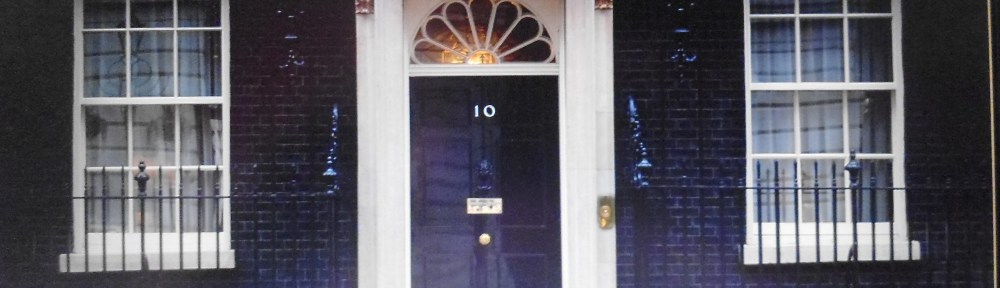
In the eight years and two weeks since the EU referendum, Sir Keir Starmer is the fifth person to be appointed Prime Minister of the United Kingdom. This means we have a lot of recent precedents against which to compare the events of the last few days.
The Palace
Up to and including 2010 it was the norm for the invitation of a new premier to form a government to take place entirely off-camera, with the politicians only being seen as they came in and out of the door and the monarch not to be seen at all.
Beginning in 2016 it became custom for the monarch and the new prime minister to be photographed at the start of their meeting and for this photograph to be shared with the press (May, Johnson, Truss, Sunak). Starmer’s appointment goes a little further by even having a short video clip of His Majesty speaking to him. I’m not familiar enough with internal layout of Buckingham Palace to know precisely where each meeting takes place (and the photographs themselves are not labelled in that way) but it’s clear that May, Johnson and Starmer all met the sovereign in the same room while Sunak was in a different part of the palace. Truss’s, of course, took place at Balmoral Castle and is famous as the last time Elizabeth II was photographed before she died. The sight of the two men in adjacent armchairs is reminiscent of scenes with outgoing and incoming Presidents of the United States in the Oval Office.
The Cars
From Thatcher until Johnson the cars used by Prime Ministers were various generations of Jaguar XJs. During Johnson’s tenure the government began phasing these out in favour of Range Rover Sentinels and then Audi A8Ls. In this instance Sunak arrived at the Palace in an Audi (KN23 XFE). Starmer arrived in a Range Rover (0Y20 CFU), then left in the same Audi. It is not clear where the limousine was hiding between Sunak’s meeting and Starmer’s, or which type of car was used to drive the Conservative leader away as his departure was apparently by a rear exit, off-camera. At some point I may do another post comparing the vehicles used in all these moments.
The Cabinet
At this point the full extent of Starmer’s first cabinet is known, though there is still some way to go with the appointment of all the junior ministers. New cabinet ministers overwhelmingly occupy the same post they had been shadowing before the election, with exceptions few enough to list individually:
- Thangam Debbonaire (Culture, Media & Sport) and Jonathan Ashworth (Paymaster General) lost their seats, replaced by Lisa Nandy and Nick Thomas-Symonds respectively.
- Anneliese Dodds (Women & Equalities) was a Shadow Secretary of State but is now only a Minister of State (both for that portfolio and at the FCDO).
- Emily Thornberry (Attorney General) was dropped from the frontbench and replaced by Richard Hermer. She doesn’t seem to have been offered Debbonaire’s or Ashworth’s place either, and now sits as a backbencher.
Some of those who were full members of the shadow cabinet have been demoted to “also attending” the real one. Starmer has followed David Cameron’s example from 2010 in avoiding immediate changes to the machinery of government – while new ministers have been appointed, the ministerial departments themselves are as the previous government left them.
Whereas Blair’s cabinet of 1997 was desperately short of prior ministerial experience (the late Lord Morris of Aberavon being the only veteran of the Wilson-Callaghan years), Starmer’s cabinet of 2024 has quite a few people who served under Blair and Brown. The most prominent example is Ed Miliband, who returns to his old job as energy secretary. Home Secretary Yvette Cooper was previously Chief Secretary to the Treasury and then head of the DWP, Northern Ireland Secretary Hilary Benn formerly headed DfID and DEFRA while a few others held multiple junior roles.
Some other New Labour grandees have returned to Parliament after a long absence to serve as lesser ministers e.g. Douglas Alexander (Business & Trade) back in the Commons, (although not for the same constituency) and Jacqui Smith (Education) to be appointed to the Lords.
Smith’s is not the only peerage required to facilitate a ministerial appointment – Hermer is not currently in Parliament either, nor are Sir Patrick Vallance (Minister of State for Science, Research & Innovation) or James Timpson (Minister of State for Prisons, Parole & Probation). It is not clear if these last three are expected to actually join the Labour Party as they were not in political roles before. Vallance in particular (famous from the COVID-era press conferences) has spent five years as a civil servant in the position of Government Chief Scientific Adviser. It is also not clear if these peerages will be created before or after those already announced in the dissolution honours.
The Council
Secretaries of State and some other officeholders are appointed at plenary sessions of the privy council. This time, unusually, the installation of the new cabinet seems to have been spread over two meetings.
The first meeting, on Saturday 6th July, saw Lucy Powell declared Lord President of the Council, then Rayner, Lammy, Cooper, Healey, Mahmood, Kendal and Nandy appointed secretaries of state. Lady Smith of Basildon was appointed Lord Keeper of the Privy Seal. The contents page preceding the actual orders in council (an innovation since the last government) splits the secretaries of state into four sections rather than as one bloc so as to have Rayner (the Deputy Prime Minister) above Reeves (the Chancellor of the Exchequer), with Mahmood given her own section due to her distinction of also being Lord High Chancellor. The contents page (though not the actual order in council) also bizarrely describes the Chancellor of the Exchequer as being a Secretary of State, which it isn’t. To make matters worse, the tab header for the PDF says “Lis of Business” rather than “List of Business”! I suspect the Privy Council Office needed some extra proofreading here.
The order in council refers to the new head of government himself as follows:
This day the Right Honourable Sir Keir Starmer KCB KC (Prime Minister) did, by
His Majesty’s command, make solemn affirmation as First Lord of the Treasury.
Writing it this way depicts Sir Keir as already being Prime Minister at the time of his appointment as First Lord, making clear that these are distinct titles. Notably Rayner is not described as (Deputy Prime Minister) in the same fashion. Rishi Sunak’s appointment on 27th October 2022 is written the same way, as were Liz Truss’s on 12th October 2022 and Theresa May’s on 19th July 2016. Boris Johnson’s presumably happened on 25th July 2019 but the file seems to be missing. David Cameron’s happened on 13th May 2010 but the document only shows the contents summary. I find it interesting that May and Truss both delayed their swearings-in as First Lord until the meeting after that in which most of their cabinet ministers were sworn, with Truss’s in particular being so delayed that it was closer to the end of her premiership than to the beginning.
The second meeting, on Wednesday 10th July, shows the appointment of secretaries Streeting, Phillipson, Miliband, Reynolds, Kyle, Haigh, Reed, Benn, Murray and Stevens, followed by Reynolds again as President of the Board of Trade – this showing a contrasting approach to the ordering of business.
The ‘Clature (alright, I’m reaching here)
In keeping with David Cameron’s example as already mentioned, Starmer has still renamed one ministerial department even if he hasn’t seriously reorganised any: At the Saturday council Angela Rayner was sworn Secretary of State for Levelling Up, Housing and Communities. At the Wednesday council she was sworn again as Secretary of State for Housing, Communites and Local Government.
This department has been in existence since 2001 without major changes to its functions but it has had multiple changes of name. I will list all of them now.
- 2001 – Office of the Deputy Prime Minister (ODPM)
- 2006 – Department for Communites and Local Government (DCLG)
- 2018 – Ministry of Housing, Communities and Local Government (MHCLG)
- 2021 – Department for Levelling Up, Housing and Communites (DLUHC)
- 2024 – Ministry of Housing, Communities and Local Government (MHCLG)
Notably GOV.UK treats the 2018 and 2024 establishments as distinct entities despite them having the same name. The (il)logic of when to say “office”, “ministry” or “department” is probably worth an article in itself at some later date. To change the Department for Children, Schools and Families into the Department for Education in 2010 required an eight-page statutory instrument. To change the MHCLG into the DLUHC in 2021 required twenty pages. Who knows how long it will take to change back again. The problem of “shopping list” department names has been noted for some time. It was reported that the “Levelling Up” part of the name was dropped because it was regarded as merely an empty slogan. Personally I would prefer that the vague “Communities” part be dropped as well, to restore the 1951-1970 name.
I mentioned in a previous post that most of my written and photographic output (online and off) post-dates Gordon Brown’s resignation. I should note now that this is also the case for most of the present digital profile of His Majesty’s Government. GOV.UK itself only dates back to 2012 (although Martha Lane Fox had started working on the project in 2009), and online minutes of the Privy Council only go back to the start of 2010. ParliamentLive.TV only dates back to December 2007 and most government Flickr accounts were in their infancy or non-existent at the time of the 2010 general election. Parliament.uk was very heavily redesigned during the later New Tens. This is not a perfect correlation, let alone a causal relationship, but it does indicate how novel it is to have all these online accounts operating under a Labour regime rather than a Conservative one.
 Robin Stanley Taylor