
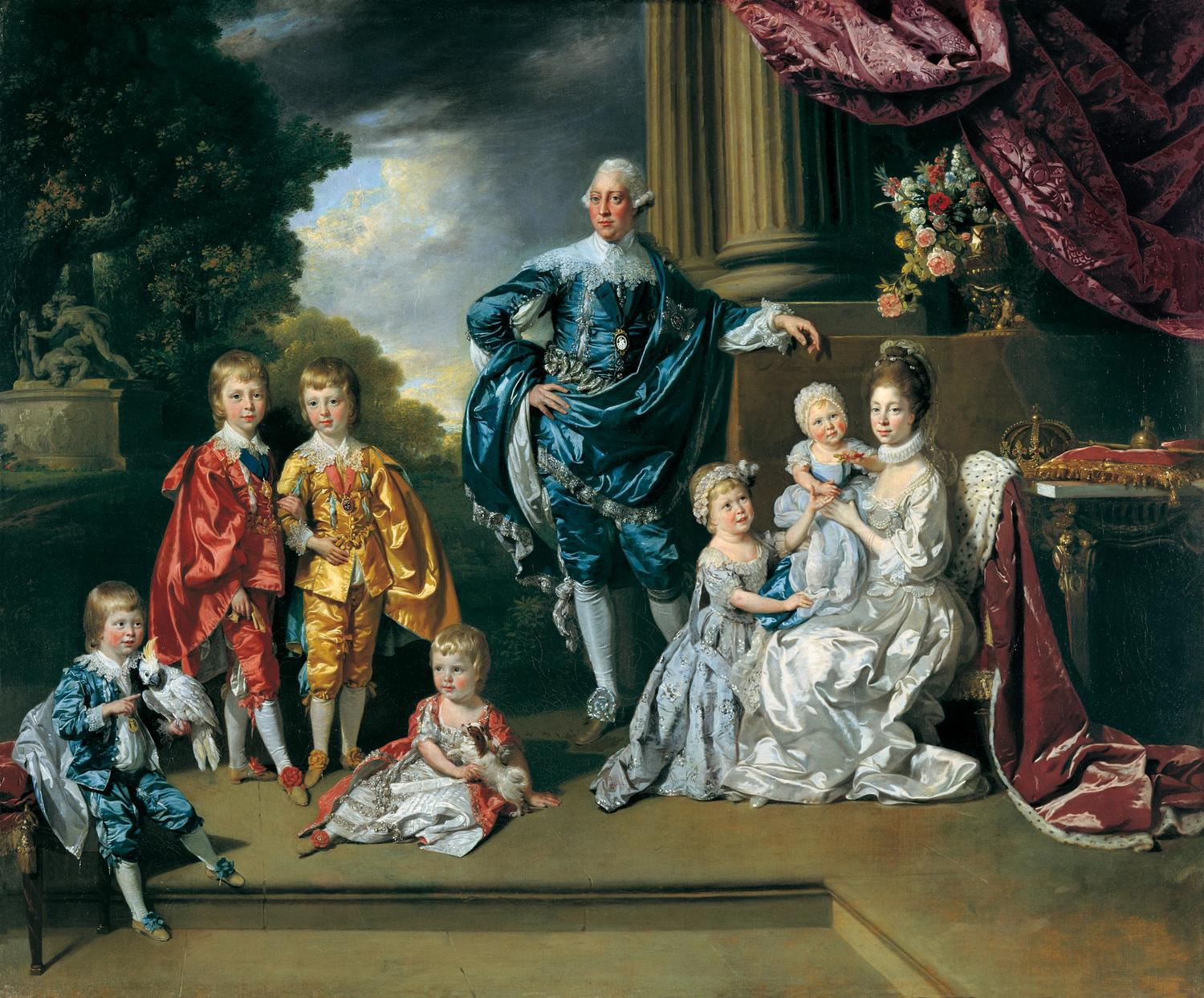
One of the many books I picked up from Hull’s YMCA shop last year was The First Four Georges by Sir John Harold Plumb. The book was originally published in 1956 but my edition was from 1966. It is, rather self-evidently, a history of the lives and reigns of King George I, King George II, King George III and King George IV, who ruled the Kingdom of Great Britain and the Kingdom of Ireland from 1714 to 1800, then the United Kingdom of Great Britain & Ireland from 1801 to 1830.
At 177 pages it is considerably shorter than most of the other books in my collection and reading it was a breeze (helped by the improvement of the weather this month allowing me to sit and read it in the orchard on the weekends).
My first knowledge of the Georgian period came from Horrible Histories, followed by David Starkey’s Monarchy and Lucy Worsley’s The First Georgians. I also occasionally dipped into the Oxford History of England. Consequently by the time I got to this short volume there was much that I did not already know: The way each father and son hated each other, the development of rival royal courts that fostered the birth of government and opposition, the emergence of the cabinet and the prime minister, the persistent threat of Jacobitism, the poor choices all four kings made in wives, the explosion of political satire and the struggles over the American colonies.
Still, this book does a good job of covering a large number of topics in a relatively small number of words. The parts new to me were the details of George III’s early life, in particular his emotional crutches regarding his senior government advisers. The stand-out piece of prose was this howler on page 100, which suggested an alternative – or at least supplementary – and unusually explicit explanation for His Majesty’s madness:
The first year of George III’s reign had been taken up almost entirely by the problem of his marriage. Animal passion and the unique sense of public duty in the need for an heir combined to make the matter one of almost neurotic, compulsive frenzy for George III. In the end he settled rashly and unwisely on Charlotte of Mecklenburg-Strelitz, a dim, formidably ugly girl. George himself regretted her plainness. Like his forbears, a sensual man, he was quickly stirred by feminine beauty but, unlike them, his high sense of morality would not allow him to indulge his fancies. Plain and undesirable as she was George III doggedly fulfilled his marital duties, and they bred child after child. On his part it was more an act of will than desire, and the strain on his already unsteady mind is thought to have been a strong contributory cause of those fits of insanity to which he became a prey.
Did George really lose his mind due to the strain of living with an ugly wife? That would have made for an interesting scene in the Alan Bennett play!
 Robin Stanley Taylor
Pingback: Mid-Year Reading Round-up | Robin Stanley Taylor