
Now is the time of year that the Royal Household publishes its financial reports detailing the use of the Sovereign Grant and other money sources. It is a chance for the public to look at “The Firm” as a business, and likewise for The Firm to advocate for itself on that basis. Obviously these are aimed at a higher reading level than most of the Palace’s announcements.
Earlier this year there was an additional publication: A report by the National Audit Office on the arrangements for Crown Estate properties which members of the family and their staff occupy. This was prompted mainly by the surrender of the Royal Lodge by the former Prince Andrew.
I have read through the majority of these documents (though the full Sovereign Grant Report, at 161 pages, may not be completed for some time). I will not comment on the majority of their contents as they are dense with financial jargon, but will highlight a couple of interesting revelations.
Working Royals
The definition of “working royal”, meaning one who carries out public duties on behalf of the sovereign, has sometimes been contested. This year’s documents appear to offer a canonical list of who currently counts. Page 35 of the NAO report says
3.10 In addition to The King and Queen, there are nine working members of the Royal family supporting the duties of the Sovereign: The Prince and Princess of Wales, The Duke and Duchess of Gloucester, The Duke of Kent, The Princess Royal, The Duke and Duchess of Edinburgh and Princess Alexandra.
This exact line is repeated in the Palace’s own financial report (page 3). This is obviously a rather smaller list than we would have seen a decade ago, due to several members from that time having died or withdrawn from duties (whether voluntarily or not) without anyone yet arriving to replace them.
The same page in the NAO report, as well as a few other sections, define four people as being outside the firm:
Princess Beatrice Princess Eugenie and The Prince and Princess Michael of Kent
The report repeatedly refers to “The Prince and Princess Michael of Kent”, giving them the definite article (with capital T, no less) normally reserved for royals in the first generation of descent from a monarch.
Sir Timothy Laurence is not mentioned in these documents even though, despite his lack of royal style or title, he definitely is on the duty roster. The status of the Duke of Edinburgh’s children and His Majesty’s grandchildren is also left unresolved.
(At this point I will take the opportunity to plug the work of Canadian journalist Patricia Treble, who has written in detail several times about the looming demographic crisis for the working royals. She noted in a post from April this year that contrary to official reports she considers Alexandra “effectively retired” due to the rarity of her appearances in the last few years.)
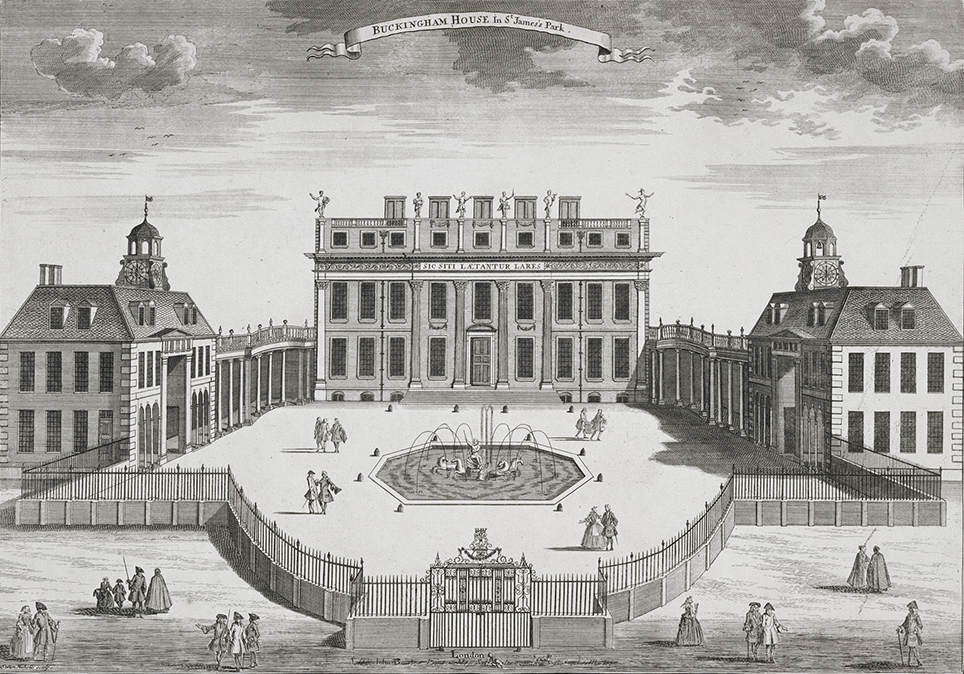
Buckingham Palace
Much of the word-count of the recent literature concerns the major refurbishment works on this residence, which had fallen into a dangerous state of disrepair by the early 2010s.
Over the last decade there have been multiple updates in formal documents, as well as the royal YouTube channel, about the work being done to overhaul the palace’s systems, structures and services.
Although it is now a prominent British icon — to the extent that “the Palace” is frequently used as the principal metonym for the entire institution of the monarchy — the physical structure has often been a source of problems. Histories of the late Georgian and early Victorian period will often point out that the construction ran well over budget requiring the replacement of the architect, and that the finished product was riddled with faults including sewer overflow, smoke accumulation and rat infestation. This was a recurrent theme in the first season of ITV’s Victoria series, and also got a sketch on Horrible Histories.
There were several renovations over the next century (including to repair bomb damage after the Second World War) which fixed some problems but not all. By the time of Elizabeth II’s Diamond Jubilee there were news stories about windows losing too much heat, plastic buckets to catch leaks, and blocks of masonry nearly killing people when they fell to the ground.
Even aside from its structural shortcomings, a lot of monarchs simply didn’t like living there: William IV, who reluctantly inherited the unfinished work from his elder brother, preferred to stay at his own custom-built residence at Clarence House (so-called because he was Duke of Clarence at the time). Victoria was initially excited to move in, but later in her reign would leave it abandoned for most of the year in favour of Osborne and Windsor.
Towards the end of George VI’s reign Philip Mountbatten & The Princess Elizabeth made their home at Clarence House as Duke & Duchess of Edinburgh. Following the latter’s accession to the throne they were reluctant to move to Buckingham Palace, only doing so because Sir Winston Churchill insisted it was the only proper place for the reigning monarch to live. It is speculated by historians that the royal couple at the time only gave way because they were relatively young and inexperienced on the throne whereas Churchill was very elderly and had achieved a near-divine status in the public mind, whereas by the end of the reign that dynamic had more than reversed. We can’t know for sure, but it feels a mightily-convenient coincidence that this announcement has been made at a time when the party in government is having a leadership contest, meaning that the incumbent is a caretaker who, in terms of effective political authority, may as well not exist.

Drawing of Clarence House from 1874.
Late in Elizabeth’s reign Clarence House became the official residence for Prince Charles’s own household, and there were reports that both he and his mother wished to shift the emphasis of the monarchy away from Buckingham Palace, perhaps even abandoning it as a residence altogether, and make Windsor Castle the principal royal residence. In Elizabeth II’s last few years events conspired in favour of this: In 2017 Prince Philip formally retired from royal duties and, while his wife continued at Buck House, he moved to Wood Farm on the Sandringham estate (where his middle son now lives). In 2020 when the pandemic hit and lockdown was imposed, they both moved to Windsor and had their “bubble” headquartered there. Over that year and the next the Castle was host to Philip’s funeral and a visit by President Biden after a G7 summit. Trooping the Colour, scaled down due to social distancing requirements, was also relocated there on both years. In early 2022 as the pandemic abated it was announced that Elizabeth would not move back to London, instead keeping Windsor as her main home and merely commuting when necessary.
On Charles’s accession he and Camilla had been living at Clarence House for nearly two decades. Although “Clarence House” as an organisation (a metonym for their separate household as Prince of Wales & Duchess of Cornwall) was formally dissolved at that point and merged with that at Buckingham Palace, the ongoing renovation works gave the couple an excuse not to actually move in. For over three years now Their Majesties have used Buckingham as the workplace for their constitutional and public functions as King & Queen, but kept Clarence House as their main London home. It also continues to be the venue for their private social functions as well as gatherings related to the charities and businesses they established there during the prior reign. At the end of 2024 the building works reached the state rooms, so that the next run of state visits (so far France, United States, Germany and Nigeria) were all redirected to Windsor as well.
Now that the restoration work is nearing completion, a long-term decision needs to be made. This week it was announced to reporters at a press briefing that Their Majesties will continue their current arrangements indefinitely, with no plans ever to move. This effectively makes official what has already quietly been the case for the past six years: Buck House is the monarch’s residence no longer. Prince William seems likely to follow suit here: The Prince & Princess of Wales have long had their official residence at Kensington Palace (which is also the metonym for their household), but where they and their children actually live has varied. Late last year the family moved into Forest Lodge, Windsor, and described it as their “forever home”.
This change may feel momentous, but royal residences have come and gone over the centuries: Westminster, Whitehall, Hampton Court, Richmond, Eltham and St James’s have all at some point been the home of the sovereign, then faded into the background (or, indeed, been destroyed). My suggestion to offer Buck House to Parliament again remains in place.
EXTERNAL LINKS
- Sovereign Grant Act 2011: report of the Royal Trustees on the Sovereign Grant 2026-27 (through Gov.UK, 24th March)
- Investigation into residential property arrangements with members of the Royal Family (through NAO.Org.UK, 5th June)
- Finances of the Monarchy (through CommonsLibrary.Parliament.UK, 5th June)
- Financial Reports 2025-26 (through Royal.UK, 25th June)
- Royal Finances overview (through Royal.UK, 26th June)
- The Sovereign Grant and Sovereign Grant Reserve annual report and accounts 2025 to 2026 (through Gov.UK, 26th June)