This month came an important stage in the slow roll-out of Timothy Noad’s illustration of the British royal arms: It has started appearing on Acts of Parliament.
The standard version of the British royal heraldic achievement appears on Acts of the Parliament of the United Kingdom, Acts of the devolved Northern Ireland Assembly and Measures of the General Synod of the Church of England. It is not used on Acts of the devolved Scottish or Welsh Parliaments, the former using the distinct Scottish arrangement of the arms and the latter a the Welsh royal badge. I have previously pondered whether Northern Ireland ought to have its own arrangement of the royal arms, but that’s another story.
More than a year after Noad’s graphic was unveiled, the three aforesaid legislatures were still using the old version with St Edward’s Crown, designed by Reynolds Stone for Elizabeth II in 1955. In the past thirty days all three have switched over.
The Westminster Parliament had a slight gap in legislative output due to the start of the new session. Those acts which received assent at prorogation on 29th April (cs. 15–23) still used the Stone version. The first Act to receive assent in this session was the National Security (State Threats) Act (c. 24) on 8th July, which used the Noad version. The Clergy Conduct Measure (No. 1) also received assent that day and also debuted the Noad version. The Synod’s puts out far fewer Measures per year than Parliament does Acts, so their last use of the Stone image was the Abuse Redress Measure (2025 No. 4) all the way back on 18th December.
I should note that this only applies to the paper and PDF (King’s Printer) versions. The digital versions on Legislation.Gov.UK have the new coat of arms retroactively applied going back many decades. I presume all pages for UK Acts are coded to use the same image in the header so they all change automatically.
Some other recent royal heraldic news: Two years ago the Prince of Wales was appointed Great Master of the Order of the Bath. Last week Alistair Bruce Tweeted this photograph of his stall plate at Westminster Abbey. At long last we have proof that William does indeed possess the full heraldic achievement of the heir apparent, including crest, compartment and supporters.
Now is the time of year that the Royal Household publishes its financial reports detailing the use of the Sovereign Grant and other money sources. It is a chance for the public to look at “The Firm” as a business, and likewise for The Firm to advocate for itself on that basis. Obviously these are aimed at a higher reading level than most of the Palace’s announcements.
Earlier this year there was an additional publication: A report by the National Audit Office on the arrangements for Crown Estate properties which members of the family and their staff occupy. This was prompted mainly by the surrender of the Royal Lodge by the former Prince Andrew.
I have read through the majority of these documents (though the full Sovereign Grant Report, at 161 pages, may not be completed for some time). I will not comment on the majority of their contents as they are dense with financial jargon, but will highlight a couple of interesting revelations.
Working Royals
The definition of “working royal”, meaning one who carries out public duties on behalf of the sovereign, has sometimes been contested. This year’s documents appear to offer a canonical list of who currently counts. Page 35 of the NAO report says
3.10 In addition to The King and Queen, there are nine working members of the Royal family supporting the duties of the Sovereign: The Prince and Princess of Wales, The Duke and Duchess of Gloucester, The Duke of Kent, The Princess Royal, The Duke and Duchess of Edinburgh and Princess Alexandra.
This exact line is repeated in the Palace’s own financial report (page 3). This is obviously a rather smaller list than we would have seen a decade ago, due to several members from that time having died or withdrawn from duties (whether voluntarily or not) without anyone yet arriving to replace them.
The same page in the NAO report, as well as a few other sections, define four people as being outside the firm:
Princess Beatrice Princess Eugenie and The Prince and Princess Michael of Kent
The report repeatedly refers to “The Prince and Princess Michael of Kent”, giving them the definite article (with capital T, no less) normally reserved for royals in the first generation of descent from a monarch.
Sir Timothy Laurence is not mentioned in these documents even though, despite his lack of royal style or title, he definitely is on the duty roster. The status of the Duke of Edinburgh’s children and His Majesty’s grandchildren is also left unresolved.
(At this point I will take the opportunity to plug the work of Canadian journalist Patricia Treble, who has written in detail several times about the looming demographic crisis for the working royals. She noted in a post from April this year that contrary to official reports she considers Alexandra “effectively retired” due to the rarity of her appearances in the last few years.)
Buckingham Palace
Much of the word-count of the recent literature concerns the major refurbishment works on this residence, which had fallen into a dangerous state of disrepair by the early 2010s.
Over the last decade there have been multiple updates in formal documents, as well as the royal YouTube channel, about the work being done to overhaul the palace’s systems, structures and services.
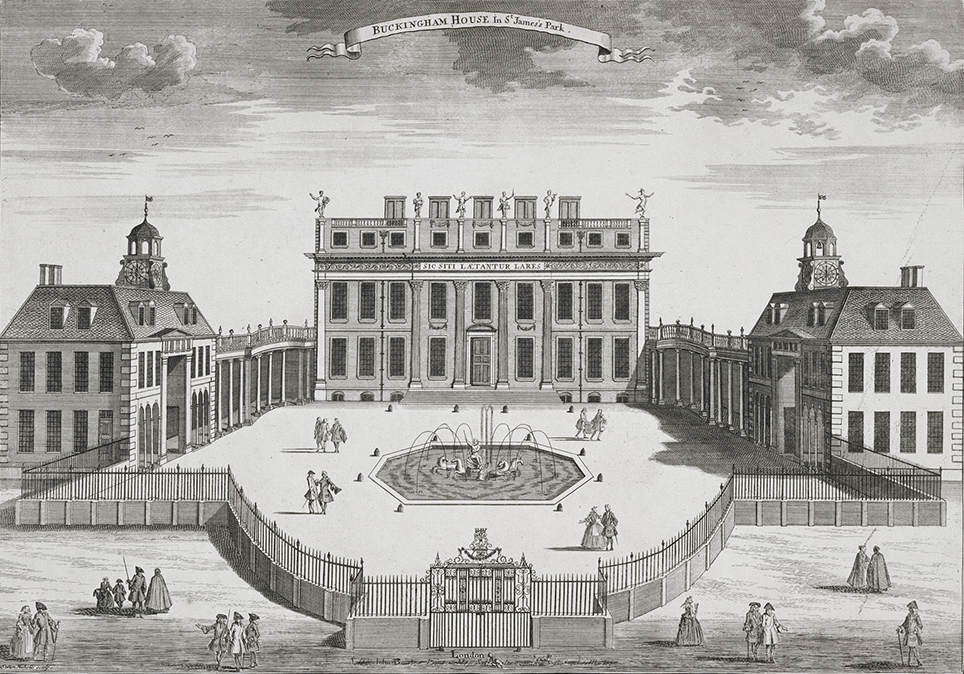
Although it is now a prominent British icon — to the extent that “the Palace” is frequently used as the principal metonym for the entire institution of the monarchy — the physical structure has often been a source of problems. Histories of the late Georgian and early Victorian period will often point out that the construction ran well over budget requiring the replacement of the architect, and that the finished product was riddled with faults including sewer overflow, smoke accumulation and rat infestation. This was a recurrent theme in the first season of ITV’s Victoria series, and also got a sketch on Horrible Histories.
There were several renovations over the next century (including to repair bomb damage after the Second World War) which fixed some problems but not all. By the time of Elizabeth II’s Diamond Jubilee there were news stories about windows losing too much heat, plastic buckets to catch leaks, and blocks of masonry nearly killing people when they fell to the ground.
Even aside from its structural shortcomings, a lot of monarchs simply didn’t like living there: William IV, who reluctantly inherited the unfinished work from his elder brother, preferred to stay at his own custom-built residence at Clarence House (so-called because he was Duke of Clarence at the time). Victoria was initially excited to move in, but later in her reign would leave it abandoned for most of the year in favour of Osborne and Windsor.
Towards the end of George VI’s reign Philip Mountbatten & The Princess Elizabeth made their home at Clarence House as Duke & Duchess of Edinburgh. Following the latter’s accession to the throne they were reluctant to move to Buckingham Palace, only doing so because Sir Winston Churchill insisted it was the only proper place for the reigning monarch to live. It is speculated by historians that the royal couple at the time only gave way because they were relatively young and inexperienced on the throne whereas Churchill was very elderly and had achieved a near-divine status in the public mind, whereas by the end of the reign that dynamic had more than reversed. We can’t know for sure, but it feels a mightily-convenient coincidence that this announcement has been made at a time when the party in government is having a leadership contest, meaning that the incumbent is a caretaker who, in terms of effective political authority, may as well not exist.
Drawing of Clarence House from 1874.
Late in Elizabeth’s reign Clarence House became the official residence for Prince Charles’s own household, and there were reports that both he and his mother wished to shift the emphasis of the monarchy away from Buckingham Palace, perhaps even abandoning it as a residence altogether, and make Windsor Castle the principal royal residence. In Elizabeth II’s last few years events conspired in favour of this: In 2017 Prince Philip formally retired from royal duties and, while his wife continued at Buck House, he moved to Wood Farm on the Sandringham estate (where his middle son now lives). In 2020 when the pandemic hit and lockdown was imposed, they both moved to Windsor and had their “bubble” headquartered there. Over that year and the next the Castle was host to Philip’s funeral and a visit by President Biden after a G7 summit. Trooping the Colour, scaled down due to social distancing requirements, was also relocated there on both years. In early 2022 as the pandemic abated it was announced that Elizabeth would not move back to London, instead keeping Windsor as her main home and merely commuting when necessary.
On Charles’s accession he and Camilla had been living at Clarence House for nearly two decades. Although “Clarence House” as an organisation (a metonym for their separate household as Prince of Wales & Duchess of Cornwall) was formally dissolved at that point and merged with that at Buckingham Palace, the ongoing renovation works gave the couple an excuse not to actually move in. For over three years now Their Majesties have used Buckingham as the workplace for their constitutional and public functions as King & Queen, but kept Clarence House as their main London home. It also continues to be the venue for their private social functions as well as gatherings related to the charities and businesses they established there during the prior reign. At the end of 2024 the building works reached the state rooms, so that the next run of state visits (so far France, United States, Germany and Nigeria) were all redirected to Windsor as well.
Now that the restoration work is nearing completion, a long-term decision needs to be made. This week it was announced to reporters at a press briefing that Their Majesties will continue their current arrangements indefinitely, with no plans ever to move. This effectively makes official what has already quietly been the case for the past six years: Buck House is the monarch’s residence no longer. Prince William seems likely to follow suit here: The Prince & Princess of Wales have long had their official residence at Kensington Palace (which is also the metonym for their household), but where they and their children actually live has varied. Late last year the family moved into Forest Lodge, Windsor, and described it as their “forever home”.
This change may feel momentous, but royal residences have come and gone over the centuries: Westminster, Whitehall, Hampton Court, Richmond, Eltham and St James’s have all at some point been the home of the sovereign, then faded into the background (or, indeed, been destroyed). My suggestion to offer Buck House to Parliament again remains in place.
In this post I have new updates on three different heraldry-related stories that I have covered before.
The Greater London Authority
The campaign by the Greater London Authority to acquire the iconic armorial achievement of its predecessor body the Greater London Council has been successful. The King issued a royal warrant on Thursday 13th November authorising the transfer, though frustratingly it the corresponding notice in the London Gazette was not published until yesterday.
British Passports
(I’ve discussed this topic ad nauseam by now so won’t link specific earlier posts.)
It was announced by the Home Office in October that a new British passport design would be coming out which featured Timothy Noad’s illustration of the royal arms with the Tudor crown in place of the previous design favoured by Elizabeth II. Recently the story has been picked up by newspapers as the new passports actually come out.
The Prince & Princess of Wales
I and other heraldists have been waiting for some time to see evidence of William & Catherine updating their personal heraldry to reflect the former’s status as heir apparent. While searching for news stories about the GLA I found articles in Hello!, People, Marie Claire and The News International (though curiously none of the more mainstream outlets) reported that when the couple attended the Royal Variety Performance last month, their invitation printed by the charity featured their conjugal coat of arms in the updated format. The style is very clearly Sodacan, and it looks as if the particular image was created on 12th April 2023 by user Mangwanani but not actually used in any articles until 22nd November this year, presumably for lack of evidence of real-life usage. Whoever found the image for the invitation must have dug rather deeply into Wikimedia Commons to find it. Reports in the aforesaid magazines that the Prince & Princess have made this change themselves seem a little misguided as it would not have been their own office in charge of producing the image, and recent evidence of their own correspondence still shows their old-style cyphers in use (not the lack of an arch on the coronet). This is thus yet another example of Wikipedians not just getting ahead of real life, but actually pushing it along a little, however inadvertently.
The new programme can be contrasted with this one from 2023, which still uses their conjugal arms as Duke & Duchess of Cambridge (or rather as son & daughter-in-law of the heir apparent), even though the new graphic image had already existed for seven months and William had held the status of heir apparent for more than a year. The old graphic still showed Catherine’s shield with a cordelière around it to balance William’s Garter circlet, even though she had been made a GCVO in 2019. Note too that the great many depictions of the main royal arms still alternate between old and new variants.
The Royal Variety Performance for 2025 was held last night, though it won’t be broadcast until next month. This time the Prince & Princess of Wales attended, as they have done in every odd-numbered year since 2015. I mentioned last year that the Royal Variety Charity was extensively using Sodacan’s Wikipedia illustration of Elizabeth II’s British heraldic achievement. Looking at this year’s photographs it appears nothing has changed.
I mentioned last week the oddity of having the Prince of Wales and his aunt the Princess Royal both undertaking prominent overseas diplomatic visits to different places at the same time. This week the Firm leaned further into this by having a married couple, the Duke & Duchess of Edinburgh, simultaneously touring different continents.
The Duke flew to Nigeria to meet with the President and attend a meeting of the Duke of Edinburgh’s International Award programme, founded by and named after his father Prince Philip.
The Duchess went on a tour of South and Central America. She visited the Republics of Peru, Panama and Guatemala, finishing in Belize. The first three were standard-fare bilateral diplomatic visits on behalf of Britain, with the Palace news page explicitly saying they were requested by the Foreign, Commonwealth & Development Office (specifically the Foreign part in this instance). In some of the photographs we can see her meeting the host president with a Union Flag prominently displayed beside that of the host state.
The visit to Belize is the more interesting one as, unlike the others, this is a Commonwealth Realm, and indeed this is highlighted multiple times in the press releases, with the Palace Twitter feed even calling it “the Realm of Belize” despite the country having no official long name. By strict Commonwealth constitutional logic Sophie should have been there in her capacity as sister-in-law to the King of Belize, acting on the advice of the Belizean government. Despite this, many of the official reports mentioned bilateral ties between Belize and the United Kingdom, which suggests a deliberate straddling of both thrones. I can’t see any royal standard flown by the Duchess on the other visits, but in Belize she was clearly photographed flying the generic ermine-bordured version. As I have lamented before, royals other than the sovereign himself do not have dedicated heraldic flags for each specific realm save Canada so must default to their British arms even where this causes constitutional confusion.
It is also worth remembering that recently there have been reports of Guatemalan military personal making illegal incursions onto Belizean territory, which was condemned by the Commonwealth. It is a little strange, therefore, that a senior royal should visit both countries in such rapid succession without the incident being brought up.
On a final note, two of the aforementioned stories featured appearances by Paddington Bear: The Duchess of Edinburgh posed with a plush toy of him at the British Embassy in Lima (Peru of course being the character’s country of origin), then the Prince & Princess of Wales greeted an actor in costume at the Royal Albert Hall. Paddington Bear has long been an international icon of British culture. Since his appearance in a video for the Platinum Jubilee celebrations in 2022, he has been particularly associated with the royal family. Some have criticised an apparent cult forming around him. This year Spitting Image created a parody of him to appear alongside the Duke of Sussex in a spoof podcast, which at time of writing is the subject of a lawsuit by Studio Canal.
Once Halloween and Guy Fawkes Night have passed, poppy season is all that remains to block Christmas from achieving total domination for the rest of the year. There are, of course, two separate dates for this occasion — Armistice Day (always 11th November, the exact anniversary of the end of the First World War) and Remembrance Sunday (second Sunday in November, a broader commemoration of war dead). Both of these events involve two-minute national silences… assuming, of course, that a silence actually falls. Due to the logistics and practicalities of the working week, some organisations have to hold subsidiary events outside the universal dates. Silences here can be hard to regulate if everyone around isn’t coordinated with it. I remember quite a few occasions from childhood when a reverent, contemplative peace was anything but. Even the highest are not immune to this: The Queen attended a service at Westminster Abbey last Thursday, but it was immediately outside rather than inside the main building. As you would expect from an open-air event in central London on a weekday, the “silence” was actually filled with a lot of traffic noise as well as two different emergency sirens. The only blessing was that at least there were no dogs barking. I’m actually a little surprised that this phenomenon hasn’t been the subject of a Family Guy cutaway by now, given that it would be an easy way to get two minutes of padding with minimal animation.
Another big event in November is the United Nations Climate Change Conference, now taking place in Belém, Brazil. The Prince of Wales flew down some days in advance to present his Earthshot Prize, which Sir Keir Starmer also attended, though neither stayed for COP30 itself. This is the latest in a long line of solo overseas engagements undertaken by the heir apparent since his wife’s cancer diagnosis last year*. William was back in time for the Sunday cenotaph service but he missed the Festival of Remembrance at the Royal Albert Hall on Saturday night. Prince George attended for the first time, in his father’s place. The festival includes the religious and patriotic music expected for a solemn occasion, but also a handful of modern entries. One of these was a cover of Avicii’s The Nights. I can’t work out whether it adds to or detracts from the spirit of the event to know that Avicii himself, err, left this world behind some years ago, his life clearly remembered but tragically brief, and predeceased his father. He was from Sweden, a country formally neutral in both world wars. The festival featured multiple performances from Sir Rod Stewart, who sported the unusual sartorial combination of a knight bachelor’s badge hung from an open shirt.
The cenotaph ceremony in Whitehall traditionally involves the laying of wreaths by senior royals, senior servicemen, cabinet ministers, diplomats, various officials representing the British Overseas Territories and Crown Dependencies, and leaders of the significant political parties in the House of Commons. This has always been a bugbear for Nigel Farage, because his parties have so far never met the threshold of six MPs needed to qualify. UKIP in 2015 got 12.6% of the popular vote but only one seat. Douglas Carswell, as the party’s sole representative in the Commons, was regarded for procedural purposes as an independent rather than a leader. Reform in 2024 got 14.3% of the vote and five seats. The cruel twist here is that since the election the Reform caucus has gained two members (one from defection, one from by-election) but also lost two of the originals, so that when November came they were back as they started. It should be noted that the six-member rule, introduced in 1984, has exceptions for the Northern Ireland parties to avoid the appearance of sectarian bias. It is also possible for two or more parties to coalesce for this purpose, as Plaid Cymru and the Scottish National Party have done since 2001**.
The Princess Royal was also absent from the London commemorations, having gone on a royal tour of Australia. She instead paid her respects at the ANZAC memorial in Sydney. It is a little extraordinary for two royal overseas visits to take place at the same time, especially when both of those away from the United Kingdom are counsellors of state. Recently I have been constructing a Wikipedia page listing all of Anne’s official overseas travel (similar to those which already exist for other senior royals) but it has quickly become a little overwhelming to see just how busy she is, with twenty such journeys listed in the Court Circular just for the last two years.
One ought probably to discuss heraldic matters now. In some of the photographs of Anne’s visit I can see her two crosses and a heart flying in various places. I didn’t see William or Camilla flying theirs in the outings aforementioned. Close-up shots of the wreaths laid and crosses planted also show royal symbols. The Queen’s monogram appeared on hers, complete with the Tudor crown. William’s, even now, still uses the pre-Carolean design (note the oak leaves and lack of arch on the coronet). The King’s wreath did not use his monogram, but instead the full royal achievement with BUCKINGHAM PALACE underneath. Once again it was the old-style illustration with St Edward’s crown.
Sir Lindsay Hoyle is something of a vexillophile and has taken to Tweeting whenever a new flag is flown from New Palace Yard. In 2021 he began making a point of raising the flags of the Overseas Territories. His most recent example was the flag of the British Indian Ocean Territory, allegedly celebrating its national day. I can’t find photographic evidence (including on Parliament.UK) of the flag actually flying in the yard, so I can only go on the image shown in the Tweet itself. The BIOT flag includes the Imperial crown, sometimes with a cap of maintenance and sometimes without, but always in the St Edward form. Hoyle’s picture had a Tudor crown. I cannot find this version on the territory’s website or any other source. Is it a custom make? The BIOT is currently the subject of a slow-moving but high-stakes political controversy as Starmer’s government intends to cede sovereignty of the landmasses to Mauritius. This would mean that the territory as a political entity ceases to exist, hence no point updating the flag. I notice that there was not a representative of the BIOT among all the other BOT representatives laying wreaths at the cenotaph. The flag of the BIOT has been widely used in the campaign against the handover, including by the displaced islanders themselves. The bill to ratify the handover passed the House of Commons and recently had its second reading in the Lords, but then there were reports that the government has paused its progress due to public resistance. In this context it is tempting to read Mr Speaker’s Tweet as a not-so-subtle dig at the Prime Minister.
Finally, a point about Flickr: The cenotaph ceremony and the Earthshot prize both produced plenty of government photographs which can be moved onto Wikimedia Commons. The former had two photographers: Simon Dawson for the Prime Minister’s Office and Gunter Hofer for the DCMS. After migrating both albums across I quickly realised that the time stamps given in the metadata were wrong. Dawson’s were one hour too late (probably not adjusted for daylight savings) while the DCMS ones were in some cases out by a whole year! This feels like an elementary mistake for a professional photographer. Sadly there are not likely to be many photographs of Anne’s excursion to Sydney for the reasons I explained last year.
FOOTNOTES
*The Princess of Wales appears not to have gone abroad on official business since 15 October 2023.
**The SNP alone has won at least six seats in every subsequent general election, so in practice the utility of this alliance is one-sided.




 Robin Stanley Taylor

