Charles the Third, by the Grace of God, of the United Kingdom of Great Britain and Northern Ireland and of His other Realms and Territories King, Head of the Commonwealth, Defender of the Faith.
This month came an important stage in the slow roll-out of Timothy Noad’s illustration of the British royal arms: It has started appearing on Acts of Parliament.
The standard version of the British royal heraldic achievement appears on Acts of the Parliament of the United Kingdom, Acts of the devolved Northern Ireland Assembly and Measures of the General Synod of the Church of England. It is not used on Acts of the devolved Scottish or Welsh Parliaments, the former using the distinct Scottish arrangement of the arms and the latter a the Welsh royal badge. I have previously pondered whether Northern Ireland ought to have its own arrangement of the royal arms, but that’s another story.
More than a year after Noad’s graphic was unveiled, the three aforesaid legislatures were still using the old version with St Edward’s Crown, designed by Reynolds Stone for Elizabeth II in 1955. In the past thirty days all three have switched over.
The Westminster Parliament had a slight gap in legislative output due to the start of the new session. Those acts which received assent at prorogation on 29th April (cs. 15–23) still used the Stone version. The first Act to receive assent in this session was the National Security (State Threats) Act (c. 24) on 8th July, which used the Noad version. The Clergy Conduct Measure (No. 1) also received assent that day and also debuted the Noad version. The Synod’s puts out far fewer Measures per year than Parliament does Acts, so their last use of the Stone image was the Abuse Redress Measure (2025 No. 4) all the way back on 18th December.
I should note that this only applies to the paper and PDF (King’s Printer) versions. The digital versions on Legislation.Gov.UK have the new coat of arms retroactively applied going back many decades. I presume all pages for UK Acts are coded to use the same image in the header so they all change automatically.
Some other recent royal heraldic news: Two years ago the Prince of Wales was appointed Great Master of the Order of the Bath. Last week Alistair Bruce Tweeted this photograph of his stall plate at Westminster Abbey. At long last we have proof that William does indeed possess the full heraldic achievement of the heir apparent, including crest, compartment and supporters.
Now is the time of year that the Royal Household publishes its financial reports detailing the use of the Sovereign Grant and other money sources. It is a chance for the public to look at “The Firm” as a business, and likewise for The Firm to advocate for itself on that basis. Obviously these are aimed at a higher reading level than most of the Palace’s announcements.
Earlier this year there was an additional publication: A report by the National Audit Office on the arrangements for Crown Estate properties which members of the family and their staff occupy. This was prompted mainly by the surrender of the Royal Lodge by the former Prince Andrew.
I have read through the majority of these documents (though the full Sovereign Grant Report, at 161 pages, may not be completed for some time). I will not comment on the majority of their contents as they are dense with financial jargon, but will highlight a couple of interesting revelations.
Working Royals
The definition of “working royal”, meaning one who carries out public duties on behalf of the sovereign, has sometimes been contested. This year’s documents appear to offer a canonical list of who currently counts. Page 35 of the NAO report says
3.10 In addition to The King and Queen, there are nine working members of the Royal family supporting the duties of the Sovereign: The Prince and Princess of Wales, The Duke and Duchess of Gloucester, The Duke of Kent, The Princess Royal, The Duke and Duchess of Edinburgh and Princess Alexandra.
This exact line is repeated in the Palace’s own financial report (page 3). This is obviously a rather smaller list than we would have seen a decade ago, due to several members from that time having died or withdrawn from duties (whether voluntarily or not) without anyone yet arriving to replace them.
The same page in the NAO report, as well as a few other sections, define four people as being outside the firm:
Princess Beatrice Princess Eugenie and The Prince and Princess Michael of Kent
The report repeatedly refers to “The Prince and Princess Michael of Kent”, giving them the definite article (with capital T, no less) normally reserved for royals in the first generation of descent from a monarch.
Sir Timothy Laurence is not mentioned in these documents even though, despite his lack of royal style or title, he definitely is on the duty roster. The status of the Duke of Edinburgh’s children and His Majesty’s grandchildren is also left unresolved.
(At this point I will take the opportunity to plug the work of Canadian journalist Patricia Treble, who has written in detail several times about the looming demographic crisis for the working royals. She noted in a post from April this year that contrary to official reports she considers Alexandra “effectively retired” due to the rarity of her appearances in the last few years.)
Buckingham Palace
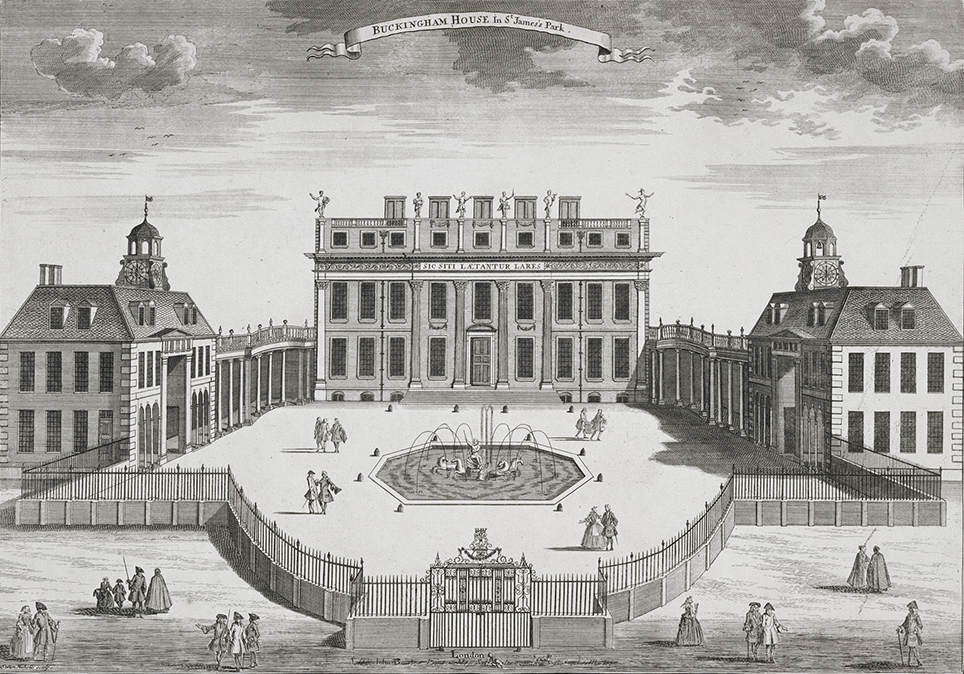
Much of the word-count of the recent literature concerns the major refurbishment works on this residence, which had fallen into a dangerous state of disrepair by the early 2010s.
Over the last decade there have been multiple updates in formal documents, as well as the royal YouTube channel, about the work being done to overhaul the palace’s systems, structures and services.
Although it is now a prominent British icon — to the extent that “the Palace” is frequently used as the principal metonym for the entire institution of the monarchy — the physical structure has often been a source of problems. Histories of the late Georgian and early Victorian period will often point out that the construction ran well over budget requiring the replacement of the architect, and that the finished product was riddled with faults including sewer overflow, smoke accumulation and rat infestation. This was a recurrent theme in the first season of ITV’s Victoria series, and also got a sketch on Horrible Histories.
There were several renovations over the next century (including to repair bomb damage after the Second World War) which fixed some problems but not all. By the time of Elizabeth II’s Diamond Jubilee there were news stories about windows losing too much heat, plastic buckets to catch leaks, and blocks of masonry nearly killing people when they fell to the ground.
Even aside from its structural shortcomings, a lot of monarchs simply didn’t like living there: William IV, who reluctantly inherited the unfinished work from his elder brother, preferred to stay at his own custom-built residence at Clarence House (so-called because he was Duke of Clarence at the time). Victoria was initially excited to move in, but later in her reign would leave it abandoned for most of the year in favour of Osborne and Windsor.
Towards the end of George VI’s reign Philip Mountbatten & The Princess Elizabeth made their home at Clarence House as Duke & Duchess of Edinburgh. Following the latter’s accession to the throne they were reluctant to move to Buckingham Palace, only doing so because Sir Winston Churchill insisted it was the only proper place for the reigning monarch to live. It is speculated by historians that the royal couple at the time only gave way because they were relatively young and inexperienced on the throne whereas Churchill was very elderly and had achieved a near-divine status in the public mind, whereas by the end of the reign that dynamic had more than reversed. We can’t know for sure, but it feels a mightily-convenient coincidence that this announcement has been made at a time when the party in government is having a leadership contest, meaning that the incumbent is a caretaker who, in terms of effective political authority, may as well not exist.
Drawing of Clarence House from 1874.
Late in Elizabeth’s reign Clarence House became the official residence for Prince Charles’s own household, and there were reports that both he and his mother wished to shift the emphasis of the monarchy away from Buckingham Palace, perhaps even abandoning it as a residence altogether, and make Windsor Castle the principal royal residence. In Elizabeth II’s last few years events conspired in favour of this: In 2017 Prince Philip formally retired from royal duties and, while his wife continued at Buck House, he moved to Wood Farm on the Sandringham estate (where his middle son now lives). In 2020 when the pandemic hit and lockdown was imposed, they both moved to Windsor and had their “bubble” headquartered there. Over that year and the next the Castle was host to Philip’s funeral and a visit by President Biden after a G7 summit. Trooping the Colour, scaled down due to social distancing requirements, was also relocated there on both years. In early 2022 as the pandemic abated it was announced that Elizabeth would not move back to London, instead keeping Windsor as her main home and merely commuting when necessary.
On Charles’s accession he and Camilla had been living at Clarence House for nearly two decades. Although “Clarence House” as an organisation (a metonym for their separate household as Prince of Wales & Duchess of Cornwall) was formally dissolved at that point and merged with that at Buckingham Palace, the ongoing renovation works gave the couple an excuse not to actually move in. For over three years now Their Majesties have used Buckingham as the workplace for their constitutional and public functions as King & Queen, but kept Clarence House as their main London home. It also continues to be the venue for their private social functions as well as gatherings related to the charities and businesses they established there during the prior reign. At the end of 2024 the building works reached the state rooms, so that the next run of state visits (so far France, United States, Germany and Nigeria) were all redirected to Windsor as well.
Now that the restoration work is nearing completion, a long-term decision needs to be made. This week it was announced to reporters at a press briefing that Their Majesties will continue their current arrangements indefinitely, with no plans ever to move. This effectively makes official what has already quietly been the case for the past six years: Buck House is the monarch’s residence no longer. Prince William seems likely to follow suit here: The Prince & Princess of Wales have long had their official residence at Kensington Palace (which is also the metonym for their household), but where they and their children actually live has varied. Late last year the family moved into Forest Lodge, Windsor, and described it as their “forever home”.
This change may feel momentous, but royal residences have come and gone over the centuries: Westminster, Whitehall, Hampton Court, Richmond, Eltham and St James’s have all at some point been the home of the sovereign, then faded into the background (or, indeed, been destroyed). My suggestion to offer Buck House to Parliament again remains in place.
The State Opening of Parliament took place today. This opens the second session of the fifty-ninth Parliament of the United Kingdom, and the third of the new Carolean era. There was not one in 2025*, but at least Their Majesties got to open the Canadian parliament instead.
Notes on the Ceremonial Elements
The King has a new Parliamentary robe (and Dr Allan Barton has already made a video about it). Previously he wore the one made in 1937 for his grandfather.
The Queen, having worn something different in 2024, seems to be wearing her coronation gown as she did in 2023, albeit without the gold highlights this time.
Ed Davis had his first state opening as Black Rod. He addressed the Commons as “this Noble house” rather than “this Honourable house”. Nobody pulled him up on that, at least publicly.
David Lammy attended his first state opening as Lord Chancellor. He revived the tradition of walking backwards down the steps of the throne having handed the speech to the monarch.
The Duke of Norfolk, the Lord Carrington and the Lord de Mauley all took part in the royal procession as Earl Marshal, Lord Great Chamberlain and Master of the Horse respectively. They still have access to Parliament for these purposes, but are no longer actually members of the upper house as a legislative body (though de Mauley will shortly be reappointed).
The Duke of Norfolk did not wear his Parliamentary robe (with its characteristic four strips of miniver) over his uniform. Having been removed as a legislator he can likely never wear it again. He last wore it in 2022, omitting it in 2023 and 2024.
The Princess Anne, as Gold Stick-in-Waiting, did not attend this state opening or that in 2024, but did in 2023.
The choreography was a little different this time: In 2022 and 2023 Charles entered the Lords chamber through the door on the government side and departed through the door on the opposition side, Camilla vice-versa. This time they entered as normal but both departed through the opposition side, walking adjacent.
One again Charles had four pages holding his train while Camilla only had two, so the end of her robe trailed along the carpet.
Dennis Skinner last attended a state opening in October 2019. Since then nobody else has picked up his tradition of jibes at Black Rod. This time somebody (not yet identified) shouted “Not Now, Andy!” as the door was knocked, referring to Andy Burnham’s attempts to get back into the lower house.
Notes on Photography
Both of the Parliamentary Flickr accounts uploaded a good selection of stills from the event. Unfortunately neither set used a Wiki-compatible licence this time, so they can’t be moved across. On the other hand, the government website’s page about the speech decided to illustrate it with not with a photograph from today’s event, but rather what is clearly a crop of one of the post-coronation portraits at Buckingham Palace on 6th May 2023.
Previously the copyright on these portraits was very tightly controlled, but by using it here HM Government may have inadvertently released it under OGL3. It has already been uploaded to Wikimedia Commons and will probably stay there until someone clarifies otherwise.
The Political Element
Of course, we must not forget that the event is not pure theatre: The actual speech is the most important part as that lays out the government’s agenda for the next year. This, however, assumes that there will actually be a government.
The fallout from Labour’s poor performance in the local elections is still raging and the night before the state opening four junior ministers had to be replaced because they resigned in protest at Sir Keir Starmer’s leadership. So far this is nowhere near the scale of what happened to Jeremy Corbyn in 2016 or Boris Johnson in 2022 but for this to happen at all on a day like this is still very concerning for any government. At time of posting there are rumours circling that Wes Streeting, Secretary of State for Health & Social Care, may be about to resign from the Cabinet and begin a leadership challenge. If this does occur, it will be interesting to see how much of today’s speech ever actually gets implemented. Watch this space, I suppose.
At time of writing, the world is eagerly awaiting the launch of the Artemis II mission, a planned flight around the moon and back. As is so often the case in astronomy, the facts of this excursion ruin one’s sense of perspective: Although humans landed on the moon itself all the way back in 1969, all of the great many manned flights, both state and commercial, since 1972 have only been as far as Low Earth Orbit. This mission, if successful, will take its crew further away from this planet than any human has ever previously ventured. Though this is a great achievement for humanity as a whole, and although it makes the Earth (with all the various human-made satellites surrounding it) look pathetically small, there is still a nationalist element to be considered here: While lots of countries have a space programme of some description, only the United States of America has ever achieved manned flights of these distances, and every human thus far to travel beyond LEO has been American.
That will change with Artemis II, as one of the crew is Canadian: Colonel Jeremy Hansen, part of the Canadian Space Agency since 2009 and a veteran of the Royal Canadian Air Force. He appeared as flag-bearer as part of the Canadian delegation at the coronation in 2023 and was subsequently awarded the British version of that year’s coronation medal.
Yesterday His Majesty sent an open letter to Hansen specifically concerning the upcoming launch. I have not seen any photograph of a paper version, but the text has been uploaded to the Royal Family website, as well as the Firm’s Twitter account and that of the Canadian Space Agency. The letter says that “as the first Canadian to venture to the Moon, [Hansen] carr[ies] not only the hopes of [his] fellow Canadians and the Commonwealth, but also the aspirations of humanity itself” and also makes references to the Astra Carta programme. It should be clear that Charles here is writing principally in his capacity as King of Canada (as emphasised by the fact that it’s in French as well as English), and indeed the CSA’s Tweeted version explicitly credits him as such, yet as I have remarked before (posts passim ad nauseam) both images show the new illustrations of the British royal arms with the Tudor crown.
Arms of the Canadian Space Agency, granted in 1991
All the photographs of Hansen in his space suit show St Edward’s crown featured prominently on his name badge, suggesting that the “Trudea crown” has not yet been rolled out to that extent. This flight could therefore represent the furthest that anyone wearing an official representation of said crown has ever travelled, which ought to be a good story for the heraldic record book.
UPDATE (2nd April)
The Canadian Armed Forces Cyber Command has unveiled its new heraldic badge, which does indeed use the Trudeau crown.
The King, fresh off his farewell to President Tinubu, made headlines on the cliffs of Seven Sisters, Sussex, on Thursday by officially opening what may physically be his largest namesake, the King Charles III England Coast Path.
Charles’s coat looks quite like the sort of thing my grandmother would have worn.
As the government’s press release explains, the project actually long predates his reign, his name being appended to it in 2023 as part of his coronation celebrations. It resulted from the Marine and Coastal Access Act passed all the way back in 2009 and, as all the updates on this other government webpage indicate, it was supposed to be completed by 2030, then optimistically brought forward to 2020, then pushed back again during the pandemic.
The ambition was to link up all the existing footpaths, as well as carving out new ones where needed, to create a continuous walking trail which covered the entirety of the English coast line. Of course, the English coast line itself is not continuous, as England has sizeable land borders with Scotland and Wales. A Wales Coast Path, proposed in 2006 and completed in 2012, links up to the English one in two places and there is also a Scottish Coastal Way in the pipeline. As this is a devolved matter, the institutions are not entirely alike and it is not certain if the other two will ever bear the monarch’s name, or if Northern Ireland will attempt something similar. Even now, despite the official opening this week, the English path has 20% still to go and is expected to be completed at the end of 2026. “Coast” is also being used in quite a broad sense, as the path incorporates trails along not only the seas, but also the rivers — including the Humber, which runs quite close to my house and along which I walk fairly regularly.
The situation with the naming and timing has some echoes of the Elizabeth Line, the commuter railway through Greater London from Reading to Shenfield, which likewise was a combination of new paths built from scratch and old ones appropriated. The proposals had been floated as far back as the 1940s and work finally began in 2009. The construction project was called Crossrail, and this by default might have become the name of the completed railway. It was only in 2016, in the run up to Elizabeth II’s ninetieth birthday, that the line was named after her. The name was slightly controversial as it gave the false impression of being part of the London Underground rather than a different railway in its own right. The completion was originally scheduled for 2018 but, inevitably, there were delays and services did not run until 2022. The repeated schedule slips raised concerns over whether Elizabeth herself would live to open her namesake line. In the event she did open the first section in May that year, but had died by the time the rest opened in November.
Hopefully His Present Majesty will not exhibit the same phenomenon.
The Commonwealth of Nations traditionally has its annual day of celebration on the second Monday in March. This is marked in many ceremonies around the world, but most prominent is a special service at Westminster Abbey, put on by the Royal Commonwealth Society, attended by the Head of the Commonwealth and several members of his family, along with diplomatic and cultural representatives from the various member countries. The service includes some speeches, some religious readings, a parade of member states’ flags and a series of musical performances from groups representing different global regions.
For all of this century so far the Abbey service has been broadcast live by the BBC (specifically “BBC Studio Events”), and the last few have been archived on iPlayer, as well as the Corporation’s YouTube channel. This year, however, the highly controversial announcement was made that the service would not be aired, the time-slot being given instead to a rerun of Escape to the Country. Allegedly this was made on cost grounds. Although the headlines initially only referred to live broadcasts, it later became apparent that the service had not been properly filmed at all. This is a rather baffling decision on the embattled BBC’s part. Given how much experience they have shooting in the Abbey — not just for these services, but also for weddings, coronations, funerals and military commemorations — it really should be second nature by now. Also, given that they have recently lost the rights to broadcast this year’s Commonwealth Games in Glasgow, as well as some other high-profile sporting events, one might have expected them to defend their remaining prerogatives with all their might.
The service did not go totally unrecorded: There are stills available on Getty Images, the order of service can be read from the Abbey’s website and the ITN Royal Family Channel has a 25-minute montage. Unfortunately the latter does not compare to the BBC productions of previous years, being rather crudely shot from a handheld camera and focusing more on the arrivals and departures at the doorway than on the event itself.
While those interested in the content of the speeches can obviously read them from the handout, and those wishing to inspect the outfits of the royals and dignities in attendance can do so from the stills, the elaborate music and dance routines cannot really be enjoyed in this manner. The whole experience is akin to watching a Telesnap reconstruction of a missing Doctor Who episode.
If the BBC does not reverse this decision next year, perhaps the Society (or whichever body is actually in charge of this decision) will offer it to another broadcaster, or even setting up their own in-house film unit to either sell to the networks or publish online. The knock-on effects for the airing of other royal events could be severe.
UPDATE (16th March)
Happily it turns out at least some of the event was professionally recorded, as the RCS’s website has released a handful of clips. Even more happily, my comparison to missing Doctor Who turned out to be apt as it was revealed on Friday that two more episodes have been found.
Some notes on three recent topics which I did not deem worthy of full-length articles in their own right:
Andrew’s Arrest
Andrew Mountbatten-Windsor was yesterday arrested at his home on the Sandringham estate and taken for police questioning, being released later the same day. He is suspected of misconduct in public office.
The King put out a statement acknowledging the situation and essentially declaring that he would not interfere with the process of law. Of course, even if Charles is going to personally recuse himself, his position as incumbent sovereign means that his name will be frequently invoked during any legal proceedings, as any prosecution would formally be “The King against…” (written as “R -v-…”), the barristers arguing for both for and against Andrew would likely be King’s Counsel and if the former prince is incarcerated it would be in one of His Majesty’s Prisons, “at His Majesty’s Pleasure”. Also, of course, the royal arms will be used on a great many letterheads in the process.
Something similar happened with the Duke of Sussex’s lawsuits regarding his security provision: As a judicial review case it was formally “The King on the application of…” and the defendant was one His Majesty’s Principal Secretary’s of State. The case was, furthermore, heard in The King’s Bench Division. As reported in The Telegraph, this was
the infelicitous situation where the King’s son is suing the King’s ministers in the King’s courts. That is pulling the King in three directions.
The government is also apparently considering legislation to remove Andrew from the line of succession to the throne. Given that he is now eighth in line with the first seven all being at least twenty-three years younger than him, the effect of this will be more symbolic than practical. The need to coordinate any legal changes with the governments of the other Commonwealth Realms add further political friction. There have also been calls to formally remove his eligibility to serve as a Counsellor of State. His removal from the line of succession would do this automatically, but otherwise it could be done by a relatively simple Act of Parliament. This status only applies to Britain so the other Realms would not need to be consulted.
A principle that has been invoked many times during these events is that “No-one is above the law.” while it doesn’t help his brother, the phrase is not strictly true: The King himself is immune to arrest in all cases due to the principle of sovereign immunity which applies to varying degrees to lots of heads of state both monarchical and republican.
Bishopric Gets Bishop Rick
Yes, I am including this one solely for the pun. Richard “Rick” Simpson has been announced as the next Bishop of Durham. The diocesan office, one of the five ost senior bishops in the Church of England, has been vacant for nearly two years since the retirement of Paul Butler. In the interim the role has been delegated to Sarah Clark, Suffragan Bishop of Jarrow, who herself was recently chosen to become the next Diocesan Bishop of Ely. It should also be noted that Sarah Mullally, having had her election confirmed on 28th January, took her seat in the House of Lords two weeks ago, but will still not be installed at Canterbury Cathedral for another month.
Chagos Chaos
Donald Trump has flip-flopped yet again on the British agreement with Mauritius to cede sovereignty of the Chagos Islands. Recently a group of four Chagossians, led by Misley Mandarin, staged a landing on the islands themselves in protest at the attempted handover. The British government ordered their eviction but that has been temporarily blocked by a court order. There has been yet another “pause” of the passage of the relevant legislation through the House of Lords where scrutiny has been very strenuous and embarrassing for the executive.
More Publications, More Podcasts
Dominic Sandbrook, whom I count among the notable people with whom I’ve communicated, is mostly famous now as the co-host of The Rest is History, an enormously successful podcast. He has recently launched another podcast, The Book Club, which he co-hosts with Tabitha Syrett. Their first episode is on Wuthering Heights. Having not read it yet, I must try very hard to avoid repeating lines from the climax of Peep Show episode 39, clips of which I now very frustratingly cannot find. Twenty-five minutes in there is a discussion of the poems and songs in The Lord of the Rings, with Syrett saying she skips over them and Sandbrook saying they’re the best bit. When I read the trilogy aloud to my mother in 2020-21 I included all of them, turning to amateur channels such as Clamavi de Profundis for musical guidance. I have learned a great many of them by heart and practice them while walking the dog along the river bank.
Sandbrook’s idea for a podcast based on books is, of course, far from original. I have already blogged about two different book-related podcasts in the last few years and searching BBC Sounds for “book club” reveals quite a long list. The idea that literacy is essential to civilisation, and that the widely-recorded decline in reading over recent years represents a serious threat thereto, is gaining traction in intellectual circles. Times columnist James Marriott, whom I’ve had on my directory page since last summer, is fast emerging as the the leader of the movement. His own book, The New Dark Ages, is already gaining critical acclaim despite the fact that it isn’t due to be published for another few months.
Secretarial Succession
Dame Antonia Romeo has indeed been appointed Cabinet Secretary and Head of the Home Civil Service, a few days after the resignation of Sir Mark Wormald. Allegations against her have apparently failed to amount to anything.
Westminster Woes
Political power-couple Richard Marc Johnson and Lee David Evans, speaking on their own podcast (yes, yet another one), discuss the state of the Palace of Westminster (as I brought up last week). They also concur with the idea of putting Charles III in charge on the grounds that the royal family clearly has a much stronger track record with this than MPs, peers and civil servants do.
Tomorrow will be a significant anniversary in British politics: It will be fifteen years since Larry, the cat pictured above, was appointed Chief Mouser to the Cabinet Office. If he makes it another three years he will be the hold the record in that office. Already he is on a record six Prime Ministers and will soon greet his sixth Cabinet Secretary as well (see next paragraph). Actually, it would be interesting to do a census of the human officials currently working in Downing Street to see how many predate him. Larry, who was adopted by the Camerons just as the government’s modern web presence was being established, is the first to officially hold the title, but culturally it goes back just over a century to Rufus (or Treasury Bill), who performed the role during the premiership of Ramsay MacDonald. Larry is now well-established as an international celebrity in his own right, to the point that the government is rumoured to have made special plans for the announcement of his eventual death (he’s 19 years old). Despite this, there have also been reports that he is rather lazy and incompetent in his actual job of killing vermin. Yesterday Larry’s own Twitter account acknowledged the passing of his former colleague Palmerston, who was Chief Mouser to the Foreign & Commonwealth Office from 2016 to 2020.
The Cabinet Secretary
Sir Chris Wormald succeeded Simon Case as Cabinet Secretary and Head of the Home Civil Service fourteen months ago, having previously been Permanent Secretary at the Department of Health & Social Care since 2016. Whereas his tenure in that job was on the long side, his time as Cabinet Secretary is the shortest in the history of that post. Last summer there were already leaks from Number 10 suggesting that the government regretted his appointment and wanted him out. Two days ago it was announced that he would step down “by mutual consent”. Before the announcement had even been made there was speculation in the press that Sir Keir Starmer intended to choose Dame Antonia Romeo as his replacement. Romeo has spent the last ten months as Permanent Secretary at the Home Office, and for four years before that she was at the Ministry of Justice, where she concurrently held the ancient office of Clerk of the Crown in Chancery which among other perks gave her a prominent seat at the coronation. While she is a favourite among constitutional scholars (such as Elijah Granet of Legal Style Blog), there were also briefings against her by some former colleagues. So far, Starmer has not named a successor to Wormald, but has said that Romeo will form a troika with Catherine Little and James Bowler while the position lies vacant.
The Lord Doyle
Matthew Doyle is, like Peter Mandelson, a figure from the Blair years brought back to help Starmer’s government only to quickly bring the regime into serious disrepute (and for very similar yet unrelated reasons). Doyle was appointed Downing Street Director of Communications (a role created in 2000 for Alastair Campbell and later satirised with the fictional Malcolm Tucker) after the 2024 general election and stayed until 28th March last year. On 10th December it was announced that he had been nominated for a life peerage. He was created Baron Doyle on 8th January and took his seat in the upper house four days later. Four weeks after that he was suspended from the Labour Party. Given that the government was already embroiled in the Mandelson scandal, this was particularly embarrassing for Starmer. Conservative backbencher Lord Harper pointed out that Doyle’s letters patent were not sealed until after the revelations came out and thus it would have been possible for the Prime Minister to postpone or withdraw his ennoblement. This was confirmed by House of Lords authorities.
Discussing this on the Parliament Matters podcast, Mark D’Arcy made an observation that I have long held:
Even though the House of Lords is half of the legislative process in Parliament, it’s remarkable how little most people in the House of Commons actually know about how it works. It’s another country from whose bourne no traveller returns as far as the Commons is concerned. Not quite true actually. A couple of them have. But it is this very strange feature of Westminster life that there is so much ignorance in the Commons about the workings of the Lords and very little inclination to learn much about it either.
He had earlier brought up a speech made in the Commons by Darren Jones, Chancellor of the Duchy of Lancaster and Chief Secretary to the Prime Minister, about proposed legislation to allow disgraced peers to be deprived of their baronies. I’m a little surprised D’Arcy didn’t highlight what the minister actually said, because at one point while bringing up the Titles Deprivation Act 1917 he managed to get World War One and World War Two confused. Worse still, nobody else in the chamber at the time pointed this out.
The Next State Visit
Nothing about Their Majesties’ outbound diplomacy has yet been confirmed for this year, but already we have one inbound state visit on the cards: The President & First Lady of Nigeria will be coming to Windsor Castle on 18th March. This is unusually early in the year for such an event (as they normally don’t start until the autumn) and is only the second time in the present reign that a Commonwealth president has been received in such a way. President Tinubu last had a royal audience in September 2024, and before that was visited in his home country by James Cleverly in 2023.
The Palace of Westminster
It has been over six years since the Parliamentary Buildings (Restoration & Renewal) Act was passed, yet progress on the actual restoration has been negligible. The House of Commons and House of Lords Commissions recently put out a joint report predicting that the work could take up to sixty-one years and cost up to £39 billion. This naturally has caused widespread outrage and been held up as the perfect symbol of the British state’s incapability of getting anything done in the modern age.
The R&R Programme in its current state was savaged in The Critic by Nicholas Boys Smith, Founding Director of Create Streets. Smith’s article seems to have been taken up by Parliamentarians themselves, with Lord Hannan of Kingsclere in particular claiming
Rarely have I seen an article taken up by politicians as swiftly and as thoroughly as this one. Every MP and peer is talking about it.
although of course that will be hard to objectively verify. Although Smith himself does not mention it directly (despite the article name), I have seen a few commentators bring up the possibility of Charles III personally taking charge of the project. While that may seem outlandish by the conventions of modern politics, there is a logic to it: Charles has been dedicated to the cause of traditional architecture for many decades, and has arranged the construction of two entire towns (Poundbury and Nansledan) in less time than the Westminster restoration is expected to take. Given that the Palace is technically a royal residence, it is also worth bringing up restoration works on other royal residences which the royal family still occupy: The rebuilding of Windsor Castle after the 1992 fire was completed in five years without a government grant, and the refurbishment of Buckingham Palace is expected to be completed next year with relatively little disruption along the way. It may solve a different problem, too: It has been known for a long time that the royals themselves are not all that keen on Buck House and have long wished to shift the emphasis to Windsor as the main residence. Elizabeth II & Philip Mountbatten were happily embedded at Clarence House before the death of George VI and would have continued living there had Churchill not insisted they move. As the 2020 pandemic seized the nation, the late sovereign decamped to Windsor for the duration of the lockdown, and as restrictions eased she decided not to move back. Charles & Camilla are likewise still at Clarence House, even continuing to use it for their private social functions and all the charities they founded as Duke & Duchess of Cornwall. The refurbishment has given them the perfect excuse not to move, as well as to redirect state visits to Windsor. As the building returns to an available state next year it could be a canny strategic move for him to graciously offer it to MPs and peers while he takes back control of Westminster. Caroline Shenton’s book Mr Barry’s War details the reconstruction of the Palace in the nineteenth century following the great fire. It mentions that Parliament turned down an offer from William IV to move to Buckingham Palace. This time around it may prove harder to refuse. Furthermore, a lot of the delay in the current project is due to some MPs’ and peers’ reluctance to commit to a full decamp, understandably fearful that once they take their foot out of the door they may never get it back in again, or that by the time they do their old home will have changed beyond all recognition. The King’s own hand at the tiller may be just the reassurance they need.
UPDATE (15th February)
Professor Norton has put out an article on the matter of peerage nominations and their opportunities for withdrawal.
Since the announcement last February that His Majesty had (an unspecified form of) cancer, speculation about the monarch’s health was inevitable. In just the past few days I found a handful of headlines suggesting that he was on death’s door:
The above are the few I can find that are close to original. There were plenty of duplicate headlines either from other news sources that were mirror sites of these, or that repackaged the same articles, or at least referred to these as their source. They all seem to come from one interview with an unnamed royal insider and the story was not picked up by any of the remotely reputable British papers (or even some of the fairly disreputable ones) so I would judge that it is safe to dismiss as trash.
Early yesterday it was announced that Charles III himself would release a message about his experience. Some outlets referred to this as his “cancer journey”. Based on the headlines above, one would expect the message to be that he would soon, well… arrive. The message wasn’t actually released until after 8pm, so for the entire day viewers were held in suspense. This strikes me as perhaps a misstep, since the vacuum allowed further morbid rumours to circulate.
The King actually announced that he was recovering and his treatment could be reduced next year. Clearly, he does expect to see the Christmases of 2026, 2027 and beyond after all.
The message was uploaded on the royal family’s official YouTube channel as a standalone video but it was also broadcast on Channel 4 as part of an episode of Stand Up to Cancer. The video on the YouTube channel was clearly extracted directly from the television broadcast as, unlike their other videos, there were no title cards featuring any royal insignia. Instead all the onscreen graphics were from Channel 4, and it even had the “4” logo in the top left corner throughout. This could be an oversight, or perhaps it was at the channel’s own insistence.
Last week Windsor Castle hosted the last of three state visits this year, featuring Frank-Walter Steinmeier & Elke Büdenbender, President & First Lady of the Federal Republic of Germany.
This one made the news far less (most likely because it was far less controversial) than that of Donald Trump in September. Unlike Trump, Steinmeier was able to partake in the public-facing elements of a state visit, such as the carriage ride through the streets of Windsor and an address in the royal gallery of the House of Lords.
This was in some ways the reciprocation of the state visit which our King & Queen made to Germany in 2023. In his state banquet speech Steinmeier said to Charles
“the fact that your very first trip abroad as King brought you to Germany was a special symbol of the German-British friendship, a gesture of appreciation which meant a great deal to me and to us Germans.”
This is not strictly true as Their Majesties had been planning to visit France first, but that visit was postponed a few months as Macron dealt with protests over state pensions.
“our languages, English and German, [ ] share such deep common roots, but now do sound a little different. It is undoubtedly true, that your language contains a very large number of very long words. As someone who has spent some time trying to learn a little Welsh, I have some sympathy for the proposition that needless gaps between words are a dreadfully inefficient use of paper… “
There was no exchange of honours this time, as Steinmeier had already been appointed an honorary GCB during the aforementioned 2023 visit. He and Charles both wore their red sashes to dinner. The Prime Minister, a KCB, notably continues not to wear his badge.
The Duke of Kent did not attend the state banquet but he later separately met the Bundespräsident at a service at Coventry Cathedral, to commemorate its bombing during the Second World War. It is worth remembering that the Duke is now the only living British prince to have been born before that war started. We got a rare glimpse of his royal cypher on a wreath lain at the old altar.
Steinmeier also had a meeting with Sir Keir Starmer at 10 Downing Street. While his state visit was still going on Starmer also had an unrelated meeting with the Prime Minister of Norway, and already since the President’s departure he has held another “Coalition of the Willing” meeting including Chancellor Merz.
From a ceremonial perspective there is little innovation here (bar a lot of stories about tiaras), as the proceedings stuck closely to the template established by recent precedents. The most interesting parts are His Majesty’s and His Excellency’s speeches, which I think, well, speak for themselves.
Recent state visits have been good opportunities for uploading free-licence photographs to Wikimedia Commons but sadly on this occasion the pickings have been very limited as the government Flickr accounts’ only pictures of Steinmeier are of his visit to Downing Street, leaving out anything involving the royals. Those on the Parliamentary accounts are not released under the correct licence, and it doesn’t look as if the German government has the same attitude to copyright that the British one does so finding anything from their end is also unlikely.



.jpg)


.jpg)
