We find ourselves in the unusual situation where two of the large Commonwealth realms are simultaneously having federal general elections, with polling days in the same week. I was interested to compare the ways in which Canada and Australia go about dissolving one parliament and electing another.
In Australia, the relevant discussion is done in writing, with the government publishing both the Prime Minister’s letter and the Governor-General’s. These are not pro forma text, but there is little personal character in the prose which comprises mainly the essential technical details (especially the dates) and constitutional obligations. The proclamation itself is, compared to its British counterpart, remarkably short and unadorned. The Governor-General’s badge of office as seen in this letterhead still uses St Edward’s Crown. The monochrome government coat of arms in the Prime Minister’s letterhead is too small and low-resolution to determine, but probably the same.
The Canadian version has the dissolution of the old parliament, the issuance of writs of election and the meeting date of the new parliament done as three separate proclamations. Each individually is quite short, with apparent length padded out by the need to restate the monarch’s and governor’s style each time as well as the bilingual requirement. The familiar depiction of the Canadian royal arms is used, embedded as a vector image that loaded piece by piece. The crown here too is still St Edward’s, rather than the Tudor or Trudeau crown.
I know from previous examples that it is customary for the Australian dissolution proclamation to have a public reading, though have yet to find the video for this particular election.
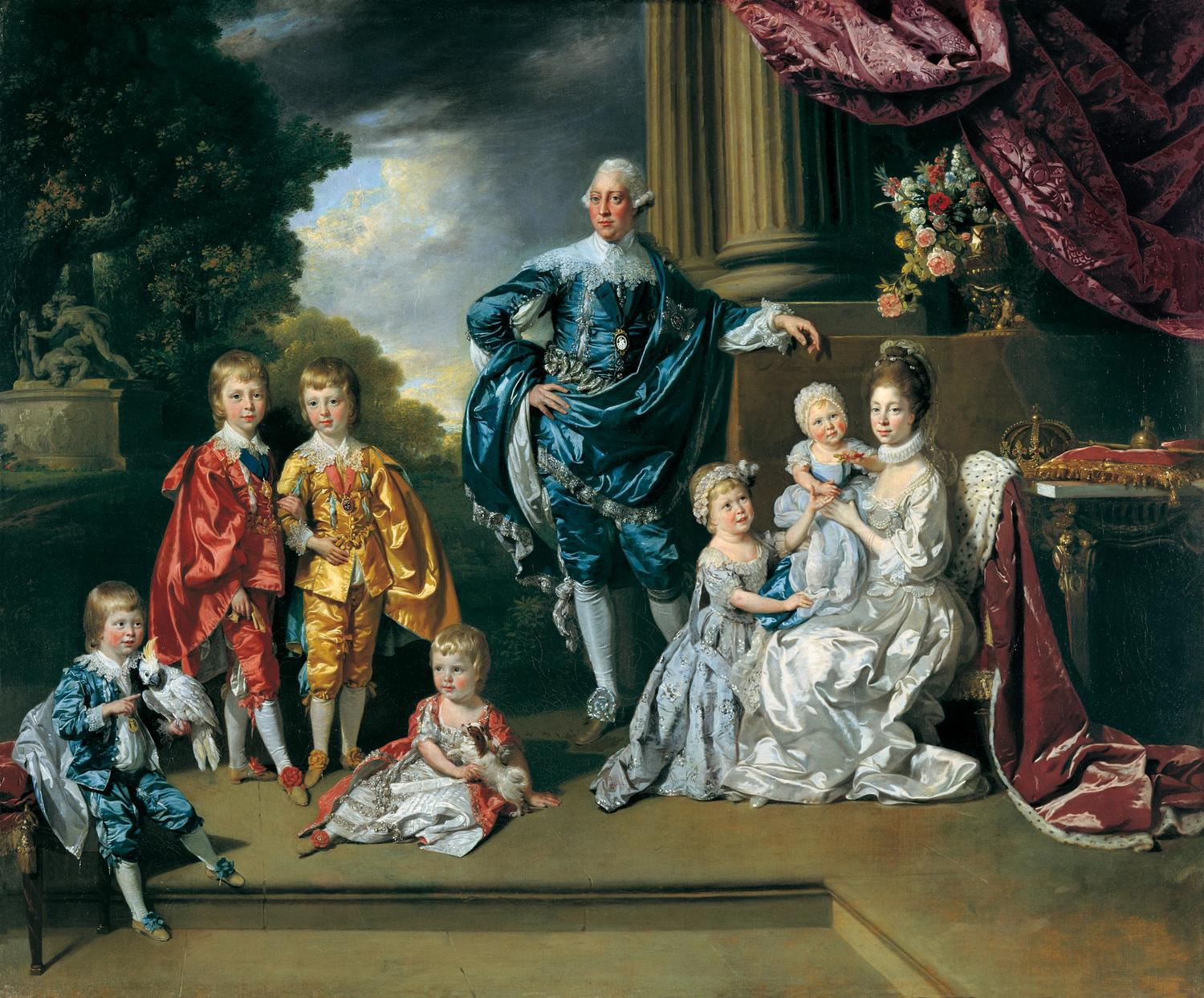
One of the many books I picked up from Hull’s YMCA shop last year was The First Four Georges by Sir John Harold Plumb. The book was originally published in 1956 but my edition was from 1966. It is, rather self-evidently, a history of the lives and reigns of King George I, King George II, King George III and King George IV, who ruled the Kingdom of Great Britain and the Kingdom of Ireland from 1714 to 1800, then the United Kingdom of Great Britain & Ireland from 1801 to 1830.
At 177 pages it is considerably shorter than most of the other books in my collection and reading it was a breeze (helped by the improvement of the weather this month allowing me to sit and read it in the orchard on the weekends).
My first knowledge of the Georgian period came from Horrible Histories, followed by David Starkey’s Monarchy and Lucy Worsley’s The First Georgians. I also occasionally dipped into the Oxford History of England. Consequently by the time I got to this short volume there was much that I did not already know: The way each father and son hated each other, the development of rival royal courts that fostered the birth of government and opposition, the emergence of the cabinet and the prime minister, the persistent threat of Jacobitism, the poor choices all four kings made in wives, the explosion of political satire and the struggles over the American colonies.
Still, this book does a good job of covering a large number of topics in a relatively small number of words. The parts new to me were the details of George III’s early life, in particular his emotional crutches regarding his senior government advisers. The stand-out piece of prose was this howler on page 100, which suggested an alternative – or at least supplementary – and unusually explicit explanation for His Majesty’s madness:
The first year of George III’s reign had been taken up almost entirely by the problem of his marriage. Animal passion and the unique sense of public duty in the need for an heir combined to make the matter one of almost neurotic, compulsive frenzy for George III. In the end he settled rashly and unwisely on Charlotte of Mecklenburg-Strelitz, a dim, formidably ugly girl. George himself regretted her plainness. Like his forbears, a sensual man, he was quickly stirred by feminine beauty but, unlike them, his high sense of morality would not allow him to indulge his fancies. Plain and undesirable as she was George III doggedly fulfilled his marital duties, and they bred child after child. On his part it was more an act of will than desire, and the strain on his already unsteady mind is thought to have been a strong contributory cause of those fits of insanity to which he became a prey.
Did George really lose his mind due to the strain of living with an ugly wife? That would have made for an interesting scene in the Alan Bennett play!
Yesterday Mark Carney made his first international trips as Prime Minister of Canada, visiting first France and then Britain. He held bilateral talks with Emmanuel Macron and Sir Keir Starmer, as well as an audience with Charles III.
The meeting with Starmer was snapped by Downing Street photographers and uploaded on Flickr. I have already copied them to Wikimedia Commons. These appear to be the first free-licence photographs of Carney’s premiership, as Canada’s own government’s policy on official copyright is some way behind Britain’s.
The conversation at Buckingham Palace had among the strangest opening exchanges I’ve heard from any of these:
Bit of a disaster today sir. My Order of Canada pin broke.
Oh.
Yes. It fell on the tarmac… which is proof that (among) our founding people (are) the British.
Do you want mine?
I’m not of that rank.
Obviously, the more substantive discussion in all cases was kept off-camera.
Lest it be forgotten that the royals have other duties, today the Palace revealed more detail about Their Majesties’ state visits to Italy and the Vatican, ending speculation that the latter would be postponed due to the Pope’s recent hospitalisation. The press release explicitly states that there will be an audience with Francis, but it tactfully does not specify where said audience will take place. It would be an interesting (if also tragic) subversion of the concept of a state visit if the host head of state was not actually in his home state at the time of the meeting.
Yesterday, following his victory in the Liberal Party’s leadership election, Mark Carney was formally appointed Prime Minister of Canada. This took place at a meeting of the Privy Council in the presence of the Governor General.
British cabinet inaugurations are not televised – instead we have to rely on merely reading the orders in council off the website later – but this gives us a good guide to what it might look like (minus the speeches and the anthem, of course): Each minister in turn gets up to take his or her oath of office, with those not already privy counsellors (including Carney himself) taking that oath as well. The Privy Council oath contains frequent acknowledgement of Charles III as King of Canada.
This being Canada, proceedings were conducted in both English and French. Given that the vocabulary of the oaths heavily favours the Romantic over the Saxon, it often sounded like the same sentences but in different accents.
At twenty-four members in all (including himself), Carney’s cabinet is considerably smaller than Trudeau’s. All the other ministers are incumbent members of the House of Commons, though only two (Dominic LeBlanc and David McGuinty) began their parliamentary careers before Trudeau became party leader. Arielle Kayabaga, a relatively junior member still in her first parliamentary term, has been appointed Leader of the Government in the House of Commons, a role which will probably be more burdensome than normal given the Prime Minister’s non-membership.
Parliament is, of course, the elephant in the room. The legislature last conducted chamber business on 17th December and was supposed to meet again on 27th January, but then was prorogued. The new session is expected to begin on 24th March. That would be the start of a new session, requiring Her Excellency to give a new speech from the throne with the government’s legislative agenda. That would be an opportunity for Carney to attempt a government “relaunch”, but this will be hampered by the parliamentary balance of power – not only the Prime Minister’s own absence, but the fact that the party as a whole has not won a majority of seats in the lower house nor a plurality of the popular vote since 2015. The new government is severely lacking in democratic authority and, with an absent leader, may well struggle to get its business through even more than Trudeau’s did.
The current (44th) Parliament is near the end of its term. Under law, the next general election can be no later than 20th October, but the Governor General can arrange one earlier at the Prime Minister’s request. The Liberals’ polling was remarkably poor in January at the point of Trudeau’s resignation announcement, but has recovered dramatically in the face of invasion threats from the United States and now, in what may be deemed Carney’s “honeymoon period” as a new leader, some polls suggest they could actually win again.
The Leader of the Opposition, Pierre Poilievre, has campaigned hard against the personality, posturing and poor performance of Justin Trudeau, embracing a populist style often likened to that of Donald Trump and associating himself with other prominent figures in that sphere of politics. Now that Trudeau himself is off the stage and Trump is Canada’s principal antagonist, this is likely to fall flat.
Supporters of Carney and opponents of Poilievre are drawing attention to the latter being a “career politician” who “never held a real job” in contrast to the former’s extensive business experience. Of course, being an elected lawmaker and a party leader is an occupation and has a skillset different to that needed for appointed roles in the state or private sector, so a having Parliament sit for an extended period without his opponent may work to the Conservatives’ advantage, as may a protracted electoral campaign. From a partisan perspective, therefore, it is in Carney’s interest for the general election to take place as quickly as possible.
Whether that is in the national interest is not certain: At a time of serious external and internal crisis, Canada has been without a functioning legislature for three months. Dissolving it now would prolong this situation for at least another month, maybe two. Then again, it’s not clear how functional that Parliament was anyway – Trudeau referred in his January speech to there being months of paralysis. Still, Carney might wish for some emergency legislation to be passed to deal with current events.
In the absence of Parliament, the Carney government must rely on ministerial powers and orders-in-council to carry out its agenda. The Prime Minister has already had himself photographedsigning some form of instruction to eliminate an unpopular tax which his predecessor had devised, though people learned in the constitution have questioned its validity – news sources are calling it an order-in-council but neither the text nor the format match this.
While I’m discussing the King’s Privy Council for Canada, indulge me a little in discussing its British counterpart: The council has recently launched a complete redesign of its website. Rather than one big PDF for each meeting, there is now a separate link for each individual order and proclamation with a search function, distinct from the list of business.
It would now be prudent to check up on the state of relations between His Majesty’s Governments of Canada and the United Kingdom, as well as the stance of Charles himself.
In his first public speech after taking office, Carney referred to Canada’s “proud British heritage”. He has already announced that he will be rapidly visiting both France and the United Kingdom in the next few days, the latter obviously involving a meeting with the monarch.
The King planted a tree in the back garden of Buckingham Palace on Tuesday to commemorateThe Queen’s Commonwealth Canopy. That it was a red maple tree did not go unnoticed. On Wednesday he held an audience for two representatives of Canada’s sentate, Gregory Peters (Usher of the Black Rod) and Raymonde Gagné (Speaker). The King presented them with a new ceremonial sword bearing his royal cypher. I note that the heraldic illustration etched onto the blade shows the Tudor crown rather than St Edward’s or the Maple Leaf version. There is also a carving of the crown at the pommel, but I can’t make out what the objects around the rim are supposed to be.
From 12th-14th March the foreign ministers of the G7 held a summit at Charlevoix, Quebec. A join statement was put out regarding the situation in Ukraine, but David Lammy remained curiously noncommittal on the US-Canada dispute. Sir Ed Davey, by contrast, has been pressing the government on this issue, as well as showing support in his characteristic way.
UPDATE (16th March)
Global News has this discussion about the mechanics of the carbon tax repeal.
Sixty-two days after Trudeau announced his intention to step down, the leadership contest for the Liberal Party of Canada concluded last night. The winner, to the surprise of almost nobody, was former bank governor Mark Carney. He garnered 85.9% of the vote, albeit on only a 37% turnout, which really shows how uninspiring the other candidates must have been.
Carney’s Wikipedia page is already describing him as “Prime Minister Designate”, though the exact date at which the Governor General will formally appoint him to that office has not yet been decided. Canada tends to do governmental transitions at a rather slower pace than Britain does, with the time between leadership elections (or indeed general elections) and ministerial appointments often being measured in weeks rather than hours, but most indications are that this one will take place unusually quickly.
That the leadership election should eschew two experienced cabinet veterans in favour of someone who isn’t even an MP is a little surprising. In the Canadian constitution, as in the British, it is not illegal for a non-Parliamentarian to be appointed to a ministerial office, but it is considered improper and, above all, politically impractical. The nearest British precedent for Carney’s situation, and even then it is a very poor one, would be the much-discussed case of Sir Alec Douglas-Home disclaiming his peerages to jump back to the Commons in 1963. A more thorough comparison of these two situations may be worth a separate article.
Accession to the premiership will, of course, give Carney the right to constitutionally advise the King of Canada, including advising him to speak on Canadian matters.
For the moment, Charles continues in a state of political limbo. Following a long-established royal tradition, he must express himself in a cryptic, plausibly-deniable way, often through subtle sartorial cues.
Today is Commonwealth Day, which includes a service at Westminster Abbey and the publication of a message by His Majesty. As the position of Head of the Commonwealth has no formal powers at all, it is not subject to “advice” from the secretariat in the way that ministers advise their monarchs, and thus this is a rare opportunity for Charles to speak his own mind. Of course, the message is meant to broadly encompass all fifty-six-and-counting members of the organisation, so is still a poor venue for a determined diatribe about any particular one of them, so any comment about the defence of Canadian sovereignty must again be inferred rather than stated outright.
Sir Keir Starmer has been similarly cautious, Tweeting about “further deepening the UK-Canada relationship together” but not saying anything specific about what that would entail. It was also announced two days ago that the Department of National Defence had commissioned a fleet of new destroyers based on a British design, but this is likely unrelated to the state of relations with the White House.
Returning to more familiar territory, I notice that where the Commonwealth Day message has been quoted inphotographic form, the coat of arms in the letterhead is now the new Timothy Noad illustration with the Tudor crown. Said illustration has also now replaced the earlier versions on the royal website as well. As I noted to Sodacan, the change was done at some point in the morning of Wednesday 5th March.
The most surprising recent development in the past few days has been the launch of another royal podcast. Whereas Camilla has been patronising The Queen’s Reading Room (of which a podcast is but one part) for some years, Charles has only just announced The King’s Music Room (probably named that way for congruence with his wife’s project), but it has already generated a lot more headlines. The format is very different from the Reading Room, being very explicitly the product of a partnership with Apple and only available to their subscribers, among which I am not.
I wonder how long it took to get those signs printed.
International affairs continue to move at a dizzying pace. Far from being able to write comprehensive essays about events, it’s as much as I can do to keep up with the photographs being uploaded.
Shortly after meeting President Trump individually, Starmer, Macron, Zelenskyy and many other heads of government met at Lancaster House for an emergency summit on the Russia-Ukraine war. This was sometimes described in the press as a European leaders meeting, but that was not strictly true as it also included Justin Trudeau, a North American.
Back in D.C., Ambassador Mandelson has already caused a minor diplomatic row by airing a view on the Trump-Zelenskyy negotiations which contradicted British government policy.
The Downing Street Flickr account uploaded many photographs of Starmer’s bilateral meeting with Trump as well as of the conference he hosted. The White House also released photographs of the former and the European Commission of the latter. This presented a challenge for me when organising the files on Wikimedia Commons. For the scenes at the White House I decided to use “Trump-Starmer bilateral” for the American photographs and “Starmer-Trump bilateral” for the British ones. For the summit I put (UK pic) and (EC pic) in brackets. Further complicating matters is that London, Brussells and D.C. all sit in different time zones so that the meta-data on different cameras are inconsistent.
Following the meeting, Zelenskyy flew to the Sandringham estate for a meeting with His Majesty. Today Trudeau did the same. The choice of Sandringham for this part was confusing for three reasons:
Sandringham is a privately-owned property, yet clearly matters of state were being conducted.
The King’s main London residence at Clarence House is only a minute’s walk from where the summit took place, whereas the journey to Sandringham is over a hundred miles.
Sandringham is normally only used by the royal family from Christmas to early February, not into March.
Sadly, no government photographs of the royal meetings were taken, onlycommercial ones. Although this could be considered a private rather than an official visit (and certainly not a state one) I was a little disappointed that the Ukrainian president was not appointed an honorary GCB.
The presence of the Prime Minister of Canada at an otherwise-European conference may seem a little strange, but of course Canada is a nation directly adjacent at the opposite end of the main adversary, as well as bordering the United States. Among the proximate causes of this summit is that the latter, long considered the keystone of any global military policy, may now me as much an antagonist as Russia is.
Given the great affection in which Canada is held by the British public, as well as the long-standing cultural and constitutional links between the United Kingdom and its former dominion, many viewers expressed disappointment that Starmer, whether in his meeting with Trump or at the subsequent summit, did not explicitly push back against Trump’s threats of both economic and actual warfare against Canada, which they interpreted as indifference to attack on a senior Commonwealth partner. That our shared monarch did not comment on the matter either was also of grave concern.
The King, of course, can only make an official statement on such a politically-charged issue on the formal advice of his Canadian government. It is yet to be confirmed if any such advice was given at today’s meeting. I can only hope that when such a statement is made, it comes with the correct coat of arms to hammer the point home!
Then again, it is also worth remembering that we are only a week from Commonwealth Day, and with it the annual Commonwealth Message. As the position of Head of the Commonwealth is one which has no formal powers even in reserve, it is one from which His Majesty can speak without ministerial advice. While a dedicated diatribe in such an instance would be inappropriate, a coded reference or two would not go amiss.


_2025-03-02-14-14.jpg)
 Robin Stanley Taylor
.jpg)