
Black Rod dealt with denser traffic.
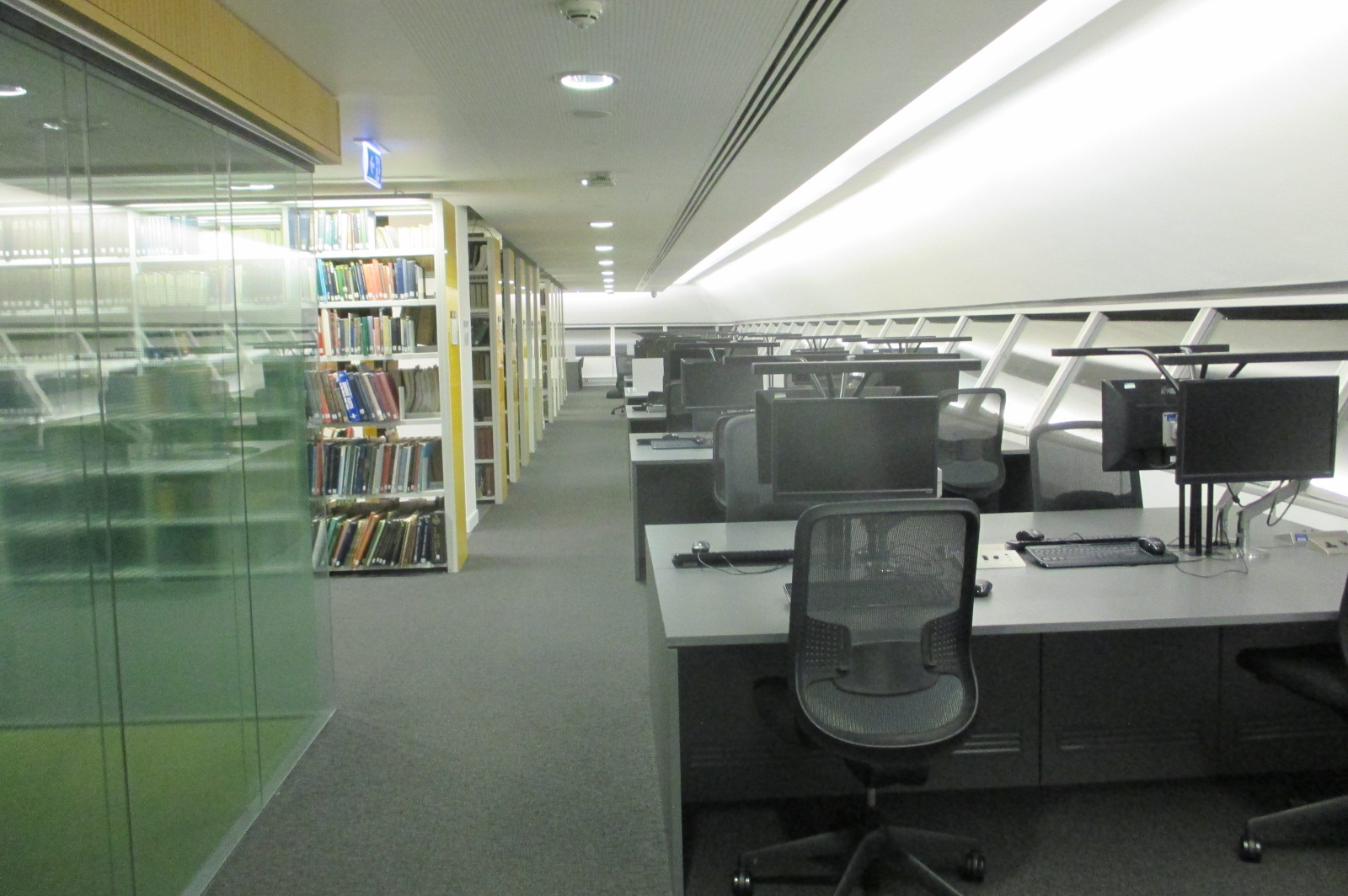
Over the last few years, in which I have moved from secondary to tertiary education, I have become ever more aware of those unusual transitional times between academic terms. There was once a clear distinction: One would be at school while everyone else was there, and all would be at work according to a pre-planned schedule, otherwise everyone would be at home. Nowadays there tends to be an odd interlayer where it is possible to physically inhabit the place of education without there actually being any formal education going on.
My first glimpses at this occurred on a few occasions when I would be part of a school trip with small groups of other pupils. The destinations were sometimes a long distance away, requiring us to set off in the early morning before everybody else arrived and return after they had left. That meant we saw the buildings in a different light – quite literally, in some cases. Rather than bustling with students, the internal spaces would be populated only by a few cleaning staff. Corridors might be in pitch darkness, and chairs would be stacked on top of tables. The territory was at once familiar and alien. GCSE study leave – for many the end of secondary education – amplified this sensation, as one’s self and one’s own classmates could be outside of the regular timetable even while they could hear the lower years going about their normal business. At certain points it almost felt like being a ghost of an earlier time who haunted future generations.
At Wilberforce I, being a student governor, sometimes had to be on site at unusual hours for meetings. This added a new component to the oddity, for not only did the space feel different but there would be different people present also. A further change occurred whenever special revision sessions would be held during holiday periods – at which we would have to go in through the delivery gate because the proper entrance was closed.
Now I that I am at university, I sometimes wonder if the normal and abnormal have swapped around. Of the fifty-two weeks in a calendar year, only twenty-four are used for teaching. Further, the exam period and the settling-in week on either side of a lengthy summer break mean that over four months have passed since I last attended a lecture. The winter break is much smaller at around six weeks from the middle of December to the end of January. One major difference between school and university is that one would rarely attend the former at evenings or weekends. These short times exhibit the heterotopic effect in microcosm, especially if darkness has fallen in the sky, though often there is sufficient inertia to prevent the hubbub of activity from wholly disappearing in the brief time before it is summoned back.
A particularly strong indicator is the state of the institution’s intranet services, be they Virtual Learning Environments, file-sharing services or even just internal email. During ordinary times they assault their members with a blizzard of notices, notifications, announcements and communiques. During the odd times they can shut down very suddenly and remain static for weeks or even months on end. Right now I am noticing a sudden burst of activity on my university’s applications after a long period of silence, indicating that normality is soon to return. Such a phenomenon is akin to the first buds of a spring and the melting of long-established ice. The resumption of normal affairs is often more disruptive to the spirit than their cessation, for by then one can have become accustomed to having free roam in a wide empty realm, and thus struggle to adjust back to structured interactions with masses of others.
Fear not, for the cycle is deceptively fast, and it is not long before the liberty of loneliness is in full force again.

 Robin Stanley Taylor