Trump at Windsor and Chequers

The 47th President of the United States has now completed his much-anticipated second state visit to Britain. Here are my observations on it.

Time and Place

This time the state visit was at Windsor Castle instead of Buckingham Palace. Trump himself said that this was because Windsor was better. While most (including the royals themselves) would agree that Windsor is the superior setting by most metrics, the real reason for the change of location is that Buckingham Palace is undergoing major renovations so won’t be available for these kinds of events for some time. Trump had previously visited the castle on his Official (not state) visit in 2018.

There had been some speculation about the idea of the second state visit being held in Scotland rather than England. The King’s letter to him in February even speculated he could come to Balmoral, but this did not come to pass. Trump did make a visit to Scotland this summer while the monarch was also there, but it was a private rather than a political visit and the two men did not meet.

The timing of the visit was a little tight, as it was sandwiched between the Duchess of Kent’s funeral and the Queen’s Reading Room Festival. The Duke & Duchess of Edinburgh were not present due to clashing commitments — commemorating Independence Day in Papua New Guinea, then representing Britain at a business summit in Japan.

Ceremony and Security

What made this visit a little surreal is that, due to the intense unpopularity of Donald Trump among most of the British population and the scale of protests against him, this was the paradoxical phenomenon of a state visit done almost in secret. There were no “public-facing” events, with the foreign visitor instead being flown in his own presidential helicopter directly from Stansted airport to his ambassador’s residence, then to Windsor Castle, then to Chequers, then to Stansted again, thus avoiding the public roads (although his motorcade was still driven there without him in it).

What particularly stood out here was the carriage ride: For the state visitor to be pulled by horse through the streets of Windsor (or the Mall in Westminster) is a standard part of the tradition — witness Macron two months ago, the sovereigns of Japan and Qatar last year, and even Vladimir Putin in 2003 — but the enormous additional security requirements for American leaders had previously rendered this impractical. The solution here was for the carriage ride, like everything else, to happen entirely within the castle grounds. There were still soldiers lining the route, but no cheers from adoring crowds (or, more likely, jeers from abhorring crowds instead). The emptiness of the background gave the scene a visual quality reminiscent of much of the COVID years, especially Prince Philip’s funeral.

Other Parts

The First Lady had a tour of the Windsor Castle library with Queen Camilla, followed by a Scouts Squirrels event with the Princess of Wales. Her facial expressions throughout these events are noticeably different to when she is pictured with her husband.

Attire

As the state banquet was at Windsor, naturally the royal men were wearing the Windsor uniform while everyone else wore white tie. The King & Queen wore the sash of the Order of the Garter, as did the Duke & Duchess of Gloucester, the Prince of Wales and the Princess Royal, while the Princess of Wales and Sir Tim Laurence wore that of the Royal Victorian Order. Trump’s chest was noticeable for its lack of adornment, which is a little odd as he seems exactly the sort of person who would most covet medals and sashes. There was no exchange of honours between the two heads of state, which one would normally expect to see here if it hadn’t been done already.

I also spotted that, when first meeting each other, the sovereign and the president both wore ties the same colour as the hats worn by their respective consorts, which was a nice touch.

Music

We had copious renditions of God Save The King and The Star-Spangled Banner. I was a little surprised we never heard the presidency’s own anthem Hail to the Chief. Protocol aside, it would have been more artistically-apposite to have that one paired with the royal anthem while the national anthem was paired with something like Rule, Britannia!

Progress and Politics

Having completed his Dignified stay at Windsor, the President then moved to Chequers for the Efficient part of the visit. The British and American governments produced a Memorandum of Understanding regarding cooperation on advanced information technologies and, most intriguingly, nuclear energy. That last one is something that Britain has direly needed for a while, though the other parts have yet to fully escape the realm of folly.

Photographs

One of the main perks, for me at least, of having a US Government visit to the UK is that there will be a series of official photographs released into the public domain. I was a little disappointed on this occasion to see that the White House Flickr account didn’t publish any photographs of the visit, while the State Department only published one of Marco Rubio meeting Yvette Cooper on the runway. The collection on Wikimedia Commons is mainly made up of images found on White House Twitter and Instagram feeds. The White House YouTube channel also uploaded some nice long videos of the key events (albeit with a banner over much of the screen). There is less clarity on these platforms as to the copyright status, and it may later turn out that they are commercial photographs rather than government ones, in which case they will have to be removed. The Downing Street Flickr account published three dozen photographs of the event at Chequers but the only one from Windsor was the group shot shown above. This means there are no free photographs of the state dinner itself, so these will have to be sourced from screencaps of the aforementioned videos.

The Future

Already there have been further news articles hinting that Trump intends to invite Charles & Camilla to Washington D.C. next year, on a reciprocal state visit coinciding with the 250th anniversary of the United States’ independence. That should be interesting to see!

UPDATE (22nd September)

The White House Flickr account has now released an album of the state banquet with 27 photographs at time of typing, as well as 83 of the arrival ceremony and 48 of the Chequers conference, which sure makes my life a lot easier.

The Premier and the Palace

Dammit, Mark, look forward!

Yesterday Mark Carney made his first international trips as Prime Minister of Canada, visiting first France and then Britain. He held bilateral talks with Emmanuel Macron and Sir Keir Starmer, as well as an audience with Charles III.

The meeting with Starmer was snapped by Downing Street photographers and uploaded on Flickr. I have already copied them to Wikimedia Commons. These appear to be the first free-licence photographs of Carney’s premiership, as Canada’s own government’s policy on official copyright is some way behind Britain’s.

The conversation at Buckingham Palace had among the strangest opening exchanges I’ve heard from any of these:

  • Bit of a disaster today sir. My Order of Canada pin broke.
  • Oh.
  • Yes. It fell on the tarmac… which is proof that (among) our founding people (are) the British.
  • Do you want mine?
  • I’m not of that rank.

Obviously, the more substantive discussion in all cases was kept off-camera.

Lest it be forgotten that the royals have other duties, today the Palace revealed more detail about Their Majesties’ state visits to Italy and the Vatican, ending speculation that the latter would be postponed due to the Pope’s recent hospitalisation. The press release explicitly states that there will be an audience with Francis, but it tactfully does not specify where said audience will take place. It would be an interesting (if also tragic) subversion of the concept of a state visit if the host head of state was not actually in his home state at the time of the meeting.


Update Regarding Government Photography

Over the course of last year I and other contributors furnished Wikimedia Commons with a large number of photographs taken from the Number 10 Flickr account.

These uploads were legally justified under the declaration on the account’s About page which said all photographs were released under the Open Government Licence. After enough photographs had been uploaded this way, a dedicated licence tag was created for it.

Late last year a deletion request was raised over a shot I had uploaded of Prince Louis of Wales at Trooping the Colour. This let to a rather long and complicated discussion over the validity of our interpretation of the government’s many varied and often contradictory statements regarding its intellectual property.

Eventually someone raised a Freedom of Information request over the matter. The Cabinet Office replied, confirming that the OGL was the licence applicable.

I am glad that this dispute has been resolved with reasonable speed and look forward to harvesting a great many more such photographs in the future. I only wish C. Smith had worded the question a little more broadly so it covered all departments of His Majesty’s Government instead of just one.

Public Domain Day 2025

As another December concludes, another batch of books, films, songs and paintings goes out of copyright.

This year’s categories are works in Britain (and countries with similar laws) the last of whose authors died in 1954, and works from the United States which were first published in 1929.

Last year the jewel of the public domain crown was Steamboat Willie, the first film to feature Mickey & Minnie Mouse. This year it is The Karnival Kid, the first film in which the mouse speaks. Also in the 1929 United States category are the first Marx Brothers film The Cocoanauts and the final Buster Keaton film Spite Marriage. Sherlock Holmes and Fu Manchu also make their first appearances in sound films.

Annoyingly there are some noteworthy works from that year originating outside the United States, which are now public domain there but will remain copyrighted in their home countries for some decades, such as Sir Alfred Hitchcock’s Blackmail and Hergé’s early Tintin cartoons. We do, however, get the first cartoons of Popeye the Sailor Man and Tarzan. We also get the surprisingly-old song Singin’ in the Rain.

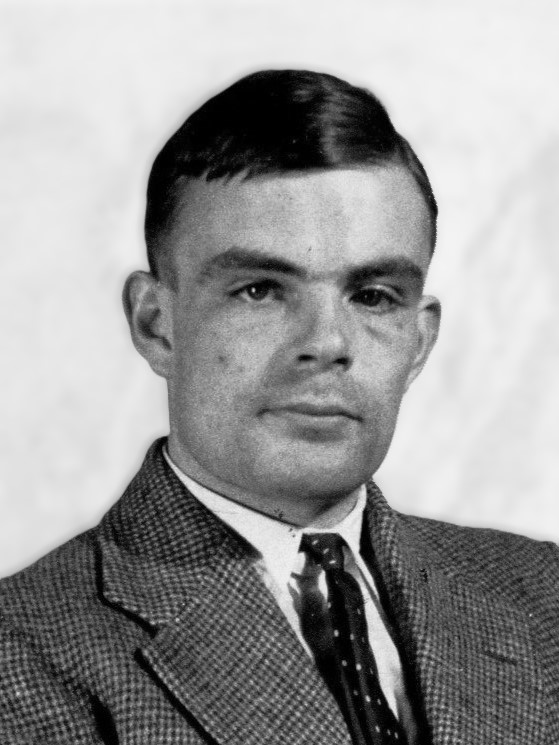
Relatively few prominent British authors entered the public domain this year, the most recognisable ones being James Hilton and Francis Brett Young. Also dying that year was the computer scientist Alan Turing, whose most famous publication was his namesake mathematical proof. Of course, many of these works will conversely not be public domain in the United States, so their proliferation over the internet will still be limited.

Photographs of the State Opening

One of the recurrent themes of this blog is the inconsistency of licensing in British governmental and parliamentary photographs. Without rehearsing the entire story again, I will note that yesterday I made a wonderful discovery:

Since the day of the event itself I had thought that the only photograph of the 2024 State Opening of Parliament to be released under a free licence was this one of His Majesty in procession through the royal gallery. It is fairly tightly framed, with only the middle ground in focus so that Charles and the page boys to his flanks appear a little too sharp while the Duke of Norfolk in front and the Marchioness of Lansdowne behind are entirely blurred.

The House of Lords Flickr account had a generous album of high quality shots, but these were released under a Non-Commercial and No Derivatives licence, rendering them useless for Wikimedia Commons*. When this happened last year I was able to get around it by using those which had been re-issued under a looser licence by the Oireachtas, although some other Wikipedians challenged the legitimacy of these. No such republication existed this time around.

Happily, yesterday when strolling through the relevant category on Wikimedia Commons I came across a second photograph of the event, taken from inside the upper chamber and showing the speech being read. The source was given as parliament.assetbank-server.com, and the link revealed a page from what seemed to be an official Parliament-owned website with twenty-eight of the forty-five photographs in the Flickr album, but this time very explicitly licensed under Attribution 3.0 Unported (CC BY 3.0), which meant they could be used on Wikimedia Commons. Of course, I took the opportunity offered by the handy “DOWNLOAD ALL AS ZIP” button to transfer the lot of them. I had to give new names to all of them as the file originals were mostly gibberish and I noticed that the metadata were inconsistent as well (some had timestamps and others didn’t, some were taken by Roger Harris and others by Annabel Moeller). Some more editing may well be required in future to rectify this.

Though I am reluctant to look this gift horse in the mouth, I am a little perplexed by the existence of this website, which bears the UK Parliament logo but is not at the parliament.uk domain, and whose individual pages can be seen freely once you have the direct link but which cannot be navigated without a login. It could be the case that the majority – or indeed entirety – of the recent House of Lords photograph collection is actually released under a usable licence and these pages would prove it, if only we ever manage to find them.

*The irritating thing about photographing licensing in a parliamentary context is that one must continually differentiate between Wikimedia Commons, Creative Commons and the House of Commons. The presence of Their Majesties in these images means that “royalty-free” isn’t very practical either.

Liberating a musical relic

In discussions of artistic and intellectual property it is often remarked that “There is nothing new under the sun.” in reference to the frequency with which works under copyright turn out themselves to have been copied or derived from older material which may or may not have been public domain already – such as popular film scores taking cues from classical compositions.

One example is Howard Shore’s In Dreams, part of his soundtrack to The Fellowship of the Ring. The melody, especially the first seven notes, came from the 1901 hymn This Is My Father’s World.

The lyrics were written by Presbyterian minister Maltie Babcock and set to music by composer Franklin Sheppard. Despite the musical similarity, thematically they are entirely different: Babcock’s lyrics are mainly about the beauty of natural creation, with a few explicit references to scripture, and obviously multiple references to the Christian deity. Shore’s song, in common with everything else in Jackson’s films, avoids any direct mention of Eru Ilúvatar. Principally the song seems to be about perseverance through adversity and the emotional pain of separation from close friends. Given how the story ends, it could be interpreted as anticipating reunification after death. That the song should allude to spiritual principles without actually naming a real religion is in keeping with Tolkien’s conception of the book (albeit he was Catholic not Presbyterian).

This was the favourite childhood church song of prominent atheist Penn Jillette, who even parodied it for the opening them of his podcast. Personally I only discovered the hymn when searching backwards from the FOTR score, and on further investigation it does not seem to have made much of a cultural penetration outside North America. Searching for it on YouTube mainly brings up American religious schools.

Given the song’s publication and Babcock’s death both occurred in 1901, with Sheppard dying in 1930, the music and lyrics have both been in the public domain for some time, so I was a little surprised to see that Wikimedia Commons did not have an audio file. I set about creating one, based on a photograph they did have of a printout of the sheet music. It had been a long time since last I used MuseScore, but in about an hour I had relearned enough to copy out the page, render it as a sound file and upload it. Obviously mine is instrumental only as MuseScore does not have a singing function and I did not wish to record my own voice for this.

EXTERNAL LINKS

  • This Is My Father’s World, performed by pupils of Fountainview Academy, British Columbia. They really seem to be leaning into the LOTR comparisons with the rowboats and the fallen leaves.
  • Extract from LOTR making-of documentary, showing the recording of In Dreams.
  • Rendition by Sean Holshouser. Twelve years and forty videos later (many of them being actual Christian songs), this remains by far his most popular.

Public Domain Day 2024

Public Domain Day this year is a little different: Relatively few artists of interest (to me, at least) have been released from copyright in Britain (probably the most culturally significant is the poet Dylan Thomas), but there have been major happenings overseas.

J. R. R. Tolkien died on 2 September 1973, so The Hobbit and The Lord of the Rings are set free today in countries with copyright terms of fifty years – most notably New Zealand, where Sir Peter Jackson adapted them for film. This might also have been the case in Canada, but the law was changed with effect from the end of 2022 to extend Canada’s posthumous copyright duration from fifty to seventy years. Tolkien’s works were thus among the first cohort to be delayed in their release. Of course, this only applies to works published in J. R. R.’s own lifetime – the great many posthumous works which were “edited” by his son Christopher (such as The Silmarillion and The Children of Húrin) will likely remain copyrighted until 2091 and those after Christopher’s death edited by Brian Sibley (e.g. The Fall of Númenor) could stay well into the twenty-second century (that’s before we even consider any other significant involved persons who may wish to claim co-authorship credit). The absurdity of this situation is compounded when one remembers that John Tolkien originally wrote some of these story ideas as early as the First World War.

The other big IP-related news story this year is the very long-awaited expiration of the copyright on Steamboat Willie, the 1928 cartoon film in which Mickey and Minnie Mouse made their first proper appearances. This film is now arguably less famous as an artistic work than as a symbol of copyright disputes, with the copyright term having been extended multiple times by acts of the United States Congress. From 2007 onwards Disney has been using an excerpt of the film as part of its production logo, which many perceived as a shift in strategy to have the image protected as a trademark once their luck with copyright extensions ran out. The Wikipedia page for the film has undergone a vast series of edits in the past twenty-four hours as multiple screenshots and stills are newly available on Wikimedia Commons.

Public Domain Day 2023

Compared to previous years, the delivery of books and other media into the public domain this year – from authors who died in 1952 – is a little disappointing.

The last of the Sherlock Holmes canon entered the public domain in the United States, having already long lost its copyright in Britain, but the infamous test case Steamboat Willie is still one more year off.

The one book that stuck out to me was The Daughter of Time (1951) by Josephine Tey. It is a murder mystery novel, but instead of contemporary crimes her policeman investigates the murder of the Princes in the Tower in 1483 and comes to the conclusion that Richard III was innocent. Although a work of fiction and not a textbook, Fey’s valediction provides an insightful analysis of the interaction between fact, legend and propaganda, as well as a satire on many other types of historical literature.

All that is from the Wikipedia page, for I have not yet read the book itself. That said, I have read Philippa Langley’s The King’s Grave and attended many virtual lectures by the Richard III Society. Although the society and the wider Ricardian movement predate Fey’s book, they were of negligible size or influence by the time of its publication and many in the movement today are quite explicit about the role it played to revive academic research into the maligned monarch as well as shift public opinion.

Now that copyright has expired, I hope that LibriVox and similar organisations will not tarry in bringing out an audiobook, failing which I will search for a physical copy in my local libraries.

Public Domain Day 2021

Tarzan & the Golden Lion, illustrated in 1922 by James Allen St. John

Another year has turned, and another batch of old material has emerged from copyright.

Edgar Rice Burroughs

Born in Chicago in 1875, Burroughs is principally famous for two stories about people removed from their environment of birth: Tarzan, the British noble firstborn adopted by an ape, and John Carter, a Confederate veteran who finds himself on Mars.

George Bernard Shaw

Shaw was forthright in many controversial campaigns, a presence among the highest echelons of society and an active political force well into his tenth decade, but I can’t help but think that nowadays a lot of his works – especially Pygmalion and Arms and the Man – are now remembered more as the basis for puns and parodies than for their actual contents.

F. Scott Fitzgerald

Fitzgerald actually died eighty years ago, but the intricacies of US copyright law mean that The Great Gatsby only now enters the public domain. Long used as an educational staple, a landmark of social commentary and the ill-judged inspiration for lavish house parties, this novel is now available for anybody’s interpretation, though maybe Flash is best avoided.

Eric Arthur Blair, AKA George Orwell

The giant of twentieth century political literature, Orwell first became known to me through the school English curriculum circa 2011. In that spring we were tasked to write – and then perform to the class – a speech on what we would consign to Room 101. I was ranked first in class for my condemnation of the caravan. While that was obviously derived more from the television series than from Orwell’s own writing, it still taught us about him if indirectly. In the early summer we analysed his essay Shooting the Elephant and I recall in the end of year examination (not sure if it was the real one or the mock) one of the passages included was an extract from chapter 3 of Nineteen Eighty-Four, in which Winston coughs a lot while performing the physical jerks. At that autumn’s prize-giving event I was named best in year for both sciences and humanities and my reward included two book tokens. I distinctly remember that Nineteen Eighty-Four was one the works I most wanted to buy with them, the other being The God Delusion by Richard Dawkins*. It is unclear exactly when I got around to buying and reading them (probably Whitsun 2012 is the late limit), but digging through old email correspondence with a classmate shows that in November I discovered and watched Michael Radford’s 1984 film adaptation. This was a source of unintentional mirth at the time as we noticed two of our history teachers interacting in what we read to be a mildly amorous manner while bearing a vague physical resemblance to John Hurt and Suzanna Hamilton. I also recall a different classmate ardently recommending that I read Animal Farm, which I did at the same time, though I do not recall how I came about my copy of that book nor where it currently resides.

At some point during these years I also found in my school’s library a copy of Homage to Catalonia, the tale of Orwell’s experience fighting for the POUM in the Spanish Civil War. The book was about forty years old** and I could barely turn a page without it breaking off in my hand. The librarian intervened several times with spine tape but eventually decided that the book was beyond rescue and decided to withdraw it from display. She placed it on a special shelf near her desk with a red ticket inside reserving it for me, on the understanding that it would stay there until I had finished it, after which she would throw it out (or give it to me permanently, it seems) and buy a new one.***

Orwell has particular relevance to this entry because period in which I read most of his works was the time of SOPA, PIPA, CISPA and ACTA in the United States, alongside the superinjunction controversies at home. It was also the time when I became engaged in various online “reviewtainment” makers (SF Debris, Red Letter Media, Trilbee et al), as well as various fandom communities, whose existence such bills would have threatened. One consequence I started looking up author death dates to commence mental countdowns to when various bits of media would enter the public domain, and Orwell’s works were especially prominent in this – his writing being so much centred around ideas of the control of information and knowledge.

The question now arises of what can be done to take advantage of his works’ new status, and one possible answer has occurred to me: Nineteen Eighty-Four includes a very sizeable book-within-a-book called The Theory and Practice of Oligarchical Collectivism, ascribed Brotherhood-leader Emmanuel Goldstein. Winston Smith reads the first chapter “Ignorance is Strength” and the third chapter “War is Peace”, but the Thought Police arrest him before he – and therefore we – can get a good look at the second.

I don’t really do competitions on this blog, since I have neither a large enough circulation nor any good prizes to give away, but if there are any teachers reading this I recommend an essay challenge for your students, which technically is also a fanfiction opportunity – tell me why freedom is slavery.

Further Reading:

2021 in Public Domain

*Somewhat ironically, that year’s prize also included a quatercentenary edition of the King James Bible.

**The latest reprint listed on its now-defunct copyright page was 1971, and the only checkout date stamped on the card affixed to the first page was 10th October 2011. Presumably I was the one taking it home on that date, for clearly nobody else had touched the book in a long time, but I may have been reading it within the library before then.

***The next year I took home a 1969 print of J. P. Nettl’s The Soviet Achievement, which I held together with some of my father’s aluminium duct tape. In May and June 2014 she held a clearing sale for a lot more books. I spent 25p on Communist Political Systems: An Introduction (Printed in 1988) by Stephen White and 10p on Structure and Change in Modern Britain (Printed in 1981) by Trevor Noble. The latter two showed no damage except their spines fading in the sunlight, but perhaps no love either as their checkout cards were blank. White’s book I found engaging enough to finish but Noble’s was so dull that I stopped with my bookmark still lodged at page 53 of 416, having found that just reading the blurb aloud would see my classmates drifting off to sleep.