Pondering Thatcher’s Letterheads

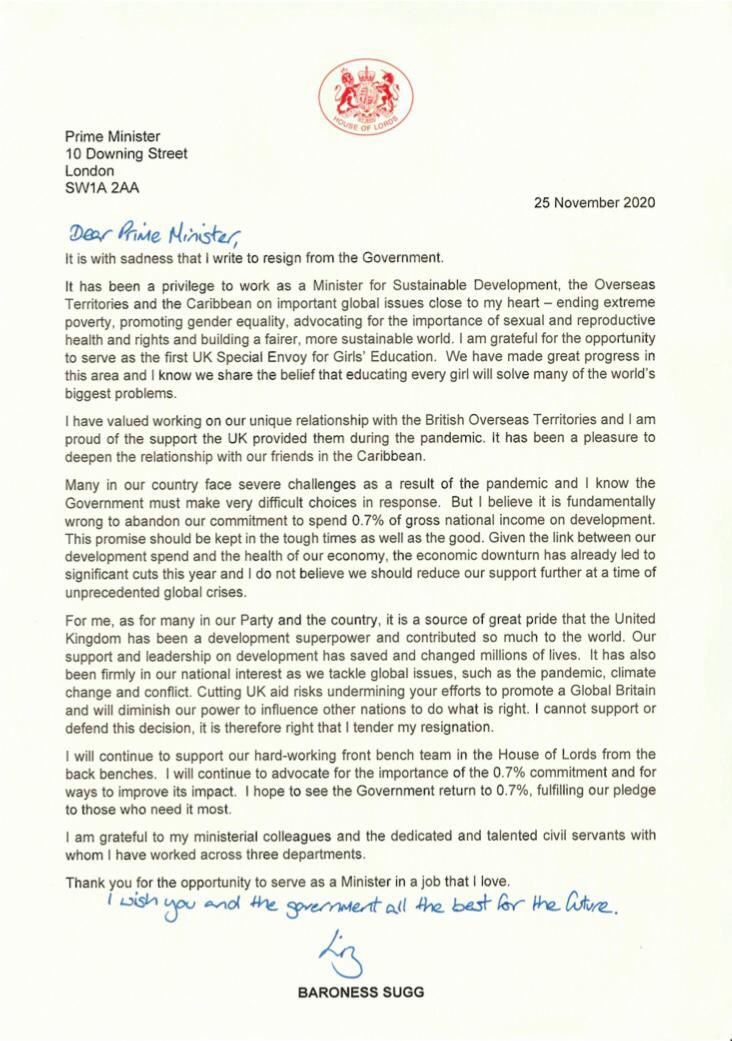
About a decade ago when I first got interested in heraldry, I came across this article in The Independent by Ben Summers and Michael Streeter, dating all the way back to 24th March 1997, early in that year’s general election campaign*. It concerned the use of the British royal arms by the Baroness Thatcher on her official letters.

The wording of the article is a little confusing, and made harder by the absence of any images (unsurprising given the age): It alleges that Lady Thatcher abandoned the use of her own coat of arms for her letters and started using instead the royal arms, in the lesser format favoured by various government departments.

Thatcher’s own heraldic achievement

The journalists interviewed both Black Rod (Sir Edward Jones) who awkwardly declined to comment and Somerset Herald (Thomas Woodcock, later Garter King of Arms) who dismissed a suggestion (made by whom it’s not clear) that Companions of the Garter are specially entitled to use the royal arms in this way.

Government arms as used at the time

The article contrasts Thatcher to Britain’s two other living former premiers at the time – “Sir Edward Heath uses a simple House of Commons portcullis and a plain typeface, while Lord Callaghan simply types his name beside the House of Lords logo.” – and the main thrust is the piece is to play up the public perception of the Iron Lady as not being able to leave government behind and as believing herself as great as the reigning monarch.

Trouble is, I think this is a bit of a reach, given this sentence: “The normal House of Lords logo used by peers places the Arms inside an ellipse, together with the words “House of Lords”, making clear the state body to which the use of the Arms relates.”

With one hand Streeter & Summers allege delusions of grandeur based on Thatcher’s supposed use of the governmental coat of arms instead of the House of Lords logo, but with the other they tacitly admit that the two devices are near-identical anyway! While the page itself does not have any photographs, I have been able to find a handful of examples online as letters by public statesmen often become collectable items sold at auction. The impression I get is that, while letterheads for members of the House of Commons have favoured the crowned portcullis badge** since many decades before Thatcher’s premiership, those for members of the House of Lords at that time used the royal arms in an oval with “House of Lords” typed underneath. Letterheads for government ministers at that time followed the same pattern – the royal arms in an oval with the department name beneath – although there were some rare examples of ministries already using the more modern corporate-style logos that would become characteristic of the New Labour years.

If the authors meant that Thatcher was using the royal arms in her private correspondence – i.e. not related to her parliamentary duties – then they might have had a point, but that is not made clear. I would also note that in all the photographs I’ve found so far, none show peers using their private coats of arms in the headers – a shame, really, as that is one of the main reasons to acquire a coat of arms in the first place.

This could be an example of what the article alleges – albeit it’s from seven years too late.

I’ve tried searching for any documentation of the actual rules around the use of parliamentary letterheads. I found this page for the House of Commons but nothing so far for the Lords.

Here I have collated a series of examples of letters written by Lady Thatcher and other British prime ministers in their legislative (rather than executive) capacities.

Margaret Thatcher

  • 1966-04-01: Letter to Mr & Mrs Bland, with no personal letterhead but logo in top left corner, featuring even lesser royal arms in a portrait oval with “HOUSE OF COMMONS” arched above it.
  • 1971-10-27: Letter to illegible recipient with green portcullis in top centre and “THE RT. HON. MARGARET THATCHER M.P.” above it.
  • 1976-10-28: Letter to Misses Brett and Watson, with blue portcullis in top left corner and “The Rt. Hon. Mrs. Margaret Thatcher, M.P.” along the top.
  • 1991-12-09: Rear page of a letter to Ed Koch (former Mayor of New York City), with portcullis in blue in top left corner and “THE RT. HON. MARGARET THATCHER, O.M., F.R.S, M.P.” along the top, notable because she is no longer called “Mrs” but not styled “Lady” either despite Denis’s baronetcy.
  • 1991-12-12: Letter to E. T. Freeborough with same layout.
  • 1995-03-01: Letter to Rick Pallack with lesser royal arms (sans oval) in top left corner and “MARGARET, THE LADY THATCHER, O.M., P.C., F.R.S.” along the head.
  • 2003-??-??: Message thanking an unidentified well-wisher for his condolences after the death of Sir Denis, featuring the House of Lords logo as described with “Margaret Thatcher” underneath it and “THE RT. HON. THE BARONESS THATCHER, L.G., O.M., F.R.S.” in the footer. “P.C.” is omitted for some reason.

James Callaghan

  • 1990-09-16: Letter to Andy Wood with House of Lords logo in red and “THE RT. HON. LORD CALLAGHAN OF CARDIFF KG” above it in black. “PC” omitted here too.

Harold Wilson

  • 1973-10-30: Letter to Geoffrey Davis, with House of Commons portcullis in top centre and “From: The Rt. Hon. Harold Wilson, OBE, FRS, MP.” above, all in green.
  • 1994-05-??: Letter to Lynda Winston, with House of Lords logo in top centre and “The Rt. Hon. The Lord Wilson of Rievaulx KG, OBE, FRS.”

Alec Douglas-Home

  • 1970-07-29: Letter to Klaus Kuhneumund, with oval House of Commons logo and “From: The Rt. Hon. Sir Alec Douglas-Home, K.T., M.P.” above, all in subtly inconsistent shades of blue.
  • 19??-04-17: Letter to the Marquess of Lansdowne, with House of Lords logo in top centre and “From: LORD HOME OF THE HIRSEL K.T.” above it. “P.C., J.P., D.L.” left out.

Harold Macmillan

  • 1978-02-22: Letter to Harold Smith, with “From the Rt. Hon. Harold Macmillan” along the top, with “OM FRS” omitted.. There is no parliamentary logo at all as he was not a member of either house at this time.

Edward Heath

  • 1984-05-10: Letter to Felipe González, with portcullis in top left corner and “The Rt. Hon. Edward Heath, M.B.E., M.P.” along the top, all in blue.
  • 1991-02-13: Letter from Heath’s private secretary Robert Vaudry to Sean Bryson with portcullis in top centre and “From: The Private Office of The Rt Hon Edward Heath MBE MP” above it, all in black.
  • 2000-09-18: Letter to the Lady Harmar-Nicholls, with portcullis in top left corner and “The Rt. Hon. Sir Edward Heath, K.G., M.B.E., M.P.” along the top, all in blue.

More recent examples of backbench peers using the royal arms

On a semi-related note, I am still searching for evidence of armorial bearings held by Wilbert Awdry (who, incidentally, died just three days before that Thatcher article was published). Recently I have found some digital uploads of his letterheads, which feature a monochrome photograph of a steam locomotive, identified by the caption as Locomotive No.1 of the Sydney Railway Company. If he wouldn’t use a coat of arms there, where would he?

*The fifty-first Parliament of the United Kingdom was prorogued on Friday 21st March but would not be dissolved until Tuesday 8th April, with polling day on Thursday 1st May.

UPDATE (21st July)

Barely a day after I posted this, technology lawyer and academic Kendra Albert and software engineer Morry Kolman launched Heavyweight, an online letterhead composition tool which allows one to mimic the style of a legal firm. These letterheads are purely textual, so sadly no coats of arms to review.

On Admirals and Arundells

The Queen turned seventy-eight today. That’s not traditionally considered one of the big birthdays and so commemorations have been fairly muted. The most significant announcement was her appointment as Vice-Admiral of the United Kingdom.

The Vice-Admiral is the deputy to the Lord High Admiral, and it may be prudent to recap the outline of that office first: The Lord High Admiral is the ultimate head (originally operational, but later just ceremonial) of the Royal Navy. Appointments have been made since the late fourteenth century in the Kingdoms of England and Scotland, then later Great Britain. Occasionally in Stuart times, and almost permanently from Anne’s reign onwards, the singular office was not filled and instead the post was instead put “In Commission” – i.e. delegated to the Board of Admiralty with the First Lord of the Admiralty (a cabinet minister) as its chair. The creation of the modern Ministry of Defence in 1964 saw the Board with its First Lord dissolved and the title of Lord High Admiral resumed in the person of Queen Elizabeth II. In 2011, on his ninetieth birthday, she conferred the office upon her husband Philip. The status of the office following his death in 2021 is a little ambiguous but the general assumption is that it defaulted back to the sovereign and now resides in King Charles III. I had wondered if Vice-Admiral Sir Timothy Laurence would be appointed on his seventieth birthday this March, but this did not occur. The King perhaps intends to retain the top office for himself and have his wife as runner-up.

The Queen is both the first female and the first royal holder of the office of Vice-Admiral, whose previous recipients have all been career navy men (and indeed tended to hold the actual rank Full Admiral). Her Majesty’s most recent predecessor was the Lord Boyce, who was appointed in 2021 and died in 2022.

Below the Vice-Admiral is another deputy, the Rear-Admiral. This office is currently held by Sir Gordon General, a General in the Royal Marines who was formerly Vice-Chief of the Defence Staff and also served as Lord High Constable at the 2023 coronation.

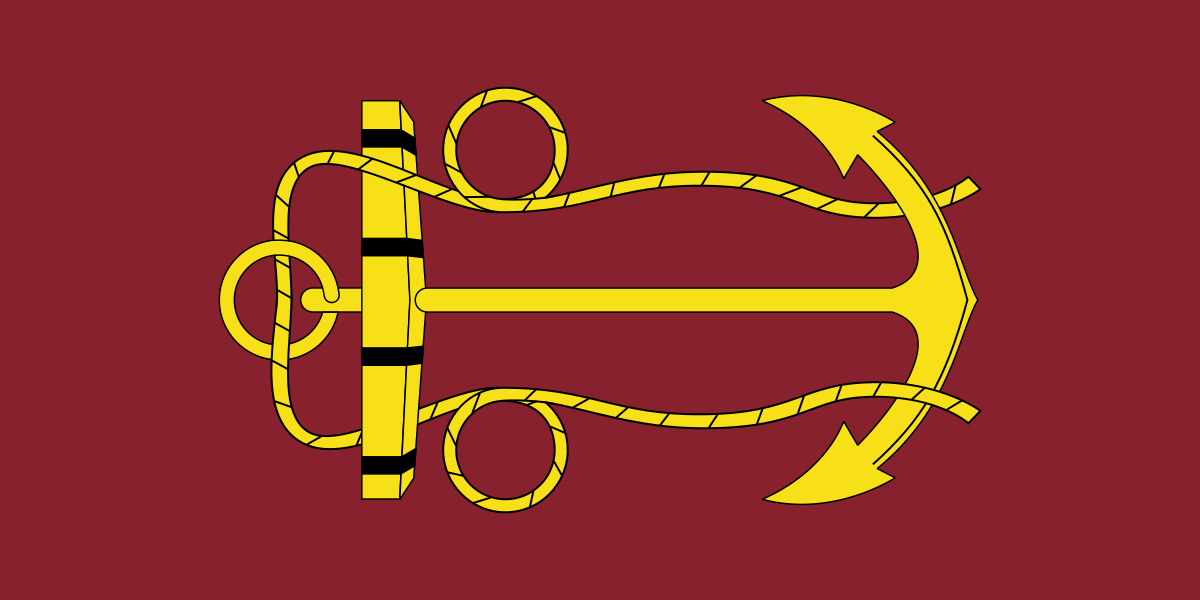
The Lord High Admiral has a flag of office – a fouled golden anchor on a crimson field. The Queen was presented with a “burgee” (pennant) with a red anchor on a white background when she visited HMNB Devonport. I just about saw Camilla’s impaled banner of arms as well.

On another note, today is also the twentieth anniversary of the death of Sir Edward Heath, Prime Minister 1970-1974. His military career was on land, though he was a noted yachtsman in later life. He stayed in the House of Commons for twenty-seven years after his premiership had ended, which is considerably longer than all his successors combined. He is the most recent Father of the House to have served more than one term, as well as the most recent to have formerly been Prime Minister.* He is also the most recent example of the Order of the Garter being conferred upon an incumbent member of the House of Commons**.

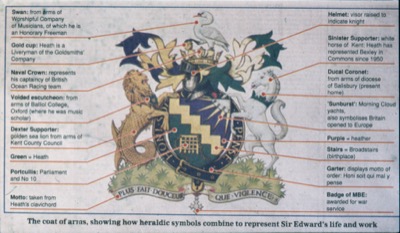
Wikimedia Commons has long had a vector graphic (by Sodacan, of course) of Sir Edward’s shield of arms, but it was only recently that I discovered, through the website of the Heraldry Society, a photograph of the heralds’ illustration of the full achievement. Heath had no offspring, so the arms as a hereditament became extinct.

This anniversary means that Arundells, his house in Salisbury, will now have been his museum for longer than he actually lived there. He bequeathed the building to his namesake charitable foundation who then opened it to the public. There was a fear in 2010 that the house would need to be sold due to high running costs, which then developed into a legal battle, but as of 2025 the estate seems to be running as normal again.

It should be noted that the spelling is Arundells with two Ls, not Arundels with one. Incidentally, it was an Earl of Arundel who is listed as England’s earliest Lord High Admiral, so everything links up I suppose!

*I’m phrasing it that way because Heath is not the most recent Prime Minister to be Father of the House – that was Callaghan.

**I hesitate to say “sitting member” because St George’s Day in 1992 fell in the interlude after the general election (9th April) but before the new Parliament actually assembled (27th April).

Another Condolence Note

Yesterday the Prime Minister and the Mayor of London attended the memorial at Hyde Park commemorating the London bombings of 7th July 2005.

As with the Auschwitz memorial earlier this year, Sir Keir left a wreath of flowers with a card attached. The card uses the old version of the government arms. I’m guessing the pile of these cards printed during the previous reign has still not been exhausted.

A mere four days earlier, the Prime Minister, Secretary of State for Health & Social Care and Chancellor of the Exchequer had visited the Sir Ludwig Guttmann Health Centre, where they spoke from a lectern clearly adorned with the new, Tudor crown, illustration.

I’m afraid I don’t have anything profound to say about the bombing attacks themselves. I had yet to ever visit London in person at the time and my main memory of that month is that of a school assembly in which our headmistress asked pupils what they’d seen on the news and a few had followed the story enough to relay it. I also remember a CBBC drama being made about the event a year later, but that’s about it.

More Crowns, More Confusion

Recently the office of the Lieutenant Governor of the Canadian province of Nova Scotia released photographs of the erection of a decorative shield on the wall of the Drawing Room at Government House, featuring the cypher of Charles III. Aside from the violation of the rule of tincture (by having a golden cypher on a silver background), I was struck by the fact that it used the Tudor Crown, not the Trudeau Crown as at the federal level.

Photographs from as far back as the coronation in 2023 show that the Tudor Crown was already in use by the provincial government at that time, with the Trudeau Crown nowhere to be seen. Ironically Nova Scotia, as the name and shield both quickly give away, was founded as a Scottish colony long before the Acts of Union and was granted arms by Charles I in his Scottish rather than English capacity, using the Scottish heraldic style with the motto scroll above the shield rather than below. The unicorn supporter even wears the Scottish crown. Perhaps it would have made more sense for the cypher to use that one instead.

It might be prudent at this point to make a note about Canada’s viceregal flags. Until Elizabeth II’s accession all the lieutenant governors used the Union Flag defaced by their heraldic badge on a white circle in the centre. Quebec changed in 1952, using the provincial coat of arm on a large white disk on a plain blue background. The arms are topped by the Tudor crown. It seems the province never adopted St Edward’s Crown despite Elizabeth’s stated preference for it. In the 1980s the other provinces switched to a similar-but-slightly-different design with the shield topped by St Edward’s Crown on a blue background with ten golden maple leaves. As far as I can tell they have not changed over since Charles III’s accession. Nova Scotia was the last holdout with the Union Flag design, only changing over in 2024. This creates the paradox whereby the Scottish and French provinces of Canada are the only ones using the crown design named after an English & Welsh dynasty.

Closer to home, but also wider afield, The Queen’s Commonwealth Trust, a charity set up in 2018, announced on Friday that it would be rebranding itself. Anything set up during that reign (or the reigns of previous female sovereigns) with “Queen’s” in the name inevitably had some ambiguity about what would happen in the next one – did “The Queen” mean Elizabeth II personally and permanently, did it mean the incumbent sovereign (in which case it should have become “The King’s” in her son’s reign) or did it mean the incumbent queen whether regnant or consort (in which case it would now belong to Camilla, but in the reign of a king with no wife there might be no namesake at all). The trust has gone with the first option, renaming itself The Queen Elizabeth II Commonwealth Trust and changing its initialism from QCT to QECT. The press release said that existing social media handles would not change, although it didn’t specify if the website’s domain name would do so. Presumably this gives them an excuse not to change St Edward’s Crown to the Tudor Crown in their logo.

Checking up on the Blog (Again)

At the midpoint of the year, another review on the blog’s statistics. I will compare the view counts to the same months last year:

Month 2024 2025 Difference
Jan 293 447 +154
Feb 248 385 +137
Mar 364 461 +097
Apr 330 380 +050
May 387 382 -005
Jun 375 401 +026
Total 1997 2456 +459

This means I have already exceeded the total readership for 2023 and fairly soon will have outdone all years prior to 2024.

I have recently undertaken a substantial rewrite of the About page, as well as absorbing the Portfolio page into it, to make it better representative of the current state of the blog instead of just the period of 2015-19, as posts from that era tend to get few if any views. In particular I have dropped the “Recurring characters” who haven’t actually recurred since then and inserted instead a “Main themes” section.

Other changes may come later if I ever get around to them.

Some Heraldic Snippets

Today the Royal Household released the Sovereign Grant Report. I will discuss the actual substance of it – especially the planned retirement of the royal train – in a later article. For now I will note that the front cover and title page of the report both continue to use the old version of the royal arms with St Edward’s Crown. This was also true of the Birthday Honours published last month in the Gazette.

The Queen opened the Ratho Library in Edinburgh today. She travelled in the newly-acquired BMW G70 (also a topic for a later article) which had her banner flying from the bonnet. It was difficult to get a good look in the footage and the press stills don’t show it at all, but I think I could make out the impalement line, with the dexter side having a yellow top half while the sinister side was white on top and blue on bottom. That would indicate it to be the English marshalling of the royal quarters, surely an armorial faux-pas for an event taking place in the Scottish capital!

The Duke of Edinburgh is in Canada visiting his namesake island and regiment. The royal website’s page on the event depicts his Canadian banner of arms flying in at least one photograph, though again I can’t find it shown in any of the stills on Getty or Alamy.

Also last month another German car manufacturer, Mercedes-Benz, was recognised as a royal warrant-holder. I presume it will be the new Tudor crown illustration that they show, but I haven’t seen any photographs of it yet.