Review: Discovering Watermills by John Vince

At eighty pence and eighty pages, this is among the lightest book purchases I have made in the past few years. I picked it up from the Dovehouse Hospice shop in Hedon two weeks ago. An inscription on the title page indicates it was previously owned by a J. Richardson. Little explanation is required for the topic of the book. Vince recounts, in a very compact format, the emergence of the practice of grinding grains for food, from the prehistoric world to the ancient, then medieval, then modern, from hand tools to human-powered wheels to the titular watermills and the various substances — including copper, paper, snuff and lead, which were extracted or refined with their aid. There follows a similarly-compressed explanation of the materials and construction techniques — the different ways in which the pins, braces and clasps can be arranged, as well as the financial considerations involved in switching from wood to cast iron (or some hybrid arrangement) in the eighteenth century. After that came an explanation of how the mill apparatus actually works; not just the internal interaction of all the cogs and pulleys, but also the way the external landscape has to be manipulated to direct the water to the mill. The main piece of information that I picked up from here is the distinction between an undershot wheel where the water pushes along the bottom and an overshot wheel where it pushes along the top. There were also two warnings, perhaps slightly contradictory, about mills left unattended: A waterwheel left locked into a stationary state can suffer rotting in its lower half which results in the whole construction disintegrating over time, yet a wheel left unlocked is liable to spin too quickly under heavy wind or rain so that the dry components inside fly apart or even catch fire. This part of the book was accompanied by mechanical diagrams as well as a brief table of statistics about the machines’ power, speed and output.

All that I have just described was concluded on page 20. The rest of the book, apart from the index and a few pages of photographs (on glossier paper but still monochrome), was a list of “some notable watermills” (with “some” here meaning many dozens) in the United Kingdom. Each had a short paragraph about its history, construction, operation, current ownership and opening times. Since this edition was published in 1987 I don’t imagine much of what was written in that chapter is still true. I would be minded nowadays to look these places up on the internet before dialling any of the telephone numbers Vince has given. What struck me most about this section is that, among all the counties of England, Scotland, Wales and Northern Ireland (and even the Isle of Man) that were documented there was no mention of East Yorkshire, whether under that name or as “Humberside”. If there aren’t any, surely that itself is worthy of mention? I can only infer that none of our mills met Vince’s standard of notability!

Review: Captain James Cook by Richard Hough

The paperback edition of this book was first published in 1995 and sold for £6.99. I picked up my copy in 2024 for £1. It follows the conventional format for a biography, beginning with the circumstances of the subject’s birth and running all the way to the aftermath of his death. That Cook has a tragic death relatively young is probably to Hough’s advantage as it prevents the book becoming overlong.

Cook is among Britain’s most celebrated sailors and explorers. This biography covers the whole of his maritime career, particularly his three Pacific voyages. Cook makes multiple visits to New Zealand, Tahiti, Hawaii and the Society Islands. He gets close to both the North and South Poles. A lot of the book is dedicated to Cook’s interactions with the Maoris and the many Polynesian tribes. There is a recurrent schizophrenia in the stories of these encounters – one minute the islanders will be treating Cook and his crew like gods, the next they will be plundering his vessels for anything not nailed down (and often even stealing the nails themselves). This reaches its apotheosis at Kealakekua Bay in 1779: On his first visit in January Cook is hailed as Orono, God of the Season of Abundance, and is showered with lavish praise, but when he returns in February the mood is of cold hostility and it is not long before a war breaks out which leads to his own gruesome death. Cook’s own personality charts a more linear decline from a civil, optimistic attitude on his original voyage to a cruel, irrational and vindictive one by the end. Partly this is the result of the great many infuriating setbacks suffered on that trip but there is also an analysis by a twentieth-century surgeon reckoning that Cook picked up an intestinal infection which impaired his brain function.

This book highlights how much of the world prior to Cook was still uncharted: As well as looking for new navigational passages (such as around the Arctic), Cook is also sent on a mission to prove or disprove the existence of Terra Australis Incognita, a much-fabled supercontinent in the Southern hemisphere that would have linked Australia together with Antarctica. There are also references to other scientific advances at the time, such as Cook’s own dietary and sanitary innovations to combat scurvy or the excursion to Tahiti to observe the transit of Venus.

The accounts of events aboard His Majesty’s Ships Adventure, Discovery and Resolution are pieced together from those diaries and letters that survived to be archived. These include Cook’s own logs, but also those of his contemporaries Joseph Banks, William Bligh, Charles Clerke, John Gore and a host of others. As is usual with these kinds of works, we get first-hand accounts of the action and occasionally the dialogue, but the thoughts and feelings of these men can only be speculation, save the rare occasions when they speak them outright. At this period real-time communication was impossible over long distances and letters could travel no faster than the mariners themselves, so the Admiralty back in Britain would not have any meaningful understanding of what happened on these voyages until the ships completed their return journey (if they ever did at all) and gave accounts retrospectively. This also meant that sailors would be cut off from events at home for months or even years at a time. In the final chapter Hough says that James & Elizabeth Cook, having married in 1762, only spent an aggregate of four years together before his death in 1779. Most of his children rarely if ever got to see their father either. After Cook’s death, Clerke became Captain and he penned the letter back to London explaining as much. It did not arrive until 1780, by which point Clerke himself had died too and it was Gore who held command by the time the survivors got home.

I bought this book principally for my father and we read it together in short bursts over the course of a year. I would recommend it to anyone with an interest in sailing, but the story is probably easier to follow and remember when taken at a faster pace.

Everything in my Power

As we have recently celebrated the eightieth anniversary of VE and VJ Day, I have naturally been reading a lot of articles and watching a lot of documentaries about the end of World War II in both Germany and Japan. The mechanics and political technicalities of the German surrender are particularly fascinating to me, as the event represented not only the cessation of fighting but also the succession of states – with the Third Reich dissolving in favour of the Allied occupation zones. It is a reminder that, even in times of total war and with the prospect of total annihilation, there are still laws and protocols which must be followed, most notably the famous Geneva Conventions.

Key to the successful operation of these laws is the presence of at least a small number of neutral countries which maintain diplomatic relations – however strained – with both factions. This can lead to some interesting shenanigans: When my late grandmother got me A. J. P. Taylor’s1 The First World War for Christmas 2013 I was amused to read that before the United States took a side there were British and German ambassadors in Washington D.C. competing for Woodrow Wilson’s favour in loans and arms contracts. The novel Winston’s War by Michael Dobbs (which I read in the summer of 2018) has a subplot in which Churchill discovers that Britain is short of rifles and hatches a cunning plan to buy second-hand German ones instead, because the Reich had such a surplus that they were still exporting them commercially to neutral countries on the continent. Though they weren’t explicitly mentioned very often, neutral states and organisations also played an important role in The Barbed-Wire University by Midge Gillies (which I finished last April), since the parcels, letters and so forth that the Allied prisoners received from home were hardly the sort of things which their Axis captors would (or indeed could) have delivered themselves. Neutral countries are also necessary for most forms of reliable news reporting (whether or not related to the war) to get from one side to the other – though how this works in the internet age is probably worth another article.

The specific aspect of wartime diplomacy which interests me for the purposes of this article, and which I only discovered in my recent Wiki-reading, is the concept of “Protecting Powers”. Put simply, this means that when two countries have broken off diplomatic relations (and especially if they have declared war) then their ambassadors and/or other official representatives on each other’s soil will be withdrawn. A neutral third country will then be appointed to act as a go-between while the warring countries cannot communicate directly. This third country will have an “interests section” as a department of its own embassy, and will be the official channel for humanitarian aid, personnel exchanges and, eventually, peace negotiations. In some cases the PP’s embassy will take over the former embassy buildings2 of the country that it protects, and may even re-employ the same lower-level staff, so that the “interests section” is a polite fiction to allow the former embassy to continue in all but name.

There are limits to what a PP can realistically do, as both parties in the conflict must agree to their appointment – a PP which allows its interests section to push too far may see its neutrality questioned by the host country, and then its own diplomatic ties threatened. Switzerland, unsurprisingly, is a popular choice for this role, as is Sweden. The Wikipedia page on Protecting Powers has a catalogue of historic and current examples, noting that by the end of World War II Sweden held 114 mandates involving 28 countries. At the time of writing, the Swedish embassy in North Korea hosts interests sections for ten other states. There was a period in the last decade when Britain broke off relations with Iran, so the Swedish embassy in Tehran hosted a British interests section, while Oman’s in London hosted the Iranian.

Of the serious armed conflicts taking place in the world right now, the most important – at least from a European perspective – is that between Russia and Ukraine. Although relations had already become icy with Putin’s annexation of Crimea in 2014, it was his launch of a full-scale invasion in February 2022 that saw them broken off entirely. This war has now been going on for 42 months, i.e. more than half as long as Britain was fighting in World War II. Having gotten into this topic, I was naturally curious as to whom the two countries had chosen as their PPs. None of the Wikipedia articles which should have mentioned it actually did so, however, so I asked the question in various talk pages. At time of uploading, only one other contributor has managed to find any information relating to this query: Based on some articles found on a Russian news site, it looks as if there still aren’t any! In a conference in Canada in 2024 (already way too late, really) there were offers by the Vatican, South Africa, the United Arab Emirates, Lithuania and Qatar to perform the role, but nothing was agreed, though Qatar at least has been involved in some POW exchanges. Putin has said Switzerland lost its neutral status by joining in sanctions on the Russian economy, and the International Committee of the Red Cross (which can also act as PP if no sovereign state is available) has struggled to get access. I might have thought that Turkey would be a candidate, since they had hosted some (unsuccessful, of course) peace talks, but they are not mentioned at all.

This perhaps goes to show that comparisons with the 1940s may be, if anything, a bit understated: To put it bluntly, the current Russian government is at least in some respects failing to comply with protocols which even he of the small moustache managed to honour!

Article from SwissInfo: Russia rejects protecting power mandate agreed by Switzerland and Ukraine (11 August 2022)

Articles from RosBiznesConsulting:

Article from Media Center Ukraine: Bohdan Chumak: The involvement of a protecting power could become an effective tool in securing the return of prisoners of war (8 January 2025)

Article from Al Jazeera: Russia and Ukraine discuss more prisoner exchanges at Istanbul talks (23 July 2025)

1 A. J. P. Taylor is not related to me.

2 Technically the building is called the “chancery” whereas the “embassy” is the organisation hosted there.

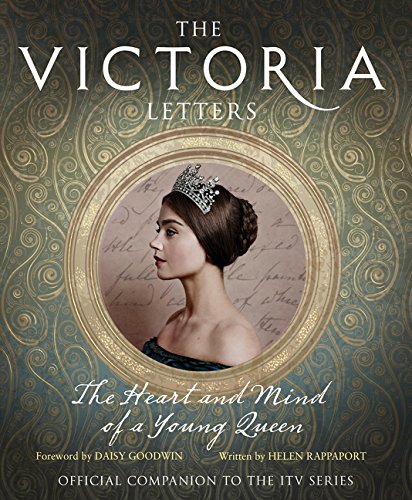
Review: The Victoria Letters by Helen Rappaport

After spending nearly two months struggling through Dan Franck’s The Bohemians, I needed something of an intellectual palette cleanser, preferably back in a subject area where I already had some prior grounding. I settled on this large hardback picture book that was released as a companion to the 2016 ITV series.

As the title implies, this is composed mainly of the private letters and journals that Victoria herself wrote from her early childhood until around the time she first gave birth (which is when the first season of the TV show ends). Victoria is unusual among British monarchs in the fact that so many of her personal written thoughts have been maintained and made public – some even during her own lifetime.

The book runs to three hundred pages, but the text density is rather low so I got through the entire book in just four days. The final twenty-eight pages are about the making of the TV series, with everything up to that point being about the real life of Victoria with the fictional series rarely acknowledged.

The book overall is both visually lavish and textually engaging, though I found a few errors along the way:

  • The photograph of a palace interior on pages 44-5 exposes part of the metal ceiling of the hangar in which the set was built.
  • The photographs on pages 144 and 228 show overhead power lines in the background.
  • Page 131 describes Victoria’s uncle Ernest Augustus as “heir apparent” instead of “heir presumptive”.
  • Page 294 says of Prince Albert that “as Victoria’s husband he automatically became a member of the Order of the Garter” which was not true; he was appointed to the order almost two months before the wedding.
  • Page 294 also includes a quote from costume designer Rosalind Ebbutt claiming “The garter traditionally went round the knee, but Queen Victoria was the first woman to be elevated to the Order of the Garter and she couldn’t wear it on her leg because it wouldn’t be visible. So she had a special one made that buckled around her arm, over her sleeve.” which is a bit misleading: Victoria was never “elevated to” the order, rather she became its sovereign automatically when acceding to the throne. The custom of wearing the garter on the arm instead of the leg was also exhibited by Anne, Britain’s previous queen regnant*. There were, of course, Ladies of the Garter before her.
  • The cast list on page 300 includes Nicholas Agnew as Prince George twice.

A further note is really more a problem with the series itself than the tie-in book: Victoria & Albert’s wedding is noted to have taken place in the Chapel Royal at St James’s Palace, but the set shown in the episode looks nothing like that and bears far more resemblance to St George’s Chapel at Windsor Castle instead.

Heraldic banners show up in multiple photographs in the book, I have already written an article about one particular instance, but perhaps an armorial viewing of the series in general is in order at some point. I notice also that when personal letters are reproduced they are topped by an illustration of the royal arms which came into use during Victoria’s reign, indicated by the lack of the Hanoverian inescutcheon, even when the letter is meant to predate her accession. Of course, little Drina was never actually granted differenced arms prior to that so I don’t know what image would have been appropriate here!

It is a shame that no similar books were written for seasons 2 and 3, and indeed that the TV series as a whole seems to have been quietly dropped after 2019, for I would have enjoyed seeing the whole of the Victorian age covered this way.

*See “The Orders of Knighthood and the Formation of the British Honours System, 1660-1760” by Antti Matikkala, pp 324-6.


Pondering Thatcher’s Letterheads

About a decade ago when I first got interested in heraldry, I came across this article in The Independent by Ben Summers and Michael Streeter, dating all the way back to 24th March 1997, early in that year’s general election campaign*. It concerned the use of the British royal arms by the Baroness Thatcher on her official letters.

The wording of the article is a little confusing, and made harder by the absence of any images (unsurprising given the age): It alleges that Lady Thatcher abandoned the use of her own coat of arms for her letters and started using instead the royal arms, in the lesser format favoured by various government departments.

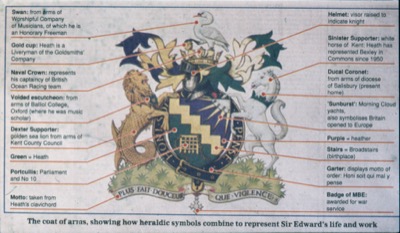
Thatcher’s own heraldic achievement

The journalists interviewed both Black Rod (Sir Edward Jones) who awkwardly declined to comment and Somerset Herald (Thomas Woodcock, later Garter King of Arms) who dismissed a suggestion (made by whom it’s not clear) that Companions of the Garter are specially entitled to use the royal arms in this way.
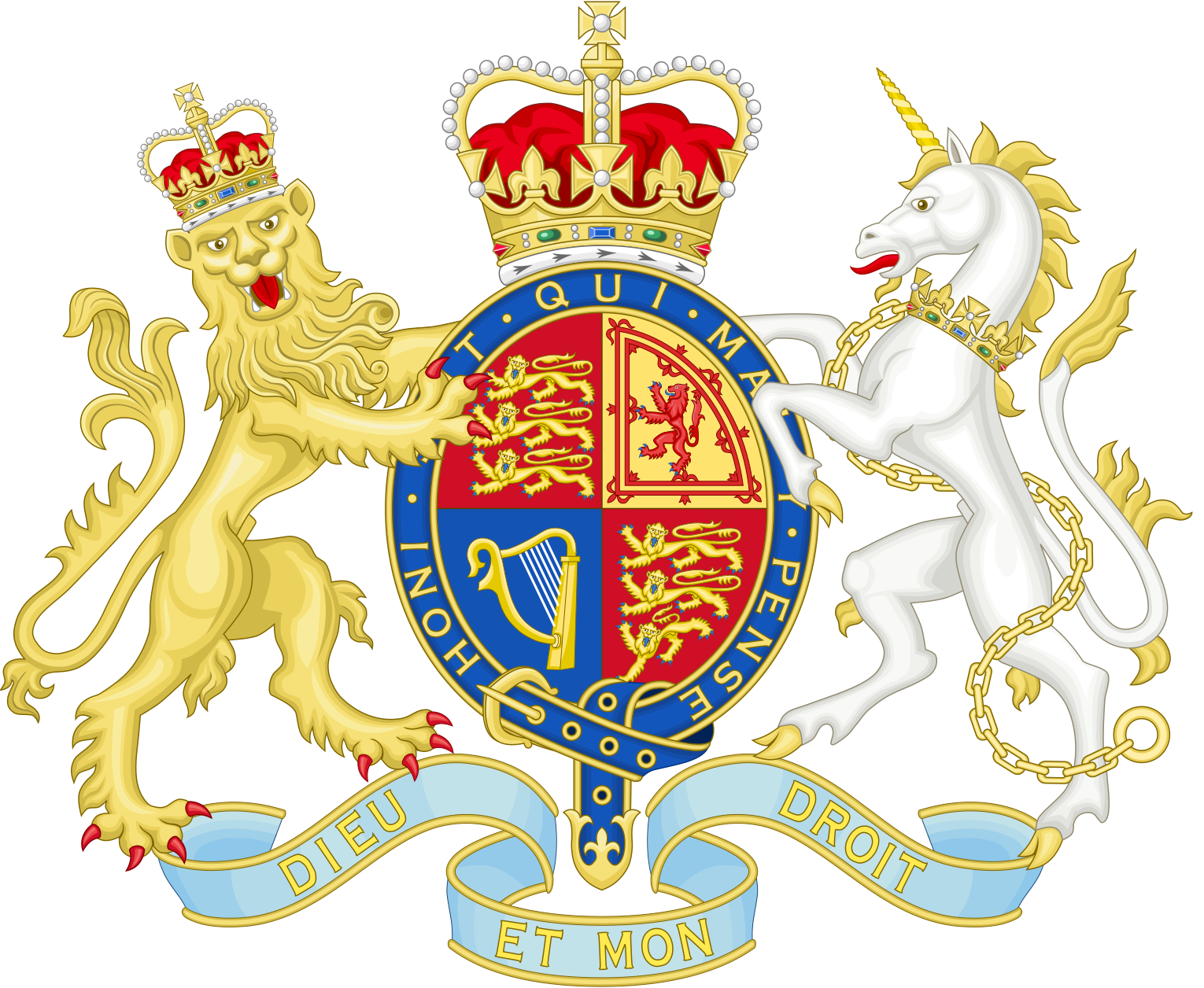
Government arms as used at the time

The article contrasts Thatcher to Britain’s two other living former premiers at the time – “Sir Edward Heath uses a simple House of Commons portcullis and a plain typeface, while Lord Callaghan simply types his name beside the House of Lords logo.” – and the main thrust is the piece is to play up the public perception of the Iron Lady as not being able to leave government behind and as believing herself as great as the reigning monarch.

Trouble is, I think this is a bit of a reach, given this sentence: “The normal House of Lords logo used by peers places the Arms inside an ellipse, together with the words “House of Lords”, making clear the state body to which the use of the Arms relates.”

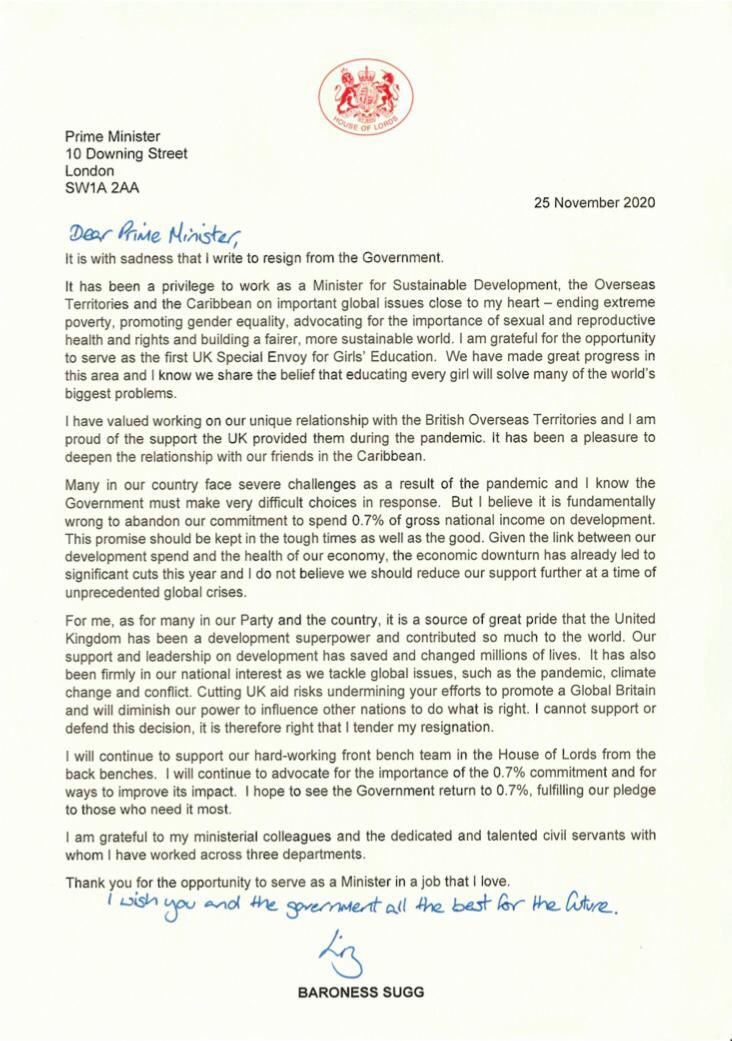
With one hand Streeter & Summers allege delusions of grandeur based on Thatcher’s supposed use of the governmental coat of arms instead of the House of Lords logo, but with the other they tacitly admit that the two devices are near-identical anyway! While the page itself does not have any photographs, I have been able to find a handful of examples online as letters by public statesmen often become collectable items sold at auction. The impression I get is that, while letterheads for members of the House of Commons have favoured the crowned portcullis badge** since many decades before Thatcher’s premiership, those for members of the House of Lords at that time used the royal arms in an oval with “House of Lords” typed underneath. Letterheads for government ministers at that time followed the same pattern – the royal arms in an oval with the department name beneath – although there were some rare examples of ministries already using the more modern corporate-style logos that would become characteristic of the New Labour years.

If the authors meant that Thatcher was using the royal arms in her private correspondence – i.e. not related to her parliamentary duties – then they might have had a point, but that is not made clear. I would also note that in all the photographs I’ve found so far, none show peers using their private coats of arms in the headers – a shame, really, as that is one of the main reasons to acquire a coat of arms in the first place.

This could be an example of what the article alleges – albeit it’s from seven years too late.

I’ve tried searching for any documentation of the actual rules around the use of parliamentary letterheads. I found this page for the House of Commons but nothing so far for the Lords.

Here I have collated a series of examples of letters written by Lady Thatcher and other British prime ministers in their legislative (rather than executive) capacities.

Margaret Thatcher

  • 1966-04-01: Letter to Mr & Mrs Bland, with no personal letterhead but logo in top left corner, featuring even lesser royal arms in a portrait oval with “HOUSE OF COMMONS” arched above it.
  • 1971-10-27: Letter to illegible recipient with green portcullis in top centre and “THE RT. HON. MARGARET THATCHER M.P.” above it.
  • 1976-10-28: Letter to Misses Brett and Watson, with blue portcullis in top left corner and “The Rt. Hon. Mrs. Margaret Thatcher, M.P.” along the top.
  • 1991-12-09: Rear page of a letter to Ed Koch (former Mayor of New York City), with portcullis in blue in top left corner and “THE RT. HON. MARGARET THATCHER, O.M., F.R.S, M.P.” along the top, notable because she is no longer called “Mrs” but not styled “Lady” either despite Denis’s baronetcy.
  • 1991-12-12: Letter to E. T. Freeborough with same layout.
  • 1995-03-01: Letter to Rick Pallack with lesser royal arms (sans oval) in top left corner and “MARGARET, THE LADY THATCHER, O.M., P.C., F.R.S.” along the head.
  • 2003-??-??: Message thanking an unidentified well-wisher for his condolences after the death of Sir Denis, featuring the House of Lords logo as described with “Margaret Thatcher” underneath it and “THE RT. HON. THE BARONESS THATCHER, L.G., O.M., F.R.S.” in the footer. “P.C.” is omitted for some reason.

James Callaghan

  • 1990-09-16: Letter to Andy Wood with House of Lords logo in red and “THE RT. HON. LORD CALLAGHAN OF CARDIFF KG” above it in black. “PC” omitted here too.

Harold Wilson

  • 1973-10-30: Letter to Geoffrey Davis, with House of Commons portcullis in top centre and “From: The Rt. Hon. Harold Wilson, OBE, FRS, MP.” above, all in green.
  • 1994-05-??: Letter to Lynda Winston, with House of Lords logo in top centre and “The Rt. Hon. The Lord Wilson of Rievaulx KG, OBE, FRS.”

Alec Douglas-Home

  • 1970-07-29: Letter to Klaus Kuhneumund, with oval House of Commons logo and “From: The Rt. Hon. Sir Alec Douglas-Home, K.T., M.P.” above, all in subtly inconsistent shades of blue.
  • 19??-04-17: Letter to the Marquess of Lansdowne, with House of Lords logo in top centre and “From: LORD HOME OF THE HIRSEL K.T.” above it. “P.C., J.P., D.L.” left out.

Harold Macmillan

  • 1978-02-22: Letter to Harold Smith, with “From the Rt. Hon. Harold Macmillan” along the top, with “OM FRS” omitted.. There is no parliamentary logo at all as he was not a member of either house at this time.

Edward Heath

  • 1984-05-10: Letter to Felipe González, with portcullis in top left corner and “The Rt. Hon. Edward Heath, M.B.E., M.P.” along the top, all in blue.
  • 1991-02-13: Letter from Heath’s private secretary Robert Vaudry to Sean Bryson with portcullis in top centre and “From: The Private Office of The Rt Hon Edward Heath MBE MP” above it, all in black.
  • 2000-09-18: Letter to the Lady Harmar-Nicholls, with portcullis in top left corner and “The Rt. Hon. Sir Edward Heath, K.G., M.B.E., M.P.” along the top, all in blue.

More recent examples of backbench peers using the royal arms

On a semi-related note, I am still searching for evidence of armorial bearings held by Wilbert Awdry (who, incidentally, died just three days before that Thatcher article was published). Recently I have found some digital uploads of his letterheads, which feature a monochrome photograph of a steam locomotive, identified by the caption as Locomotive No.1 of the Sydney Railway Company. If he wouldn’t use a coat of arms there, where would he?

*The fifty-first Parliament of the United Kingdom was prorogued on Friday 21st March but would not be dissolved until Tuesday 8th April, with polling day on Thursday 1st May.

UPDATE (21st July)

Barely a day after I posted this, technology lawyer and academic Kendra Albert and software engineer Morry Kolman launched Heavyweight, an online letterhead composition tool which allows one to mimic the style of a legal firm. These letterheads are purely textual, so sadly no coats of arms to review.

On Admirals and Arundells

The Queen turned seventy-eight today. That’s not traditionally considered one of the big birthdays and so commemorations have been fairly muted. The most significant announcement was her appointment as Vice-Admiral of the United Kingdom.

The Vice-Admiral is the deputy to the Lord High Admiral, and it may be prudent to recap the outline of that office first: The Lord High Admiral is the ultimate head (originally operational, but later just ceremonial) of the Royal Navy. Appointments have been made since the late fourteenth century in the Kingdoms of England and Scotland, then later Great Britain. Occasionally in Stuart times, and almost permanently from Anne’s reign onwards, the singular office was not filled and instead the post was instead put “In Commission” – i.e. delegated to the Board of Admiralty with the First Lord of the Admiralty (a cabinet minister) as its chair. The creation of the modern Ministry of Defence in 1964 saw the Board with its First Lord dissolved and the title of Lord High Admiral resumed in the person of Queen Elizabeth II. In 2011, on his ninetieth birthday, she conferred the office upon her husband Philip. The status of the office following his death in 2021 is a little ambiguous but the general assumption is that it defaulted back to the sovereign and now resides in King Charles III. I had wondered if Vice-Admiral Sir Timothy Laurence would be appointed on his seventieth birthday this March, but this did not occur. The King perhaps intends to retain the top office for himself and have his wife as runner-up.

The Queen is both the first female and the first royal holder of the office of Vice-Admiral, whose previous recipients have all been career navy men (and indeed tended to hold the actual rank Full Admiral). Her Majesty’s most recent predecessor was the Lord Boyce, who was appointed in 2021 and died in 2022.

Below the Vice-Admiral is another deputy, the Rear-Admiral. This office is currently held by Sir Gordon General, a General in the Royal Marines who was formerly Vice-Chief of the Defence Staff and also served as Lord High Constable at the 2023 coronation.

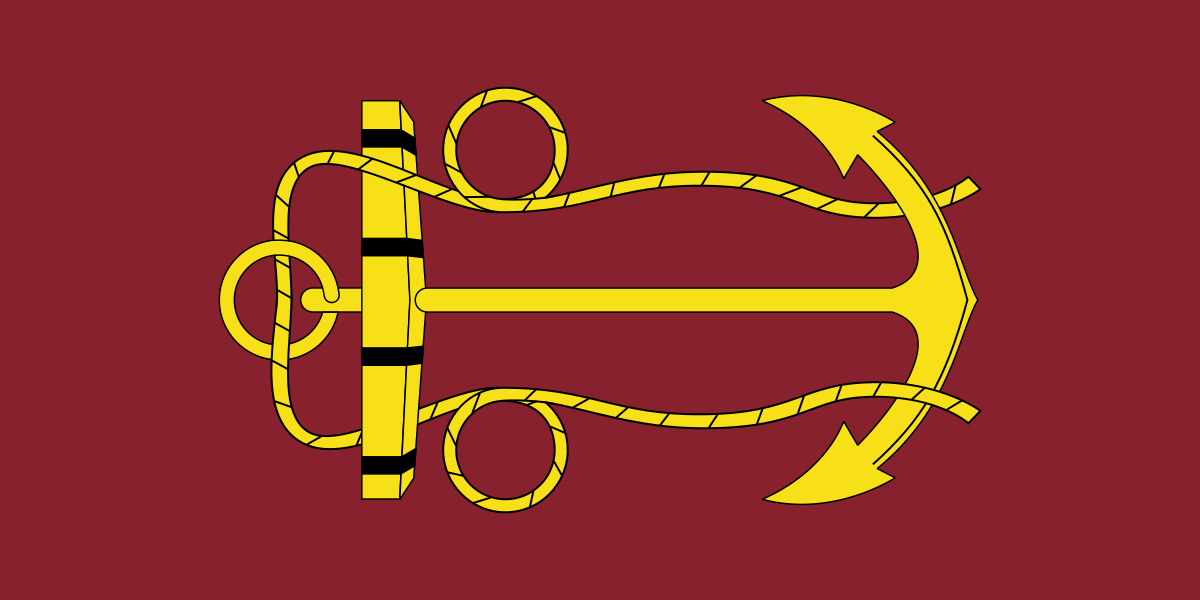
The Lord High Admiral has a flag of office – a fouled golden anchor on a crimson field. The Queen was presented with a “burgee” (pennant) with a red anchor on a white background when she visited HMNB Devonport. I just about saw Camilla’s impaled banner of arms as well.

On another note, today is also the twentieth anniversary of the death of Sir Edward Heath, Prime Minister 1970-1974. His military career was on land, though he was a noted yachtsman in later life. He stayed in the House of Commons for twenty-seven years after his premiership had ended, which is considerably longer than all his successors combined. He is the most recent Father of the House to have served more than one term, as well as the most recent to have formerly been Prime Minister.* He is also the most recent example of the Order of the Garter being conferred upon an incumbent member of the House of Commons**.

Wikimedia Commons has long had a vector graphic (by Sodacan, of course) of Sir Edward’s shield of arms, but it was only recently that I discovered, through the website of the Heraldry Society, a photograph of the heralds’ illustration of the full achievement. Heath had no offspring, so the arms as a hereditament became extinct.

This anniversary means that Arundells, his house in Salisbury, will now have been his museum for longer than he actually lived there. He bequeathed the building to his namesake charitable foundation who then opened it to the public. There was a fear in 2010 that the house would need to be sold due to high running costs, which then developed into a legal battle, but as of 2025 the estate seems to be running as normal again.

It should be noted that the spelling is Arundells with two Ls, not Arundels with one. Incidentally, it was an Earl of Arundel who is listed as England’s earliest Lord High Admiral, so everything links up I suppose!

*I’m phrasing it that way because Heath is not the most recent Prime Minister to be Father of the House – that was Callaghan.

**I hesitate to say “sitting member” because St George’s Day in 1992 fell in the interlude after the general election (9th April) but before the new Parliament actually assembled (27th April).

Review: The First Four Georges by J. H. Plumb

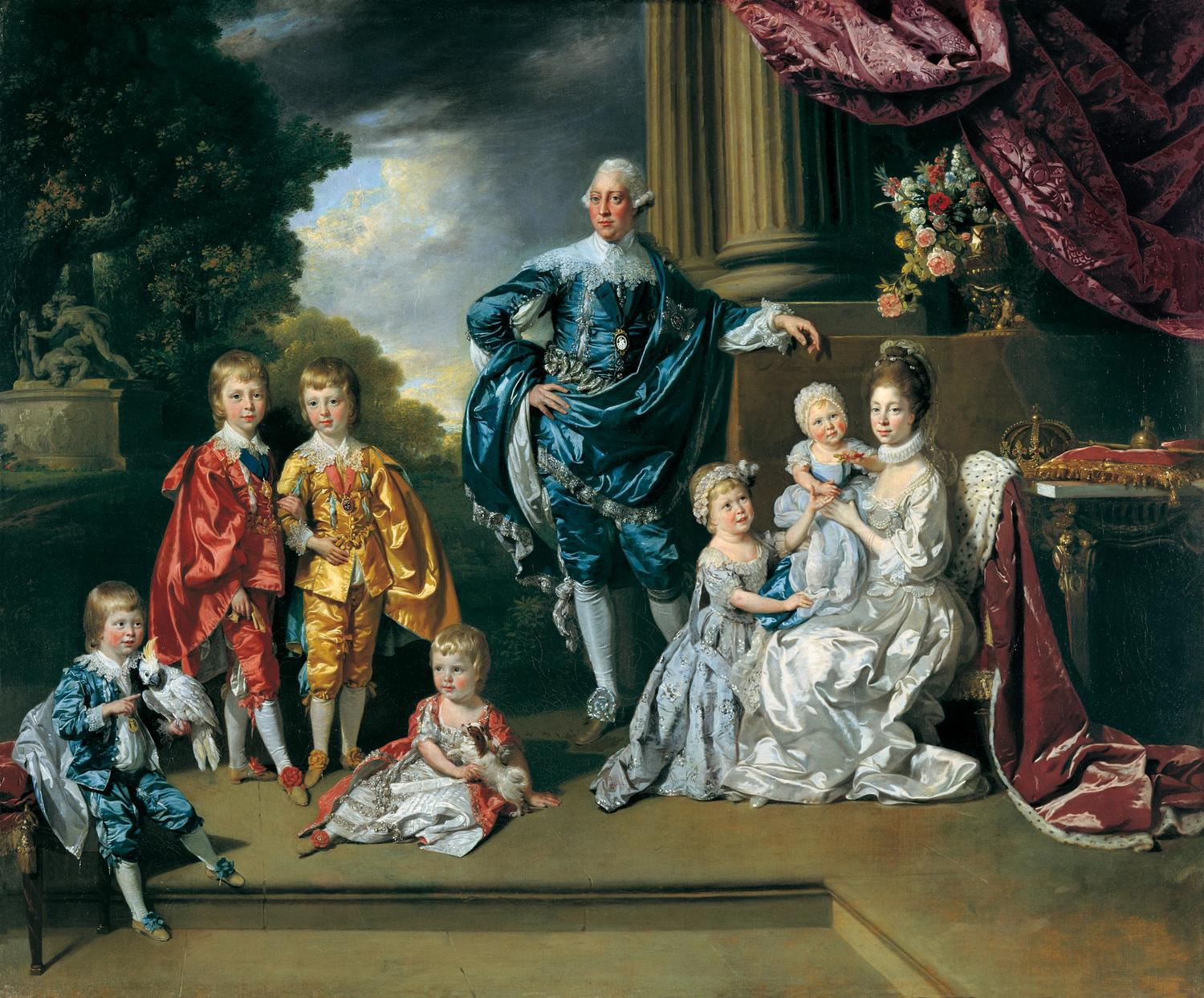
One of the many books I picked up from Hull’s YMCA shop last year was The First Four Georges by Sir John Harold Plumb. The book was originally published in 1956 but my edition was from 1966. It is, rather self-evidently, a history of the lives and reigns of King George I, King George II, King George III and King George IV, who ruled the Kingdom of Great Britain and the Kingdom of Ireland from 1714 to 1800, then the United Kingdom of Great Britain & Ireland from 1801 to 1830.

At 177 pages it is considerably shorter than most of the other books in my collection and reading it was a breeze (helped by the improvement of the weather this month allowing me to sit and read it in the orchard on the weekends).

My first knowledge of the Georgian period came from Horrible Histories, followed by David Starkey’s Monarchy and Lucy Worsley’s The First Georgians. I also occasionally dipped into the Oxford History of England. Consequently by the time I got to this short volume there was much that I did not already know: The way each father and son hated each other, the development of rival royal courts that fostered the birth of government and opposition, the emergence of the cabinet and the prime minister, the persistent threat of Jacobitism, the poor choices all four kings made in wives, the explosion of political satire and the struggles over the American colonies.

Still, this book does a good job of covering a large number of topics in a relatively small number of words. The parts new to me were the details of George III’s early life, in particular his emotional crutches regarding his senior government advisers. The stand-out piece of prose was this howler on page 100, which suggested an alternative – or at least supplementary –  and unusually explicit explanation for His Majesty’s madness:

The first year of George III’s reign had been taken up almost entirely by the problem of his marriage. Animal passion and the unique sense of public duty in the need for an heir combined to make the matter one of almost neurotic, compulsive frenzy for George III. In the end he settled rashly and unwisely on Charlotte of Mecklenburg-Strelitz, a dim, formidably ugly girl. George himself regretted her plainness. Like his forbears, a sensual man, he was quickly stirred by feminine beauty but, unlike them, his high sense of morality would not allow him to indulge his fancies. Plain and undesirable as she was George III doggedly fulfilled his marital duties, and they bred child after child. On his part it was more an act of will than desire, and the strain on his already unsteady mind is thought to have been a strong contributory cause of those fits of insanity to which he became a prey.

Did George really lose his mind due to the strain of living with an ugly wife? That would have made for an interesting scene in the Alan Bennett play!

Feeling a Little Blue

For many years now I have been an infrequent reader of Murrey and Blue, a blog about medieval history written from a Ricardian perspective. Its themes and contents overlapped with my interests a fair bit, especially heraldry – the very name refers to the House of York’s livery colours. It combined a catty, snarky writing style with a great deal of detailed historical analysis and research.

The blog dates back to January 2014 and, unlike mine, has had many contributing authors over the decade. Late last month ViscountessW, one of the more prolific contributors, announced that following the death of the owner Stephen Lark and the looming, inevitable, expiration of the site’s WordPress plan, the blog has ceased operations. Happily a new incarnation of the blog is already in existence, but the fate of the eleven-year back-catalogue of old articles is not known.

I should say that while I enjoyed the content of Murrey and Blue, I’ve never been keen on it from a design perspective – the original theme used was an old one and a bit crude, but it was at least functional. At some point between March and May 2021 it was changed to something that looked a little more modern but which lacked a sense of structure and texture as well as being hard to navigate. The new website looks even worse in that regard, but I hope this is just its larval stage and a better theme will be chosen soon.

Art Deco – Building Style of the 1920s and ’30s

Rachael Unsworth in profile

For my first virtual lecture of 2025 I joined Leeds City Walking Tours, though obviously on this occasion I walked very little.

The presentation was by author and geographer Dr Rachael Unsworth, and it focused on the Art Deco architectural style of the interbellum period.

Art Deco was dubbed some some as the most glamorous style of the 20th century. It stood in stark contrast to the misery and gloom of the First World War. It had its antecendents in both the Beaux Arts and Bauhaus movements – the latter, Unsworth notes, has proven extremely influential on other artistic and architectural movements ever since despite not being very long-lived in its own right.

The Art Deco movement is traditionally traced back to the 1925 Paris Exposition, though the actual term “Art Deco” is a retronym not properly established until the 1960s. It overlapped with Modernism and was notable for sticking to some of the established rules of the preceding Classical period (especially regarding the overall shape of a building) while radically changing its ideas about materials and ornamentation. The decorative flourishes of this fashion focused on bold geometric shapes and the Greek Key symbol (of which Unsworth pointed out a few examples). It also saw the widespread adoption of Portland Stone, steel frames, reinforced concrete, “Crittal windows”, chrome fittings, vitrolite and fluorescent lights.

Dr Unsworth listed some of the “architectural lynchpins” of Art Deco – Charles Reilly, Robert Atkinson, Thomas S. Tait, Howard Morley Robinson – then some rapid-fire examples of the Art Deco buildings themselves. As you would expect from the name of her organisation, these were mostly focused on Leeds.

Particular attention was given to the university, where she brought up the anecdote of the Parkinson Building which was faced with Portland Stone at the front but ordinary brick at the lesser-seen back, because the latter was 4% cheaper. There were also some examples closer to (my) home, such as the Dorothy Perkins building in central Hull.

Unsworth closed out by noting the paradox of Art Deco – it was used as a component of national identity in some countries but stood for internationalism in others. It also stood for peace and democracy at the same time as standing for the power of dictatorships. The League of Nations headquarters in Geneva had the same aesthetics as the Reich Chancellery in Berlin.

She had hinted at the start of the lecture that this topic had particular salience at the moment. I had no idea what she meant.

FURTHER READING

Art Deco style is popular again, a century after its heyday – Associated Press