More Upcoming State Visits

A week ago it was announced that Their Majesties would undertake state visits Italy and the Vatican in April this year, though not many details are yet available. Last night it was reported by The Daily Mirror that next year would see a royal tour of Canada and a state visit to the United States, though naturally at this stage even less is known about these and the article itself is mainly waffle.

Interestingly these visits will be to the two republics where Britain is represented by peers – the Lord Llewellyn of Steep (Conservative) in Rome and the newly-appointed Lord Mandelson (Labour) in Washington.

Any discussion of royal travel this year and last (and likely next as well) has to take account of the monarch’s ongoing cancer treatment, around which long-haul journeys have to be carefully timed. In at least one instance, the health factor may be double-sided as Pope Francis was today hospitalised with bronchitis. The state visit to Italy will be hosted by Sergio Mattarella, President for a decade as of this month. The state visit to the United States will likely be hosted by President Trump, whose affection for the royal family is widely-viewed as an important tool for diplomatic leverage. It is not clear who will host the Canadian tour, as Canada could well be changing Prime Minister more than once between now and next year.

The Italian visit is the only one for which anything substantive has already taken place, as His Majesty preceded the trip with an Italian-themed dinner party at Highgrove. I would be interested to see if Princess Beatrice’s husband Count Edoardo Mapelli Mozzi, who is of Italian descent, has any involvement.

The North American tour next year is purely in the speculative stages at this point, but that may be an advantage in that it gives more time for preparation. That Canada and the United States will be visited back-to-back could prove very interesting in the euphemistic sense given the currently-volatile state of relations between these two countries.

Unless something else is arranged in between, Canada would be the second Commonwealth Realm other than Britain that Charles III has visited since his accession (a planned trip to New Zealand last year having been abandoned). The last time the reigning monarch visited Canada was in 2010, and the last time Charles & Camilla personally visited (as Duke & Duchess of Cornwall) was in 2022.

Elizabeth II made six visits to the United States during her reign – in 1957, 1959, 1976, 1983, 1991 and 2007. On the latter four occasions she was representing Britain, but in 1959 she went in her capacity as Queen of Canada, with 1957 being a dual mandate. Notably she never represented any of her other realms abroad in this manner.

The 1976 visit is the most obvious precedent as it came just after the Bicentenary of the Declaration of Independence and was consciously planned as part of the commemorations. Next year will be the Semiquincentenary, and a royal visit will likely have similar intentions (albeit this time some weeks ahead of the actual anniversary date).

The Dark Lord Rises

A longstanding frustration of British heraldists and constitutionalists is the misuse of the word “Lord” in conjunction with a person’s given name. “Lord” can, of course, have many different meanings depending on context. In particular, its placement before or after a person’s first name.

When “Lord” is placed before a person’s first name and surname (i.e. the place where a knight would put “Sir”) it indicates said person to be the younger son of a marquess, duke or occasionally prince – e.g. Lord Nicholas Windsor, son of the Duke of Kent; Lord Ivar Mountbatten, son of the Marquess of Milford Haven. When placed directly before the surname (or territorial title) omitting the first name, it indicates that the person is a baron, viscount, earl or marquess (most usually the former) in his own right – e.g. Lord Winston, Lord Stansgate, Lord Attlee and Lord Lothian.

Sometimes, where it is necessary to preserve the first name, the word Lord can be written between the two – most famously in the case of Alfred, Lord Tennyson. It is also possible for the same person to occupy both states – the two-time Victorian prime minister John Russell was the younger son of the 6th Duke of Bedford and was later created an earl in his own right with the earldom using his surname as the title, thus going from “Lord John Russell” as a commoner to “John, Lord Russell” as a peer. If the use of commas between parts of a person’s name is not practical, especially in long lists of names where it may cause confusion, then one can sometimes get away with using brackets for this purpose instead e.g. Lord (Andrew) Lansley.

I bring this up due to the recent appointment of Peter, Lord Mandelson to be His Britannic Majesty’s Ambassador to the United States of America. His page on Gov.UK and the titles of a series of recent Flickr photographs both incorrectly call him “Lord Peter Mandelson”, thus greatly elevating the prestige of his parentage.

(Just to confuse you, Mandelson actually does have noble heritage on his mother’s side, but only from another life baron – Lord Morrison of Lambeth – whose own origins were distinctly proletarian.)

Once these photographs had been transferred to Wikimedia Commons, I made sure to change the names and captions to something more suitable.

Thankfully the Court Circular for 3rd February does better, stating that

The Lord Mandelson was received in audience by The King and kissed hands upon his appointment as His Majesty’s Ambassador to the United States of America.

On the day of his arrival, the British Embassy in Washington D.C. Tweeted a video of him giving a fluffy speech about his new role, accompanied with a sickeningly-dreamy montage and backing tune. Interestingly, the Tweet and the speech simply call him “Peter Mandelson” without mentioning his peerage at all. Since there did not appear to be a text copy anywhere, I have typed out his speech based on the subtitles. I have copied the punctuation exactly as it appeared there, despite this not always matching the way Mandelson actually spoke the words. Actually, given the syntactical incoherence of some of the sentences, I suspect he spoke in free-form and the written version came later. I have numbered the lines for ease of analysis.

  1. Hello, I’m Peter Mandelson, and I’m proud to serve as His Majesty’s British Ambassador to the United States of America.
  2. It’s great to be up and running in the US, a country in which I have spent so much of my adult life and admire so much.
  3. I’m speaking to you from the Ambassador’s Residence, a building that symbolises decades of friendship, hosting countless presidents, prime ministers, politicians, royalty, and many ordinary American citizens.
  4. I’m crystal clear: the UK has no closer ally than America.
  5. And no one does more than our two countries together in intelligence sharing and defence.
  6. With our jet fighters, our naval missions, and army special forces operating together in the world.
  7. Our deep economic and cultural ties are unrivalled.
  8. Looking ahead, President Trump’s administration is shaping up to be one of the most consequential periods in modern America.
  9. I feel energised by the opportunities opening up to work more closely together in tackling threats to our security, and collaborating together in exploiting new technologies to boost jobs and higher living standards.
  10. I was born in London to a middle-class family.
  11. My father was from Jewish parents whose own father helped found a local synagogue.
  12. My loving mother was always there for my older brother and me, and my father worked hard to send us both to university.
  13. At Oxford University, my passion for learning and to drive change was ignited.
  14. I’ve served as a legislator, elected first to the House of Commons, and more recently, in Parliament’s upper house.
  15. I’ve also helped found and grow a successful international business, promoting market access and investment around the world.
  16. I’m ready to bring my policy knowledge, entrepeneurial spirit, and experience at the highest levels of government to this role.
  17. As Northern Ireland Secretary, I was responsible for implementing the Good Friday Agreement, which finally brought peace to that troubled part of the United Kingdom.
  18. Today, the UK Government’s number one priority is economic growth.
  19. More than 1 million Britons work for US companies, and a million Americans work for UK firms.
  20. The UK and US already have $1.5 trillion invested in each other, and I’m confident we can go even further and faster together.
  21. I’m hugely grateful for the warm welcome since our arrival, Reinaldo, with whom I have lived happily for 28 years and I are so happy to be here making our home in the great United States of America.
  22. We look forward to exploring this magnificent country, from coast to coast, from state to state, and meeting many new friends along the way.

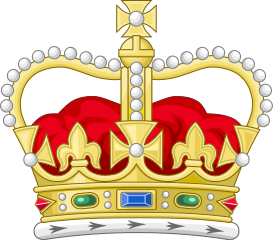
The montage includes a close-up shot of the pediment on the southern facade of the residence, as well as a clip of Mandelson speaking behind a podium (location unknown, but presumably within the embassy itself). Both the pediment and the podium feature the British royal arms, the former (built in 1928) using the Tudor crown and the latter (made at some point in Elizabeth II’s reign) using St Edward’s crown.

Lines 10-14 are most in need of analysis: His reference to “a middle-class family” overlooks that his grandfather, though not yet ennobled, was already a Companion of Honour and had been an MP for decades with several cabinet posts under his belt. Line 11 should really be split up to read something like “My father was from Jewish parents. His own father helped found a local synagogue.” as the single-clause formation he actually used implies his paternal grandparents were siblings! Line 13 is a little confusing – if he didn’t already have a passion for learning then how did he get into Oxford in the first place?

The inconsistency in line 14 is especially frustrating – he refers to Parliament’s lower house by name but its upper house merely by that description, despite the montage including a clip of his introduction ceremony. The verb “elected” obviously only applies to the former. The sentence would work better as “I’ve served as a legislator, first elected to Parliament’s lower house, then appointed to the upper house.” instead.

The assertion made in line 4 could also be a little disappointing to some of Britain’s European and Commonwealth allies – especially, given recent events, the ones in Canada.

UPDATE (11th September)

Whoops, that didn’t last long, did it?

A Proliferation of Signs: Badges in the Medieval World

Video

It has been a while since I attended any virtual events by the Royal Heraldry Society of Canada. Today’s was rather different in style to the ones I remember during the COVID years.

The speaker was Ann Marie Rasmussen, Professor and Diefenbaker Memorial Chair in German Literary Studies at the University of Waterloo. Her lecture was divided into three parts.

Badges are small devices found mainly in north west Europe. They were easy and cheap to make, usually from pewter in moulds carved from stone. We have an example of a surviving stone mould in Mont-Saint-Michel showing the image of St Michael slaying the dragon. Pewter can show fine details well, but it has the weakness of tarnishing easily. Currently there are more than twenty-thousand medieval badges surviving in museums, and during the middle ages there were probably more than a million in existence. Badges were designed to be decoded. Pilgrim badges were one type, made and sold at holy sites showing religious imagery (e.g. one from Canterbury shows Thomas Becket, one from the Vatican shows crossed keys with a tiara). There survives an anonymous painting of Christ himself among the pilgrims, all of them wearing badges.

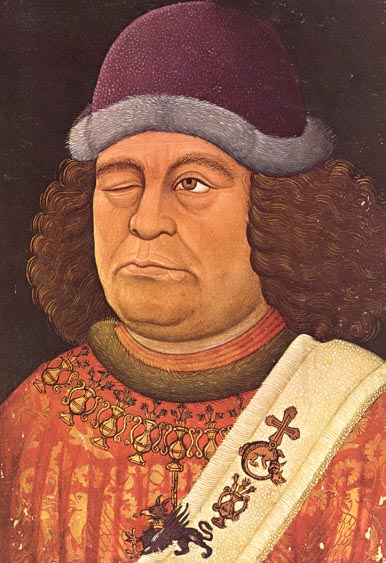
Almost all retainers and employees would have a badge to show the identity of the lord, household or organisation for which they worked. There are even examples of badges made of children’s toys. A 1432 portrait of the poet Oswald von Wolkenstein shows him wearing a badge of a dragon and griffin.

The separation of the spiritual and temporal realms is a modern idea. The types of badges often crossed over. Not all imagery was reverential – there are some humourous ones designed to resemble unsightly body parts, and there are records from medieval times of people complaining about indecent badges being worn and distributed around festival times.

EXTERNAL LINKS

UPDATE (June 13th)

The Society has uploaded the lecture to its YouTube channel, so I am spared from writing out a long description of its contents.

New World Heraldry with Bruce Patterson

The Oxford University Heraldry Society often plays host to reasonably esteemed academics in their field, but incumbent officers of arms themselves are a rare treat. This evening our guest speaker was Bruce Patterson, Saint-Laurent Herald of Arms in Ordinary and Deputy Chief Herald of Canada. He gave us an overview of the history of Canadian heraldry from the sixteenth century to the twenty-first.

Canada began as a colony within New France, and thus naturally used the French royal arms. In the 1760s sovereignty was taken over by the Kingdom of Great Britain and exercised by the Hudson Bay Company. In 1826 the Canada Company was created to recruit Brits to emigrate to the under-developed parts of the colony. Both of these corporations had grants of arms.

Grants of arms to Canadian citizens were mostly the responsibility of the College of Arms and the Lyon Court until 4th June 1988 when the Canadian Heraldic Authority was established as part of the Governor-General’s office. The government at the time deemed the existence of a home-owned heraldic authority to be an essential feature of a sovereign nation. The physical headquarters of the CHA are found at La Salle Academy complex, along with the rest of the Canadian honours system. The individual offices of arms within the authority are named after Canada’s rivers. The Chief Herald has a blue and black tabard, but the other heralds merely wear morning dress in contrast to their British counterparts (as illustrated by a photograph from the Diamond Jubilee pageant in 2012). The CHA has an arrangement with the CoA regarding the supply of drawings of older grants, and the former lacks the latter’s vast genealogical remit.

The Authority issues grants on letters patent and, like its parent institutions, allows recipients to choose the level of extravagance and ornamentation in their design. A distinctly Canadian feature is that the blazon is written in both French and English, with grantees able to choose which language takes precedence. Other distinctive Canadian features are that male and female armigers use identical arrangements of elements and that cadency is determined on a personal basis rather than according to any standardised convention. Canadian grants often combine symbols familiar in European and Inuit traditions – most prominently in the arms of Mary Simon.

Patterson rounded off with some illustrations of the royal achievement of Canada itself, as well as the sovereign’s banner of arms and the new variant of the Tudor crown.

The lecture aimed for breadth rather than depth (as this blog post likely reflects), and served better as an introduction for beginners than a deep dive for the devout. If this proves to be the teaser for a long-running series I would be overjoyed, especially as I have not found many session of the Royal Canadian Heraldry Society advertised on Eventbrite for quite some time.

The Crown old and new

Early in the new reign, the College of Arms announced a new royal cypher for Charles III. A noted difference between this one and his mother’s (other than the name, of course) was the depiction of the crown.

“St Edward’s” crown, favoured by Charles II to Victoria

Up to and including Victoria’s reign, depictions of the crown in heraldic drawings could be inconsistent. Edward VII ordered a standardised depiction with simple arches, which has come to be known as “the Tudor crown” due to its resemblance to one supposedly commissioned by Henry VII or VIII (and seen in royal portraits up to the Civil War). Elizabeth II later decided to change this to a version with depressed arches, better resembling St Edward’s crown which monarchs actually wear at coronations, and which seemed to be favoured in heraldic drawings before Victoria’s time. The timing of these decisions created a general misconception that the Tudor crown is always used when the monarch is male and St Edward’s when the monarch is female. Charles’s decision is likely to reinforce that belief.

The “Tudor” crown, as used by Edward VII-George VI

On the day of the coronation, the Canadian Heraldic Authority unveilved their own new version of the crown, intended to be more distinctly Canadian. The overall shape of the crown is still based on the Tudor version, but the jewels have been replaced by a wavy blue line, the uppermost cross by a snowflake (as already used in the Order of Canada) and the crosses around the rim by – of course – golden maple leaves. The removal of explicit Christian symbols may be due to the lack of an established church in Canada, though the omission of fleurs-de-lis is a little perplexing, given the constitutional importance of the country’s French heritage.

https://upload.wikimedia.org/wikipedia/commons/thumb/d/d4/Crown_of_Canada_2023.svg/248px-Crown_of_Canada_2023.svg.png

The Canadian crown, as used by Charles III

It is not clear on exactly what timescale the new crown is to supersede the old. Four days after the coronation the government of Canada released a revised Canadian passport design. Though many radical changes have been made, the 1952 depiction of the crown retains pride of place. It is also not certain whether this will apply to the parliamentary maces. Currently the mace of the House of Commons is modeled on the Tudor crown while that of the Senate is modeled on St Edward’s. This is reflected in the heraldic badge of the parliament, showing both maces in saltire behind the shield. Funnily enough, British passports, though updating the introductory text to reference His Britannic Majesty instead of Hers, also still seem to have the prior crown on their covers.

The shield itself (fleurs and all) remains unchanged. It was announced on the same day that the arms of Canada may be flown as a banner to represent Charles and all future sovereigns. Previously Elizabeth II’s flag had the royal arms of Canada with her personal EIIR cypher imposed on a hurt in the middle. The removal of the cypher brings Canada closer in line with British heraldic practice whereby the reigning monarch bears the arms of dominion undifferenced, as well as avoiding the hassle of redesigning the flag for each subsequent reign. It remains to be seen whether the heraldic banners of other members of the royal family will also omit their cyphers and keep just the cadency labels.

FURTHER READING

Heraldic Artist Chat

Another session with the Royal Heraldry Society of Canada, Toronto Branch. This time Jason Burgoin was interviewing six heraldic artists from different countries.

Edgar Sims

He has been drawing all his life, becoming a graphic designer after high school. He worked in different areas of art, not always as exciting. He studied law at some point, then transitioned to studying history in the last ten years. All of a sudden they all clicked together. Coats of arms are all around but most people don’t really think about them. Sims always worked with traditional media, but Latvian heraldry is very digital – no scrolls, letters patent or large beautiful manuscripts. He often has to explain the rules of heraldry to audiences who are not knowledgeable. He only works with Latvian clients, creating new achievements from scratch. He has made many civic arms, including the national hospital, as well as a President of Latvia.

Latvian heraldry is both very old and very new, rooted in the thirteenth century but interrupted by Soviet occupation. The Heraldic Authority is quite pedantic in stylistic choices to make a unified aesthetic, but the four artists working their can each recognise their own work. A wide variety of traditions are blended together – generally following the Nordic tradition but using British torses and crests. Branches of plants often surround personal shields, whereas other countries reserve these for civic arms. The main inspiration for the authority was the “boom” of heraldry in the interwar years, when civic arms were widespread but personal arms were discouraged – tainted by association with Germany.

Aaron Murray Travers

He is still relatively new to heraldry, but has been sculpting, painting and drawing his whole life. He met some of his lifelong friends through artwork. Australian heraldry was rare in the second millennium aside from politicians and military officers, but interest is growing now. Blazon has always been a challenge due to his dyslexia. He originally got into the subject after finding “the Travers arms” at a bucketshop. Fired up by his ancestry he eventually created his own style. He enjoys being able to recognised particular individuals by their arms across the centuries. He repeats traditional artistic techniques, but also incorporates elements from graffiti and comic book work. He particularly loves bookplates.

Allan Ailo

He was a graphic artist for many years. He had a lifelong interest in heraldry since finding Heather Childs’s book on it in high school. The rise of digital art has given heraldists much more flexibility and allowed it to become more widespread. Individuals can have representations of their own heraldry with much less fuss – no need to rent a private artist. Whereas before heraldic dinnerware required skilled craftsmanship, nowadays heraldic mugs can be printed by machine. Heraldry is more visible now that it is no longer bound to a physical object.

He advises new artists to study symbolism, and other types of art. His most rewarding experiences are seeing other people suddenly understand heraldry. His most challenging are interpreting blazon. He designed the scroll which the society sent to Elizabeth II for her Platinum Jubilee, as well as the members’ medallion.

Tania Crossingham

She is also Australian, but has lived in Finland for the past four years. She studied to teach art history in high school, but then fell in love with medieval illumination and taught herself calligraphy. She is also branching out to fabric design. One day Leon Mintle approached her at an exhibition and said she should try heraldry.

She loves the more traditional styles and these are what her customers typically want. She reworks old designs, including letters patent. She advises finding a more experienced artist to mentor you.

Xon de la Campa

Before he got into proper education he saw heraldry everywhere, but it was not popular as a hobby. It was weird, like comic books. Spain is unique in using the bordure to denote maternal arms, as well as quartering them with the paternal as a matter of course. There is also a tradition of adding text to the shield. This makes for some interesting designs, not all of them nice. He is more relaxed with digital art than traditional tools as it is easier to correct mistakes that way. Daniel de Bruen is his main influence, with his unique ability to show new and old, producing something very different.

Brian Abshier

He took art as an optional class at university. He was never taught formally. He never did any kind of digital art. He had a parallel passion for history. Wikipedia made his research easier. Heraldry is not very prevalent in the United States. His preferred style is that of manuscripts and armorials from the thirteenth and fourteenth centuries, for which he often receives online requests. His most interesting project was a history of an English manor, illustrating the house, its owners and their arms. Bitmaps and rasters don’t scale well, so he has to ask clients about the size of their intended display. He uses a mouse rather than a tablet, the resulting imperfections avoiding a wholly digital look.

EXTERNAL LINKS

Burgoin’s Hall of Heraldic Artists

A Canadian Heraldry Double-Dip

At 4pm today (or 11am for them) I attended yet another virtual lecture put on by the Toronto Branch of the Royal Heraldry Society of Canada. The speaker was Bernard Juby and the topic was heraldic bookplates – meaning a decorative label pasted into the early pages of a book, illustrating the arms of the copy’s owner. Juby told us, and showed many examples, of heraldic artists in Canada and around the world who had been commissioned to make such pieces. He said that the convention began in late fifteenth-century Germany, and that until relatively recently books of all kinds were primarily owned by the elite social classes, most of whom would be armigers.

His presentation focused on breadth rather than depth, moving at considerable speed through the portfolios of over a hundred artists. The rushing by of so many luxuriously detailed and coloured artworks was quite dazzling. It was indicated that a recording of the presentation will shortly be available on the society’s YouTube channel, so I need not attempt to describe them all again.

Towards the end of this presentation, Jason Burgoin casually mentioned that later in the same day the British Columbia & Yukon branch of the society would be holding its annual general meeting. This began at 1pm BC time, which was 4pm in Toronto or 9pm in Yorkshire.*

The meeting was chaired by Steve Cowan. He welcomed the presence of Angélique Bernard, one of the branch’s patrons, and then announced that this would probably be the last Zoom meeting for a little while. He moved swiftly and efficiently through the agenda, including a handful of financial statements and appointments of various society officers (He noted that everybody else turned their cameras off at that point. “Very wise”.). The main concern was the content of The Blazon, the branch’s newsletter, and anticipation of upcoming commemorations (Commonwealth Day, Platinum Jubilee and the branch’s own fortieth anniversary). I was pleased to be able to witness this, as practice for the NERA’s AGM in May.

After an ten-minute adjournment, another presentation followed. This was by Charles Maier, former Athabaska Herald, and concerned the armorial history of Sir Winston Churchill. Maier said that while we often talk of him as one of the great men of history, his heraldry is great in itself. Winston was born a nephew of the Duke of Marlborough. He was proud of his lineage but also wanted to secure his own accomplishments. It is a lingering curiosity that he consistently refused to differentiate his own arms from those of his uncle.

The first Sir Winston Churchill was a cavalier soldier who was stripped of his lands and wealth under the republic. It was most likely during this time that the motto “Faithful Though Disinherited” was adopted. His branch of the family had borne arms Sable a lion rampant Argent over all a bend Gules, but in Charles II’s reign the bend was removed and replaced with a canton Argent thereon a cross Gules, presumably as an augmentation in reward for his services. The crest, a lion holding a red flag, also seems to date from this time. John Churchill, 1st Duke of Marlborough, was also made a Prince of the Holy Roman Empire in 1704 and Prince of Mindelheim in 1705. This allowed him to use the Imperial Eagle as a supporter behind the shield in addition to the wyverns on either side. A further augmentation (an inescutcheon Argent a cross Gules, surmounted by another inescutcheon Azure three fleur-de-lys Or) was granted in time for his funeral in 1722, and carried on flags in his procession. A special act of Parliament allowed Churchill’s English peerages to pass to his daughters, and through them into the Spencer family. The Spencer dukes gave their own quarterings priority over his until 1817 when they swapped them around and changed their name to Spencer-Churchill. They used a griffin and a wyvern as supporters. The modern day dukes continue to use the heraldic accoutrements of their principality, despite titles of the Holy Roman Empire never being allowed to pass through the female line, and also in spite of all German monarchies having been abolished in 1918. I found it a little strange that the Churchills continue to cling to a token given by the Germans for defeating the French, given that their name is now associated with saving the French from the Germans.
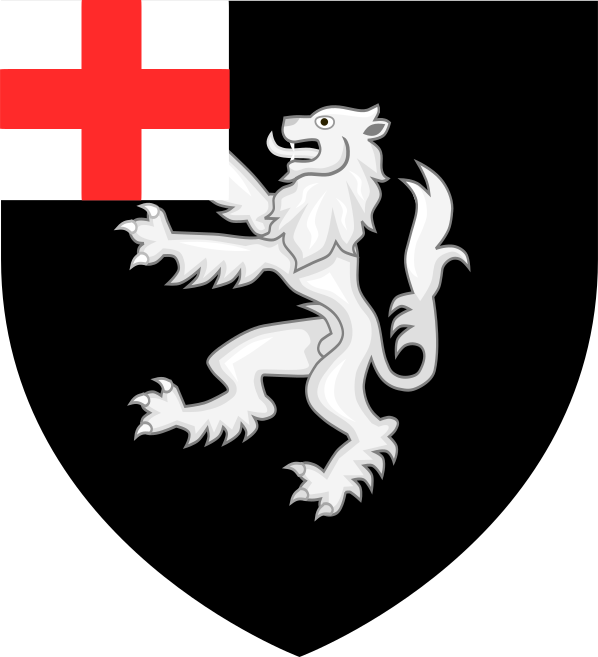
The later Winston was appointed Lord Warden of the Cinque Ports in 1941, allowing him to use the arms of that office. He became a Knight of the Garter in 1953, requiring a banner and stallplate of his arms to be placed in St George’s Chapel. Churchill disliked his first banner and had another one made in “a more striking, modern style”. He also had two stall plates – the first was made by Harold Soper in 1954, but never affixed because the herald responsible was not satisfied with its artistic quality. The second was made in 1958 by George Friend. He received a state funeral in 1965. This was conducted by the Earl Marshal, who had Nelson and Wellington as his only precedents. Banners of Churchill’s own arms, and those of the Cinque Ports, were held by heralds in his procession. The funeral banner had a small blue crescent for difference, which Churchill had refused to use when alive. The coffin went from Victoria to Bladen by train, the namesake locomotive bearing a plaque of his arms on its boiler.

Maier pointed to some other examples of his heraldic legacy – HMS Churchill, HMCS Churchill, Churchill College Cambridge and the 1965 Churchill postal stamp, whose launch coincided with the introduction of the modern flag of Canada, ironically symbolic of the passing of the very age with which he was most associated. His arms were also borne, impaled, by his daughter Mary Soames, who became a Lady of the Garter in 2005. Of course, he also brought up Churchill’s time in Canada: The famous “roaring lion” portrait was taken by Yousuf Karsh in 1941, and Churchill’s expression is of anger at having his cigar taken away. William McKenzie-King, Prime Minister of Canada at the time, was desperate to be photographed with Churchill, though that picture is less well known. When Churchill was Secretary of State for the Colonies he argued with the Garter King of Arms about whether a warrant or a proclamation was needed for Canada’s new blazon.

Patrick Crocco asked if there was any particular system for assigning Garter stalls. Maier said it was simply whichever stall had been recently vacated. He also mentioned that HM Treasury covers all expenses relating to the order’s insignia.

There followed even more post-presentation chat, including a lengthy discussion between Cowan and Burgoin about women’s naval bowler hats. Sean from New Zealand was again present with his baby (whose burblings could be heard). I said that I had spent much of the past two years baby-sitting, thus becoming familiar with the heraldic banners featured in Ben & Holly among other programs. I also mentioned that I had been reading The History of the English-Speaking Peoples aloud to my mother, and trying to master Churchill’s voice.

All in all, today’s three events took up a lot of virtual time, but was well worth it. More are coming soon.

FURTHER READING

*A considerable amount of the post-presentation chat concerned the confusion that arises due to holding virtual meetings across multiple time zones. To make matters worse, different countries do daylight savings at different times – in Canada it begins tomorrow, but in Britain not for another fortnight.

A Grand Total

It is not entirely easy to count how many heraldic illustrations I have made for Wikimedia Commons over the years. Do I count badges separately from shields? Do I include achievements I’ve made twice? What about ones that have been deleted?

When I finished updating my gallery at the end of July the shields and lozenges collectively numbered nine-hundred and sixty-six. Over the course of August I have illustrated at least another thirty-four.

My official one thousandth coat of arms is that of the Barons Darebury, a relatively short and low-profile line of peers whose distinctions include High Sheriff of Cheshire and Chairman of Aintree Racecourse.

Having cleared this benchmark, I move onto the next project. Last year I unveiled my armorial of universities in the United Kingdom. This year I have made a similar list for the universities in Canada. This one has so far progressed much more rapidly, as Canadian heraldry is very easily searchable in the Public Register of Arms, Flags and Badges, in contrast to British heraldry which often involves a great deal of searching around for clues. The register had blazons for fifty-four fully-fledged universities, as well as twenty-nine subsidiary colleges or faculties and four related voluntary bodies.

The items in this list are organised by province, though they are not evenly spread – forty of the eighty-seven institutions are in Ontario, with the University of Toronto alone having fifteen distinct grants. Newfoundland & Labrador and Prince Edward Island, by contrast, boast only one each. Another strange trend is that Canada’s heralds seem to have been inordinately fond of sealing their letters patent on the fifteenth and twentieth days of the month.

I am struck by one major problem – although I have quickly compiled many dozens of blazons I can find illustrations for only two of them. On the actual pages of these institutions one can frequently find an image of the coat of arms copied directly from either the register or the university’s own website, claimed under fair use. Such a justification does not fly on pages such as the one I am making, so I will have to call on the aid of all Wikimedia’s great armorial artists to fill the gaps.

It Mitre Be Good

Bowyer (left) and Burgoin (right)

My assault on the Eventbrite buffet continues with Crosiers, and Mitres, and Tiaras, Oh My: A Gamboling Journey Through Ecclesiastical Heraldry by David Bowyer. The session was hosted by Jason Burgoin, president of the Toronto Branch of the Royal Canadian Heraldry Society.

Logging on was difficult: I had expected the meeting to begin at 7pm as listed on the advertisement but then it became apparent that this was Toronto time, so for attendees from the British Isles it would actually be taking place from midnight. The first few minutes were a little tense as the audio quality was very poor and an unknown person let out several primal-sounding screeches that left the rest of us confused. Burgoin, pleading that “We are not IT folks.” advised us that the bandwidth would be conserved and quality improved if everybody not presenting would turn off their cameras and microphones, and indeed there was some improvement. When Bowyer began his presentation he was swiftly interrupted by a notice that the screen share feature was not on.

Bowyer’s presentation eventually got moving. There were 119 PowerPoint slides, each showing an illustration of the titular ecclesiastical objects either in real life or represented in heraldry. He explained the history and symbolism of all the different kinds of hats that could be placed above a clergyman’s arms and the other embellishments that could be placed behind.

After nearly two hours the talk concluded and Burgoin resumed the screen to announce other upcoming events. He was conscious that many overseas viewers had been forced to stay up very late and was keen to answer any questions before they started logging off en masse. There was some time left over for idle chitchat, with one Englishwoman commenting that she had never used Eventbrite before signing up to this two months ago, and that it wasn’t a problem for Brits be up past midnight but she didn’t expect it to go on until 2am. I, in my first verbal interjection to any virtual conference, remarked that one of the advantages of the virtual format was the ability to attend from in bed. Lyon then told us how annoyed he was that the College of Arms in England had granted arms to Bishop Seabury of Connecticut* even though he had been consecrated in Aberdeen. He then announced that he had recently granted arms to the Principal Presbyterian Theological College. They had requested that their supporters be “one man, one woman, one white, one black, one in one academic gown, one in another academic gown” and that “when I described it in the blazon they decided it wasn’t gender-neutral enough so I had to go back and look at new language to be able to express what the students’ aspirations were for the supporters which I managed to do.” I then asked how long the blazon ended up being, expecting that the effort to account for every demographic permutation would have consumed reams of parchment. Instead he replied “Very short, I ended up just blazoning it “two human figures one wearing X one wearing Y representative of inclusion” and they can do what they like with it after that as far as I’m concerned.” and then departed saying he had to preach in the morning. I noted after he had gone that I now had an unusual claim to fame – very few can say that they spoke to Scotland’s chief herald from in bed at 2am. Another member said “We’ll just have to invite Garter to one of these.” and indeed I have often wondered when I will get to see any representatives of the English college on Zoom.

I recognised some of the names, faces and avatars from earlier conferences – such as Liam Devlin. Alexandra Fol, David G. Scott, Richard d’Apice, Brian Abel Ragen and Douglas Anderson were also among the names, though I cannot be certain that they were the ones I have linked.

There are plenty more heraldry conferences to come, as well as plenty on other topics – such as Lady Hale of Richmond discussing her 2019 prorogation judgement. All in good time.

*It wasn’t clear from context if he meant Seabury’s personal arms or the official arms of the diocese.