
Having already posted some months ago a long list of all the books I’ve recently acquired, I suppose at some point I should say something about the experience of actually reading them. Here, then, are some mini-reviews of the publications I’ve finished during the period of January-June 2025, in no particular order.
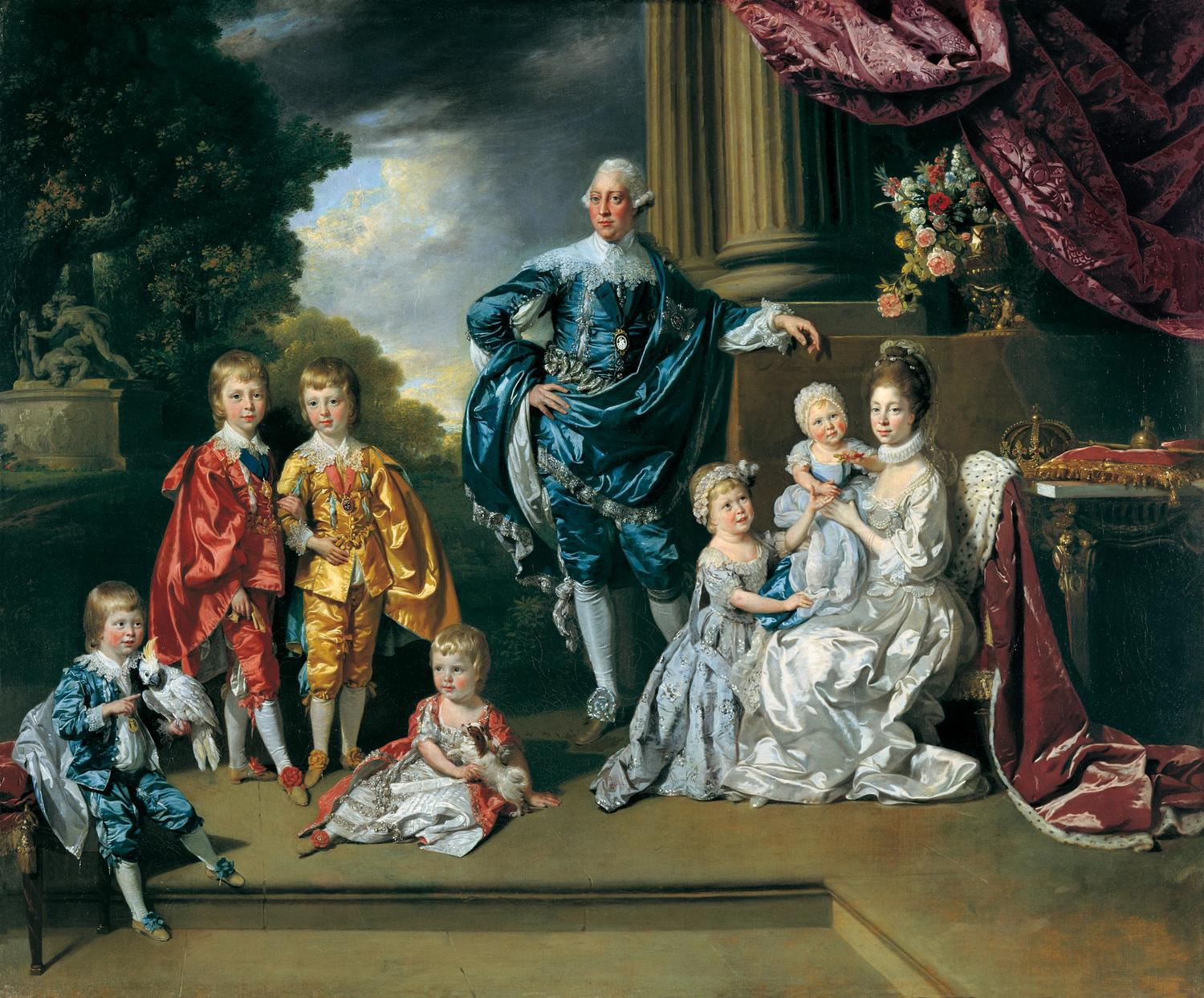
The First Four Georges by Sir J. H. Plumb
Already reviewed in a different post.
The Extended Phenotype by Richard Dawkins
Although he is primarily famous for The God Delusion and maybe secondarily for The Selfish Gene, the professor himself generally regards this one as his true magnum opus. I’m not sure how famous Dawkins already was back in 1982, but this book feels as if written in his capacity as a biologist rather than as a public intellectual and activist. It is a much more academic work than his more famous ones and, having not been taught biology for just over a decade, I cannot claim full comprehension of the more terminologically-dense parts, but these aren’t really necessary for understanding the main thesis. Dawkins does not present new facts so much as a new way of interpreting facts we already possess: Normally the conception of evolution and natural selection is that they take place on the level of the individual organism, the family, the society and even the entire species. Dawkins instead looks at it in terms of the alleles of genes competing indirectly against each other with the organisms serving merely as a convenient – and disposable – host. The title of the book refers to Dawkins’s other big point that alleles affect the physical and behavioural characteristics of a species, which in turn affect the environment those species inhabit, as well as the ways in which other species evolve in response, so the phenotype of an allele in one species can be regarded as including the features observed in another species. The author also brings up a great many case studies of evolutionary adaptation and competition, including counter-intuitive examples such as between males and females of the same species, or even between parent and child! Of great interest here are his analyses of why some creatures are capable of adapting to “win” an evolutionary war while others are not. A theme which runs through the book as well is the difficulty of finding the vocabulary to comprehend these complex natural phenomena without slipping into metaphor and personification, which feels in some way prescient given the author’s later writings about religion.
The Final Curtsey by Margaret Rhodes
As with Lady Boothroyd’s autobiography, the early sections of this book felt a lot like reading my own grandmother’s childhood recollections, although from the opposite end of the class spectrum. Rhodes gives her account of her aristocratic early life, her experience of living through the war and her career as a courtier to the royal family. One thing that confused me a little was her choice of names for Britain’s senior mother and daughter after 1952 – the reigning sovereign is “The Queen” whereas George VI’s widow is “Queen Elizabeth”. Often I would get a long way into a paragraph before working out which one Rhodes meant. Despite being published in 2012, just four years before she died, Rhodes mentions a distinctly old-fashioned approach to writing. To modern eyes she appears curiously unfazed by the historical weight of her experiences, taking it in her stride that she dined nightly with the heiress presumptive while the bombs were falling, got roped into organising a faraway dynastic wedding, smuggled prisoners out of a country undergoing a violent coup and even watched a man drop dead in front of her. While the overall tone may seem a little twee at times it’s definitely worth the read and packs a lot into relatively few pages. The final days of the Princess Margaret and the Queen Mother are especially important for the record.
The Gathering Storm by Sir Winston Churchill
This is a very long book, and that’s only the first in a six-volume set amounting to more than three thousand pages in total. Churchill has written a great many well-renowned history books, but here it is a history in which he was a major protagonist so it also doubles as a memoir of sorts. The length here is justified as he writes in great detail about a multiplicity of topics, taking the reader step-by-step from the conclusion of WWI to the outbreak of WWII, with the volume ending at the point when he became Prime Minister. It’s astonishing to realise that he completed this enormous tome while he was serving as Leader of the Opposition, a feat of intellectual multitasking which feels impossible today. Given that Churchill’s reputation speaks for itself it almost feels redundant to comment further except to say that I am on the lookout for Volume 2, though given the backlog of books already accumulated it could take a while to get there.
The Glamour Boys by Sir Chris Bryant
Yet another World War II history, and also written by a sitting MP. Bryant’s behind-the-scenes account of the parliamentary machinations leading up to the war is in many ways complementary to Churchill’s own. The focus here is on the alternative, underground world that the “boys” were forced to inhabit, noting the parallels between their nonconformism, adamant against the mainstream of the time, on both personal and political levels. This book presents a major setback for anyone attempting a historical rehabilitation of Neville Chamberlain – his reputation before was of optimistic (or perhaps delusional) naivety rather than malevolence, but here he comes off as cruel and wicked in his attempts to suppress his glamorous detractors with an underhanded smear campaign. The only downside to this book is its length – at 448 pages it’s a rather weighty tome and it sometimes feels as if Bryant was padding it out to look more imposing on the shelves. Some critics have said he indulges too much in the lurid descriptions of the rebels’ relationships in the early part of the book, but I think the real waffle comes nearer the end, once the war has already gotten going, when the defining goal of the story has been completed and everything thereafter feels a bit more like generic wartime biography divorced from the specialist subject matter.
The King’s Painter by Franny Moyle
Going a bit further back this time takes us to the Tudor era. This is a biography of the portrait artist Hans Holbein the Younger, best remembered for his imposing image of Henry VIII. The biography covers the full length of Holbein’s life and career, with detailed analyses of his major works and the artistic innovations they represented. Not having studied the history of art (or art itself) much before I cannot fairly judge the quality of Moyle’s commentary here, except to note that she brought up verisimilitude so often it almost felt like a tic. Aside from the art itself, a lot of the book was dedicated to the religious and political upheavals in continental Europe which alternately expanded and restricted Holbein’s professional opportunities.
The Roman War Machine by John Peddie
Returning to the war theme but backing up even further to the ancient world, this is a book on the military structure and logistics of the Roman Empire. In some ways this felt like a throwback to my GCSE Latin course, in others like a memory of and educational field trip I might have done in primary school. This book is in English, of course, save for the heavy use of Latin military jargon. Peddie writes in detail, and with diagrams, about the ranks, formations, equipment and resources sustaining Rome’s military operations. Even here we cannot avoid World War II, for Peddie makes repeated comparisons to campaigns in the twentieth century to show the historical resilience of the Roman legacy.
The Penguin Guide to the Railways of Britain by Edgar Jones
This book was published in 1981 so a lot of the guidance here is obviously out of date now. On this note I would particularly highlight some lines from pages 36-38: “The Advanced Passenger Train represents the latest development in electric rail transport.”, “It is possible that a diesel-powered version of the APT will be developed for use on non-electrified lines.” and “At this moment 60 per cent of trains are diesel-powered. With the progressive introduction of the HST – the most advanced diesel-electric in the world – it is fair to say that this form of power has reached its apogee in Britain. Since electricity holds the key to the future, when these expresses become obsolete it is probable that the diesel, like steam, will disappear.”. The first fifty pages tell the history of locomotion in Britain from the early nineteenth century to the late twentieth, including the evolution (with diagrams) of different types of rail vehicles. The next three hundred pages take the reader around the country, region by region, explaining all the routes can be taken and all the stations that can be visited. The writing, though concise and eloquent, can be a little dry and it was difficult to keep up the momentum towards the end. From the way it’s structured, it less resembles a conventional reading book than the railway version of Burke’s and Debrett’s, so perhaps one is better off treating it that way instead of trying to finish it in a linear fashion.
Classical Literary Criticism by T. S. Dorsch
It is a little strange to realise that not only has literature itself been around for thousands of years but that literary criticism has been too. Even though the source texts may be as old as the fourth century BC and the translations into English were done in 1965, a lot of the prose still feels contemporary to one familiar with book and film reviews both amateur and professional. Indeed, a lot of the talking points would not have been out of place in a modern day “reviewtainment” video essay. There are multiple chapters on individual narrative devices, as well a the structures and purposes of different types of plays and comments on stories already performed in the writers’ memories. Most impressively, there are multiple instances when one of the writers goes into detailed analyses of the subtleties of another writer’s word choices and sentence structure. All of this, of course, has to be translated from Greek and Latin into English with the nuances intact. There are even times when one of them criticises another critic’s literary criticism, such as when (p65) Aristotle notes that “Ariphades ridiculed the tragedies for using expressions that no one would use in ordinary speech… these raise the diction above the level of the commonplace, but Ariphades failed to see this”. The introductory note by the editor explains who the sources – Aristotle, Horace and Longinus – actually were. The former belonged in the fourth century BC while the latter two belonged in the first. The gap between them is greater than between Shakespeare and Wilde, yet to us know they seem interchangeable, a good reminder of how long the ancient Greek and Roman eras really were.
Shadow State by Luke Harding
The book was just over three hundred page but I devoured it very rapidly. It tells of how the Russian Federation went from the collapse of the Soviet Union under Gorbachev to the emergence of Putin’s regime in which the military, business, the mafia and the President’s personal interests are all effectively merged into one and how this level of corruption affects not just Russia itself but also the other nations with which Russia interferes. The stories told are the ones you’d expect – Hillary Clinton’s emails, the Salisbury poisoning, and Brexit. There is some poetry in the timing: The book was published in 2020 as Trump was heading to the election he would lose. I bought it from Red Cross on 28th August 2024, as he was heading to the election which would see him restored. This also of course means that Putin’s ongoing war against Ukraine cannot be included, though there is much about the events leading up to it and Zelensky (suited and beardless) makes several appearances. The hero of the tale is Eliot Higgins, a journalist who created the Bellingcat online information exchange that allowed amateurs to monitor and scrutinise world events remotely. Harding resists the temptation to grant Russia an Orwellian omniscience, noting instead that Putin’s schemes often backfired or fell flat, that he only turned to online subterfuge because he lacked the funds for traditional spycraft, that many of his apparent successes – including Trump – were coincidence or blind luck and that the quality of Russian operatives had declined since Soviet times. The story of Salisbury assassins Chepiga and Mishkin, in particular, plays out as something of a farce. Nonetheless the death and destruction they caused is very real and, at time of writing, the threat feels as pressing as ever.
The Ricardian Century by John Saunders
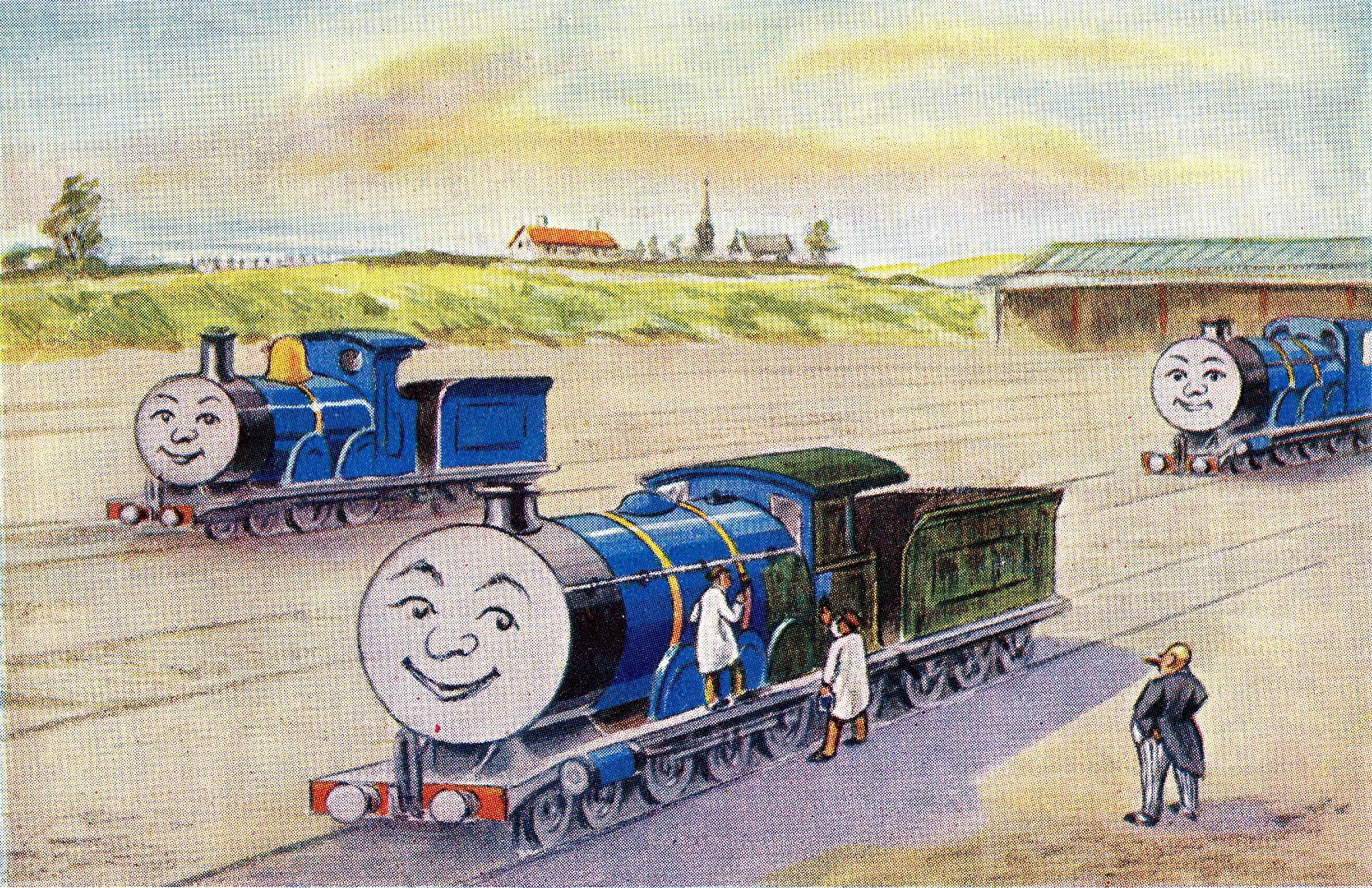
This may be the newest book I’ve ever picked up from a charity shop, as I found it at Oakwood Dog Rescue in February and the copyright notice said 2025. The book was in pristine condition and I worked very hard to keep it that way, although despite my best efforts a few bits of the corner flaked off before I’d finished it. This is the official history of the Richard III Society from its foundation in 1924 (as the Fellowship of the White Boar) to its centenary celebrations in 2024. The book is the product of a print-on-demand service rather than an established publisher and at times looks, to paraphrase Mark Corrigan, like a printout rather than a book. The cover design is especially poor: On the rear is a small square photograph of Saunders, in low resolution and squinting a bit, clearly cropped from a larger group shot, while the front has an equally-fuzzy raster of a depiction of the Society’s coat of arms from which not all of the white space has been cut out of the background. Aesthetic issues aside the contents are engaging enough, giving the reader a detailed look at all the twist and turns of both Ricardianism as a movement and the Society as an organisation. What fascinates me is that by all logic the Society ought to be a dissident fringe group. Though clearly there has been a shift in public attitudes to Richard III over the centuries (and certainly in this millennium) towards acquitting him of history’s more outlandish charges, the consensus among historians is still that he was the most likely perpetrator of the regicide of his nephews. Furthermore, as Ricardianism asserts that “the wrong side won” at Bosworth in 1485, and that sad side includes the current royal family, it is tantamount to asserting (much like the Jacobites) that the entire royal line thereafter to the present day must be illegitimate. Despite this the Society has been accepted by the wider academic community as a legitimate scholarly institution (even if they still ultimately disagree with its conclusions) and has even been accepted by the royal establishment with Prince Richard, Duke of Gloucester serving as Patron for more than half of his and its lifetime and the College of Arms hosting the book’s launch. George Awdry, Wilbert’s brother, is also mentioned a few times. One thing that really stuck out at me was the revelation (p93-4) that the Society was not formally incorporated as a legal entity until 2019, which made me wonder how they’d acquired a grant of arms in 1988, among other things.




 Robin Stanley Taylor

_2024.jpg)