Human Rights – Where Are We Going

P1030101

Yesterday, as I walked out of the lecture theatre where Mr Bond had given his Polymath talk, I noticed a monochrome A4 poster pinned to a notice board on the opposite wall which bore the face of The Right Honourable Dominic Grieve QC MP, the former Attorney General for England & Wales. I was startled to see that his present was scheduled to occur less than 24 hours after the one which I had just left.

This evening, as the sweltering heat of the afternoon had begun to subside, I arrived at the Esk building. Being a mathematics student, I lacked much in the way of prior experience with that part of the campus and for some minutes I thought I might be lost. I was reassured that I had reached the correct venue by the appearance of a wine table just outside the lecture theatre flanked by several men in dark suits (among them Professor Norton). I shambled in believing myself to be late, but in fact our right honourable and learned guest was himself delayed by almost thirty minutes due to faulty railway signals between London and Doncaster.

Though Mr Grieve was invited and advertised primarily for his legal experience, he chose on this occasion to speak in his capacity as a politician. His speech covered the ups and downs of the relationship between the British political scene and the concept of Human Rights.

In recent years the Conservative Party has pushed to replace the Human Rights Act 1998 with a British Bill of Rights, mainly with the intention of disentangling British courts from those in Strasbourg. Theresa May has even been known to say that leaving the European Convention on Human Rights is more important than leaving the European Union. Grieve confessed that he would struggle to maintain an impartial stance on this issue, his own career as Attorney General having ended because of it.

The ECHR was promoted in the immediate post-war years by Sir David Maxwell-Fyfe (later known as Lord Kilmuir). In 1951 the United Kingdom became the first country to ratify the convention. Controversy came and went over the years, with tensions notably emerging under New Labour who, Grieves said, made much of the promotion of Human Rights legislation but did little to confer any national character upon it.

In the latter half of the noughties, the Conservative Party began planning for major changes to our human rights legislation. Michael Howard in particular was hostile to the Human Rights Act, and David Cameron leaned in that direction for – leading towards the 2010 general election – he was trying to form an alliance with News International, who did not much care for the expansion of privacy law. Grieve, Shadow Secretary of State for Justice, produced reform proposals in late 2009.

In the next section of his speech, our guest explained how, despite their partisans’ decade of obsession, Conservative governments have struggled to make any noteworthy progress in separating British courts from those on the continent. The First Cameron Ministry (sometimes known as ConDem) made considerable noise, but no action could actually be taken without the cooperation of the Liberal Democrats, who – being ardent Europhiles – naturally refused to give any.

It became very quickly apparent through the speech that Mr Grieve considered the British Bill of Rights to be an exercise in pointlessness. He noted that only 16% of polled voters showed any interest in repealing the HRA and said that the government was struggling against the reality of the convention’s benefits, apparently oblivious to the destructive influence of the UK’s non-adherence – such as Russia’s using Britain’s attitude as justification for its own non-implementation – or to the positives when we do confirm – such as the improvements in Jordanian law following the Abu Qatada case.

Our guest closed  his presentation by criticizing some of his Conservative colleagues for pursuing a mythologized view of parliamentary supremacy which bore little if any resemblance to constitutional reality.

Due to the delayed start, many attendants had already filed out before the question & answer session could proceed.  The organizers were keen to wrap up the event swiftly so that the promise of wine could be fulfilled.

P1030102

This is probably not the kind of party that most students have on campus.

As a non-drinker, and having given up my dinnertime to attend this, I was more than a little disappointed at the absence of the usual buffet nibbles. Even so, this was a small price for making Dominic Grieve the twelfth name on my notables list.

FURTHER READING


Tower Talk At Haven Arms

Simon Tower

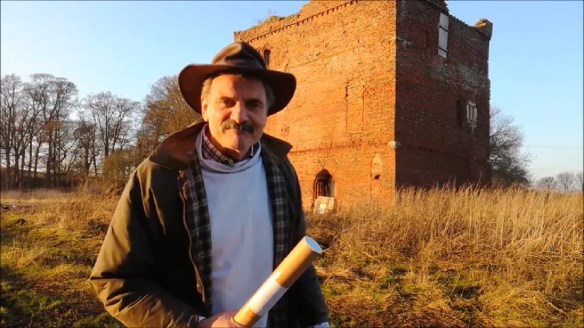
Tonight my father gave a presentation at the Haven Arms in Hedon concerning the ongoing restoration work at Paull Holme Tower, attended by the Hedon Viewfinders photography club and some extended family.

My father acquired the tower in the early 1990s, when it was little more than a pile of old bricks. My childhood was sprinkled with the occasional visit to this mysterious ruin, with its decaying castellations, its perilous stairs and its grass-covered roofline.

In this decade my father stepped up his efforts to effect a restoration, including opening the tower to members of the public. I was roped in to produce visual aids and, on occasion, dig out decades of dung from the ground floor.

In 2015 my father began efforts to produce a documentary series about the restoration, often enlisting me as cameraman. In 2017 we met with Estuary TV and secured a broadcast deal. At tonight’s presentation we were shown extensive clips from upcoming episodes.

The moment of triumph came late in 2016, when Historic England gave us a grant for the restoration work. Even so, the process of rebuilding took a long time to commence, due to seasonal weather difficulties, the need to produce a very specific type of brick, and unpleasantness from neighbours. The most significant changes have occurred since last summer, which annoyingly means that I was not around to see them. The tower now stands noticeably taller than it did for most of my life, for there is at last a roof as well as restored castellations. We also have a new entrance gate and gravel driveway for ease of access.

After the main presentation, attendees showed off their own photographs of the tower, some dating back centuries. There was even a brief discussion about my pet topic of heraldry, as historians tried to date the tower by the display of the Holme-Wastney arms surrounded by Tudor roses.

Though there has been much dithering with authorities, my father still intends to open the tower again once work is complete. No doubt I will be roped in to film that as well.

USEFUL LINKS


A Brief History of By-elections

cameron-wave3

David Cameron, formerly the right honourable member for Witney

This morning the proceedings in the chamber of the House of Commons began with the following exchange:

The Right Honourable John Bercow (Speaker of the House and member for Buckingham): Order, order, Dame Rosie Winterton.

The Right Honourable Dame Rosie Winterton (Opposition Chief Whip and member for Doncaster Central): I beg to move that Mr Speaker do issue his warrant to the Clerk of the Crown, to make out a new writ for the electing of a member to serve in this present parliament for the borough constituency of Batley & Spen, in the room of Helen Joanne Cox, deceased.

John Bercow: The question is that I do issue my warrant to the Clerk of the Crown to make out a new writ for the electing of a member to serve in this present parliament for the constituency of Batley & Spen, in the room of Helen Joanne Cox, deceased. As many as are of that opinion will say “Aye”.

Honourable members: Aye!

John Bercow: …of the contrary “No”.

Honourable members: –

John Bercow: The ayes have it, the ayes have it. Order, order, Mr Gavin Williamson.

The Right Honourable Gavin Williamson (Parliamentary Secretary to the Treasury and member for South Staffordshire): I beg to move that Mr Speaker do issue his warrant to the Clerk of the Crown to make out a new writ for the electing of a member to serve in this present parliament for the county constituency of Witney, in the room of the Right Honourable David William Donald Cameron, who since his election has been appointed to the office of Steward & Bailiff of Her Majesty’s manor of Northstead in the county of York.

John Bercow: Thank you. The question is that I do issue my warrant to the Clerk of the Crown to make out a new writ for the electing of a member to serve in this present parliament for the county constituency of Witney, in the room of the Right Honourable David William Donald Cameron, who since his election has been appointed to the office of Steward & Bailiff of Her Majesty’s manor of Northstead in the county of York. As many as are of that opinion will say “Aye”.

Honourable members: Aye!

John Bercow: …of the contrary “No”.

Honourable members: –

John Bercow: I think the ayes have it, the ayes have it.

The above prose records “moving the writ” – the first component of a parliamentary by-election. The House of Commons is elected at large once every few years following the dissolution of its predecessor, with all six hundred and fifty constituencies being contested simultaneously. On occasion, however, an individual seat will be vacated during the course of a parliament, requiring the electoral process to be repeated in that constituency alone so that a new member can represent that constituency in the same legislature (rather than waiting for the whole new parliament to arrive). Sometimes there will be more than one vacancy overlapping, so multiple by-elections will be held simultaneously.

Since the general election of 2015 there have so far been five by-elections (not counting the two just initiated). The first was in Oldham West & Royton, following the death of Michael Meacher. Alongside “Super Thursday” in May there were two more – Sheffield Brightside & Hillsborough (for Harry Harpham, who had died in January) and Ogmore (for Huw Irranca-Davies who had resigned to contest the same seat for the National Assembly). That same day saw London elect as its mayor The Right Honourable Sadiq Khan, who promptly vacated the constituency of Tooting. All of these elections were Labour holds.

The most recent pair, however, have a different story. On the day of the Tooting by-election (16th June) there was a shooting attack against Jo Cox MP. She died a few hours later. Campaigning for the EU referendum seven days later was briefly suspended and parliament recalled from its short recess to pay tributes. The timing was unfortunate not just because of its proximity to the referendum but also because of its proximity to the summer recess. By-elections take approximately four weeks between the moving of the writ and the polling day, but for a deceased member the writ is delayed until after the funeral. In Jo Cox’s case this meant there was no time left before the summer and so the election will wind up happening more than four months after the vacancy opened.

Witney is a different story. Its vacancy opened on 12 September when the aforementioned Mr Cameron received his aforementioned appointment. In a bizarre case of the patron becoming the client, he was given the job after writing to the Chancellor of the Exchequer whom he had so recently employed at the Foreign & Commonwealth Office. The Steward and Bailiff of the Manor of Northstead, alongside that of the Three Hundreds of Chiltern, is an office of profit under the crown. They are mere sinecures (the manor house collapsed in the 1600s and the hundreds were taken over by other officials still earlier) which have since the mid-eighteenth century been used for the sole purpose of allowing a member of the commons to step down.

In the old kingdom of England the role of parliamentarian was a rather taxing one – pay was only nominal and attendance at Westminster deprived many of life in their constituencies. Many were elected reluctantly or even against their will. It was in this situation that a resolution was passed in 1624 banning members from resigning their seats. Decades later, though, a loophole was created by the Act of Settlement. Being desirous of reducing the influence that royal patronage held over the legislature, parliament enacted an early form of separation of powers – any MP who was appointed to an office of profit under the crown (this term then included ministerial posts) would be disqualified from his seat, but a person was allowed to be elected to the house without vacating such a position which they held already. This began a very long tradition whereby a newly-appointed minister would begin his tenure by immediately fighting a by-election to renew their mandate. As time went on and ministers of the crown became more numerous such elections became a severe nuisance with each cabinet reshuffle demanding multiple writs and a general election which resulted in a change of government would then see the new set of ministers have to contest their constituencies for a second time in rapid succession.

Changes were enacted in 1867 for the shuffling of existing ministers to be exempted. In the First World War there were acts to temporarily suspend the procedure and finally in 1926 the concept was abolished altogether. Sinecures such as the Chiltern Hundreds were the exception, surviving purely as a means of allowing a member to quit in the course of a parliament. To “take the Chiltern Hundreds” is a long-standing euphemism for resignation.

FURTHER READING

Wikipedia:

Resignation from the British House of Commons

The Act of Settlement

Ministerial by-election

Recent By-Elections

Chiltern Hundreds

Manor of Northstead

Parliament:

By-elections

Timetables


The Middle Age of Beverley

Whereas it might have been more in line to devote this post to discussion of the European Union referendum, here instead is an account of a college trip to some medieval hotspots in Beverley.

That we should have been on such an excursion at all was an oddity – the locations featured were entirely focused on Medieval History, yet the Modern History class were allowed to tag along. This being the penultimate day of the term – and there being no more history lessons in the remainder of the timetable – the educational focus of the outing was light. No worksheets were distributed nor notes taken, though teachers occasionally stopped to explain the historical significance of the local landmarks.

A large black cylinder with wooden boards over the outlines of windows.

The tower at Beverley Westwood.

The first such place was the Black Mill at Beverley Westwood. It one of two survivors of the five windmills which once stood in Beverley, and lost its sails in 1868. The Westwood is one of few remaining areas of common land in England, meaning that residents have maintained their traditional rights to use the turf for grazing cattle or collecting firewood – indeed there were several cows (and cowpats) there to greet us as we ambled across. In the modern era, visible to us on our visit, the territory is also used for a golf course and for Beverley Racecourse.

Beverley escaped the Harrying of the North because the Normans knew of the area’s religious past. John of Beverley – then the Bishop of York – was believed to have performed miracles. He also founded Beverley’s first building, a church dedicated to St John the Evangelist, though this was abandoned in the Viking invasion. The settlement became a large town and was granted borough status in the twelfth century with special interest in trading wool and leather. In the late fourteenth century it became the tenth-largest town in England, having continued to grow despite the effects of the Black Death, the Peasants’ Revolt and the Hundred Years’ War which stunted the development of other parts of the country.

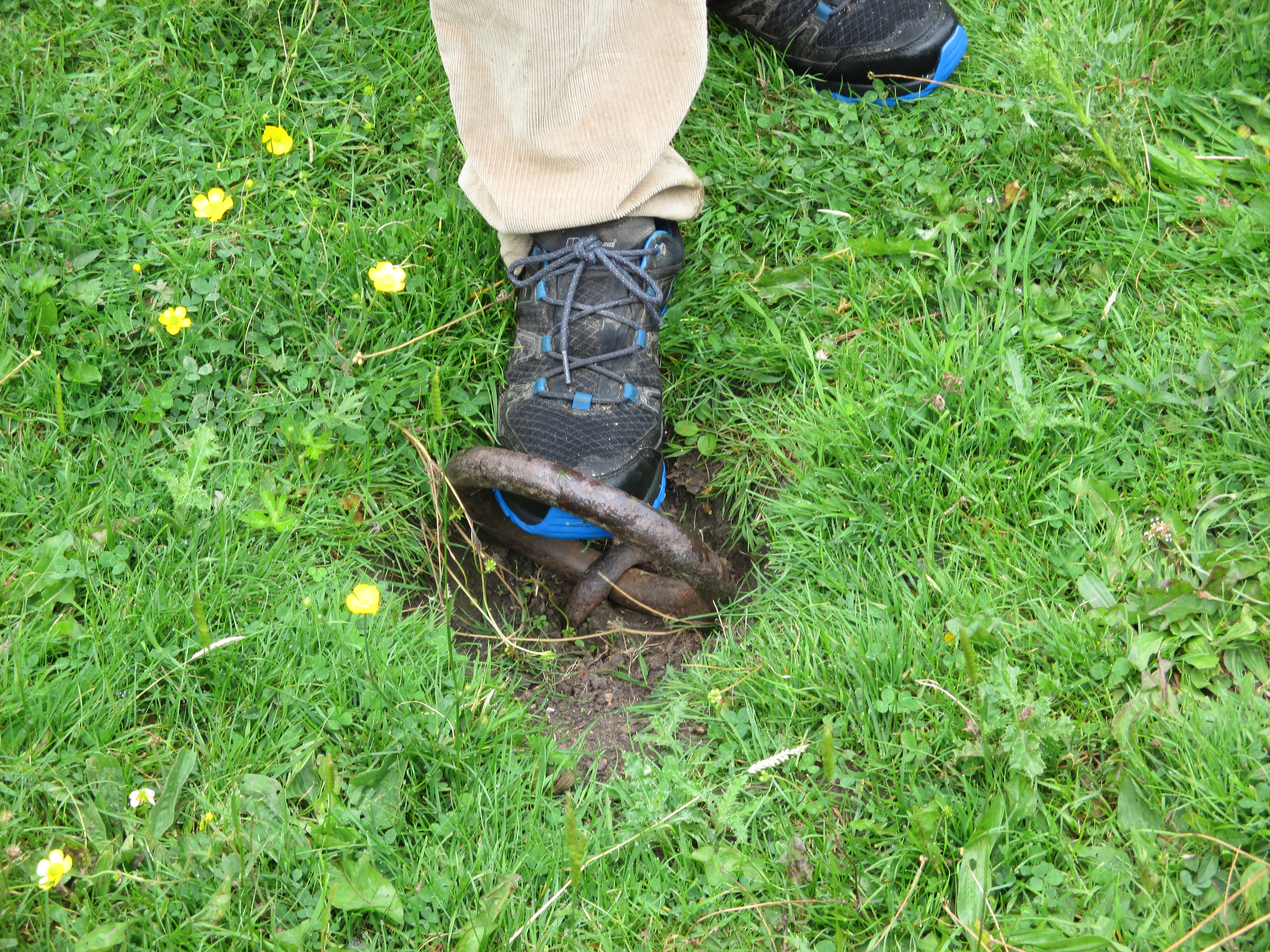
Having ambled across the turf, exploring the dips and bumps in the ground, we were lectured on the habitation of the settlement in the middle ages. We also were dispatched around this area to uncover a large metal hook in the ground. This was used for the medieval sport of bull-baiting: A bull would be attached to the hook while dogs were sent to attack it. Spectators would bet on the time taken for the bull to die and the number of dogs slain in the process. There was also a practical purpose – the adrenaline rush in the last moments of life improved the taste of the beef.

Grass, a dark circle of earth and a metal hoop protruding from the ground..

The bull-bating hook.

The second stop on our visit was the deserted village of Wharram Percy. Occupied almost continuously from the ninth century to the fifteenth, the village was then abandoned. There are some six thousand or so settlements of this type in Britain but few of them are so large or so well preserved. The nearest car park is some 750m away, so getting to the site requires a lengthy trek down an overgrown rocky slope which some members of our group found taxing. The land, overseen in its day by the Percy family (Earls of Northumberland, and relatives of Lord Percy Percy in the first two series of Blackadder) contains the church of St Martin, the outlines of several houses and, naturally, some more cows.

Having picnicked in the shade behind the minibus, we headed for Rudston Church. There lies the body of Winifred Holtby, the novelist and journalist best known for 1936’s South Riding, which was adapted to a BBC miniseries in 2011 (parts of which were filmed near my house).

IMG_0261

The graveyard at Rudston Church

Our next stop was at Burton Agnes. Though the location is normally advertised for its grand Elizabethan stately home, we headed for the smaller Norman building to its side. The dark, uneven ground floor and tight helical stairway belie the vast dining room above, though the overall appearance was still somewhat spartan, with nothing but a long wooden table in an otherwise empty expanse.

IMG_0263

Burton Agnes Norman Hall (left).

Finally we ventured to Skipsea Brough. Surrounded by grassland and yet more cows, this small hamlet features the motte of Skipsea Castle, built by Drogo de la Beuvrière circa 1086 to secure the region and its trading routes against an invasion by Denmark. The castle itself was destroyed following the rebellion of William de Forz in 1221. All that remains now is the artificial hill. The land was reclaimed for farming in the eighteenth century and taken over by the Office of Works in the twentieth.

IMG_0270

The view from the Motte

It may perhaps appear strange that we closed out the academic term by wandering around the countryside, carefully evading deposits of Bovine faecal material while discussing medieval history, but in many ways it was a blessing that East Yorkshire had such rich locations to offer, and that we were able to visit them all with time left at the end of the day to visit the polling station. Though this day out may well be overshadowed in most people’s memories by the referendum, it will stand out as an example of what rural England has to offer as well as that which can survive the many tests of time. That last point may well prove more important than ever given what is about to come.

Continue reading

Harold Wilson turns 100

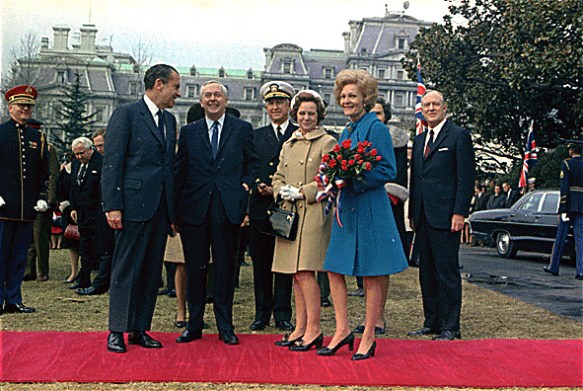
The Nixons and Wilsons stand on a red carpet surrounded by officials and officers.

Harold & Mary Wilson pose with Richard & Pat Nixon outside the White House, 27th January 1970

Britain’s longest-serving male prime minister of the post-war era, and so far the last to ever serve non-consecutive terms, Harold Wilson was born on 11th March 1916. He first entered the House of Commons in the Attlee landslide of 1945, winning the seat of Omskirk from Commander Stephen King-Hall of the National Labour Organisation. By that point, though, he already had a fascinating career behind him.

He was head boy of Wirral Grammar School, having moved there in 1932 after his father was made redundant. In 1934 he enrolled at Jesus College, Oxford to study Modern History. Here he became politically active as a member of the Liberal Party. Later he transferred to Philosophy, Politics & Economics and joined the Labour Party instead. At 21, Wilson was one of the century’s youngest Oxford dons, teaching Economic History at New College in 1937.

As war came to Europe, Wilson joined the civil service, rising swiftly through the Ministry of Fuel and Power to become Director of Economics and Statistics. For his work he was made an Officer of His Majesty’s Most Excellent Order of the British Empire.

When the war ended and a general election seemed likely, Wilson resigned from the service in order to be secured immediately as a candidate (bridging the gap as a Praelector at University College). Having been returned as an MP, he was quickly brought into the Attlee government as Parliamentary Secretary to the Ministry of Works (the department which managed the requisitioning and development of property). In 1947 he was promoted to Secretary for Overseas Trade, which consisted largely of negotiating supply contracts with the USSR. Later that year he was further raised to the presidency of the Board of Trade (a job now held by the Secretary of State for Business, Innovation & Skills). This was a cabinet position and he, at 31, was Britain’s youngest cabinet member. During his early tenure, he led a “bonfire of controls” to get rid of wartime rationing and his reputation suffered during debates over the value in sterling when he was seen as having repeatedly changed sides. Opposition to the introduction of medical charges to the National Health Service caused him to resign in April 1951 from the government, which sixth months later fell from office as Winston Churchill’s second premiership began.

Attlee stood down as Labour leader after the party lost another general election in 1955. He was succeeded by Hugh Gaitskell, who returned Wilson to the front bench as Shadow Chancellor of the Exchequer. Wilson stayed there until 1961, facing down four Conservative incumbents (Rab Butler, Harold Macmillan, Peter Thorneycroft and Derick Heathcoat-Amory). He had the unusual distinction of serving on the shadow cabinet and simultaneously chairing the Public Accounts Committee, the latter role normally being given to backbenchers. After Labour lost its third consecutive general election in 1959, Wilson unsuccessfully attempted to replace Gaitskell as party leader. Later, George Brown beat him in the deputy leadership election of 1962. Wilson’s break came in January 1963 when Gaitskell died and he won the subsequent leadership election (ahead of both Brown and eventual successor James Callaghan). As the Profumo Affair sullied the government’s reputation, the opposition gathered greater public support. When Macmillan left office, the disclaimed earl (Sir Alec Douglas-Home) who followed him proved no match for Wilson at the dispatch box. The ultimate result was that the 1964 general election made Harold Wilson into Britain’s youngest premier for more than seven decades.

Yet his victory was, if anything, underwhelming: rather than the red landslide which pundits had expected, Labour in fact had a majority of only four seats. This is a curious part of Wilson’s legacy; he is famously remembered as the man who won four general elections – whereas Blair and Thatcher each only managed three. Wilson, however, had fewer years in office than either, and usually worked with much smaller majorities. Only the election of 1966 proved a decisive triumph, with Labour earning a 111-seat lead over the Conservatives whose rookie leader Edward Heath was still relatively unknown as a political figure. Heath and Wilson were vital figures in one another’s political careers: Born in the same year, they both broke the political mold by attending grammar schools rather than private, and they both came to the frontbench with records of wartime service. Their clashes across the dispatch box caused them to be seen as a modern-day Gladstone and Disreali, and began the path later completed by Thatcher and Kinnock of defining the modern day rivalry between party leaders, especially at Prime Minister’s Questions.

Another defining feature of Wilson government’s was their poor track records in by-elections, which caused the repeated whittling down of their parliamentary majorities. As the 1970s arrived Labour had lost control of sixteen constituencies. When polls suggested that their popularity had risen again, the prime minister called an election, only to find himself swiftly replaced by Heath. Wilson survived as Labour leader and after four years of Conservative rule Heath himself was in trouble with oil price rises and industrial unrest leading to three-day-weeks. A snap election was initiated. Wilson did not strictly win (it being a hung parliament in which the Conservatives actually outpolled Labour yet returned fewer MPs), yet after six days of negotiation he was once again posing before the black door. His minority government was unstable and so after just seven months Britain went back to the polls. On the second attempt Labour outpolled the Conservative and won a majority in the Commons – yet it was one even smaller than that of ten years before. This, though, would prove only a brief encore: Wilson did not intend to stay in office past the age of sixty years. On 5th April 1976 he resigned, by which point he was in the early stages of Alzheimer’s and drinking during the daytime. His resignation honours were derided as the “Lavender List” for giving gongs to businessmen and celebrities with little connection to public service. The list was so named after the suggestion that his political secretary Baroness Falkender had written the first draft on lavender notepaper.

James Callaghan (Secretary of State for Foreign & Commonwealth Affairs and MP for Cardiff South East) won the Labour leadership election and took over as prime minister while Wilson was made a Knight of the Most Noble Order of the Garter. Sir Harold remained on the backbenches while the government deteriorated until eventually in 1979 a vote of no confidence by the House of Commons forced a general election in which Margaret Thatcher brought the Conservatives to office. Sir Harold retained his seat and continued to serve in the House until 1983 when, after achieving her second (and largest) election victory, Thatcher included in her dissolution honours a peerage for her predecessor. he declined the earldom which retired prime minsters normally enjoyed, settling for the Barony Wilson of Rievaulx. He made his last speech to the House of Lords in 1986 (on the subject of Marine Pilotage) but continued to attend that place until 1994. One year after that, he passed away from a combination of Alzheimer’s and colon cancer at the age of 79. The noble Lord’s memorial service at Westminster Abbey was attended by Sir Edward Heath, the Baroness Thatcher, the Lord Callaghan of Cardiff and the Prince of Wales.

This year, Lord Wilson’s legacy is under renewed scrutiny as we approach a referendum on the United Kingdom’s continued membership of the European Union. When he called a plebiscite in 1976 on the European Economic Community (or Common Market), his cabinet was split on the issue as seven senior ministers campaigned to leave as Wilson (and indeed Heath) pushed to remain. The decisive Europhile victory briefly settled the issue, but in the following decade the Labour Party was wrought by internal divisions which kept it out of government until 1997. Now it appears that David Cameron may be facing a similar situation as six of his own cabinet ministers campaign for Brexit while the Scottish National Party have repeatedly hinted at a renewed push to break up the United Kingdom itself. Time may tell a different story but for now it appears that Wilson’s troubles of forty-one years ago may soon return to haunt Downing Street once more.