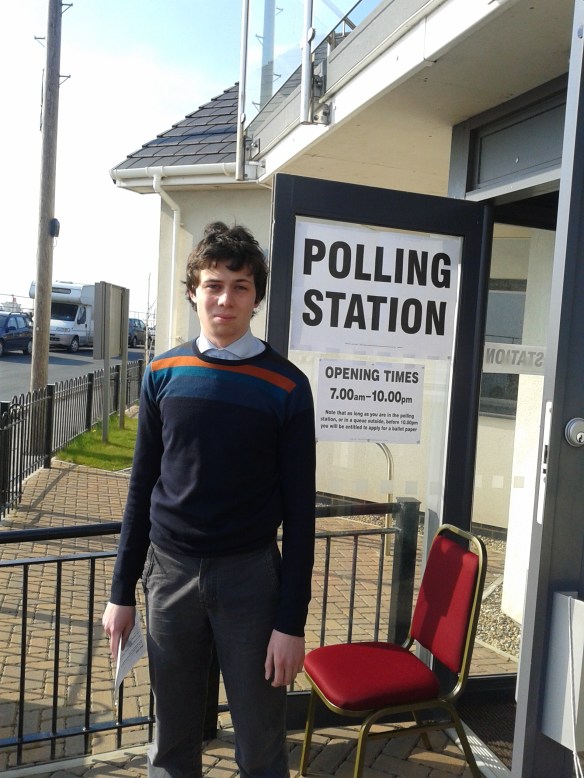
Thursday 5th May 2016, © my father.
Sir Keir Starmer’s appointment as Prime Minister, following the general election in which the Labour party won a landslide victory and the Conservatives lost almost everything, leads naturally to recollections of (and generally unfavourable comparisons against) the Blair landslide of May 1997. Many people will cite this as a defining moment in the course of their lives. In particular, many ask “Were you up for Portillo?”.
I wasn’t. I only know this period from documentaries and diaries. I hadn’t quite been born yet.
I think it was around 2003-ish that I remember hearing mentions of the name Tony Blair and the office of Prime Minister for the first time, as well as of George W. Bush as President of the United States. Blair cropped up a few times in fictional television, such as his cameos with the Simpsons and Catherine Tate. Expy versions of him also appeared, most famously in Little Britain, but also the titular “Sinister Prime Minister” in the premiere of M. I. High and in the first revived series of Doctor Who, the latter as a hollowed-out skin suit. That whole two-parter, of course, was a fairly explicit parody of the events leading up to the invasion of Iraq.
When Blair resigned and was succeeded by Gordon Brown there were quite a few skits on television about it. I mentioned it in an ICT lesson that week (the task being the formatting of a newspaper). As far as specific events, the aforementioned Iraq invasion is something I only really learned about years later and I have no contemporary memories at all of 9/11, only learning about it from a documentary in the late noughties discussing conspiracy theories about it, but I was very aware of newspaper and television reports about the “Credit Crunch” and parliamentary expenses scandal as they happened. The bird flu and swine flu pandemics late in that decades were recurrent stories.
I think most of my political knowledge probably came from Jeremy Clarkson, both in the form of his many “World According To” books we’d accumulated at home and to the references he would make on Top Gear, frequently complaining about Blair, Brown and Prescott for their ideology in general and their approach to motoring and environmentalism in particular. Though I recognised Prescott’s name and face I probably did not appreciate that he was Deputy Prime Minister and represented a constituency very close to where I lived – nor that Alan Johnson, Secretary of State for a great many things, was also next door. The series includes quite a few references to (and impressions of) Margaret Thatcher, who was also mentioned in at least one storybook read in school, but it was not until years later that I heard of John Major.
Despite not really being that interested in politics as a subject, I still ended up watching a lot of political comedy – especially Have I Got News For You and Mock the Week. Possibly Russell Howard’s Good News was in there as well.
I dimly followed the 2010 general election, by which time I was in secondary school. I didn’t know or care what the parties were but there were a few others in my year who had already nailed their colours to the mast. Graham Stuart’s campaign posters could be seen at several points along the route of the school bus. I and a friend of mine would count these as we went back and forth. We would also comment “Vote Tory!” upon the disembarking of another pupil, purely because he’d ranted negatively about them beforehand. We kept that up for some years afterwards.
Of course, the 2010 election was not a clean break between Labour and Conservative – it produced a hung parliament, so there ensued a five day hiatus while coalition negotiations went on. David Cameron did not actually get to the lectern outside Number 10 until late Tuesday evening, with Nick Clegg not being named as his deputy until Wednesday and other ministerial appointments completed on Thursday.
Recently I went back through the records to see what I was up to in that week. In theory that should have been easy since I’ve kept all my school books from that time as the source material for Homework Direct. Unfortunately it seems that there are no entries at all for that month, with only one each for April and June. This is likely to be because we were headed towards the end of the year with internal examinations looming so much of our activity at that time would have been centred on revision. I look through my exercise books again is not so revealing:
Food Technology
Nothing at all from this period, it seems.
French
6-13: Some vocabulary tests and a series of answers to textbook exercises. I don’t have the textbook anymore and the test questions were given orally so I don’t really have any contextual detail.
Geography
7-12: The exercise book runs out here and the new one doesn’t start until September. All I found were a crude diagram of the courses in a river showing where erosion takes place and a wordsearch for related key terms.
History
6-13: An analysis of sources on the role of the monasteries in England and Henry VIII’s reasons for dissolving them, then about the wider consequences of the break with Rome.
Latin
6-12: A crossword (although the worksheet bizarrely calls it a “criss-cross puzzle”) translating some vocabulary from Latin into English and a wordsearch vice-versa. A short scene from the textbook translated.
Mathematics
10: A small paragraph of notes about surface areas of cuboids.
Music
Nothing at all from this period, it seems.
Science
10-13: I actually change exercise books on 13th May itself. Lots of worksheets and quizzes about the rock cycle, the three different kinds of rock and the types of weathering to which they can be subjected.
It should be noted that I could not actually find my Religious Studies exercise book. I’m sure I don’t have my English book for that year, as our teacher took them home for marking in February and mysteriously never handed them back. My planner page from that week is little more than a list of textbook chapters.
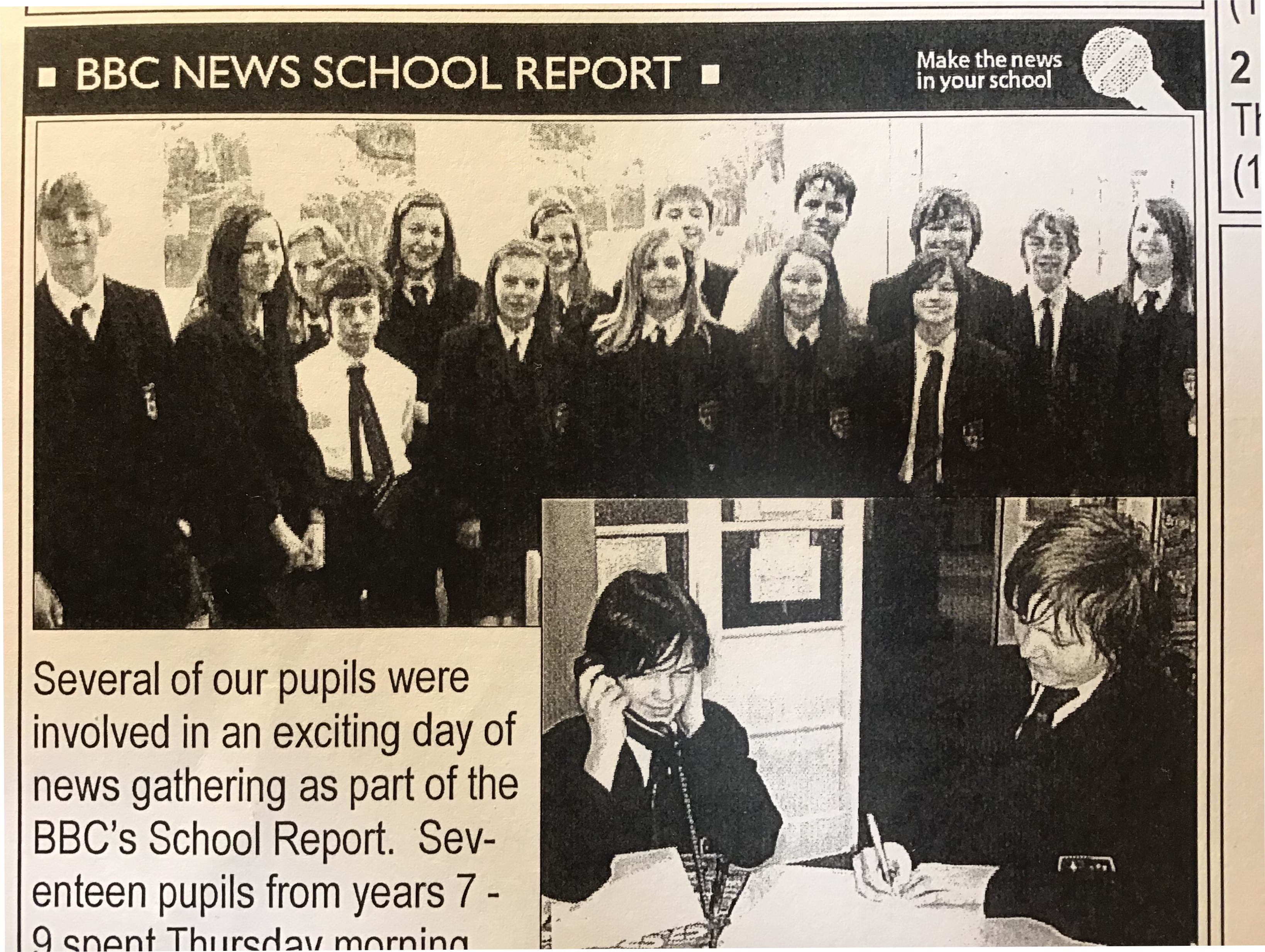
Even so, it is good that I kept so many paper records from this time as the digital trail almost disappears before 2011 (at least until I can hunt down the old memory sticks on which it was saved). Looking through my school’s online records from that time through the Wayback Machine is hopeless due to link rot. I have some surviving copies of the school’s newsletter from that year, but none from the time of the election. The closest edition is the one sent out on 15th March, on the back of which is a group photograph from BBC School Report 2010 (not to be confused with BBC School Report 2011, which actually got me on television).
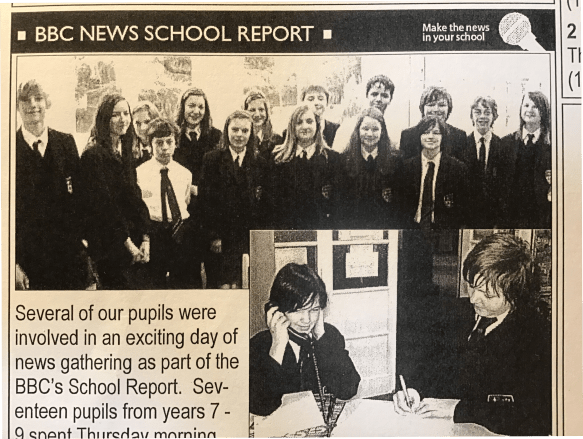
It’s a shame I couldn’t straighten my tie. From the poor quality of this photograph you might well think this came from a much earlier era than it really did.
For most of the period of 2010-11 I followed American politics more closely than British, mainly through the YouTube extracts of Real Time with Bill Maher. American issues, and some that were international, came to me indirectly – a lot of my favourite reviewtainment channels were facing constant blocks and deletions due to copyright policy, and this was the age of PIPA and SOPA (later followed by CISPA and ACTA) which threatened the whole existence of such a hobby, as well as online freedom more generally.
2012 had the big British events of the Diamond Jubilee and the London Olympics, followed by the Obama-v-Romney election in the states. Late in that year I started the GCSE course on Russia & the Cold War which was the first time I had studied recent(-ish) politics in detail. As Bolshevism and its fallout continues to cast shadows on world affairs even today, naturally this was a segue into a great many other adjacent topics. Not only did I carry my reading forward to the end of the twentieth century and into the twenty-first to see the lingering effects of e.g. the Russian Revolution and the Word Wars, I also went backwards to the eighteenth and nineteenth to find their roots. I also discovered the Russia Today channel at this time. It was of course in RT’s interests to look for and present stories (not always true) that Western media would avoid. Obviously it was during this time that I had my first experience reading Orwell.
By 2013 this had led me back around to the politics and government of the United Kingdom. I followed contemporary stories as they came out and filled myself in on what I’d earlier missed using whatever documentaries I could find. Sacrilegious as this may be to some, you really can teach yourself a lot just by reading (and later writing) the relevant Wikipedia pages.
This all happened during the tenure of the Cameron-Clegg coalition, explicitly not a normal time in politics (not that “normal” ever truly exists, of course). Cameron is therefore “my” prime minister in that sense, though I was not eligible to actually vote for or against him during that time. The 2015 general election was the first one that I watched live.
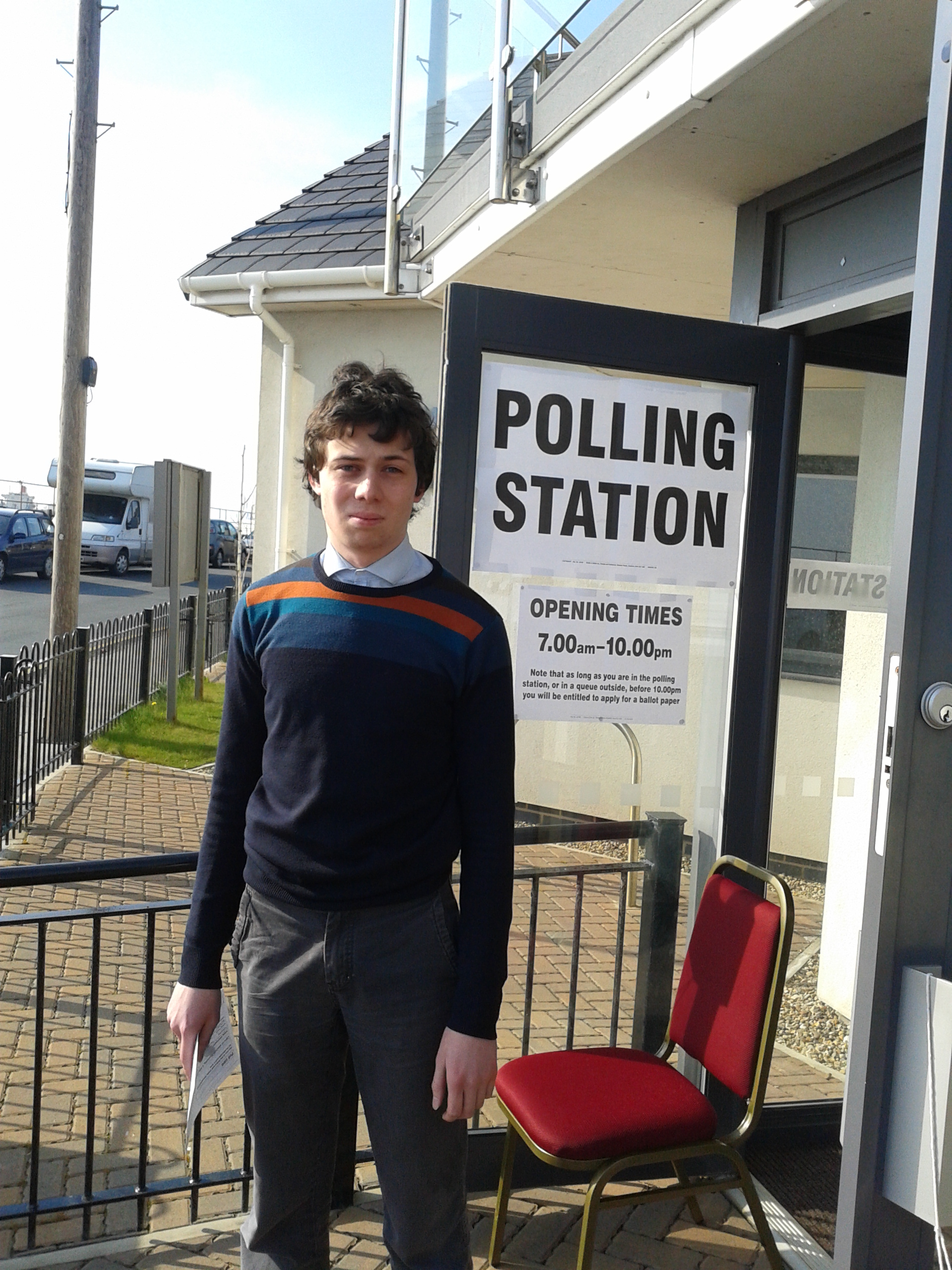
My first actual ballot cast, as pictured above, was for Humberside Police & Crime Commissioner (not otherwise that important), followed swiftly by the EU referendum. At that point the story might as well end, for it was during Cameron’s second term that this very blog got going, and thus memory lane merges back into the main road.
Last year (around 20th May) the Conservatives from Cameron onwards passed the point where they had been in power for longer than New Labour. Slightly ahead of that they passed the point of having been in power for more than half my life.
The purpose of this exercise is to recall what I was up to the last time the Labour party governed Britain, to determine what parts of my life already came about before Brown’s resignation and what would come after.
Much of the comparison is not really a political comparison of Labour vs Conservative but more a cultural comparison of the noughties vs the new tens. As aforesaid, the first red years included Top Gear up to Series 15, as well as the first five series of revived Doctor Who (with The Vampires of Venice airing during the post-election negotiation period and Amy’s Choice being the first under Cameron). They also involved all three films of The Lord of the Rings, plus all seven Harry Potter books and the first six film adaptations. The blue years included The Hobbit trilogy and an explosion of new Star Trek spinoffs. Charlie Brooker’s Screenwipe and Newswipe came before the switch with Weekly Wipe coming after. 8 Out of 10 Cats dates back to 2005 but ‘Does Countdown only to 2012. David Starkey’s Monarchy series (as well as many smaller documentaries about the Tudors) came in the noughties whereas Lucy Worsley started in the tens. Peep Show skews to the Labour end and is strongly associated with that era. That Mitchell and Webb Sound and Look had four seasons each made under New Labour, while John Finnemore’s Souvenir Programme exclusively exists under the Conservatives. This isn’t a perfect guide, though, since many of the programmes made in the former period are ones I didn’t actually watch until the latter. I’m also fudging the lines a bit for series whose production and broadcast dates fall either side of the border.
On a personal level Conservative government has been a constant throughout adolescent and adult life while Labour had the whole of my childhood. I’m obviously not in the same frame of body or mind now as in 2010, and I’ll be following Starmer’s government in real time in a way that I didn’t for Brown or Blair. There are some psychological tricks at play here – if, during the 2010-24 period, you recalled something that happened during the Thatcher-Major years, it would be easy to feel on some level that there was continuity in the partisan situation and forget that the Labour government interrupted it. Conversely, it might now be possible to think back to 1997-2010 and forget about Cameron-Sunak. This is especially the case if policies, styles of government and indeed people are carried over and political situations from long ago are restored, which is often the case. For some people it may be like finding the last decade was all a dream, for others the nightmare is just beginning.
Time to sleep… or are you waking up?




 Robin Stanley Taylor

