Heraldry in “Stoke Me a Clipper”

Red Dwarf is a science fiction comedy series about a man from the twenty-third century who gets put into stasis and wakes up three million years in the future. As such, one would not expect it to include much in the way of medieval heraldry. Indeed, mostly it doesn’t. However, much like Star Trek, the normally-futuristic series occasionally delves into history, and historical fantasy, by means of either time travel or simulation.

The episode “Stoke Me a Clipper” (1997) involves Lister spending a few minutes in a virtual reality game based vaguely on medieval England, featuring an unnamed King & Queen of Camelot. That term is normally associated with Arthurian legends, which are nominally set in the fifth and sixth centuries but have much of their imagery and iconography backported from much later eras. The scene we witness in this episode looks most likely to be set in the fifteenth century, though no detail is actually given about the overall plot nor the setting of the story and no claim is made to historical accuracy.

A great many heraldic banners are seen in this scene, which manage to almost, but not quite, resemble real historical blazons.

The most obvious of these is “The Good Knight” (John Thompson) who wears an off-model version of the royal arms of England: His tabard is quarterly Gules and Azure, the first quarter bearing two lions passant guardant in pale Or and the second quarter bearing three fleurs-de-lys two and one Or. Curiously the lower quarters were left blank, as were those on his back. Perhaps they were meant to be out of frame?

Screencap circa 6m17s

The King (Brian Cox) & Queen (Sarah Alexander) sit on a raised platform under a canopy on two ornate wooden thrones. Their gowns have no heraldic motifs but several are visible on the wall behind them. Above and between the thrones is a depiction of the coronet of a Marquess, the style of which probably dates to the seventeenth century. Lower down is a shield Argent a saltire between four fleurs-de-lys in cross although I am not certain of the latter’s tincture. At the top right of the screen is a shield with two piles reversed the point of each charged with a rose and in the top left is a shield parted per pale and charged with one large fleur-de-lis. Again the tinctures are uncertain. There are four rectangular images behind the thrones. The first looks to be Azure with at least two fleurs-de-lys Or (France again?) the second and third have a metal background with a fess chequy of a colour and a different metal (Clan Stuart?). The fourth cannot be seen as the consort’s throne obscures it completely from this angle.

Screencap circa 6m22s

Four banners are held aloft to the side of the throne area: That on the far right of the screen is divided per bend, the upper part being Azure four crosses fitchee Or and the lower being Gules fretty Argent. Closest to the platform is Azure seme-de-lis Or a double cross Argent over all a label of three points Argent. In between we have Quarterly 1st & 4th Vert a bend between two crosses flory Or 2nd & 3rd bendy of six Vert and Argent a label of three points Argent and Quarterly 1st & 4th Gules a bend between six crosses crosslet fitchee Argent 2nd & 3rd Gules three lions passant guardant in pale Or a label Argent. That last one bears more than a passing resemblance to the arms of the Howard Dukes of Norfolk.

Screencap circa 8m58s

We also see a trumpeter with a cloth shield hanging from his instrument. My best guess is Per fess Argent and Purpure in chief a cross throughout Gules impaling Gules three lions passant guardant reversed in pale Or. This is perhaps the least heraldic-looking of the bunch.

Screencap circa 6m7s

There are knights either side of the royal couple on the platform. That by the king’s right hand wears a tabard Ermine two piles Sable each charged with a lion rampant Or and that to the queen’s left Paly of four Azure and Argent on a bend Gules three birds displayed wings elevated Or. I cannot identify the birds from this distance but given heraldic trends they are most likely eagles, possibly falcons. Affixed to the roof of the stage is a shield which I would guess as Or a bend between two lozenges Sable each charged with a saltire of the field. The most obviously anachronistic element here (beside the decaying castle ruins, of course) is the tasselled embroidering at the front of the stage which shows a Georgian or Victorian depiction of the arms of the United Kingdom.

Screencap circa 8m16s

A man in the crowd (holding his helmet in front of his chest) wears a tabard which seems to be Per pale Sable and Or a label of three points Gules.

Screencap circa 8m37s

The trumpeter and a knight in the crowd both wear a tabard Gules two broken swords inverted Or on a pile reversed Azure fimbriated a broken sword of the second. Two children wear Chequy Or and Azure on a chief of the second three fleurs-de-lys of the first and yet another bystander wears something like Gules a crescent Argent between an orle of martlets Or.

Screencap circa 7m48s

A shot from the back of the crowd shows a knight with a helmet on wearing Vert on a pile Or a falcon’s head erased of the first and a man in a brown hat wearing Per pale Purpure and Argent a dragon passant counterchanged. Both animals are depicted as langued Gules.

Screenshot circa 9m14s

Lister’s own armorial bearings are difficult to make out – what we see on his outfit looks almost like the Russian double-headed eagle. There are a few other examples of heraldry in this scene but they are too faraway to read properly. Overall the resemblance of this scene is more to a Renaissance fair or a gathering of the Society for Creative Anachronism than to a typical period drama. Ugly faux-heraldry is avoided with almost all the arms shown being in keeping with the principles of good heraldic design, even if the matching up of arms to people is apparently entirely random.

I suppose Blackadder, particularly the first series, is the logical next stop for checking out heraldry in British television. Unfortunately that one doesn’t seem to be on iPlayer at the moment, nor can I find a convenient source of screencaps.

SOURCES
A Proliferation of Signs: Badges in the Medieval World

Video

It has been a while since I attended any virtual events by the Royal Heraldry Society of Canada. Today’s was rather different in style to the ones I remember during the COVID years.

The speaker was Ann Marie Rasmussen, Professor and Diefenbaker Memorial Chair in German Literary Studies at the University of Waterloo. Her lecture was divided into three parts.

Badges are small devices found mainly in north west Europe. They were easy and cheap to make, usually from pewter in moulds carved from stone. We have an example of a surviving stone mould in Mont-Saint-Michel showing the image of St Michael slaying the dragon. Pewter can show fine details well, but it has the weakness of tarnishing easily. Currently there are more than twenty-thousand medieval badges surviving in museums, and during the middle ages there were probably more than a million in existence. Badges were designed to be decoded. Pilgrim badges were one type, made and sold at holy sites showing religious imagery (e.g. one from Canterbury shows Thomas Becket, one from the Vatican shows crossed keys with a tiara). There survives an anonymous painting of Christ himself among the pilgrims, all of them wearing badges.

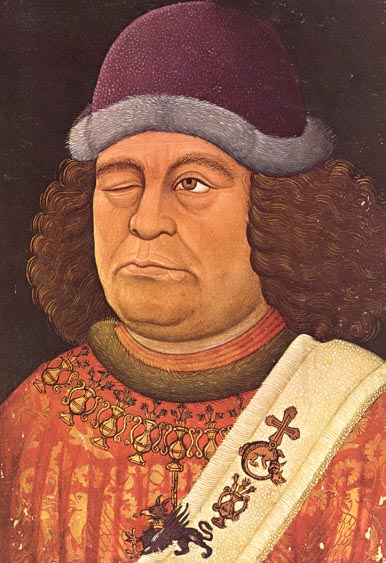
Almost all retainers and employees would have a badge to show the identity of the lord, household or organisation for which they worked. There are even examples of badges made of children’s toys. A 1432 portrait of the poet Oswald von Wolkenstein shows him wearing a badge of a dragon and griffin.

The separation of the spiritual and temporal realms is a modern idea. The types of badges often crossed over. Not all imagery was reverential – there are some humourous ones designed to resemble unsightly body parts, and there are records from medieval times of people complaining about indecent badges being worn and distributed around festival times.

EXTERNAL LINKS

UPDATE (June 13th)

The Society has uploaded the lecture to its YouTube channel, so I am spared from writing out a long description of its contents.

Link

Today’s virtual lecture was by the York Festival of Ideas, starring Eleanor Parker.

I asked her at what point in English history the Saxons and Normans were no longer considered different races/nations. She replied that the Normans quickly came to call themselves English, but that twelfth century sources still indicate a cultural and linguistic split, with non-Francophones held back in life.

EXTERNAL LINKS

Women in Medieval London

This afternoon I attended a virtual lecture by the Guildhall Library entitled Women in Medieval London. The speaker was Caroline Barron, Professor Emerita at Royal Holloway and President of the British Association For Local History.

She began by saying that it made a difference to be able to physically meet again, though she still welcomed those watching on Zoom. She showed two maps of London produced by the Historic Towns Trust – one for 1300, the other for 1520. She said that it is much more difficult to map medieval London compared to other English towns such as Norwich or York due to the extreme scale of change that has taken place over the centuries. One cannot simply work backwards from a 1970s Ordnance Survey, but must instead work from the ground up with surviving deeds and wills.

The Black Death killed half of London’s population. As in the Second World War, this resulted in a lot of women filling vacancies left by the slain men. London had over a hundred county churches in 1300, but pre-Reformation records only survive for thirty of them. Records survive from local governments and the Livery Companies. There are plenty of wills left by widows, but very few from wives or maidens. There are very few private papers, letters or diaries from which to glean intimate personal information. Women never served as sheriffs, aldermen or mayors, but exercised public authority in other ways. Barron cited the example of a 1372 dispute between dyers, leather sellers and pouch makers, the eventual agreement for which cited John & Agnes Blackthorn, John & Lucy Whiting, and Richard & Catherine Weston. Another example was Alice Holford serving as bailiff of London Bridge for over twenty years. Very little record survives of medieval attitudes towards female authority. Accounts from ward moots of Queenhithe show complaints about John of Ely, assayer of oysters, delegating his functions to women, who then allowed good and bad oysters to be mixed.

Outside of nunneries it appeared that very few women remained unmarried. City custom allowed married women to trade as femme sole, and allowed girls to be apprenticed (meaning that the husband was not involved). A proclamation in 1404 required every apprentice to be enrolled at the Guildhall, explicitly referring to both male and female.

Chattel was more important in London than elsewhere, for the rural gentry tended to have most of their wealth tied up in land. When a man of the city died, custom dictated that one third each went to his widow, his children, and a charitable cause. A London widow was also entitled to dower until death or remarriage, and could remain in her husband’s residence indefinitely unlike elsewhere. On 12th January 1465 the Court of Aldermen declared every woman married to a freeman and living with him at his death (important because divorce was very difficult prior to the reformation, so failed coupled would often resort to simply living apart) inherited his freedom to trade for as long as she lived in London and did not remarry. Barron mentioned Stephanie Hovland’s thesis on apprenticeships in medieval London, and showed the indenture of Katharine Nougle from 1392. Hovland found that only thirty such documents survived (partly because the Chamberlain of London’s records were destroyed in a fire), of which nine were for women. There are references to female apprentices in cases at the Mayor’s Court, and in provisions of men’s wills, such as the cutler Philip Waltham (d. 1426) who specified that his three apprentice girls should receive 6s8d if they behaved well towards his wife Ellen. About three quarters of men appointed their widows as executors.

A fascinating document is the original (not copied) will of Emma the Smerewyf from 1260. It was A5 in size and held four seals. It is kept in the Bodleian Library despite her living in London. She left property in the parish of St. Sepulchre to her husband, who in turn left it to a clerk, who in 1278 gifted it to Osney Abbey, which was then absorbed by Christ Church College in 1545. Emma gave a house and all her utensils to her husband with the condition that after his death they went to the poor. She distributed over £40 in alms to the poor, to various nunneries and to St Mary’s Hospital in Bishopsgate. She had a second house in St. Sepulchre, which she used to set up a chantry. Apparently childless, she named her nephew Alan as an executor and gave him five marks of silver. In the thirteenth century the custom against will-making by married women had not yet been established.

Widows were the most powerful women in medieval London. Barron found Johanna Hill particularly interesting: She was a Bell Founder, the foundry in Aldgate run by her husband Richard (d. May 1440). He had four apprentices. Johanna was his executor and took over the foundry. On 28th March 1441 she made a contract with Faversham Church to make them five new bells and repair any defective ones. Barron showed some examples of fifteenth century bell founders’ marks, including Richard Hill’s shield of arms which Joanna differenced by a lozenge. Her own will mentioned a bell maker, apprentices, servants, and a scrivener. She left everything to her namesake daughter, who passed the foundry to John Sturdy and his wife (a third Johanna), who made another contract with the same church.

John Minse, an imager, died in the plague of 1348-9 leaving his tenements in St Mildred, Poultry to his widow Matilda with remainder to his daughters Alice and Isabella, and then in default of the heirs of their bodies to a chantry in the parish. Matilda was to be Isabella’s guardian and co-executor with two men: Gilbert de Wendover (ironmonger) and Roger Oathkin (grocer). All three met their own death the next year. Matilda’s will gave her best instruments and a chest to William her apprentice. She transferred him to the service of Br Thomas Hailsham of Bermondsey Priory for the rest of his training. Her house was sold to buy a chantry for herself, her husband and – unusually – her siblings. Her daughters are not mentioned, but in June 1353 there is a mention of Isabella’s guardianship. The orphans of citizens were in those days assigned guardians by the aldermen. She was committed to Thomas de Straundon, a cofferer, with four sureties. In 1355 he rendered account for her inheritance and in April 1362 she came of age, acknowledging her inheritance with satisfaction. It is hard to track her after that, as if she married she would have changed her name.

Barron concluded that women in medieval London were not valued solely for breeding as in the aristocracy, and though lacking governing power could still exercise considerable economic power, especially as the Black Death increased their necessity. The population of England as a whole declined until 1400 and did not pick up again until 1500. One result was a high rate of immigration Flanders to find work.

There followed a question session, the first queries coming from the room:

I thought the husband took all his wife’s property.

Mostly true, but some husbands gave permission for the wife to will separately. Many of the examples were from before that custom solidified.

If women remarried override their wills?

The old husband’s will would not be overridden, but the new husband took take the widow’s inheritance. Wealthy widows were highly sought for this reason, but often they were reluctant to give up their autonomy. Many became vowesses to escape the pressure, and sometimes husbands made this a condition of a larger inheritance.

Why did these female economic freedoms later fall away. Was it simply a matter of there being more men around?

Once the population rose again there was a lot of poverty in England due to unemployment, inflation and pasteurisation of arable land. There was a feeling that women shouldn’t take jobs from men, as in the twentieth century.

What proportion of the later population was middle class (the one for whom we have records)?

Strictly speaking everyone was supposed to draw up a will. We have some from very poor people. Among merchants in the late fourteenth century the wills are full of bequests to the poor.

How literate were the women of this time?

They had a lot of “pragmatic literacy”. There were opportunities to be educated by chantry priests. Women signed their names in documents. Common profit books were passed to both men and women.

The next few questions were through Zoom.

Liz Duchovni: Do indentures survive in other cities so we can compare the gender balance to London?

Some freedom registers survive in York, not necessarily apprenticeship registers. In general the opportunities in London were greater than in other towns. London was exceptional, but then as a London historian I would say that.

Jonathan Wober: To what extent were the privileges for women in London different to other cities?

Legitim was only practised in London and York, where it was abolished in the eighteenth century. My colleague Dr Clive Burgess has not found the same in Bristol. London was the best place for an ambitious woman. That may still be true.

Deborah Stock: What did lower class women do? Were they home based, or doing other work? Within a city context they couldn’t have been agricultural labourers.

There are a lot of bequests in wills to female domestic servants, including dowries so they could marry.

Liz Galaxy: Did women need their husbands’ permission to work?

There were no regulations. I think it would be a strategic decision. It would be in a man’s interest to let his wife trade as a femme sole, since then he was not liable for her debts.

Gillian: What was the average marriage age for women?

Aristocratic girls married as soon as they could physically have children. Apprenticed girls did not marry until course was finished. This could explain why the London population rose at a slower pace than elsewhere.

Gillian: Statue of Licoricia, Jewish moneylender, at Winchester?

I wonder if Emma the Smerewyf was also a moneylender, though if she was setting up chantries she clearly wasn’t Jewish.

Alison Parry: Endowments to poor widows are still going in St Bartholemew’s. Now paid as 20p, only one claims per year. Are there any others?

A lot of charities are still going, mostly those which set up schools. Dick Whittington set up almshouses to be run by the Mercers’ Company. These charities have survived better than chantries, which were often lost in the reformation.

Rachael Holter: Would widows automatically lose their freedoms if they remarried?

Widows were known to be very wealthy. When the Guildhall was rebuilt in the late fifteenth century they kept a register of widows from whom to find funds. Not all women wanted to be independent.

Alison Turner: Did male apprentices also need permission to marry?

On the whole male apprentices were not supposed to marry until they completed their courses, whereas it was anticipated that females might do so.

FURTHER READING

The Podcast in the Tower

Princes in the Tower Podcast Series

Shortly after mentioning them in a post about someone else, I came across a podcast by History Extra concerning the mystery of the “Princes in the Tower”, meaning Edward V and Richard of Shrewsbury in the Tower of London awaiting what should have been the former’s coronation. As well as the boys themselves, the podcast also investigates the historical reputation of their supposed killer Richard III, formerly Duke of Gloucester.

As the boys simply disappeared without trace in the summer of 1483, nobody can be sure exactly what happened to them. Bones were discovered in 1674 that might have been them, but there were discrepancies between historical accounts and some of the bones were not even human. Our present sovereign has not allowed DNA testing to determine their exact identity. The reason for her reticence is itself unknown, the most plausible explanation being that she fears setting a precedent for historians to tamper with her own remains in centuries to come. Perhaps “the Princess in the Tunnel” will still be an obsession for the nuttier tabloids?

Richard III himself is also hotly contested. Having been painted by the Tudors (and then Shakespeare as a deformed, leering hunchback, he has benefited from later attempts to rehabilitate his reputation, at least relative to the standards of the time. As said in the podcast, the Ricardian phenomenon is at least as intriguing as the life of Richard himself, or indeed his royal nephews.

EXTERNAL LINKS

UPDATE (February 2021)

Today I found a podcast series about Richard III by Matt Lewis.