Documentary Déjà Vu

Last month was the 200th anniversary of the opening of the Stockton & Darlington railway, the world’s first public railway to use steam locomotives. There have been quite a few commemorative events for this. The BBC has taken the opportunity to rerun a collection of some of their railway-related documentaries (not that they don’t have at least a handful of these at normal times anyway), which I have been watching on iPlayer over the last week or so.

When you watch a lot of documentaries about the same topic (e.g. railways, World War 2, the royal family, past general elections), especially if created by the same company, you will quickly notice a lot of repetition in what you’re being shown: You’ll notice the same stock film clips, the same talking points in the narration, the same talking heads being interviewed, the same background music being used. To some extent this is inevitable as, of course, they are all talking about the same event. Sometimes, however, the the resemblance is so specific as to be jarring.

Among the aforementioned documentaries were Ian Hislop Goes off the Rails, a standalone production, and The Last Days of Steam, an episode from series 8 of Timeshift. Both were originally aired in October 2008, the former on 2nd and the latter on 16th. When discussing the decline of the railways and the widespread adoption of the private motorcar, both show the same clip of a youngish couple in a red Austin-Healey roadster (registration 699 DON) driving on a motorway.

In Hislop’s documentary the clip starts at 39:19, accompanied by Terry Gourish, historian at LSE, saying

Well from the mid fifties things began to change. There was no fuel rationing affecting private motoring, road transport began to get a great impetus from new road-building, culminating in the first motorway, the M1, in 1959…

whereas in Timeshift‘s, it occurs at 41;30 as Jonathan Glancey, author of John Betjeman on Trains, says

The car from the mid-1950s was, apart from anything else, and beyond a means of transport, a consumer dream. It was something you could own. You can’t own a railway. A railway takes you where the railway goes. A care takes you, theoretically, where you want to go.

That the same clip should occur at almost exactly the same time in two documentaries produced by the same broadcaster a mere fortnight apart feels like a slight failure of quality control.

Some years ago I discovered the Railway Mania podcast series. Unfortunately that series has wound down a little recently, with just one new episode in almost a year. In its place I’ve recently turned to the Green Signals show, co-presented by Richard Bowker (former Chairman of the Strategic Rail Authority) and Nigel Harris, former editor of RAIL magazine. It’s a bit like the ex-politicians’ podcasts that have proliferated over recent years (e.g. Political Currency with Osborne & Balls) but more focused on industrial news.

Moving away from real railways, commemorations of the 80th anniversary year of The Railway Series continue. Today Historic England unveiled a blue plaque at 30 Rodborough Avenue in Stroud to mark that Wilbert Awdry had long ago lived there. The ceremony was attended by a group of his descendants. I was a little disappointed that so much of the news coverage identified him as the creator of Thomas the Tank Engine rather than of The Railway Series, including some incorrectly implying that the character debuted in 1945 rather than 1946. I also see that the display included a cardboard cut-out of the All Engines Go! version of Thomas himself, even though that series has been cancelled now and was generally disliked by most of the Awdry fandom. In some of the news videos a band outside can also be heard playing the Allcroft-era theme by O’Donnell & Campbell.

I also recently discovered that Thomas & Friends itself has an official 80th anniversary podcast. This is also includes many sound clips from the TV series. Curiously, the copyright notice credits the podcast to Gullane (Thomas) Ltd, showing that this company at least nominally still exists within the Mattel empire.

Pondering Thatcher’s Letterheads

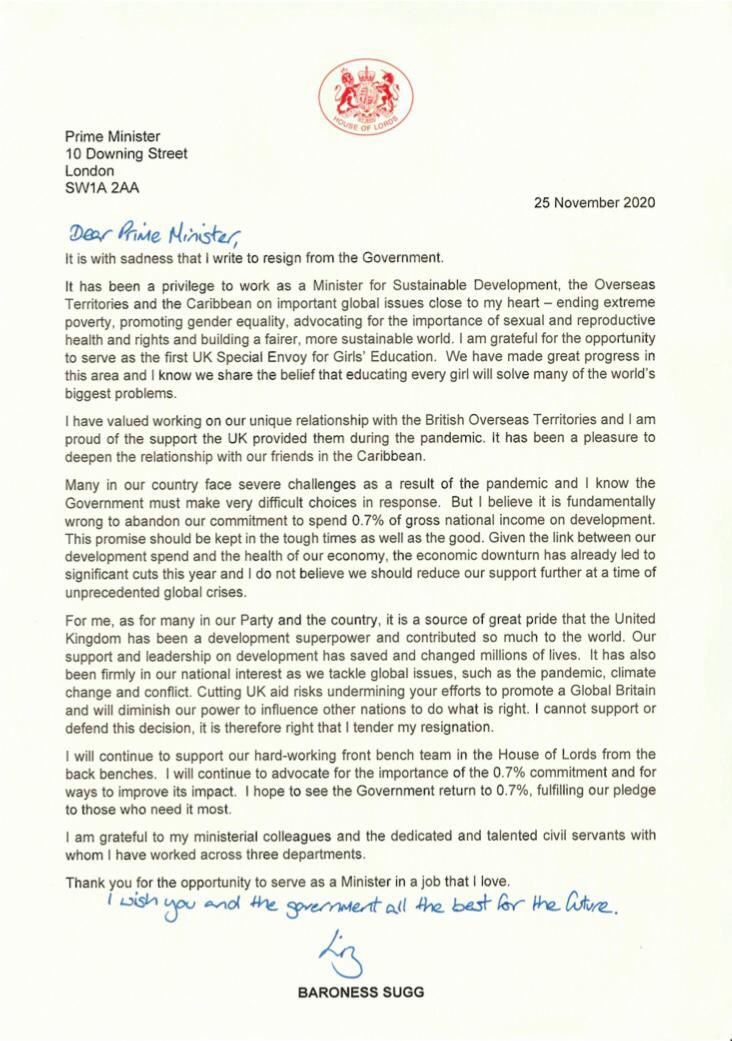
About a decade ago when I first got interested in heraldry, I came across this article in The Independent by Ben Summers and Michael Streeter, dating all the way back to 24th March 1997, early in that year’s general election campaign*. It concerned the use of the British royal arms by the Baroness Thatcher on her official letters.

The wording of the article is a little confusing, and made harder by the absence of any images (unsurprising given the age): It alleges that Lady Thatcher abandoned the use of her own coat of arms for her letters and started using instead the royal arms, in the lesser format favoured by various government departments.

Thatcher’s own heraldic achievement

The journalists interviewed both Black Rod (Sir Edward Jones) who awkwardly declined to comment and Somerset Herald (Thomas Woodcock, later Garter King of Arms) who dismissed a suggestion (made by whom it’s not clear) that Companions of the Garter are specially entitled to use the royal arms in this way.

Government arms as used at the time

The article contrasts Thatcher to Britain’s two other living former premiers at the time – “Sir Edward Heath uses a simple House of Commons portcullis and a plain typeface, while Lord Callaghan simply types his name beside the House of Lords logo.” – and the main thrust is the piece is to play up the public perception of the Iron Lady as not being able to leave government behind and as believing herself as great as the reigning monarch.

Trouble is, I think this is a bit of a reach, given this sentence: “The normal House of Lords logo used by peers places the Arms inside an ellipse, together with the words “House of Lords”, making clear the state body to which the use of the Arms relates.”

With one hand Streeter & Summers allege delusions of grandeur based on Thatcher’s supposed use of the governmental coat of arms instead of the House of Lords logo, but with the other they tacitly admit that the two devices are near-identical anyway! While the page itself does not have any photographs, I have been able to find a handful of examples online as letters by public statesmen often become collectable items sold at auction. The impression I get is that, while letterheads for members of the House of Commons have favoured the crowned portcullis badge** since many decades before Thatcher’s premiership, those for members of the House of Lords at that time used the royal arms in an oval with “House of Lords” typed underneath. Letterheads for government ministers at that time followed the same pattern – the royal arms in an oval with the department name beneath – although there were some rare examples of ministries already using the more modern corporate-style logos that would become characteristic of the New Labour years.

If the authors meant that Thatcher was using the royal arms in her private correspondence – i.e. not related to her parliamentary duties – then they might have had a point, but that is not made clear. I would also note that in all the photographs I’ve found so far, none show peers using their private coats of arms in the headers – a shame, really, as that is one of the main reasons to acquire a coat of arms in the first place.

This could be an example of what the article alleges – albeit it’s from seven years too late.

I’ve tried searching for any documentation of the actual rules around the use of parliamentary letterheads. I found this page for the House of Commons but nothing so far for the Lords.

Here I have collated a series of examples of letters written by Lady Thatcher and other British prime ministers in their legislative (rather than executive) capacities.

Margaret Thatcher

  • 1966-04-01: Letter to Mr & Mrs Bland, with no personal letterhead but logo in top left corner, featuring even lesser royal arms in a portrait oval with “HOUSE OF COMMONS” arched above it.
  • 1971-10-27: Letter to illegible recipient with green portcullis in top centre and “THE RT. HON. MARGARET THATCHER M.P.” above it.
  • 1976-10-28: Letter to Misses Brett and Watson, with blue portcullis in top left corner and “The Rt. Hon. Mrs. Margaret Thatcher, M.P.” along the top.
  • 1991-12-09: Rear page of a letter to Ed Koch (former Mayor of New York City), with portcullis in blue in top left corner and “THE RT. HON. MARGARET THATCHER, O.M., F.R.S, M.P.” along the top, notable because she is no longer called “Mrs” but not styled “Lady” either despite Denis’s baronetcy.
  • 1991-12-12: Letter to E. T. Freeborough with same layout.
  • 1995-03-01: Letter to Rick Pallack with lesser royal arms (sans oval) in top left corner and “MARGARET, THE LADY THATCHER, O.M., P.C., F.R.S.” along the head.
  • 2003-??-??: Message thanking an unidentified well-wisher for his condolences after the death of Sir Denis, featuring the House of Lords logo as described with “Margaret Thatcher” underneath it and “THE RT. HON. THE BARONESS THATCHER, L.G., O.M., F.R.S.” in the footer. “P.C.” is omitted for some reason.

James Callaghan

  • 1990-09-16: Letter to Andy Wood with House of Lords logo in red and “THE RT. HON. LORD CALLAGHAN OF CARDIFF KG” above it in black. “PC” omitted here too.

Harold Wilson

  • 1973-10-30: Letter to Geoffrey Davis, with House of Commons portcullis in top centre and “From: The Rt. Hon. Harold Wilson, OBE, FRS, MP.” above, all in green.
  • 1994-05-??: Letter to Lynda Winston, with House of Lords logo in top centre and “The Rt. Hon. The Lord Wilson of Rievaulx KG, OBE, FRS.”

Alec Douglas-Home

  • 1970-07-29: Letter to Klaus Kuhneumund, with oval House of Commons logo and “From: The Rt. Hon. Sir Alec Douglas-Home, K.T., M.P.” above, all in subtly inconsistent shades of blue.
  • 19??-04-17: Letter to the Marquess of Lansdowne, with House of Lords logo in top centre and “From: LORD HOME OF THE HIRSEL K.T.” above it. “P.C., J.P., D.L.” left out.

Harold Macmillan

  • 1978-02-22: Letter to Harold Smith, with “From the Rt. Hon. Harold Macmillan” along the top, with “OM FRS” omitted.. There is no parliamentary logo at all as he was not a member of either house at this time.

Edward Heath

  • 1984-05-10: Letter to Felipe González, with portcullis in top left corner and “The Rt. Hon. Edward Heath, M.B.E., M.P.” along the top, all in blue.
  • 1991-02-13: Letter from Heath’s private secretary Robert Vaudry to Sean Bryson with portcullis in top centre and “From: The Private Office of The Rt Hon Edward Heath MBE MP” above it, all in black.
  • 2000-09-18: Letter to the Lady Harmar-Nicholls, with portcullis in top left corner and “The Rt. Hon. Sir Edward Heath, K.G., M.B.E., M.P.” along the top, all in blue.

More recent examples of backbench peers using the royal arms

On a semi-related note, I am still searching for evidence of armorial bearings held by Wilbert Awdry (who, incidentally, died just three days before that Thatcher article was published). Recently I have found some digital uploads of his letterheads, which feature a monochrome photograph of a steam locomotive, identified by the caption as Locomotive No.1 of the Sydney Railway Company. If he wouldn’t use a coat of arms there, where would he?

*The fifty-first Parliament of the United Kingdom was prorogued on Friday 21st March but would not be dissolved until Tuesday 8th April, with polling day on Thursday 1st May.

UPDATE (21st July)

Barely a day after I posted this, technology lawyer and academic Kendra Albert and software engineer Morry Kolman launched Heavyweight, an online letterhead composition tool which allows one to mimic the style of a legal firm. These letterheads are purely textual, so sadly no coats of arms to review.

The Railway Series at 80

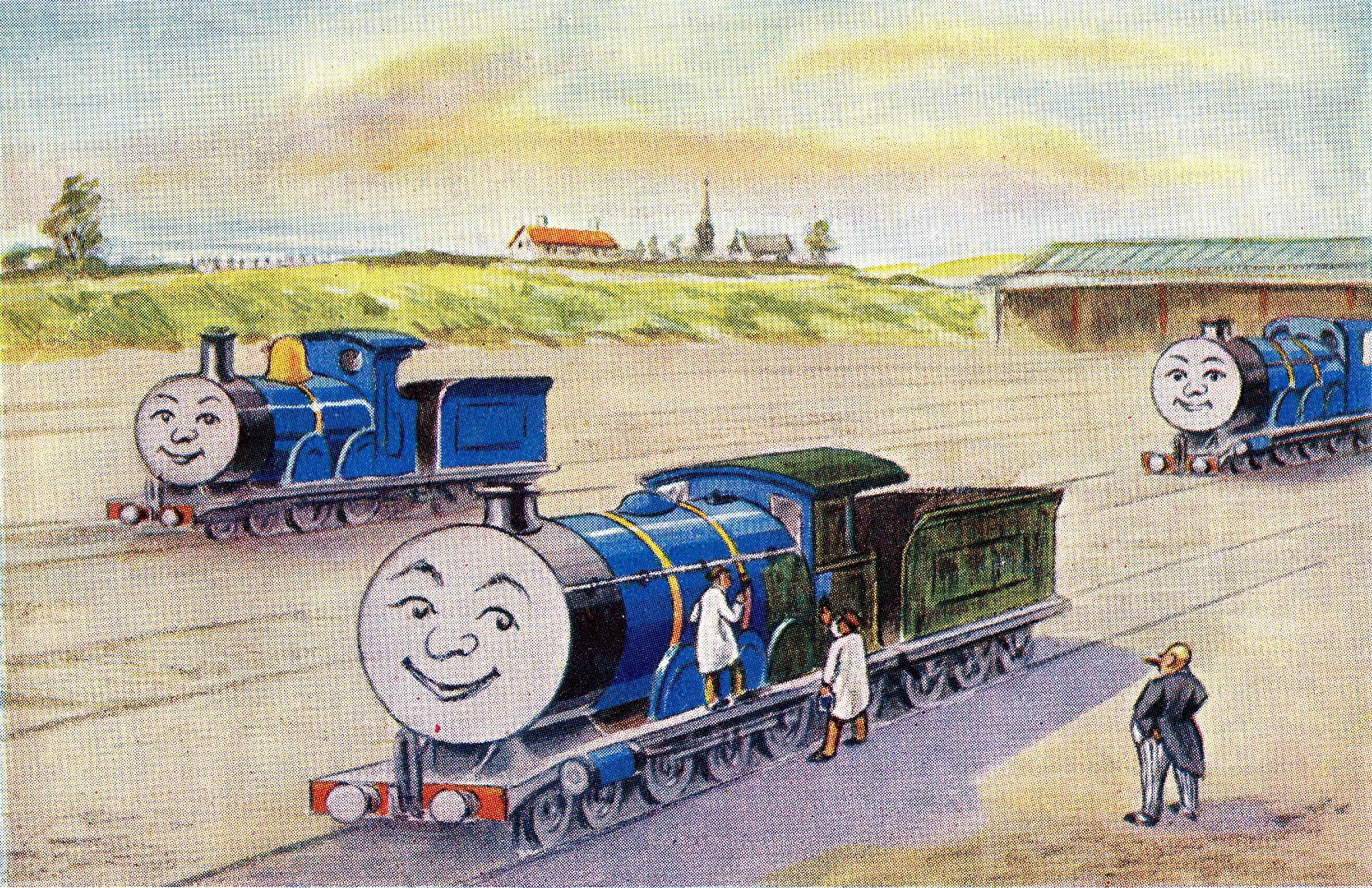
Illustration of “Edward, Gordon and Henry” by William Middleton

Five years ago, for the seventy-fifth anniversary of The Three Railway Engines I came up with a poem based on Tolkien’s work adapted to be about the engines on Sodor.

Today is the eightieth anniversary of said book. I have pondered calling it 3-E Day, but doubt that would catch on. I would like to turn to verse again. This time, instead of adapting another poem, I have thought about what an anthem for the island might be. Truth be told, I don’t think The Island Song really works diagetically – it is too obviously written to be about a children’s television series. Instead here is something simpler: A variation on the royal hymn.

While the first verse of God Save The King! is almost universal across the realms and territories of the Commonwealth, there have often been custom extra verses with lyrics specific to the locality, albeit with many of the same core concepts (and indeed rhymes) cropping up in more than one place. This is my submission for the Sudrian stanza:

Our island is to me,
Homestead and sanctuary,
By Britain’s shore.
Bless this enchanted isle,
That years may ne’er defile.
Grant all Thy children smile,
For evermore!


It’s The Dunn Thing

Today I noticed that BBC Four has started airing the documentary series The Architecture the Railways Built, presented by historian Tim Dunn, and put the whole first season on iPlayer. This series was originally made five years ago for Yesterday, a UKTV channel technically owned by BBC Studios but run more like the commercial stations. This series was already watchable on UKTV’s own catch-up website and repackaged on at least two different licensed YouTube channels, but the lack of advertisements and all-around superior functionality of the BBC’s service will make iPlayer my preferred platform. This makes for a rare case of televisual upcycling in a partnership where downcycling is the norm, the most obvious locomotion-related example being Michael Portillo’s many Great Railway Journeys programs.

Each episode of TATRB is forty-five minutes long and typically covers three locations, two in the United Kingdom and one abroad. No obvious connection is made between the three, so I’ve often been left feeling that it would be better if the three locations chosen were grouped by geographic region, architectural style or railway feature. Alternatively, they could be split up so that each location had a fifteen-minute episode to itself.

In addition to broadcast television, Dunn has made regular appearances in railway-related online channels, including several times presenting Sudrian pseudohistorical lectures hosted by the Talyllyn Railway.

Note on the Decease of Britt Allcroft

Hilary Mary Allcroft, commonly known as Britt, was the television producer and director responsible for turning The Railway Series into Thomas the Tank Engine & Friends. She was at the helm of the franchise from 1984 to 2003, overseeing its first seven series and the film Thomas & the Magic Railroad. She also created the companion series Shining Time Station for the American market and in early years was part of the production team for Blue Peter.

Directly or indirectly, to this day she remains a commanding influence in the childhoods of many millions in the United Kingdom and around the world. Though no longer in charge of the franchise for more than twenty years she remained a grandee until her death and – however controversial some of her adaptation decisions may have been – her presence was much appreciated by the surrounding community.

Her death occurred on Christmas Day, but was not made public until today. Her family arranged for the first announcement of her demise – preceding any newspapersto be given by the filmmaker Brannon Carty, in whose documentary An Unlikely Fandom she had recently appeared.

I was not aware of the death of director David Mitton when it happened, nor even born yet when Wilbert Awdry himself passed away. I hope it will be many years before his son Christopher dies.

Farewell Britt, your presents were much appreciated.

UPDATE (4th January)

The aforementioned Brannon Carty has also uploaded his interview with BBC Radio 5.

Second Look at Royal Variety

Three weeks after its recording, the Royal Variety Performance for 2024 has been broadcast. I have also found on the charity’s website some publicity stills from the event along with the official brochure.

The brochure contains a great deal of heraldic illustration, much of which is clearly of Sodacan origin. The artistic schizophrenia is evident even from the front cover, which prominently displays a full-colour Sodacan version of the royal arms with the Tudor crown while also having in the header a monochrome outline (similar to that on royal.uk) of the St Edward crown version as part of the Royal Variety Performance logo. Throughout the brochure the latter is included as part of the page header while the former is repeated many times as a main-body illustration. More curious is that in the borders of several pages another obvious Wikimedia graphic is seen – the coat of arms of the Prince of Wales. Quite why that one was used I am not sure, especially as Charles stopped using it upon his accession and it has yet to be conclusively shown that William now does so. The outline version also appears as the background pattern to some of the pages themselves. To make things even more confusion two more expressions of the royal arms appear in the brochure – in the letterhead of a message from Buckingham Palace on page 7 in the royal warrant part of the advertisement for Mikhail Pietranek Interior Furnishing and Design on page 65.

A quick glance at the brochures for past installments of the performance makes clear – even just from the front covers – that this armorial smorgasbord has been in effect for some time.

As far as the performance itself is concerned, I do not intend to write a detailed review. The one part I deem relevant to the ongoing themes of this blog is the section on the Lord Lloyd-Webber’s famous musical drama Starlight Express:

After the play’s own professional actors had done their carefully-choreographed routine, the night’s host Alan Carr came on for a comedy coda of sorts, wearing a much simpler steam engine costume and clearly much less steady on his feet. Lloyd-Webber himself was on stage at this point. Carr’s entrance was accompanied by the original Thomas & Friends theme tune. I found this amusing for two reasons:

  1. That theme debuted when the series began forty years ago, but then was replaced in Hit Entertainment’s retool of the franchise twenty years ago. Even though the theme has been out of use now for as long as it was in, it still achieves far greater cross-generational recognition than do any of its successors.
  2. Britt Allcroft’s 1984 production was not the first attempt at adapting Awdry’s books for television – Lloyd Webber had approached the vicar a whole decade earlier with his own pitch and had produced a pilot episode for Granada by 1976, but the studio declined to put it into production. This disappointment was the reason he made Starlight Express in the first place!


Forty Years of Thomas & Friends

At noon on 9th October 1984, ITV premiered Thomas & Gordon and Edward & Gordon, the first two episodes of Thomas the Tank Engine & Friends, Britt Allcroft’s adaptation for television of The Railway Series Wilbert Awdry.

Although fans have aired their private celebrations, official commemorations (e.g. those by the franchise owners) have been muted. I suspect that is to avoid community burnout when anniversaries pile up. This autumn’s quadragenary of the television adaptation is swiftly followed next spring by the octogenary of the books themselves, and likely there has been a collective decision to focus efforts on the latter instead.

I will keep my own remarks on the short and stumpy side to avoid rehashing the colossal article I posted in 2021. Though T&F has had its rocky periods over the decades (including an especially bad one at present), the classic seasons are a timeless artistic masterpiece in their own right, down mostly to the model-work of David Mitton and the music of Mike O’Donnell & Junior Campbell.

Even forty years on, there still is nothing quite like it.

Awdry Arms Again

Back in November I discovered the coat of arms of Sir John Wither Awdry, paternal grandfather of children’s author Wilbert Vere Awdry. The illustration was based on a blazon found in Burke’s Landed Gentry, 1862.

Page 39 of that book gives the shield Argent three cinquefoils Or on a bend Azure cotised of the same and crest out of a ducal coronet a lion’s head Azure for AWDRY OF SEEND.

The next entry is AWDRY OF NOTTON, and it is this one which includes Sir John. For the arms and crest of this branch, Burke merely says “same as AWDRY, of Seend”.

Today I have found the family referenced in the Burke’s Landed Gentry 1921. Page 53 of this book gives a slightly different blazon – shield Argent on a bend Azure cottised Sable between two crescents of the second a crescent between two cinquefoils Or and crest on a wreath of the colours in front of a lion’s head erased Azure gorged with a collar gemel Argent a cinquefoil between two crescents fesseways Or. Curiously the entry for Awdry of Seend in this edition gives no armorial details at all. Wilbert was ten years old when this version came out, and his date of birth is given in his father’s paragraph but no other detail about him personally is included.

The Awdrys are also mentioned at least twice by Arthur Charles Fox-Davies in his Armorial Families series. Page 51 of the 1895 book gives entries for multiple Awdry men, each time with the same information about Sir John’s arms – shield Argent on a bend cottised Azure three cinquefoils Or a crescent of the second for difference and crest out of a ducal coronet Or a lion’s head Azure. He also takes care to note that these are armorial bearings as used, and as quoted in Burke’s “Landed Gentry”, but for which no authority has been established. These comply with the blazon as I first encountered it, except that the crescent for difference was not originally there. The crescent, of course, is the traditional English mark of cadency for an armiger’s second son. I find it a little odd that Fox-Davies types the exact same information out for each of Sir John’s many sons whom he records, but does not say if any of them added extra cadency marks for their own position in the family tree. Pages 55 and 56 of the 1910 book gives the exact same blazon as Burke’s 1921.

For now I will accept the later version as the correct one and I have modified my illustration accordingly. Pending further research, I would speculate that the Awdrys of Seend are the senior branch of the family with the relatively simple arms while the Awdrys of Notton are the long-established offshoot with permanent (although inconsistently recorded) augmentations.

FURTHER VIEWING

I Might Have Known

Three years ago I had a stab at designing a coat of arms for the Reverend Wilbert Vere Awdry, believing that he never had one officially granted or descended to him. Now, however, I discover that he most likely did.

When searching through the Internet Archive I found a digital copy of The Thomas The Tank Engine Man, a biography of Awdry by Brian Sibley (who also edited The Fall of Númenor and wrote several companion books about Tolkien’s legendarium and its cinematic adaptations).

The early pages recount some of the vicar’s family history, including his uncle William and grandfather Sir John. Sir John Wither Awdry spent three years as Chief Justice of the Supreme Court of Judicature at Bombay and William Awdry spent twelve as Bishop of South Tokyo. I quickly found that these two men already had their own Wikipedia biographies, both of which mentioned their kinship to Wilbert. If only there had been links in the other direction I might have discovered this information much earlier.

William, August 1900

Unfortunately Debrett’s Peerage would be of no use here as it tends to list only the corporate and not the personal arms of the Lords Spiritual, and even then only those diocesan bishops within the United Kingdom – Awdry meeting neither condition. Happily, Sir John did have an entry in Burke’s Landed Gentry 1862, which lists his dynastic arms of unspecified antiquity as Argent three cinquefoils Or on a bend Azure cotised of the same with crest Out of a ducal coronet a lion’s head Azure and motto Nil Sine Deo.

William and Wilbert being legitimate agnatic descendants of Sir John, it naturally follows that whatever armorial ensigns he possessed, they possessed also. It is curious, therefore, to have found so little record of him or his son Christopher actually using them. This is amplified by the fact that the fact that he and his brother George clearly had an active interest in and working knowledge of heraldic blazon, which Sibley’s book even notes:

George…was exploring matters of heraldry and coats of arms ‘A real beauty occured to me for Tidmouth,’ he wrote to his brother, ‘It ought to be rather elaborate, as it is relatively new, and the simple ones are doubtless allotted already.’ The proposed arms for Tidmouth were to feature a smith’s hammer and tongs, a lymphad (a heraldic ship), three herrings and a wheel. ‘This,’ George explained, ‘covers all Tidmouth’s titles to importance: shipping, transport, fishing, engineering…’

I did, of course, illustrate Tidmouth’s arms two years ago as well.

Arms, Flags, Paint Pots & Queens

Having written a few times now about heraldry as featured in The Railway Series, as well as significant events in that franchise, I felt that now would be a good time to do a spotlight on the most particularly heraldry-heavy story.

Today is the seventieth anniversary of the UK publication of Gordon the Big Engine, the eighth book in the series, came just fifteen days after Elizabeth II’s coronation. I will, of course be focusing on the fourth chapter in the book (and its 1995 television adaptation), in which the monarch herself visits the big station.

The written story has seven illustrations by Clarence Reginald Dalby, of which only the last three are relevant here. The television episode obviously has a large number of potential screenshots. The images used below are linked from the bountiful gallery on ttte.fandom.com and are labelled by their timestamp within the episode (not counting opening credits) in case of future link rot.

5th illustration

6th illustration

7th illustration

The text of the story says:

Edward steamed in, looking smart with flags and bright paint.
…the Queen’s train glided into the station. Gordon was spotless, and his brass shone. Like Edward, he was decorated with flags, but on his buffer beam he proudly carried the Royal Arms.

In the illustrations themselves we can see Union Flags galore, as well as a string of pennons in the national colours.There is also a tricolor drape across the frame of the station which runs the risk of inadvertently looking French or Dutch. Gordon’s carving of the royal arms is obviously the centrepiece here: It looks to have a lion Or as the supporter on both sides with the quarterings being first and fourth Or, second Azure third Gules. The actual charges on them cannot be deciphered but the crown looks like a reasonable approximation of either the Tudor crown or St Edward’s (the former likely still being in wide usage at this early stage of Elizabeth’s reign).

The television adaptation depicts things a little differently – Britt Allcroft at this stage was keen to present Sodor as a mystical fantasy land and dissociate it from the United Kingdom (although clearly not from the monarch), so the Union Flags are entirely absent and the bunting is generically technicoloured. We do, however, see multiple carvings of the royal arms – one leaning on either side of Gordon’s smokebox and at least four more attached to the station itself – originally on the glass of the canopy but later moving to the pillars and a nearby lamppost.

2m02s

2m43s

3m24s

4m20s

Also flying from the canopy are three flags of more definite designs, the first Argent a cross Gules, the second Azure a saltire Or and the third Murrey a saltire Argent. The first is obviously the flag of England but I don’t know the origin of the other two. We don’t get a close-up shot of the royal arms, but they are clearly supported by a golden lion and a white unicorn in the right arrangement. The shield itself looks to be blue in both the lower quarters but the upper quarters for England and Scotland are potentially correct. A red banner with indecipherable golden embroidering also flies outside the station as Gordon approaches.

This, incidentally, was not the first adaptation of the source material, for the story was republished as part of a series of Changing Picture Books called Busy Engines in 1994. The illustrations here (by Arkadia Illustration Ltd.) show many Union Flags as in the original book but no royal arms. Gordon’s footplate instead carries a large facsimile of St Edward’s Crown (perhaps foreshadowing the Duchess of Loughborough).

The Queen’s own appearance also changes – in the 1953 book she is shown only as an arm emerging from her carriage, in the 1994 book wearing a golden circlet trimmed with ermine and a thick blue sash from her right shoulder (very formal for a day trip on a steam train) and in the 1995 episode in a light blue dress with matching hat. It has been suggested but never confirmed that the man in the brown jacket is meant to be her husband and the short woman in the green dress her mother, which might be the clue as to why the story title implies that more than one queen visited.