Sir David’s Day

Just over two years have passed since the murder of Sir David Amess, MP for the town (now city) of Southend-on-Sea. It was announced at an intermediate point that he would have his shield of arms fixed to the wall of the Commons chamber, in the manner of other murdered MPs – the most recent example being Jo Cox.

Now, at long last, the shield has been revealed.

Sir David was presumably non-armigerous during his lifetime, with this being a posthumous grant arranged through his widow Julia. So far no news source that I can find (and certainly not the College of Arms) has published the blazon, which I would guess is something like Azure on a chief conjoined to a pale between two talbots rampant Or five roses Gules barbed and seeded Proper. According to press releases the roses represent his five children as well as his gardening hobbies while the talbots represent his animal welfare campaigns and his time at Bournemouth University.

Most intriguing is the motto of His Life Remains, which Julia chose because “wherever I go, I am reminded of him in some way: someone he has helped, a charity he has supported and people whose lives he has touched”. It is unusual for a heraldic motto (unless referring to God, of course) to use third-person language and this decision wouldn’t really make sense except in the concept of a memorial for the deceased.

On an aesthetic level I would rate this achievement higher than Cox’s, due to the superior tincture contrast, although the arrangement of elements is a little unsatisfactory and requires a slightly more rectangular shield shape.

The details of his crest remain unknown.

Everyone on the Same Page

Minutes of His Majesty’s Most Honourable Privy Council usually make for quite dry reading. Despite the speculations of conspiracy theorists, and apart from grand occasions such as the accession of a new king, plenary sessions are mainly filled by the appointments of new officeholders (especially in recent years, as ministerial churn as grown), amendments to charters of public bodies, closures of overcrowded graveyards, and the designs of commemorative coin series.

The formatting is similarly dull, being little but a list of links to PDFs, in which each order in council has its own A4 page with the main text in what I presume is Times New Roman with St Edward’s Crown (surrounded by the national floral badges) in the header. Beginning each document is a contents list typed in a sans serif font (most likely Arial).

Last month, though, a small change was seen – the individual orders in council now have page numbers in their footers (in the sans serif font, and clearly not actually part of the order) while the contents pages now have hyperlinks in their right margins. A new front page has also been added, with the Privy Council Office prominently featured. The PCO’s logo is slightly different to that used by most other government departments – it features the royal shield encircled by the Garter and ensigned by the crown, but without supporters or motto. An interesting thing to note here is that although this stylistic modernisation debuted more than a year into the New Carolean era, the depiction used on the front page and in the orders themselves is still St Edward’s Crown and not the Tudor Crown as the current monarch apparently prefers.

EXTERNAL LINK

Some News At Last!

Long-time readers will be familiar with my frustrations in discovering the heraldic achievements of former ministers and recent Garter companions Lady Amos and Sir Tony Blair. Now, at last, some progress is being made.

My guess at Amos’s lozenge.

Almost a month ago the Right Reverend Graham Usher, Bishop of Norwich, Tweeted a photograph of the inside of St George’s Chapel. Among the familiar Garter banners I noticed one I had not seen before – per saltire Gules and Or, two of the sections charged with counterchanged circular devices. Presumably the other two sections had them as well, but Sir Thomas Dunne’s banner obscured them. I wasn’t entirely sure what the symbols were – Jukudlick, another Wikipedian, reckoned they were gyroscopes. Without any specific, reliable matching of the arms to the person I was not prepared to add the graphic to her page.

Today’s update comes from the website of Ian G. Brennan, the man who actually constructs the wooden models of knights’ crests to go above their stalls. He includes a photographic gallery of all the crests he has made… and now Blair’s is among them. I had not been paying much attention to his website as it did not look to be frequently updated – indeed the overall design looks to be stuck around the middle of Blair’s premiership. Judging by what I saw when checking the Wayback Machine, this update happened within the last ten days.

No blazon is given, but my best guess for Blair’s crest is a mute swan’s head erased Proper holding in the beak a rose Gules seeded Or barbed slipped and leaved Vert.

The torse is depicted as Azure, Or and Gules, which gives some hints as to the principal tinctures of the shield. The red rose is almost certainly a reference to his thirteen-year leadership of the Labour Party.


The website also has a photograph of Amos’s crest. Whether this actually is a crest or just a badge is yet to be seen – I note that the photograph is framed so as not to reveal the presence or absence of a torse. Here the round object looks more clearly like a gyroscope, while the beast holding it is, I would say, a panther sejant guardant Proper. As always with heraldry, you can’t be sure until you’ve read the blazon.

This year’s Garter ceremony was held on Monday. Blair and Amos attended for the second time, as did first-timers Lady Ashton of Upholland and Lord Patten of Barnes. Ashton is already King of Arms for the Order of St Michael and St George (even attending the coronation in that capacity), yet her own bearings are not recorded in any issue of Debrett’s I’ve seen. Patten has no record either. Based on this, I don’t expect any revelation until 2025.

Armory and Architecture

This evening I attended a virtual lecture at Arts University Bournemouth. The presenter was David Lund and the subject was the history of architectural model-making, particularly that of John Brown Thorp.

Modelling is an invisible profession to most people as the model-makers are largely executing the ideas of architects, who thus take all the credit for the design. British model-making kicked off in the late sixteenth century with the arrival of trends from Italy. The earliest record is of a 1567 model of Longleat House, made for Sir John Finn. Sir Christopher Wren would go on to commission architectural miniatures on a regular basis.

Originally timber was favoured for model-building, but card proved to be more adaptable. Thorp is considered the grandfather of architectural model-making. He had his headquarters near to the Inns of Court, and his extremely-detailed scale models were used in court cases. By 1940 his firm was employing forty other modellers. The emergence of modelling as a dedicated profession allowed an increase in the size and standards of their creations.

Modelling boomed in the 1950s and ’60s, with the material fashions of the models changing in line with those of the buildings themselves – card representing brick was replaced by perspex representing glass and steel. The economic slump of the 1970s caused a change in clientele, with modellers working for private developers instead of state architects. Nowadays it is common for models to be designed on computers and then 3D-printed, incorporating lighting and even animation.

In the Q&A session, Lund was asked about the phenomenon of public disappointment when a finished construction fails to live up to what the model promised. Lund conceded that models and artistic renderings often gave a sanitised, optimistic prediction of the built environment, replete with happy people and clean surfaces, whereas the reality (especially in modernist constructions) proved quite different. Developers and the public often unfairly blame the artists and modellers for this, even though they are only following what the developers tell them to do.

On an entirely unrelated note, late last night I discovered that Sir Lindsay Hoyle, Speaker of the House of Commons since 2019, has finally been granted a coat of arms. I was relieved to come across this news at all, yet also a little perplexed to realise that the news articles were from almost a month ago. I don’t know how I missed this, given that I have been obsessively looking out for this ever since his election. The not-so-grand reveal came at the unveiling of a new set of stained-glass windows in the Palace of Westminster, the other panels of which were decorated with the arms of British Overseas Territories.

None of the news articles I have uncovered so far gave the blazon for the new achievement, so my illustration for Wikimedia Commons is based on visual inspection of the artwork in the photograph. It indeed includes the red rose of Lancaster, “busy bee” and rugby references as Sir Lindsay hinted two years ago. The use of the parliamentary mace Or on a fess conjoined to a bordure Vert is almost certainly copied from the arms of Sir Harry Hylton-Foster, who became speaker sixty years before Hoyle did – though one has to hope that Hoyle does not end his tenure quite so abruptly. The window shows mantling Gules and Argent (rather than Vert to match the shield), so I have copied that. It is not clear exactly when the grant was made, nor whether the grant was to Sir Lindsay himself or to his noble father (the mace makes the latter seem unlikely).

The search for other new grants continues. Last month I got a pretty strong hint about the arms of Lady Amos, but those of Sir Tony Blair remain as elusive as ever.

She Spoke to Serve

The late Baroness Boothroyd has fascinated me for as long as I have followed British politics, and hers was among the deaths I most dreaded.

Just last October, with my newly-registered library card, I took out her autobiography. There are eighty pages before she actually becomes an MP (and she goes into detail of her multiple failed attempts), describing her childhood in impoverished Dewsbury, then her time as a Tiller girl, then going into politics as a secretary to two Labour MPs, then going overseas to work for JFK. Even when she gets into parliament, her struggles are as within her own party as against the others – this being the age of entryism by Militant, which she was instrumental in rooting out.

Before the release of the 2018 parliamentary portrait series ,(and note that her image is the one used on the PDS blog) Boothroyd was one of the many prominent politicians for whom I struggled long to find a free photograph to use on Wikipedia. The only one on which I could lay my hands was a poor-quality screenshot from President Obama’s speech in Westminster Hall in 2011, published on the White House channel and thus public domain. The baroness is shown looking the wrong way, sandwiched awkwardly between George Osborne and Douglas Alexander. For the top (indeed, only) illustration in a prominent online biography it just wasn’t good enough.

The other big challenge was her coat of arms – one of my earliest such works. Unlike her successor Michael Martin, Boothroyd’s arms were widely photographed and shown online. Recreating the lozenge visually was easy enough, though it wasn’t until years later that I tracked down the text of the blazon to go with it. My first attempt was not well-received by the residents of r/heraldry, so it was one of the few of my graphics which I completely remade.

I never got to see how the community (or anyone else) viewed my second attempt, for within hours of her death being announced another user, ProfAuthor, had replaced it with his own vector graphic. It is technically superior, of course, but still it is disappointing to know that my own efforts are made redundant. Something similar happened with Sir Ernest Shackleton the last time he was in the news.

A New Regency Bill

Ever since the state opening earlier this year, the topic of counsellors of state has been prominent in my mind, and in the minds of many others. Just as Elizabeth II’s health was failing and the necessity of this constitutional device was more pressing, so the actual availability of counsellors was at its lowest since the device was invented. Many in academic and political circles were discussing possible updates to the legislation. I even had a go at drafting a new bill myself. As the original 1937 Act had already been amended twice, and as I wanted to avoid a confusing change of pronouns mid-paragraph, I did consider neatening things up by repealing it wholesale and typing out most of its provisions again, but that version turned out to be too long-winded for the amount of actual change I needed to effect. By early September it was nearly in a presentable state, but then Her Majesty’s death seemed to render the matter moot for a while.

Today the Lord Chamberlain of the Household announced that King Charles wished his siblings Anne and Edward to be re-appointed as counsellors. This will require new legislation, which we can expect to be brought forward swiftly. I hope it’s not too late to send in my own.

A

BILL

TO

Amend the provisions for a regency in the event of the incapacity of the sovereignty due to illness or minority, and for the performance of certain of the royal functions in the name and on behalf of the Sovereign in certain other events.

BE IT ENACTED by the King’s most Excellent Majesty, by and with the advice and consent of the Lords Spiritual and Temporal, and Commons, in this present Parliament assembled, and by the authority of the same, as follows:—

1. The Regency Act 1937 is amended: –

  1. In subsection (1) of section two, replace “Lord Chancellor” with “Prime Minister” and “Chief Justice of England, and the Master of the Rolls” with “Speaker, and the President of the Supreme Court”.
  2. In subsection (2) of section two, replace “His Majesty’s Dominions and to the Government of India” with “His Majesty’s Realms and to the Commonwealth Secretariat”.
  3. In subsection (1) of section five, replace “mother, if she is living” with “living parent”.
  4. In subsection (1) of section six, replace “by telegraph” with “electronically”.
  5. For all of subsection (2) of section six, substitute “The counsellors of state shall be any five persons of His Majesty’s choosing, appointed by Statutory Instrument under this Act and subject to the affirmative resolution procedure.”.

2. The Regency Acts of 1943 and 1953 are repealed.

3. This Act may be cited as the Regency Act 2022, or it and the Regency Act 1937 may be cited as one.

4. This Act takes effect upon the approval by both Houses of Parliament of the first statutory instrument passed under section one.

EXPLANATORY NOTES

This bill updates the Regency Act 1937, as well as repealing the 1943 and 1953 Acts which had amended it already.

Section 1 (1) changes the list of persons empowered to determine the monarch’s absence or incapacity. It adds offices whose jurisdiction encompasses the whole United Kingdom (Prime Minister, Lord Speaker, President of the Supreme Court) and removes those whose roles are only applicable to parts of it (Lord Chancellor, Lord Chief Justice, Master of the Rolls).

Section 1 (2) removes reference to defunct bodies and adds reference to current ones.

Section 1 (3) updates the list of potential counsellors of state. The original text specified the consort and the first four adults in line to the throne. In early 2017 this would have meant Princes Philip, Charles, William, Harry and Andrew. By 2022 the former had died and the latter two had withdrawn from royal duties, leaving only two counsellors still active: the minimum for this provision to be used. The accession of King Charles III dulls the urgency of the situation by adding Queen Camilla and Princess Beatrice to the list (as consort and fourth adult in line respectively) but the current arrangements are still less than ideal. The new text allows for counsellors to be added or removed as necessary without the burden of new primary legislation each time.

Section 2 repeals intermediate legislation whose provisions are now redundant. The 1943 Act lowered the age of eligibility for the heir-apparent to be a counsellor, but that is negated by this Bill. The clause regarding counsellors’ absence is also covered by the revised wording. The 1953 Act anticipated minority reigns by persons who have since reached the age of majority and gave powers to persons who are now deceased. The sole active provision of the latter Act is to reduce the age at which the heir-apparent could be regent from twenty-one to eighteen years, but as the present heir-apparent is over the higher age that point is likewise moot.

Section 4 delays implementation of the legislation until His Majesty’s appointments have been approved, to avoid an interim situation in which there would be no counsellors of state at all.

Link

Today’s virtual event was by the Foundation for Integrated Transport, and its content is adequately explained by the title.

“Car dependency” is a term used in the urban planning community to mean the inability of a resident (or visitor) to move around a settlement without the use of a personal motorcar. It is often cited as a defining (and damning) feature of suburban environments, particularly in the United States following the Second World War. As their name implies, urban planners (and urbanists more generally), tend to focus their attention on cities and dense conurbations, with comparisons made to the suburbs. Smaller towns and rural environments are often overlooked, hence the theme of today’s seminar.

Though interested in the premise, I was a little disappointed by the format – although the participants spoke to each other over Zoom, the guest attendees were made to watch it through YouTube, so other than the chatbox (only available to those who had YouTube accounts) there was no meaningful interaction with the hosts.

Heralds-a-Heralding

Today and yesterday, Charles III was formally proclaimed as King across the world, following the meeting of his accession council. This is only the fourth accession in Britain since the invention of the television, and the first time that the council itself has been broadcast live. Indeed, to my knowledge the only other time that any meeting of the council in Britain has been recorded was for the 1993 documentary Days of Majesty, and even then only a small clip was shown. There was supposed to have been a meeting (probably done virtually) some days ago for the swearing in of Liz Truss’s new cabinet, but the fading of Queen Elizabeth’s health prevented it. When that session will eventually take place is unknown. We are in an odd situation where the new monarch is having his accession confirmed by a set of ministers whose own office-holding has not been fully confirmed either. The ceremony was something of a consolation prize for Penny Mordaunt, who lost the bid to become Prime Minister but was instead appointed Lord President. She took the lead role in the day’s proceedings. Once the proclamation had been approved and various oaths had been taken it was read out by David White, Garter King of Arms, on the palace’s balcony. Not long later it was repeated by Timothy Duke (Clarenceux) on the steps of the royal exchange. The next day it was read by Robert Noel (Norroy & Ulster) at Hillsborough Castle. Joseph Morrow (Lyon) read it at Mercat Cross, as did Morfudd Meredith (Lord Lieutenant of South Glamorgan) and Thomas Lloyd (Wales Herald) in Cardiff. The other proclamations made around the British Isles, and the Commonwealth, are far too numerous to list.

Times such as this are a rare opportunity (others being state openings and, next year, the coronation) to see officers of arms in their full finery. They will be very busy over the coming months.

It can be taken as read that, following his ascent to the throne, the undifferenced arms of the United Kingdom, and those of all his other realms and territories, now belong to His Majesty. The arms of his siblings, niblings and cousins have no reason to change from what they were before. The arms of his wife, sons, and daughters-in-law are all due for upgrades.

Probable arms of Camilla, Queen Consort

Camilla, as Queen Consort, can now be expected to impale the Shand arms with those of the King. Given that William now has all of the statuses and titles that his father held a week ago, it is most probable that he will bear the same heraldic achievement, with which Catherine will impale the Middleton arms. It is yet to be seen (and there are conflicting precedents) of the Duke & Duchess of Sussex will similarly upgrade by swapping their five-point cadency label for one of three points, and removing the strawberry leaves from their coronets. The ever-present yet ever-uncredited Sodacan has already uploaded multiple illustrations of how he expects the revised armorial achievements to look.

Probable arms of Catherine, Princess of Wales

There is some controversy over whether Charles will change the heraldic depiction of the crown from St. Edward’s (depressed arch) to Tudor (no depression). There is a perception that St. Edward’s Crown is for queens and the Tudor crown for kings (due to the latter being preferred from 1901 to 1952) but this is not binding and St. Edward’s was regularly used by kings before Victoria’s reign.

FURTHER VIEWING

UPDATE (April 2024)

I’ve just finished reading Charles III: New King. New Court. The Inside Story by Robert Hardman. Chapter Three: London Bridge explains that the Truss ministry was supposed to be sworn in on 7th September with the politicians meeting in Westminster and Queen Elizabeth attending by audio-only link from Balmoral, but the meeting was cancelled at short notice when her health took a downturn.

UPDATE (September 2025)

Historian Jason Loch has published this article analysing the intricacies of the accession council and the legal status of Truss’s cabinet.

Demise and Disarray

The death of Elizabeth II is a time of serious grief for her family and her many peoples. It is also a time of mild confusion for public bodies, and of course Wikipedians. Here is a run-down of some of the changes that have recently been made.

The Monarch

The man long known as Charles, Prince of Wales is now King. For many years there had been speculation that he would take the regnal name George VII in honour of his maternal grandfather and great-grandfather, but shortly after his accession it was confirmed that he would indeed go by Charles III. There was a brief period when his page was at Charles, King of the United Kingdom before being changed to Charles III. There is an ongoing debate as to whether the article title should include “of the United Kingdom”. The side in favour argues that there have been many other monarchs over the centuries called Charles III from whom the present monarch needs to be differentiated. The side against argues that Charles is king of far more than just Britain, and that if you included one realm in his title you would have to include all of them, lest you imply that one is more important than another.
The Consort

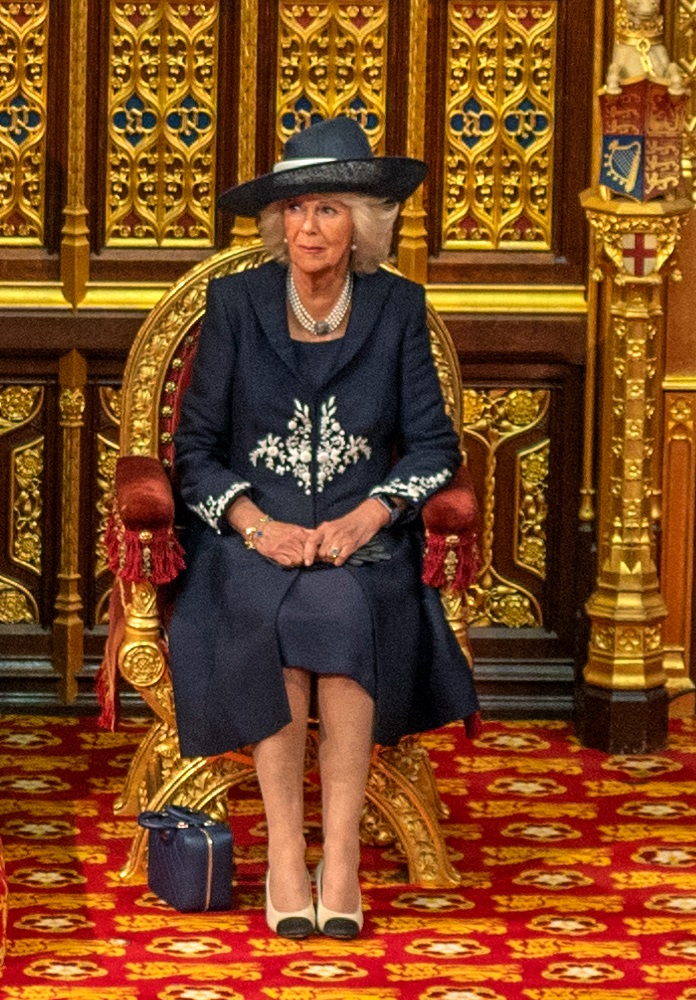
Camilla Shand, at the time of her marriage in 2005, was not popular among much of the public still grieving Diana Spencer. So as to avoid appearing to usurp her legacy, she never styled herself “Princess of Wales”, instead going by “Duchess of Cornwall”. It was also suggested back then that, upon her husband’s accession, she would be styled “Princess Consort” (presumably derived from Prince Albert) rather than Queen. How true this proved to be was always a matter of public relations rather than constitutional law. By the start of this year it was clear that her reputation had recovered sufficiently to abandon that idea, and Elizabeth II in an open letter explicitly endorsed her daughter-in-law to be called Queen Consort. Currently all major media and government sources are very insistent on styling her “The Queen Consort”, rather than simply “The Queen” as other queens consort were before her. It is not yet clear if she will be described this way for the whole of Charles’s reign or if it is simply a temporary measure so as not to confuse the public while the late queen regnant is still being mourned. Again, there is dispute over whether her article title should include “of the United Kingdom”.

The Heir Apparent

In 2011 Prince William of Wales was ennobled by his grandmother as Duke of Cambridge, Earl of Strathearn and Baron Carrickfergus in the peerage of the United Kingdom. He has not ceased to hold these titles, but they are now buried beneath several others. The dukedom of Cornwall, in the peerage of England, is governed by a 1337 Charter instructing that it belongs automatically to the eldest living legitimate son of the incumbent monarch and the heir apparent to the throne, and that if these two statuses are held by different people then the title is left vacant. This means that all dukes (save Richard of Bordeaux) are deemed to have held the original peerage, rather than it being created anew each time. The Duchy of Cornwall, a substantial land-holding corporation in the south of England, is governed by the same. The dukedom of Rothesay in the peerage of Scotland is mandated by an Act of Parliament from 1469 to follow an identical succession, as are the titles Earl of Carrick, Baron of Renfrew, Lord of the Isles, Prince of Scotland and Great Steward of Scotland. The titles of Prince of Wales and Earl of Chester, by contrast, are not automatic. They are conferred by letters patent at the discretion of the monarch. It appears from news reports that Charles III has opted to do so almost immediately after coming to the throne, though I am still waiting to see this formally confirmed in the Gazette or the Court Circular. There was a short interlude in which the royal website and Wikipedia styled him “Duke of Cornwall and Cambridge”. I argued that it was poor form to include Cambridge while leaving out Rothesay, to which an anonymous user replied:

It would, but we don’t have a basis for that usage in Wikipedia practice. The hierarchy is very much What the Papers Say > legal/heraldic/formal/official names > anything that actually makes sense. I’m guessing there will be a followup announcement about his distinct style in Scotland and indeed in Northern Ireland, and maybe they’ll end up with something more logical and less clumsy. After workshopping every other possibility.

The Others

The accession of a new sovereign causes a reshuffle in the orders of precedence among the royal family. In the male order, Charles is naturally now on top. His sons William and Harry also move up, as do his grandsons George, Louis and Archie (their position before, as great-grandsons of the sovereign, was a little unclear). Andrew and Edward are demoted from sons to brothers, James and Peter from grandsons to nephews, and the Earl of Snowdon from nephew to cousin. The Dukes of Gloucester and Kent and Prince Michael are unaffected. On the female side Camilla achieves supremacy, followed by Catherine, then Meghan, then Charlotte, then Lilibet, then Sophie, Anne, Beatrice, Eugenie, Louise, Zara, Birgitte, Katharine, Marie-Christine, Sarah and Alexandra.

The styles and titles of Charles’s descendants are also upgraded (though those of his siblings and niblings are not diminished). William and Harry both gain a definitive article in their princely titles. George, Charlotte and Louis are now “of Wales” rather than “of Cambridge”. There has, of course, already been a famous Princess Charlotte of Wales, so until an alternative solution emerges their Wikipedia pages must be differentiated by the awkward use of years in brackets. Archie and Lilibet, as children of a younger son of the sovereign, now qualify as royals under the terms of the 1917 letters patent. They could now correctly be styled as “His Royal Highness Prince Archie of Sussex” and “Her Royal Highness Princess Lilibet of Sussex”, though no move has been made in that direction so far. The situation regarding the Earl of Wessex’s children remains ambiguous. Charles could, of course, amend or revoke the letters patent however he wishes, but there has not yet been any indication in that regard.

The dukedom of Edinburgh, earldom of Merioneth and barony Greenwich, which were conferred by George VI on his daughter’s fiancé Philip Mountbatten in 1947, and were then inherited by Charles in 2021, have now merged with the crown. Any of them can be bestowed anew on whomever His Majesty chooses. His brother Edward has long been presumed to receive them next, but no decision has been taken at this time.

Under the Regency Act 1937 Camilla (consort) and Beatrice (fourth adult in line) have become Counsellors of State.

The office of Lord Great Chamberlain of England (not the same as Lord Chamberlain of the Household) has automatically transferred from the 7th Marquess of Cholmondeley to the 7th Baron Carrington. The former therefore loses membership of the House of Lords under Section 2 of the 1999 Act while the latter gains it. What happens to the place he already held among the ninety elected hereditary peers is still to be determined.

The Courts

The Queen’s Bench Divisions of the High Courts of England & Wales and of Northern Ireland, as well as the Courts of Queen’s Bench for the Canadian provinces of Alberta, Manitoba, New Brunswick and Saskatchewan, have all been renamed King’s Bench. The status of Queen’s Counsel in Australia, Britain, Canada and New Zealand has likewise changed to King’s Counsel, and all who hold it have had to amend their post-nominals accordingly. Only last month I created a new template for judges of the Queen’s Bench Division and had scrupulously added the specification to each of their infoboxes. Now I have had to change all of them. Still, it helps boost my edit count I suppose.

UPDATE (March 2023)

A few months late but better than never, the Palace now confirms that Archie & Lilibet have princely titles, as well as that Edward has become a duke.