An odd way to promote oneself

In early July, two by-elections are to take place in the upper house, following the retirement of the Lord Brabazon of Tara in April and the death of the Lord Swinfen in June. Both were among the Conservative section of the excepted hereditary peers, which means there is no partisan competition for their replacements.

Despite the smallness of the electorate, the statements made by the twelve peers to offer their candidacy have been released on Parliament’s website. Most are essentially short CVs, with nothing particularly jumping out save Lord Wrottesley’s self-description as “closet tree hugger, as reflected in my business interests”, apparently forgetting that the whole point of being a closet anything is precisely not to announce it in public.

The exception is the Earl of Dudley, who instead of giving any information about himself simply linked to his YouTube channel, technodemic. Its content comprises nothing but music videos, some featuring (I would guess) the earl himself and others made up of television clips. There is a lengthy description on the about page, but confidence is not inspired by the lack of an avatar, nor the names of some of the channels to which he subscribes.

Somehow, I don’t think he’ll win.

UPDATE (6th July)

The by-elections have been won by the Lords Remnant and Wrottesley. Dudley received no votes at all.

York and Swinfen

Late last night Professor Norton blogged about the decease of his noble friend Roger Swinfen Eady, 3rd Baron Swinfen. The photograph he used in his post was a screenshot of him in the upper chamber on 1st February 2018, taken from parliamentlive.tv, and displayed on his Wikipedia page. I know because I put it there.

Swinfen was not photographed for an official parliamentary portrait, nor in any other setting that resulted in an image released with a Wiki-compatible licence, so I had to resort to a Fair Use screenshot, as with so many other deceased parliamentarians, in order to illustrate his page. Thankfully the fact that both houses (and indeed the devolved legislatures) have recently gotten into the habit of publishing high-quality portraits under CC-BY-3.0 or similar means that such a trick will likely be needed less often in the future.

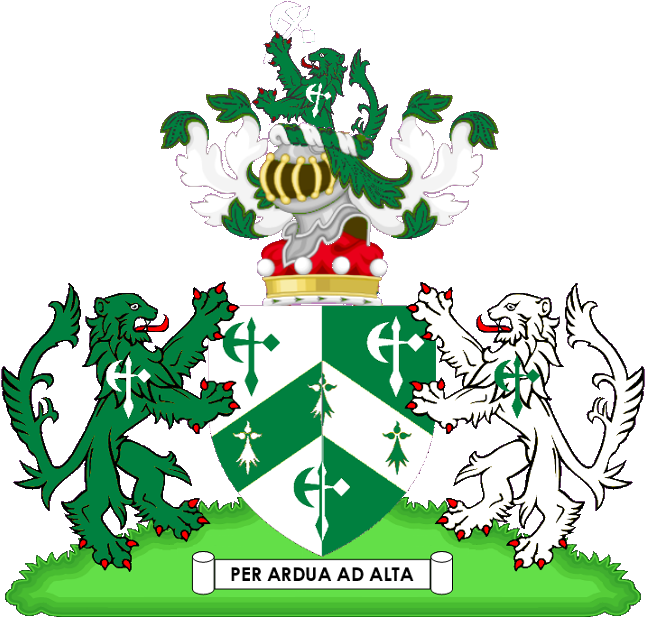
Of course, I also illustrated his coat of arms a year ago, and being the copyright owner for that graphic I released it under the same.

Last month Norton blogged on a different topic – the repeated floating by the government of plans to move the House of Lords to York. Not, to be clear, moving Parliament as a whole along with the royal households, the senior courts and the departmental headquarters of the executive, but just moving the upper house while leaving everything else in London. On Thursday he secured a lengthy debate in the chamber on that topic. The peers who spoke were unanimous in their savaging of their proposal. Many of the issues I commented on Norton’s post regarding the practical absurdities of a separation and the apparent powerlessness of ministers in the upper house to influence their Commons colleagues were repeated by members in their speeches. My favourite contribution was by the Lord Addington: Michael Gove’s comment was the sort that usually comes up halfway through the third round in a pub, that should be forgotten by the end of the fourth, and certainly not remembered the next morning.

Accessions and Assumptions

Today was another virtual double-helping. The first was a Teams presentation from The National Archives in which Dr Tracy Borman, Joint Chief Curator of Historic Royal Palaces, plugged her new book Crown & Sceptre: a new history of the British Monarchy.

Borman gave a synopsis of her publication, which essentially amounted to a summary of English and then British royal history since 1066. That part I will not type out again. She called Elizabeth I a brilliant propagandist and “the greatest monarch of all time”. She thought less of Victoria, who spent so much time in retirement after Albert’s death that the institution of the crown was nearly disbanded. She also called Edward VIII’s abdication a lucky escape, noting the callous attitude he had both to the institution and his family members. She spotted a theme that the best monarchs were those never originally supposed to reign – including the present one. Another important point was that after the Civil War and the Glorious Revolution, Britain’s monarchs were reduced to ceremonial figureheads, focusing their efforts on charity and patronage instead of direct political power. This earned them mockery from other still-absolute monarchs at the time, but seems in the long term to have greatly contributed to outlasting them.

In the Q&A, I asked how much the present day royal family was influenced by the Scottish half of their pre-C17 ancestry, since her book was focused on the English side. Borman said that the constitutional model which Britain still has today (and has exported around the world) largely resulted from the absolutist attitudes of the House of Stuart clashing with the English parliamentary system, without which its seminal conflicts would likely never have happened.

While I enjoyed the presentation I am not sure that I will end up buying the book. While Borman claimed to be “inspired” by the Platinum Jubilee giving the opportunity to look back over the last millennium, I suspect it was more a matter of judging the point in the media cycle when such a book would get most sales. I am reminded of J. P. Nettl’s preface to his 1967 book The Soviet Achievement, beginning with “Anyone should have serious doubts before adding to the mountain of literature on the Soviet Union. The fiftieth anniversary of the October revolution provides an occasion, perhaps, but no automatic excuse.”, a sentiment that could apply equally well here.

The second event was a Zoom lecture by the Heraldry Society. Marcus Meer‘s talk “And No Recently Assumed Arms…” was about the display of, and attitudes around, heraldry in medieval German cities, and something of a sequel to his “Lest They Pass to the Peasants” lecture to the Scottish society in March.

Urban centres in the Middle Ages were festooned with heraldic marks of the municipalities themselves as well as the guilds, corporations and individuals resident within. They would be set in stained glass, carved into stone walls or moulded on cutlery. The use of such images was a shared focal point for citizens’ attention, helping to maintain communal stability. They were also used to demarcate sections of the urban space, and to claim control of said sections on behalf of their owners. Delegated authority was rendered visible as government officials wore the state or city’s badge, and armorial marks would be painted on items produced in the city as a sign of quality control. Heraldry was also a mark of power struggles – guilds would fight for precedence in civic processions and conquerors of a town would displace existing shields with their own.

Meer spoke of a departure in scholarship from analysis of heraldry as a fixed symbol of meaning, towards a study of medieval perspectives.

The Gossembrot Armorial of 1469 was an attempt by the author to shore up his family’s status against the threat from social climbers. It collected the arms of all the families into whom Gossembrots had married, but it omitted arms which had come into use too recently in favour of those long-established. Others would embellish their own heritage beyond plausibility, such as Ulman Stramer who, in his Book of my Lineage and Adventure (1360-1400), claimed that his ancestor Gerhart of Reichenbach was granted arms by King Conrad, even though Conrad reigned in an age before it became customary to have arms formally granted by a sovereign. In the fifteenth century there was a social distinction between arms officially sanctioned and arms privately assumed. Urban grantees, much like their contemporaries in England, sought to consolidate their status. Also similar to England, “confirmations” of supposedly-old arms were preferred to grants of clearly-new ones, for armigers wanted proof that they and their agnates had always belonged to the gentry instead of recently joining it. Sometimes grants were sought from foreign rulers, such as Henry VIII of England to Lorenz Stauber of Nuremberg in 1521.

There were accounts of legal disputes over heraldic ownership, such as unrelated armigers bearing the same shield, and the city authorities deciding that they must be long-lost family. A case study was the Church of St Anne in Augsburg, where Ulrich, Georg and Jakob Fugger had endowed a family chapel. When the male-line of the dynasty died out the female-line descendants were allowed to inherit the chapel but not the Fugger arms.

I asked Dr Meer what was the lowest social rank at which one could get away with assuming arms. He replied that there were no hard rules, and that at Nuremberg there is evidence of armigerous peasants, albeit probably the wealthier peasants. Emperors were known to complain of non-nobles assuming arms, but there wishes were not enforced.

10th June is International Heraldry Day (though as little recognised as all the other National Whatever Days) and the society was proud to unveil its new logo, courtesy of Quentin Peacock. Also today it was announced that Her Majesty had appointed two new members of the Order of the Thistle – former Lord Advocate Dame Elish Angiolini and former Presiding Officer of the Scottish Parliament Sir George Reid. Their arms, if yet they have them, will at some point be displayed at the High Kirk. Meanwhile, with just three days to go until the Garter service, I am still none the wiser as to the arms of Amos and Blair.

Thanks for the Memoiries

Politician’s autobiographies are a strange beast. Everyone who’s anyone (and some who maybe aren’t) eventually publishes a weighty tome detailing their time in (or out of) power with a view to putting a favourable account of themselves in the public’s minds, as well as perhaps generating income and attention lost since holding office. A few of these, such as Alastair Campbell or Alan Clark, become famous in their own right but I suspect the majority sink into obscurity as fast as their authors do.

When I discovered it four days ago, the Wikipedia article on British political memoirs was a left much to be desired. The list was long and disorganised. After many hours of code crunching, I had rearranged it into three big tables, searchable by name and publication date. I also added details of the authors’ notability as well as the publisher. The list is, of course, incomplete, given that there are new memoirs coming out every year as well as older ones overlooked (indeed I discovered a few along the way), but with as much as is already there I can spot a few trends. Harper and Collins (together or apart) got the top picks of the right wing while Penguin and Random House (ditto) got the left’s. I don’t know if that says anything about those companies’ corporate politics or if it’s just a herd mentality among their clients. Biteback, a company dedicated to political publications, is happy to print for any party.

I am sometimes struck by how early some of these books were published: Jess Phillips, who became MP for Birmingham Yardley in 2015, released her first book Everywoman in 2017 and already seems to be on at least her third. Gerald Kaufman published How to be a Minister in 1980, when his own ministerial experience amounted to just five years as a junior minister. Maureen Colquhoun wrote A Woman In The House having been voted out of the Commons after just five years. Even those who have served a long time still stand to miss out on what happens after – Ken Clarke’s Kind of Blue, debuting in 2016, mentioned how he was glad that Kaufman cut ahead of him when taking the oath in 1970, for he had no desire to be Father of the House. I presume he didn’t expect Sir Gerald to die so soon, to say nothing of the chaos of 2019.

The titles of such books are also interesting. Both Parmjit Dhanda (Gloucester 2001-10) and Matthew Parris (West Derbyshire 1979-86) described themselves as “outsider”. Almost forty of the books listed actually had “memoir” as part of the name. Some attempted puns on their own names, such as Coming Up Trumps or Teddy Boy Blue. Of particular significance is the number of books actually named after people other than the subject: Three Conservative autobiographers defined themselves in relation to Thatcher, while only one Labour book similarly refers to Blair.

Although a large proportion of the writers end up being members of the House of Lords at some point, relatively few devote more to it than a brief note in the epilogue. Those who were MPs tend to regard their time on the green benches as their real career, with ennoblement marking its end. Often the book is already out by the time the scarlet robes are put on. Clement Attlee stands out here – he apparently wrote and released As It Happened in 1954 while he was still leading his party!

FURTHER READING

Privy to the Details

Meetings of Her Majesty’s Most Honourable Privy Council are not usually a big event. Although the committees (particularly the Cabinet and the Supreme Court) are very busy institutions, the plenaries generally take place once per month, minimally attended (the quorum is four) and enacting mere formalities.

A major exception to the norm is upon the demise of the crown. Then an Accession Council is swiftly convened to greet the new monarch. This is typically the only occasion on which the entire council meets.

Nowadays, even that is set to change. It was reported in Private Eye some time ago that places at the next accession will have to be rationed, on account of the council having grown too large over the course of the present reign. Certain office-holders will be invited automatically, but everyone else will have to enter a ballot.

Recently there has been a freedom of information request which revealed which offices would grant automatic invitation. As it turned out, the list was still quite long. I have endeavoured to break it down by category for ease of understanding.

The Firm

  • Members of the Royal Family who are Privy Counsellors
  • The Lord Great Chamberlain
  • The Earl Marshal
  • The Garter Principal King of Arms
  • The Lord Lyon King of Arms
  • Members of the Royal Household who are Privy Counsellors
  • Certain senior members of the Royal Household who are not Privy Counsellors

Political figures

  • The Lord High Chancellor of Great Britain
  • The Prime Minister
  • The Lord President of the Council
  • The Lord Keeper of the Privy Seal
  • The Speaker of the House of Commons
  • The Lord Speaker
  • Serving Cabinet ministers (and ministers who attend Cabinet)
  • The Leader of the Opposition
  • Members of the Shadow Cabinet who are Privy Counsellors
  • Westminster Leaders of political parties represented in the House of Commons
  • The First Minister of Scotland
  • The First Minister of Wales
  • The First Minister of Northern Ireland
  • The Deputy First Minister of Northern Ireland
  • The Presiding Officer of the Scottish Parliament
  • The Presiding Officer of the Welsh Parliament
  • The Speaker of the Northern Ireland Assembly
  • Deputy Speakers (of where?)
  • Former Prime Ministers
  • Former Lord Presidents of the Council
  • Former leaders of political parties who are Privy Counsellors

Religious figures

  • The Archbishop of Canterbury
  • The Archbishop of York
  • The Bishop of London
  • Former Archbishops of Canterbury and York
  • Former Bishops of London

Judiciary

  • The Judicial Committee
  • The Lord Chief Justice of England & Wales
  • The Lord Chief Justice of Northern Ireland
  • The Lord President of the Court of Session
  • The Lord Advocate
  • The Master of the Rolls
  • The President of the Queen’s Bench Division
  • The President of the Family Division
  • The Chancellor of the High Court of England & Wales
  • Lord and Lady Justices of Appeal

Diplomats and civil servants

  • The Secretary-General of the Commonwealth of Nations
  • High Commissioners of the Commonwealth Realms
  • The Marshal of the Diplomatic Corps
  • The Cabinet Secretary
  • The Permanent Secretary of the Foreign, Commonwealth & Development Office

The City of London

  • The Lord Mayor
  • The Sheriffs
  • The Recorder

Notably the reply did not specify how many places were available by ballot.

UPDATE (8th September)

Elizabeth II died earlier today. The council website currently advises attendees to await for an email giving further instructions.

State of Change

May I see the wine list?

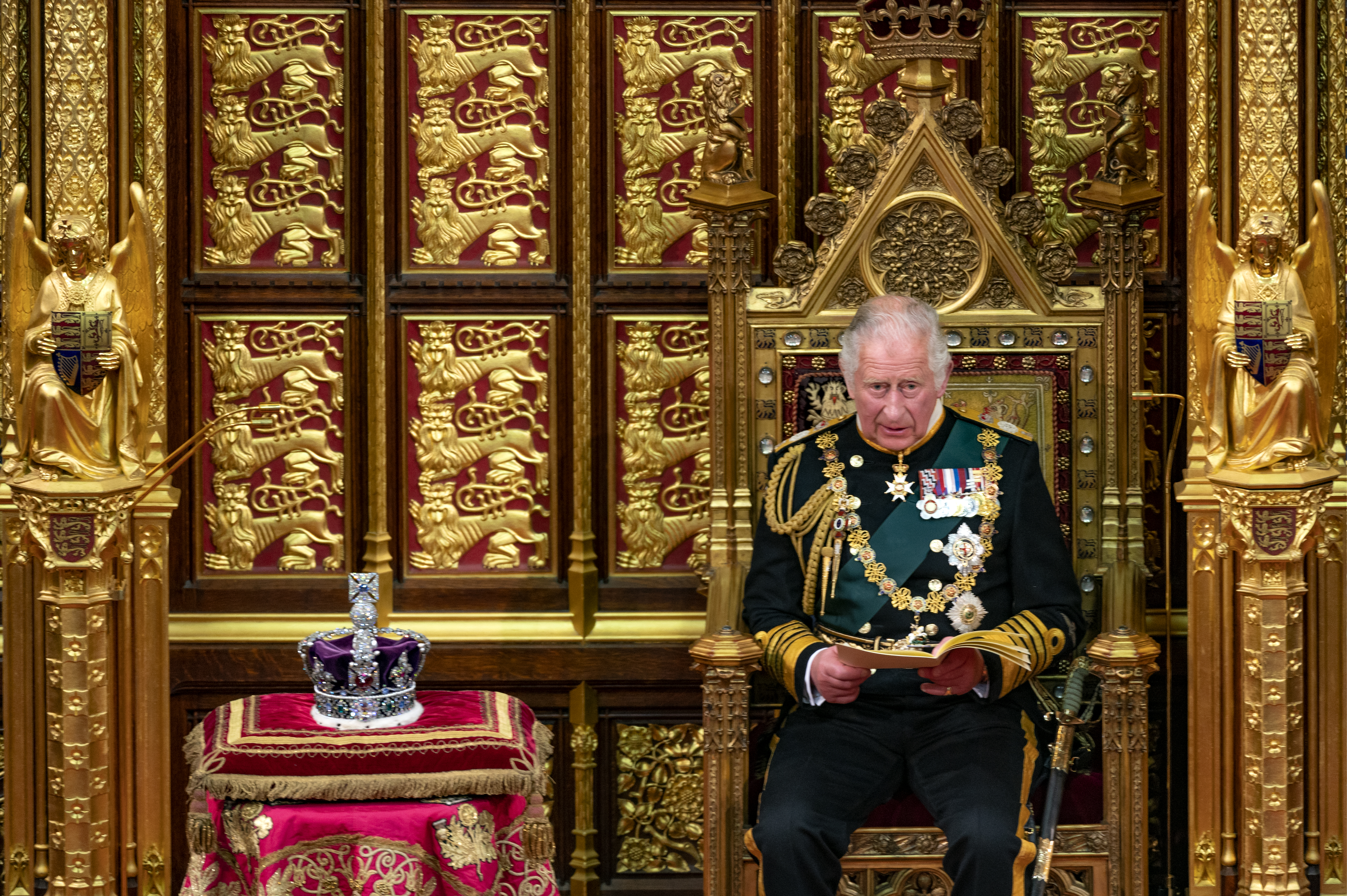
Late last night it was announced that, due to episodic mobility issues, Queen Elizabeth would not be personally present for the state opening of Parliament today. While the shortness of notice is unusual, it is far from unprecedented for a parliamentary session to begin without the monarch. The present queen missed the openings of 1959 and 1963 due to pregnancy. Victoria loathed to visit Parliament at all during her forty years of mourning. On those occasions the standard procedure was to open the session by commission, with the Lord Chancellor reading the speech. This time, perhaps in consequence of the shortness of notice, the full state ceremony went ahead but with the Prince of Wales reading the speech instead of his mother.

The last time an heir apparent opened Parliament in this way was 23rd November 1819, when the Prince Regent opened the second session of the sixth Parliament on behalf of George III, a mere nine weeks before actually ascending to the throne. Charles, of course, is not full regent, and performed today’s ceremony in his capacity as counsellor of state. Such counsellors are required to act in pairs, hence the first appearance of the Duke of Cambridge at the event.

It was reported in the BBC coverage that Charles was sitting on the consort’s throne, with the monarch’s throne being removed from the chamber completely. The Imperial State Crown was displayed on a small table to his right where the monarch’s throne would normally be, while his wife and son sat on the smaller chairs in the alcoves either side.

Convention has long been for the peer reading the speech to do so in first person, as the sovereign herself would have done, but Charles opted to switch to third person, repeatedly describing the government and its ministers as “Her Majesty’s” instead of “my”*. I do not know if he was making the substitution mentally or if the speech was actually printed again with altered wording – which would require a downgrade in materials.

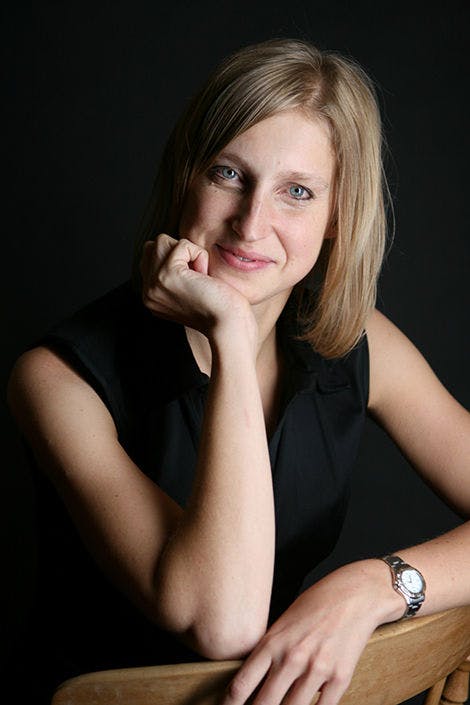
Also last night it was announced that Professor Anne Curry had been appointed Arundel Herald Extraordinary. This did not make her a member of the College of Arms, but did allow her to take part in the procession with the other heralds.

This afternoon the House of Lords Flickr account published twenty photographs of the ceremony, taken by Annabel Moeller and licensed as CC BY 2.0, enabling me to quickly absorb them into Wikimedia Commons. It is unusual for us to have such number and quality of images for events like these. The trend towards releasing photographs in this way is encouraging, even if it is intermittent.

Given that this if the first time counsellors of state have been used to open a legislative session, and that the decision was not known until thirteen hours prior, one has to wonder how much improvisation was employed in today’s ceremony, for example:

  • Their Royal Highnesses travelled entirely by motorcar. Had there previously been plans to use the horse-drawn carriages?
  • The Prince of Wales was in full military uniform as for most state openings, but his wife and son were in morning suits as for the “dress down” occasions in June 2017 and December 2019. The inconsistency is inexplicable.
  • There was no mention of the Union Flag over the Victoria Tower being swapped for the royal standard. Was a banner of the heir apparent’s arms available?
  • The limousine carrying Charles had his own shield of arms mounted on the roof, but that carrying William used the generic red shield with a crown. Has a shield of William’s arms been made for this purpose?
  • The carpet on the lowest step to the throne was plain red, whereas previously the pattern of lions and roses continued all the way.
  • Sir Lindsay Hoyle is wigless for the third consecutive state opening, despite promising to wear it before his election. It can’t still be missing, can it?

When the ceremony is over, both houses debate a response to the address. Tradition dictates that the motion be introduced by a long-serving older member and seconded by a younger, recently-elected one. The role of the “old duffer” was this time fulfilled by my own MP, the “shy and retiring” Graham Stuart. He said of his constituency:

Beverley and Holderness comprises four towns—Beverley, Hornsea, Withernsea and Hedon—and many other hamlets and villages that are dotted across east Yorkshire. It is a beautiful part of the world and has history as well as charm. Beverley has contributed more than most places to the improvement of our democratic system over the years—admittedly chiefly by running elections in such a corrupt manner that the law had to be changed afterwards. After the unseating of the victorious candidate in 1727 by a petition, his agents were imprisoned and Parliament passed a whole new bribery Act. But Beverley’s notorious freemen were not to be put off so easily. Beverley continued to be a byword for electoral malpractice. The novelist Anthony Trollope stood in the Liberal interest, unsuccessfully, in 1868, and such was the level of wrongdoing that a royal commission was established especially and a new law passed disenfranchising the town and barring it from ever returning a Member of Parliament again. Obviously the law did change. Free beer and cash inducements were the electoral controversies then, rather than, say, beer and curry today. Never in the history of human conflict has so much karma come from a korma.

FURTHER READING

*The version used on the Hansard website for both the Commons and the Lords is in third person as Charles delivered it, while that on the government’s site is in first person, as well as annotated with the names of the bills being described.

Churchill the Activist: His Dedication to Human Rights

Another presentation by the International Churchill Society, featuring Ankit Malhotra and Zareer Masani.

I asked the final question: “Both sides of the EU referendum were keen to claim Churchill’s legacy. What is known of his views on the optimal level of European political integration?

Justin Reash, the host, joked that “keen” was an understatement.

Masani said that his references to a United States of Europe would not go down well with today’s Brexiteers who constantly go on about how the EU is trying to create just that against everyone’s national interest. He thought that Churchill would not be a typical Brexiteer – he was in favour of European unity, but would have liked to see it include the east of Europe and not just the west as actually transpired.

Malhotra added that the idea of a United States of Europe was provocative at its time and not unique to Churchill – even Gaddafi imagined a United States of Africa – but that the British have always been wary of a larger system of uniform governance which perhaps explains their attitude towards the EU. If they championed an idea they obviously believed in it wholeheartedly, which is why the Council of Europe lives on, perhaps more strongly than the European Union.

Reash said that one of the many reasons for Churchill’s initial interest in the United States of Europe was the sense of collective security, which was shown not to have been achieved at Versailles. Being able to prevent another world war is something we all really want, that legacy now of course bearing fruit in Ukraine.

Churchill’s Reputation Today

Today I attended a virtual presentation by Dominic Sandbrook to the International Churchill Society, the whole of which has been posted on their YouTube channel.

My question was “Other than Thatcher, is any later prime minister likely to receive a state or ceremonial funeral?”, and Dr. Sandbrook’s reply was “No, Tony Blair might be an obvious contender but I don’t think he would want one. It’s really interesting, the contrast between Blair and Thatcher: Thatcher was tremendously controversial in her lifetime and afterwards. People who voted for Thatcher continue to adore her whereas those who didn’t absolutely despised her. In Blair’s case it’s actually a lot of the people who voted for him who now regard him as the devil incarnate, so I don’t know who the constituency would be to support a Blair funeral – the small constituency of “centrist dads” as I believe they’re called on social media? Most prime ministers end up kind of regressing into obscurity. Harold Wilson won lots of elections and bestrode British politics in the 1960s-70s but basically was a forgotten man by the time he died.” which somehow segued into a discussion of The Crown.