The Deep Breath Before The Plunge

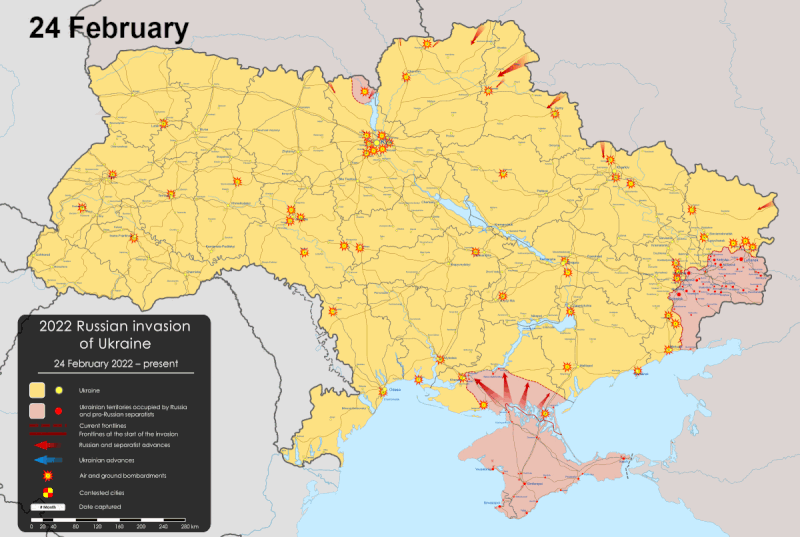
File:2022 Russian Invasion of Ukraine animated.gif

Almost two years ago, it was becoming clear in Britain and most other countries that the coronavirus was a global problem and not merely a regional one. There were cases identified in the UK in January 2020, through February its news coverage slowly outgrew that of Brexit, with stories of panic buying and rising case rates, but much of ordinary life went on. By mid-March the crisis had become unavoidable – the government was giving daily press conferences and many public places (including universities) were shutting down. Hand sanitiser dispensers and social distance signs popped up all over. Then, on 23rd, the entire country went into the first lockdown. The Britain at the end of that month felt like a wholly different world from what it had been at the beginning. For other countries the exact dates vary but the overall phenomenon is very much the same. In retrospect, there was something particularly surreal about the week of 17th-23rd, where for many it may have felt like an unplanned holiday, the full weight of the disaster looming but having yet to hit.

Now, after twenty-three months of on-and-off disease control, much of the developed world is transitioning from “pandemic” to “endemic” and returning to something like normality. In Scotland and Wales, all remaining COVID-induced restrictions are set to be lifted by the end of next month. In Northern Ireland they were lifted on 15th of this one. In England they went on Thursday. By superb coincidence, that was the same day the Vladimir Putin launched a full-on invasion of Ukraine.

Compared to the virus, this is neither as surprising nor as sudden – Russia has been in a state of war with its western neighbour for just over eight years, and diplomatic relations with other countries have been tense throughout that time, including many accusations of election meddling, political bribery and even assassination. Over the last few months the pressure could be seen rising. It was generally understood that war would properly break out at some point, but not exactly when. I remember Lucy Worsley’s Empire of the Tsars airing in early 2016, with quite a few online quips that the BBC wanted to get the filming done quickly in case war was imminent. Now, at the time of typing, it looks as if momentum has gathered – countries are, with varying degrees of enthusiasm, freezing (soon it could even be seizing) the financial assets of Russian businessmen and officials, as well as banning such people from their airspace. Sporting organisations look to ban Russia from their games. Britain is even sending troops to Eastern Europe. Other countries are doing likewise, or at least supplying equipment to the Ukranians themselves.

All that being said, we are not yet actually at war. British and Russian embassies to each other remain open, as do those in most other countries. It remains to be seen how long that lasts. The situation of the tens of thousands of Russian people living in Britain is perilous, as is that of Russian businesses trading here, or vice versa. This week’s invasion has been dubbed the largest conventional warfare operation in Europe since World War 2, and cries of World War 3 are widespread – and they are not meant jokingly this time. In the books that my late grandmother bought for me about the first two, it was mentioned that before the United States’s involvement, British and German ambassadors in Washington DC were competing with each other for American military contracts, and that private businesses within the allied and axis territories continued trading with each other (including weapons) right up until the declarations of war took effect. It will be interesting to see how much of that is repeated with Russia Today.

Speaking of Russia Today, RT continues to broadcast in this country. Suffice to say, its coverage of the invasion differs sharply from that of most other networks. The channel has been under review by Ofcom, and the leaders of the Labour and Scottish National parties have called for its termination. This has already been done in Poland and Germany, though the latter’s own public broadcasting service was reciprocally banned in Russia and there are fears that the BBC would suffer the same fate. I discovered RT in late 2012, at the same time as I was covering the Soviet Union for GCSE history. I appreciated the level of attention it gave to topics other channels thought less important, such as SOPA/PIPA/CISPA/ACTA and the Snowden revelations, as well as its documentaries on a variety of topics. If nothing else, it was good for checking the aspect ratio settings on one’s television, being for the time one of very few networks still airing in 4:3. All that being said, as a state-controlled news outlet it was never entirely trustworthy, and one could always sense that it was going out of its way to depict western democracies – and indeed “The West” as a concept – in the worst possible light and to encourage any kind of crankery that would undermine Russia’s strategic rivals.

As many are now pointing out, the true strength of Russian propaganda is online rather than on television, and that will be much trickier to sort out. The powers, rights and obligations of the large social media sites to intervene on political matters has long been controversial, as have measures to restrict the digital activity of Russia in particular. If the situation continues to escalate we may well see YouTube channels and Twitter accounts being suspended en-masse, as well as purges of suspicious users from message boards. As far as the pandemic comparison goes, we must currently be at least at the second or third week of March. I dread to think what the fourth looks like.

OTHER ANALYSES

  • Putin’s Power and Western Impotence by David Starkey. He says that Putin seeks to revive Tsarism not Stalinism, and that he understands that all authority derives from force whereas Western nations have forgotten this. Starkey condemns Angela Merkel for shutting down Germany’s nuclear plants in favour of Russian gas, as well as all European nations for letting their militaries wither. This being Starkey, he also takes potshots at 16-year-old girls.

UPDATE (2nd March)

RT’s television channel is off air and YouTube, along with other platforms, has hidden all of its videos.

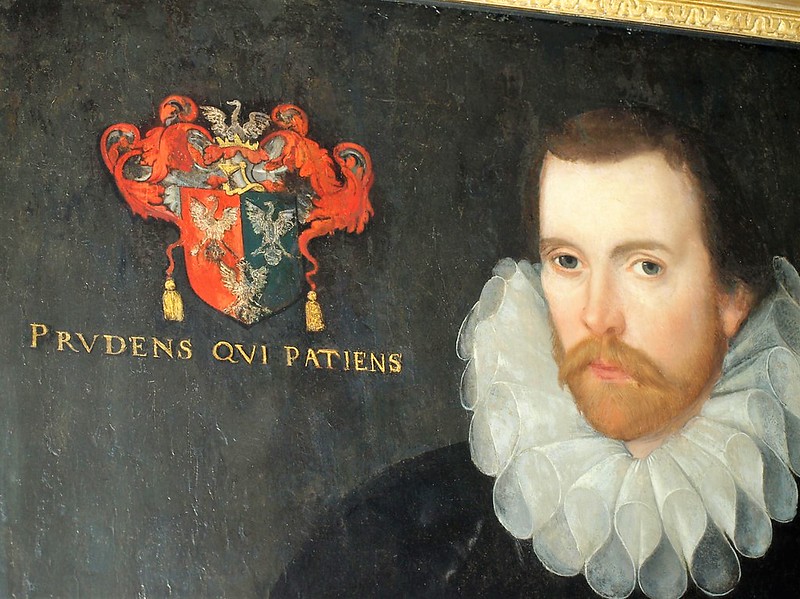
Fighting Corruption in the Judiciary

Many times before I have virtually attended the kinds of events that I could not attend in person. Sometimes it is because the location is too far away, other times because I am not a member of the organisation hosting. On this occasion it was both.

When I first found the flyer for today’s presentation on Eventbrite I assumed it would be an academic or professional presentation similar to all the others. Only upon entry did I realise it was actually the preparatory talk to a competition (which I obviously will not be entering).

The challenge was for high-schoolers and undergraduates to imagine that they were junior staffers at the justice ministry in a fictional Eastern European country which, having emerged from the Warsaw Pact, signed and ratified the United Nations Anti-Corruption Convention but then, after a change of government, withdrew from it, and wanted to make changes to the method of appointment and dismissal of judges. The student’s task was to make a video presentation about the meaning and consequence of corruption. They should outline the basics of a legal strategy to bring their fictional homeland in line with the convention again, and produce three key ideas on enhancing judicial independence.

The speaker, Alice Thomas, then went on to make some general points about political corruption: It exists everywhere in some shape or form. What we know is only what other people have found out, and in countries without an independent media it can be difficult to find out anything. Most countries have anti-corruption strategies, at least on paper. The United Nations often follows the work of smaller regional groups, because having fewer members means it takes less time to reach decisions. North Korea, unsurprisingly, did not sign the aforementioned treaty at all. Some countries signed but did not ratify. International cooperation is important for asset recovery and information exchange, since corruption is often a cross-border phenomenon. The judiciary, legislature and executive are there to monitor each other. In a country without a functioning judiciary everybody can basically do as they please. Corruption may take the form of individual judges being bribed or coerced rather than the whole system being controlled. For a government to ensure judicial independence without inadvertently encroaching on it is a complicated task, since attempts to scrutinise the courts would themselves resemble the executive applying  political pressure.

Rather amusingly, Thomas ended by telling participants to be careful about their sources and not to rely on Wikipedia because “it’s not always very accurate. It’s a very subjective thing. It relies on who writes what in it.” – me, for example.

EXTERNAL LINKS

More Speakers, More Arms

Almost three years ago I constructed, for Wikipedia, a list of all the coats of arms borne by Speakers of the House of Commons. That list covered the lower houses of Great Britain (1707-1800) and the United Kingdom (1801-present). Finding sources for the later incumbents was difficult – quite a few were missing from Burke’s and Debrett’s, so I had to get creative in looking for visual evidence, often relying on photographs from corporate events at Speaker’s House.

A few weeks ago the heraldic artist Baz Manning, whose photographs from Lincoln’s Inn I had already used for a similar page about Lords of Appeal, contacted me to say that he had taken extensive photographs inside the Palace of Westminster of the speakers’ arms, and would be uploading those on Flickr too. Not content with merely documenting those speakers who served since the Acts of Union, he had photographed the shields commemorating just about every speaker since the age of Henry III. It was therefore only natural that I should make a Wikipedia list for them as well.

In addition to these photographs I had written the written source of the 1850 book The Lives of the Speakers of the House of Commons by James Alexander Manning (Related? I’ll have to ask.), which I had already used for the earlier entries in the British list. The relative ease of accessing these compared to what I had before meant the prequel was much more easily accomplished than the original.

That is not to say that there were no difficulties, however – whereas speakers from the Georgian age onward generally served a good number of years in the green chair before ascending to the red bench*, in medieval to Stuart times their tenures were often very brief – indeed, the legislatures themselves were often only in existence for a few weeks. It was also much more common for members to serve non-consecutive terms, which means confusion about how to arrange their entries.

A particularly knotty problem is that many of these men lived and died in an age long before English spelling was nailed down, which means tricky decisions on what to actually call them (e.g. Guildesborough or Goldsborough, Broke or Brooke). Another is that different sources often contradict each other as to what exactly their armorial bearings were, Baz even pointing out quite a few instances where the painted shield on the wall does not conform to the blazon in the grant, or when there are two separate illustrations that are not in agreement.

Still, the page is up, and unlike last time it does not appear that I will be stuck waiting months for review and clearance, so I’m counting this as a success. It remains to be seen if one more armorial page can be squeezed out of this topic. Obviously the old Parliament of Scotland had no elected speaker (being unicameral and chaired by the Lord Chancellor much like the House of Lords), but the House of Commons of Ireland before 1801 had one much like its English counterpart. I will have to see if a similar gallery of painted shields is maintained at College Green, and if any other budding heraldists have been able to photograph it.

*Only five speakers of the English House of Commons ever ascended to the peerage, whereas only ten speakers of the British house have not, and several of them died in office. Quite a lot of English speakers were at least knights or baronets, though that introduces the further difficulty of finding out if each one was knighted before or after their time in office.

Warwick the Kingmaker by John Reid

Today I attended another virtual meeting of the Richard III Society Gloucester Branch. The presentation was by John Reid, discussing the historical reputation of Richard’s father-in-law Richard Neville, 16th Earl of Warwick, popularly nicknamed “The Kingmaker”.

Warwick has been hugely divisive to contemporaries as well as historians, Ricardians, Lancastrians and Yorkists. He was England’s greatest celebrity of the fifteenth century and his fame (or infamy) carried on into the twentieth). He even had a board game named after him.

He became the premier earl in England in 1449 due to lucky deaths. His family were great winners in the lottery of aristocratic marriages – picking up the estates of the Beauchamps and Despensers. His patchwork of armorial quartering reflects the complexity of his family connections. He had initially supported Henry VI, but changed sides in 1452 largely due to his inheritance disputes with the Duke of Somerset.
Henry VI, due in part to inherited mental health troubles, proved spectacularly incompetent, and many considered Richard, Duke of York to be king by right – though Reid showed us York’s signature on the letters patent of 1454 appointing Henry’s son Edward of Lancaster as Prince of Wales, clearly showing that even at this late stage he was not disputing the latter’s right. When eventually he rebelled against the Lancastrian crown he had Warwick’s invaluable support. York’s son Edward, Earl of March rescued Warwick from Margaret of Anjou and Warwick in turn arranged his coronation as Edward IV. For the first three years of Edward’s reign Warwick was thought “third king”, being virtual governor of the realm, acquiring even more land (after he confiscated the estates of the Percy and Clifford families, he wound up with lordships in twenty-eight English counties and a handful in Wales) and an annual income of at least £10,000 (nearly £11m in 2021 money).

Matters of matrimony spoiled his status: Warwick had spent months lobbying for a French princess to marry his king, and was humiliated by the revelation that Edward had already married – in secret – to Elizabeth Woodville, a dowager dame whose family had fought for the Lancastrian side. He described the parvenu Woodvilles as “grasping and charmless”, resenting how many titles, offices and marriages were given to them at the expense of his own dynasty, and how their influence over the crown came to displace his. Reid drew parallels with the modern-day rivalry between Carrie Symonds and Dominic Cummings.

Warwick’s first coup against Edward occurred in the summer of 1469. He launched his second in 1471, making a deal with Margaret of Anjou on 22 July and reinstating Henry VI on 3 October. He was killed at the Battle of Barnet on 14 April 1471. Reid noted that this was the only time he had fought on foot rather than horseback, leaving him with no easy way to escape when the tide turned against him and he was isolated from his allies on the field. This was very similar to the way Richard III would die fourteen years later.

The earl was adept at his own spin so contemporary sources are often too kind to him. Later writers were often too harsh. In particular Burgundian writers made him a bogeyman, believing that his policies would lead to their absorption by France. He had something of a rehabilitation under the Tudors – Henry VII wanted Henry VI to be declared a saint.

In summing up, Reid discussed Warwick’s virtues and vices. He was confident, charismatic, charming, courageous and energetic. He was treated shabbily by Edward IV after 1464. He may have been the model for Sir Lancelot as envisioned by Sir Thomas Mallory. On the other hand he can be seen as seeking power only for himself and being motivated by personal feuds rather than the national interest. His military skill is doubted, as is his necessity in the Yorkist accession. Could Edward IV have made himself king without Warwick’s help? Were the Woodvilles any worse than the Nevilles?

After the presentation itself had concluded and most attendees had logged out, there was a lengthy discussion between one attendee (Sean O’Neill) and the host (Cynthia) over the intricacies of Zoom functions – because various buttons were appearing and disappearing depending on the settings of individual hosts and updates by the company. This led to an explanation of the difficulties of an organisation managing virtual meetings, then one into internet difficulties generally as well as experiences of coronavirus. I mentioned having tested positive in November, and my experience with Hubbnet. I remarked that I would have been truly screwed had the pandemic hit in the period of 2009-13 when my house relied on plugabble WiFi dongles for very limited internet access. The two were surprised to realise that I lived near Hull, the former having once lived in North Ferriby and the latter in Hessle. They started asking me if Kingston Telecoms or Kingston Communications still existed (they do).

Guts for Garters

For the last few Decembers I have eagerly awaited the release of the new year honours list. Normally they arrive a few days before the actual new year, but this time around they came with barely an hour to spare.

There were, as to be expected, a great many awards given on ministerial advice for those involved in fighting COVID, but at the very top were three new appointments made at Her Majesty’s personal discretion to the Order of the Garter: Camilla, Duchess of Cornwall, her daughter-in-law; Valerie, Baroness Amos, former Lord President of Her Privy Council; and Tony Blair, her former Prime Minister.

While sons (and in modern times also daughters) of the reigning monarch are appointed to the order routinely it is rare for royals by marriage. The only examples in the past two hundred years are of those married to the sovereigns themselves – Albert two months in advance of his wedding, Alexandra, Mary and Elizabeth shortly after their husbands’ accessions. Camilla and the late Prince Philip are the only consorts to receive the garter while their spouses were not yet on the throne. I wonder if she shall use the same stall that he did?

Amos is a former leader of the House of Lords (like Lord Salisbury, and indeed others of that title before him). She also served a brief term as High Commissioner to Australia and an even briefer one as International Development Secretary.

Tony Blair appointed Amos to most of those offices. It used to be the norm for former Prime Ministers to join the order, up to and including John Major in 2005 it became rare to see party politicians appointed. It was long assumed that Blair had declined any honours if indeed he was ever offered them, whether that was due to his personal distaste for them (he portrayed himself as a moderniser rather than a traditionalist, and was often observed to behave more like a US President than a British minister), or potential public backlash over controversies stemming from his premiership. What has persuaded him to accept the award now, fifteen years on, is not yet known.

These are the first appointments to the order since 2019. There were no Garter Day ceremonies in 2020 or 2021 due to the pandemic. This year is set to be Elizabeth II’s Platinum Jubilee, so one presumes that the Firm will be keen to make up for lost time.

Today’s news will have interesting ramifications heraldry-wise: Camilla has of course been openly armigerous since 2005, and Sodacan has already updated his graphic of her arms to include the Garter circlet. Amos has been a peeress all my life, and typically appears early on in the pages of Burke’s and Debrett’s, but has never been shown with any armorial design. She may therefore receive a brand new grant in the coming months. Blair is especially confusing, though he is joining an English order of chivalry, he may be Scottish for heraldic purposes and so it would be Lyon not Garter arranging his grant.

SEE ALSO

The Nearest Exit

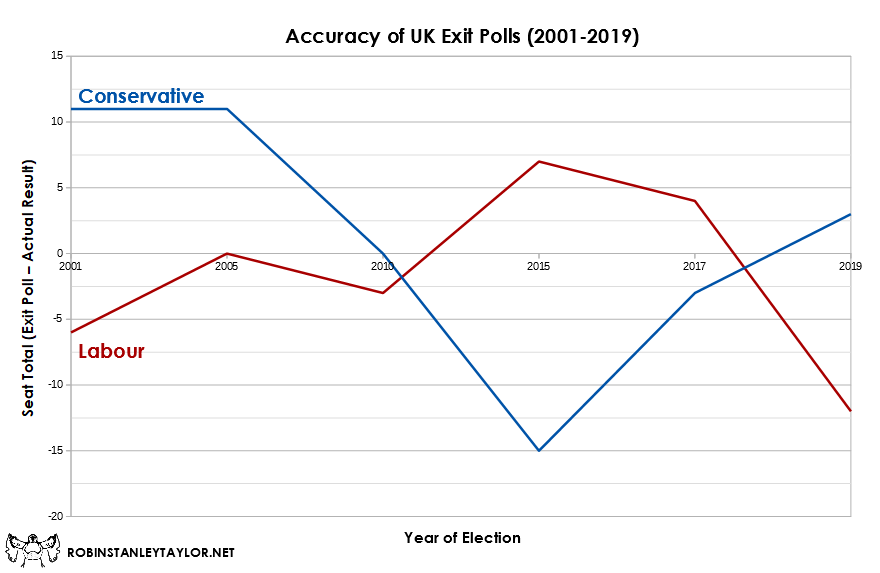
One of the most iconic components of election night in the United Kingdom is the 10pm exit poll. There will have been a heavy outpouring of regular polls, predictions and projections throughout the campaign, but the beauty of the exit poll is that instead of asking people what they intend to do it asks what they already did – all uncertainty thus being removed. The mood of political parties regarding their relative fortunes, the emotional state of all watching and the entire political narrative can be one way throughout the whole campaign and then change dramatically into something entirely different as soon as the bongs sound. The most prominent examples are 2015 – where it was widely predicted that the Conservatives would sink to around 290 seats and be level pegging with Labour, only to find that they’d actually gone up – and 2017 – where Theresa May had long expected to win by a landslide, but actually lost her majority.

Only a very small section of the people are surveyed – in the 2010 example Dimbleby said one hundred and thirty polling places, or one for every five parliamentary constituencies. The statisticians in charge of the polling companies are razor sharp in finding exactly the right places from which to check the political temperature. This makes it all the more remarkable that the polls’ predictions are so close to reality. Despite the protestations of the talking heads that “it’s too early to call” and Dimbleby’s own quip that “if it was dead accurate there’d be no need for anybody to go and vote”, generally the numbers shown are not far from the real ones.

To make the lead graphic, I skimmed through the coverage of the six UK general elections that have taken place in my lifetime, and compiled a spreadsheet of the seat totals projected for the two main parties as well as the actual numbers of seats won by those parties. The graph shows how much either party was under- or overestimated each time. The 2010 poll was nearly spot-on, with the Conservative figure exactly right and the Labour only three too low. The worst inaccuracy was the Conservative figure for 2015, and indeed this was the only occasion in this millennium where the overall result was mispredicted (it was a small Conservative majority rather than a hung parliament).

FURTHER READING

Exit polling explained – University of Warwick

Countessing Your Blessings

Recently I was browsing the Straight Dope Message Board and found a thread entitled Wait… ______ is still alive? As you’d expect, it’s about people one could reasonably assume to have died a long time ago who are actually still living. The one that caught my eye was post #40, mentioning that Clarissa Eden “died only last week”.

Having maintained the Wikipedia pages of British political figures past and present for the last few years, I was intensely aware of the curiosity of Clarissa’s continued existence. One of my earliest posts was on the centenary of Harold Wilson, but his wife had already passed that marker two months earlier. Whereas he died in 1995 at age seventy-nine, Mary finally passed in 2018, aged one hundred and two. Clarissa falls a little short of her record at one hundred and one. By comparison, Lady Dorothy Macmillan died in 1966 (aged sixty-five), the Lady Home of the Hirsel in 1990 (aged eighty), Sir Denis Thatcher in 2003 (aged eighty-eight) and the Lady Callaghan of Cardiff in 2005 (aged eighty-nine).

Still, it is interesting that so little media coverage was given to her death. In most newspapers that mentioned her at all it was as a minor footnote. Perhaps that is the ultimate tragedy – to outlive your fame by so long that nobody even remembers you. Indeed, her title itself would not be recognised – her three stepsons all predeceased her with no offspring of their own so the peerages are long extinct. Clarissa is so far the last premier’s spouse to be a countess*. There may never be another.

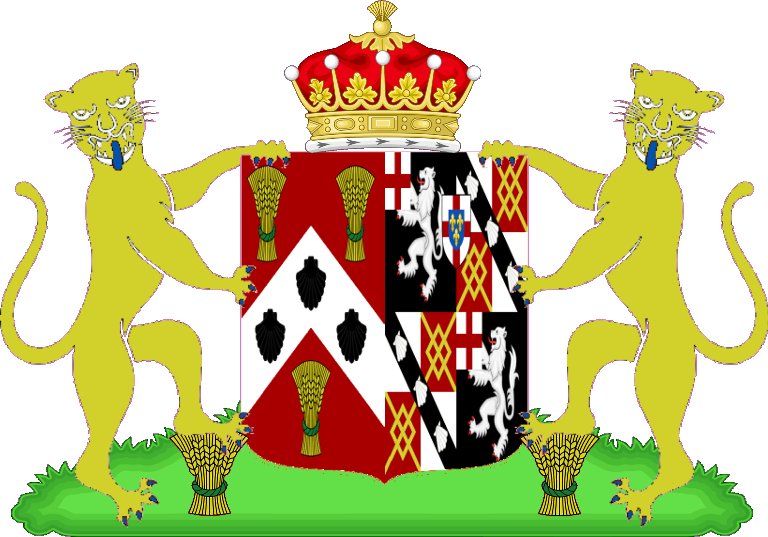
Clarissa’s heraldic achievement – the arms of Eden impaling Spencer-Churchill

EXTERNAL LINKS

*Eden’s immediate successor Macmillan was the last prime minister to receive an earldom, but that was long after his wife had died. Douglas-Home was of course a countess before her husband’s tenure but died a mere baroness. The title refers to the River Avon in Warwickshire. A county called Avon (referring to a different Avon river in Bristol) was created by Heath’s reforms in 1974 then abolished by Major’s reforms in 1996.

A Stark Vision

Amateur or professional, few students of Britain’s royal, political and constitutional history will be unaware of Dr David Starkey. With an extensive collection of literary and televisual credits, plus a famously oversized personality, he was for many years a giant among celebrity historians. His most prominent was his 2004 series Monarchy, followed by Magna Carta in 2015, but he can be traced back much earlier, appearing in The Trial of King Richard the Third in 1984. He has even been featured on the royal family’s own YouTube channel.

His career, though illustrious, has not been smooth sailing, for his character is notoriously abrasive and his reputation has been rocked by a string of ill-worded outbursts – in most notably in 2011 and 2015. His performance in directly teaching the youth was also rocky.

I was quite surprised, early in 2020, to see him interviewed on Akkad Daily. It taxed my mind to decide whether this pairing more represented Benjamin going up in the world or Starkey going down. Certainly the latter plummeted with great velocity that summer following a catastrophic episode with Darren Grimes, which resulted in many of his professional contracts being terminated and accolades withdrawn.

Given the severity of that latest offence, and given that he was seventy-five years old, one could have expected Starkey to vanish from public life altogether and slip quietly into retirement. For a few months that looked to be the case but then he began popping up again on various virtual conferences and current affairs broadcasts, suggesting there is still a place for him on the talking head circuit (well, the right-wing parts of it anyway).

A week ago he launched his own YouTube channel on which, seemingly alone, he gives lengthy speeches to his camera about his specialist subjects. Much of it recycles what he has already said in his earlier lectures and documentaries, some of which are of course no longer available. His motivation is not clear: it could simply be a charitable effort for the sake of public education (sort of a more sedate Crash Course) but then his website asks for monetary donations and boasts about the number of supporters he has in his “fight back”.

In between these was Charlie Brooker’s end of year mockumentary Death to 2020, in which Hugh Grant plays the historian Tennyson Foss. Judging by the hair, clothes, spectacles and voice I am fairly sure this is meant to be a pastiche of Starkey’s own interviews, although hints at the character’s backstory are clearly different.

Another Day, Another Death

James Brokenshire was not the most high-profile of British politicians. Overall he spent sixteen years in the House of Commons, including seven years as a junior minister in a senior department and three as the senior minister in two junior departments, twice having to resign from the government due to the lung cancer which ultimately ended his life earlier this month. Even so, the fact that he had been a cabinet minister, the relatively low age at which he passed and the level of public fear surrounding cancer, one would reasonably have thought it unlikely that his demise could be outdone in the eleven days before the house was to meet again. Then, to the shock of the nation and world, Sir David Amess was stabbed to death. MPs were already due to return from the conference recess today, but scheduled business in both chambers was abandoned in favour of tributes to Amess, with a service following in St Margaret’s Church. Brokenshire’s tributes have been postponed to Wednesday.

Something similar happened during the Easter recess – the death of Dame Cheryl Gillan on 4th April and of the Baroness Williams of Crosby* on 11th would have been the principal concern of their respective houses, had not the Duke of Edinburgh died on 9th. In that instance it was the social and constitutional rank of the departed that determined priority of mourning rather than the manner of death.

The most obvious comparison, made frequently by those who have spoken publicly in the last few days, is to the murder of Jo Cox a week before the EU referendum. There has even been a move to design a shield of arms for Sir David and place it on the chamber wall next to hers. Of course, the two victims had very different profiles – Cox was a Labour woman who supported remaining in the EU, Amess a Conservative man who favoured leaving. This is reflected in the different profiles of their killers – Thomas Mair was a white supremacist with links to the English Defence League, Ali Hari Ali is said to be of Somalian heritage and a suspected Islamist.**

Also distinguishing the two victims is the time they had spent in politics. As I mentioned before, Jo Cox was not well-known to the general public, having only begun her tenure in the House of Commons thirteen months prior. She could well have joined the shadow cabinet in the mass reshuffle later that month, and by this point she might even have been a contender for the party leadership, but back then she was a much a footnote as most of the other MPs from the 2015 intake. Part of what made her death so tragic was precisely that she died so young and so early in her political career, with so much potential thereby wasted. Amess, by contrast, had been an MP for almost long as the average Brit has been alive. Though never a minister, he was a creature of the house, serving on many important if low-profile committees as well as being involved in numerous campaigns and publications. Most in the political sphere knew his reputation, in contrast to Cox who was something of a cipher.

More broadly, the country must acknowledge the worrying frequency with which politicians and their entourages have been attacked (whether or not the attack succeeded in killing the victim) in recent decades, and consider how this can be rectified, both in terms of personal security to defend from those with evil motivations, and in the public attitude to politics that would encourage such evil in the first place. As the pandemic has shown this year and last, the kind of openness and accessibility required of parliamentarians can also be very dangerous to them in person, yet to abandon it can be very damaging to democracy as a whole.

EXTERNAL LINKS

*The speaker mentioned on 13th April that four other former MPs had died during the recess – Peter Ainsworth, Ian Gibson, Robert Howarth, Paul Marland.

**Almost immediately upon the announcement of the attack and the description of the attacker as a “British national” there were people denouncing immigration policy and calling for border closure.