Depravity and Deprivation

The Prince Andrew made a statement two days ago that, following discussions with the rest of the royal family, he will “no longer use my title or the honours which have been conferred upon me”. This is a press release rather than any formal instrument of law, so does not properly remove those from him, though a complete stripping away of said title and honours may be looming anyway. It is important to be aware of the principles and procedures involved here.

Removal of the Peerages

Andrew holds three titles in the Peerage of the United Kingdom — Duke of York, Earl of Inverness and Baron Killyleagh — which were conferred on him by Queen Elizabeth II. He has committed to ceasing all use of these titles whether in public or private context and so most if not all press and official sources will no longer use them when referring to him, but legally removing them is not easy. For almost a thousand years it has been the case that the reigning monarch (nowadays always on the advice of the Prime Minister) was broad prerogatives to hand out peerages at will, but not to then take them back again.

Some media sources are misusing technical terms here: The peerages are not “dormant” (which occurs when the incumbent dies and it is not clear who, if anyone, is the heir), nor “abeyant” (which is where the peerage allows succession to heirs female but without ranking them by primogeniture as the males are, so that inheritance is split between them). They are also not “extinct” or “reverted to the crown” (when the incumbent dies there is definitely no heir), nor “merged with the crown” (when the peer ascends to the throne). Probably the most appropriate term here is disused, for while Andrew legally still is Duke of York, he and everyone else will behave as if he isn’t.*

This video by Dr Allan Barton, writer of The Antiquary, explains most of the processes of removing peerages, which I will here summarise in textual form:

Recent Legislation

The Peerage Act 1963 provided, among other measures, for a person who has inherited a peerage within the last twelve months to disclaim it for his lifetime by writing to the Lord Chancellor. This is not relevant to Andrew’s situation as he has held his titles for over thirty-nine years and they were newly-created for him rather than inherited.

The House of Lords Reform Act 2014 allows peers to retire from Parliament at will, and also allows the Lord Speaker to expel members who are absent without leave for a whole session of six months or longer, as well as those who receive criminal convictions resulting in imprisonment for more than a year. The House of Lords (Expulsion and Suspension) Act 2025 further gives the House the power to vote out members who breach the code of conduct. Notably neither of these acts say anything about removing the titles of those affected, only their membership of the legislature. These are not relevant to Andrew’s situation either because his membership of the upper house was already terminated by the House of Lords Act 1999 and he was not one of the peers elected to stay on at the time nor has he contested any of the hereditary peer by-elections since then.

The Titles Deprivation Act 1917 allowed King George V to revoke British peerages from those whom a specially-appointed committee of the Privy Council had identified as aiding or supporting an enemy country in the First World War. This is probably the closest precedent for Andrew’s situation but still is not itself applicable as his alleged offences are not of the nature described therein, plus “the present war” as specified is one that ended more than four decades before his birth.

Earlier Legislation

In medieval and early modern times, a recurrent political weapon was the Act of Attainder. This was a special Act of Parliament which convicted and sentenced its target for a serious crime without the need for a trial in court. An attainted man lost all of his civil rights and his property was all forfeit to the state. If he held a peerage this was forfeit in the same way.

This was used regularly to punish peers who were political enemies of the monarch, especially if they had led revolts against him. There is precedent for this being used against members of the monarch’s own immediate family, most notably in 1478 when George Plantagenet was attainted and then executed for treason against his brother King Edward IV. He lost the dukedom of Clarence and all subsidiary titles, which his own son Edward of Warwick was then unable to inherit.** The last use of an act of attainder against a peer of the realm was in 1745, when several dozen people were convicted for the Jacobite uprising against King George II.

The procedure for attainder was abolished in the nineteenth century and Winston Churchill was dissuaded from attempting to revive it in the twentieth. The concept of convicting a person of a crime through the legislature rather than the courts was open to abuse for political purposes and is considered incompatible with modern conceptions of Human Rights, so its future usage is highly unlikely.

If the present Duke is to be properly deprived of his peerages, a bespoke new law will need to be devised.

Removal of the Knighthoods and Other Honours

Elizabeth II appointed her son a Commander of the Royal Victorian Order in 1979, then promoted him to Knight Commander in 2003, then Knight Grand Cross in 2011. She also appointed him a Royal Knight Companion of the Order of the Garter in 2006.

Appointments to orders of chivalry are by the monarch’s letters patent, which can be cancelled and annulled by subsequent letters patent. Andrew’s knighthoods are both in orders under the monarch’s direct control rather than those subject to ministerial advice so I would logically assume that members can be removed (or, to use the technical term, degraded) at the monarch’s will as well, but this page on the Cabinet Office website is a little ambiguous.

Andrew was appointed a Grand Companion of the Order of Logohu in 2015. This order has the King of Papua New Guinea as sovereign and the Governor-General as Chancellor, but I haven’t so far found a source clarifying whether governmental advice is required for either appointment or removal.

Andrew also has a raft of military and commemorative medals, including the South Atlantic Medal for his service in the Falklands War. I haven’t looked up the rules of eligibility and forfeiture for all of these individually. His foreign awards (such as the Royal Norwegian Order of St Olav) are up to those countries to decide.

Removal of the Status of Prince

The dignity of Prince or Princess of the United Kingdom, along with the style of Royal Highness, is conferred by the sovereign either by letters patent or royal warrant and can be revoked by the same. François Velde of the website Heraldica has compiled the texts of all of these since 1864. It should be noted that, whereas the monarch himself has a distinct legal title in each of the Commonwealth Realms, the titles of the rest of the royal family only exist in the law of the United Kingdom and are recognised in the other realms by courtesy.

Removal from the Line of Succession

Per the Statute of Westminster 1931 any changes to the rules for succession to the throne must be agreed by all the Commonwealth Realms in unison. Per the Act of Settlement 1701 the Duke can remove himself from the line of succession by converting to Roman Catholicism. Perhaps that is something His Majesty can discuss with His Holiness at next week’s state visit.

Other Matters

The Order of Precedence in Scotland is determined by a royal warrant from 1905. That in England & Wales is based mainly on an ordnance by the Lord Chamberlain in 1595. These can be, and frequently are, amended in small ways by successive royal warrants to assign precedence to individuals and offices for which the original documents did not account. The King could likely revoke Andrew’s precedence as a brother of the monarch by this method.

The House of Lords Precedence Act 1539 (which per se only applies within the Lords chamber but in practice has been used as a basis for the order of precedence in England more widely) is primary legislation and would need another act of Parliament to change it.

Andrew is still eligible to be a Counsellor of State per the Regency Act 1937, as the Counsellors of State Act 2022 did not remove existing counsellors. His position as fourth adult in line to the throne will not change until Princess Charlotte has her twenty-first birthday in 2036. He could be ruled out early if he ceases to be a British subject and/or domiciled in the United Kingdom. Again, the only other way to remove him is by new primary legislation.

His precedence is largely an academic matter now that he is no longer attending even family events let alone public ones, and is fantastically unlikely to be called upon to attend a sitting of Parliament nor to sign state papers, but if there is to be a bill to remove his peerages then it would be fairly easy to tack on an extra couple of sentences dealing with these matters too.

I am a little uncertain as to the protocols around removing his naval rank, but it seems that, with the cooperation of the Admiralty Board, he can be permitted to resign his commission.

Before we get carried away with all of this, it is worth reminding ourselves of the state of limbo in which the addled prince currently lives — he has, after all, still yet to be convicted of, or even tried for, any crime, and in the future it may be considered by cooler heads that a bad precedent was set in such degradation based on the heat of public opinion.

Finally, spare a thought for Andrew Lownie, whose book is, much as I predicted, already seriously overtaken by events barely two months after publication. He’ll have to rush out a new edition next year, I suppose!


FURTHER READING

FOOTNOTES

*The closest parallel, though still quite weak, is how Queen Camilla was legally Princess of Wales from 2005 to 2022 but styled herself Duchess of Cornwall instead.

**As the attainder only applied to his father, he could still inherit the earldoms of Warwick and Salisbury from his maternal grandmother… but then in 1499 he too was attainted and executed for treason against King Henry VII. The latter title was restored in 1512 to his sister Margaret, but then she was attainted in 1539 and executed in 1541 for treason against King Henry VIII.

UPDATE (20th October)

Dr David Torrance has produced a briefing on this topic for the House of Commons Library. My FOI request to the Cabinet Office as to whether the Honours Forfeiture Committee’s remit includes those orders in the sovereign’s personal gift has been rejected.

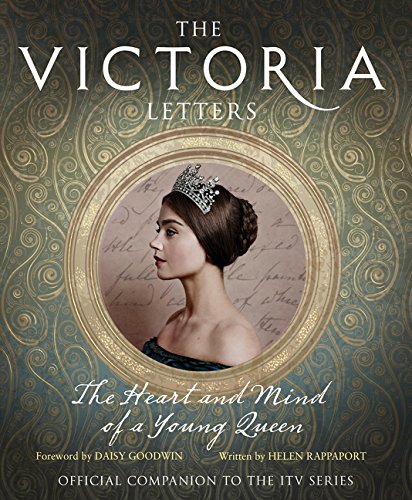
Review: The Victoria Letters by Helen Rappaport

After spending nearly two months struggling through Dan Franck’s The Bohemians, I needed something of an intellectual palette cleanser, preferably back in a subject area where I already had some prior grounding. I settled on this large hardback picture book that was released as a companion to the 2016 ITV series.

As the title implies, this is composed mainly of the private letters and journals that Victoria herself wrote from her early childhood until around the time she first gave birth (which is when the first season of the TV show ends). Victoria is unusual among British monarchs in the fact that so many of her personal written thoughts have been maintained and made public – some even during her own lifetime.

The book runs to three hundred pages, but the text density is rather low so I got through the entire book in just four days. The final twenty-eight pages are about the making of the TV series, with everything up to that point being about the real life of Victoria with the fictional series rarely acknowledged.

The book overall is both visually lavish and textually engaging, though I found a few errors along the way:

  • The photograph of a palace interior on pages 44-5 exposes part of the metal ceiling of the hangar in which the set was built.
  • The photographs on pages 144 and 228 show overhead power lines in the background.
  • Page 131 describes Victoria’s uncle Ernest Augustus as “heir apparent” instead of “heir presumptive”.
  • Page 294 says of Prince Albert that “as Victoria’s husband he automatically became a member of the Order of the Garter” which was not true; he was appointed to the order almost two months before the wedding.
  • Page 294 also includes a quote from costume designer Rosalind Ebbutt claiming “The garter traditionally went round the knee, but Queen Victoria was the first woman to be elevated to the Order of the Garter and she couldn’t wear it on her leg because it wouldn’t be visible. So she had a special one made that buckled around her arm, over her sleeve.” which is a bit misleading: Victoria was never “elevated to” the order, rather she became its sovereign automatically when acceding to the throne. The custom of wearing the garter on the arm instead of the leg was also exhibited by Anne, Britain’s previous queen regnant*. There were, of course, Ladies of the Garter before her.
  • The cast list on page 300 includes Nicholas Agnew as Prince George twice.

A further note is really more a problem with the series itself than the tie-in book: Victoria & Albert’s wedding is noted to have taken place in the Chapel Royal at St James’s Palace, but the set shown in the episode looks nothing like that and bears far more resemblance to St George’s Chapel at Windsor Castle instead.

Heraldic banners show up in multiple photographs in the book, I have already written an article about one particular instance, but perhaps an armorial viewing of the series in general is in order at some point. I notice also that when personal letters are reproduced they are topped by an illustration of the royal arms which came into use during Victoria’s reign, indicated by the lack of the Hanoverian inescutcheon, even when the letter is meant to predate her accession. Of course, little Drina was never actually granted differenced arms prior to that so I don’t know what image would have been appropriate here!

It is a shame that no similar books were written for seasons 2 and 3, and indeed that the TV series as a whole seems to have been quietly dropped after 2019, for I would have enjoyed seeing the whole of the Victorian age covered this way.

*See “The Orders of Knighthood and the Formation of the British Honours System, 1660-1760” by Antti Matikkala, pp 324-6.


A Very Late Announcement

Today is St George’s Day. It was delayed in the church calendar from its usual date of 23rd April so as not to clash with Easter, though this was not well publicised in advance and in practice not widely observed. The movement also means that St George’s Day clashes with Ed Balls Day!

I was disappointed to see no new appointments to the Order of the Garter either today or last Wednesday. Currently there are four vacancies among the ordinary Knights and Ladies Companion.

I was a little surprised to see that the News page on GOV.UK included “Prime Minister Liz Truss’s statement on the death of Her Majesty Queen Elizabeth II“, given that said prime minister resigned thirty months ago. Upon inspection of the Updates section, it seems the page was originally published with only the video link, and the transcription has now very belatedly been added. Amusingly, the note doesn’t even say “transcription”, but rather “translation”. Surely, Truss’s thoughts weren’t that incomprehensible, were they?

Notes on the Qatari state visit

Today and yesterday the United Kingdom hosted Sheikh & Sheikha Tamin & Jawaher bin Hamad Al Thani, Emir & Consort of the State of Qatar.

The visit included a speech by the Emir to the British Parliament and a state banquet at Buckingham Palace – likely the last for some years as the building is soon to be closed for a major renovation project. He also gave a speech at Mansion House and received a tour of Westminster Abbey.

As is typical, the visit involved an exchange of honours. The King appointed the Emir as an Honorary Knight Grand Cross of the Order of the Bath. This is consistent with his father who was given the same honour in 2010, but it feels like a category error as normally royal heads of state are made Stranger Knights of the Order of the Garter while the Bath is given to elected presidents – the most recent being last year with Yoon Suk Yeol of South Korea, who coincidentally is also back in the news today. The Emir in his red sash stuck out a little next to all the British royals wearing blue ones.

Charles had already been awarded the Collar of the Qatari Order of Merit in 1986. Yesterday he was presented with the Sword of the Founder Sheikh Jassim bin Mohammed bin Thani.

The recent state visit also saw growth in the Royal Family Order of Charles III: The Queen having appeared as the founder member at the Japanese state visit earlier this year, the order is now also seen sported by the Princess Royal, as well as the Duchesses of Edinburgh and Gloucester.

I notice a discrepancy in the spelling of the visitor’s title – the royal and parliamentary sources say “Amir” but the newspapers and Wikipedia say “Emir”. Getty is inconsistent, even sometimes within the same photograph caption.

Don’t They Look Younger Now?

Fresh from attending special sittings of the States of Jersey and the States of Deliberation in Guernsey, today Their Majesties returned to Westminster for the opening of the first session of the fifty-ninth Parliament of the United Kingdom.

This was the first King’s Speech under a Labour government since 1950. There is some symmetry, perhaps, between Charles III’s second speech and George VI’s second-to-last.

This is the only free-licence photograph of the event so far.

While the content of the speech was very lengthy and stood in radical contrast to the one delivered for Sunak’s government in November, in ceremonial terms there was very little change. The King’s getup was identical to that worn last time. The Queen’s changed a little – instead of her coronation gown, she has reverted to the style of dress she wore in 2019 and earlier. Reeta Chakrabarti, presenting the BBC’s coverage, described it as “very fine, off-white silk crepe embroidered by Fiona Claire”. She has not taken to wearing a sash again, but the star of the Order of the Garter appears around her left hip. This was also, incidentally, her 77th birthday.

Shabana Mahmood appeared as Lord Chancellor. Being a barrister, she wore the full-bottomed wig. This is the first time a woman has performed this role at a state opening, for Liz Truss’s brief tenure in the role did not include one. Justin Welby, the Archbishop of Canterbury, can be seen for the first time wearing the collar of the Royal Victorian Order.

The most striking visual difference was in the change of pages – last time King Charles’ train was carried by Nicholas Barclay, Ralph Tollemache, Charles van Cutsem and Lord Oliver Cholmondeley (three of whom also appeared at the coronation). This time Tollemache returned but the other three were replaced by William Sackville, Alfred Wellesley and Guy Tryon. I don’t know any biographical detail about them beyond what I can guess from their surnames but they all appeared to be several years younger than the boys whom they replaced. Queen Camilla continued to use William Keswick and Arthur Elliott as before. As at last year’s ceremony Her Majesty’s two pages held her robe in the middle rather than at the end so that the end still dragged along the carpet, whereas His Majesty’s four pages kept the whole garment elevated (despite it being longer than his wife’s).

Some other things of note – as is custom after the first state opening of a new parliament, the lower house appointed three temporary deputy speakers. The senior of these is Sir Edward Leigh. I don’t think a Father of the House has ever been appointed as a deputy speaker before. These three will hold office for the brief period until new deputies are elected. All three of the deputy speakers sitting before dissolution have now left the house (one against his will), which was last the case in 1997. There will thus be no continuity except for Sir Lindsay Hoyle himself. Also today the first life peerages of Sir Keir Starmer’s premiership were patented – Lord Vallance of Balham and Lady Smith of Malvern. It appears that the ministerial appointments will be taking priority over the dissolution honours after all.

EXTERNAL LINKS


The Emperor’s New Collar

Naruhito & Masako, Emperor & Empress of Japan, conducted a three day visit to the United Kingdom this week. It was the third state visit to Britain during the present reign, and the first monarchical one since that by the King & Queen of the Netherlands in 2018.

The visit consisted of the expected activities – a state banquet at Buckingham Palace, then another banquet at the London Guildhall, as well as military parades and presentations.

According to the Court Circular for 25 June, the palace guest list included “Mr. Christopher Broad (Founder of YouTube channel, Abroad in Japan)”. This is thought to be the first time that a prominent YouTuber has been invited to a state event specifically in that capacity.

As is customary during state visits, the monarchs exchanged appointments to their respective orders of chivalry: Charles received the Collar of the Supreme Order of the Chrysanthemum while Naruhito became a Stranger Knight of the Most Noble Order of the Garter. It is a shame that his visit was not a few days earlier, or he could have marched in the procession.

File:Coat of Arms of Japanese Emperor (Knight of the Garter Variant).svg

Sodacan’s representation of the Japanese Garter arms.

Naruhito ascended the imperial throne in 2019 when his father Akihito abdicated. Japan now joins Spain and the Netherlands in having two Garter stalls simultaneously. What makes the Japanese representation different to the Spanish and Dutch is the different style of heraldry. The Japanese Imperial Seal is a mon representing a stylised chrysanthemum flower. Mon are normally standalone objects without a background – more visually similar to a Western crest or livery badge than a shield of arms. To make the symbol compatible with European heraldic customs for use in St George’s Chapel it is typically presented as the lone charge on a red background for the shield and banner, then again without a background as the crest atop the helm. The Emperor paid a private visit to Windsor Castle to view his predecessors’ stall plates there and to lay a floral wreath on Elizabeth II’s tomb.

The state banquet also marked the first appearance of the Royal Family Order of Charles III. Dating back to the reign of George IV, the royal family orders are an informal and highly personal decoration restricted to senior royal women. Each consists of a silk ribbon from which hangs a jeweled miniature portrait of the sovereign. The orders do not always have formal classes but their badges tend to come in different sizes which correlate to the seniority of the recipient. The colour of the ribbon varies: Charles III follows George V in using pale blue, whereas Victoria used white, Edward VII blue and red lined with gold, George VI pink and Elizabeth II yellow. The Queen was seen wearing the new Carolean order immediately above the Elizabethan one she received as Duchess of Cornwall in 2007, and there is a clear difference in size. The Duchess of Edinburgh also wore Elizabeth’s order to the banquet.

This state visit was a little unusual in that it happened during a general election campaign. Some changes had to be made to the itinerary to cut out the more obviously political elements: Unlike previous visiting sovereigns, the Emperor did not make an address to Parliament (since their isn’t one) and while the cabinet and opposition leaders attended the state banquet they did not have individual meetings with him. Notably Sir Keir Starmer and Sir Edward Davey were not wearing their respective knightly insignia.

Garter Day 2024

https://youtube.com/watch?v=l_GswdE9bbw

Today saw yet another of the royal public events that were too big to cancel – the procession of the Knights of the Garter to St George’s Chapel, Windsor. As with other big public events, I primarily experienced it in the form of the passive livestream on YouTube.

The cameras followed the knights, heralds and other officers as they marched on foot from the castle to the chapel, then went back again by carriage. They also filmed a large procession of what I assumed to be security cars following along the same stretch of road, which took something away from the splendour of the occasion. The cameras did not go inside the chapel, instead just showing the crowds and guards waiting outside for the duration, but the microphones (wherever the may have been positioned) were able to pick up a reasonable audio feed of the speeches, sermons and hymns.

The new members being installed today were royal lady the Duchess of Gloucester and knights companions the Lords Peach, Kakkar and Lloyd-Webber.

Stall plates and banners as photographed in The Dragon. Artist unknown.

Earlier this year, at the prompting of Baz Manning, I subscribed to The Dragon, the community newsletter of St George’s Chapel. Although this mainly covers religious events, it is also often where knights’ armorial bearings are leaked for the first time. The edition of 9th June included photographs of the newly-delivered stall plates for Lady Ashton of Upholland and Lord Patten of Barnes, while that of 16th June showed the banners of Lords Peach and Kakkar. Apparently Peach’s must have been granted fairly recently, for the article claims that the sword is a reference to him carrying Curtana at the coronation last year. That means Lloyd-Webber is the only current member who remains at present armorially anonymous.

UPDATE (20th June)

The video I originally linked at the top of the article has been removed from Associated Press’s YouTube channel. All the other channels that also uploaded the same video seem to have removed it as well. For now I have replaced it with an amateur video by David Dumbrăveanu. The Daily Mail curiously still seems to have the full video up, and most other channels have at least small snippets.

In for the short haul

The digital illustration of coats of arms, and the uploading of such illustrations on Wikipedia, has been a pursuit of mine for more than seven years now. My productivity in this hobby has not been uniform. There have been some months in which I have uploaded nothing at all (e.g. October 2020) and others in which I have uploaded a great many (e.g. more than a hundred in August 2018).

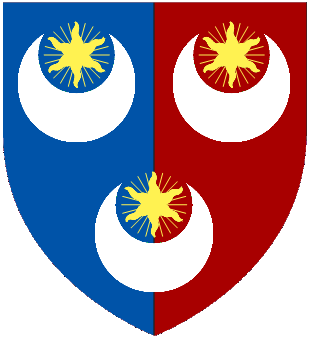
The four months of 2024 so far have been at the low end, with only thirteen illustrations in the year so far – and April in particular having just one – that being the nineteenth-century judge Arthur, Lord Hobhouse.
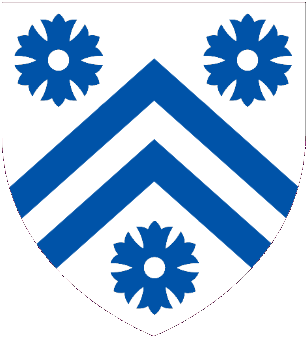
This is not likely to improve any time soon, as I have long since exhausted the opportunities afforded by Burke, Cracroft and Debrett.

As I have mentioned before, I eagerly await the publication once every three months of the College of Arms’s newsletter, and the prospect of new blazons within, only to be regularly underwhelmed by the reality.

Yesterday’s edition did little to break the trend: Four new blazons were announced, of which only one applied to a person with a Wikipedia page. That person was Aamer, Lord Sarfraz, whose arms were actually granted two years ago and illustrated by me not long after based on the photograph shown on his website.

Much more interesting, and substantial, was the section about corporate heraldry. Two examples were given, one being the British Airways Board (again, already known). The newsletter was supplemented by a booklet about corporate grants, which was a substantial read in itself. Though the general principles described are those already articulated elsewhere on the college’s website, the style of the publication is radically different to what I am used to seeing from them and perhaps represents a significant change in approach. One might almost think they were advertising…

That Time of Year Again

Lord Kakkar by Roger Harris, 2019 (CC-BY-3.0)

St George’s Day – 23rd April – is the traditional day for announcing new appointments to the Order of the Garter. The King today named three new ordinary knights and one new royal lady:

  • The Lord Peach, Chief of the Defence Staff 2016-18. This is fairly unsurprising as another former chief, Lord Stirrup, is also part of the order, as were many other (though not all) chiefs before him.
  • The Lord Kakkar, former Chairman of the Appointments Commissions for both the House of Lords and the Judiciary. He is most prominently known for his work in business and medicine.
  • The Lord Lloyd-Webber, one of the musical composers for the coronation, is probably the most famous. It is perhaps a little surprising that he went directly to the Garter and was not offered the Royal Victorian Order first.
  • The Duchess of Gloucester, President of the Royal Academy of Music since 1997. This appointment is a bit of a departure from convention as, while royals by birth are nearly all given the Garter as a matter of course (Princess Margaret and Prince Michael being odd exceptions), royals by marriage (unless their spouse be first in line to the throne or already sitting on it) generally are not. This honour is presumably in thanks for the additional duties the duchess has taken on since the winding down of Elizabeth II’s reign, and in particular during Charles III’s recent illness. It remains to be seen if the Duchess of Kent will be extended the same.

In addition to these appointments, there was some reshuffling of honorary offices among the other orders of chivalry which in recent years had fallen vacant or merged with the crown: The Queen was made Grand Master of the Order of the British Empire (last held by the Prince Philip, 1953-2021) while the Prince of Wales was made Great Master of the Order of the Bath (last held by Charles himself from 1974 until his accession).

The most revolutionary of today’s changes regards the Order of the Companions of Honour. This was created in 1917 alongside the Order of the British Empire and designed to reward outstanding achievements in art, science, medicine or public service among people who would not accept titular dignities. Appointments are made on ministerial advice. Currently the order has a quota of sixty-five ordinary members, of which two places are currently vacant. There is also one honorary member, the Indian economist Amartya Sen. Until now, no member of the royal family had been appointed a Companion of Honour. Given the origins of the institution, it seems a little odd that His Majesty (or the Prime Minister) would choose to create the supernumerary category of Royal Companion (similar to that in the Garter), and to make his daughter-in-law the Princess of Wales the first incumbent. This stands in contrast to the Order of Merit, in which Elizabeth II appointed both her husband and her son as full members on the same basis as all the others.

In armorial terms, obviously this will mean four new banners to hang in St George’s Chapel. The Duchess of Gloucester’s arms are well-known, and I have already found and illustrated those of Lord Kakkar (though doubtless his increased prominence will lead to a better rendering by a different artist soon enough), but Peach and Lloyd-Webber are a mystery – the former having been ennobled too recently to appear in the last print of Debrett’s.

UPDATE (24th April)

There are now three vacancies among the Companions of Honour, as it transpires that the Lord Field of Birkenhead died while I was writing this post.

A Patten Emerges


On St George’s Day last year His Majesty appointed two new companions of the Order of the Garter – Lady Ashton of Upholland and Lord Patten of Barnes. Obviously that would mean their banners of arms would at some point be erected at St George’s Chapel in Windsor Castle. At the time it was not public knowledge what their lordships’ arms actually were, if indeed they had any, and given how long it was taking to find out about Blair and Amos I was not optimistic of learning any time soon.

Today they were revealed by Major Alastair Bruce of Crionaich via what used to be called a Tweet. He shows photographs of two banners of arms along with an excerpt from an online article, which I will quote below:

Baroness Ashton served in the Ministry of Justice and later as the EU’s first High Representative for Foreign Affairs and Security policy. She contributed towards negotiating a peace settlement between Serbia and Kosovo. Red roses reflect the fact that Upholland, which forms part of Baroness Ashton’s title, is in Lancashire.

On Lord Patten’s banner the pearls allude to the crest of Hong Kong where he was Governor from 1992 to 1997. The blue field and crowns replicate the arms of Oxford University where Lord Patten has been Chancellor since 2003.

It is not clear precisely where Bruce found this information, as the message includes the web address of St George’s Chapel but does not specify an exact page. I have looked through the site to find a recent update about Patten and Ashton but found nothing. I hope this will be resolved soon.

As for the heraldic designs themselves: Patten’s arms are perfectly dignified if a little unoriginal. Having the shield resemble that of his university could make for a confusing sight should he try to impale them. Ashton’s banner is an overloaded mess redolent of the worst excesses of the early nineteenth century.

That the reveal of these arms took only nine months instead of eighteen is a positive sign. I hope that future grants of arms will become public even faster.

UPDATE (15th January)

Baz Manning informs me that the images and quoted text are from The Dragon, the community newsletter of St George’s Chapel.