Documentary Déjà Vu

Last month was the 200th anniversary of the opening of the Stockton & Darlington railway, the world’s first public railway to use steam locomotives. There have been quite a few commemorative events for this. The BBC has taken the opportunity to rerun a collection of some of their railway-related documentaries (not that they don’t have at least a handful of these at normal times anyway), which I have been watching on iPlayer over the last week or so.

When you watch a lot of documentaries about the same topic (e.g. railways, World War 2, the royal family, past general elections), especially if created by the same company, you will quickly notice a lot of repetition in what you’re being shown: You’ll notice the same stock film clips, the same talking points in the narration, the same talking heads being interviewed, the same background music being used. To some extent this is inevitable as, of course, they are all talking about the same event. Sometimes, however, the the resemblance is so specific as to be jarring.

Among the aforementioned documentaries were Ian Hislop Goes off the Rails, a standalone production, and The Last Days of Steam, an episode from series 8 of Timeshift. Both were originally aired in October 2008, the former on 2nd and the latter on 16th. When discussing the decline of the railways and the widespread adoption of the private motorcar, both show the same clip of a youngish couple in a red Austin-Healey roadster (registration 699 DON) driving on a motorway.

In Hislop’s documentary the clip starts at 39:19, accompanied by Terry Gourish, historian at LSE, saying

Well from the mid fifties things began to change. There was no fuel rationing affecting private motoring, road transport began to get a great impetus from new road-building, culminating in the first motorway, the M1, in 1959…

whereas in Timeshift‘s, it occurs at 41;30 as Jonathan Glancey, author of John Betjeman on Trains, says

The car from the mid-1950s was, apart from anything else, and beyond a means of transport, a consumer dream. It was something you could own. You can’t own a railway. A railway takes you where the railway goes. A care takes you, theoretically, where you want to go.

That the same clip should occur at almost exactly the same time in two documentaries produced by the same broadcaster a mere fortnight apart feels like a slight failure of quality control.

Some years ago I discovered the Railway Mania podcast series. Unfortunately that series has wound down a little recently, with just one new episode in almost a year. In its place I’ve recently turned to the Green Signals show, co-presented by Richard Bowker (former Chairman of the Strategic Rail Authority) and Nigel Harris, former editor of RAIL magazine. It’s a bit like the ex-politicians’ podcasts that have proliferated over recent years (e.g. Political Currency with Osborne & Balls) but more focused on industrial news.

Moving away from real railways, commemorations of the 80th anniversary year of The Railway Series continue. Today Historic England unveiled a blue plaque at 30 Rodborough Avenue in Stroud to mark that Wilbert Awdry had long ago lived there. The ceremony was attended by a group of his descendants. I was a little disappointed that so much of the news coverage identified him as the creator of Thomas the Tank Engine rather than of The Railway Series, including some incorrectly implying that the character debuted in 1945 rather than 1946. I also see that the display included a cardboard cut-out of the All Engines Go! version of Thomas himself, even though that series has been cancelled now and was generally disliked by most of the Awdry fandom. In some of the news videos a band outside can also be heard playing the Allcroft-era theme by O’Donnell & Campbell.

I also recently discovered that Thomas & Friends itself has an official 80th anniversary podcast. This is also includes many sound clips from the TV series. Curiously, the copyright notice credits the podcast to Gullane (Thomas) Ltd, showing that this company at least nominally still exists within the Mattel empire.

The Inbetweeners: A Potential Revival

Even here I’ve managed to squeeze heraldry in. The shield of Rudge Park Comprehensive School is about as generic and uninspiring as you’d expect, but at least it conforms to the rules of heraldry unlike so many in real life. The blazon is most likely “Azure on a bend Argent three oak trees of the field”.

The Inbetweeners is a televisual franchise that can be considered, if not actually dead, then at least dormant, in as much as it’s been eleven years since the release of the second film and fifteen years since the end of the TV series. Neither the audience nor, it seems, the cast and crew, can entirely move on and yesterday there was an announcement that the four lead actors had signed up to a revival. Most of the news articles I could find were behind paywalls and those few which were readable still didn’t betray much in the way of detail despite about what form this new instalment would take. Presumably nothing of substance has been decided yet. From fans and commentators there is excitement, but also a lot of dread.

My academic cohort were a few years behind that of the character, and I think we discovered the program en mass around 2011-12* — after the series proper had ended but before we reached sixth-form ourselves. While the jokes (and indeed the catchphrases) circulated widely, I’m not sure it was ever regarded as more than fiction. Nobody saw it as a reflection of their own lives at the time, much less an aspiration for the future. A lot of cultural histories of this period refer to The Inbetweeners as the way sixth-form really worked for most people in Britain, in opposition to the fantasy version presented by Skins**, but curiously I don’t remember anyone at my school talking about Skins at all. As to whether it’s representative now, I’m obviously too old to say (and likely wasn’t qualified even back then), but I remember these articles from the end of the last decade noting how hard the format had proven to recapture.

Even so, we know we are in for some kind of comeback, and the scepticism of the long-time fans is well-founded as bringing back a property like this after such a long time always runs the risk of sullying rather than enhancing its reputation. Even this series’ own tenth anniversary special in 2018 was widely regarded as a damp squib. The problem most critical to a story of this kind is the age of the characters: Dawson Casting is routine for productions like this and right from the start the leads played characters a few years younger than themselves*** without straining credibility. Now, however, if you tried to pick up remotely close to where the second film left off they’d be about twice as old as the people they portrayed, and even with digital de-ageing it would be hard to pull off, with the added complication that the setting itself would have to be more than a decade in the past rather than contemporary^. Clearly, if the cast are to unite onscreen again, it would need to be in a “Where Are They Now?” sort of way, catching up with them at about age 35. This is tricky, as inevitably their situation in life will be very different, and that tends to cause existential problems for what is formally called situational comedy. Of course, other genres can also have this problem in their own ways, so here I will briefly change tack.

Dr Philippa Gregory has written a great many novels about English royal history, including a long string of them about the Plantagenets and Tudors. Starz has adapted some of these into TV series: The White Queen in 2013^^, The White Princess in 2017 and The Spanish Princess in 2019-20. TWQ covered the life of Elizabeth Woodville from 1461 to 1485, TWP followed her daughter Elizabeth of York until 1499. Gregory said that these parts of English history were underserved in mainstream fiction beyond Shakespeare, which may be correct. Season 1 of TSP was about the life of Catherine of Aragon from 1501-1509. This part could still qualify since Catherine’s time with Henry in their youth before their marriage broke down is also frequently neglected. When it was announced that TSP would get a second season, fans on their forums wondered just how long Starz intended to string this out, noting that the story couldn’t go much further before becoming a rehash of Showtime’s series The Tudors or myriad other productions including Gregory’s own The Other Boleyn Girl.

When it comes to this proposed revival, the comparison of which to be most wary is, of course, Peep Show, that other Channel 4 cult classic of the noughties. The exact diagetic timeline of that series is not always consistent, but the final episode has Jeremy turning 40 and the first series seems to have them both just shy of 30. The Inbetweeners, if renewed now, would land around the middle of this range. What’s more, a lot of the story ideas floated for the new script — whether by ordinary fans or by people connected with the franchise, feel very PS-esque: I saw musings about quirky flatshares, wedding disasters, failed partnerships and juxtaposed career outcomes. As I mentioned in last month’s post, PS had to end once the main characters got too old for the situation to continue, and any revival now would need to radically change its approach to adjust to the times. There might well need to be a new setting, and the characters to be written in a new way. This would also be the case for The Inbetweeners, and indeed more so given the even greater time gap both absolute and proportionate. It would not be possible to write the characters as the same personalities we remember from 2010, nearly half their lives ago. For sure, you could make arrested development an explicit feature of the story (as it also was on PS, and which would be entirely expected for at least two of the main four) but even then it would come off with a different tone.

My intention here is not to come of as overly pessimistic: I know from Futurama and Red Dwarf that an old franchise can be successfully brought back many times across several decades. It is eminently possible to get an interesting story out of a late sequel, albeit one which will need to be quite distinct from what was written the first time around and with the high risk that a large proportion of the audience will feel disgust at the outcome rather than delight. There is life here still, just not necessarily as we used to know it.


NOTES

*As the whole series ran to only eighteen episodes it was quite easy to finish the whole run on 4OD in a few days.
**I refer readers to this video essay by Stuart “Stubagful” Hardy, in particular where he says “I never got to live a life like the kids on Skins. Most of my teenage years consisted of being made to sit in a series of rooms with adults glowering at me… alright, a drama based on my teenage years probably wouldn’t have exactly made for a compelling piece of television but, in my defence, that was real! You people want real, don’t you.
and, while it’s actually reviewing a completely different Channel 4 program, Charlie Brooker’s famous line in this Guardian article: “The biggest teenage taboo is being strait-laced. It’s easy to tell a researcher you went to a house party that turned into an orgy. It’s less easy to say you like eating toast and watching QI.
***The four lead actors were born 1982-87 whereas the characters would have been born 1991-92 in order to start sixth-form in 2008.
^The second film already has this problem, being set in 2010-11 but made in 2014.
^^Co-production with the BBC.

The Queen’s Austen Faux Pas

The Queen’s Reading Room has just had its annual festival at Chatsworth House. In this video as shown on the ITN royal family YouTube channel, she makes a speech about Jane Austen (who turns 250 this year), a segment of which I will now quote:

We are provided with this magnificent backdrop that was her inspiration for Pemberley in Pride and Prejudice, and who can forget the infamous scene of Mr Darcy emerging from the lake in the BBC version?

There have been quite a few BBC adaptations, but of course she is referring to the 1995 version where Darcy is played by Colin Firth. I have not yet gotten around to reading the book or watching any of its adaptations, but immediately this line pinged something in my head. I was sure I’d read somewhere, many years ago, that this is an example of the Mandela Effect — that the infamous scene that none can forget was never actually in the episode!

Happily I didn’t need to go through the entire series on iPlayer because the Lake Scene is the subject of multiple YouTube videos, including at least two by the BBC itself.

Sure enough, we see him jumping in, then him swimming beneath the surface, then cut to Bennet in Pemberley’s garden, then to Darcy walking along the grassy hills still damp. The actual moment of his emergence from the water is not included.

Just three months ago there was a YouGov article describes this as a prime example of collective false memory: Their study showed 49% remembered the scene happening even though it didn’t. The televisual non-event is so famous that there was even a giant fibreglass statue of Firth erected in Hyde Park in 2013.

I wonder if anyone at Clarence House had to check Her Majesty’s speech in advance of the event. This is the sort of thing which should have been caught and corrected before it went public.

Review: Mitchell & Webb Are Not Helping

Almost ten years since the end of Peep Show and just over fifteen since the end of That Mitchell & Webb Look, the duo have returned for another series on Channel 4. A side effect of watching old material over and over again is that it can cause one’s mental cache of another person’s appearance to be skewed many years into the past, leading to surprise when a more up-to-date view is encountered. While I am familiar with David Mitchell’s recent appearance from, among other things, Ludwig (which incidentally should also be returning soon) I had not seen Robert Webb in anything new for a while and so his gaunt visage shook me a little.

It may seem glib for me to point this out, but the leads’ age is an important theme throughout a lot of the sketches: Whereas Peep Show ended with Jeremy turning forty and That Look had a sketch about how they couldn’t be cutting-edge forever, this series picks up with both men in their fifties and a lot of the jokes are about them suffering aches and pains or reminiscing about references alien to their younger co-workers. One of the few recurring sketches is even called Middle-Aged Man Island and consists of them talking about World War II, lightbulbs, Christmas decorations etc.

I’m sure that fans of Mitchell & Webb’s earlier work would have been delighted to know that a new series was happening at all, albeit cautious in their expectations of its quality. Those who were hoping for a whole-hearted revival of That Look will probably be disappointed here. The writing in this one has nowhere near the sharpness of the earlier material and often feels ill-suited to the duo’s strengths. Another of the recurring skits is Sweary Aussie Drama, about an Australian family fighting over the ownership of their enormous farm, with the big joke being that none of them can get through the simplest sentence without a shower of expletives. This could work in isolation as a decent satire, except that so much of the rest of the series’s own writing also tends that way, as well as relying on puerile blue humour in lieu of clever ideas or, indeed, good line delivery. Some of the sketches, particularly one about a workshop for dead relatives’ antiques, felt more like something from Tracey Ullman’s Show a few years back. I can’t see many scenes, or even lines or screenshots, from this production establishing lasting cultural fame the way the older ones have.

The main thing that the scripts are missing is direct interaction between the two leads: We rarely get scenes of David & Rob talking one-on-one, instead this is much more of an ensemble piece where the troupe just happens to include two members who were once in a double act. That could have been pulled off if the supporting cast from That Look or Peep Show could be carried over, but Bachman, Burdess, Evans, Fitzmourice, Hadland, Howick, Joseph, King, Neary, Suttie and Winkleman are nowhere to be seen. Olivia Colman at least manages to return, although only for one sketch and with curiously little attention drawn to her presence. In their place we have Kiell Smith-Bynoe (of Ghosts fame), Krystal Evans, Stevie Martin and Lara Ricote. I can’t criticise any of their performances individually but they don’t have the same familiar chemistry with the two leads that their predecessors would have done.

Overall I would say that Not Helping is passable but not spectacular, and I wouldn’t chose a second series of this over a Peep Show revival, or even more Back. Frankly, it’s just not Numberwang!

New Channels Discovered


I mentioned some years ago the phenomenon of YouTube channels carrying old episodes of TV series that probably wouldn’t be broadcast anymore.

Clarkson-era Top Gear is probably not such a series, but recently I discovered that thirteen months ago the channel Top Gear Classic was launched, carrying compressed clips of the various challenges the three presenters undertook from 2002 to 2015. The name is a little confusing as I would have thought that “Classic” in this context should refer to the 1977-2001 broadcasts. Many of the clips on this new channel are the same that were already uploaded to the main Top Gear channel, and indeed the BBC Studios channel, many years ago. The most obvious difference now is the much higher video quality. Given how many amateur fan channels have sprung up with compilations from this time, and subsequently The Grand Tour, it would have been a great loss for the BBC not to get in on the act themselves I suppose.

Another new find is the channel Rails, Roads & Runways, launched in January this year by ITV Studios and containing, as you may expect, episodes of rather old documentary series about trains, cars and aeroplanes.

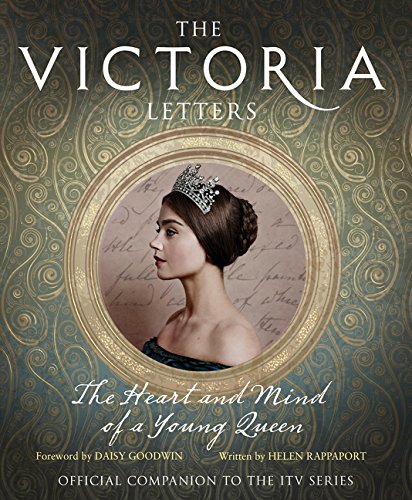
Review: The Victoria Letters by Helen Rappaport

After spending nearly two months struggling through Dan Franck’s The Bohemians, I needed something of an intellectual palette cleanser, preferably back in a subject area where I already had some prior grounding. I settled on this large hardback picture book that was released as a companion to the 2016 ITV series.

As the title implies, this is composed mainly of the private letters and journals that Victoria herself wrote from her early childhood until around the time she first gave birth (which is when the first season of the TV show ends). Victoria is unusual among British monarchs in the fact that so many of her personal written thoughts have been maintained and made public – some even during her own lifetime.

The book runs to three hundred pages, but the text density is rather low so I got through the entire book in just four days. The final twenty-eight pages are about the making of the TV series, with everything up to that point being about the real life of Victoria with the fictional series rarely acknowledged.

The book overall is both visually lavish and textually engaging, though I found a few errors along the way:

  • The photograph of a palace interior on pages 44-5 exposes part of the metal ceiling of the hangar in which the set was built.
  • The photographs on pages 144 and 228 show overhead power lines in the background.
  • Page 131 describes Victoria’s uncle Ernest Augustus as “heir apparent” instead of “heir presumptive”.
  • Page 294 says of Prince Albert that “as Victoria’s husband he automatically became a member of the Order of the Garter” which was not true; he was appointed to the order almost two months before the wedding.
  • Page 294 also includes a quote from costume designer Rosalind Ebbutt claiming “The garter traditionally went round the knee, but Queen Victoria was the first woman to be elevated to the Order of the Garter and she couldn’t wear it on her leg because it wouldn’t be visible. So she had a special one made that buckled around her arm, over her sleeve.” which is a bit misleading: Victoria was never “elevated to” the order, rather she became its sovereign automatically when acceding to the throne. The custom of wearing the garter on the arm instead of the leg was also exhibited by Anne, Britain’s previous queen regnant*. There were, of course, Ladies of the Garter before her.
  • The cast list on page 300 includes Nicholas Agnew as Prince George twice.

A further note is really more a problem with the series itself than the tie-in book: Victoria & Albert’s wedding is noted to have taken place in the Chapel Royal at St James’s Palace, but the set shown in the episode looks nothing like that and bears far more resemblance to St George’s Chapel at Windsor Castle instead.

Heraldic banners show up in multiple photographs in the book, I have already written an article about one particular instance, but perhaps an armorial viewing of the series in general is in order at some point. I notice also that when personal letters are reproduced they are topped by an illustration of the royal arms which came into use during Victoria’s reign, indicated by the lack of the Hanoverian inescutcheon, even when the letter is meant to predate her accession. Of course, little Drina was never actually granted differenced arms prior to that so I don’t know what image would have been appropriate here!

It is a shame that no similar books were written for seasons 2 and 3, and indeed that the TV series as a whole seems to have been quietly dropped after 2019, for I would have enjoyed seeing the whole of the Victorian age covered this way.

*See “The Orders of Knighthood and the Formation of the British Honours System, 1660-1760” by Antti Matikkala, pp 324-6.


Another Condolence Note

Yesterday the Prime Minister and the Mayor of London attended the memorial at Hyde Park commemorating the London bombings of 7th July 2005.

As with the Auschwitz memorial earlier this year, Sir Keir left a wreath of flowers with a card attached. The card uses the old version of the government arms. I’m guessing the pile of these cards printed during the previous reign has still not been exhausted.

A mere four days earlier, the Prime Minister, Secretary of State for Health & Social Care and Chancellor of the Exchequer had visited the Sir Ludwig Guttmann Health Centre, where they spoke from a lectern clearly adorned with the new, Tudor crown, illustration.

I’m afraid I don’t have anything profound to say about the bombing attacks themselves. I had yet to ever visit London in person at the time and my main memory of that month is that of a school assembly in which our headmistress asked pupils what they’d seen on the news and a few had followed the story enough to relay it. I also remember a CBBC drama being made about the event a year later, but that’s about it.

The Railway Series at 80

Illustration of “Edward, Gordon and Henry” by William Middleton

Five years ago, for the seventy-fifth anniversary of The Three Railway Engines I came up with a poem based on Tolkien’s work adapted to be about the engines on Sodor.

Today is the eightieth anniversary of said book. I have pondered calling it 3-E Day, but doubt that would catch on. I would like to turn to verse again. This time, instead of adapting another poem, I have thought about what an anthem for the island might be. Truth be told, I don’t think The Island Song really works diagetically – it is too obviously written to be about a children’s television series. Instead here is something simpler: A variation on the royal hymn.

While the first verse of God Save The King! is almost universal across the realms and territories of the Commonwealth, there have often been custom extra verses with lyrics specific to the locality, albeit with many of the same core concepts (and indeed rhymes) cropping up in more than one place. This is my submission for the Sudrian stanza:

Our island is to me,
Homestead and sanctuary,
By Britain’s shore.
Bless this enchanted isle,
That years may ne’er defile.
Grant all Thy children smile,
For evermore!


It’s The Dunn Thing

Today I noticed that BBC Four has started airing the documentary series The Architecture the Railways Built, presented by historian Tim Dunn, and put the whole first season on iPlayer. This series was originally made five years ago for Yesterday, a UKTV channel technically owned by BBC Studios but run more like the commercial stations. This series was already watchable on UKTV’s own catch-up website and repackaged on at least two different licensed YouTube channels, but the lack of advertisements and all-around superior functionality of the BBC’s service will make iPlayer my preferred platform. This makes for a rare case of televisual upcycling in a partnership where downcycling is the norm, the most obvious locomotion-related example being Michael Portillo’s many Great Railway Journeys programs.

Each episode of TATRB is forty-five minutes long and typically covers three locations, two in the United Kingdom and one abroad. No obvious connection is made between the three, so I’ve often been left feeling that it would be better if the three locations chosen were grouped by geographic region, architectural style or railway feature. Alternatively, they could be split up so that each location had a fifteen-minute episode to itself.

In addition to broadcast television, Dunn has made regular appearances in railway-related online channels, including several times presenting Sudrian pseudohistorical lectures hosted by the Talyllyn Railway.

Joy to the Web, the Lords Have Come

To commemorate the fortieth anniversary of the broadcasting of proceedings from the chamber of the House of Lords, that house’s YouTube channel has uploaded a series of lengthy extracts from said first broadcast – Wednesday, 23rd January 1985.

Said day is noteworthy for including the maiden speech of the 1st Earl of Stockton, aged 90.

Truth be told I had seen some of these clips years earlier – including Stockton’s speech – as they were uploaded by the amateur channel Coljax Parliament. I assume these were originally recorded with a home VHS system from the live television broadcast. Still, it is nice to have these on the official channel. I hope that this is not a one-off and that Parliament will take to uploading more of its old archive footage, since ParliamentLive.TV only goes back to 2007 and footage earlier than that is restricted to what can be found on British Pathé or C-SPAN.

As the press release notes, Parliamentary cameras are now remotely operated and, while picture quality isn’t perfect, the colours and lighting tend to be reasonably well balanced. The early footage had the camera operators just behind the bar of the house, operating manually. This makes for better angles and movement (I daresay it looks almost cinematic, rather than like CCTV footage.) but there is an awful lot of Black Crush between peers’ jackets and the background shadows. I had originally thought this to be a result of compression and degradation in Coljax’s tapes, but it now seems it was like that in the master footage too, which is a pity.