Pondering Thatcher’s Letterheads

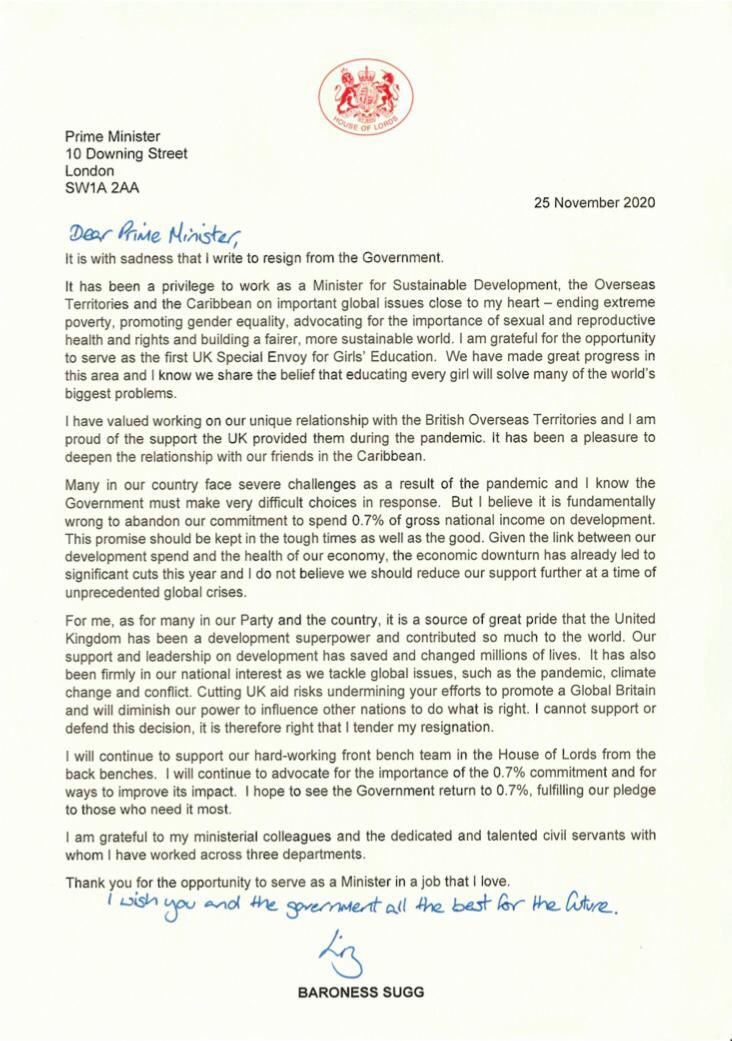
About a decade ago when I first got interested in heraldry, I came across this article in The Independent by Ben Summers and Michael Streeter, dating all the way back to 24th March 1997, early in that year’s general election campaign*. It concerned the use of the British royal arms by the Baroness Thatcher on her official letters.

The wording of the article is a little confusing, and made harder by the absence of any images (unsurprising given the age): It alleges that Lady Thatcher abandoned the use of her own coat of arms for her letters and started using instead the royal arms, in the lesser format favoured by various government departments.

Thatcher’s own heraldic achievement

The journalists interviewed both Black Rod (Sir Edward Jones) who awkwardly declined to comment and Somerset Herald (Thomas Woodcock, later Garter King of Arms) who dismissed a suggestion (made by whom it’s not clear) that Companions of the Garter are specially entitled to use the royal arms in this way.

Government arms as used at the time

The article contrasts Thatcher to Britain’s two other living former premiers at the time – “Sir Edward Heath uses a simple House of Commons portcullis and a plain typeface, while Lord Callaghan simply types his name beside the House of Lords logo.” – and the main thrust is the piece is to play up the public perception of the Iron Lady as not being able to leave government behind and as believing herself as great as the reigning monarch.

Trouble is, I think this is a bit of a reach, given this sentence: “The normal House of Lords logo used by peers places the Arms inside an ellipse, together with the words “House of Lords”, making clear the state body to which the use of the Arms relates.”

With one hand Streeter & Summers allege delusions of grandeur based on Thatcher’s supposed use of the governmental coat of arms instead of the House of Lords logo, but with the other they tacitly admit that the two devices are near-identical anyway! While the page itself does not have any photographs, I have been able to find a handful of examples online as letters by public statesmen often become collectable items sold at auction. The impression I get is that, while letterheads for members of the House of Commons have favoured the crowned portcullis badge** since many decades before Thatcher’s premiership, those for members of the House of Lords at that time used the royal arms in an oval with “House of Lords” typed underneath. Letterheads for government ministers at that time followed the same pattern – the royal arms in an oval with the department name beneath – although there were some rare examples of ministries already using the more modern corporate-style logos that would become characteristic of the New Labour years.

If the authors meant that Thatcher was using the royal arms in her private correspondence – i.e. not related to her parliamentary duties – then they might have had a point, but that is not made clear. I would also note that in all the photographs I’ve found so far, none show peers using their private coats of arms in the headers – a shame, really, as that is one of the main reasons to acquire a coat of arms in the first place.

This could be an example of what the article alleges – albeit it’s from seven years too late.

I’ve tried searching for any documentation of the actual rules around the use of parliamentary letterheads. I found this page for the House of Commons but nothing so far for the Lords.

Here I have collated a series of examples of letters written by Lady Thatcher and other British prime ministers in their legislative (rather than executive) capacities.

Margaret Thatcher

  • 1966-04-01: Letter to Mr & Mrs Bland, with no personal letterhead but logo in top left corner, featuring even lesser royal arms in a portrait oval with “HOUSE OF COMMONS” arched above it.
  • 1971-10-27: Letter to illegible recipient with green portcullis in top centre and “THE RT. HON. MARGARET THATCHER M.P.” above it.
  • 1976-10-28: Letter to Misses Brett and Watson, with blue portcullis in top left corner and “The Rt. Hon. Mrs. Margaret Thatcher, M.P.” along the top.
  • 1991-12-09: Rear page of a letter to Ed Koch (former Mayor of New York City), with portcullis in blue in top left corner and “THE RT. HON. MARGARET THATCHER, O.M., F.R.S, M.P.” along the top, notable because she is no longer called “Mrs” but not styled “Lady” either despite Denis’s baronetcy.
  • 1991-12-12: Letter to E. T. Freeborough with same layout.
  • 1995-03-01: Letter to Rick Pallack with lesser royal arms (sans oval) in top left corner and “MARGARET, THE LADY THATCHER, O.M., P.C., F.R.S.” along the head.
  • 2003-??-??: Message thanking an unidentified well-wisher for his condolences after the death of Sir Denis, featuring the House of Lords logo as described with “Margaret Thatcher” underneath it and “THE RT. HON. THE BARONESS THATCHER, L.G., O.M., F.R.S.” in the footer. “P.C.” is omitted for some reason.

James Callaghan

  • 1990-09-16: Letter to Andy Wood with House of Lords logo in red and “THE RT. HON. LORD CALLAGHAN OF CARDIFF KG” above it in black. “PC” omitted here too.

Harold Wilson

  • 1973-10-30: Letter to Geoffrey Davis, with House of Commons portcullis in top centre and “From: The Rt. Hon. Harold Wilson, OBE, FRS, MP.” above, all in green.
  • 1994-05-??: Letter to Lynda Winston, with House of Lords logo in top centre and “The Rt. Hon. The Lord Wilson of Rievaulx KG, OBE, FRS.”

Alec Douglas-Home

  • 1970-07-29: Letter to Klaus Kuhneumund, with oval House of Commons logo and “From: The Rt. Hon. Sir Alec Douglas-Home, K.T., M.P.” above, all in subtly inconsistent shades of blue.
  • 19??-04-17: Letter to the Marquess of Lansdowne, with House of Lords logo in top centre and “From: LORD HOME OF THE HIRSEL K.T.” above it. “P.C., J.P., D.L.” left out.

Harold Macmillan

  • 1978-02-22: Letter to Harold Smith, with “From the Rt. Hon. Harold Macmillan” along the top, with “OM FRS” omitted.. There is no parliamentary logo at all as he was not a member of either house at this time.

Edward Heath

  • 1984-05-10: Letter to Felipe González, with portcullis in top left corner and “The Rt. Hon. Edward Heath, M.B.E., M.P.” along the top, all in blue.
  • 1991-02-13: Letter from Heath’s private secretary Robert Vaudry to Sean Bryson with portcullis in top centre and “From: The Private Office of The Rt Hon Edward Heath MBE MP” above it, all in black.
  • 2000-09-18: Letter to the Lady Harmar-Nicholls, with portcullis in top left corner and “The Rt. Hon. Sir Edward Heath, K.G., M.B.E., M.P.” along the top, all in blue.

More recent examples of backbench peers using the royal arms

On a semi-related note, I am still searching for evidence of armorial bearings held by Wilbert Awdry (who, incidentally, died just three days before that Thatcher article was published). Recently I have found some digital uploads of his letterheads, which feature a monochrome photograph of a steam locomotive, identified by the caption as Locomotive No.1 of the Sydney Railway Company. If he wouldn’t use a coat of arms there, where would he?

*The fifty-first Parliament of the United Kingdom was prorogued on Friday 21st March but would not be dissolved until Tuesday 8th April, with polling day on Thursday 1st May.

UPDATE (21st July)

Barely a day after I posted this, technology lawyer and academic Kendra Albert and software engineer Morry Kolman launched Heavyweight, an online letterhead composition tool which allows one to mimic the style of a legal firm. These letterheads are purely textual, so sadly no coats of arms to review.

Quite the Collection

In addition to my two library cards and my many online sources I have during the past few years – commencing mainly in 2022 – accumulated a rather large collection of used books from a handful of charity shops I have frequented, mainly in Hull but also in some other East Yorkshire towns. Over the weekend I set about cataloguing the lot, though this list excludes those which I have given away as gifts to friends or family members. The small minority which I am currently reading or have already finished are shown in bold.


FICTION (arranged by author)

Dr. Gregory’s books have proven particularly easy to find at sub-£ prices.

  • Austen, Jane: The Complete Novels
  • Blyton, Enid: The Secret Seven (books 4-6)
    • Go Ahead
    • On The Trail
    • Good Work
  • Boyne, John: The Boy in Striped Pyjamas
  • Brooks, Max: World War Z
  • Chaucer, Geoffrey & Spearing, Anthony Colin: The Knight’s Tale
  • Dickens, Charles: Little Dorrit
  • Durrell, Lawrence: Sebastian
  • Gerber, Michael: Barry Trotter
    • and the Shameless Parody
    • and the Unnecessary Sequel
  • Gregory, Philippa
    • The Boleyn Inheritance
    • The Constant Princess
    • The Favoured Child
    • The Lady of the Rivers
    • The Other Boleyn Girl
    • The Other Queen
    • The Red Queen
    • The Taming of The Queen
    • The White Princess
    • The White Queen
    • Three Sisters, Three Queens
  • Keyes, Daniel: Flowers for Algernon
  • Lawrence, David Herbert
    • Lady Chatterley’s Lover
    • Women in Love
    • Sons and Lovers
  • Mallinson, Allan: A Call to Arms
  • Mantel, Dame Hilary: Bringing Up the Bodies
  • Mitchell, Margaret: Gone With The Wind
  • Naylor, Doug: Red Dwarf, Last Human
  • Orwell, George: The Complete Novels
  • Penman, Sharon: The Sunne in Splendour
  • Sachor, Louis: Holes
  • Sansom, Christopher John: Sovereign
  • Shakespeare, William: The Complete Works
  • Thackeray, William Makepeace: Vanity Fair
  • Tolkien, Christopher: The History of Middle-earth (volumes 1-7)**
    • The Book of Lost Tales, Part 1
    • The Book of Lost Tales, Part 2
    • The Lays of Beleriand
    • The Shaping of Middle-earth
    • The Lost Road and Other Writings
    • The Return of the Shadow
    • The Treason of Isengard
  • Tolkien, John Ronald Reuel: Sir Gawain & the Green Knight, Pearl and Sir Orfeo
  • Towles, Amor: A Gentleman in Moscow
  • Townsend, Sue: Adrian Mole, The Prostate Years
  • Tsiolkas, Christos: Dead Europe

NON-FICTION (arranged by topic)

ANCIENT WORLD

  • Beard, Dame Mary
    • How Do We Look? The Eye of Faith
    • Pompeii, The Life of a Roman Town
  • Graves, Robert: The Greek Myths, Vol. 1 & 2
  • Peddie, John: The Roman War Machine
  • Potter, Timothy William: Roman Italy
  • Taggart, Caroline: A Classical Education
  • Thucydides: History of the Peloponnesian War
  • Wells, Colin: The Roman Empire

ART & ARCHITECTURE

  • Cruickshank, Dan: Adventures in Architecture
  • Devonshire, Deborah, Duchess of: The House, Chatsworth
  • National Trust:
    • Beningbrough Hall*
    • Treasures of
  • Spalding, Frances: British Art Since 1900
  • Style, Colin & O-Ian: House Histories for Beginners
  • Suh, H. Anna: Leonardo’s Notebook
  • Taylor, Richard: How to Read a Church

BIOGRAPHIES AND MEMOIRS (arranged by protagonist)

  • Cameron of Chipping Norton, David, Baron: Cameron at 10 (Sir Anthony Seldon & Peter Snowdon)
  • Churchill, Sir Winston
    • The Churchills, In Love & War (Mary Sybilla Lovell)
    • Winston & Clementine, The Triumphs & Tragedies of the Churchills (Richard Hough)
  • Clark, Alan: Into Politics (himself)
  • Cook, James: Captain James Cook (Richard Hough)
  • Devonshire, Georgiana, Duchess of (Amanda Foreman)
  • Fowlds, Derek: A Part Worth Playing (himself)
  • Hodkinson, Mark: No One Round Here Reads Tolstoy (himself)
  • Holbein, Hans: The King’s Painter, The Life & Times of (Moyle, Franny)
  • Hudson, Kerry: Lowborn (himself)
  • Ishikawa, Tetsuya: How I Caused The Credit Crunch (himself)
  • Kaufman, Sir Gerald: How to be a Minister (himself)
  • Kay, Adam: Twas The Nightshift Before Christmas (himself)
  • Macron, Emmanuel: The French Exception (Alan Plowright)
  • Mitford, Nancy: The Letters of Nancy Mitford (Charlotte Mosley)
  • Mowlam, Mo: The Biography (Julia Langdon)
  • Newcastle, William, 1st Duke of: Portrait of a Cavalier (Geoffrey Trease)
  • Palin, Sir Michael: Full Circle (himself)
  • Pilkington, Karl: The World of Karl Pilkington (Ricky Gervais)
  • Riverdale, Robert “Skips”, Baron: A Life, A Sail, A Changing Sea (himself)
  • Smith, Matt: The Biography (Emily Herbert)
  • West, Timothy: Our Great Canal Journeys (himself)
  • Whitelaw, William, Viscount: The Whitelaw Memoirs (himself)

CONTEMPORARY POLITICS

  • Abell, Stig: How Britain Really Works
  • Brooks, Richard: The Great Tax Robbery
  • Cohen, Nick: Waiting for the Etonians
  • Harding, Luke: Shadow State, Murder, Mayhem & Russia’s Remaking of the West
  • Luce, Edward: In Spite of the Gods, The Strange Rise of Modern India
  • Minton, Anna: Ground Control
  • Runciman of Doxford, David, 4th Viscount: How Democracy Ends
  • Willetts, David, Baron: A University Education
  • Wilson, Andrew: The Ukraine Crisis, What It Means For The West

HISTORY (other)

  • Belchem, John: A New History of the Isle of Man, Vol. 5 The Modern Period 1830-1999
  • Briggs, Asa, Baron: A Social History of England
  • Browne, Harry: The Rule of British Trade Unions 1825-1914
  • Churchill, Sir Winston: A History of the English-Speaking Peoples, Vol. I
  • Crosby, Alan: Preston Gould, England’s Greatest Carnival
  • Thomas, Gordon: Inside British Intelligence
  • Hibbert, Christopher: A Social History of the English 1066-1945
  • Jones, Terry: Who Murdered Chaucer?
  • Laidler, Keith: The Head of God, The Lost Treasure of the Templars
  • Morfitt, Paul & Wells, Malcolm: Hull Corporation Buses*
  • Sandbrook, Dominic: Never Had It So Good
  • Stead, Neville: Kingston-upon-Hull, Images of a Rich Transport Heritage
  • Street, Sean: A Remembered Land, Recollections of Country Life 1880-1914

LINGUISTICS

  • Burrow, John Anthony: A Book of Middle English
  • Oxford
    • Dictionary of Idioms
    • Dictionary of Quotations & Proverbs Vol. I
  • Parkinson, Judy: I Before E
  • Taggart, Caroline & Wines, J. A.: My Grammar & I

LOCOMOTION

  • Allan, Ian: Railway Liveries 1923-1947
  • Atterbury, Paul: Discovering Britain’s Lost Railways
  • Morrison, G. W. & Whiteley, J. S.: Profile of the Deltics
  • Jones, Edgar: The Penguin Guide to the Railways of Britain
  • Ross, David: The Illustrated History of British Steam Railways

ROYAL FAMILY

  • Burns, Michael: The Queen’s Flight
  • Fraser, Lady Antonia: The Warrior Queens: Boadicea’s Chariot
  • Glenconner, Anne, Baroness: Lady in Waiting
  • Green, Candida Lycett & Wales, Charles, Prince of: The Garden At Highgrove
  • Junor, Penny: The Duchess, Camilla Parker Bowles
  • Kent, Princess Michael of: Crowned in a Far Country
  • Langley, Philippa & Jones, Michael: The Search for Richard III, The King’s Grave
  • Lisle, Leanda de: Tudor, The Family Story
  • Low, Valentine: Courtiers, The Hidden Power Behind the Crown
  • Mayer, Catherine: Charles, The Heart of a King
  • Phillips, Charles: Kings & Queens of Great Britain
  • Plumb, Sir John Harold: The First Four Georges
  • Rhodes, Margaret: The Final Curtsey
  • Weir, Alison: Katherine Swynford

SCIENCE, PHILOSOPHY & IDEAS

  • Attenborough, Sir David: Life on Earth
  • Darwin, Charles & Leakey, Richard: The Illustrated Origin of Species
  • Dawkins, Richard
    • The Extended Phenotype
    • The Greatest Show On Earth
  • Freeman, Betty Jo; Ornitz, Edward M. & Tanguay, Peter E.: Autism, Diagnosis, Current Research & Management
  • Garner, Alan: The Voice That Thunders
  • Harari, Yuval Noah: Homo Deus, A Brief History of Tomorrow
  • Shennan, Stephen: Genes, Memes & Human History

SECOND WORLD WAR

Churchill manages to appear on this list twice as an author and twice as a subject.

  • Beevor, Sir Anthony
    • D-Day
    • Stalingrad
  • Bryant, Sir Arthur: Triumph in the West
  • Bryant, Sir Chris: The Glamour Boys
  • Cawthorne, Nigel: Fighting Them on the Beaches
  • Churchill, Sir Winston: The Second World War, Vol. I
  • Faulks, Sebastian: The Vintage Book of War Stories
  • Felton, Mark: Zero Night
  • Gillies, Midge: The Barbed-Wire University
  • Levine, Joshua: Dunkirk, The History Behind The Major Motion Picture
  • Lomax Eric: The Railway Man
  • Roberts of Belgravia, Andrew, Baron: The Storm of War
  • Trigg, Jonathan: D-Day Through German Eyes
  • Wilson, Kevin: Men of Air, The Doomed Youth of Bomber Command

TELEVISION

  • Jay, Sir Antony & Lynn, Jonathan: The Diaries of the Right Hon. James Hacker Vol. II (Yes, Prime Minister)
  • Lloyd, John & Mitchinson, John: The Second Book of General Ignorance (QI)
  • McCann, Graham: The Story of a Television Classic (Dad’s Army)
  • Patterson, Dan: Only Book You’ll Ever Need (Mock the Week)
  • Porter, Richard: And On That Bombshell (Top Gear)

MISCELLANEOUS

  • Automobile Association:
    • 250 Tours of Britain
    • Book of British Villages
  • Lewis, Oliver: The Orwell Tour
  • Jordison, Sam & Kieran, Dan: Crap Towns Returns
  • Marshall, Enid Ann: General Principles of Scots Law
  • Which?: Book of Tax 1985/86
  • Wood, Michael: In Search of Shakespeare

*Unfortunately I left this one for some weeks in the boot of my car and upon eventually retrieving it I discovered the floor was damp. I can’t put it back on the shelf until the mold has been treated. (UPDATE 3rd February – I found another copy of Beningbrough Hall in a different charity shop for half the price at which I bought the first one.)
**These were purchased as a set for £15. Carrying them out of the shop was a bit tricky. I also acquired Volume 9, Sauron Defeated, as a gift in 2020. These may technically belong in the non-fiction section as the series constitutes more of a literary making-of documentary than a pure immersive story.

Public Domain Day 2025

As another December concludes, another batch of books, films, songs and paintings goes out of copyright.

This year’s categories are works in Britain (and countries with similar laws) the last of whose authors died in 1954, and works from the United States which were first published in 1929.

Last year the jewel of the public domain crown was Steamboat Willie, the first film to feature Mickey & Minnie Mouse. This year it is The Karnival Kid, the first film in which the mouse speaks. Also in the 1929 United States category are the first Marx Brothers film The Cocoanauts and the final Buster Keaton film Spite Marriage. Sherlock Holmes and Fu Manchu also make their first appearances in sound films.

Annoyingly there are some noteworthy works from that year originating outside the United States, which are now public domain there but will remain copyrighted in their home countries for some decades, such as Sir Alfred Hitchcock’s Blackmail and Hergé’s early Tintin cartoons. We do, however, get the first cartoons of Popeye the Sailor Man and Tarzan. We also get the surprisingly-old song Singin’ in the Rain.

Relatively few prominent British authors entered the public domain this year, the most recognisable ones being James Hilton and Francis Brett Young. Also dying that year was the computer scientist Alan Turing, whose most famous publication was his namesake mathematical proof. Of course, many of these works will conversely not be public domain in the United States, so their proliferation over the internet will still be limited.

An Evening with Philippa Gregory

I have virtually visited the National Archives many times to hear talks from authors of historical fact. This time I got to see an author of historical fiction.

Shikha Sharma, the Events Manager, introduced the talk as part of the “What’s Online?” series. The interview was primarily centred on Dawnlands, part of the Fairmile series taking place in England in the seventeenth century, but there were questions and observations about Gregory’s other works as well.

Gregory said that a lot of people think they don’t know the Stuarts very well, and that it is much easier to convince publishers to print books about the Tudors. It was the notion of a family story developing into global affairs that got them interested.

Sharma reminded us that the talk was part of the Treason exhibition. The accusation of treason was the state’s supreme weapon to suppress rebellion and scrub out subversive ideas. She asked about the character of Ned Ferryman, who sticks to his personal ideals throughout but is considered a traitor by the law. Gregory said Ned was an old Cromwellian soldier who thought he was fighting for a new world of liberty. None of them could have predicted the restoration of the king so soon. Most of Cromwell’s soldiers were pardoned by Charles II, but those who had been directly involved in his father’s execution were pursued across the world. Ned is contrasted with Lyvia, who joins a long line of ambitious, manipulative women (nearly always Catholic and Italian), ingratiating herself at court, with occasional warm feelings never prioritised. Gregory said it was always helpful to have someone who can observe important historical events.

Sharma asked why it was important to tell these stories, and how the research is done. Gregory said that the life stories of lower-class women were not often recorded except as character assassinations when they stepped out of line, official records often differing sharply from personal accounts. Around 1660-80 there was a prominent increase in the number of women writing and publishing. The range of subjects on which books can be written was widened by the English Marxist historians of the 1950s. Each character presents a different research problem – she could find only two biographies about Mary of Modena, both very old and out of print. The working-class characters are usually composites from historical records rather than directly based on specific individuals. Her favourite character is always the one she’s just finished working on. Gregory covers her study with maps and drawings relevant to the book she’s writing, meaning she redecorates for each new book. She doesn’t want to delay the creative process for research – typically each new book takes 18-24 months in all, though by now she has a large stockpile of research from all the books she’s done before. We are separated from the Stuarts by generations of Whig historians, but you can often find hidden treasures in local museums.

Sharma noted that the books were prone to “painterly” descriptions, and asked if that was deliberate. Gregory said that if you pick up any historical fiction you know the author’s narrative voice. One’s idea of historical Venice is heavily mediated by Canaletto, as is London by Gustave Doré.

On the topic of historical accuracy and the grand sweep of her plots, she said that she doesn’t plan much for the series – it’s dictated by the real history but she has to decide as she goes along how her characters fit into it. Most family lineages start as peasants in the mud, much as they’d like to be aristocrats. If somebody points out an error in a book she corrects it in the next edition. She claims this has only happened 3-4 times in over thirty publications.

Sharma often asked questions from the audience but she did not name the members and often merged several similar questions together. I asked how close to the present day Gregory would consider setting her books. She said she had originally considered taking the Fairmile series as late as 1920, where British society was plagued by a fear of moral decay after the First World War and a sense that the prosperity of empire had reached its limits. Her plan had been to write two books per century, but she now finds herself writing four or five which may require the breadth of her series to be reduced.

The obvious question to ask of these kinds of authors is when they would go if they could travel through time. Gregory said she was less interested in specific eras than in solving historical mysteries, such as the Princes in the Tower or Amy Robsart.

Sharma asked specifically about the baby in the warming pan. Gregory said we know what happened in the birthing chamber because James VII was forced to hold a public inquiry. Princesses Mary and Anne both claimed to believe the story in order to justify the later coup, but the books written now cannot present it as fact.


Thanks for the Memoiries

Politician’s autobiographies are a strange beast. Everyone who’s anyone (and some who maybe aren’t) eventually publishes a weighty tome detailing their time in (or out of) power with a view to putting a favourable account of themselves in the public’s minds, as well as perhaps generating income and attention lost since holding office. A few of these, such as Alastair Campbell or Alan Clark, become famous in their own right but I suspect the majority sink into obscurity as fast as their authors do.

When I discovered it four days ago, the Wikipedia article on British political memoirs was a left much to be desired. The list was long and disorganised. After many hours of code crunching, I had rearranged it into three big tables, searchable by name and publication date. I also added details of the authors’ notability as well as the publisher. The list is, of course, incomplete, given that there are new memoirs coming out every year as well as older ones overlooked (indeed I discovered a few along the way), but with as much as is already there I can spot a few trends. Harper and Collins (together or apart) got the top picks of the right wing while Penguin and Random House (ditto) got the left’s. I don’t know if that says anything about those companies’ corporate politics or if it’s just a herd mentality among their clients. Biteback, a company dedicated to political publications, is happy to print for any party.

I am sometimes struck by how early some of these books were published: Jess Phillips, who became MP for Birmingham Yardley in 2015, released her first book Everywoman in 2017 and already seems to be on at least her third. Gerald Kaufman published How to be a Minister in 1980, when his own ministerial experience amounted to just five years as a junior minister. Maureen Colquhoun wrote A Woman In The House having been voted out of the Commons after just five years. Even those who have served a long time still stand to miss out on what happens after – Ken Clarke’s Kind of Blue, debuting in 2016, mentioned how he was glad that Kaufman cut ahead of him when taking the oath in 1970, for he had no desire to be Father of the House. I presume he didn’t expect Sir Gerald to die so soon, to say nothing of the chaos of 2019.

The titles of such books are also interesting. Both Parmjit Dhanda (Gloucester 2001-10) and Matthew Parris (West Derbyshire 1979-86) described themselves as “outsider”. Almost forty of the books listed actually had “memoir” as part of the name. Some attempted puns on their own names, such as Coming Up Trumps or Teddy Boy Blue. Of particular significance is the number of books actually named after people other than the subject: Three Conservative autobiographers defined themselves in relation to Thatcher, while only one Labour book similarly refers to Blair.

Although a large proportion of the writers end up being members of the House of Lords at some point, relatively few devote more to it than a brief note in the epilogue. Those who were MPs tend to regard their time on the green benches as their real career, with ennoblement marking its end. Often the book is already out by the time the scarlet robes are put on. Clement Attlee stands out here – he apparently wrote and released As It Happened in 1954 while he was still leading his party!

FURTHER READING

Memories of Malta

Fort Manoel in Gżira, Malta, 1880.

This is Thursday and I still haven’t written anything and in any case, with the way I have been feeling and the things that have happened, I can’t even remember what I was supposed to write about. However, this week has seen the Queen celebrate her 80th birthday, and being a true royalist I was sitting watching the film of her life. She is a few months older than I am and was always there when I was a child. The two little princesses were my favourite pair. No television in those days, but I used to keep a scrapbook and cut out every picture I could find of them.

Sitting watching the program, Paull came and sat with me and I started telling him different things that had happened to granddad and myself over the years where our lives had touched with Elizabeth and Philip and had just been telling him about our lives in Malta when he left me to my program. No sooner had he gone than Malta appeared on the screen and I called him back. He watched the program with and said Grandma, you should write about these things. You knew all about that, didn’t you, so here you have a few memories. Just a few, I won’t bore you too much.

P.O. Stanley Edward Taylor & wife in Malta, 1949.

Stan and I met at Royal Arthur, a shore base at Butlins in Skegness. The first time I saw him he was wearing a pink tu-tu and dancing with four other PTIs to the music of the Sugar Plum Fairy. Shortly afterwards, Royal Arthur moved across country to Corsham in Wiltshire. There were three huge camps there: The first was the Ship’s Company camp for the Wrens, sailors and officers. The second was the working offices and training camps where new entries were taken in and trained, and their instructors lived on the same camp with them. I was a writer pay as it was termed and our office was very close to the gym where Stan spent his time. Up the road there was another camp, Kingsmoor where petty officers took their courses and it was there that we first made contact with Philip. We had been told that Prince Philip of Greece would be joining us and none of us had ever heard of him. We honestly thought that he was to be one of our young entrants so we were absolutely bowled over when this handsome blonde young man whizzed through the gate in an elderly open-topped sports car. The first time my friend and I saw him we were just going through the gate back to our working camp when this old black car without even slowing down shot past us taking Jean’s jacket off her arm and leaving it in the dust. Now, Jean was a Hull girl and no-one did that to her. When he didn’t stop she took her shoe off and aimed it at him together with a load of abuse. The poor old jaunty was dancing up and down waving his arms and mouthing no-no-no. That was our first meeting with Philip. We would occasionally meet him at sports events and he met with us when we played mixed hockey. Rumours started to circulate that he was getting mail from Buckingham Palace and returning from London one day he had a slight car accident. It was reported straight back to the Palace and Elizabeth dashed out and got into her car and started off for Corsham. However, word was sent that she had to be turned back and back home she was sent. Later, of course, came the Royal Wedding and ten Chiefs and Petty Officers from Kingsmoor were invited to the wedding and much to their embarrassment were known ever after that as the bridesmaids.

Philip’s ship, the Black Swan-class Magpie.

The following year Stan and I were married and Stan was posted to Malta where he was the PTI for six frigates, one of which was Philip’s Magpie. Stan was based on the Pelican which wasn’t easy for sport with six ships to look after and as we were newly-weds he pleaded his case and was allowed to stay ashore with me, except when they all went on exercises together. The little ships had never been heard of in the Med sports before but he went from one ship to the other getting his teams together by means fair and fowl. He had more AN Others on his lists than actual names, but by the time he had told each of his boxers that it didn’t really matter as so-and-so was a better boxer anyway, he ended up with his teams and that year took every cup in the Med. I can still see him and Captain Bonham Carter standing behind the goal with their faces up to the nets calling come on, hit me, hit me, and seeing their caps go flying in the air with each goal.

Stan’s ship, the Egret-class Pelican.

We went out with the footballers that night, starting out in Sliema, but the boys got restless and wanted to go down the Gutt as the red light district is known, but couldn’t because they knew Stan wouldn’t let me go. He said “As long as I am with her she can go anywhere.” and off we all went to Floriana. I was very innocent in those days and watched a matelot dancing with a large lady in a pink satin blouse. After a quick glance at this pair I remarked to Stan “What a large lady that is!”, at which all the lads curled up with laughter. We then went on to the main Gutt and after a while one of the lads came to Stan and whispered in his ear, and Stan said okay and decided that it was time we got ourselves home, and off we went. The next morning there was an SOS from Philip: “What have you done to my crew? Get yourself down to the local prison and see if you can get them out!”, and that was when I learned that Stan had been asked to remove me as there was a fight brewing between the navy and the army.

Lt. Mountbatten with the Princess Elizabeth, 1947.

Elizabeth sometimes came down to Manoel Island when the boys were playing friendly matches. There would hardly be a soul watching and a matelot would walk to the side of the of the pitch with a wooden chair and a few minutes later she would appear. No sign of her detective though, he was always around watching from a distance, and in no time a little group of sailors would be standing around her chair watching the match. She always looked so happy in Malta. They were very happy days for all of us.

Must go, it’s bedtime.

Written 27th April 2006
by Pauline Taylor (1927-2018)
 
UPDATE (12th April)
The Lord Judge, Convenor of the Crossbench Peers, referenced his own Maltese memories in a parliamentary speech earlier today.

Pauline on Pooches

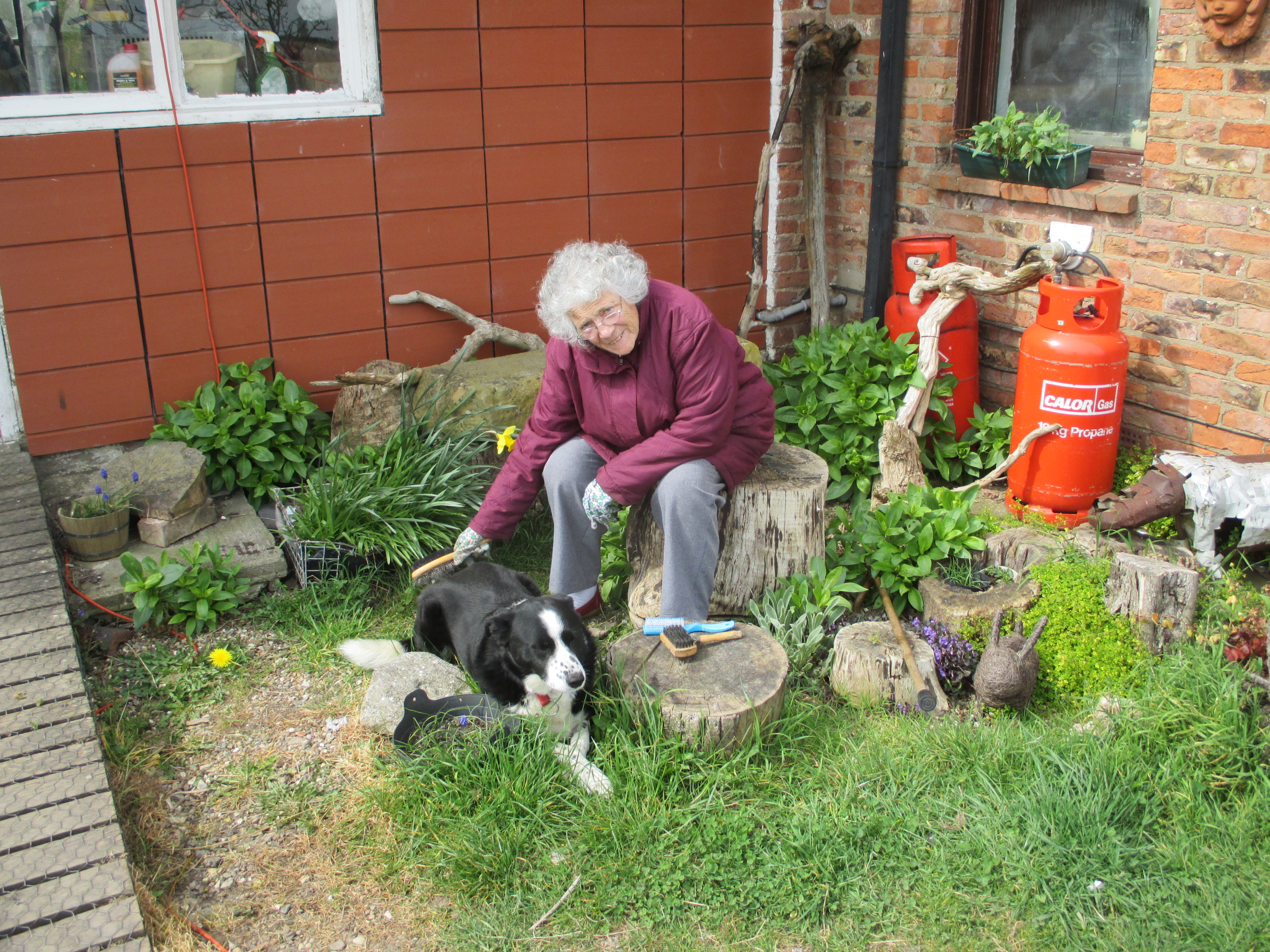
Pauline (88) grooms Monty (8), 26th April 2015

Great sadness can be experienced from quite an early age when small things are so important to us. The loss of a toy, the death of an animal in our lives. Most of us have buried our pets in the garden, I certainly remember burying a canary in a cocoa tin and putting flowers on its grave, soon to be not forgotten, but put to the back of our minds as a new pet takes its place.

Heartbreak (circa 2002)

Little old ladies are often stereotyped as surrounded by cats, and indeed my grandmother had many. She loved dogs too, however, and made many references to them in her writings. I present a compilation of them now, to commemorate those who could not write for themselves.

The passages are ordered by date of writing rather than by date of events described. Contextual notes are inserted where appropriate to avoid reproducing excessive prose unrelated to the topic. Occasionally I have corrected typos.

The dog was sitting all of a quiver, tail swishing slowly and tongue hanging from one side of his mouth. His eyes never left the two cats he had chased up the tree as he willed them to come down for another chase. But the cats stayed on their wide branches with eyes half closed and a smirk on their faces. They were content to stay up there all day if necessary, and would enjoy doing it.

The dog came dashing back having had great sport chasing the cat under the caravan and he took up his place under the tree. He was to have a long wait, the other cat was older and wiser and loved sitting up in the tree. He wasn’t coming down to be chased by a silly old dog – not for a long time anyway.

A Summer’s Day in the Jungle (Fiction) (17/04/2002)

I tried making the area smaller by laying the odd paving slab between the bushes but eventually had to admit defeat, and but for a small circle with a weeping willow where our first dog is buried, I gave the rest over to the couch grass.

The Garden (??/??/2003)

There’s the man who brings his very large fluffy white dog and grooms it in one of the lay-byes. There is white wool everywhere and once it blows into the trees it stays there for days. Couldn’t he bring a plastic bag with him?

The Dumpers (03/05/2003)

On Saturday once everyone had eaten, off they went well booted, scarved, hooded and gloved. Looking out of the window at the comings and goings you could well imagine you were in Eskimo land. Wherever they went they were followed by a sad looking dog with a football in its mouth longing for someone to kick it for him.

I went [shopping] via Clough Road and saw a flag flying saying Courts closing down sale. Well I couldn’t resist that and duly crossed the road and drove ‘round the back to Courts parking lot. Oh! Thinks Pauline, they must be going to have a caravan sale as there were about 20 lovely caravans set out around the car park. To my dismay there were 2 shaggy little dogs/pups with short logs shagging away in the middle of the park. Poor little strays I thought, must call into the dogs’ home as I am in Clough Road. Driving towards the main doors I parked my car, got out with a lot of difficulty only to find myself surrounded by a pack of yapping Jack Russells which should have been white but were actually a dark grey. They followed me to the main door still barking and there was a notice saying Store closed, nearest store Grimsby. To say the least I was miffed, Courts could have taken their flags down. I turned and made my way back to my car accompanied by the yapping dogs and noticed that each caravan had a kennel at the side of it and children and men were appearing on their doorsteps. That was when it dawned that I was in the middle of a gypsy camp.

Home – I was so pleased to see it as I always am. I was greeted by the dog with his football and pleading eyes, but my buckling legs hadn’t a kick left in them. Sank into my armchair, coat and all and as usual it wasn’t long before Simon arrived with a cup of tea. “Had a good day?” says he and when I told him of my day, his eyes rolled up and he remakred “Mother, only you could end up in the middle of the diddy camp surrounded by a pack of dogs. I bet you patted them all.”.

Half Term (16/02/2005)

From the docks we would drive home and dad would open his kit bag and spread the contents on the floor. Huge blocks of Cadbury’s chocolate, boxes of chocolates, boxes of lovely perfumes, and always from his cook a sweet bottle full of King prawns, and who got the first choice, why Twister of course – our dog. On his second night home, Dad was allowed to go ‘round the corner to the Fountain Villa Club, where lots of elderly ex-seamen gathered. He would take Twister with him, buy a box of chocolates and give it to the dog to bring home for us, and one again he got the first chocolate.

I am six years younger than my next sister and therefore was almost like an only child until I was 5 and started school at St. Mary’s, and spent my time with Twister our wire-haired terrier, and Billy our large black Persian cat. I must have been a pain in the neck to them as they were my only companions most of the time and I spent my time dressing them in baby clothes, sitting them on chairs to play schools and taking them for walks in my large dolls pram. That bit they quite enjoyed.

Early Childhood (29/09/2005)

I had Patch in my car who thought it was great but the heat was unbearable. There was plenty of shade for him under the trees and everyone took him for walks.

A young boy on the next stall decided to play with his football and Patch was there in a flash. Then the lad realised that if he threw the ball at Patch instead of past him, he would throw it back, they played for ages and gathered quite an audience. All I could think of was either patch would end up without his front teeth or with a flat nose like a peke.

Vintage Weekend (??/06/2006)

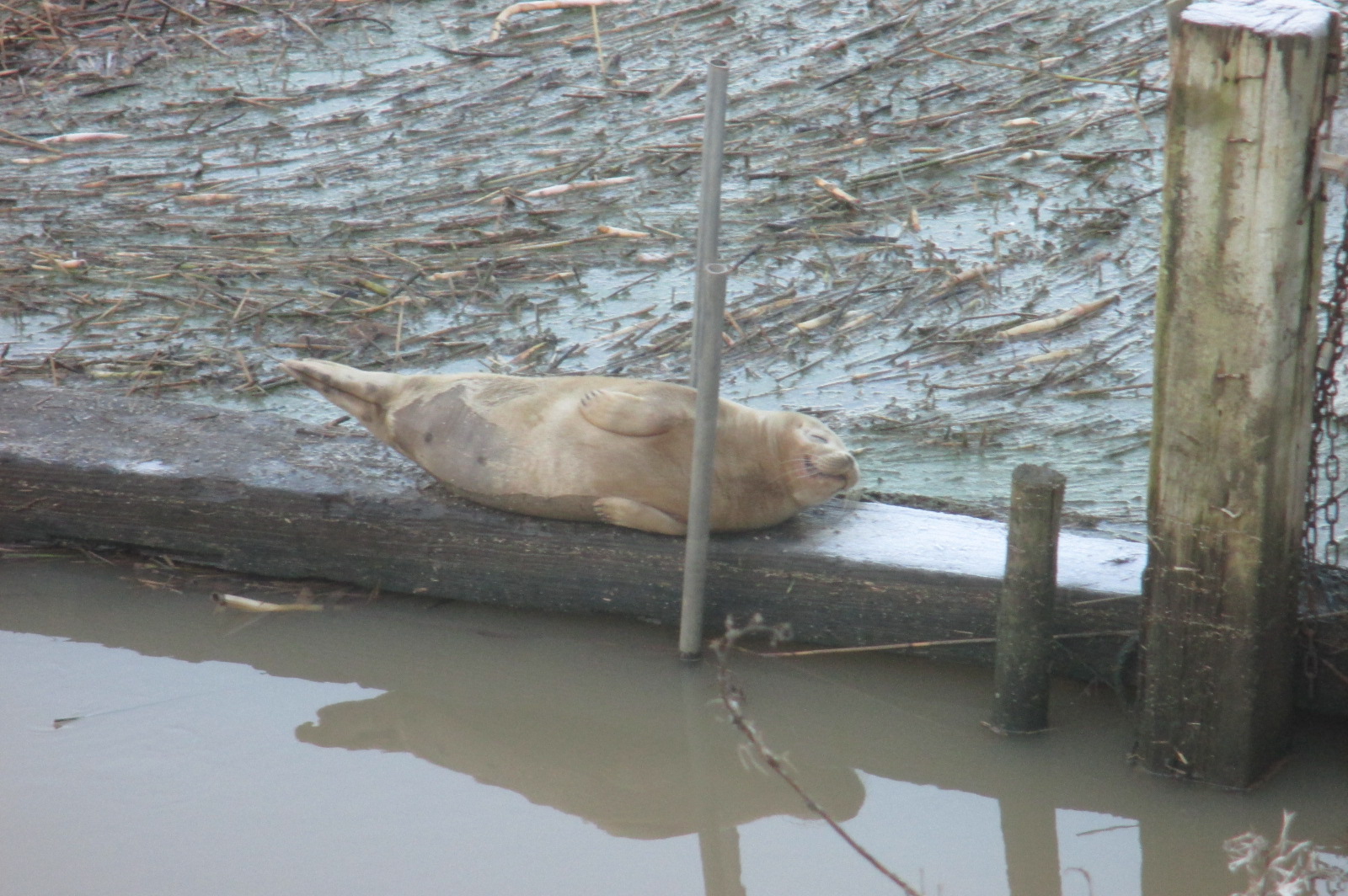
[Seals] still appear quite regularly and at the moment are regular visitors. There’s usually just the one who loves to tease the dog*. Patch swims out to him and when they are face to face the seal dives under him and comes up again behind his back. Patch gets tired long before the seal and has to give up and I really don’t think he has any ill intentions, he just wants to play with it as he does with all the dogs who come for their walkies. Most of the dogs’ owners soon get to know Patch and quite happily take him for a walk with them. Young Paull came in at the weekend and said “Grandma, you should have been up the end. There are two seals in the Creek and they are sitting playing on a piece of wood which looks like a tree trunk. They keep pushing each other off and as the log floats towards the mouth of the creek they push it back in again and start all over again.” Patch has been sitting on the edge all of a quiver but didn’t go in further than his knees. Probably thought two were too much for him.

Simon and Paull can’t resist buying ancient machinery… [the truck] was navy blue with a large RN and Royal Navy on its side, only does about 10 miles (or they are just telling ME that) an hour and the dog is delighted as he now has a vehicle he can ride on instead of being scrunched between Paull’s legs on the grass cutter.

Wildlife at Stone Creek (24/10/2006)

The fire brigade were here for 5 days slowly pumping water from the drains into the Creek. Simon, Paull and Monty joined them, taking cups of tea etc. and Monty left home completely, after all he lived on Battenburg cake with the firemen and not dog-biscuits.

Summer 2007 (27/09/2007)

I remember last year’s winter… there are bags of compost all over the place unused, one sack and loads of packets of seeds and bulbs lying around that never did get planted. Monty had a wonderful time as the plants in pots got dryer and he could just pull and the whole plant and bag of soil came out of its pot, and if they didn’t it didn’t matter, he just ate the pot as well.

Looking back at 2007 (17/01/2008)

A few days before Betty and Stan’s wedding, I was cuddled up in a big bed with Betty and another sister Dolly. Stan crept up the stairs and threw a little bundle on our bed and shot off before Mum caught him. That little bundle was Twister, a tiny wire haired terrier pup for Betty. He never did leave us as by the time the wedding and honeymoon had taken place when they tried to take him to their flat he cried so much that they had to bring him back.

I decided it was time to let [a beaver lamb] go as it was getting a bit rough down the front edges. My new neighbour begged it and was seen later that day parading down the street with her fur coat in hot sun and her pet Peke on a lead. It was obvious she felt the bees’ knees.

Last but not least is the beauty of the lot. My sister Ethel’s brown mink which was given to me when she died… The family came home for our first Christmas together in the UK and whilst we were busy getting the house we rented in Hornsea dried out, Peter, my eldest arrived with Sandra, his girlfriend, to give us a hand. Out of the blue Ethel arrived wearing the said mink coat and sitting on her knee was her beloved little brow spaniel. Sandra in all her innocence asked me who is that lady with the dog that matches her coat, you can’t see where the dog ends and the coat starts. Forever more to Sandra Aunty Ethel was the lady with the dog that matches her coat.

Coats in the Attic (24/01/2008)

*This particular seal is presumably the inspiration for Sammy.

The Little Boat

The little boat was bobbing in the Creek. It was a very sad little boat, its paintwork was dirty, covered in mud from the winter. Its red sail had not been unfurled since its last trip out in the Autumn and no-one had set foot on its deck since that day. It felt dirty, forgotten and unloved. It longed for a sunny day to warm its decks again, it had been such a proud little boat once.

Then one day as it sat on the mud waiting for the tide to be deep enough to re-float it, the incoming tide brought with it a young seal. “Hello little boat” he said, “can I sit on your deck for a while, I have been swimming for a long time and need a rest”. The little boat felt a quiver of excitement as the first of the tide reached her hull and lifted her gently, and not waiting for an answer the seal jumped aboard. “Why are you so sad little boat?”, and the little boat told him how no-one loved her and how lonely she was without any friends. “I’ll be your friend little boat, what is your name”? “I haven’t got one really, they just call me the boat”. “My name is Sammy and I shall call you Fair Lady, though you don’t look very fair at the moment. You’ll soon look beautiful again, the spring is here and everything gets spring-cleaned. Cheer up little boat, I will come and see every day until your family comes back”, and the little boat felt so much better. A weak ray of sun hit her porthole and started to warm her cabin and Fair Lady began to feel alive again for the first time in ages. The seal lay on her deck and told of his travels up and down the river chasing the fish and how he liked to visit the quiet creek.

The next day was Saturday and Fair Lady was hoping Sammy would visit her when the tide came in. The sun was shining much brighter that morning and she started to shiver as in the distance she recognised a voice calling – “I can see the boat – oh doesn’t she look dirty and miserable, not like our boat at all. Can we take her home and wash her daddy?” asked one of the children and her little heart started to thump as she felt feet on her deck again. How lovely the thought, perhaps she would get a wash and her sails set and maybe even a sail down river. After looking her over, she suddenly felt herself moving as she was pulled out of the water and onto her trailer. The children were as excited as she was as finally she was attached to the Land Rover and started to slowly move from the boatyard. The ride was very bumpy over rough land, but that didn’t matter, she was being taken home and her family hadn’t forgotten her. She felt a thrill run from her keel to the top of her mast as her trailer turned onto the bridge and there was the house which called out, “Hello little boat, nice to see you again”, and the little rowing boats wagged their oars at her. She was towed into the field and parked by the tap. She was stripped down, her mast removed and then came that lovely feeling of clean water on her deck and a soft brush making her tingle, soap suds were everywhere and made her sneeze, but oh how she loved it. She had her keel painted with anti-fouling and was polished from head to mast top. Her brasses shone in the spring sun and her mast and sails which had been washed, were put back. That night she was taken back to the creek and launched on the incoming tide. With her family all aboard she sailed out of the creek into the Humber. She felt fantastic and only one thing was missing – her friend Sammy, But suddenly from her port side a voice called “Ahoy there Fair Lady, don’t you look great, I think I gave you the right name”. And side by side the two of them sped up the Humber and her heart swelled with pride and happiness.

Written 25th March 2007
by Pauline Taylor (1927-2018)