On What Authority

A sign welcoming drivers to Humberside, defaced by black and white splatters.

By Adpopulum, 1992 (CC-BY-SA-3.0)

The people of Yorkshire have an unusually strong local identity compared to those of other English regions, and Kingston-upon-Hull a greater notability (or perhaps notoriety?) compared to other cities.

Around 208 CE York was established by Emperor Septimius Severus as the provincial capital of Lower Britain. A reorganisation in 296 made it the probable capital of Second Britain. From around 450 to 654 it was the capital of the Anglian Kingdom of Deira, which then became the southern half of the Anglo-Saxon Kingdom of Northumbria. From 867 to 954 it was known as Jórvík and was under Danish rule. It was during this period that the North, West and East Ridings* were established to subdivide the area. The territory was absorbed into the unified Kingdom of England in 954, then from 966 to 1055 an Earl of York was appointed to govern on the monarch’s behalf.

Prior to the Norman conquest the earls of England had each ruled multiple shires and considered themselves of equal stature to continental dukes, but William of Normandy did not want to be outranked and so diminished them to one shire each, putting the earls level with European counts and so leading to their administrations being called counties. The county system emerging from this time remained fairly stable until Victoria’s reign.

Parts of Cumberland, Lancashire of Westmorland were split off from Yorkshire in the twelfth century, but by the time of the 1831 census it was still by far the largest of England’s forty then-counties, having more than more than twice the acreage of Lincolnshire or Devon and nearly thrice of Norfolk. The Local Government Act 1888 removed many administrative duties from the courts of quarter sessions and invented county councils to take them on instead. The three ridings, already given separate sessions, also had their own separate councils. The next big reform was the Local Government Act 1972, which sought to radically alter the county map of England and Wales so that the borders corresponded to the modern – rather than medieval – population distribution. Yorkshire’s three ridings were abandoned. A few smaller parts around the edges were given to other neigbouring counties, and the rest reconstituted as four entities – North Yorkshire, South Yorkshire, West Yorkshire, and Humberside.

The non-metropolitan county of Humberside mainly replaced the East Riding, but also incorporated parts of the West Riding and northern Lincolnshire. It was subdivided into nine districts, all of which obtained borough status: North Wolds, Holderness, Kingston-upon-Hull, Beverley, Boothferry, Scunthorpe, Glanford, Grimsby and Cleethorpes. Although the government had used the term Humberside in planning since 1964 and the BBC had launched Radio Humberside in 1971, the creation of a county by that name was strongly disliked by a significant proportion of its residents. In 1981 North Wolds renamed itself East Yorkshire and Beverley became the East Yorkshire Borough of Beverley. Already by the 1990s it was clear that the county could not last. With effect from 1996 the area was reformed yet again. Those parts which had been in Lincolnshire were returned, while the Yorkshire part was made into the new ceremonial county (also called a lieutenancy area) called East Riding of Yorkshire. The governance of the new county was split between two unitary authorities – Kingston-upon-Hull became one, while Beverley, Boothferry, Holderness and North Wolds were merged into the other, which confusingly was also called East Riding of Yorkshire.

Even though Humberside has now been dead longer than it was ever alive (as well as longer than I have been) the name continues to haunt us in the aforementioned radio station, the fire service, the airport, the scouts and the police force. There was even a Humberside Police & Crime Commissioner created in 2012. A lot of junk mail continues to put Humberside in our address, and many official notices put up by the former borough councils are still in place.

Hull itself has a place in the national consciousness – particularly in comedy – long before its designation as City of Culture. By the end of the thirteenth century the King’s town upon the River Hull had an active market, a travelling funfair, a seat in the House of Commons and a royal charter. From 1331 the burgesses had the power to elect a mayor. Another charter in 1440 created the municipal corporation and made Hull a county of itself (an early version of the same idea that a unitary authority today expresses). Seven years later the county’s boundaries were widened to include some nearby villages, which were sometimes called Hullshire. These were removed in 1835. The 1888 act made Hull a county borough. Victoria bestowed city status on the town to commemorate her diamond jubilee. George V upgraded the mayor to lord mayor after opening King George Dock. The city council replaced the corporation in 1972.

Readers may be wondering why I have bothered to tell them all of this. Well, in Eye 1540 I came across this passage in the Rotten Boroughs section:

HOW DEMOCRACY WORKS (1): Labour Hull city council is keen to get into bed with Tory East Riding of Yorkshire Council to set up a combined authority. Jumping on the devolution bandwagon with an elected mayor and all could bring in a hoped-for £1.6bn in Whitehall funding.
Under the planned timetable for the creation of the combined authority, a deal will be signed off by 31 March. But public “consultation” on any agreement will not start until late June at the earliest. How might the (meaningless) public consultation go?
Back in 2014, Hull wanted to extend its boundary to take over part of East Riding, so a referendum was held. Fewer than 2,000 voters were in favour, with more than 51,000 against, so the plan was ditched. But this time the public may not have any effective say in the matter.

Looking back I found a story about the plan in the Hull Daily Mail from October, with other hints still earlier but public interest only really seems to have picked up a few days ago. The gist of the plan seems to be that the existing councils will remain, but they will pool their resources to form a combined authority similar to that used by metropolitan counties, and on top will be a directly-elected “metro mayor”. It is not clear if the mayor will absorb the role of the existing Police & Crime Commissioner, as has been the case in other regions. It will also be interesting to see what name the combined authority will take – most have been named after the counties in which their constituent districts are situated, and indeed the county councils which used to be there before 1986, but in this case one of the districts has the same name as the overall county, so most likely the combination will be called something like “Hull & East Riding”, a redundancy akin to saying “Parliament and the Lords” or “Europeans and the French”.

The existence of directly-elected executives is a new development in Britain, and one at odds with the traditions of our constitution. This has long been a nation of parliamentary government, not presidential. The scramble for local and regional devolution has not been without controversy, especially the PCCs. The cost of and confusing of so many reorganisations in local administration also tends to provoke public anger. Many mock the patchwork of differing political structures across the United Kingdom, but attempts to standardise them never really seem to work. In particular it is noted that local personal identity tends to align more with the pre-Heath counties than with the modern ones, which were designed around administrative efficiency rather than emotional allegiance.

In this instance any controversy over the merits of the plans themselves is accompanied by anger at the secretive manner in which negotiations were carried out, and in the apparent intention of both central and local government to impose the new system without public consent. Two items arrived in my postbox today: Issue 39 of Your East Riding, and a campaign leaflet. The first is keen to announce that East Riding won Council of the Year 2020, but makes no mention of the new combined authority, merely having a brief segment about the Humber Local Enterprise Partnership on page 5. The second is credited to Matthew Grove, who was Conservative PCC from 2012 to 2016 but has since defected to the Liberal Democrats. Half of the front page is dedicated to a large-lettered condemnation of the deal and its negotiation process.

There is also a partisan component to consider here, which the Eye briefly mentioned. Generally it is observed that urban voters lean to the left and rural voters to the right. This is clear in recent election results for the two districts.

Hull City Council, 2018: Labour 31, Liberal Democrats 24, Conservatives 2.
East Riding Council, 2019: Conservative 49**, Liberal Democrat 8, Yorkshire Party 2.

The latter result is particularly impressive given that the UK-wide results were disastrous for the Conservative party. While there have been times when the Liberal Democrats gained significant footholds, the norm has been for Labour to have a majority within City of Hull and the Conservatives an ascendancy without. By contrast, the metro mayoral elections across the combined county would be very tight races. I wonder if, without the promise of such a large payment, the existing council leaders would have been more reluctant to relinquish such secure areas of control.

As this blog is so often about heraldry, I will end with some of the arms of the authorities I have been discussing.

Kingston-upon-Hull: Azure three ducal coronets in pale Or. Certified in 1879 but seen in use as early as the fifteenth century.

York: Argent on a Cross Gules five Lions passant guardant Or. Recorded in the 1584 visitation but in use as early as Edward III’s reign.

On 11th February 2004 Hull was also granted a badge of Three coronets in pale Or without the blue background.

The creation of county councils in the nineteenth century led to a proliferation of county heraldry, which previously had been inapplicable. In medieval times it was considered that helmets and crests were appropriate only for human men not impersonal corporations, so older grants of arms are of just a shield, though York obtained semi-official permission to ornament its arms with sword, mace and cap of maintenance in 1396. By Victoria’s reign this principle had been abandoned and so later civic grants of arms frequently include crests, supporters and mottoes. In contrast to the city arms which have been carried through multiple reconstitutions, the county arms have been designed anew as often as the counties themselves.

East Riding County Council (1889-1974): Escutcheon Per chevron Argent and Or in chief two garbs Proper and in base an eagle displayed Azure on a chief Sable three Roses of the first barbed and seeded Proper; crest On a wreath of the colours on a garb fessewise Or an eagle displayed Azure; motto Solis Ortum Conspicere. Granted 28th February 1945.

Humberside County Council (1974-1996): Escutcheon Per fess Sable and Gules on a fess wavy Argent between in chief a coronet Or between two roses Argent barbed and seeded Proper and in base two fleurs de lis Or a bar wavy Azure; crest On a wreath Or and Gules rising from flames Proper a demi-eagle Azure goutté d’Or armed also Gold holding in the beak a sword point downwards Proper hilt and pommel Or; supporters On the dexter a dolphin Argent finned Or charged on the shoulder with a terrestrial globe Azure the land masses Or supporting an anchor Proper and on the sinister a female figure habited representing Ceres with cornucopia all Proper upon a compartment per pale water barry wavy Azure and Argent and a grassy field Proper; motto United We Flourish. Granted 28th July 1976.

Holderness Borough Council (1974-1996): Escutcheon Per saltire the chief Azure charged with a sun in splendour Or the base barry wavy Argent and Azure the dexter flaunch per fess Vert and Sable the sinister flaunch per fess Sable and Vert each charged with a rose Argent barbed and seeded Proper; crest On a wreath Or Vert and Sable within a mural crown Argent charged with a saltire Gules an ancient ship with one mast and two sails set standing on the poop a man with cocked hat and telescope beneath his sinister arm Sable mantled parted Vert and Sable doubled Or.; supporters On the dexter side a mermaid on her head a Roman helm proper and holding in her exterior hand a trident Or and on the sinister side a Triton on his head a horned Danish helm Proper and brandishing with his exterior hand a sword Argent pommel and hilt Or; motto Think Right Do Right; badge A Viking ship with sail and pennon flying within an annulet compony Or and Argent. Granted 30th March 1978.

East Riding of Yorkshire District Council (1996-present): Escutcheon Barry Vert and Or on a chevron engrailed plain cotised Gules three roses Argent barbed and seeded Proper; crest Issuing from a mural crown Argent an eagle displayed Gules armed and langued Azure supporting with the dexter talons a sword hilt upwards and with the sinister talons a crozier in saltire Or mantled Gules doubled Argent.; supporters On the dexter a lion Azure guardant armed and langued Gules gorged with a wreath of barley supporting between the forelegs a trident Or on the sinister a demi-horse Argent langued Gules maned Or the feet webbed Vert conjoined to the lower half of a hippocampus Vert supporting between the forelegs set upon a staff a cross fleury Gules.; motto Tradition and Progress. Granted August 1996.
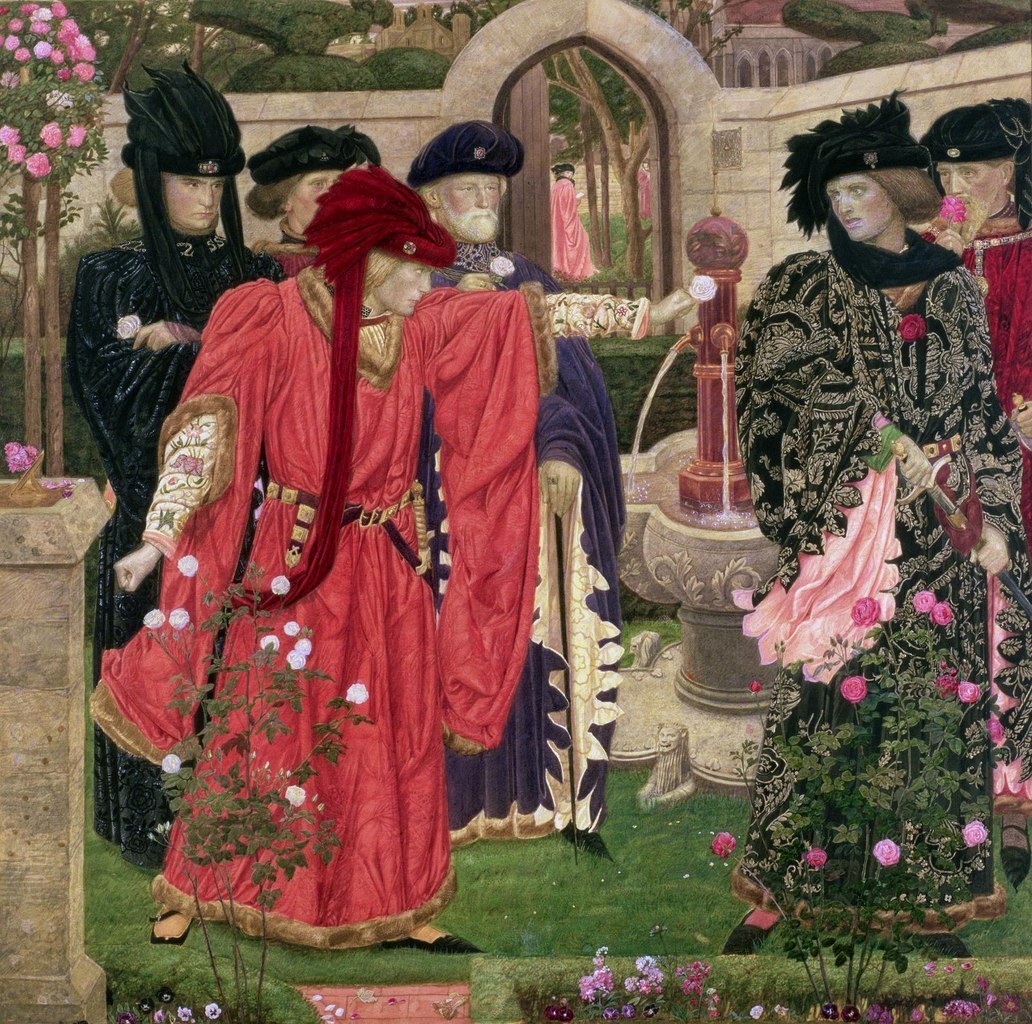
https://upload.wikimedia.org/wikipedia/commons/7/7e/Choosing_the_Red_and_White_Roses.jpgFinally a note about the roses: while the white rose was indeed a badge used by many heads of the House of York, and the red rose a badge used by many heads of the House of Lancaster, the status of each as the badge of its respective faction was imposed retroactively by Henry VII’s creation of the Tudor rose upon his marriage to Elizabeth of York, then bolstered by William Shakespeare’s writing of the Temple Gardens scene in Henry VI, Part 1. The name “Wars of the Roses” came into common use after 1829 in reference to said scene. Their use of symbols for the counties of Yorkshire and Lancashire emerged still later. Notably the roses appear frequently in municipal grants of arms since the 1888 reforms but not in earlier ones. In spite of what some may claim today, the conflict was not a petty rivalry between two northern counties.

EXTERNAL LINKS

UPDATE (13th September)

The latest episode of Jay Foreman’s Map Men covers many of the same topics I have done in this article. Indeed, the resemblance is almost suspicious…

UPDATE (1st November)

For those interested in the region’s past more broadly, I have just found the channel Hull History Nerd. Most of the videos are focused on transport and infrastructure rather than governance.

*The term riding literally means one third (in contrast to the farthings used prominently by a different famous shire) so one of the compass directions had to be left out. Much like the Diocese of Sodor and Man, the name was eventually adopted for a fictional location in Winifred Holtby’s novel. The BBC adapted the novel in 2011 for a miniseries, some parts of which were filmed close to my house.
**Two of them, Leo Hammond and Benjamin Weeks, were at university with me at the time of the election.

Farewell to Cottingham Road

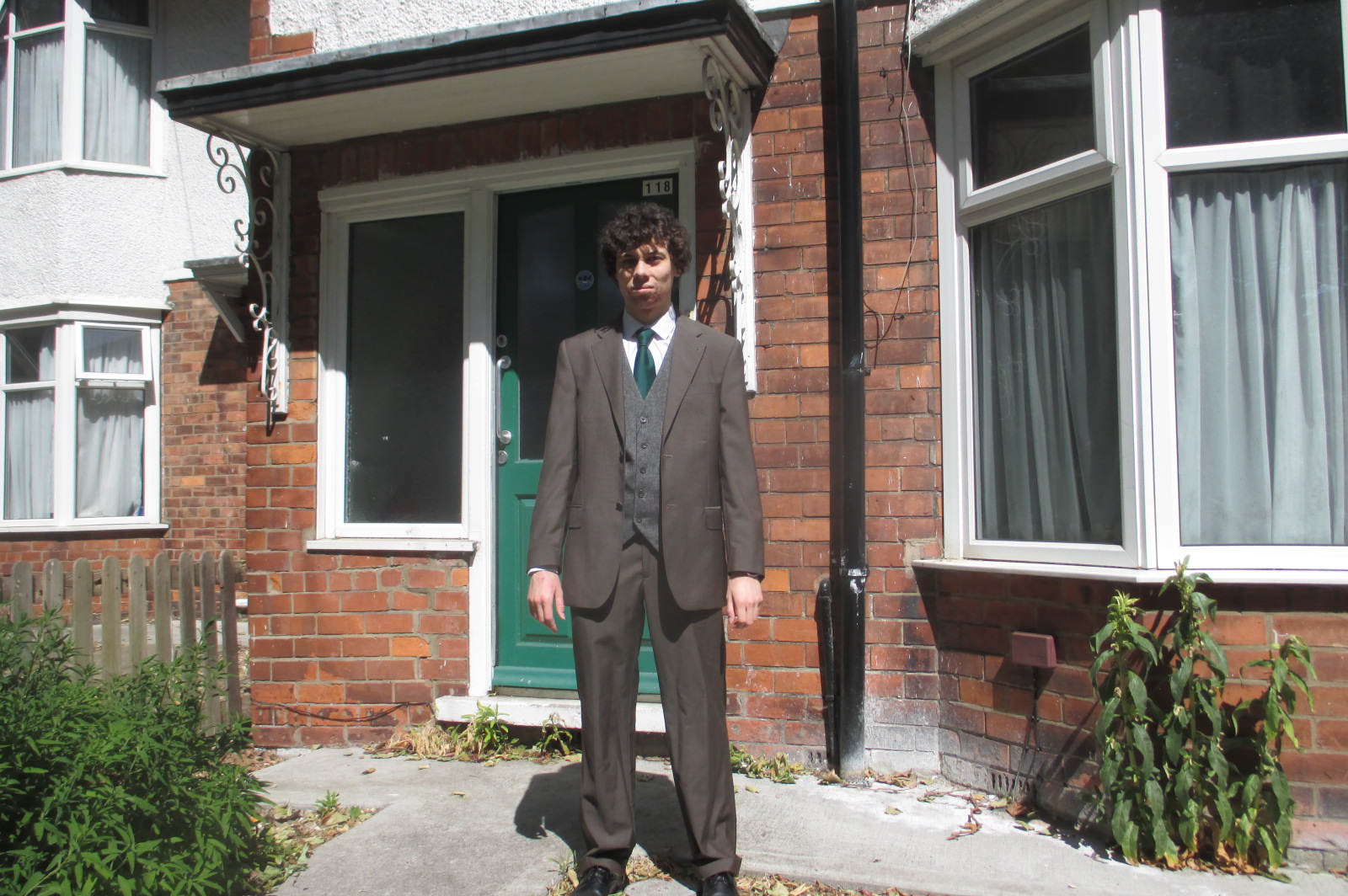
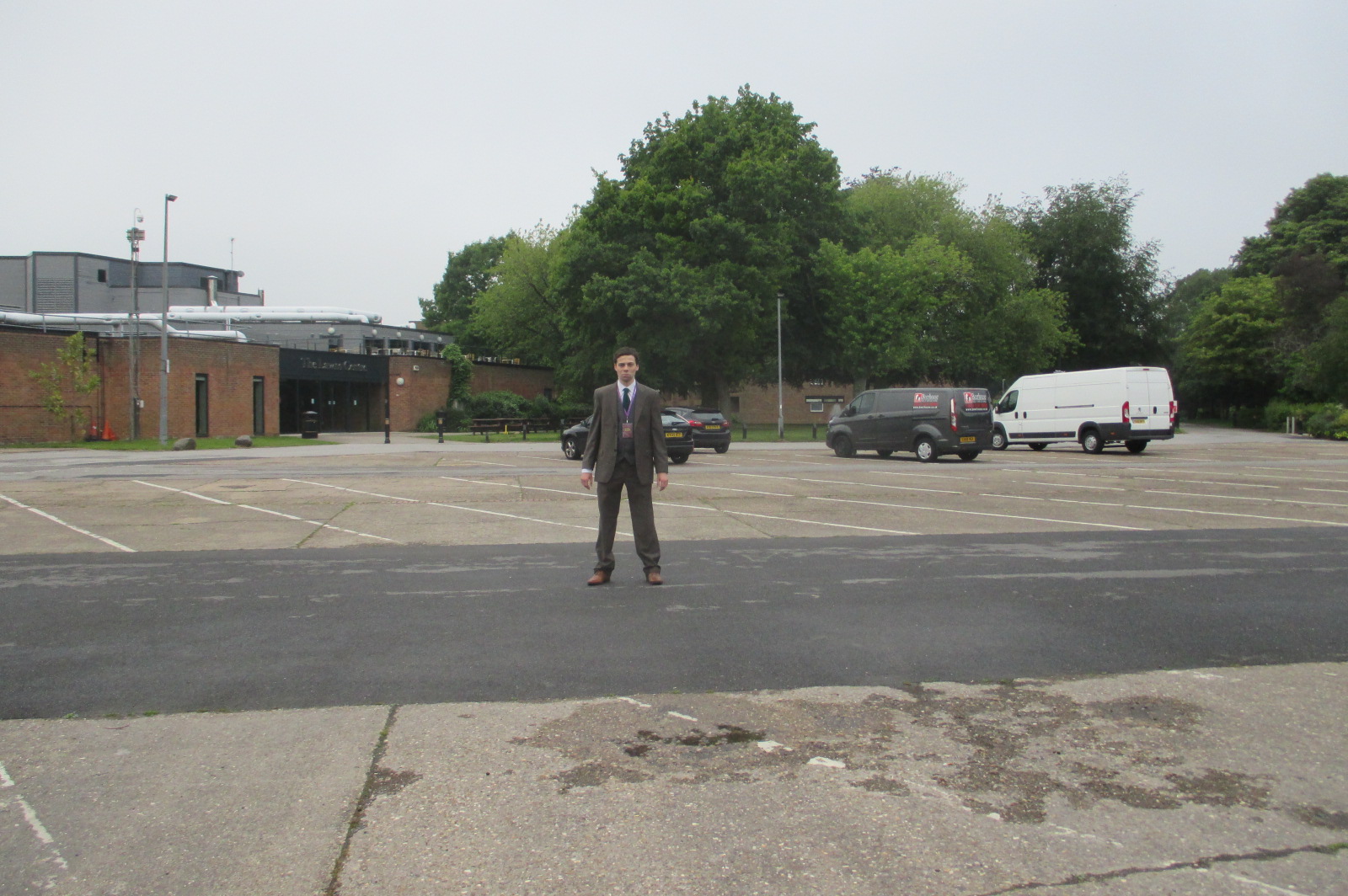
Obviously my hair is a lot longer this time, but the suit is the same.

It is a very small proportion of blogs that get serious attention. The same is true of video channels, social network profiles, books, magazines, newspapers and academic journals. For every best seller or household star, there are thousands of obscurities whose volumes fill up discount bins and whose view counts barely break out of single figures. Indeed there are many whose authors just give up or even forget about them, and sit incomplete for eternity. This one was created just shy of five years ago, and this shall be the seventy-fifth published article. A glance of WordPress’s site statistics function shows that there have been 4923 views in total. The mean view count per post is therefore a moderately impressive 66.5, but an inspection of the ranked list shows that the median is a less impressive 6. Factoring in a margin of error for me reading the site myself, I suspect that at least a dozen posts – mostly those talking about student union meetings – actually had no other readers at all. Two articles seriously inflate the mean: The runner up is Interview at Selwyn College, detailing my ill-fated application to matriculate at Cambridge. By far the winner, made just fifty-three weeks ago, is Farewell to Cottingham, discussing my time at The Lawns. Today it is time for the sequel.

All satellite accommodation having closed, the only dwellings available were those in or immediately around the campus. Once again I was slow to investigate options and was primarily concerned with minimizing the expense, so instead of the luxurious newer sites I opted for a Kexgill-owned house with three others on nearby Cottingham Road. In contrast to where I lived before, the history of this house was not well documented, though what sources I can find suggest the road itself dates back to the eighteenth century while the nearby North Hull Estate was constructed between the World Wars, but the construction date of my particular residence and the other student houses adjacent is far from clear. As is to be expected with properties of this nature, a great many fittings and furnishings have been changed over the years to types bought in bulk by the owners, thus obfuscating the property’s true vintage. Buildings like this often have subtle vestigial features which hint at grander days gone by. In our case it was a stained glass window at the top of the staircase. A few dozen metres east of us were houses that had mosaic tile art in their porches. Otherwise they were indistinct from any other undergraduate digs.

The desks, cupboards, wardrobes, drawers and shelves were the same plywood varieties that were seen in the old halls, while the white goods often had panels that were turning yellow. Very little of the flooring in any room was truly flat and very few of the walls were truly straight. In particular my bedroom window had sagged a little on its hinges and did not properly line up with the frame. Full closure required a lot of brute force to lift it up at the same time as pulling it in, the strain of which eventually caused the handle to come off in my hand. The main problem which we experienced in the early months was the cold – even in September it was apparent that there was a sudden drop in temperature upon entering the house. The contract said that Kexgill remotely controlled the central heating for all their properties and so for a while it was assumed that they were leaving it as late as possible before switching it on to save money. As nights got longer and longer we eventually complained and were issued space heaters for our bedrooms. The house was advertised as containing a living room, but on viewing it was clearly a downstairs bedroom with the bed removed. Very little socialising occurred in my time but when it did it was invariably in the kitchen instead. The living room, whose only unique feature was an ironing board (but no iron) was mostly used for storing laundry.

It wasn’t all bad: We had a normal washing machine in the kitchen between four of us, rather than having to use an overstretched institutional launderette with a needlessly complex card payment system. The dryer was less of a boon, as it warped one of my old jumpers until it would have better fitted Mr Tickle. It broke in the spring and a new one was dragged in. The kitchen had further problems: In mid-October the lights broke, forcing me to cook dinner wearing a head torch for a few days. In April the radiator sprang a leak. It was dumped in the bush in the rear garden and a brand new one was fitted in its place. There were also signs of rot or mould having infected one of the storage cupboards. Supposedly this had been treated by spraying the area with bleach, the smell of which lingered for the whole academic year.

The main benefit of the place was that it was barely a two minute walk away from the university’s premises. The result was that I could pop home between lectures, and even access the library at night, without having to carry all the day’s necessary items on an arduous walk or an uncertain bus ride. It was also very close to a large number of food shops, which was especially handy in the last few months.

The outbreak of SARS-CoV-2 caused a great upheaval, of course. At a stroke it negated the benefit of proximity to campus, as the university’s physical presence was closed and teaching became purely virtual. From then on the house might as well have been in the next county. The ensuing national lockdown reinforced how little space there was in the property – we had front and rear gardens, but they were a far cry from the large open space at The Lawns. With no access to the library, the lecture theatres or the student union, our house became our whole world – a billet for which it was obviously not prepared. Thankfully I had earlier taken a few steps to alleviate the drabness of the off-white walls, which eased my sanity during the long period of isolation: in October, when the university’s photocopiers were still available, I had printed off family portraits and hung them in my bedroom. In November I bought several rolls of robin-themed Christmas wrap and made wallpaper out of it. Constantly having to adjust the shifting blu-tack was a pain but if I squinted I could almost convince myself that I inhabited a place of greater splendour.

As mentioned on this blog many times before, there is often a lengthy wrap-up period in May-June when academic courses have concluded and students scuttle off home. This time around it started abnormally early due to lockdown, and two of my three housemates jumped ship straight away, returning only briefly weeks later to collect their belongings. In terms of practical space the departure of one’s co-residents is a benefit, as each remaining person controls a greater share of the communal areas. On a theoretical level, though, the space actually diminishes: their rooms disappearing from the map as the doors are forever closed. They also revert to being identified by number rather than by name.

The depersonalisation culminated today in my own departure. It was with heavy heart that I dismantled the decorations I had spent so long erecting, decanted the contents of my shelves into a pile of plastic bags and scrubbed away at the various empty surfaces they uncovered. By the end, as in all such cases, it was as if I had never existed, just like all of those before me.

The future of these houses, as with so much else in 2020, cannot be predicted with confidence. During my stay our rooms were measured for refits, so it is likely that, even if a new cohort eventually move in, they will not inhabit quite the same home that I did. On some level, therefore, the pattern continues.

UPDATE (April 2022)

Having been in the area for other purposes, I had a look around the house to see if anything had changed. Obviously I didn’t have the key anymore, and the place was deserted again due to the Easter holiday. The tattoo parlour next door is now a dog grooming salon. The curtains were drawn on the front of the house and through the frosted front door the hallway looked barren. The back garden is still accessible. The blinds are drawn on what had been the kitchen window. Those on the lounge window were open, and inside it looked to have been converted into a second kitchen. Cereal boxes on the counter implied someone was living there recently, but there was no other sign of life.

Kilnsea Sound Mirror

A year ago I and my parents attempted to reach the sound mirror at Kilnsea, but could not traverse the terrain. Today we made a second attempt, parking rather closer and walking in from the other direction. We found the large concrete concavity surrounded tightly by a primitive fence and dappled with lichen. The land around the fence is dense with weeds and getting to the mirror required a lot of creative stomping. There were some notice boards explaining the features of the landscape but they were few and far between. From some angles the structure appears merely to be a solitary artifice in the middle of nowhere. Still, at least there is no entrance fee.

Farewell to Cottingham

Compared to other students who live in far off regions of the country, or indeed the world, university was no great distance away for me. Even so, the years I spent getting up at the crack of dawn for school and college convinced me that moving closer to campus would still be preferable to more long commutes.

In recent years Hull has constructed much new and lavish accommodation for its undergraduates, which it is keen to advertise to new applicants. There are also several private companies dotted around the campus offering homes to students. Since I accepted my offer at short notice it quickly became apparent that all of the more prestigious lodgings had been taken. In a fraught telephone exchange I was told that I could be offered a temporary dwelling on a camp bed until a space opened up somewhere else. A day later I was contacted again to say that a vacancy had been found at Ferens Hall. Through quick research online (mostly on The Student Room), I discovered that this was generally considered the least desirable of The Lawns’s buildings, the few compliments being reserved specifically for the recently-refurbished M block which I did not occupy.

In fact, my room turned out to be the perfect location, as I was opposite a bathroom and beside a kitchenette, as well as having one of the shortest walks to either the dining hall or the main road. Each shopping trip might have been up to ten minutes shorter than that endured by a resident of Grant Hall at the other end of the complex. Most importantly, for an undergraduate at least, it must have been some of the cheapest student accommodation in Britain.

One notable anecdote is of Christmas 2017 when Colin Colborn, the hall’s warden, invited residents to a film quiz. I was partnered with his daughter, and we were the winning team, which I found surprising given that I haven’t been to a cinema for about a decade.

That said, there were certain issues: The dining facilities comprised a small kitchenette on the first and second floor of each block, plus a proper kitchen directly under my bedroom which was apparently shared with two neighbouring blocks. This arrangement proved woefully inefficient as a cooked meal had often had to be carried back to one’s own room for lack of sitting space. We also had persistent problems with stiff windows that either jammed open in winter or closed in summer. Then there was the time that part of a ceiling spontaneously collapsed, though luckily few people were in the building at the time.

That hall was removed from the options list after 2018, as the university planned to sell it off. In the event it still ended up being used for temporary accommodation in the first few weeks of this academic year because some of the newer buildings on campus were not finished on time. By the winter it had become a ghost hall, with all the rooms empty but, for some reason, many lights left on, including new desktop lamps which projected ghostly white spots into the night.

For my second year I went to Lambert Hall. I chose it specifically because it was the one closest to where I had been before. In the autumn of 2018 there were several occasions on which I absentmindedly wandered back to my old door at Ferens and wondered why the key didn’t fit.

The experience here has been different, as it is easier to establish a sense of community with split levels and wide landings instead on discrete floors and narrow corridors. Whereas Ferens was built in the traditional quadrangle shape, the others are built in a more experimental design. Another distinction is that nearly every room has a small balcony, which sometimes gives the impression of being in a holiday camp. The much larger kitchen provisions also helped.

In my earlier posts I have noted the transitory presence which a student body constitutes, and how this is particularly true of Hull due to its major reorganisations and redevelopments in the last few years. Threads and discussions from as late as 2013 can already feel like archives from a lifetime ago, and therefore public records can be seriously out of date. In particular I noticed references to the use of lounges and common rooms in the individual halls, but I would never experience this in my own time. During my term at Ferens I took every opportunity to sneak into all the other blocks in search of the place I had seen pictured on Wikimedia Commons from ten years before my arrival. I never found it. I can only assume that it was obliterated long ago. For the other halls the common rooms can be seen but not accessed. Through the windows I often saw that they were being used for storage of spare bedding. Opposite can be seen other locked doors with faded signage marking them as the entrance to laundry rooms, and next to them are empty post racks. All of these facilities have been transferred to The Lawns Centre. Notably I have often seen the lights on at Reckitt Hall’s common room as well as reasonably modern-looking books on the shelves, but never anybody in there.

Throughout the last few years the university has been focusing all of its efforts, and the students all their demands, on the central campus. This means that the satellite facilities have suffered a slow death. Returning last September, I and my fellow residents observed that our little commune was much quieter than it had been the previous year, with several blocks across the site being unoccupied. One could walk by the other halls and peer through the windows to see bare shelves and uncovered blue mattresses. This spring we received letters to tell us that, since only a small handful of students had applied to live here in the 2019-2020 term, the whole site would be closed down and sold off. This follows the closure of nearby Needler Hall in 2016 (I witnessed it being demolished and rebuilt as an Aldi.) and Thwaite Hall in 2017 (still sitting there, boarded up and waiting for sale). The secondary campus in Scarborough appears to have suffered a similar fate. I have the odd distinction of being the last occupant of my hall two years in a row.

I have stayed on later than most other students, the majority of whom were quick to depart once their examinations concluded. For the last fortnight I have continually seen parents driving in to collect their offspring, and trudging past my window with suitcases whose tiny wheels dragged noisily over the undulated path. Eventually I found myself all alone in a house and park strewn with other people’s abandoned leftovers. Still, I got my money’s worth out of it.

UPDATE (June 2020)

This post is by far the most popular of any on the blog, so I thought I’d write a sequel.

EXTERNAL LINKS

The Hidden Heritage of Holderness

IMG_3432

This time of year, after the end of winter examinations but before the beginning of a new trimester, is rather uneventful as far as undergraduates are concerned. I therefore have the opportunity to leave my student dwellings and go home for a week. Today my parents took me on a tour of some interesting locations in the sparsely-populated parishes of South East Holderness. I had seen many of these locations before when delivering leaflets for the Hubb, but this excursion was focusing more on the historical perspective.

Our first landmark was the Gunpowder Plot sculpture, erected in 2013 in Welwick. The sculpture depicts conspirators Guy Fawkes, Robert Caseby, Jack Wright and Kit Wright – the latter two being brothers from this village. The work was unveiled by Graham Stuart MP, whom the plaque incorrectly styles as a privy council member.

Taking up the bulk of our day was the Church of St Helen, in the parishes of Skeffling (civil) and Easington (ecclesiastical). Constructed in the early reign of King Edward IV, it held regular congregations until last summer when, after several years of dwindling audiences, the Church Commissioners decided to close it down. Inside everything looks much as one would expect: stone arches, wooden pews, and haunting streams of sunlight through the stained-glass windows (this building has no electricity, though it does have candles and what looked like gas lamps.). Though nothing was obviously missing, one could sense from the thin layer of dust on so many surfaces and the abrupt skipping of years in the guestbook that this was no longer the centre of any significant activity.

The church contained a few references to the aforementioned Wright brothers, but what most interested us, given our association with the Tower, were the many monuments to the Holme family, both verbal and heraldic. The bodies of John Holme, Esq (d. 1744) and his wife Dinah, née Burgh (d. 1729) are contained here, along with those of two sons (Henry & John, the latter being rector of Brands-Burton & Barmston) and a daughter (Margaret, Mrs Thomas Reaston). Above these large luxurious engravings are several depictions, in varying states of repair, of the Holme escutcheon – Barry of six Or and Azure, on a canton Argent a chaplet gules. The most prominent of these is topped by the Holme crest – Out of a mural coronet Gules a hound’s head erased Or – and impaled with the arms of Burgh – Argent on a saltire Sable five swans Proper.

This slideshow requires JavaScript.

There were many more references among the many dusty documents to the Holmes of various generations, though the task of constructing a coherent timeline is confounded by the fact that, like so many families prior to the nineteenth century, they frequently recycled the same limited pool of names and were not much concerned with consistent spelling.

Having left the church, we went in search of the sound mirror at Kilnsea. Constructed around much of the north east coat during the First World War, these large concrete hemispheres would focus the engine noise from approaching aircraft, so that advance warning could be given of imminent bombing raids. The mirrors were ultimately rendered obsolete by the invention of faster aeroplanes and later RADAR.

We did not make it to the mirror, however, because the intermediate terrain was not navigable. Much of the surrounding land has been given over to a nature reserve managed by the Yorkshire Wildlife Trust. To approach our target we had to troop over a lot of damp, thorny ground and long grass. Then there was the problem of the artificial lake. I walked along the full length of the narrow strait depicted above, but it did not quite reach the bank at the other side, and I judged the water to be a little over what I could reasonably ford – both in width and in depth. None of us wanted to risk spending the next few hours trudging about with mud-soaked legs and squelching boot-soles, so we gave up and turned back.

Our final stop, for a rather belated lunch, was at Spurn Discovery Centre. Opened ten months ago, this rather controversial building is the headquarters of the Spurn National Nature Reserve. My family have visited Spurn many times during my life, and on each occasion found it to be a slightly different shape. Coastal erosion here is very fast, due to the soft nature of the boulder clay, and the entire landmass moves two metres westwards every year. Nearly two years ago a major storm wiped out part of the road to the head, creating a tidal island. Some months earlier the trust abandoned attempts to preserve shoreline, instead planning to “let nature take its course”. Tourists are driven across the peninsula using a “Unimog” bought from the Dutch Army, but even that struggles to get across when it rains or the tide rises.

The café had a wide selection of reference books and memorabilia, most of which related to the birds and other creatures which inhabited the surrounding sand. Ornithology – despite what my name and logo may imply – is not my area of interest or expertise, so I have little to comment on these. I was rather hoping that there would be some material relating to the human history of the region, for up until the nineteenth century there were dozens of small towns dotted along this section of the coast, all now submerged by the north sea. If nothing else, I could have hoped to find some interesting heraldry somewhere.

The Middle Age of Beverley

Whereas it might have been more in line to devote this post to discussion of the European Union referendum, here instead is an account of a college trip to some medieval hotspots in Beverley.

That we should have been on such an excursion at all was an oddity – the locations featured were entirely focused on Medieval History, yet the Modern History class were allowed to tag along. This being the penultimate day of the term – and there being no more history lessons in the remainder of the timetable – the educational focus of the outing was light. No worksheets were distributed nor notes taken, though teachers occasionally stopped to explain the historical significance of the local landmarks.

A large black cylinder with wooden boards over the outlines of windows.

The tower at Beverley Westwood.

The first such place was the Black Mill at Beverley Westwood. It one of two survivors of the five windmills which once stood in Beverley, and lost its sails in 1868. The Westwood is one of few remaining areas of common land in England, meaning that residents have maintained their traditional rights to use the turf for grazing cattle or collecting firewood – indeed there were several cows (and cowpats) there to greet us as we ambled across. In the modern era, visible to us on our visit, the territory is also used for a golf course and for Beverley Racecourse.

Beverley escaped the Harrying of the North because the Normans knew of the area’s religious past. John of Beverley – then the Bishop of York – was believed to have performed miracles. He also founded Beverley’s first building, a church dedicated to St John the Evangelist, though this was abandoned in the Viking invasion. The settlement became a large town and was granted borough status in the twelfth century with special interest in trading wool and leather. In the late fourteenth century it became the tenth-largest town in England, having continued to grow despite the effects of the Black Death, the Peasants’ Revolt and the Hundred Years’ War which stunted the development of other parts of the country.

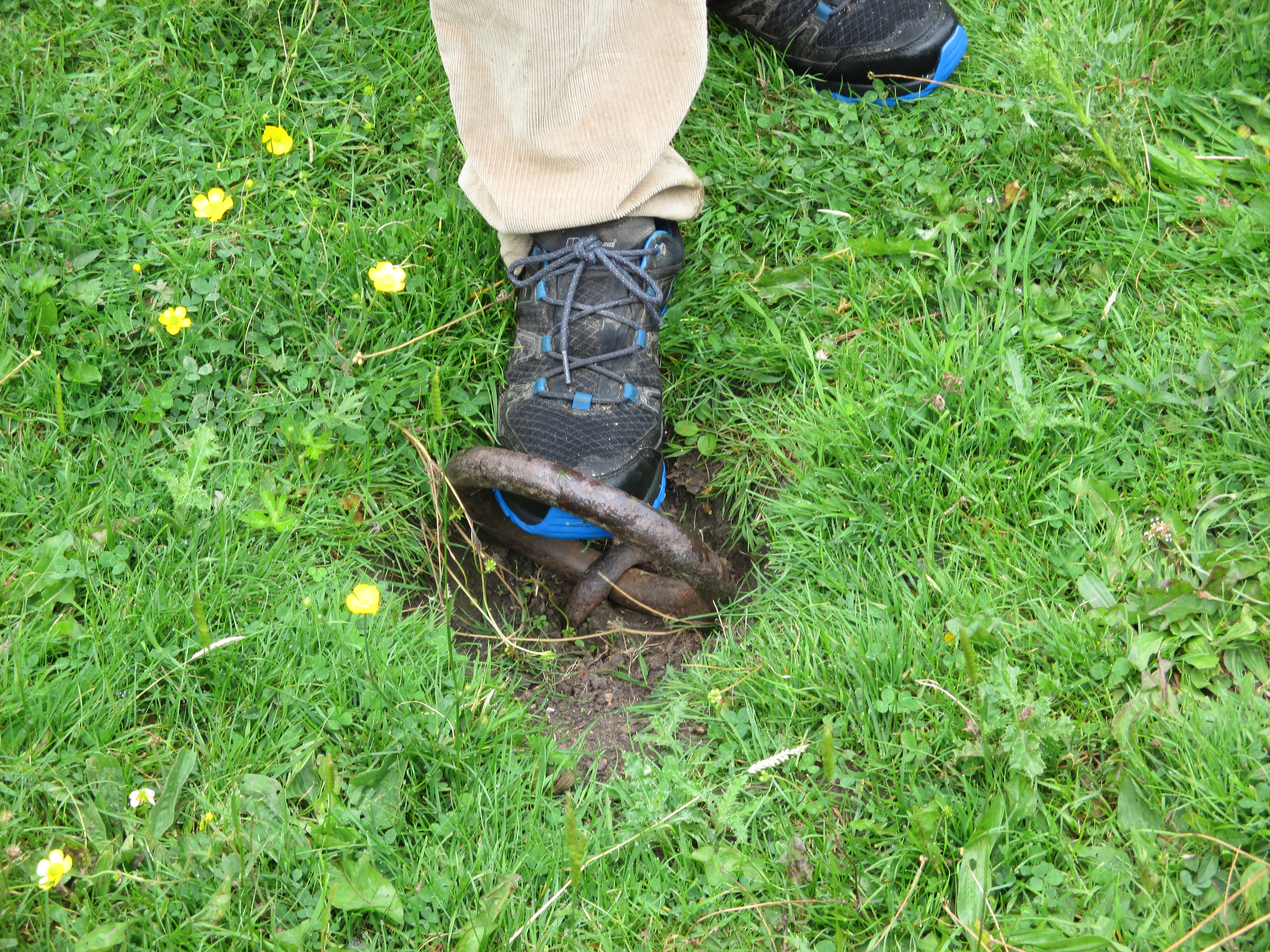
Having ambled across the turf, exploring the dips and bumps in the ground, we were lectured on the habitation of the settlement in the middle ages. We also were dispatched around this area to uncover a large metal hook in the ground. This was used for the medieval sport of bull-baiting: A bull would be attached to the hook while dogs were sent to attack it. Spectators would bet on the time taken for the bull to die and the number of dogs slain in the process. There was also a practical purpose – the adrenaline rush in the last moments of life improved the taste of the beef.

Grass, a dark circle of earth and a metal hoop protruding from the ground..

The bull-bating hook.

The second stop on our visit was the deserted village of Wharram Percy. Occupied almost continuously from the ninth century to the fifteenth, the village was then abandoned. There are some six thousand or so settlements of this type in Britain but few of them are so large or so well preserved. The nearest car park is some 750m away, so getting to the site requires a lengthy trek down an overgrown rocky slope which some members of our group found taxing. The land, overseen in its day by the Percy family (Earls of Northumberland, and relatives of Lord Percy Percy in the first two series of Blackadder) contains the church of St Martin, the outlines of several houses and, naturally, some more cows.

Having picnicked in the shade behind the minibus, we headed for Rudston Church. There lies the body of Winifred Holtby, the novelist and journalist best known for 1936’s South Riding, which was adapted to a BBC miniseries in 2011 (parts of which were filmed near my house).

IMG_0261

The graveyard at Rudston Church

Our next stop was at Burton Agnes. Though the location is normally advertised for its grand Elizabethan stately home, we headed for the smaller Norman building to its side. The dark, uneven ground floor and tight helical stairway belie the vast dining room above, though the overall appearance was still somewhat spartan, with nothing but a long wooden table in an otherwise empty expanse.

IMG_0263

Burton Agnes Norman Hall (left).

Finally we ventured to Skipsea Brough. Surrounded by grassland and yet more cows, this small hamlet features the motte of Skipsea Castle, built by Drogo de la Beuvrière circa 1086 to secure the region and its trading routes against an invasion by Denmark. The castle itself was destroyed following the rebellion of William de Forz in 1221. All that remains now is the artificial hill. The land was reclaimed for farming in the eighteenth century and taken over by the Office of Works in the twentieth.

IMG_0270

The view from the Motte

It may perhaps appear strange that we closed out the academic term by wandering around the countryside, carefully evading deposits of Bovine faecal material while discussing medieval history, but in many ways it was a blessing that East Yorkshire had such rich locations to offer, and that we were able to visit them all with time left at the end of the day to visit the polling station. Though this day out may well be overshadowed in most people’s memories by the referendum, it will stand out as an example of what rural England has to offer as well as that which can survive the many tests of time. That last point may well prove more important than ever given what is about to come.

Continue reading