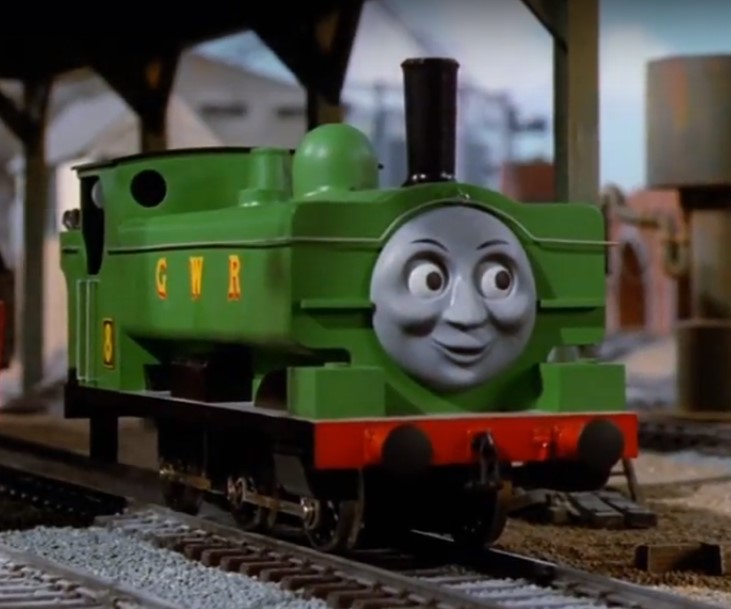
Aren’t You Sitting A Bit Close?

This ought to date well.

Once again I find myself in one of the bits between, specifically the annual Christmas post-script that occurs in the final week of each calendar. It is an awkward limbo, in which the climax of the year has been reached and passed but normality has not yet resumed.

Christmas has always felt like something of a world unto itself, somehow separated from the rest of reality. For almost a whole month (much longer if you work in retail) websites are redesigned, new dress codes are imposed, all manner of buildings are redecorated and new song rotations are adopted for radio stations. We don’t normally treat Easter this way, nor indeed Halloween. In particular, an awful lot of radio and television series are insistent upon doing the annual Christmas special, which is broadcast (and possibly filmed) separately from the regular run, with the holiday often dominating the story, and sometimes even an altered title sequence – snow effects superimposed over the visuals and bells added to the music.

There are quite a few franchises that carry on getting Christmas specials even when they are stood down as regular series. Mrs Brown’s Boys, for instance, ended its last full series in February 2013 but continues to get double bills at Christmas and New Year with the result that “special” installments now outnumber regular ones. Miranda likewise had three series of six episodes each. Oddly the second series ended on 20th December 2010 and the third series premiered 366 days later. This meant there were two Christmas episodes consecutively but they were not specials as such. The third series ended with a cliffhanger on 28th January 2013, which was not resolved until a similar special double in 2014-15. Not Going Out had its finale in 2014 (aired on Christmas Eve, but the episode was not seasonal), yet came back for a Christmas special in 2015 which then essentially became the pilot for a revival and retool in 2017.

Paradoxically, the saviour’s birthday is also a way of nailing down the timeline within a fictional story – most episodes of a fictional series could be set at any time of year – especially if it’s a studio show with no opportunity to check the leaves on the trees – and it isn’t always clear how much time is supposed to elapse between them. If there are at least two episodes set at Christmas with at least one non-Christmas episode in between, then this establishes that at least one diagetic year has gone by. This occasionally leads to problems with the series’ setting. Dad’s Army is a story about the Second World War, but more specifically the Home Guard. That institution was established on 14th May 1940 and deactivated on 3rd December 1944 (although not formally dissolved until New Year’s Eve 1945), which means that only three Christmases occurred during its period of operation. I was not able to binge the entire series again to check, but from the brief summaries I read online it appears that there were at least four episodes released at this time of year (one as part of a normal series, three as specials), although only two were necessarily set at Christmas so perhaps the chronology is preserved. The Simpsons, Family Guy and American Dad all famously operate on a floating timeline – where the external year changes but the main characters never physically age or progress to different life stages. All have annual Christmas episodes year on year without acknowledging the implications. The latter is especially bizarre as the Christmas stories form an ongoing series in themselves which often involves traveling through time and warping reality.

Thomas & Friends** is a franchise in which time never progresses either externally or internally. Sir Topham Hatt’s grandchildren Bridget & Stephen never grow up, nor does the technology level (or indeed the clothing) move beyond the early 1960s. This is despite the inclusion of at least one Christmas (or at any rate wintertime) episode in each series, and indeed quite a few series in which the year apparently cycles around several times. For a long time the only real human (as opposed to real locomotives, such as City of Turo, Flying Scotsman or Rocket) to be written in the franchise was, quite aptly, our immortal sovereign. From Paint Pots & Queens until the start of this year, I think I counted forty-two separate winters on the island, which means that new episodes cannot logically be taking place any earlier than 1994. Her Majesty returned to the franchise in the 75th anniversary special Thomas & the Royal Engine, this time accompanied by her eldest son. Charles is dressed in what vaguely resembles his Gordonstoun uniform, which would place the episode in the period of 1962-1967, but his height and voice would suggest an earlier date.

This year’s coronavirus pandemic has made it painfully apparent which “new” television content is actually new and which was filmed months or even years in advance. The example most prominent for me is Channel 4’s long running panel show 8 Out of 10 Cats, whose Christmas special this year was apparently recorded back in January (i.e. just after the previous such holiday had finished). The studio had a full live audience and plenty of physical interaction between the panelists. The spin-off series, 8 Out of 10 Cats Does Countdown, was even worse.

Already the programme had been subject to some creative scheduling in 2019 due to Rachel Riley’s pregnancy. Riley announced her condition on 24th May, and gave birth on 15th December. In scripted series this might have been hidden by careful framing or an oversized labcoat, but this was probably not feasible with a studio audience. The bump is not seen during the eighteenth season (26th July-6th September), but appears prominently in that year’s Christmas special (broadcast 23rd December), during which Carr decides to stake his reputation on the joke “Rachel is heavily pregnant, so let’s get a move on before someone unexpectedly slides down her chimney.”, as well as throughout the nineteenth season (9th January-14th February 2020).

The twentieth season ran from 31st July to 28th August, by which point the pandemic was well underway, and consisted entirely of leftover material from earlier years. Episodes 1 and 2 were filmed in “late 2019” and show Riley still pregnant. Episode 3 was filmed in “early 2019” and includes references to Richard Ayoade’s role in the “recent” LEGO Movie 2, which premiered over eighteen months prior. Episodes 4 and 5 were not new material, but “Best Bits” compilations assembled in 2018 (for confirmation, look at the title slides at the end of the closing credits to see the little “MMXVIII” and “MMXIX” notices). Quite why these episodes were released in so obviously the wrong order is anyone’s guess. There was something of a Funny Aneurysm Moment in episode 2 when Jon Richardson got “Corona” as his word and the other panelists didn’t really react.

From what has been said on Twitter by people claiming to have been in the audience, the 2020 Christmas special was actually filmed in February 2019. That may initially seem crazy, but on closer inspection it is reasonable, as Riley is clearly not pregnant, yet it cannot have been filmed after the birth as the title card still says “MMXIX” not “MMXX”*, so it must have been filmed before the foetus grew to noticeable size, which realistically means no later than July. Why the 2020 Christmas special was filmed before the 2019 one is, again, a question for the ages.

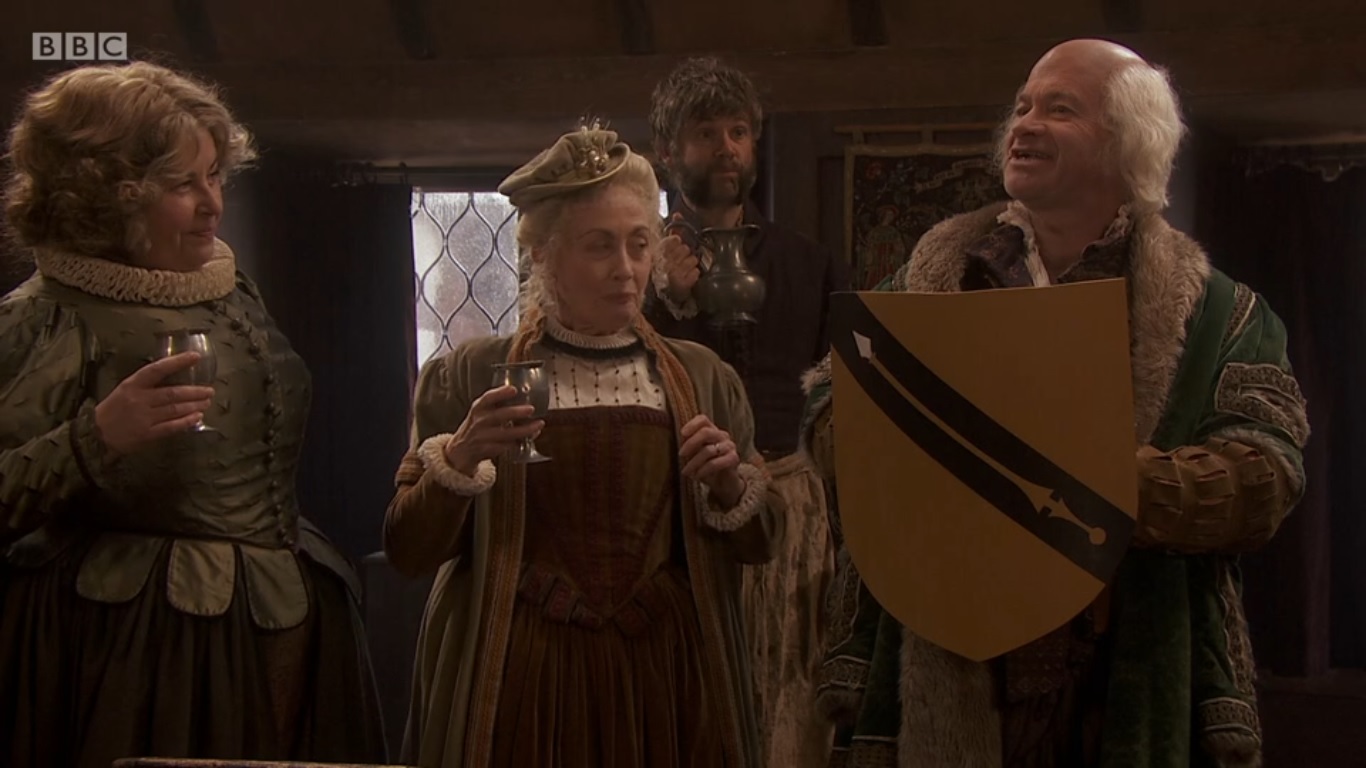
An example of this effect in fiction is the BBC sitcom Ghosts, whose second season was released on 21st September, having been filmed in January and February. Episode 2 has an eerily subplot about how one of the medieval peasant ghosts returned from a holiday outside his village and accidentally gave all of his neighbours the plague, which was originally planned to be much more graphic. This season also includes a Christmas special (released on 23rd December) in which, once again, there is no acknowledgement of the pandemic.

It would be pertinent to ask whether this really matters: current-affairs programming such as Have I Got News For You? or Mock the Week need to be filmed at short-notice, but non-topical material can be stored for any time without the quality being affected. I would say that it does matter at least a little, for all works are a product of their times even if that is not their intention – each new entry being on some level a reaction to what existed before. The longer in advance a program is made, the more those in it must hedge their bets with respect to topical references, social commentary or even acknowledgement of personal circumstances, with the result that a product which should feel fresh and contemporary is instead rendered oddly generic and distant. Furthermore a game show of any kind relies on the audience being invested in the competition while a fictional piece often strives for hype regarding story arcs and major plot developments, but the tension is inevitably dulled if it is obvious that the events on-screen are all in the past.

This year, of course, adds another dimension to this problem. When the general public have spent nine months largely stuck at home, deprived of social interaction and encased in protective clothing, it can be quite jarring – perhaps even a little cruel – to see people on television apparently carrying on as if nothing has happened. Charlie Brooker in his Antiviral Wipe said “many shows which would normally seem cozy and harmless suddenly look freakishly irresponsible” and many online discussions of recent media have comments to the effect that it was like staring into a parallel universe.

*UK Maternity leave is mandatory for two weeks and then optional for up to fifty more. Riley giving birth on 15th December means, that there would only be three remaining days in the year 2019 in which she could have returned to film the special, one of them a Sunday and another New Year’s Eve. It doesn’t seem very likely.

**This paragraph solely concerns Thomas & Friends on television. The Railway Series in print does not have these problems.

UPDATE (January 2021)

Another season of Cats Countdown has been launched. The end card still says MMXIX and Riley is still not pregnant so presumably this was filmed around the same time as the recent special. One wonders just how many advance episodes they could have banked in 2019 – especially given that the previous season already appeared heavily padded.

UPDATE (May 2021)

The Unlucky Tug has made a video attempting to construct a diagetic timeline for the CG section of Thomas & Friends, with particular reference to the implausibility of a middle-aged Queen Elizabeth appearing with a prepubescent Prince Charles. He also notes, as I neglected, that The Royal Engine, the last of season 24 to be produced (though Thomas’s Animal Friends was the last released) is effectively the finale of this section of the franchise, which will be completely rebooted as All Engines Go! this October.

UPDATE (September 2021)

I’ve seen it stated online (though only in some obscure and dubious-looking sources) that the ‘Cats Does Countdown Christmas Special for 2021 was recorded on either 26th June or 2nd July. Sean Lock was still alive at that time but he is not said to appear in the episode.

The New Spitting Image

I was born a year and a half too late to see the original Spitting Image when it aired on television. My first encounter with the series was, if I recall correctly, in late 2013 when I discovered clips from it on YouTube (a great many of which have recently been purged). Occasionally a clip show would include snippets of it, or there would be a nostalgic documentary, but watching the series properly was unfeasible.

Over my lifetime there have been a few attempts to provide a spiritual successor, but none had the staying power – or indeed the cultural weight – of the original. 2DTV (2001-2004) with its crude animation, was eventually cancelled due to low viewing figures. Headcases (2008) ran for just eight episodes. Newzoids, which used physical puppets with CG faces, appeared in advance of the 2015 general election and returned for a second series in late 2016, but then unceremoniously faded away.

Just over a year ago news broke that Spitting Image itself would be returning. Three weeks ago, it finally did. However, as before, I haven’t actually seen it. As with so many new productions, the creators have opted to bypass standard television and go directly to a streaming service. In this instance, the satirical puppet show will be the first original commission on BritBox, which was set up in 2017. It seems that Spitting Image is intended to be the “flagship” of the service which will tempt new viewers aboard. From what I have seen on various forums, there is some skepticism of this approach, with many expressing fatigue at having to juggle so many online subscriptions to get what they previously would have done from broadcast television.

The upshot of all this is that, as with the classic series, I must rely on the clips that are steadily dribbled out on the series’ YouTube channel. I had mixed views about the first few clips – while the visual design was on form, many of the vocal impressions felt lackluster and forgettable, with the action and dialogue not quite having the energy of the original. Still, it was nice to see a few nods to the older series, such as the giant portrait of Margaret Thatcher, Priti Patel reprising Edwina Currie’s role vampire portrayal, or Mike Pence copying John Major’s grey face aesthetic.

Many question now whether political satire is even possible nowadays, when public figures are rarely granted any dignity in the first place and various sectors of society are so offense-prone that any seriously biting comedy is liable to be swiftly shut down. We will have to wait and see whether this franchise is able to weather that storm. Already there is one instance of a sketch being withdrawn – whereas the original dropped a parody of “Tomorrow Belongs To Me” from its 1987 election special, the new one has quickly removed a Supercalifragilisticexpialidocious parody about Jacinda Ardern because the sketch ended with her decapitating a COVID patient, shortly before a real beheading took place in France. A similar incident befell the Doctor Who episode Robot of Sherwood due to the murders of James Foley and Steven Sotloff.

Can the new Spitting Image succeed? Only time will tell.


Visual Details in the BBC’s Roadkill

This slideshow requires JavaScript.

Recently I watched the new BBC drama series Roadkill, starring Hugh Laurie as ambitious but morally-unsound cabinet minister Peter Laurence. Many have wondered how it would be possible to set political fiction in the 2016-2020 era without Brexit, Trump and now Coronavirus (although this series was filmed a little to early to know of that last one) completely dominating every character’s every thought, or indeed without those certain real names and faces with whom such events are so intimately intertwined. This series has the innovative solution of moving an unspecified time into the future, by which point these issues have supposedly been resolved and everything is back to normal. That alone would surely make it a utopian invention, but the purpose of this post is not to review the series on a dramatic basis. Instead, I wish to draw attention to the ways in which government location and insignia – including the royal arms – are depicted in television.

Television program-makers have to tread very carefully when depicting real life brand names, trademarks, uniforms or other insignia. This often leads to them creating slightly off-model versions for their fictional purposes, in the hope that the result will be different enough to avoid legal liability but similar enough for viewers to understand.

In Roadkill there are multiple shots in this miniseries of the grand staircase at 10 Downing Street, with its display of the portraits of former prime ministers. Exactly when the political history of this work diverges from real life is unknown, but the most recent leader seen on the stairs is Margaret Thatcher (whose premiership is likewise something of a fixed point in time). Comparisons to virtual tours of the real staircase (both taken during Cameron’s tenure) reveal that the portraits on set were from different photographs. They are also quite literally larger than life, as the real portraits from Baldwin onwards are seen to be rather diminutive within their frames.

Laurence begins the episode as Minister of Transport, and there is a shot of him pulling up outside his headquarters, with “Ministry of Transport” on plaques either side of the main entrance. In real life Britain last had an organisation by that name in 1970. Since 2002 it has been called the Department for Transport, though the initialism MOT is still used for vehicle safety tests. Later in the episode Laurence is moved to Justice. In his meeting with the Prime Minister she refers to “the Ministry of Justice” which is what it has been called in real life since 2007, yet later when we see our protagonist at his new desk his screensaver says “Department of Justice” instead. For the rest of the series he is called “Minister” rather than “Secretary of State” and there is no mention of him holding the office of Lord Chancellor. What’s striking about these examples is the subtlety of the change – the typeface doesn’t look any different, nor does the coat of arms, only the arrangement of the arms to the left of the text instead of above.

The current template for government letterheads debuted in 2012, alongside the rolling out of GOV.UK, in a drive to rationalise the costly and confusing sprawl of departmental websites and logos which had emerged over the past twenty years. Prior to that there was no consistency in branding – while some departments did use the royal arms, others just put their names in stylised lettering, or had some other unrelated imagery. While this looked rather poor for the real life institutions, it probably made things easier for creators of political fiction, who could plausibly make up just about any title design for their invented offices without having to carefully alter the official insignia. The DoSAC logo as used in The Thick of It, for example, is perfectly believable as part of the Whitehall lineup of that period.

A long time ago there was a Doctor Who episode called The Aliens of London, in which much of the action takes place at Number 10. There was an attempt at recreating the grand staircase – in this version the helical staircase ascends anticlockwise and the walls are red, with the portraits few and far between. A coat of arms can be seen printed on the window, but too distant for much clarity. A later scene shows a conference room in which the royal arms appear on a backlit screen. The crown, motto, garter circlet and shield are correct (albeit the tinctures are changed), but the supporters are swapped around so that the unicorn stands to the dexter of the shield and the lion to the sinister – as if in the Scottish version. The lion is chained this time while the unicorn wears the crown of Scotland. The unicorn is still gorged with a circlet at the neck.

This slideshow requires JavaScript.

I also have a distant recollection of a scene in Torchwood series 3 or 4 in which a much worse state emblem is seen – the supporters and motto of the royal arms but the shield just shown the Parliamentary portcullis badge. Unfortunately I haven’t been able to track down a screencap in order to check.

The Lockdown Specials

One of the more interesting phenomena to emerge since the start of the pandemic has been the proliferation of makeshift online productions by those who previously would have been on mainstream television. The gap between amateur and professional has been noticeable diminished as a result of the virus, as actors and presenters have been deprived of their studious, props and make-up artists.

Only this year did I discover the radio sitcom Cabin Pressure. In March the writer John Finnemore launched the online video shorts entitled Cabin Fever. In April David Walliams and Matt Lucas performed a Little Britain compilation with improvised costumes. This was warmly received despite the main show having ended thirteen years ago and despite an ongoing controversy about some of its content. On the same night Dawn French released a “Parish Update” based on The Vicar of Dibley.

Especially notable about these online substitutes is the extent to which their creators are open to public contributions for ideas. Earlier examples included Jimmy Carr’s Little Tiny Quiz of the Lockdown. After a while he began asking viewers to suggest questions. I sent in a whole slideshow’s worth, but got no acknowledgement. The latest one – actually three months ago but I only just found it – was on the Sid City channel, a fan channel for actor Alexander Siddig. He played Lt. Dr. Julian Bashir on Star Trek: Deep Space Nine from 1993 to 1999. Although the series ended twenty-one years ago the fanbase goes strong. Fans writing their own stories about characters from their favoured franchise is hardly uncommon, but convincing the cast themselves to perform it is vanishingly rare. The circumstances obviously prohibit the cast from physically interacting, so the stories are formatted as futuristic epistolary novels in which the characters interact through video link. The premise of Alone Together is very topical, of course, being that Cardassia has been closed off due to the spread of a disease – though this one attacks its victims’ thought processes rather than their respiration. A later story, Curse from the Prophets, is even more on-point in its commentary about immigration.

It will be interesting to see which franchise is next to have this treatment – perhaps The Thick of It, as virtual conferences are now so dominant in real-life politics, although Iannucci has said that his satire is redundant now, and how many of the main cast in 2012 would have survived to 2020 is far from certain.

A Princely Gift

I suppose there are worse things he could be wearing.

A few days ago I discovered the YouTube channel Documentary Base, whose content is what you’d expect. What particularly caught my interest was the series Crown and Country. The Prince Edward writes and presents a historical tour of England’s royal landmarks, one of many documentaries put out by his ill-fated Ardent Productions. This programme is about the same age as I, and now so obscure that its IMDB page looks to be mostly guesswork.

As far as I can decipher there were three series (in the years 1996, 1998 and 2000 – the former typed in the credits as such while the latter two are rendered as MCMXCVIII and MM). The YouTube playlist does not have them in broadcast order – and I think it may even mislabel a few of them, which makes it a little confusing. Series 1 and 2 are differentiated by swapping some of the clips in the opening title sequence montage. Series 3 switches from 4:3 to 16:9, and the title sequence is crudely cropped. The first two series credit the presenter as “Edward Windsor”, the third as “Edward Wessex”.

Technical details aside, the programme is pervaded by an otherworldly quaintness. As with so many films of this type it seems to be designed for international syndication rather than domestic broadcast, and while many specific events and locations are discussed the production itself is curiously timeless. It bulges with luxuriant panning shots of rolling countryside, weathered stone and ornately carved wood panels. The overall tone puts me in mind of Mitchell & Webb’s Sunday afternoon relaxation DVD. There are other curiosities, too, such as the title music which occasionally sounds like the middle eight of the Doctor Who theme.

The parts most interesting to me, as a blogger on heraldry, were the visits to the College of Arms and St George’s Chapel, neither of which get as much screen time as I would like.

In more recent news, the Prince of Wales has launched RE:TV, a channel (or platform, it’s not entirely clear) centered around his environmental projects. I also found this virtual interior tour of Buckingham Palace by interior design blogger Ashley Hicks.

Scrapped

There are two ways of doing things – the Great Wikipedian Way or the wrong way.

On Thursday I rolled past 12,000 edits to the English Wikipedia, allowing me to upgrade to the rank of Veteran Editor II or Grand Tutnum. This feat, especially during the last few months, was helped by the appointment of the new life peers: Their pages all needed updating to reflect their new identities, and even in some cases moving to new names as well as creating redirects and expanding various lists. I also embarked on a project to add succession boxes to all existing life peers – well, the males at least – showing their place in the order of precedence. So far the contributions I have described still stand, and are likely to do so for the foreseeable future. Others are not so lucky.

Early in 2018 I came looked across the numerous articles relating to The Railway Series and its television adaptation Thomas & Friends. In particular I noticed that the images used to illustrate character pages, especially the secondary characters, had been uploaded about a decade ago and were of rather poor quality – low resolution and harshly cropped. I set about replacing them with higher-clarity screenshots from videos I found online. I did this for Annie & Clarabel (both in one picture), Bertie, Diesel, Duck, Harold, Oliver, Peter Sam, Rheneas, Rusty, Salty, Sir Handel, Sir Topham Hatt, Terence and Trevor. Now, thirteen of those fourteen are gone.

This summer I noticed a string of alerts on my Talk page saying that my images were no longer being used in any articles and so would soon be deleted (because, as screenshots of a copyrighted TV series, they could only be uploaded under fair use, not Creative Commons). My first thought was that a different editor had uploaded images of their own to displace mine, or even that they had meanly decided any illustration would be too extravagant. Instead I discovered that the articles themselves were being deleted. Editors more powerful than I have determined that these pages were mere fancruft, and therefore unworthy of inclusion. At the time of writing only the “Steam Team”, Donald & Douglas and The Fat Controller above the waterline, with enough citations from outside the franchise itself to keep them on – though even these often sport multiple error boxes and tags for improvement. The secondary characters have been relegated to brief snippets in list articles. These lists themselves are being eyed up for deletion (in the words of one editor ” Combining two or more bad articles still produces a bad article that needs to be deleted in the end.“), so they may end up disappearing altogether. It should be noted that articles about the series itself outside of the fourth wall – whether in print or on television – are not threatened, rather it is the diegetic detail that tends to be in the crosshairs.

Some series fare better than others at this – the Doctor Who, Harry Potter, Star Trek and Star Wars franchises among others have hundreds upon hundreds of pages about characters, locations and species which do not seem to be in any immediate danger of purging. Tolkien’s Legendarium, of course, has been subject to plenty of discussion by formal academic publications and other secondary sources to solidify its presence. These franchises (along with many other detailed specific topics) also have their own independent wikis (often at fandom.com, formerly wikia.com) which can be tailored to focus on them individually and not limited by conformity to the standards of the vast Wikipedia project. In the case of Awdrey’s work, the community is rather small and has been barely active for a long time. The majority of the dedicated article-builders decided it was a more productive strategy to give up the main line and plough all of their efforts into the branch.

This is not the only area where such attitudes are encountered. Moving closer to my usual areas of interest, Wikipedia has a large number articles about royal pretenders – i.e. members of deposed dynasties. A few years ago the majority of these articles had the same formatting and templates as did those of still-enthroned royals, and even described subjects by the titles and styles they would enjoy under their respective monarchies. The talk pages of these articles often sported angry outbursts by those who deemed the prince-pretenders non-notable, or at least insisted that their “real” names should be used instead of their traditional titles (thought that itself would be a matter of some difficulty, as members of these families often have presences in multiple countries, and different countries afford differing levels of recognition to these people’s titles, such that they have different legal identities depending on location). Recently I have noticed that several of these articles have undergone significant revisions to decrease the level of perceived fluff around their styles and honours.

Sometimes this has affected things that I have personally created. Two years ago I made a navbox for the husbands of British suo jure princesses, seeing as we already had ones for the princesses themselves, the princes, and their wives (and equivalents for other countries of course). The template was swiftly deleted. I also spent a great deal of time putting together a navbox for all of Britain’s then-living life peers, in the style of those on the pages of their hereditary counterparts. That too was canned almost immediately.

I will not go into the wider issue of inclusionism and deletionism. My intention here is simply to highlight how easy it is for a person – or even many people – to dedicate a great deal of time and effort to a cause which is ultimately defeated, and its fruits at a whim obliterated, such that all their toil has been for nothing. This is a fact of life that long predates Wikipedia, and will likely never be escaped.


And On That Note

In something of a diversion from the topics normally covered on this blog, I have published online a series of amateur musical pieces that I made some years back using MuseScore, an open-source composition platform. They can be found here.

There is no particular theme to all of these, nor were they created for any particular purpose – save passing time. The most I have ever gotten out of them so far is as the backing track for my Homework Direct introductory video. Should they arouse any interest I might consider licensing them for fees, but that seems unlikely.

Heraldry in Upstart Crow

Ben Elton’s BBC sitcom Upstart Crow, covering the life of William Shakespeare (David Mitchell), contains some interesting heraldic treasures. A subplot of the series involves the playwright’s attempt to elevate himself to the gentry with the acquisition of a grant of arms. Robert Greene (Mark Heap), Master of the Revels, seeks to deny him this, viewing the Shakespeares as of insufficiently high birth.

Success comes in the third season, Elizabeth I allegedly having been so impressed by Shakespeare’s latest play that she decreed “Only the son of a gentleman could have writ such wit!” and thus elevated the bard’s father accordingly.

There are other armorial treats, though also causes for confusion: At the theatre where Shakespeare and his troupe are seen rehearsing, there is a large cloth of the royal arms at the time – quarterly France & England – hanging in the background. There appear to be multiple versions of this prop used. On some occasions the arms are depicted in the correct tinctures, on others the field colours are swapped so that the fleur de lis are on gules and the lions on azure. There are other curiosities in that same set, for on either side are other shields which also get swapped out at various points. On the right, in seasons 1 and 2, is a shield resembling that of the Dauphin of France, though again with the background tinctures changed, while those appearing on the left are not those I can identify.

The Queen herself (Emma Thompson) appears at Hampton Court Palace in the 2017 special A Christmas Crow. Behind her is a large, colourful relief of the modern-day royal arms, showing quarterings for Scotland and Ireland but not for France, and featuring a unicorn argent as the sinister supporter. These elements would not be brought together until the union of the crowns, which of course occurred at Elizabeth’s death. The specific iteration shown in this episode, with the motto scroll floating in the air, would belong to the reigns of Victoria, Edward VII, George V, Edward VIII and George VI.

NOTABLE CLIPS

FURTHER READING

Train Breeds Musical Geniuses

An interesting – if perhaps slightly hyperbolic – video by classical and film music enthusiast Inside the Score, whose works include an appreciative analysis of the score for The Lord of the Rings and a scathing one for Harry Potter.

This short piece posits that the musical complexity of the music from Series 1-7 of Thomas the Tank Engine & Friends – unusual for children’s programming – formed the inspiration for the most talented musicians of the generation watching it.

Co-composer Mike O’Donnell has his own channel, and there are quite a few channels dedicated to the classic series’ music alone, to say nothing of the hundreds pumping out the fanfics:

UPDATE (June 2021)

Mike O’Donnell has given a two-part interview to a fan channel about his work on the series and his new CD releases.

UPDATE (July 2022)

Charles Cornell, another musical YouTuber, has also done an appraisal of the theme.

Rails Go Ever Ever On

Illustration of “Edward’s Day Out” by William Middleton

The Reverend Wilbert Vere Awdry’s The Three Railway Engines, first instalment in what would become the world famous Railway Series, was originally published seventy-five years before today. After his death, the franchise he created was carried on by his son Christopher. That can, of course, be said of another great English writer, though sadly his Christopher’s own demise came earlier this year. Present circumstances impede me from coming up with a more comprehensive tribute, but perhaps this could be the basis for a joint effort between Clamavi de Profundis and The Tuggster Intensifies one day:

Rails go ever ever on,
Over rock and under tree.
By tunnels where no sun has shone,
Canals that never find the sea;
Ploughed through snow by winter sown,
And past the merry flowers of June,
Over sleepers lain on stone,
And viaducts o’er valleys hewn.

Rails go ever ever on,
Under cloud and under star.
Yet wheels that thundering have gone
Roll at last to home afar.
Eyes that fire and smoke have seen,
And horror in the smelter’s place
Look at last on buffer clean,
In cosy sheds they longed to face.

The track goes ever on and on
Down from the door where it began.
Now far ahead the line has gone,
And I must follow, if I can,
Pursuing it with weary wheels,
Until it joins some larger way,
Where many points and switches meet.
And whither then? I cannot say.

The track goes ever on and on
Out from the yard where it began.
Now far ahead the line has gone.
Let others follow, if they can!
Let them a journey new begin.
But I at last with pistons worn
To silent sidings will crawl in,
To down for night and sleep ’till dawn.

Still ’round the next bend there may wait
A new branch or secret gate;
And though I long have roamed this isle,
I never could lose cause to smile
Upon the realm my line does span
West of Barrow, East of Mann.

Adapted from The Road Goes Ever On by J. R. R. Tolkien, circa 1937.

UPDATE (22nd October)

Search engine results show that at least one other has thought of this connection before I did – EndlessWire94 on DeviantArt.