In Honour of the Occasion

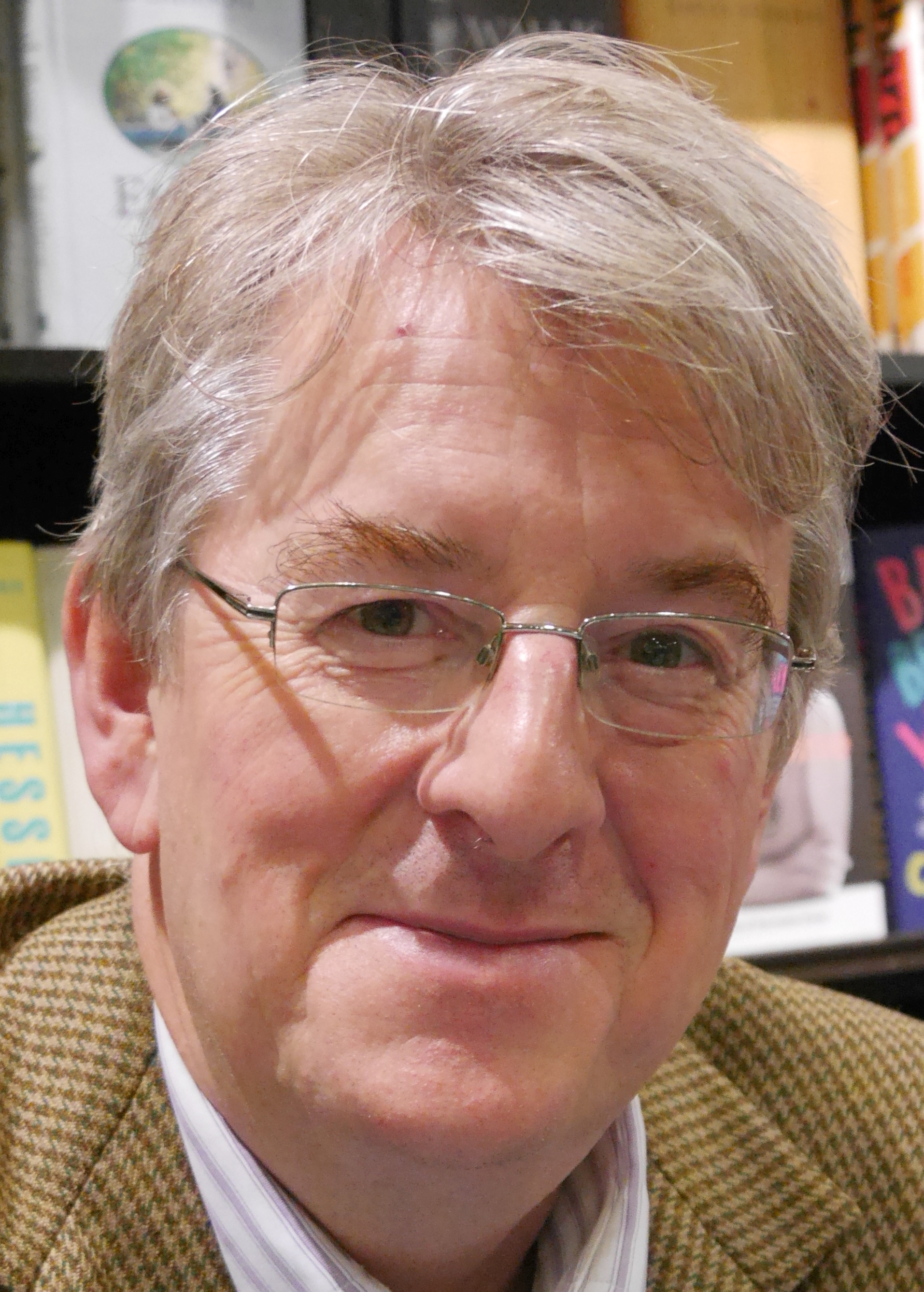
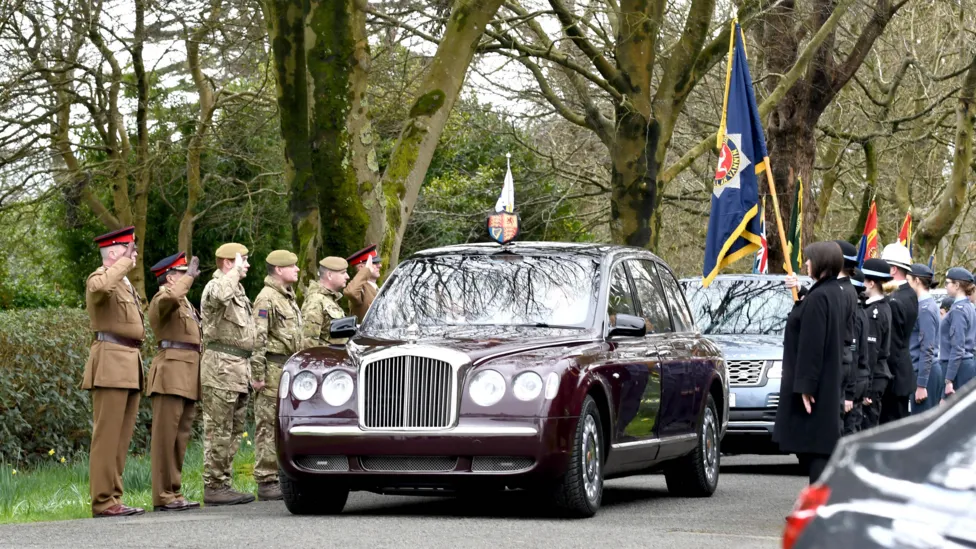
Photograph by sbclick, 2011 (CC-BY-1.0)

In theory the monarch can bestow practically any accolade on any person at any time and for any reason. In practice, since the late Victorian age there has been a trend towards grouping announcements into two big lists each year – one in June for the sovereign’s official birthday, one in December for the upcoming new year. There are also smaller lists issued at irregular intervals to commemorate particular events e.g. the deaths of senior royals, the dissolutions of parliaments and the resignations of prime ministers. The latter two types tend to be particularly controversial.

Wikipedians have generally maintained pages for all of the lists, great and small. They  have also created an annual page called “Special Honours”, which they use as a catch-all term for those titles and decorations which were issued outside of any named occasion.

Today’s announcement is a little confusing for those seeking categorisation – the Prime Minister’s office has released a list of honours and appointments for March 2024. The document as a whole does not have any particular name, but paragraphs within it do: Creative Industries Honours, Technology & Artificial Intelligence Honours, and Political Honours. The former has provoked the most recognition, appointing film producer Emma Thomas as a DBE and her husband Christopher Nolan (already a CBE since 2019) as a knight bachelor. There is also a short list new privy counsellors (e.g. Vaughan Gething, recently appointed as First Minister of Wales), though whether these count as honours in the way knighthoods do is debatable.

This new publication comes just forty-eight days after the list of “Political Peerages” (e.g. yet more new members of the House of Lords). It eludes me why today’s list was not brought forward to be merged with that one, or pushed back to fold in with the Birthday Honours in June. The only likely explanation is that these were Rishi Sunak’s personal picks and he (or His Majesty) wanted that distinction made clear in the public mind. Of course, that could also have been achieved by waiting for the looming dissolution honours at this year’s general election – or indeed Sunak’s resignation honours, which may well come earlier!

Edward gets the Thistle

The Prince Edward seems to have made a habit of collecting new titles on his birthdays. For the occasion of his wedding in 1999 he was ennobled as Earl of Wessex and Viscount Severn. These both refer to places in England, in contrast with the normal convention for royal peerages. On his fifty-fifth birthday he gained a surprise Scottish title – Earl of Forfar – and then for his fifty-ninth he gained another, long-awaited and far more prestigious one – Duke of Edinburgh. Now that his primary title refers to a Scottish place – and the capital at that – it would seem a little strange for him not to join Scotland’s highest order of chivalry.

It was not exactly surprising, then, to learn that on his sixtieth birthday he had been appointed an Extra Knight of the Order of the Thistle. In this category he joins his nephew the Duke of Rothesay and his sisters the Queen and the Princess Royal. We can expect that soon his banner of arms will be hung alongside theirs at the High Kirk in his namesake city.

The King also announced three new appointments among the ordinary membership of the order – the Baroness Black of Strome, the Baroness Kennedy of The Shaws and Sir Godfrey “Geoff” Palmer – all of whom, curiously, have academic careers. This brings the order up to its full complement of sixteen members (excluding royals). It is unusual for all the appointments to be made today as traditionally they are announced on 18th June.

Finally, a concurrent press release confirmed that the duke had been appointed to a second term as Lord High Commissioner to the General Assembly of the Church of Scotland, a post which he last held in 2014-15. In the Scottish order of precedence he will rank immediately below the sovereign himself, rather than his natural precedence as a brother thereof.

Awdry Arms Again

Back in November I discovered the coat of arms of Sir John Wither Awdry, paternal grandfather of children’s author Wilbert Vere Awdry. The illustration was based on a blazon found in Burke’s Landed Gentry, 1862.

Page 39 of that book gives the shield Argent three cinquefoils Or on a bend Azure cotised of the same and crest out of a ducal coronet a lion’s head Azure for AWDRY OF SEEND.

The next entry is AWDRY OF NOTTON, and it is this one which includes Sir John. For the arms and crest of this branch, Burke merely says “same as AWDRY, of Seend”.

Today I have found the family referenced in the Burke’s Landed Gentry 1921. Page 53 of this book gives a slightly different blazon – shield Argent on a bend Azure cottised Sable between two crescents of the second a crescent between two cinquefoils Or and crest on a wreath of the colours in front of a lion’s head erased Azure gorged with a collar gemel Argent a cinquefoil between two crescents fesseways Or. Curiously the entry for Awdry of Seend in this edition gives no armorial details at all. Wilbert was ten years old when this version came out, and his date of birth is given in his father’s paragraph but no other detail about him personally is included.

The Awdrys are also mentioned at least twice by Arthur Charles Fox-Davies in his Armorial Families series. Page 51 of the 1895 book gives entries for multiple Awdry men, each time with the same information about Sir John’s arms – shield Argent on a bend cottised Azure three cinquefoils Or a crescent of the second for difference and crest out of a ducal coronet Or a lion’s head Azure. He also takes care to note that these are armorial bearings as used, and as quoted in Burke’s “Landed Gentry”, but for which no authority has been established. These comply with the blazon as I first encountered it, except that the crescent for difference was not originally there. The crescent, of course, is the traditional English mark of cadency for an armiger’s second son. I find it a little odd that Fox-Davies types the exact same information out for each of Sir John’s many sons whom he records, but does not say if any of them added extra cadency marks for their own position in the family tree. Pages 55 and 56 of the 1910 book gives the exact same blazon as Burke’s 1921.

For now I will accept the later version as the correct one and I have modified my illustration accordingly. Pending further research, I would speculate that the Awdrys of Seend are the senior branch of the family with the relatively simple arms while the Awdrys of Notton are the long-established offshoot with permanent (although inconsistently recorded) augmentations.

FURTHER VIEWING

Notes on the Memorial of Constantine II at Windsor

People of prominence often find that one period of mourning is not enough. For many of high status there will be the funeral itself within weeks of their death and then a separate, less formal, memorial service as much as a year later. Prince Philip had one of these in 2022, as did Lady Boothroyd last month.

Constantine II, King of the Hellenes 1964-73, died on 10 January 2023 and his funeral was held in Athens six days later. Yesterday a thanksgiving service took place at St George’s Chapel, Windsor, hosted and attended by the British royals.

Although it was a British-hosted event, only the Greek family’s website seems to list the order of service or any photographs. The order of service is has the late monarch’s arms illustrated on the first cover and those of the Order of the Garter on the last. This time the illustration is not that by Sodacan for Wikimedia Commons. I cannot identify the artist for this one, nor which typeface was used for the prose.

Most intriguing about the online material is that it highlights the contribution of the Lord Soames of Fletching. There is even a link to his website, which is still up even though it clearly hasn’t been updated since the most recent general election.

The Audley Beast with David Phillips

Thomas’s daughter Margaret, painted in 1562, with the beast in the background.

After a long-ish break – the January lecture failing due to technical glitches – I returned to the Oxford University Heraldry Society for a lecture about the Tudor era nobleman Thomas Audley, 1st Baron Audley of Walden, and the mysterious animal that features as his heraldic supporter.


At the end of the lecture I asked a question that had been intriguing me for a while – why, in the early Tudor period, was there such an explosion of historically-prominent senior officials with the first name Thomas?

Phillips gave the answer that, prior to the reformation, Thomas Becket was one of England’s most venerated saints and so of course a high proportion named their sons after him. That just left me with the new question of why there weren’t so many Thomases in high office between Henry II and Henry VII’s reigns, but I didn’t get time to ask that one.


On an unrelated note, today marks the tenth anniversary of my registration as a Wikipedia editor. In terms of edit count rankings, I have climbed to number 5452. There was no grand celebration – not even an automated reminder – but I did discover a Ten Year Society to join, albeit one with little activity thus far.

The King’s Accession: Fast and Slow

The royal journalist Robert Hardman recently released his latest publication Charles III. New King. New Court. The Inside Story, which covers the end of the previous reign and the beginning of this one. Confusingly the same book seems to have been published under at least three titles: I’m also seeing it called Charles III: The Making of a Modern Monarch and The Making of a King: Charles III and the Modern Monarchy.

Reading the whole thing will obviously take some time, but I have managed to get through the first few pages, including those covering the decease of Elizabeth II. I was particularly fascinated by this passage:

…for visibility, Prince Charles was raised on his mother’s mantra that ‘I have to be seen to be believed’. Immediately after her death, it became clear that he would abide by this. Duties and conventions which might have been spread over many months at the start of the previous reign kicked in almost immediately. His first broadcast as monarch was recorded within twenty-four hours (Elizabeth II’s first broadcast, which was by radio, came ten and a half months into her reign). There would be visits to all the home nations within days. Court mourning, which continued for two and a half months after the state funeral of George VI, would end precisely one week after that of Elizabeth II. In less than three weeks, the King’s cypher, ‘CIIIR’ (Charles III Rex), was ready and released for immediate use on post boxes, military uniforms and official documents. It had taken more than five months before the design for ‘EIIR’ was approved in 1952. Investitures were up and running again within the month.

Of course, this is still slower than I would have liked, especially in heraldic, numismatic and vexillological matters: Sixteen months into the present reign, there is still uncertainty about the arms of The Queen and the Prince & Princess of Wales (especially in Scotland), as well as His Majesty’s personal banners in most other Commonwealth Realms. Though in almost all cases it is trivial to predict what they ought to look like, there are few in which I am certain that such designs have actually been granted. In addition, I am still yet to personally encounter any coinage or banknote bearing the current monarch’s face.

The slowness in updating online profiles is particularly baffling, given that it requires no physical material to be changed. This month there has been a hint of movement by His Majesty’s Revenue & Customs, whose Twitter icon now shows the Tudor crown, although the logo on the website itself still uses the St Edward version. The cover images for recent policy posts show both versions in use, suggesting that the filtering through of the new design is still ongoing.

UPDATE (19th February)

The crown logo is now updated across government websites.

A Patten Emerges


On St George’s Day last year His Majesty appointed two new companions of the Order of the Garter – Lady Ashton of Upholland and Lord Patten of Barnes. Obviously that would mean their banners of arms would at some point be erected at St George’s Chapel in Windsor Castle. At the time it was not public knowledge what their lordships’ arms actually were, if indeed they had any, and given how long it was taking to find out about Blair and Amos I was not optimistic of learning any time soon.

Today they were revealed by Major Alastair Bruce of Crionaich via what used to be called a Tweet. He shows photographs of two banners of arms along with an excerpt from an online article, which I will quote below:

Baroness Ashton served in the Ministry of Justice and later as the EU’s first High Representative for Foreign Affairs and Security policy. She contributed towards negotiating a peace settlement between Serbia and Kosovo. Red roses reflect the fact that Upholland, which forms part of Baroness Ashton’s title, is in Lancashire.

On Lord Patten’s banner the pearls allude to the crest of Hong Kong where he was Governor from 1992 to 1997. The blue field and crowns replicate the arms of Oxford University where Lord Patten has been Chancellor since 2003.

It is not clear precisely where Bruce found this information, as the message includes the web address of St George’s Chapel but does not specify an exact page. I have looked through the site to find a recent update about Patten and Ashton but found nothing. I hope this will be resolved soon.

As for the heraldic designs themselves: Patten’s arms are perfectly dignified if a little unoriginal. Having the shield resemble that of his university could make for a confusing sight should he try to impale them. Ashton’s banner is an overloaded mess redolent of the worst excesses of the early nineteenth century.

That the reveal of these arms took only nine months instead of eighteen is a positive sign. I hope that future grants of arms will become public even faster.

UPDATE (15th January)

Baz Manning informs me that the images and quoted text are from The Dragon, the community newsletter of St George’s Chapel.

Found in the Booth

For the past few years I have kept a keen eye on the blog Heraldry Online by Stephen Plowman. Most of the heraldry community learn of grants of arms by updates on relevant authorities websites, or by the accounts given in volumes of Debrett’s. Plowman, however, posts a regular stream of photographs of the actual letters patent by which the arms were granted, spotting the historic documents as they come up for auction (typically after the actual line of armorial inheritance has gone extinct). Today he has posted one particularly important to me – the late Baroness Boothroyd.

I have written many times before about my history with her arms, but it is nice to see the definitive article at last. The text of the blazon is the same as in Debrett’s, but we now know the date of granting (8th October 1993) and the herald responsible (Conrad Swan).

Back in the Library

The arms of Lord Loomba, drawn by Cakelot1

After more than two years of waiting, this month I finally found the opportunity to go into the reference floor of Hull Central Library, where there sit a few physical volumes of Burke’s and Debrett’s Peerage. My particular quarry was the 2015 edition. I have, of course, already perused the Google Books sample of Debrett’s 2019, but there were a great number of pages omitted from that (the 2015 edition has no sample at all), and indeed there were some peerages which had become extinct before the writing of the 2019 edition so did not feature in it.

Over two long sessions of careful copying out, for which I prepared by compiling a list of peers of the time whose ensigns armorial I did not already have on record, I have been able to update Wikipedia with thirty-three new blazons, which were:

I have already illustrated some of these by myself, but I also gave the list to the relevant WikiProject community for the benefit of our other artists, some of whom have already enriched these peers’ pages with their own illustrations.

There were some interesting findings among them. Lord Deighton’s blazon includes three London 2012 Olympic torches Or enflamed Proper, which I assume must have been cleared with the International Olympic Committee for intellectual property reasons. Lord Forsyth has a square block of roughly dressed sandstone. Lord Ramsbotham takes the radical step of specifying that the tincture Vert should be the shade thereof being known as rifle green, against the heraldic convention that one shade of a colour is as good as any other.

This is my most significant haul of new material for quite some time. I must hope that my next discovery will not take even longer.

A Note on the Honours Given to Prime Ministers

Cameron’s ennoblement got me thinking about the general trend of honours given to former prime ministers. Combing through Wikipedia, I have produced a list of them. To keep it from becoming overly long (and to avoid ambiguities about who counts as a prime minister), I have restricted it to honours conferred after the end of Victoria’s reign.

Although their legal status is much the same, British orders of chivalry can be politically divided into two categories: The Baronetage, Knights Bachelor, the Orders of the Bath, St Michael & St George, the Companions of Honour and the British Empire are appointed on the advice of government ministers, while the Royal Victorian Order, the Order of the Hospital of St John of Jerusalem and the Order of Merit are conferred at the monarch’s personal whim. The Orders of the Garter and Thistle fell into the former category in the early eighteenth century but were changed to the latter in 1946. Peerages both life and hereditary are presumed to be in the former category.

Here is a simplified list of who received which kind of honour and when. Honours which a person held before ascending to the premiership are not included:

HONOURS IN THE MONARCH’S GIFT

Garter (post-’46)

  • Churchill in 1953 (while still prime minister, in advance of the coronation)
  • Attlee in 1956 (resigned as Labour leader the previous year)
  • Wilson in 1976 (three weeks after leaving office)
  • Callaghan in 1987 (three weeks before stepping down from the Commons)
  • Thatcher in 1995
  • Major in 2005
  • Blair in 2021 (New Year’s Eve)

Merit

  • Balfour in 1916
  • Lloyd George in 1919 (while still prime minister)
  • Churchill in 1946 (while opposition leader)
  • Attlee in 1951 (while opposition leader, ten days after premiership’s end)
  • Macmillan in 1976
  • Thatcher in 1990 (nine days after premiership’s end)

St John

  • Thatcher in 1991 (Dame of Justice)

HONOURS ON MINISTERS’ ADVICE

Garter (pre-’46)

  • Balfour in 1922 (backbench MP) (adv. Lloyd George)
  • Asquith in 1925 (adv. Baldwin)
  • Baldwin in 1937 (adv. Chamberlain) (immediately after resignation)

Companion of Honour

  • Attlee in 1945 (adv. Churchill) (shortly after resigning as Deputy PM)
  • Major in 1998 (adv. Blair)

Hereditary peerage

  • Balfour in 1922 (adv. Lloyd George)
  • Asquith in 1925 (adv. Baldwin)
  • Baldwin in 1937 (adv. Chamberlain)
  • Lloyd George in 1945 (adv. Churchill)
  • Attlee in 1955 (adv. Churchill)
  • Eden in 1961 (adv. Macmillan)
  • Macmillan in (adv. Thatcher)

Life peerage

  • Douglas-Home in 1974 (adv. Wilson)
  • Wilson in 1983 (adv. Thatcher) (dissolution honours)
  • Callaghan in 1987 (adv. Thatcher) (dissolution honours)
  • Thatcher in 1992 (adv. Major) (dissolution honours)
  • Cameron in 2023 (adv. Sunak)

It may also be worth considering honours given to the spouses of prime ministers, whether for achievements in their own right or by right of marriage.

  • Margaret Lloyd George: GBE in 1918 (adv. her husband)
  • Lucy Baldwin: GBE and DStJ in 1937 (former adv. Chamberlain)
  • Clementine Churchill: GBE in 1946 (adv. Attlee), life peer in 1965 (adv. Wilson)
  • Dorothy Macmillan: GBE in 1964 (adv. Douglas-Home)
  • Denis Thatcher: TD in 1982, baronet in 1990 (adv. Major), CStJ in 1991.
  • Norma Major: DBE in 1999 (adv. Blair)
  • Cherie Booth/Blair: CBE in 2013 (adv. Cameron)
  • Philip May: Knight bachelor in 2020 (adv. Johnson)

Unless I’ve missed any, no current or former prime minister (or their spouse) has, from 1901 onward, been appointed to the Order of the Bath, the Order of St Michael and St George, the Order of the Thistle or the Royal Victorian Order.