The Heraldry of Haiti

Malcolm Lobley’s lecture tonight for the Yorkshire Heraldry Society concerned the country which has long been a source of cult fascination among armory enthusiasts.

He began with a short history of how the country came to be – which was, by his own admission, a way of padding the event’s length.

Henry Christophe founded the Kingdom of Haiti in 1811. In addition to proclaiming himself as monarch, he established a native nobility on the European model consisting of four princes, eight dukes, twenty-two counts, thirty-seven barons and forty chevaliers. He assumed arms of dominion for his realm, and also created a heraldic authority to assign arms to his appointees.

Lobley noted that as in Britain there was a convention on helmet usage according to rank – nobles used a barred helmet, the most senior affrontee and the rest facing dexter. Some of the titles of the peers, based on contemporary local place names, sounded comical to English speakers, such as the Duc de la Marmelade and the Duc de Limonade. Lobley was especially drawn to the Duc de l’Anse, which he translated to “jug handle”. Hyenas were a common choice as supporters. The contents of the shield tended to a medieval degree of simplicity though incorporating more modern imagery, such as Baron de Beliard with his rake and watering can.

The lecture was also used as an opportunity to advertise the Armorial Général du Royaume d’Hayti, which the College of Arms has been trying to flog for more than a decade.

She Spoke to Serve

The late Baroness Boothroyd has fascinated me for as long as I have followed British politics, and hers was among the deaths I most dreaded.

Just last October, with my newly-registered library card, I took out her autobiography. There are eighty pages before she actually becomes an MP (and she goes into detail of her multiple failed attempts), describing her childhood in impoverished Dewsbury, then her time as a Tiller girl, then going into politics as a secretary to two Labour MPs, then going overseas to work for JFK. Even when she gets into parliament, her struggles are as within her own party as against the others – this being the age of entryism by Militant, which she was instrumental in rooting out.

Before the release of the 2018 parliamentary portrait series ,(and note that her image is the one used on the PDS blog) Boothroyd was one of the many prominent politicians for whom I struggled long to find a free photograph to use on Wikipedia. The only one on which I could lay my hands was a poor-quality screenshot from President Obama’s speech in Westminster Hall in 2011, published on the White House channel and thus public domain. The baroness is shown looking the wrong way, sandwiched awkwardly between George Osborne and Douglas Alexander. For the top (indeed, only) illustration in a prominent online biography it just wasn’t good enough.

The other big challenge was her coat of arms – one of my earliest such works. Unlike her successor Michael Martin, Boothroyd’s arms were widely photographed and shown online. Recreating the lozenge visually was easy enough, though it wasn’t until years later that I tracked down the text of the blazon to go with it. My first attempt was not well-received by the residents of r/heraldry, so it was one of the few of my graphics which I completely remade.

I never got to see how the community (or anyone else) viewed my second attempt, for within hours of her death being announced another user, ProfAuthor, had replaced it with his own vector graphic. It is technically superior, of course, but still it is disappointing to know that my own efforts are made redundant. Something similar happened with Sir Ernest Shackleton the last time he was in the news.

Stories in Scotland’s Skies by Philip Tibbets

Today’s virtual lecture took me back to the Heraldry Society of Scotland, where our speaker – the Lyon Court’s vexillologist – gave a fascinating talk about the history of flag culture in Scotland, and the process by which flags – heraldic or otherwise – come to be invented.

At least I think that was what happened. Unfortunately I cannot say for certain due to glaring technical problems. We virtual attendees did not actually see the inside of the venue, for the visual feed was only of the slideshow (and even that did not seem to be aligned properly with the speech), but we guessed that the microphone was positioned a great distance away from Mr Tibbetts’s mouth and much closer to an audience member with a recurrent cough. As a result only about half of the speaker’s syllables could be heard, which rendered most sentences unintelligible. Edward Mallinson made several attempts to resolve the sound problem but it made no difference. He even turned on the automated subtitles, but those are notoriously poor even when the sound is good. Before even thirty minutes into the planned ninety-minute event I and a few other Zoom-watchers had given up and logged out.

It was, to say the least, a grave disappointment.

Heralds-a-Heralding

Today and yesterday, Charles III was formally proclaimed as King across the world, following the meeting of his accession council. This is only the fourth accession in Britain since the invention of the television, and the first time that the council itself has been broadcast live. Indeed, to my knowledge the only other time that any meeting of the council in Britain has been recorded was for the 1993 documentary Days of Majesty, and even then only a small clip was shown. There was supposed to have been a meeting (probably done virtually) some days ago for the swearing in of Liz Truss’s new cabinet, but the fading of Queen Elizabeth’s health prevented it. When that session will eventually take place is unknown. We are in an odd situation where the new monarch is having his accession confirmed by a set of ministers whose own office-holding has not been fully confirmed either. The ceremony was something of a consolation prize for Penny Mordaunt, who lost the bid to become Prime Minister but was instead appointed Lord President. She took the lead role in the day’s proceedings. Once the proclamation had been approved and various oaths had been taken it was read out by David White, Garter King of Arms, on the palace’s balcony. Not long later it was repeated by Timothy Duke (Clarenceux) on the steps of the royal exchange. The next day it was read by Robert Noel (Norroy & Ulster) at Hillsborough Castle. Joseph Morrow (Lyon) read it at Mercat Cross, as did Morfudd Meredith (Lord Lieutenant of South Glamorgan) and Thomas Lloyd (Wales Herald) in Cardiff. The other proclamations made around the British Isles, and the Commonwealth, are far too numerous to list.

Times such as this are a rare opportunity (others being state openings and, next year, the coronation) to see officers of arms in their full finery. They will be very busy over the coming months.

It can be taken as read that, following his ascent to the throne, the undifferenced arms of the United Kingdom, and those of all his other realms and territories, now belong to His Majesty. The arms of his siblings, niblings and cousins have no reason to change from what they were before. The arms of his wife, sons, and daughters-in-law are all due for upgrades.

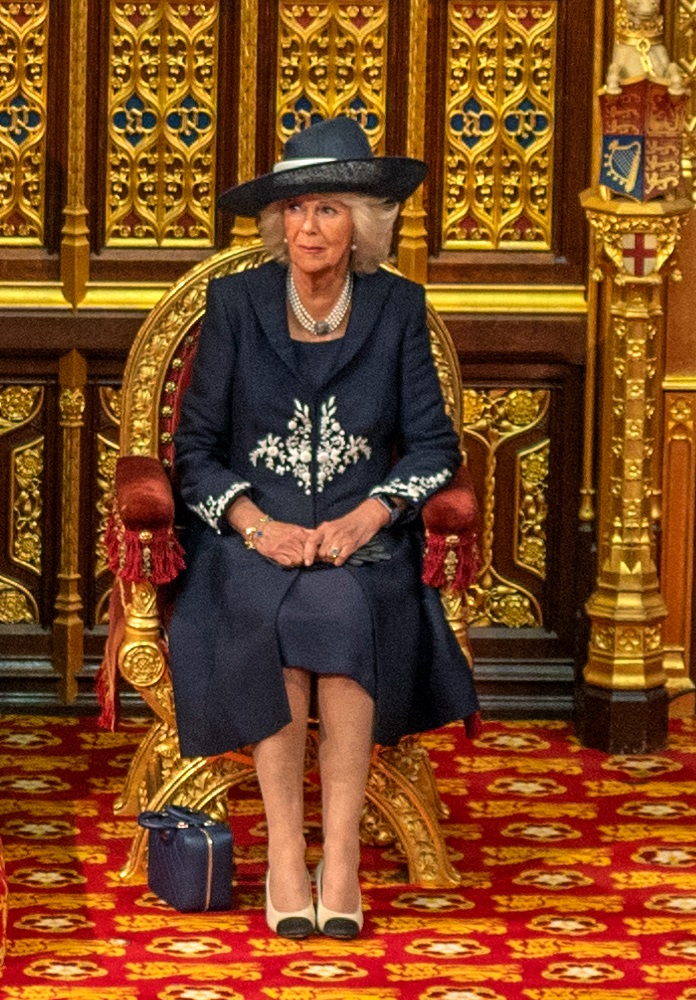
Probable arms of Camilla, Queen Consort

Camilla, as Queen Consort, can now be expected to impale the Shand arms with those of the King. Given that William now has all of the statuses and titles that his father held a week ago, it is most probable that he will bear the same heraldic achievement, with which Catherine will impale the Middleton arms. It is yet to be seen (and there are conflicting precedents) of the Duke & Duchess of Sussex will similarly upgrade by swapping their five-point cadency label for one of three points, and removing the strawberry leaves from their coronets. The ever-present yet ever-uncredited Sodacan has already uploaded multiple illustrations of how he expects the revised armorial achievements to look.

Probable arms of Catherine, Princess of Wales

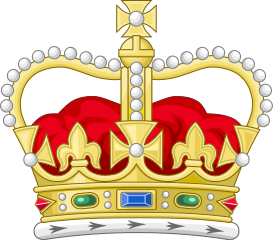
There is some controversy over whether Charles will change the heraldic depiction of the crown from St. Edward’s (depressed arch) to Tudor (no depression). There is a perception that St. Edward’s Crown is for queens and the Tudor crown for kings (due to the latter being preferred from 1901 to 1952) but this is not binding and St. Edward’s was regularly used by kings before Victoria’s reign.

FURTHER VIEWING

UPDATE (April 2024)

I’ve just finished reading Charles III: New King. New Court. The Inside Story by Robert Hardman. Chapter Three: London Bridge explains that the Truss ministry was supposed to be sworn in on 7th September with the politicians meeting in Westminster and Queen Elizabeth attending by audio-only link from Balmoral, but the meeting was cancelled at short notice when her health took a downturn.

UPDATE (September 2025)

Historian Jason Loch has published this article analysing the intricacies of the accession council and the legal status of Truss’s cabinet.

Demise and Disarray

The death of Elizabeth II is a time of serious grief for her family and her many peoples. It is also a time of mild confusion for public bodies, and of course Wikipedians. Here is a run-down of some of the changes that have recently been made.

The Monarch

The man long known as Charles, Prince of Wales is now King. For many years there had been speculation that he would take the regnal name George VII in honour of his maternal grandfather and great-grandfather, but shortly after his accession it was confirmed that he would indeed go by Charles III. There was a brief period when his page was at Charles, King of the United Kingdom before being changed to Charles III. There is an ongoing debate as to whether the article title should include “of the United Kingdom”. The side in favour argues that there have been many other monarchs over the centuries called Charles III from whom the present monarch needs to be differentiated. The side against argues that Charles is king of far more than just Britain, and that if you included one realm in his title you would have to include all of them, lest you imply that one is more important than another.

The Consort

Camilla Shand, at the time of her marriage in 2005, was not popular among much of the public still grieving Diana Spencer. So as to avoid appearing to usurp her legacy, she never styled herself “Princess of Wales”, instead going by “Duchess of Cornwall”. It was also suggested back then that, upon her husband’s accession, she would be styled “Princess Consort” (presumably derived from Prince Albert) rather than Queen. How true this proved to be was always a matter of public relations rather than constitutional law. By the start of this year it was clear that her reputation had recovered sufficiently to abandon that idea, and Elizabeth II in an open letter explicitly endorsed her daughter-in-law to be called Queen Consort. Currently all major media and government sources are very insistent on styling her “The Queen Consort”, rather than simply “The Queen” as other queens consort were before her. It is not yet clear if she will be described this way for the whole of Charles’s reign or if it is simply a temporary measure so as not to confuse the public while the late queen regnant is still being mourned. Again, there is dispute over whether her article title should include “of the United Kingdom”.

The Heir Apparent

In 2011 Prince William of Wales was ennobled by his grandmother as Duke of Cambridge, Earl of Strathearn and Baron Carrickfergus in the peerage of the United Kingdom. He has not ceased to hold these titles, but they are now buried beneath several others. The dukedom of Cornwall, in the peerage of England, is governed by a 1337 Charter instructing that it belongs automatically to the eldest living legitimate son of the incumbent monarch and the heir apparent to the throne, and that if these two statuses are held by different people then the title is left vacant. This means that all dukes (save Richard of Bordeaux) are deemed to have held the original peerage, rather than it being created anew each time. The Duchy of Cornwall, a substantial land-holding corporation in the south of England, is governed by the same. The dukedom of Rothesay in the peerage of Scotland is mandated by an Act of Parliament from 1469 to follow an identical succession, as are the titles Earl of Carrick, Baron of Renfrew, Lord of the Isles, Prince of Scotland and Great Steward of Scotland. The titles of Prince of Wales and Earl of Chester, by contrast, are not automatic. They are conferred by letters patent at the discretion of the monarch. It appears from news reports that Charles III has opted to do so almost immediately after coming to the throne, though I am still waiting to see this formally confirmed in the Gazette or the Court Circular. There was a short interlude in which the royal website and Wikipedia styled him “Duke of Cornwall and Cambridge”. I argued that it was poor form to include Cambridge while leaving out Rothesay, to which an anonymous user replied:

It would, but we don’t have a basis for that usage in Wikipedia practice. The hierarchy is very much What the Papers Say > legal/heraldic/formal/official names > anything that actually makes sense. I’m guessing there will be a followup announcement about his distinct style in Scotland and indeed in Northern Ireland, and maybe they’ll end up with something more logical and less clumsy. After workshopping every other possibility.

The Others

The accession of a new sovereign causes a reshuffle in the orders of precedence among the royal family. In the male order, Charles is naturally now on top. His sons William and Harry also move up, as do his grandsons George, Louis and Archie (their position before, as great-grandsons of the sovereign, was a little unclear). Andrew and Edward are demoted from sons to brothers, James and Peter from grandsons to nephews, and the Earl of Snowdon from nephew to cousin. The Dukes of Gloucester and Kent and Prince Michael are unaffected. On the female side Camilla achieves supremacy, followed by Catherine, then Meghan, then Charlotte, then Lilibet, then Sophie, Anne, Beatrice, Eugenie, Louise, Zara, Birgitte, Katharine, Marie-Christine, Sarah and Alexandra.

The styles and titles of Charles’s descendants are also upgraded (though those of his siblings and niblings are not diminished). William and Harry both gain a definitive article in their princely titles. George, Charlotte and Louis are now “of Wales” rather than “of Cambridge”. There has, of course, already been a famous Princess Charlotte of Wales, so until an alternative solution emerges their Wikipedia pages must be differentiated by the awkward use of years in brackets. Archie and Lilibet, as children of a younger son of the sovereign, now qualify as royals under the terms of the 1917 letters patent. They could now correctly be styled as “His Royal Highness Prince Archie of Sussex” and “Her Royal Highness Princess Lilibet of Sussex”, though no move has been made in that direction so far. The situation regarding the Earl of Wessex’s children remains ambiguous. Charles could, of course, amend or revoke the letters patent however he wishes, but there has not yet been any indication in that regard.

The dukedom of Edinburgh, earldom of Merioneth and barony Greenwich, which were conferred by George VI on his daughter’s fiancé Philip Mountbatten in 1947, and were then inherited by Charles in 2021, have now merged with the crown. Any of them can be bestowed anew on whomever His Majesty chooses. His brother Edward has long been presumed to receive them next, but no decision has been taken at this time.

Under the Regency Act 1937 Camilla (consort) and Beatrice (fourth adult in line) have become Counsellors of State.

The office of Lord Great Chamberlain of England (not the same as Lord Chamberlain of the Household) has automatically transferred from the 7th Marquess of Cholmondeley to the 7th Baron Carrington. The former therefore loses membership of the House of Lords under Section 2 of the 1999 Act while the latter gains it. What happens to the place he already held among the ninety elected hereditary peers is still to be determined.

The Courts

The Queen’s Bench Divisions of the High Courts of England & Wales and of Northern Ireland, as well as the Courts of Queen’s Bench for the Canadian provinces of Alberta, Manitoba, New Brunswick and Saskatchewan, have all been renamed King’s Bench. The status of Queen’s Counsel in Australia, Britain, Canada and New Zealand has likewise changed to King’s Counsel, and all who hold it have had to amend their post-nominals accordingly. Only last month I created a new template for judges of the Queen’s Bench Division and had scrupulously added the specification to each of their infoboxes. Now I have had to change all of them. Still, it helps boost my edit count I suppose.

UPDATE (March 2023)

A few months late but better than never, the Palace now confirms that Archie & Lilibet have princely titles, as well as that Edward has become a duke.

Lyon Lectures

Video

A downside of the fading of the pandemic and return to normalcy is that a lot of the institutions which had taken to putting on virtual meetings have now reverted to doing them in person only. Since these events are in many different locations around the world, far away from each other and from me, my ability to attend is severely limited.

One particular frustration has been been the Lyon Court, which for the last few months has been commemorating the 350th anniversary of the Lyon Register. Many times I have seen these lectures advertised on EventBrite, but I have not been able to go to them.

Now, belatedly, there is happy news, for the Lyon Court’s formerly-sparse YouTube channel has in the past fortnight seen a flurry of uploads from this lecture series. It is a little disappointing to have to catch up months later instead of taking part live, but getting to see them at all is still a great improvement compared to what would have been expected three years ago.

Developments in England have been less encouraging – there has been no newsletter from the College of Arms for this July. Upon inquiry, Portcullis told me that they hope to publish one later in the year. The heraldic decisions of Amess, Amos, Blair and Hoyle remain elusive.

To whom these Presents shall come

The shield of George Darley, poet and novelist, granted in 1804.

Among the most frustrating experiences for internet heraldists is the difficulty of actually finding citations for grants of arms. Burke’s and Debrett’s have long recorded the arms of the peerage and baronetage, but knights and gentlemen (or those whose higher dignities came and went between publications) are left out, and in any case the editions of either that can be read for free online tend to be decades if not centuries old, so that recent grants remain elusive.

The Canadian Heraldic Authority, of course, has its public register, but its British counterparts are in no position to form anything similar. The rolls of arms at the Lyon Court and the College of Arms may be inspected in person for a fee. There has been talk of the latter digitising its records, but even then their access will likely still be restricted, for the corporation would otherwise ruin its financial model.

Ireland, though, has provided an unexpected boon. Some days ago Stephen Plowman of Heraldry Online blogged that the National Library of Ireland had uploaded microfilm scans of all that country’s grants and confirmations of arms from 1630 to 2009. The volumes are labelled by single capital letters, which is a little misleading as the contents are not arranged alphabetically but chronologically. The handwriting and blackletter print are sometimes challenging to read through a computer monitor, but most of the text is legible.

Some of the stories revealed are quite fascinating – there are several cases of people seeking posthumous grants for their ancestors, as well as seeking “name and arms” clauses to inherit the arms of their in-laws. This sometimes leads to the Ulster King of Arms writing out complicated stories of marriages, ancestries and deaths.

As in other places, there is the dilemma of whether the herald should “grant” arms anew or merely “confirm” arms that were assumed long ago. My favourite reference so far (in Volume C) is to a shield long being displayed on a decorative plate in the petitioner’s house!

Although not all of the names mentioned in the books have turned out to be that famous, there have been a fair few additions to my Wikipedia collection. Even individuals who were not themselves notable may be the ancestors of those who were, and those fill in the heraldic gaps indirectly.

Heraldic Headache

Five and a half months since the announcement of their appointments, the installation of the Duchess of Cornwall, the Baroness Amos and Sir Tony Blair in the Order of the Garter finally took place today. Suspended for two years due to the pandemic, the ceremony was revived with the knights, ladies, heralds and soldiers marching through the grounds of Windsor Castle in all their finery.

Getting photographs of this event has proven annoyingly difficult. The Royal Household itself has not made a proper film of it, nor have the major news networks covered it in much detail, so I have had to piece it together from commercial photographers (whose shots I would not risk directly embedding here), crowd-members short films and attendees’ Tweets. The end result is less than satsifactory.

Most importantly, I have yet to see any photographs from inside the chapel since the new members were installed, so remain none the wiser as to the appearance of their armorial banners – my main reason for waiting so expectantly all this time! Sir David Amess and Sir Lindsay Hoyle remain similarly elusive.

While we’re here, it’s worth mentioning yet another podcast I have discovered: the Commonwealth Poetry Podcast by Gyles & Aphra Brandreth, whose first episode features the Duchess of Cornwall and Dame Joanna Lumley as its guest stars.

EXTERNAL LINKS

UPDATE (12th August)

By searching “Garter” on the Parliamentary Archives website, I have found this photographic album of the procession from 1996. Hopefully there will be more of its kind in the same place.

Accessions and Assumptions

Today was another virtual double-helping. The first was a Teams presentation from The National Archives in which Dr Tracy Borman, Joint Chief Curator of Historic Royal Palaces, plugged her new book Crown & Sceptre: a new history of the British Monarchy.

Borman gave a synopsis of her publication, which essentially amounted to a summary of English and then British royal history since 1066. That part I will not type out again. She called Elizabeth I a brilliant propagandist and “the greatest monarch of all time”. She thought less of Victoria, who spent so much time in retirement after Albert’s death that the institution of the crown was nearly disbanded. She also called Edward VIII’s abdication a lucky escape, noting the callous attitude he had both to the institution and his family members. She spotted a theme that the best monarchs were those never originally supposed to reign – including the present one. Another important point was that after the Civil War and the Glorious Revolution, Britain’s monarchs were reduced to ceremonial figureheads, focusing their efforts on charity and patronage instead of direct political power. This earned them mockery from other still-absolute monarchs at the time, but seems in the long term to have greatly contributed to outlasting them.

In the Q&A, I asked how much the present day royal family was influenced by the Scottish half of their pre-C17 ancestry, since her book was focused on the English side. Borman said that the constitutional model which Britain still has today (and has exported around the world) largely resulted from the absolutist attitudes of the House of Stuart clashing with the English parliamentary system, without which its seminal conflicts would likely never have happened.

While I enjoyed the presentation I am not sure that I will end up buying the book. While Borman claimed to be “inspired” by the Platinum Jubilee giving the opportunity to look back over the last millennium, I suspect it was more a matter of judging the point in the media cycle when such a book would get most sales. I am reminded of J. P. Nettl’s preface to his 1967 book The Soviet Achievement, beginning with “Anyone should have serious doubts before adding to the mountain of literature on the Soviet Union. The fiftieth anniversary of the October revolution provides an occasion, perhaps, but no automatic excuse.”, a sentiment that could apply equally well here.

The second event was a Zoom lecture by the Heraldry Society. Marcus Meer‘s talk “And No Recently Assumed Arms…” was about the display of, and attitudes around, heraldry in medieval German cities, and something of a sequel to his “Lest They Pass to the Peasants” lecture to the Scottish society in March.

Urban centres in the Middle Ages were festooned with heraldic marks of the municipalities themselves as well as the guilds, corporations and individuals resident within. They would be set in stained glass, carved into stone walls or moulded on cutlery. The use of such images was a shared focal point for citizens’ attention, helping to maintain communal stability. They were also used to demarcate sections of the urban space, and to claim control of said sections on behalf of their owners. Delegated authority was rendered visible as government officials wore the state or city’s badge, and armorial marks would be painted on items produced in the city as a sign of quality control. Heraldry was also a mark of power struggles – guilds would fight for precedence in civic processions and conquerors of a town would displace existing shields with their own.

Meer spoke of a departure in scholarship from analysis of heraldry as a fixed symbol of meaning, towards a study of medieval perspectives.

The Gossembrot Armorial of 1469 was an attempt by the author to shore up his family’s status against the threat from social climbers. It collected the arms of all the families into whom Gossembrots had married, but it omitted arms which had come into use too recently in favour of those long-established. Others would embellish their own heritage beyond plausibility, such as Ulman Stramer who, in his Book of my Lineage and Adventure (1360-1400), claimed that his ancestor Gerhart of Reichenbach was granted arms by King Conrad, even though Conrad reigned in an age before it became customary to have arms formally granted by a sovereign. In the fifteenth century there was a social distinction between arms officially sanctioned and arms privately assumed. Urban grantees, much like their contemporaries in England, sought to consolidate their status. Also similar to England, “confirmations” of supposedly-old arms were preferred to grants of clearly-new ones, for armigers wanted proof that they and their agnates had always belonged to the gentry instead of recently joining it. Sometimes grants were sought from foreign rulers, such as Henry VIII of England to Lorenz Stauber of Nuremberg in 1521.

There were accounts of legal disputes over heraldic ownership, such as unrelated armigers bearing the same shield, and the city authorities deciding that they must be long-lost family. A case study was the Church of St Anne in Augsburg, where Ulrich, Georg and Jakob Fugger had endowed a family chapel. When the male-line of the dynasty died out the female-line descendants were allowed to inherit the chapel but not the Fugger arms.

I asked Dr Meer what was the lowest social rank at which one could get away with assuming arms. He replied that there were no hard rules, and that at Nuremberg there is evidence of armigerous peasants, albeit probably the wealthier peasants. Emperors were known to complain of non-nobles assuming arms, but there wishes were not enforced.

10th June is International Heraldry Day (though as little recognised as all the other National Whatever Days) and the society was proud to unveil its new logo, courtesy of Quentin Peacock. Also today it was announced that Her Majesty had appointed two new members of the Order of the Thistle – former Lord Advocate Dame Elish Angiolini and former Presiding Officer of the Scottish Parliament Sir George Reid. Their arms, if yet they have them, will at some point be displayed at the High Kirk. Meanwhile, with just three days to go until the Garter service, I am still none the wiser as to the arms of Amos and Blair.

Counting Stars

Aside

After eight years as a Wikipedia editor, I have made over eighteen thousand edits, which puts me at the service rank of Veteran III, or Most Perfect Tutnum. These ranks are gained automatically by reaching the necessary tenure and edit count, with users themselves left to keep track of them. They are not any kind of deliberately-selected prize from those in charge. The Wikipedian honours system is large, varied and probably not well understood by the majority of users, including me. The one thing I had managed to comprehend was the barnstar, essentially a token of appreciation which any ordinary user can award to any other. I woke up today for some reason thinking of these, pondering why I had never gotten one. Of course, I could never draw attention to this, for nothing could be more pitiful. I thought of designing a userbox saying “This user has never received a barnstar, but he pretends not to be disappointed”. It’s the sort of ironic cloak to one’s frustrations that could well have caught on. Then, late this afternoon, I found a message on my Commons talk page from senior editor Cardofk, giving me the graphic designer’s barnstar for all the the coats of arms I’ve uploaded. So much for that plan!