The inevitable moment I and so many others around the world had long dreaded finally arrived tonight – Buckingham Palace announced the death of Elizabeth II. It is a blessing that she survived to see her Platinum Jubilee and the end of the pandemic, but also a disappointment that she missed her centenary.
Last year, shortly after the death of her consort Philip, I blogged an extract from my grandmother’s writings, concerning the time she spent in Malta with then-Lieutenant Mountbatten. I sent a letter about such recollections to his widow. Some weeks later I received a thank-you note from Mary Anne Morrison, Woman of the Bedchamber.
I would have liked to be able to recall a more direct interaction with Her Late Majesty, but sadly my only in-person encounter was a drive-by glimpse in 2017. My time with the new monarch has been similarly brief – I once got a wave from him at the Valley Gardens in Withernsea in July 2013.
More words will come when I have had time to compose them.
For a while now the Supreme Court of the United Kingdom has had two vacancies, caused by the retirement of Lord Lloyd-Jones and Lady Arden of Heswall in January. Yesterday it was announced that appointments had been made: Arden’s place is to be taken by Sir David Richards, formerly of the Court of Appeal of England & Wales, while Lloyd-Jones’s successor is… Lord Lloyd-Jones.
The reason for this bizarre phenomenon is found by looking at legislation relating to mandatory retirement ages. The Judicial Pensions Act 1959 set the retirement age for people entering the judiciary thereafter at 75, though it was not binding on those already holding office by then (so Lord Denning and Lord Cameron continued until ages 83 and 85 respectively). The Judicial Pensions and Retirement Act 1993 lowered this to 70, but again was not retroactive so that those who had held judicial office before 31 March 1995 were grandfathered in. Lady Arden was the last such grandfathered member of the UKSC. The last overall was Sir James Holman, appointed a judge of the Family Division (EWHC) on 18 March 1995, who retired on 28 June.
The Public Service Pensions and Judicial Offices Act 2022 (which received Royal Assent on 10 March) raised the retirement age back to 75, and this time it was retroactive, so that those already in office can now serve an extra five years, and some who recently retired at age 70 (such as Lloyd-Jones and Richards) can come back for an encore.
Incidentally, I discovered these appointments through the Twitter feed CrownOffFOIDs. The name is a shorthand for “Crown Office Freedom of Information Disclosures”. This is the Crown Office in Chancery, a small section of the Ministry of Justice responsible for the production and management of certain state and royal documents. Whether the office itself, or a private citizen, is operating the Twitter account is not clear. The output includes photographs of the Great Seal of the Realm as well as many of the different types of document to which it may be attached. There are writs, warrants, patents and proclamations of a great many kinds, including the proclamation of the present monarch’s accession, which the Tweet notes is not as physically impressive as one might have expected.
A downside of the fading of the pandemic and return to normalcy is that a lot of the institutions which had taken to putting on virtual meetings have now reverted to doing them in person only. Since these events are in many different locations around the world, far away from each other and from me, my ability to attend is severely limited.
One particular frustration has been been the Lyon Court, which for the last few months has been commemorating the 350th anniversary of the Lyon Register. Many times I have seen these lectures advertised on EventBrite, but I have not been able to go to them.
Now, belatedly, there is happy news, for the Lyon Court’s formerly-sparse YouTube channel has in the past fortnight seen a flurry of uploads from this lecture series. It is a little disappointing to have to catch up months later instead of taking part live, but getting to see them at all is still a great improvement compared to what would have been expected three years ago.
Developments in England have been less encouraging – there has been no newsletter from the College of Arms for this July. Upon inquiry, Portcullis told me that they hope to publish one later in the year. The heraldic decisions of Amess, Amos, Blair and Hoyle remain elusive.
As Boris Johnson’s premiership draws to an undignified conclusion, a new leader of the Conservative & Unionist Party is to be elected for the third time in just over six years.
When last that happened, Professor Norton blogged about about four different types of Prime Ministers: Innovators who want to implement specific and ambitious goals of their own design (e.g. Thatcher), reformers who want to implement the goals of the party overall (Attlee), egoists who are in it for their own fame (Eden, Wilson, Johnson) and balancers who are concerned with keeping the peace between rival factions (Macmillan, May). He has not claimed these to be definitive or exclusive, but merely the labels he finds most useful. Recently he has revisited the idea.
In my view the roles of innovator and reformer are a little difficult to distinguish, as political ideas are often credited to the prime minister who enacted them even when their invention was owed to another (e.g. much of Thatcherite thinking was actually the product of Sir Keith Joseph). It might be better to merge them into one category of ideologue.That of balancer more obviously stands apart as someone less ambitious about specific goals and more concerned about overall stability. Egoist, of course, is something that few politicians would admit of themselves and which often comes across as a slur (not that it is untrue).
At present the nomination window has yet to formally open let alone close, so the field is still prone to change, but let us take a look at those declaring so far:
Kemi Badenoch (Saffron Walden), lately a junior local government minister
Suella Braverman (Fareham), current Attorney General
Jeremy Hunt (South West Surrey), current health committee chair
Sajid Javid (Bromsgrove), lately health secretary
Penny Mordaunt (Portsmouth North), a junior trade minister
Grant Shapps (Welwyn Hatfield), current transport secretary
Rishi Sunak (Richmond Yorks), lately Chancellor of the Exchequer
Elizabeth Truss (South West Norfolk), current foreign secretary
Tom Tugendhat (Tonbridge & Malling), current foreign affairs committee chair
Nadhim Zahawi (Stratford-on-Avon), current Chancellor of the Exchequer
At present Sunak and Truss are perceived as most likely to make the final ballot. Sunak seems to be positioning himself as a balancer. He wants to be perceived as a safe pair of hands and broadly popular among the public. Truss is going more for the ideologue side, particularly those who had favoured a harder departure from the European Union. Both are obviously egoists at heart, given that both appear to have registered their campaign websites some time before there was any hint of Johnson’s resignation. Concerns have long been raised about Truss spending government money on her own publicity, while Sunak seems to have hired a social media specialist to improve his personal brand.
Among the other candidates, Mordaunt and Tugendhat might be considered together. Their support (and that for defence secretary Ben Wallace, who was the front-runner before he ruled himself out) seems to come from the same source – a desire to clean up the party’s image and get politics back to normal. The quest for them is less about any specific policy goals and more about cleaning up the party’s image. They are seen to have demonstrated competence in their roles so far (a rare treat in modern politics) and avoided the scandals plaguing those at the top. Their military backgrounds are likely a large part of their appeal.
Javid and Hunt are somewhere in between. Hunt was the runner up in 2019 and has stayed out of Johnson’s government, so is a champion for the opposing faction (especially Remainers). Javid is more closely associated with Johnson but not seen as a lackey to the extent that Sunak or Truss are. Both are well-established within the parliamentary party so probably seek the same safe-hands image, as well as leaning on their reputations as businessmen.
Badenoch and Braverman both have fairly low national profiles which they are probably hoping to raise. They are unlikely to win but may be securing higher offers in the new cabinet or the next leadership election, whenever that may be. The former is well regarded for her chamber and studio performance, and promoted as a competent officeholder, whereas the latter seems to be favoured more as a stalking horse for an economic sect of the party.
That leaves Shapps and Zahawi, whose analysis must be very carefully phrased. Like Hunt and Javid they both have business backgrounds, but these may prove more a hindrance than a help. Shapps has several times attracted controversey over the conduct of his companies as well as denial of operating them under pseudonyms while serving in the Commons. In late 2015 he had to resign from the government due to alleged negligence in handling bullying claims within the party. He’s even been caught editing his own Wikipedia page to remove inconvenient details. Zahawi is distrusted by some in the party for having accepted a great office of state from Boris Johnson immediately before demanding he step down. There have also been numerous concerns raised about his private business interests, and flags raised by HMRC over his tax affairs.
Without commenting on the veracity of these particular claims, it raises the prospect of another category of leader – the featherer. Like egoists, no candidate would outright admit to being one, but unlike them the goal is less to acquire personal fame and more to protect one’s personal interests – or those of a different person supporting them. This would be hard to use in an academic textbook though, since such nest-feathering typically does not become known until many years after the accession has taken place.
UPDATE (12th July)
Shapps and Javid have withdrawn, Rehman Chisti dipped his toe but shortly withdrew again. Badenoch, Braverman, Hunt, Mordaunt, Sunak, Truss, Tugendhat and Zahawi have qualified for the first round.
Late last night Professor Norton blogged about the decease of his noble friend Roger Swinfen Eady, 3rd Baron Swinfen. The photograph he used in his post was a screenshot of him in the upper chamber on 1st February 2018, taken from parliamentlive.tv, and displayed on his Wikipedia page. I know because I put it there.
Swinfen was not photographed for an official parliamentary portrait, nor in any other setting that resulted in an image released with a Wiki-compatible licence, so I had to resort to a Fair Use screenshot, as with so many other deceased parliamentarians, in order to illustrate his page. Thankfully the fact that both houses (and indeed the devolved legislatures) have recently gotten into the habit of publishing high-quality portraits under CC-BY-3.0 or similar means that such a trick will likely be needed less often in the future.
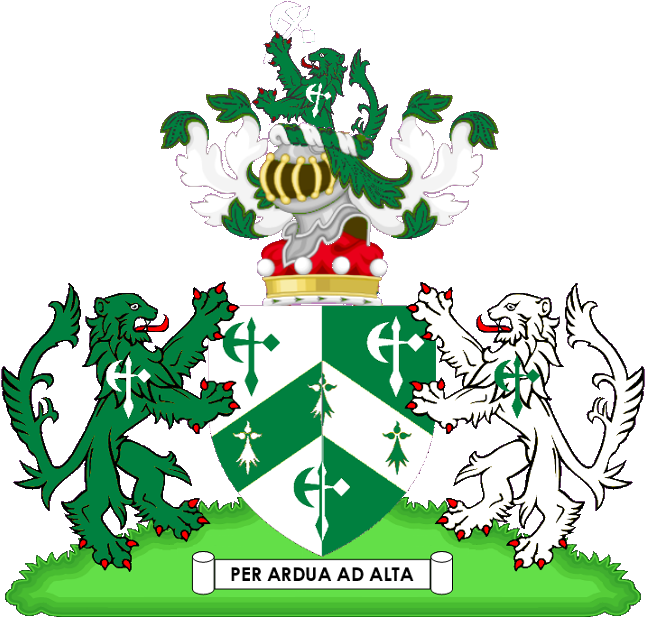
Of course, I also illustrated his coat of arms a year ago, and being the copyright owner for that graphic I released it under the same.
Last month Norton blogged on a different topic – the repeated floating by the government of plans to move the House of Lords to York. Not, to be clear, moving Parliament as a whole along with the royal households, the senior courts and the departmental headquarters of the executive, but just moving the upper house while leaving everything else in London. On Thursday he secured a lengthy debate in the chamber on that topic. The peers who spoke were unanimous in their savaging of their proposal. Many of the issues I commented on Norton’s post regarding the practical absurdities of a separation and the apparent powerlessness of ministers in the upper house to influence their Commons colleagues were repeated by members in their speeches. My favourite contribution was by the Lord Addington: Michael Gove’s comment was the sort that usually comes up halfway through the third round in a pub, that should be forgotten by the end of the fourth, and certainly not remembered the next morning.
Almost two years ago, it was becoming clear in Britain and most other countries that the coronavirus was a global problem and not merely a regional one. There were cases identified in the UK in January 2020, through February its news coverage slowly outgrew that of Brexit, with stories of panic buying and rising case rates, but much of ordinary life went on. By mid-March the crisis had become unavoidable – the government was giving daily press conferences and many public places (including universities) were shutting down. Hand sanitiser dispensers and social distance signs popped up all over. Then, on 23rd, the entire country went into the first lockdown. The Britain at the end of that month felt like a wholly different world from what it had been at the beginning. For other countries the exact dates vary but the overall phenomenon is very much the same. In retrospect, there was something particularly surreal about the week of 17th-23rd, where for many it may have felt like an unplanned holiday, the full weight of the disaster looming but having yet to hit.
Now, after twenty-three months of on-and-off disease control, much of the developed world is transitioning from “pandemic” to “endemic” and returning to something like normality. In Scotland and Wales, all remaining COVID-induced restrictions are set to be lifted by the end of next month. In Northern Ireland they were lifted on 15th of this one. In England they went on Thursday. By superb coincidence, that was the same day the Vladimir Putin launched a full-on invasion of Ukraine.
Compared to the virus, this is neither as surprising nor as sudden – Russia has been in a state of war with its western neighbour for just over eight years, and diplomatic relations with other countries have been tense throughout that time, including many accusations of election meddling, political bribery and even assassination. Over the last few months the pressure could be seen rising. It was generally understood that war would properly break out at some point, but not exactly when. I remember Lucy Worsley’s Empire of the Tsars airing in early 2016, with quite a few online quips that the BBC wanted to get the filming done quickly in case war was imminent. Now, at the time of typing, it looks as if momentum has gathered – countries are, with varying degrees of enthusiasm, freezing (soon it could even be seizing) the financial assets of Russian businessmen and officials, as well as banning such people from their airspace. Sporting organisations look to ban Russia from their games. Britain is even sending troops to Eastern Europe. Other countries are doing likewise, or at least supplying equipment to the Ukranians themselves.
All that being said, we are not yet actually at war. British and Russian embassies to each other remain open, as do those in most other countries. It remains to be seen how long that lasts. The situation of the tens of thousands of Russian people living in Britain is perilous, as is that of Russian businesses trading here, or vice versa. This week’s invasion has been dubbed the largest conventional warfare operation in Europe since World War 2, and cries of World War 3 are widespread – and they are not meant jokingly this time. In the books that my late grandmother bought for me about the first two, it was mentioned that before the United States’s involvement, British and German ambassadors in Washington DC were competing with each other for American military contracts, and that private businesses within the allied and axis territories continued trading with each other (including weapons) right up until the declarations of war took effect. It will be interesting to see how much of that is repeated with Russia Today.
Speaking of Russia Today, RT continues to broadcast in this country. Suffice to say, its coverage of the invasion differs sharply from that of most other networks. The channel has been under review by Ofcom, and the leaders of the Labour and Scottish National parties have called for its termination. This has already been done in Poland and Germany, though the latter’s own public broadcasting service was reciprocally banned in Russia and there are fears that the BBC would suffer the same fate. I discovered RT in late 2012, at the same time as I was covering the Soviet Union for GCSE history. I appreciated the level of attention it gave to topics other channels thought less important, such as SOPA/PIPA/CISPA/ACTA and the Snowden revelations, as well as its documentaries on a variety of topics. If nothing else, it was good for checking the aspect ratio settings on one’s television, being for the time one of very few networks still airing in 4:3. All that being said, as a state-controlled news outlet it was never entirely trustworthy, and one could always sense that it was going out of its way to depict western democracies – and indeed “The West” as a concept – in the worst possible light and to encourage any kind of crankery that would undermine Russia’s strategic rivals.
As many are now pointing out, the true strength of Russian propaganda is online rather than on television, and that will be much trickier to sort out. The powers, rights and obligations of the large social media sites to intervene on political matters has long been controversial, as have measures to restrict the digital activity of Russia in particular. If the situation continues to escalate we may well see YouTube channels and Twitter accounts being suspended en-masse, as well as purges of suspicious users from message boards. As far as the pandemic comparison goes, we must currently be at least at the second or third week of March. I dread to think what the fourth looks like.
OTHER ANALYSES
Putin’s Power and Western Impotence by David Starkey. He says that Putin seeks to revive Tsarism not Stalinism, and that he understands that all authority derives from force whereas Western nations have forgotten this. Starkey condemns Angela Merkel for shutting down Germany’s nuclear plants in favour of Russian gas, as well as all European nations for letting their militaries wither. This being Starkey, he also takes potshots at 16-year-old girls.
UPDATE (2nd March)
RT’s television channel is off air and YouTube, along with other platforms, has hidden all of its videos.
James Brokenshire was not the most high-profile of British politicians. Overall he spent sixteen years in the House of Commons, including seven years as a junior minister in a senior department and three as the senior minister in two junior departments, twice having to resign from the government due to the lung cancer which ultimately ended his life earlier this month. Even so, the fact that he had been a cabinet minister, the relatively low age at which he passed and the level of public fear surrounding cancer, one would reasonably have thought it unlikely that his demise could be outdone in the eleven days before the house was to meet again. Then, to the shock of the nation and world, Sir David Amess was stabbed to death. MPs were already due to return from the conference recess today, but scheduled business in both chambers was abandoned in favour of tributes to Amess, with a service following in St Margaret’s Church. Brokenshire’s tributes have been postponed to Wednesday.
Something similar happened during the Easter recess – the death of Dame Cheryl Gillan on 4th April and of the Baroness Williams of Crosby* on 11th would have been the principal concern of their respective houses, had not the Duke of Edinburgh died on 9th. In that instance it was the social and constitutional rank of the departed that determined priority of mourning rather than the manner of death.
The most obvious comparison, made frequently by those who have spoken publicly in the last few days, is to the murder of Jo Cox a week before the EU referendum. There has even been a move to design a shield of arms for Sir David and place it on the chamber wall next to hers. Of course, the two victims had very different profiles – Cox was a Labour woman who supported remaining in the EU, Amess a Conservative man who favoured leaving. This is reflected in the different profiles of their killers – Thomas Mair was a white supremacist with links to the English Defence League, Ali Hari Ali is said to be of Somalian heritage and a suspected Islamist.**
Also distinguishing the two victims is the time they had spent in politics. As I mentioned before, Jo Cox was not well-known to the general public, having only begun her tenure in the House of Commons thirteen months prior. She could well have joined the shadow cabinet in the mass reshuffle later that month, and by this point she might even have been a contender for the party leadership, but back then she was a much a footnote as most of the other MPs from the 2015 intake. Part of what made her death so tragic was precisely that she died so young and so early in her political career, with so much potential thereby wasted. Amess, by contrast, had been an MP for almost long as the average Brit has been alive. Though never a minister, he was a creature of the house, serving on many important if low-profile committees as well as being involved in numerous campaigns and publications. Most in the political sphere knew his reputation, in contrast to Cox who was something of a cipher.
More broadly, the country must acknowledge the worrying frequency with which politicians and their entourages have been attacked (whether or not the attack succeeded in killing the victim) in recent decades, and consider how this can be rectified, both in terms of personal security to defend from those with evil motivations, and in the public attitude to politics that would encourage such evil in the first place. As the pandemic has shown this year and last, the kind of openness and accessibility required of parliamentarians can also be very dangerous to them in person, yet to abandon it can be very damaging to democracy as a whole.
*The speaker mentioned on 13th April that four other former MPs had died during the recess – Peter Ainsworth, Ian Gibson, Robert Howarth, Paul Marland.
**Almost immediately upon the announcement of the attack and the description of the attacker as a “British national” there were people denouncing immigration policy and calling for border closure.
Dissolution day has arrived for the Welsh Parliament with just a week to go before the election. The documentation I found on the matter did not specify a precise time, so my default assumption was that it took place at midnight. Since the Senedd only has sixty members it took under an hour to delete the “MS” post-nominals from all of their pages. For good measure I also created a box that could be slapped on the top of each article removing any doubt over the nature of events. I hope that in time the politically-oriented communities of Wikipedians will adopt something similar for all elections of this kind (preferably with a dedicated bot) as I think it is far more efficient than laboriously removing each and every reference to incumbency from each and every page. Also today the UK Parliament would be closing down, though not for an election.
Having been in session since 17th December 2019, Parliament was prorogued this afternoon, to re-open on Tuesday 11th May. As expected, the ceremony was much modified to meet the requirements of social distancing. The Lords Newby (Liberal Democrat) and Judge (Crossbench) were still named in the letters patent – along with Welby and Buckland, of course – but it was only Fowler, Evans and Smith who physically took part. Unlike in the abortive attempt of September 2019 the three commissioners were not huddled together but spaced apart, and it is clear now that the temporary bench between the woolsack and the throne is in fact three smaller stools which, until this occasion, were always pushed together. Black Rod summoned the Commons as before (reciting her command in a robotic fashion that suggested some very determined memorisation), but instead of walking in two columns with government members adjacent to their shadows the MPs had to shuffle awkwardly in single file. Upon reaching the Lords’ bar, Mr Speaker and Black Rod stood at the far ends of the panel behind the crossbench with the Clerk of the House of Commons in the middle some way back, while the Serjeant-at-Arms did not appear to be there at all. The nodding and doffing between Commons and Commission only occurred once each on entry and departure instead of the usual three times. A doorkeeper could be seen in the archway directing MPs to stand on the steps either side as they came in. The Reading Clerk (Jake Vaughan) read the patent as before, but for a while I wondered where the other two clerks were – given that since the start of the pandemic there has only been one chair at the table instead of three. For a moment I feared that Vaughan was going to have to do both parts of the Royal Assent maneuver himself – perhaps darting either side of the table – or that another clerk would be participating virtually. Instead the Clerk of the Parliaments (Simon Burton) and the Clerk of the Crown in Chancery (Antonia Romeo) strode into the chamber from either side behind the commissioners, did their part as usual, then swiftly exited the same way.
When Her Majesty’s Most Gracious Speech had been read aloud and the MPs dismissed, Fowler stood up and stepped ahead of the woolsack while Evans and Smith sidled out to his right – in contrast to the normal procedure in which Evans would have moved first and thus brushed in front of him – then went out of the chamber behind the mace-bearer as normal. As this was to be his last sitting day as Lord Speaker I had wondered if there would be any cheering – let alone applause or other gesture of celebration – from the peers spectating, but instead the procession was as solemn as any. Upon returning to their own chamber MPs again had to arrange themselves in a distanced fashion while Sir Lindsay recited the list of acts granted assent. Handshaking was against regulations, so members merely bumped elbows or exchanged nods with the speaker either side of the perspex screen as they departed past his chair.
The timetable published some weeks back for the election of a new lord speaker would have had the winner (The Lord McFall of Alcluith, Senior Deputy Speaker since 2016) assuming office this Saturday and presiding for the first time next Tuesday, but the government’s decision to seek prorogation this week instead of next means that the new speaker’s debut will in fact be at the state opening. Exactly what role he will play there is still uncertain, for little more information has been revealed about the changes that ceremony will undergo to remain COVID-compliant.
What I often notice about royal commissions in Parliament is that the cameras and microphones are left running even when nothing is formally happening. In the upper chamber I heard Lady Smith converse with the backbenchers. I couldn’t make out the whole conversation
Smith: If you make me laugh you’ll be in trouble.
Unknown: The ~~~~* know how you feel.
Smith: Every sympathy.
Unknown: It’s nice to have some other people dressed.
Smith: You haven’t got to wear a hat though, have you?
Unknown: Well they do – he has a mitre!
Smith: I think it would fit better now I’ve got so much hair.
Unknown: The first law of politics is Don’t Wear A Funny Hat.
Smith: Don’t wear a subtle one either.
Unknown: As long as you don’t break into song.
Smith: My mates from school are all watching.
Unknown: Is the Lord Speaker allowed to keep his?
Smith: I’d hate to see what they’re saying on WhatsApp at the moment.
The rest of the conversation was insufficiently intelligible to transcribe, but I think one of the unknowns joked about Smith having her hair cut around the hat and somehow being electrocuted.
*It sounded like “conventioners” or “adventurers” but in context it clearly referred to the bishops, and indeed Archbishop Welby was probably one of those replying.
It was always difficult to work out the exact year in which a given episode of Victoria was taking place, given the series’ sloppiness with chronology. Series 2 ended with “Luxury & Conscience” in which Sir Robert Peel resigns as prime minister following the murder of his personal secretary Edward Drummond – events which actually took place three years apart. Series 3 picks up with “Uneasy Lies the Head that Wears the Crown”, which covers the revolutions of 1848 and features Lord John Russell in charge. Dialogue indicates that the return of the Whigs to government is a recent development. In between these installments is the 2017 Christmas special “Comfort & Joy”, set in 1846 and showing, among other things, the adoption of Sarah Forbes Bonetta (which happened in 1850). The curious thing about the Christmas special is the absence of the political side of things. In real life Russell’s ministry had already been in place for six months but, in the series’ uncertain timeline, the political situation is simply ignored. This is almost certainly deliberate, as the intention is for the holiday special to be a purely family affair. Plus, with more than a year’s gap between the series it’s entirely possible that the later story arcs hadn’t yet been planned out, nor the relevant characters cast.
Flash forward to 2021: The Duke of Edinburgh had wished for a low-key funeral (well, by royal standards at any rate), and the pandemic meant that something on the scale of the Queen Mother’s funeral in 2002 or even Lady Thatcher’s in 2013 would not be possible. Instead Philip’s coffin was driven a short distance within the bounds of Windsor Castle and then lowered into the vault. Hundreds of soldiers were still present outside, but COVID regulations forbade more than thirty attendees. Ordinarily it would be expected that prime ministers and other senior officials would attend, but Boris Johnson (and, presumably, any others concerned) relinquished his place to make room for more of the deceased’s family. The resulting guest list included eighteen descendants of King George V, eight spouses thereof, three other descendants of Queen Victoria and one spouse thereof. I had wondered if the family or the press would have sought to orchestrate a photograph of Prince George of Cambridge saluting the coffin à la John Kennedy, but it was decided that the great-grandchildren were too young to be involved.
While the masks and social distancing ought to be obvious giveaways, I actually found that the reduced attendance gave the ceremony a strangely timeless quality – it was effectively a bottle show. Other than Mssrs Mozzia and Brooksbank all the people there were the same people one would have expected to see there at had this happened at any point in the last ten years – admittedly Viscount Severn and Lady Louise would have been smaller. Justin Welby might be considered a semi-political figure and he took office in 2013, but as St George’s Chapel is a royal peculiar he played a minor role compared to David Conner, who has been Dean since 1998. Thomas Woodcock as Garter King of Arms could also be considered vaguely political given his role introducing new members of the House of Lords, with that office the public tend to remember the uniform rather than the face. The sounds of the past week, too, were those you’d expect to hear: steady footsteps, military orders, cannon blasts, church bells, and, from the studio, the interminable wittering of Gyles Brandreth. Now the burbling of a Land Rover TD5 has been added to the mix. Even that adds to the timeless effect, since the Defender was in production for a third of a century and without a number plate even I – a subscriber to Land Rover Enthusiast for a few years – could not guess at a glance the decade in which this one was constructed.
Those who have studied British political history know that long ago the House of Commons met in St Stephen’s Chapel, with the Speaker’s chair on the altar steps and the members facing each other in the choir stalls – an arrangement which has been maintained in subsequent legislative chambers in Britain and around the world. As a consequence today’s proceedings – with only a few dozen people carefully spaced apart – resembled a session of the hybrid house, or perhaps even the failed 1am prorogation in 2019. Hopefully on this occasion the ceremony won’t have to be repeated a month later.
Having already done a piece about television scheduling in light of COVID, it would be pertinent to review it in relation to the royal death. Of course major newspapers and broadcasters have documentaries and obituaries prepared years in advance of the event – not just for the Duke of Edinburgh but for a wide range of prominent public figures. Eye 1545 page 18 notes how, in the build up to his centenary on 10th June, contributors often had to do each interview twice – the first speaking in present tense wearing light suits, the second in past tense wearing black ones. It was also noted that, in addition to different networks’ documentaries often – and unavoidably – using the same stock footage and delivering the same story as each other, there were some instances of companies recycling interview footage from their own documentaries in 2011 or even 2007, with talking heads who nowadays are visibly much older or even who themselves have died in the intervening years.
On other occasions this temporal tangle would be cause for disdain, but to commemorate a man who has been “a constant” for longer than most of the world can remember, somehow it feels oddly appropriate.
UPDATE (20th April)
The video I originally embedded (from the firm’s own YouTube channel) has now been set to private. The BBC’s has also disappeared. I have replaced it with the Teletrece version.
UPDATE (1st May)
That one has gone as well. I’m now using the one from 6abc Philadelphia.

 The inevitable moment I and so many others around the world had long dreaded finally arrived tonight – Buckingham Palace announced the death of Elizabeth II. It is a blessing that she survived to see her Platinum Jubilee and the end of the pandemic, but also a disappointment that she missed her centenary.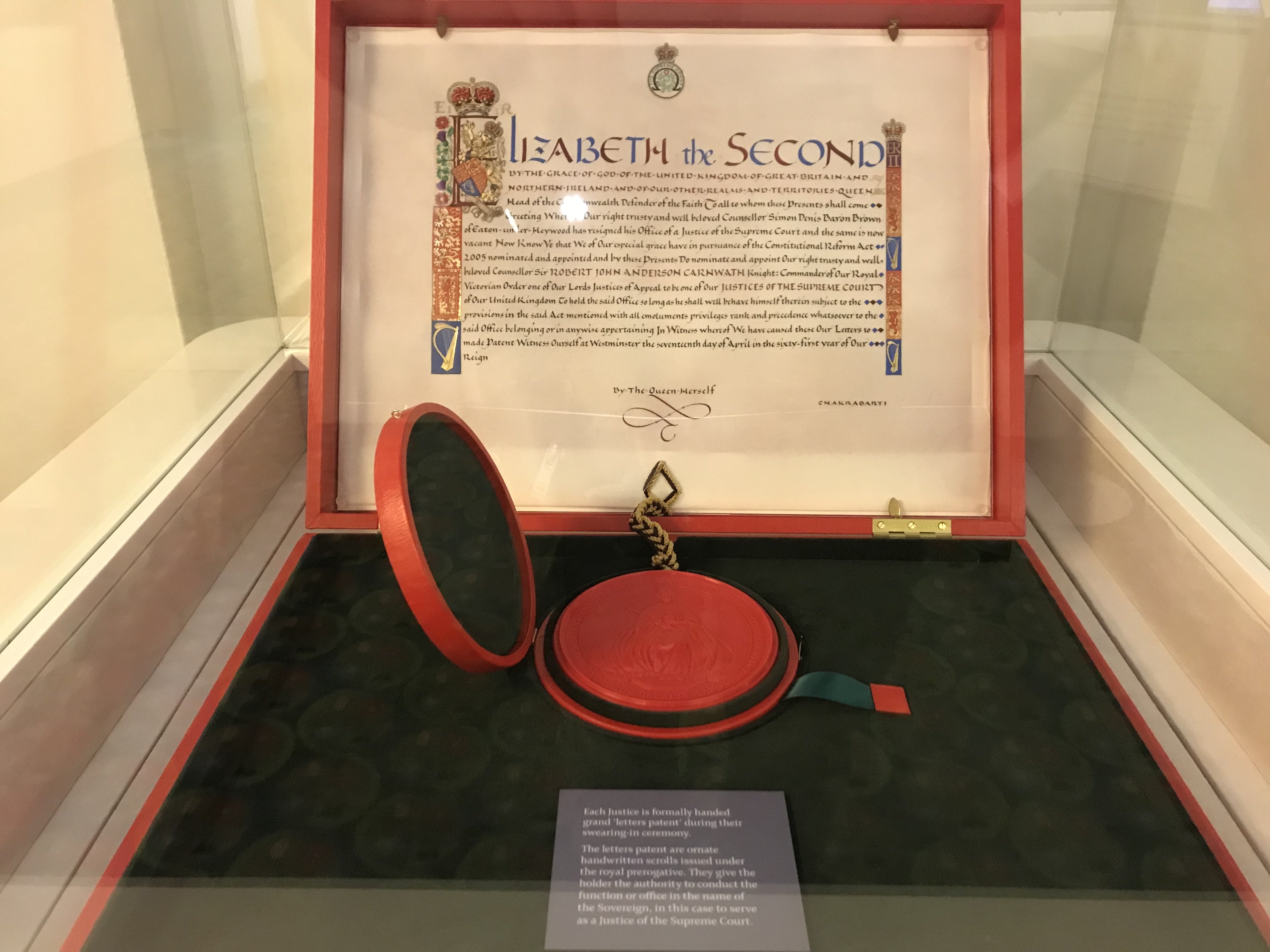

 Of course, I also illustrated his coat of arms a year ago, and being the copyright owner for that graphic I released it under the same.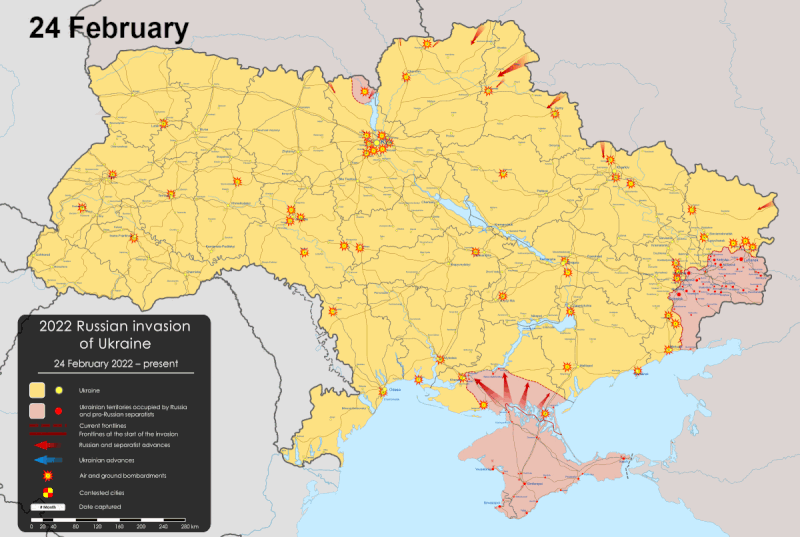


 Robin Stanley Taylor

