Parliament and Devolution with Adam Evans

I should start doing caption contests with these.

Dr Adam Evans, Clerk of the Welsh Affairs Committee in the House of Commons, gave the second talk of the term. He commented that he was impressed by the turnout for a discussion of this kind by undergraduates on a Friday, especially given how many public gatherings were being disrupted by the recent pandemic.

Dr Evans was careful to note that, whatever the practicalities or political considerations, devolution is distinct in law from federalism – the devolved institutions are created on the UK Parliament’s authority, rather than vice versa.

Devolution, he noted, has been asymmetric, with different regions having different levels of devolved power. The Scottish Parliament has near-complete autonomy, with social security being the only notable area of domestic policy reservation. The National Assembly for Wales is a little more restricted, lacking control of police and the judiciary. The Northern Ireland Assembly has more complicated arrangements, with some matters “excepted”, others “reserved” and the rest “transferred”. In England there is not devolved parliament, but there has decentralisation of certain powers to local authorities and the creation of regional ones. Devolution is considered “a process, not an event” and occurs as a pragmatic response to political pressures rather than according to anyone’s master plan. There were disagreements as to what would be the outcome of the devolution process – some hoped it would kill off nationalist movements which threatened the continuation of the United Kingdom, others feared it would embolden them.

Whereas the House of Commons is elected by first past the post, which normally delivers a majority of seats for a single party, the devolved legislatures have varying forms of proportional representation, which normally make this impossible. Scotland and Wales use the additional member system, in which constituency results are balanced out by regional lists. In Wales the executive has always been formed by the Labour Party, going in and out of coalitions with the Liberal Democrats and Plaid Cymru depending the balance of power. Lib-Lab coalitions also governed Scotland for the first eight years, but for the National Party has ruled for the last thirteen years – five of them with an unexpected parliamentary majority. Northern Ireland’s setup demands a power-sharing agreement between the largest Unionist and Nationalist parties, with official opposition legally impossible for some years. The latter situation has frequently been unstable, most recently with the Renewable Heat Incentive scandal that put the assembly out of action for almost three years.

Our guest talked a little too slowly, resulting in our session being interrupted by the arrival of the next class before his presentation had finished. We adjourned during pleasure as before – though not all of the buffet arrived on time and we were staring at an empty table for a few minutes – then he finished his speech in the question period by looking at Westminster’s role in the process. He noted that the Commons had adopted English Votes for English Laws in 2015, which had added a grand committee stage to certain bills which did not affect Scotland or Northern Ireland. He said that in most cases this was a mere formality, and the time needed to set up the chamber for the grand committee was greater than the time for which the committee actually sat. He also recalled SNP members being rather loudly disgruntled with the arrangement. He also looked at the constitutional guardianship role of the Lords and suggested they were in effect the chamber for the union.

[This slide reminded me of certain passages I read some time back about British politics during the nineteenth century, in which it was considered that the colonial parliaments – and indeed the British – should only have a lower house, with the Lords becoming the upper house for all of them. Obviously this policy was never enacted.]

Questions and answers are broadly summarised as follows:

Will there be a one-Yorkshire devolution deal, replacing Dan Jarvis’s Sheffield City Region? There is no great appetite for it. A proposal was made for devolution to the north east but it was rejected.

Will there be a resolution the representation of nationalist parties on regional committees in the House of Commons, and the Committee on the Future Relationship with the European Union, or does the government think it can do what it wants now it has a majority? The Future Relationship committee is only due to exist for one year so its composition won’t be that important. As for Scotland, the SNP chair might decide to hold all the meetings in Scotland, knowing it will be impractical for English Conservatives to fly north two days a week.

For the “leveling up” project, wouldn’t it be better to give greater powers to existing local authorities rather than creating new assemblies? There has to be a balance between devolution and centralism. The UK government doesn’t want to give so much away that its own authority is undermined. The treasury has been happy to let local councils set business rates, but less keen to devolve other tax-raising powers. Notably Margaret Thatcher abolished metropolitan county councils because they were using their powers to impose tax policies that were contrary to her will, and in some cases illegal. There’s also the risk that if you give powers to the north then the south will start wanting them as well.

As is becoming a trend, I asked the final question of the sitting. Jumping on the points made in the answer given just before, I enquired as to the sustainability of the last twenty years’ devolution policy given the tendency towards competitive nationalisms in different regions – would devolution tend to a point where all parties and groups were appeased, or would the lower administrations continue demanding more and more powers be ceded until the central government had nothing left?

Evans replied that the current trend was not sustainable, pointing to similar goings-on in Spain. He noted that the Scottish Parliament was probably the most powerful provincial legislature outside the Swiss Cantons, yet the National Party still continue to insist on devolution going further. He brought up a request for Scotland to have a separate immigration policy, given its demographic differences from the rest of the UK. He also said that devolutionary politics depend on who is in power in which place, and that voters may eventually get tired of continual constitutional debates. He said that the central administration recognises the need, much of the time, to reject calls for further concessions, but that sometimes it was politically impossible to resist. If, for instance, the last general election had resulted in a Labour minority government, it may have been dependent on SNP support and therefore compelled to allow more powers to be devolved to Holyrood. The main point, Dr Evans said, is that since 1949 the UK has accepted the principle of self-determination: that if a people really don’t want government by Westminster then they cannot feasibly be forced to accept it.

Parliament and Europe with Martyn Atkins

IMG_5093

Wow, I’d never even heard of that one!

Another trilogy of outreach lectures began today. Our guest on this occasion was Martyn Atkins, Clerk of the House of Commons’s Procedure Committee since 2015. His talk was on the work of select committees within both houses of Parliament, particularly with respect to the European Union.

Atkins has given lectures of this kind several times over the last few years, and has nearly always been asked of we are out of the EU yet. Finally the answer is yes. He notes that the word “Brexit” has been banished from official communications by Her Majesty’s Governent, but hopes that he is not important enough to attract Dominic Cummings‘s ire.*

The United Kingdom’s rights and responsibilities in relation to the European Union continued from the referendum all the way until exit, and many will still continue until the end of the implementation period on 1st January 2021. Parliament’s scrutiny systems on such matters will also continue to apply during this time.

Many are still unsure as to the role of national legislatures within the European Union. The European Communities Act of 1972 gave precedence to continental law over domestic. Some had claimed that it would have been simple to repeal the act, but Atkins said this was easier said than done. He cited various statistics as to the extent of EU law – one sixth of Britain’s statute book being transposed directives, around 15% of secondary legislation being made under treaty obligations.

Atkins also referred to the “document-based system” in place, by which proposals by the European Council are sent to the United Kingdom’s Mission (formerly Representation), and deposited in Parliament for scrutiny. The government would also provide explanatory memoranda. Having left the European Union, Britain no longer has an automatic entitlement to some of these documents and must rely on the goodwill of the European Council to release them, or find out the important bits from other sources, such as the domestic governments of remaining member states with strong freedom of information laws.

The fifteen-member European Scrutiny Committee of the 58th and current House of Commons was only established four days ago. It is expected that Sir William Cash will be re-elected as chairman but this is not yet certain. Atkins said that “ministerial careers crumble before your eyes” at the committee, with particular reference to Joan Ryan and the Baroness Vadera. He also highlighted the role of retired civil servants in departmental scrutiny, noting that they “turn from poachers to gamekeepers” and know the tricks which their successors employ in order to be evasive. He also noted that the European Scrutiny attracts “a certain sort of member” but declined to elaborate.

We were then shown a summary of events in Parliament since the referendum in 2016. It was noted that Article 50 was originally supposed to take effect on 29th March 2019, but that this was then delayed until 12th April, then 31st October, then finally 31st January. Our speaker lamented that at no point had the government (in any of its incarnations) made a serious attempt to get explicit support for its position in the lower house, and that events might gone very differently had the executive and legislature gone for a more consensual approach from the beginning rather than the partisan adversarialism that had actually been observed.

Our attention was drawn to a “sad” letter written on exit day by the Earl of Kinnoull (Chair of the European Union Select Committee) to Stephen Barclay (outgoing Secretary of State for Exiting the European Union). Ministers are no longer required to attend the committee, but scrutiny will continue on matters deemed important.

Returning to the Commons, it was noted that what used to be the Exiting the European Union Select Committee has been reconstituted as the Committee on the Future Relationship with the European Union. Hilary Benn continues to chair, but the composition has changed to reflect the general election results – there are now eleven members from the Conservative & Unionist Party, seven from the Labour Party and two from the Scottish National Party. The committee will cease to exist altogether on 16th January 2021.

That was the end of the speech. There followed the usual buffet lunch, after which we reconvened in another nearly-identical lecture theatre for topical questions. It was not possible to record the questions and their answers in full but the gist was as follows:

What are relations like between government and the select committees? Ministers are desperate not to be seen getting things wrong. If the chairman is from the opposition, or even a member from the government side who isn’t entirely on board with the frontbench’s positions, then departments might be reluctant to let ministers attend. Ex-ministers on committees – notably Jeremy Hunt for Health & Social Care – can be very forensic as they know the departments better than anyone else.

Should a Northern Ireland party have a seat on Benn’s committee? The Democratic Unionist Party was really quite influential on the committee during the last Parliament, but their power has waned now they are no longer needed for the government’s majority. Labour or even the SNP could have given up one of their seats for the Social Democratic & Labour Party, with whom they share goals.

Is the committee system fulfilling its bipartisan purpose? Select committees should operate on consensus to scrutinise government regardless of political colour, but the system in recent years has been under strain like never before.

Do you recommend any further reforms to select committees? It would be a mistake to regard the 2010 reforms as the final word. They were a response to the expenses scandal and were meant to be ongoing in the long term. You never quite know what’s going on with committee elections. The SNP are remarkably disciplined in getting members on committees, almost as if they have one candidate for one vacancy. Some MPs are frustrated that their fame outside Parliament (because they were, for instance, senior military officers or directors of large companies) may not be recognised inside and so lesser-known members might not get onto committees to which they would be suited.

[Professor Norton interjected that some committee seats are more desirable than others, with the less popular ones often spending a long time begging for vacancies to be filled until eventually backbenchers are pushed forth. Atkins agreed, and said that since the election the Conservatives took a long time to decide whom their nominees were going to be, and that in some cases this delayed the formation of committees which might have been able to start business even with empty spaces.]

*This remark struck me as a little confusing, since Mr Atkins is employed by the House of Commons and not by the government, so should be outside the jurisdiction of a Downing Street adviser.

Can You Picture It? (2019 Edition)

Lia Nici, MP for Great Grimsby. Photograph by David Woolfall (CC-BY-3.0)

The general election in December meant the formation of a new parliament, and this was marked by the commissioning of a new round of members’ portraits.

There has been less publicity about the photographs this time: so far I have yet to even see a blog post about them by the parliamentary digital service, let alone the extensive amateur caption contest which kicked off in 2017. As with the previous rounds, my first awareness of the new series came from noticing the photographs on MPs’ and peers’ Wikipedia pages. Naturally, I again went through a long list of names adding as many of their portraits as were not already in place. Lacking much in the way of official confirmation I assume that this photo shoot was carried out in much the same way as the first one – a stall erected just beyond the chamber to catch members passing through after they take the oath. The key difference is that both houses have been covered simultaneously, whereas originally the Lords did not get their portraits until many months after the Commons.

We still do not have a complete gallery of parliament, for there are still a few dozen members who did not pose for either series. Conversely there are many MPs and peers for whom two portraits now exist. This caused Wikipedians a minor problem when it came to competing filenames. The files for portraits from the lower house now include “MP” at the end where they did not before, which allowed them to be moved from one Commons to the other easily. No change was made to the filenames for the upper house, which means that in cases of duplication the uploader has tacked “, 2019” onto the end so as to avert a clash.

Visually the main difference is in colour temperature – the portraits for the 57th parliament were done with stark blue-grey tones whereas those for the 58th are a less dramatic beige. There is also a slight change in aspect ratio for the full frame shots – the old ones were in 5:7 and the new 2:3. The automated cropped versions are come in the same ratios as before.

Left: The Lord Naseby in March 2018.

Right: The Lord Naseby in December 2019.

Note the fortuitous choice of tie colours to coordinate with the light and background on both occasions.

Kilnsea Sound Mirror

A year ago I and my parents attempted to reach the sound mirror at Kilnsea, but could not traverse the terrain. Today we made a second attempt, parking rather closer and walking in from the other direction. We found the large concrete concavity surrounded tightly by a primitive fence and dappled with lichen. The land around the fence is dense with weeds and getting to the mirror required a lot of creative stomping. There were some notice boards explaining the features of the landscape but they were few and far between. From some angles the structure appears merely to be a solitary artifice in the middle of nowhere. Still, at least there is no entrance fee.

By Her Majesty’s Commission

A bit quicker there, Norman!

Keen scholars of British politics will know that Parliament has three fundamental components – the monarch, the Lords and the Commons. Most of the time MPs and peers debate in separate chambers, while the monarch merely signs off the the papers which are brought to her. There are, however, special occasions on which it is necessary for all three components to come together. These are done in the chamber of the House of Lords – normally described as the upper house, but in this context more like the middle – with the monarch enthroned at the south end of the room, MPs standing behind the bar at the north, and peers themselves on their usual red benches in between.

The most famous of these is the state opening, which commences a new parliamentary session. The others are prorogation (the end of a session), granting royal assent to new acts (often combined with prorogation), the opening of a new parliament (in which the first state opening is delayed until MPs and peers are sworn) and the approbation of the lower house’s speaker (done on the second day of a new parliament, and/or after the old speaker departs). The state opening gets more attention than the others partly because it unveils the government’s main legislative agenda – and is thus the main battleground for the presence or absence of parliamentary confidence in the ministry – and partly because in modern practice it is the only event which the monarch attends in person.

The Lords and Commons have three-figure memberships with respective quora of just 30 and 40, so the absence of even large numbers of members – especially backbenchers – does not threaten to invalidate such events as these. The Queen is only one person, and thus physically invisible. Fortunately, methods have been devised which allow Her Most Excellent Majesty to be projected into the legislature while her most singular body remains elsewhere. Enter the Lords Commissioners.

The Queen, by letters patent under the Great Seal of the Realm, appoints a team of three to seven privy counsellors (who are nearly always peers) to carry out these parliamentary functions on her behalf.

There are variations depending on the specific type of ceremony, but certain details are common to all: The Leader of the House of Lords announces that, it not being convenient for Her Majesty to be personally present there that day, a commission has been passed appointing several Lords therein named to do whatever is needed on her behalf. The Lord Speaker rises from the woolsack and vacates the chamber along with several other peers. The commissioners, robed and hatted, then file in and sit adjacent on a temporary bench before the steps of the throne. Black Rod is sent to summon the Commons, and then MPs come to the bar of the house, exchanging bows with their lordships (at which point the male commissioners doff their hats with varying levels of synchronisation). A parliamentary clerk reads out the letters patent to verify that the commissioners have the required authority, each one bowing (and doffing) invididually as his name is mentioned. At the end bows are exchanged again while MPs back out.

In one of the most pointless projects ever undertaken, I have gone through the online Hansard archives noting down all the named members of various commissions in the last two hundred years, and put them into a colour-coded spreadsheet. A few explanatory notes first:

  1. Hansard, and thus the spreadsheet, only lists those who physically attended. Archbishops and Lord Chancellors are named in the patent ex officio but do not actually take part are omitted.
  2. On some occasions the record only says that there was a commission, rather than specifying who was in it. For these I obviously have no information to include. Annoyingly there is a huge stretch from 1905 to 1916 about which I can only guess.
  3. I have listed New Parliaments, Approbations, Sessions Opened and Prorogations. Unless combined with the latter I have not listed Royal Assents, for these are not intuitive to locate in the timeline and, when I have found them, they have uniformly declined to mention commissioners by name.

From what information I have managed to gather, a curious tale can be told:

In the nineteenth century it was the norm for all Lords Temporal involved in the commission to be from the governing party, and even for most or all of them to be government ministers, though the leader of the house (perhaps not yet a well-defined office) was not normally among them. In the first half of the century it was reasonably common for the Archbishop of Canterbury to personally attend, but in the second half this tailed off. Very occasionally the Bishop of London appears. There is even one instance, when setting up the fifth UK parliament in 1812, of the Prince Regent’s younger brothers taking part. Their formal political affiliation is unclear.

The World Wars, and the interbellum period, saw an abnormal frequency of complex and confusing multi-party governments, whether confidence-and-supply or full coalition. This is reflected in the composition of the royal commissions, which frequently include peers from more than one party and even a few whom I took to be Crossbenchers. The approbation of Captain Edward Fitzroy as Commons Speaker in 1928 is the first instance I can find of a Labour peer taking part – Kenneth Muir Mackenzie, between terms as a junior government whip. The general election of 1929 saw the Labour Party win a plurality of seats in the Commons for the first time (though the Conservatives won the popular vote), and Ramsay MacDonald formed a minority government which lasted just over two years (Ramsay had earlier governed for nine months in 1924, but in that instance the transition of power occured after the session had already started). The two commissions at the start of that parliament feature Labour’s John Sankey as Lord Chancellor, but flanked by two Conservatives and two Crossbenchers. The absence of other Labour peers may be explained by their small presence in the upper house at the time, but the preference of opposition Conservatives over allied Liberals is not so clear.

By the time of the 1931 general election a three-way coalition had been formed, with senior Conservative and Liberal figures included. This coalition fought the election together and won by an overwhelming landslide. The specifics of this would be too great a digression from the purpose of this article, but the main Labour Party expelled MacDonald and others who remained in his government. They formed a splinter group called the National Labour Organisation. For convenience I have kept Sankey in red here although the party actually fought in green. The commissions for 3rd and 4th November that year both featured Sankey as Lord Chancellor, but that for the new parliament straddled him with three Conservatives plus the Crossbench Sumner, then that for the Speaker’s approbation involved another three Conservatives plus the Liberal Islington. Stanley Baldwin replaced MacDonald as Prime Minister before the 1935 election, and the two commissions beginning that parliament were mostly Conservative, with one Liberal each and once a crossbencher but no Labour peers.

The commission for Douglas Clifton-Brown’s approbation in 1943 (by which time another wartime grand coalition had been formed) involved Lords Crewe and Addison, leaders of the Liberal and Labour parties in the upper house. Curiously, then-Conservative leader Cranborne was left out in favour of his father and predecessor Salisbury.

Attlee’s 1945 landslide saw the beginning of the modern two-party system. The commission opening that parliament was led by Lord Chancellor Jowitt, accompanied by house leader Addison. Salisbury and Cranborne represented the Conservatives (Yes, father and son together!) while Samuel took part as Liberal leader. Oddly the approbation commission the next day had only Jowitt in common, the others being Air Secretary Stansgate (Tony Benn’s father) and one Conservative and two Liberals. The two commissions at the beginning of Attlee’s second term in 1950 approach what would eventually become the norm, with one member each from the Conservative, Liberal and Crossbench factions.

From the 1955 general election until Wilson’s accession in 1964, the commissioners tended to be three Conservative and two Labour. After that a fairly consistent pattern emerged – albeit with occasional substitutions – a royal commission comprised the Lord Chancellor, the Leader of the House, the leaders of the two main opposition parties, and a third peer from the government side chosen seemingly at random. This convention lasted until 1993. In the prorogation commission that year the Chancellor and three leaders attended as before, but instead of the rotating government peer Lord Weatherill was appointed to complete the group. Speaker of the Commons until the year before, he became Convenor of the Crossbenchers. From then on it became the norm to have a crossbencher in the commissions – usually the Convenor, but if (s)he was not a privy counsellor then someone else might act in his stead.

The next change occured followed the Constitutional Reform Act 2005, and the establishment in the following year of the elected office of Lord Speaker, separated from the Chancellorship. Lady Hayman took office in July and the next commission took place in November. On that occassion the Chancellor (Lord Falconer of Thoroton) still led the commission as before and Hayman effectively replaced the crossbench representative. A reshuffle in 2007 saw Falconer replaced by Jack Straw, the first MP to hold that office for centuries. As with the Archbishop of Canterbury the Lord Chancellor continued to be named in the letters patent, but a technicality of the Standing Orders of the House of Lords meant he could not perform prorogations in person. From then on nearly all commissions (exceptions to be specified) were led by the Leader of the House – for which there were precedents in earlier ceremonies when the Chancellor could not attend, or even where the office was vacant for a while – accompanied by the Lord Speaker, the opposition leaders and the convenor – all members thus having different affiliations.

The restriction did not apply to approbations, so Straw was able to lead the commission for John Bercow in 2009, with the Lord Speaker waiting outside the chamber. The other commissions in 2009-10 followed the new pattern. There was no commission in 2011 due to the session being extended. The prorogation ceremony in 2012 saw Lord Shutt of Greetland, on his last day as Deputy Chief Whip, substitute for Lord McNally as Liberal Democrat leader. That of 2013 saw Labour leader Lady Royall of Blaisdon absent, though she was still named in the patent. The commissions of 2014-17 were unremarkable. In 2018 there was again no new session, nor did Bercow resign his speakership as originally promised. The bicorn hats were thus not seen at all that year. In the latter third of 2019, however, the commissioners would be very busy.

Boris Johnson’s attempted five-week prorogation was so controversial that the opposition peers all boycotted the ceremony, including those who would have been commissioners. The procedure was thus performed to a nearly-empty chamber in the small hours of the morning by the minimal quorum of three – Evans of Bowes Park (Leader), Fowler (Speaker) and Hope of Craighead (Convenor). That prorogation was annulled by the Supreme Court, but Johnson was eventually permitted to try again – although only for the usual few days this time. The second attempt went normally with Smith and Newby attending as normal (though Lord Judge had replaced Hope as Convenor).

On the penultimate day of that parliament Bercow finally retired and his deputy Sir Lindsay Hoyle was elected to replace him as Speaker. Following Straw’s precedent a decade earlier, Robert Buckland performed the approbation, though his hat had to be precariously perched upon his wig rather than fitting around it. Lord Dholakia subsituted for Newby, and doffed a few times more than necessary.

Following the snap December general election, the 58th Parliament had to be set up in something of a hurry. For what appears to be the first time in at least two hundred years, both of the normal commissions were performed on the same day – presumably to allow MPs to start swearing in earlier. Both commissions involved the standard lineup, though there was an awkward moment when Evans forgot to turn over the page in her script.

This session is due to run until May 2021, and thus we seem to be in for another doff-free year, which the commissioners themselves may find a relief, though for some viewers at home it is no doubt a disappointment.

Key  
* Lord Chancellor
^ Leader of the House of Lords
~ Lord Speaker
  Tory, Conservative, Unionist, National
  Whig, Liberal, Liberal Democrat
  Labour
  Spiritual
  Impartial
  Affiliation unclear
  Crossbench
  Social Democratic
   
Notes  
-1 The Baroness Royall of Blaison was named in the patent but did not appear in the ceremony and was not mentioned in Hansard.

aengoaenrgioneroinoh

Date Type 1st 2nd 3rd 4th 5th 6th
12/07/05 Prorogation Canterbury Eldon* Camden Hawkesbury^    
15/12/06 New Parliament Canterbury Erskine* Aylesford Walsingham    
16/12/06 Approbation Erskine* Aylesford Spencer Walsingham    
27/04/07 Prorogation Eldon* Camden Hawkesbury^      
22/06/07 Approbation Canterbury Eldon* Aylesford Hawkesbury^    
14/08/07 Prorogation Canterbury Eldon* Camden Hawkesbury^    
21/01/08 Session Opened Canterbury Eldon* Camden Aylesford Dartmouth  
04/07/08 Prorogation Canterbury Eldon* Camden Westmorland Montrose  
19/01/09 Session Opened Canterbury Eldon* Camden Montrose    
21/06/09 Prorogation Eldon* Canterbury Camden Dartmouth Westmorland  
23/01/10 Session Opened Canterbury Eldon* Camden Aylesford Dartmouth  
24/07/11 Prorogation Canterbury Eldon* Camden Westmorland Aylesford  
07/01/12 Session Opened Canterbury Eldon* Wellesley Camden Westmorland  
24/11/12 New Parliament York & Albany Cumberland & Teviotdale Eldon* Liverpool^ Westmorland  
02/06/17 Approbation Eldon* Cholmondeley Shaftesbury Bathurst Liverpool^  
14/01/19 New Parliament Harrowby Westmorland Wellington Shaftesbury Liverpool^  
21/04/20 New Parliament Eldon* Canterbury Wellington Westmorland Shaftesbury  
14/11/26 New Parliament Eldon* Wellington Westmorland Liverpool^ Harrowby  
04/02/30 Session Opened Lyndhurst* Bathurst Rosslyn Wellington^ Aberdeen  
26/10/30 New Parliament Lyndhurst* Canterbury Buckingham Rosslyn Bathurst  
27/10/30 Approbation Lyndhurst* Rosslyn Bathurst Ellenborough Melville  
14/06/31 New Parliament Canterbury Brougham & Vaux* Wellesley Grey^ Durham  
15/06/31 Approbation Brougham & Vaux* Richmond Lansdowne Durham    
29/01/33 New Parliament Brougham & Vaux* Grey^ Richmond Lansdowne Auckland  
31/01/33 Approbation Brougham & Vaux* Richmond Lansdowne Albermarle Auckland  
19/02/35 Session Opened Canterbury Lyndhurst* Rosslyn Wharncliffe Jersey  
31/01/37 Session Opened Canterbury Cottenham* Lansdowne Duncannon Melbourne^  
15/11/37 New Parliament Cottenham* Lansdowne Conygham Mulgrave Duncannon  
28/05/39 Approbation Cottenham* Lansdowne Duncannon Shaftesbury Falkland  
07/10/41 Prorogation Lyndhurst* Wellington^ Buckingham & Chandos Shaftesbury Wharncliffe  
02/02/43 Session Opened Lyndhurst* Canterbury Wharncliffe Buccleugh Shaftesbury  
05/09/44 Prorogation Lyndhurst* Wharncliffe Buccleugh Wellington^ Del La Warr Dalhousie
18/11/47 New Parliament Canterbury Cottenham* Lansdowne^ Spencer Auckland  
19/11/47 Approbation Lansdowne^ Langdale Grey Auckland Campbell  
01/08/49 Prorogation Lansdowne^ Minto Clanricarde Saint Germans Campbell  
31/01/50 Session Opened Cottenham* Lansdowne Minto Breadalbane London  
04/11/52 New Parliament St Leonards* Lonsdale Salisbury Montrose Northumberland  
05/11/52 Approbation St Leonards* Salisbury Montrose Eglinton Colchester  
20/08/53 Prorogation Cranworth* Granville Argyll Breadalbane Newcastle  
14/08/55 Prorogation Cranworth* Granville Argyll Stanley of Alderley Harrowby  
29/07/56 Prorogation Cranworth* Harrowby Stanley of Alderley Willoughby D’Eresby Monteagle of Brandon  
30/04/57 New Parliament Cranworth* Harrowby Spencer Stanley of Alderley Argyll  
01/05/57 Approbation Cranworth* Granville^ Harrowby Spencer Argyll  
28/08/57 Prorogation Canterbury Cranworth* Granville^ Harrowby Panmure  
02/08/58 Prorogation Chelmsford* Salisbury Hardwicke De La Warr Beaufort  
13/08/59 Prorogation Campbell* Granville^ Somerset Saint Germans Sydney  
28/08/60 Prorogation Campbell* Somerset Sydney Stanley of Alderley Monteagle of Brandon  
06/08/61 Prorogation Westbury* Granville^ Saint Germans Sydney Monteagle of Brandon  
06/02/62 Session Opened Westbury* Saint Germans Sydney Stanley of Alderley    
07/08/62 Prorogation Westbury* Saint Germans Russell Kingsdown    
05/02/63 Session Opened Westbury* Argyll Saint Germans Sydney Stanley of Alderley  
28/07/63 Prorogation Westbury* Saint Germans Newcastle Stanley of Alderley Wensleydale  
04/02/64 Session Opened Westbury* Argyll Saint Germans Sydney Stanley of Alderley  
29/07/64 Prorogation Westbury* Saint Germans De Grey Sydney Wensleydale  
07/02/65 Session Opened Westbury* Somerset Saint Germans Sydney Stanley of Alderley  
06/07/65 Prorogation Granville^ Saint Germans Sydney Eversley Wensleydale  
01/02/66 New Parliament Cranworth* Argyll Sydney Bessborough Stanley of Alderley  
02/02/66 Approbation Cranworth* Argyll Sydney Bessborough Dalhousie  
10/08/66 Prorogation Chelmsford* Buckingham & Chandos Malmesbury Bradford Cadogan  
21/08/67 Prorogation Chelmsford* Richmond Bradford Beaufort Devon  
19/11/67 Session Opened Chelmsford* Marlborough Malmesbury Buckingham Cadogan  
31/07/68 Prorogation Cairns* Malmesbury Beaufort Buckingham Devon  
10/12/68 New Parliament Hatherley* De Grey Kimberley Sydney Ailesbury  
11/12/68 Approbation Hatherley* De Grey Kimberley Sydney Argyll  
16/02/69 Session Opened Hatherley* De Grey Kimberley Sydney Ailesbury  
11/08/69 Prorogation Hatherley* Kimberley Granville Sydney Foley  
08/02/70 Session Opened Hatherley* De Grey Kimberley Bessborough Sydney  
10/08/70 Prorogation Hatherley* Halifax Kimberley Normanby Sydney  
21/08/71 Prorogation Hatherley* Halifax Saint Albans Cowper Cork  
06/02/72 Session Opened Hatherley* Ripon Halifax Sydney Bessborough  
12/02/72 Approbation Hatherley* Halifax Bessborough Cork Eversley  
10/08/72 Prorogation Hatherley* Ailesbury Granville^ Kimberley London  
06/02/73 Session Opened Selborne* Ripon Halifax Kimberley Cork  
05/08/73 Prorogation Selborne* Granville^ Cowper Sydney Bessborough  
05/03/74 New Parliament Cairns* Richmond^ Hertford Beauchamp Bradford  
06/03/74 Approbation Cairns* Richmond^ Beauchamp Skelmersdale    
07/08/74 Prorogation Cairns* Beauchamp Derby Bradford Skelmersdale  
05/02/75 Session Opened Cairns* Malmesbury Hertford Beauchamp Skelmersdale  
13/08/75 Prorogation Cairns* Richmond^ Beauchamp Shrewsbury Hardwicke  
15/08/76 Prorogation Cairns* Richmond^ Hardwicke Hertford Bradford  
14/08/77 Prorogation Cairns* Richmond Salisbury Harrowby Skelmersdale  
17/01/78 Session Opened Cairns* Richmond Hertford Beauchamp Skelmersdale  
16/08/78 Prorogation Cairns* Richmond Northumberland Hertford Skelmersdale  
05/12/78 Session Opened Cairns* Richmond Northumberland Beauchamp Skelmersdale  
15/08/79 Prorogation Cairns* Northumberland Beauchamp Hardwicke Skelmersdale  
07/09/80 Prorogation Selborne* Sydney Kenmare Kimberley Cork  
27/08/81 Prorogation Selborne* Spencer Cork Kenmare Monson  
07/02/82 Session Opened Selborne* Sydney Kenmare Cork Monson  
02/12/82 Prorogation Selborne* Granville^ Kimberley Carrington Monson  
15/02/83 Session Opened Selborne* Carlingford Sydney Cork Monson  
25/08/83 Prorogation Selborne* Derby Sydney Kenmare Monson  
05/02/84 Session Opened Selborne* Sydney Kenmare Monson Carrington  
14/08/84 Prorogation Selborne* Sydney Derby Kenmare Monson  
23/10/84 Session Opened Selborne* Carlingford Kimberley Kenmare Monson  
14/08/85 Prorogation Halsbury* Lathom Waterford Coventry Hardwicke  
12/01/86 New Parliament Halsbury* Cranbrook Iddesleigh Coventry Barrington  
13/01/86 Approbation Halsbury* Cranbrook Iddesleigh Coventry Barrington  
25/09/86 Prorogation Halsbury* Iddesleigh Stanley of Preston Kintore Barrington  
27/01/87 Session Opened Halsbury* Lathom Cross Kintore Coventry  
16/09/87 Prorogation Halsbury* Cross Stanley of Preston Brownlow Lothian  
09/02/88 Session Opened Halsbury* Lathom Cross Kintore Rosslyn  
24/12/88 Prorogation Halsbury* Coventry Kintore Colville of Culross Esher  
21/02/89 Session Opened Halsbury* Cranbrook Kintore Lathom Cross  
11/02/90 Session Opened Halsbury* Mount Edgcumbe Limerick Cross Knutsford  
25/11/90 Session Opened Halsbury* Lathom Coventry Brownlow Knutsford  
09/02/92 Session Opened Halsbury* Portland Coventry Mount Edgcumbe Cross  
04/08/92 New Parliament Halsbury* Rutland Cross Knutsford Lathom  
05/08/92 Approbation Halsbury* Rutland Cross Knutsford Balfour of Burleigh  
18/08/92 Prorogation Herschell* Kimberley Spencer Ripon Oxenbridge  
31/01/93 Session Opened Herschell* Spencer Kimberley Breadalbane Carrington  
25/08/94 Prorogation Herschell* Kimberley Breadalbane Carrington Chesterfield  
05/02/95 Session Opened Herschell* Spencer Tweedmouth Breadalbane Carrington  
22/04/95 Approbation Herschell* Kimberley Spencer Carrington Kensington  
05/09/95 Prorogation Halsbury* Cross Norfolk Limerick Belper  
11/02/96 Session Opened Halsbury* Cross Lathom Ashbourne Kintore  
14/08/96 Prorogation Halsbury* Cross Coventry Balfour of Burleigh James of Hereford  
19/01/97 Session Opened Halsbury* Cross Pembroke Balfour of Burleigh Kintore  
06/08/97 Prorogation Halsbury* Norfolk Cross Ashbourne    
12/08/98 Prorogation Halsbury* Norfolk Coventry Waldegrave Rathmore  
07/02/99 Session Opened Halsbury* Hopetoun Coventry Balfour of Burleigh James of Hereford  
17/10/99 Session Opened Halsbury* Pembroke Marlborough Coventry Balfour of Burleigh  
30/01/00 Session Opened Halsbury* Cross Hopetoun Kintore Belper  
03/12/00 New Parliament Halsbury* Clarendon Kintore Pembroke Belper  
20/06/05 Approbation Halsbury* Waldegrave Kintore      
15/02/16 Session Opened Buckmaster* Devonshire Lincolnshire Sandhurst Farquhar  
04/02/19 New Parliament Birkenhead* Crawford Donoughmore Farquhar Sandhurst  
05/02/19 Approbation Birkenhead* Crawford Donoughmore Ribblesdale Newton  
28/04/21 Approbation Birkenhead* Lincolnshire Kintore Sandhurst Balfour of Burleigh  
08/01/24 New Parliament Cave* Cromer Shaftesbury Desart Somerleyton  
09/01/24 Approbation Cave* Cromer Desart Fitzalan of Derwent Huntly  
02/12/24 New Parliament Cave* Shaftesbury Kintore Donoughmoure Newton  
03/12/24 Approbation Cave* Donoughmore Kintore Fitzalan of Derwent Finlay  
21/06/28 Approbation Hailsham* Kintore Strachie Muir Mackenzie Darling  
25/06/29 New Parliament Sankey* Stanhope Kintore Atkin Southborough  
26/06/29 Approbation Sankey* Stanhope Kintore Atkin Southborough  
03/11/31 New Parliament Sankey* Sumner Somerleyton Darling Stonehaven  
04/11/31 Approbation Sankey* Londonderry Onslow Stanhope Islington  
26/11/35 New Parliament Hailsham* Stanmore Thankerton Russell of Killowen Rennell  
27/11/35 Approbation Hailsham* Crawford Goschen Stonehaven Rhayader  
09/03/43 Approbation Simon* Salisbury Crewe Fitzalan of Derwent Addison  
01/08/45 New Parliament Jowitt* Salisbury Samuel Addison Cranborne  
02/08/45 Approbation Jowitt* Fitzalan of Derwent Stansgate Stanmore Mottistone  
01/03/50 New Parliament Jowitt* Addison^ Mersey Hardinge of Penthurst Llewellin  
02/03/50 Approbation Jowitt* Addison^ Mersey Swinton Hardinge of Penthurst  
31/10/51 New Parliament Simonds* Mersey Swinton Hall Ismay  
01/11/51 Approbation Simonds* Mersey Swinton Hall Llewellin  
07/06/55 New Parliament Kilmuir* Home Hall Woolton Ogmore  
08/06/55 Approbation Kilmuir* Home Hall Woolton Ogmore  
20/10/59 New Parliament Kilmuir* Hailsham Saint Aldwyn Stansgate Silkin  
21/10/59 Approbation Kilmuir* Hailsham Saint Aldwyn Stansgate Silkin  
27/10/64 New Parliament Gardiner* Longford^ Carrington Listowel Rea  
28/10/64 Approbation Gardiner* Longford^ Carrington Listowel Rea  
26/10/65 Approbation Gardiner* Dilhorne Listowel Henderson Ogmore  
18/04/66 New Parliament Gardiner* Longford^ Carrington Rea Donovan  
19/04/66 Approbation Gardiner* Longford^ Carrington Rea Morris of Borth-y-Gest  
29/06/70 New Parliament Hailsham of Saint Marylebone* Jellicoe^ Listowel Rea Shackleton  
30/06/70 Approbation Hailsham of Saint Marylebone* Jellicoe^ Listowel Rea Shackleton  
12/01/71 Approbation Hailsham of Saint Marylebone* Jellicoe^ Listowel Rea Shackleton  
06/03/74 New Parliament Elwyn-Jones* Listowel Windlesham Shackleton Byers  
07/03/74 Approbation Elwyn-Jones* Shepherd^ Listowel Saint Aldwyn Byers  
22/10/74 New Parliament Elwyn-Jones* Shepherd^ Listowel Windlesham Byers  
23/10/74 Approbation Elwyn-Jones* Champion Listowel Saint Aldwyn Byers  
03/02/76 Approbation Elwyn-Jones* Shepherd^ Listowel Byers Hailsham of Sain Marylebone  
09/05/79 New Parliament Hailsham of Saint Marylebone* Soames^ Aberdare Byers Elwyn-Jones  
10/05/79 Approbation Hailsham of Saint Marylebone* Soames^ Aberdare Byers Elwyn-Jones  
15/06/83 New Parliament Hailsham of Saint Marylebone* Aberdare Belstead Byers Cledwyn of Penrhos  
16/06/83 Approbation Hailsham of Saint Marylebone* Aberdare Belstead Byers Cledwyn of Penrhos  
07/11/86 Prorogation Hailsham of Saint Marylebone* Whitelaw^ Llewelyn-Davies of Hastoe Diamond Elwyn-Jones  
17/06/87 New Parliament Havers* Whitelaw^ Seear Aberdare Cledwyn of Penrhos  
18/06/87 Approbation Havers* Whitelaw^ Seear Aberdare Cledwyn of Penrhos  
15/11/88 Prorogation Mackay of Clashfern* Belstead^ Nugent of Guildford Cledwyn of Penrhos Jenkins of Hillhead  
16/11/89 Prorogation Mackay of Clashfern* Belstead^ Aberdare Cledwyn of Penrhos Jenkins of Hillhead  
01/11/90 Prorogation Mackay of Clashfern* Aberdare Denham Cledwyn of Penrhos Jenkins of Hillhead  
22/10/91 Prorogation Mackay of Clashfern* Aberdare Waddington^ Cledwyn of Penrhos Jenkins of Hillhead  
16/03/92 Prorogation Mackay of Clashfern* Aberdare Waddington^ Cledwyn of Penrhos Jenkins of Hillhead  
27/04/92 New Parliament Mackay of Clashfern* Caithness Aberdare Seear Cledwyn of Penrhos  
28/04/92 Approbation Mackay of Clashfern* Ferrers Aberdare Cledwyn of Penrhos Jenkins of Hillhead  
05/11/93 Prorogation Mackay of Clashfern* Wakeham^ Richard Seear Weatherill  
03/11/94 Prorogation Mackay of Clashfern* Cranborne^ Richard Seear Weatherill  
08/11/95 Prorogation Mackay of Clashfern* Cranborne^ Ampthill Jenkins of Hilhead Richard  
17/10/96 Prorogation Mackay of Clashfern* Cranborne^ Jenkins of Hilhead Richard Weatherill  
21/03/97 Prorogation Mackay of Clashfern* Cranborne^ Jenkins of Hilhead Ampthill Richard  
07/05/97 New Parliament Irvine of Lairg* Richard^ Jenkins of Hilhead Cranborne Weatherill  
08/05/97 Approbation Irvine of Lairg* Richard^ Thomson of Monifieth Cranborne Weatherill  
19/11/98 Prorogation Irvine of Lairg* Cranborne Rodgers of Quarry Bank Jay of Paddington^ Chalfont  
11/11/99 Prorogation Irvine of Lairg* Strathclyde Rodgers of Quarry Bank Jay of Paddington^ Weatherill  
23/10/00 Approbation Irvine of Lairg* Jay of Paddington^ Mackay of Ardbrecknish Rodgers of Quarry Bank Weatherill  
30/11/00 Prorogation Irvine of Lairg* Jay of Paddington^ Marsh Strathclyde Rodgers of Quarry Bank  
13/06/01 New Parliament Irvine of Lairg* Williams of Mostyn^ Strathclyde Moore of Wolvercote Jenkins of Hillhead  
14/06/01 Approbation Irvine of Lairg* Williams of Mostyn^ Moore of Wolvercote Strathclyde Williams of Crosby  
07/11/02 Prorogation Irvine of Lairg* Williams of Mostyn^ Williams of Crosby Strathclyde Molyneaux of Killead  
20/11/03 Prorogation Falconer of Thoroton* Amos^ Strathclyde Thomson of Monifieth Donaldson of Lymington  
18/11/04 Prorogation Falconer of Thoroton* Amos^ Blatch Donaldson of Lymington Williams of Crosby  
11/05/05 New Parliament Falconer of Thoroton* Amos^ Strathclyde Donaldson of Lymington Roper  
12/05/05 Approbation Falconer of Thoroton* Amos^ Strathclyde Roper Donaldson of Lymington  
08/11/06 Prorogation Falconer of Thoroton* Amos^ Hayman~ Strathclyde McNally  
30/10/07 Prorogation Ashton of Upholland^ Hayman~ Strathclyde McNally Williamson of Horton  
26/11/08 Prorogation Royall of Blaisdon^ Hayman~ Strathclyde McNally Williamson of Horton  
22/06/09 Approbation Royall of Blaisdon^ Strathclyde McNally D’Souza Jack Straw*  
12/11/09 Prorogation Hayman~ Strathclyde McNally Royall of Blaisdon^ D’Souza  
08/04/10 Prorogation Royall of Blaisdon^ Hayman~ Strathclyde Shutt of Greetland D’Souza  
18/05/10 New Parliament Strathclyde^ Hayman~ McNally Royall of Blaisdon D’Souza  
19/05/10 Approbation Strathclyde^ Hayman~ McNally Royall of Blaisdon D’Souza  
01/05/12 Prorogation Shutt of Greetland D’Souza~ Strathclyde^ Williamson of Horton Royall of Blaisdon  
25/04/13 Prorogation Williamson of Horton D’Souza~ Hill of Oareford^ McNally -1  
14/05/14 Prorogation Butler of Brockwell D’Souza~ Hill of Oareford^ Royall of Blaisdon Wallace of Tankerness  
26/03/15 Prorogation D’Souza~ Hunt of Kings Heath Laming Newby Stowell of Beeston^  
18/05/15 New Parliament Stowell of Beeston^ D’Souza~ Royall of Blaisdon Wallace of Tankerness Laming  
19/05/15 Approbation Stowell of Beeston^ D’Souza~ Royall of Blaisdon Laming Wallace of Tankerness  
12/05/16 Prorogation Wallace of Tankerness D’Souza~ Stowell of Beeston^ Hope of Craighead Smith of Basildon  
27/04/17 Prorogation Evans of Bowes Park^ Hope of Craighead Fowler~ Newby Smith of Basildon  
13/06/17 New Parliament Evans of Bowes Park^ Fowler~ Smith of Basildon Newby Hope of Craighead  
14/06/17 Approbation Evans of Bowes Park^ Fowler~ Smith of Basildon Newby Hope of Craighead  
09/09/19 Prorogation Evans of Bowes Park^ Fowler~ Hope of Craighead      
08/10/19 Prorogation Evans of Bowes Park^ Fowler~ Newby Judge Smith of Basildon  
04/11/19 Approbation Robert Buckland* Evans of Bowes Park^ Dholakia Judge Smith of Basildon  
17/12/19 New Parliament Evans of Bowes Park^ Fowler~ Smith of Basildon Newby Judge  
17/12/19 Approbation Evans of Bowes Park^ Fowler~ Smith of Basildon Newby Judge  

UPDATE (March 2020)

I recently came across the Journals of the House of Lords which, unlike Hansard, do list all the commissioners and even describe their seating order. I will not be remaking the spreadsheet though. Firstly I just can’t be bothered, and secondly only certain years of the journals are available online, so the updated recored would have several serious gaps.

The Legislative Process with Liam Laurence Smyth

Today the trilogy of parliamentary outreach lectures concluded with the Clerk of Legislation. Mr Smyth’s spoken words were more difficult than his predecessors’ to compile into a textual summary, but unlike them he supplied lavish visual aids, including four bills and five diagrams.

This should make nice bedtime reading.

Smyth noted that his presentation would have been very different four years ago, the referendum having disrupted British politics in almost every way imaginable. Entering the civil service fast stream in 1977 he was eye witness to the decline of James Callaghan and the rise of Margaret Thatcher. He saw the transformation of Tony Blair from a poll-chaser whose view was never known until he had checked with the focus group to a conviction politician who prayed on his knees beside George Bush. Having been born in Northern Ireland he has personal cause to be passionate about the delivery of peaceful democracy. One of his mottoes is “We have to work for people who voted for Section 28 and for people who voted against it.”

There was a brief detour concerning English Votes for English Laws. Smyth said that these were almost pointless in legislative terms – as it is hard to find any concrete example of a bill passing or failing that would have been different had EVEL not been there – but a great political success, for it showed that the government had addressed the West Lothian Question. Notably, no opposition party had made any serious effort to overturn it.

We were shown a diagram of the Chamber Business Team in the Public and Private Bill Office. Smyth was pleased to have avoided the traditional hierarchical display but then pointed out that his office was obviously the largest. That however, would soon change with the parliamentary restoration & renewal process, resulting in a more open-plan approach. Acknowledging that the thirteen-strong team was quite small in proportion to a house of 650 members, Smyth stressed that the team did not carry through every bill that was proposed, nor did they actually write legislation.

Our guest wryly pointed out that three parliaments had dissolved since the passage of the Fixed-Term Parliaments Act 2011, and that only one of them had run for the full fixed term. He set out the major achievements of the last parliament during the extremely long 2017-19 session: The European Union (Withdrawal) Act, other Brexit-related acts (haulage, healthcare, nuclear safeguards, taxation of cross-border trade, sanctions, et al), the Data Protection Act, various other acts (Offensive Weapons, Smart Meters, Tenant Fees, Ivory), and the aforementioned Parliamentary Buildings (Restoration & Renewal) Act. That last one has an unusual distinction of being given royal assent twice.

He also showed us some examples of the many private members’ bills which were passed, though noted that some were actually written by the government – the giveaway being that the explanatory notes credit the Home Office. Smyth said that since the Roy Jenkins era governments had shied away from private member space and in recent times were more likely to give up their own schedule slots.

Turning back to Brexit, we were told of change in the usage of emergency debates were only for discussion, and would not result in a consequential vote on any substantive motion. This changed on 3rd September when Yvette Cooper secured such a debate to change the House’s procedures so that her private bill could be given precedence in the timetabling, thus subverting the normal working of parliament in several ways. The debate was granted at the discretion of John Bercow, the recently-retired speaker. His conduct, particularly in his last few months, generated a lot of controversy. Smyth said simply that he had responded to the emergence of an anti-government majority, or “The Rebel Alliance” as some were calling it. Smyth joked that whereas previously his department had mapped every outcome possible, in future they would also have to map some which were not.

The Prime Minister held several votes in the House of Commons on a motion for a snap general election. The Fixed-Term Parliaments Act required that the motion be endorsed by two thirds of the total membership (434 out of 650) – a bar which was repeatedly missed. Ultimately the 57th parliament was dissolved through a new piece of legislation, whose passage does not have the super-majority requirement. Smyth described the Early Parliamentary General Election Act being “passed in haste” with many MPs trying to tag on amendments which would have invoked more fundamental issues (such as the extent of the franchise and campaign spending) than were meant to be within the scope of the bill.

Included in today’s presentation was a case study about Northern Ireland. The province’s domestic issues are normally governed by a devolved administration based in Stormont, but in early 2017 a financial scandal caused a snap election from which a new executive has still yet to emerge. That meant political control reverted to Westminster, where laws were recently passed to bring major areas of Northern Ireland’s social policy in line with both Ireland and Great Britain despite the objections of some MLAs. Just before dissolution, the outgoing parliament passed the very important Historical Institutional Abuse (Northern Ireland) Act. Assent was given in the Lords at the very end of its last sitting day.

Discussion also turned to a raft of “makeweight” bills introduced by the government in a desperate attempt to retain primacy in parliament. The most derided was the Non-Domestic Rating (Public Lavatories) Bill – quite literally the bottom of the barrel.

After lunch was another general question session. I have attempted a summary below:

How much has Brexit changed the legislative process? Hugely. We have to get used to EU-retained law. This could become difficult in the long term as the law was passed on the assumption that we would still be in the European Union, so domestic and continental courts are liable to interpret the spirit of the law differently. A lot of the change has been caused by the hung parliament. If the next government has a big majority then things may return to normal.

Is there a problem with negative resolution procedures for secondary legislation in terms of scrutiny and oversight? Not really. Humdrum official-level scrutiny is more significant.

Was it right to call the last parliament a “zombie” given it actually achieved a lot? It was felt that parliament was stuck over Brexit. There were many achievements early in the session, but later on they stalled.

With an early sitting before Christmas is there time to pass the withdrawal agreement? The new parliament will assemble on Tuesday 17th December. The Queen will give her speech on Thursday 19th. Parliament could pass the second reading and the programme motion. It might be hard to get a new Chairman of Ways & Means elected in time. Whatever is passed must also be agreed by the European Parliament.

How will the legislative process change after Brexit? Britain will have to make a lot more decisions about agriculture & fisheries that would once have been made by the European Union. There was a process of grieving after the referendum. We’ve spent our entire working lives thinking Britain would always be in the European Community. Future generations will have a much greater scope to make their own policy decisions.

The Role of Select Committees with Stephen McGinness

Round two took place in the same venue and timeslot. Our second guest was Stephen McGinness, Senior Clerk in the Journal Office.

McGinness recalled that he had started working for parliament in 1998, having previously been an environmental biologist, as evidence that there are many possible routes into the political scene.

We were asked if we knew the purpose of select committees. The answer that emerged was to study complex issues in more detail than would be possible in plenary. Committees are elected by MPs with quotas for each party to reflect their overall size in the house just after a general election. It was noted that, in the last parliament especially, defections and by-elections can cause significant changes to the balance of power in the lower house which will not be reflected in committees. There are a few committees in which the party balance is different, notably the Scottish Affairs committee in which the Scottish National Party, naturally, has a larger delegation (although they did not get a majority as they had wanted).

Departmental select committees were instituted in 1979 at the initiative of Norman St John-Stevas, though others had existed for centuries before. Prior to 2010 a chairman would be elected among committee members at their first meeting. The members in turn were nominated by their party’s whips. In practice the whips would decide the chairman in advance as well. Nowadays the committees and their chairs are elected by the whole house in a secret ballot. The chairman generally does not vote except to break ties, which means that the government sometimes finds it advantageous to have an opposition member in charge and vice versa. McGinness told some stories about parliamentary manoeuvrings of those who sought chairmanships – such as Meg Hillier scooping up second preference votes for Public Accounts, or whips trying to get Nicola Blackwood atop Science & Technology as consolation for not making her a minister.

Our guest then showed us some information graphics, which he admitted to pinching from the Institute for Government, and whose content I will not bother typing out here. His slideshow also included this photograph of a committee room in portcullis house. Immediately I sensed that there was something familiar about the dark-tinted edges, the fuzzy lines and that bright purple suit top. Sure enough I uploaded in 2017 from an educational video that parliament put out in 2012.

An important point made towards the end of the presentation was that the European Scrutiny Committee (mentioned last week) is frequently overlooked by parliament, press and public. They scrutinise EU legislation many years in advance of its implementation yet outsiders only take notice at the last minute – often with alarmist reactions.

After another buffet lunch we again subjected our guest speaker to questions. Those  questions and their answers are summarised below:

How different could two individual chairs be? Some are very adamant, treating members and staff as their own personal retinue. Others are very consensual and always want unanimity. Effectiveness is somewhere in between.

Has there been a change in the nature of chairs since 2010? Elected chairs feel they have a mandate to lead and so are more confident in commanding. Whip-appointed chairs had less of a personal agenda.

Has election improved the quality of chairs? There have been downsides, but committees are now more representative and more independent. You can never guarantee the quality of reports.

Would one-party dominance reduce a committee’s effectiveness? The committee reflects the effectiveness of the whole House of Commons. When one party has a landslide – such as in the Blair years – the committees can often be the real opposition.

Could there be one improvement to the scrutiny process? Currently it is hard to get members away from Westminster. Committee members should be allowed to vote remotely.

[On this one Professor Norton interjected that a party-balanced committee could all be absent at the same time as an extension of pairing. McGinness replied that pairing is now impossible as members no longer trust each other.]

Do Commons committees work with their counterparts in the devolved legislatures? No, they hate us! Devolved administrations don’t want anything to do with Westminster.


Parliament and Scrutiny with Jessica Mulley

Today a great many students crowded into a rather small lecture theatre for what, as Professor Norton explained, would be the beginning in a trilogy of events this semester concerning the inner workings of Parliament. Our guest in this first instalment was Jessica Mulley, who became Clerk of the European Scrutiny Committee – which reviews all official documentation from the European Union – last September. She has worked in various clerical roles in the House of Commons since 1993.

Mulley was keen to stress the distinction between scrutiny – a collaborative process between legislature and executive – and accountability – more driven and antagonistic. She set out the three key functions of parliament: to scrutinise government, to make laws, and to authorise money. In the latter case it is the executive which possesses the financial initiative (the right to propose collecting and spending public funds), but the legislature must grant permission. She also discussed the ways in which ministers can convey information to parliamentarians. On the one hand is the ministerial statement, made in the house at the minister’s initiative, with answers given to MPs’ questions later. On the other are various forms of enquiry initiated by parliament. Each department has regularly scheduled questioned periods, though the number of oral questions which can be asked is limited. An MP or peer can also ask written questions, on which there is no limit at all, but Mulley said many found the responses disappointing compared to what could be found through a Freedom of Information request.

The category which most concerned today’s talk was the Urgent Question, which is granted at the speaker’s discretion and to which a minister must reply immediately. These were once granted sparingly, but their usage ballooned following the election of John Bercow as speaker in 2009 and then skyrocketed in the parliament just gone – mostly aimed at the Department for Exiting the European Union. As a group we were asked to discuss whether urgent questions were a good device for scrutiny. The general perception appeared to be that they were more about accountability – and perhaps grandstanding by the opposition. A civil servant from the Department for Business, Energy & Industrial Strategy was in attendance, and he told us that the short-notice nature of Urgent Questions often meant that the minister could not be properly briefed on the subject before going to the dispatch box, with the result that the answer would be of poor quality. He also said that the questions sometimes covered topics outside of the department’s remit.

At was at this point that I made an intervention, relaying a complaint made by an ex-minister at an Institute for Government conference that the rise in urgent questions was an obstacle to reducing the number of ministers appointed, as departments found they always needed someone to be available at short notice. Mulley agreed that modern ministries were overlarge, but dismissed Urgent Questions as a cause.

Our next segment concerned Prime Minister’s Questions. Mulley noted that big money was made by selling broadcast licences for the occasion around the world. She asserted that PMQs were not a good form of scrutiny, because the premier does not have advance notice for the majority of the questions and so must formulate responses on the spot. This changed a little when Jeremy Corbyn took to fielding questions from members of the public on Twitter, for that was an open platform and so the government could read them. It was noted, however, that nearly all prime ministers in living memory spoke highly of the ritual, for it kept them fully briefed on the workings of government. With no advance warning of which topics would be brought up, they would have to make sure they went to the chamber each week with a complete knowledge of every nook and cranny of the state as it was at that moment.

That’s more like it.

At this point our congregation rose and went to the upper floor where a buffet table had been prepared. After the disappointments of last month’s events I was pleased to see that the food was plentiful this time. In addition to the usual chocolate brownie squares, halved sausage rolls and triangular sandwich pieces there was a plate of what looked like miniature fruit crumbles, which was new for me.

In the second half we returned to the cramped lecture hall to ask questions of our own. Mulley cited the select committees as the best form of parliamentary scrutiny, due to their evidence-based inquiry work and their operational autonomy. She recalled her horror at seeing an early version of the withdrawal agreement which would have given statutory duties to the committees, thus depriving them of the ability to control their own agenda. She said that she constantly feared receiving the call that The Queen had died, knowing the administrative burden entailed by a demise of the crown.

An attendee asked about the growing clamour in various political circles for Britain to adopt a written constitution. She said words to the effect of “We have a written constitution. What we don’t have is one single document with paragraph numbers.” and was unconvinced that the creation of such a document would, in and of itself, have any tangible benefit. This response was in tune with comments that Norton has made in recent weeks.

Finally she was asked what could be done to eliminate bullying in the Commons. Mulley said that there was a fundamental power disparity in the House between elected members and everyone else, but said that to take the privileges of MPs away would be to undermine democracy and therefore the only workable solution was to have politicians with the integrity not to abuse their position. She did however, acknowledge that relations between officials themselves were very hierarchical and noted that this was often missed by the press.


Forging the Iron Lady with Terrence Casey

This could be the venue, or it could be the set for an upcoming Ken Loach remake of Nineteen Eighty-Four.

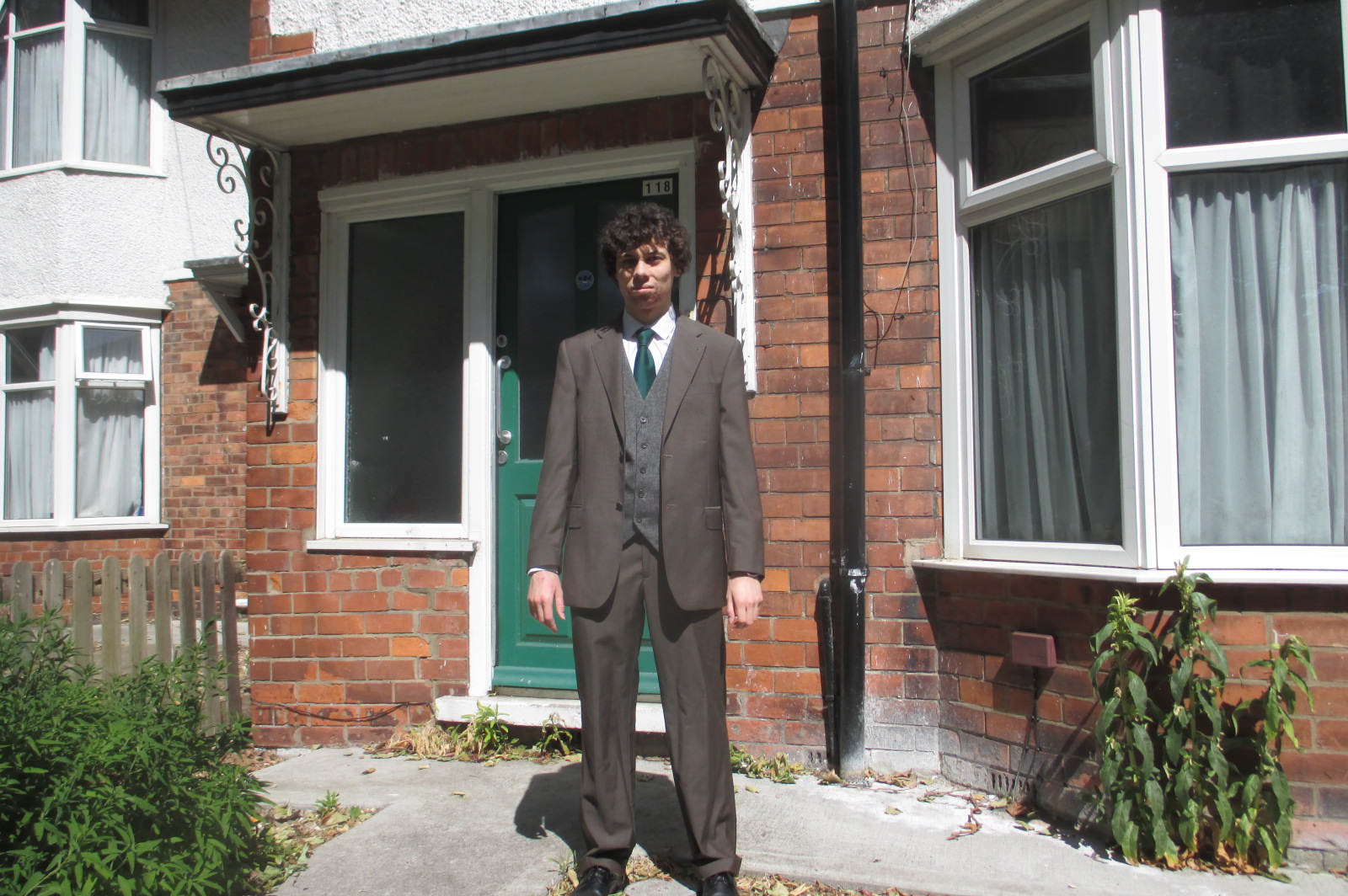
Having attended quite a few guest speeches by this point, I expected tonight’s to fit into the familiar mould. I was a little thrown-off, as were the those in charge, to find that the fixed tiers of seats in the lecture hall were folded away at the back wall and instead we were circled around a splatter of smaller tables. In retrospect it felt a misstep to wear a business suit to the occasion.

This was the Annual Norton Lecture, delivered by Professor Terrence Casey of the Rose-Hulman Institute of Technology. Trying very hard to minimise his references to Trump or Brexit, he spoke to us about the turbulent politics of the 1970s and the rise of Margaret Thatcher.

As someone who has watched a lot of old documentaries about British politics, as well as listened to a lot of Professor Vernon Bogdanor’s lectures for Gresham College, I was on familiar ground for much of the talk. Casey took us through the story of how the post-war economic consensus broke down through the tenure’s of Heath, Wilson and Callaghan, from the imposition of far-reaching price controls in 1972 to the Winter of Discontent in 1979. There was also the concurrent parliamentary story of the “Who Governs?” election, followed by Wilson’s achievement of a very slim majority, then the pacts with the Liberals when that got worn away.

The more original parts of the lecture (from my perspective at least) were on the backstage parts of the story – how policies were formulated and parties managed. Casey was keen to stress that the Margaret Thatcher of 1970, newly appointed as Secretary of State for Education & Science, was a far cry from the character that exists in public memory now. At that point, the notion of her ever becoming prime minister, let alone the godmother of a new political age, would have been considered farcical. Her emergence as a right-wing firebrand, he said, was more by a series of random chances (such as Callaghan’s decision against an election in 1978, or the backbench resentment of Heath in 1975) than by any divine ordination.

Casey rejected the idea that “Neoliberalism” – a term rarely spoken kindly but rather spat out in contempt by those who use it at all – was thrust upon the unwilling masses in an unethical manner by a nefarious elite. Instead he described it as the natural result of the masses falling out of love with the Keynesian regime that had prevailed before and looking for an alternative solution which the Thatcherite faction – with particular mention of Sir Keith Joseph – provided them. He also noted that whereas the throwing out of what is sometimes called Butskellism occurred quite rapidly after the economic breakdown and industrial unrest of the 1970s, the backlash against Blatcherism ensuing from the 2008 credit crunch took a much longer time to result in any serious change of course from the governments of the nations affected.

In the lengthy question & answer session which followed, I asked Professor Casey the same question which I had put to Paul Danahar ten months ago – When does he last remember politics being normal? He replied that there could never be a clear single cause or moment identified, but that the tide would have been turned by the culmination of many small factors. He also reassured us that although he had singled out the nineteen-seventies and the new tens for the purpose of his speech tonight he was aware of many other much rougher times in public discourse, all of which society survived mostly intact.

The Bits Between

Black Rod dealt with denser traffic.

Over the last few years, in which I have moved from secondary to tertiary education, I have become ever more aware of those unusual transitional times between academic terms. There was once a clear distinction: One would be at school while everyone else was there, and all would be at work according to a pre-planned schedule, otherwise everyone would be at home. Nowadays there tends to be an odd interlayer where it is possible to physically inhabit the place of education without there actually being any formal education going on.

My first glimpses at this occurred on a few occasions when I would be part of a school trip with small groups of other pupils. The destinations were sometimes a long distance away, requiring us to set off in the early morning before everybody else arrived and return after they had left. That meant we saw the buildings in a different light – quite literally, in some cases. Rather than bustling with students, the internal spaces would be populated only by a few cleaning staff. Corridors might be in pitch darkness, and chairs would be stacked on top of tables. The territory was at once familiar and alien. GCSE study leave – for many the end of secondary education – amplified this sensation, as one’s self and one’s own classmates could be outside of the regular timetable even while they could hear the lower years going about their normal business. At certain points it almost felt like being a ghost of an earlier time who haunted future generations.

At Wilberforce I, being a student governor, sometimes had to be on site at unusual hours for meetings. This added a new component to the oddity, for not only did the space feel different but there would be different people present also. A further change occurred whenever special revision sessions would be held during holiday periods – at which we would have to go in through the delivery gate because the proper entrance was closed.

Now I that I am at university, I sometimes wonder if the normal and abnormal have swapped around. Of the fifty-two weeks in a calendar year, only twenty-four are used for teaching. Further, the exam period and the settling-in week on either side of a lengthy summer break mean that over four months have passed since I last attended a lecture. The winter break is much smaller at around six weeks from the middle of December to the end of January. One major difference between school and university is that one would rarely attend the former at evenings or weekends. These short times exhibit the heterotopic effect in microcosm, especially if darkness has fallen in the sky, though often there is sufficient inertia to prevent the hubbub of activity from wholly disappearing in the brief time before it is summoned back.

A particularly strong indicator is the state of the institution’s intranet services, be they Virtual Learning Environments, file-sharing services or even just internal email. During ordinary times they assault their members with a blizzard of notices, notifications, announcements and communiques. During the odd times they can shut down very suddenly and remain static for weeks or even months on end. Right now I am noticing a sudden burst of activity on my university’s applications after a long period of silence, indicating that normality is soon to return. Such a phenomenon is akin to the first buds of a spring and the melting of long-established ice. The resumption of normal affairs is often more disruptive to the spirit than their cessation, for by then one can have become accustomed to having free roam in a wide empty realm, and thus struggle to adjust back to structured interactions with masses of others.

Fear not, for the cycle is deceptively fast, and it is not long before the liberty of loneliness is in full force again.