Sigh for A Deltic

This one was taken by Terry Foulger circa 1977, just to confuse you.

Today’s virtual lecture was put on by the North Eastern Railway Association. The Zoom session opened half an hour before the start of the actual presentation. This allowed the veteran members of the association to resolve technical issues, and also to trade jokes about Vladimir Putin. Neil Mackay, the association’s chairman, said that the upcoming Annual General Meeting would be held on Zoom due to the trustees’ lack of confidence in physical attendance, and asked if anyone would volunteer to be minutes secretary.

Our speaker was David Thomas. He had come to show off his photographs of the Class 55 diesel locomotives – popularly known as the Deltics, taken at various points along the East Coast Mainline in the period of 1977-1982, in anticipation of their displacement by the Class 43 High Speed Trains. Originally the photographs were taken with a Kodak Retinec 1B and the sound was captured by a Philips cassette tape recorder. Thomas’s original plan was to produce a tape-slide presentation, but this proved too costly at the time. Rather than settle for a less-than-professional presentation, he simply withheld the pictures until Microsoft Powerpoint came along to make things easier.

There followed a long stream of images. I will not attempt to describe them all. Thomas said that the Deltic engine was originally a marine concept, the admiralty having wanted a powerplant for its minesweepers. There were some technical diagrams included, and photographs of smashed engines undergoing repair. There were also insights into his personal life – he mentioned rushing to get a shot of No. 003 Meld at Holloway before going to see his wife give birth in York. He noted, too, where the environment in his photographs had changed, such as the “re-greening” around the viaduct at Leeds or the disappearance of poplar trees on the A64. Important moments in railway history were captured, such as the centenary of York Station in June 1978 and the final Deltic Scotsman service in February 1982.

The title of the lecture derived from Sigh for a Merlin by Alex Henshaw. The Rolls Royce Merlin engine had unofficially given its name to the Lancaster Bomber aeroplanes which used it, just as the Napier Deltic engine had done for the Class 55s. Thomas admitted that he didn’t like the locomotives originally but he grew to love them and he ended his talk by saluting all the volunteers who keep them working in preservation, the fleet between them having covered sixty-eight million miles.

EXTERNAL LINKS

UPDATE (8th March)

Chairman Mackay has accepted my offer to act as Minutes Secretary at the Annual General Meeting in May.

Fighting Corruption in the Judiciary

Many times before I have virtually attended the kinds of events that I could not attend in person. Sometimes it is because the location is too far away, other times because I am not a member of the organisation hosting. On this occasion it was both.

When I first found the flyer for today’s presentation on Eventbrite I assumed it would be an academic or professional presentation similar to all the others. Only upon entry did I realise it was actually the preparatory talk to a competition (which I obviously will not be entering).

The challenge was for high-schoolers and undergraduates to imagine that they were junior staffers at the justice ministry in a fictional Eastern European country which, having emerged from the Warsaw Pact, signed and ratified the United Nations Anti-Corruption Convention but then, after a change of government, withdrew from it, and wanted to make changes to the method of appointment and dismissal of judges. The student’s task was to make a video presentation about the meaning and consequence of corruption. They should outline the basics of a legal strategy to bring their fictional homeland in line with the convention again, and produce three key ideas on enhancing judicial independence.

The speaker, Alice Thomas, then went on to make some general points about political corruption: It exists everywhere in some shape or form. What we know is only what other people have found out, and in countries without an independent media it can be difficult to find out anything. Most countries have anti-corruption strategies, at least on paper. The United Nations often follows the work of smaller regional groups, because having fewer members means it takes less time to reach decisions. North Korea, unsurprisingly, did not sign the aforementioned treaty at all. Some countries signed but did not ratify. International cooperation is important for asset recovery and information exchange, since corruption is often a cross-border phenomenon. The judiciary, legislature and executive are there to monitor each other. In a country without a functioning judiciary everybody can basically do as they please. Corruption may take the form of individual judges being bribed or coerced rather than the whole system being controlled. For a government to ensure judicial independence without inadvertently encroaching on it is a complicated task, since attempts to scrutinise the courts would themselves resemble the executive applying  political pressure.

Rather amusingly, Thomas ended by telling participants to be careful about their sources and not to rely on Wikipedia because “it’s not always very accurate. It’s a very subjective thing. It relies on who writes what in it.” – me, for example.

EXTERNAL LINKS

Warwick the Kingmaker by John Reid

Today I attended another virtual meeting of the Richard III Society Gloucester Branch. The presentation was by John Reid, discussing the historical reputation of Richard’s father-in-law Richard Neville, 16th Earl of Warwick, popularly nicknamed “The Kingmaker”.

Warwick has been hugely divisive to contemporaries as well as historians, Ricardians, Lancastrians and Yorkists. He was England’s greatest celebrity of the fifteenth century and his fame (or infamy) carried on into the twentieth). He even had a board game named after him.

He became the premier earl in England in 1449 due to lucky deaths. His family were great winners in the lottery of aristocratic marriages – picking up the estates of the Beauchamps and Despensers. His patchwork of armorial quartering reflects the complexity of his family connections. He had initially supported Henry VI, but changed sides in 1452 largely due to his inheritance disputes with the Duke of Somerset.
Henry VI, due in part to inherited mental health troubles, proved spectacularly incompetent, and many considered Richard, Duke of York to be king by right – though Reid showed us York’s signature on the letters patent of 1454 appointing Henry’s son Edward of Lancaster as Prince of Wales, clearly showing that even at this late stage he was not disputing the latter’s right. When eventually he rebelled against the Lancastrian crown he had Warwick’s invaluable support. York’s son Edward, Earl of March rescued Warwick from Margaret of Anjou and Warwick in turn arranged his coronation as Edward IV. For the first three years of Edward’s reign Warwick was thought “third king”, being virtual governor of the realm, acquiring even more land (after he confiscated the estates of the Percy and Clifford families, he wound up with lordships in twenty-eight English counties and a handful in Wales) and an annual income of at least £10,000 (nearly £11m in 2021 money).

Matters of matrimony spoiled his status: Warwick had spent months lobbying for a French princess to marry his king, and was humiliated by the revelation that Edward had already married – in secret – to Elizabeth Woodville, a dowager dame whose family had fought for the Lancastrian side. He described the parvenu Woodvilles as “grasping and charmless”, resenting how many titles, offices and marriages were given to them at the expense of his own dynasty, and how their influence over the crown came to displace his. Reid drew parallels with the modern-day rivalry between Carrie Symonds and Dominic Cummings.

Warwick’s first coup against Edward occurred in the summer of 1469. He launched his second in 1471, making a deal with Margaret of Anjou on 22 July and reinstating Henry VI on 3 October. He was killed at the Battle of Barnet on 14 April 1471. Reid noted that this was the only time he had fought on foot rather than horseback, leaving him with no easy way to escape when the tide turned against him and he was isolated from his allies on the field. This was very similar to the way Richard III would die fourteen years later.

The earl was adept at his own spin so contemporary sources are often too kind to him. Later writers were often too harsh. In particular Burgundian writers made him a bogeyman, believing that his policies would lead to their absorption by France. He had something of a rehabilitation under the Tudors – Henry VII wanted Henry VI to be declared a saint.

In summing up, Reid discussed Warwick’s virtues and vices. He was confident, charismatic, charming, courageous and energetic. He was treated shabbily by Edward IV after 1464. He may have been the model for Sir Lancelot as envisioned by Sir Thomas Mallory. On the other hand he can be seen as seeking power only for himself and being motivated by personal feuds rather than the national interest. His military skill is doubted, as is his necessity in the Yorkist accession. Could Edward IV have made himself king without Warwick’s help? Were the Woodvilles any worse than the Nevilles?

After the presentation itself had concluded and most attendees had logged out, there was a lengthy discussion between one attendee (Sean O’Neill) and the host (Cynthia) over the intricacies of Zoom functions – because various buttons were appearing and disappearing depending on the settings of individual hosts and updates by the company. This led to an explanation of the difficulties of an organisation managing virtual meetings, then one into internet difficulties generally as well as experiences of coronavirus. I mentioned having tested positive in November, and my experience with Hubbnet. I remarked that I would have been truly screwed had the pandemic hit in the period of 2009-13 when my house relied on plugabble WiFi dongles for very limited internet access. The two were surprised to realise that I lived near Hull, the former having once lived in North Ferriby and the latter in Hessle. They started asking me if Kingston Telecoms or Kingston Communications still existed (they do).

The Trouble with Tombs

This was a presentation by the University of Liverpool, concerning the history, primarily between the seventh and nineteenth centuries, of how England has dealt with human corpses.

The main speaker was Ruth Nugent. She wanted to examine how the dead were handled literally, emotionally, ethically, spiritually and ideologically. She found that there was rarely much commentary on the relationship between bodies and tombs, students of other subjects would focus on associated details of architecture, geneaology, heraldry and religion but the principles of burial itself were often overlooked.

Until the eleventh century burial within a church building (as opposed to the yard outside) was reserved for royals, saints and clergy. Until the thirteenth it was monasteries that were most sought after as resting places. Due to the long-term problem of overcrowding it was common for bodies to be moved after a hundred years so that the plot could be used for someone else, or because the church was undergoing renovation work. There were cases of corpses stolen by one church from another, and legal disputes between families of the deceased over where the remains could be placed. Sometimes churchmen would claim to “discover” the bodies of legendary figures such as King Arthur. Epidemics, such as the Great Plague, put increased pressure on churchyards due to sudden mass burials. In the nineteenth century secular public cemeteries were opened to give alternatives to church burials, and cremation became more accepted. Laws were passed against intramural burials and exhumation to recycle spaces.

Physical upkeep was always a problem. Tombstones would be chipped away to make ingredients for magical medicines, and sometimes families would carry out clandestine removals of their own ancestors to escape from vandalism. Elizabeth I ordered churches to restore their tombs but often the churches lacked the money to comply. The Civil War left cathedrals in particularly poor condition and soldiers often looted graves. Large numbers of graves underneath churches could cause subsidence. Antiquarians (she named John Leland, John Stow, William Camden, John Waver and William Dering) determined to make written records of tombs and their contents in the hopes that the information could survive even if the physical structures didn’t – partly through interest in history, partly to safeguard their own futures.

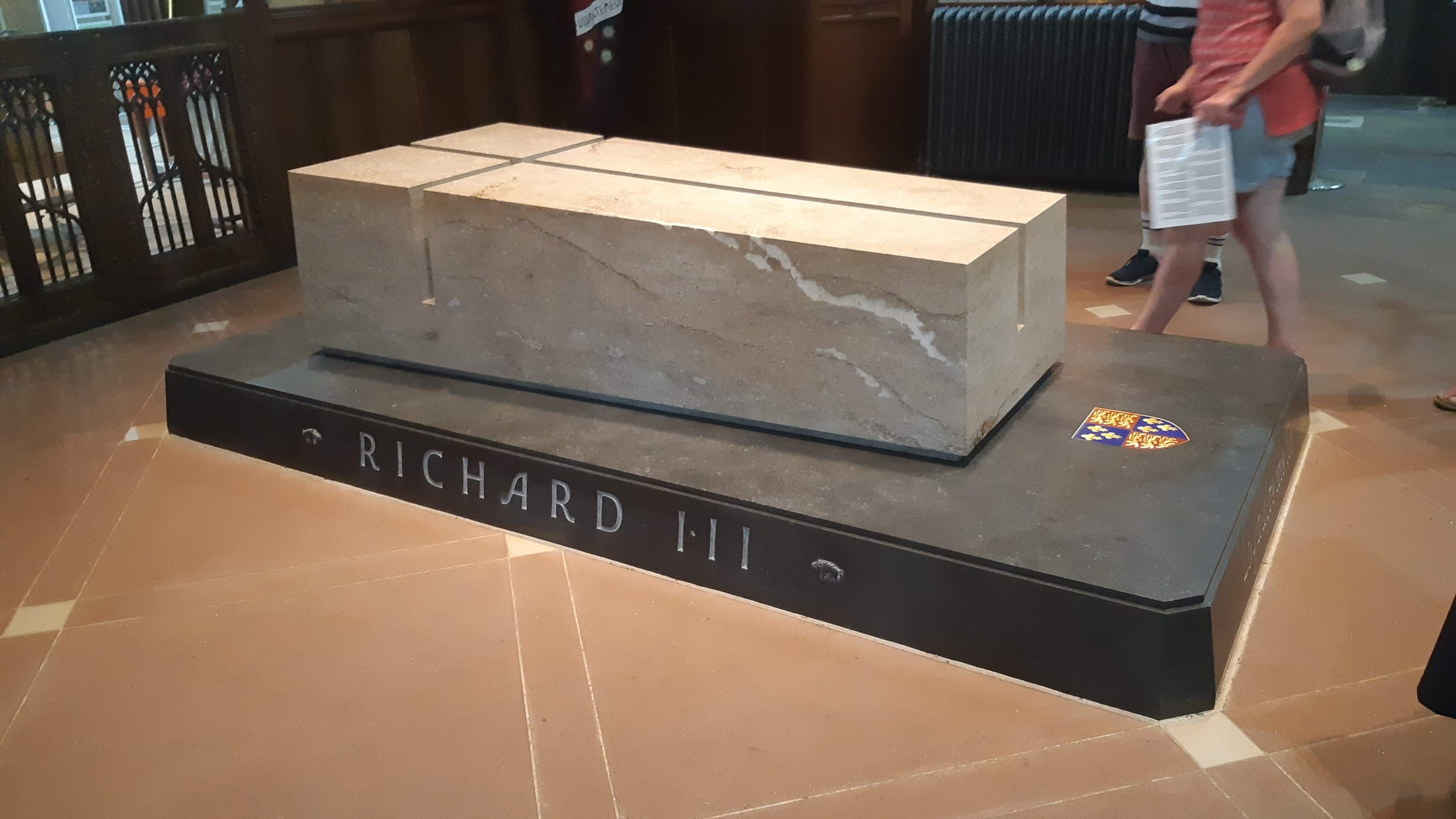
The next speaker was David Monteith, who recalled his experience with the reburial of Richard III in 2015. Public consultation revealed a very wide spectrum of preferences for the appropriate manner in which to deal with the late king – some wanting a full tomb, others a simpler box. He noted that many people’s feelings about Richard were hard to separate from his Shakespearean portrayal, and that if the rediscovery had occurred a few years later he would have needed to contend with much more polarised attitudes to memorials. He said that even in Richard’s day it was normal for the dead to be moved or their surroundings altered – Edward IV rebuilt many tombs of his relatives, as later would Elizabeth I. Burial styles changed over the centuries and so there were many valid ways of disposing of Richard. He did, though, have to discourage visitors at Leicester Cathedral from taking photographs with the casket.

Harold Mytum followed. The Church of England has policies for bodies found on consecrated land that parallel those of secular authorities. In medieval times English burials were much the same as continental ones, including frequent recycling of plots. Most above-ground interments in Europe lasted only twenty-five years before the cadaver was moved elsewhere. The Church has a duty to protect and respect human remains, but exhumation can be allowed if it serves the public interest, e.g. the advancement of science.

Andrea Bradley spoke of the challenges involved in securing land for HS2 – with its own bespoke system for the removal and reburial of human remains. They have a specific legal agreement with the Archbisop’s Council that corpses uprooted from consecrated ground must be put down in other consecrated ground.

Ian Dungavell said that burial spaces in cities are getting full again, and few now expect a large grave for themselves in perpetuity, instead accepting that after some time they will be relocated. Re-use of graves in this way has been allowed again (although only in London) since 2007 because there is no alternative possible.

Lin Foxhall, the host, took questions from the audience.

  • On the rise of digital commemoration, Nugent said to be wary of rapid-onset obsolescence. QR codes and URLs might not be functional a century from now and those without compatible technology – even today – would be locked out of interaction.
  • Asked why bodies were so obsessed over, even by cultures who insisted the soul was more important, Monteith suggested that without a standardised metaphysical understanding of death we fill the gap with fear.  He also wondered if we over-medicalise death nowadays.
  • Asked how common it was for bodies to be upgraded to higher-status graves, Mytum said that the emergence of non-religious cemeteries allowed greater commercialism in burial plans. Dungavell said that not everyone has detailed plans for their disposal, and that survivors sometimes need to “park” the body in a cheap grave for a few years while a more elaborate commemoration is organised.
  • Asked if future wills could contain clauses regulating future exhumations, Nugent said that such clauses are already in use. Foxhall said that ecological implications of burial and/or cremation are more closely observed now.
  • Asked if we should go back to communal burials, and why bones are seen as more important than ashes, Dungavell thought bones were treated brutally enough and Mytum said there are already commercial long-burrows.
  • I asked if something like the Necropolis Railway could reappear to allow urban residents to visit relatives’ graves far away. Dungavell said that the original company was unsuccessful as people wanted burials nearby. Ruth mentioned how railway companies had allowed corpses to go in sidings and embankments.
  • Asked about the changing nature of images on graves, Nugent said that some pictures could be very upsetting, especially if photographs peel off. Mytum noted that there had been changes in taste for memorials in the middle of the twentieth century, Foxhall noted very dark imagery in the eighteenth – such as cherubs becoming skeletons.
  • Asked about the need for different funeral and disposal styles for different cultures, Monteith noted he had already seen multi-faith crematoria for that purpose.

EXTERNAL LINKS

Re-imagining Towns and Cities

Recently I’ve been binging on some urban design channels – mostly talking about the best way to structure and arrange a populous settlement. Today I attended a Zoom talk on that topic – the heraldry stuff for this year appearing to have run out.

I had expected today’s session to be on similar themes – housing density, cycle paths, zoning etc – but instead it was mainly focused on children’s play areas. It was hosted by Timberplay, with guest speakers Lucy Wallwork and Laura Scott-Simmons.

The consensus was a need to move away from “KFC” playgrounds (Kit, Fencing and Carpet, not Kentucky-Fried Chicken) and towards more varied, naturalistic settings. Much of the aim was to design urban environments in a child-friendly way, so that children could access communal spaces without needing to be driven around in parents’ cars (or, for that matter, being endangered by other cars passing nearby).

Another theme in the talk was the decline of high streets due to the rise of online shopping – exacerbated by the pandemic, of course. It was recommended that city centres cater to more than just retail, with outlets for religion, leisure, culture and even rewilding. It was important to avoid “clone cities” which are indistinguishable from their neighbours, and create a unique feature for each town to attract tourism.

The talk ran on for a little longer than I had expected but there was still time at the end for questions. One asked if the measures for “children” also applied to adolescents, and the speakers acknowledged that teens were often “designed out” of public spaces because of negative perceptions. (The popular industry phrase quoted earlier was “too old for the playground, too broke for the café, too young for the pub”.)

I, living most of my life in remote countryside and noticing how many of these projects had “urban” or “city” in the title, asked if the same principles of design also worked for smaller and more rural settlements. The speakers said that the basic rules still applied, and that there was sometimes a “play deficit” in rural areas because it is often assumed that people there have easy access to nature whereas really much of it is closed-off agricultural land.

FURTHER READING

Most of these were mentioned in the presentations, and it’s easier just to list the links instead of copying them out.

Railway Heraldry with Gordon Casely

Casely with the Scotsman, 10th April 1966

Today I virtually attended the Alan Watson Memorial Lecture by the Heraldry Society of Scotland, focusing on the coats of arms of Britain’s railway companies since Victorian times.

Before the presentation proper, Edward Mallinson gave a speech commemorating Alan Watson himself – a heraldist, philatelist and trainspotter who died last year.

Gordon Casely added to the tributes, then began his lecture. He noted that the society had never covered railway heraldry in its lectures before, and insisted that “to sample the pleasures of such heraldry, one doesn’t need to be a railway enthusiast, far less a loco-spotter, number-bagger, rivet-counter, or even an anorak. Casely himself had been a railway journalist in the 1960s, and in later decades a campaigner for higher quality rail services in Scotland.

He prefaced his historical tour was a health warning – railway heraldry is an absolute mess, almost all being borrowed, bogus or thieved. He also said that much of it amounts to heraldry we don’t really deserve – badges, totems, insignia, emblems, motifs or devices, rather than coats of arms. As to why this had occurred, he suggested that Victorian-era Lyons and Garters had both “missed their trains” when it came to “the heraldic iron horse”. He said that he had examined over two hundred sets of heraldic devices used by railways in Britain, and could count on his fingers the real coats of arms. Still, railway heraldry was always interesting and entertaining.

His first example was a plaque at Edinburgh Waverley station commemorating Sir Nigel Gresley. The coat of arms above the text is that of the London & North Eastern Railway (real and legal, unusually), rather than Gresley’s own.

In the next slide, I am sad to say that our speaker made an error. He showed my illustration of the arms of the Gooch baronets of Benacre Hall, although he attributed them to Sir Daniel Gooch, 1st Baronet of Clewer Park and Chairman of the Great Western Railway. He compared these to the arms to those displayed on the stall plate of Major John Gooch in the chapter room of the Order of St John, and thought it curious that the latter’s arms contained railway references (a wheel in centre chief and on the crest) while the former’s did not. Having checked in Burke’s, I can say that the arms of Sir Daniel and his successors do contain those elements, and that Casely was simply using the wrong image.

The vast majority of railway arms showed a shield within a strap and buckle. Within the Scottish clan system, such an arrangement marks that one is a junior member of the group rather than the chief, and thus the captains of industry were making themselves look like mere corporals. Of the five major railways in Scotland circa 1920, four used a buckle around their main emblem while the Caledonian Railway simply copied the pre-1603 royal arms of Scotland. Scottish railways in modern times are no better. Casely recalled writing to the chief executive of the Great North Eastern Railway in 1996 suggesting arms be adopted. What resulted was, in Casely’s words, “a real fruit salad”, featuring two oval shields within a strap and generic Scottish floral emblems crammed between. Particularly bad was the logo of the English, Welsh & Scottish Railway, which instead of the unicorn represented Scotland with a stag more appropriate to Northern Ireland. A case study was made of the Deltics (“a proper locomotive”, Mallinson interjected). An earlier plan was for this class to be called Heralds, with individual vehicles named after specific heralds (i.e. Albany, Rothesay, Ross, Orkney, Marchmont and Stirling, plus Glasgow).

Moving down to England, the Great Western Railway used the “entirely bogus” emblem simply placing the arms and crests of London and Bristol side by side, even though the line ended at Paddington and never penetrated the square mile. The Lancashire & Yorkshire Railway borrowed the shields of the two county towns, while an early emblem for the Hull & Barnsley Railway used an ermine pavillion based on those employed (incorrectly even then) by peers of the realm. Casely was particularly contemptuous of the Cornwall railway, whose seal used the shield of the Duchy, ensigned it with the heir apparent’s feathers, and shoved some industrial tools behind it. A smorgasboard of other railway emblems was shown, most following the trend of simply stealing the civic arms of their connected towns or badges of the royal family.

At last some “real” heraldry was featured – the Great Central Railway matriculated from the College in 1898, making it likely the first railway in Britain with legal heraldry, and used them on just about everything.

Arms were adopted for British Rail following nationalistation in 1948, technically those of the British Transport Commission. The crest alone was used on a roundel on the sides of many trains. Two versions of this were used – with the lion facing either dexter or sinister depending on which side of the train you stood. Allegedly Garter Bellew went apoplectic upon realising this. The famous cycling lion was similarly reversible.

Casely also mentioned that a handful of lines never used any kind of emblem – such as the North Sunderland Railway which he personally visited in 1951. His conclusion was that though railways have long used a large selection of emblems, badges and other quasi-heraldic insignia, the majority of it would not be heraldry as we know it. He wondered if heraldists had “some work to do” in convincing modern rail companies to seek legal grants of arms.

This was, by the speaker’s assertion, the society’s first in-person lecture for eighteen months. A hybrid system was in place, with an uncertain number of people sitting in the lecture hall and two dozen (including myself) attending virtually. What annoyed me about this setup was that all of the virtual attendees had been forcibly muted and the chatbox was disabled. Members physically present were invited to ask questions at the end of the presentation, but we had no ability to interact. This was a deep disappointment as I was keen to advertise the island armory post that I published a week ago. The only function I found still working was the “raise hand” button, which I and one other attendee used, but I never got to see if this was acknowledged by the hosts as while Mallinson was advertising an upcoming lecture my internet connection failed. By the time I got it working again the meeting had concluded and the session had closed.

FURTHER READING

Restoration & Renewal with James Henderson

Today’s Zoom meeting was with the charity Transforming Communities Together, concerning the Restoration & Renewal programme for the Palace of Westminster.

James, our host, asked his small group about our reasons for joining him. I replied that I was not professionally affiliated with the project but followed politics (and occasionally architecture) as a hobby. I also referred to my father’s ownership and ongoing restoration of Paull Holme Tower.

The presentation began with a brief virtual tour of the premises and an explanation of the role of MPs. James asked us if we had ever met our member of Parliament. I responded that I had never met with my own, but had met several others – Diana Johnson, Alan Johnson, Victoria Atkins and Lia Nici.

Much of the conversation focused on ways to make Parliament more accessible to the public – with participants requesting a hearing loop and better wheelchair routes. I recalled my parents’ experience opening the tower to the public, finding that tours had to be stopped due to the unsafe medieval staircase which could not be brought up to code without substantially altering the original fabric of the building and thus rather defeating the objective. Another participant responded that it was all about money.

On a related note, it was announced on Wednesday that Parliament had launched a new website for its heritage collections. The new site provides detailed galleries and records of all the palace’s artworks, furniture and fittings. I appreciate the idea but so far I have been a little disappointed by how many items have their illustrations missing and the range of records not quite being as wide as expected, but hopefully in time that will be resolved.