The Matter of Sir Martin

Yesterday the London Gazette published the list of British honours conferred to commemorate the sovereign’s official birthday. Among those appointed as Knights Bachelor was the writer and academic Martin Amis. This announcement was notable for two reasons, the most prominent being that he died almost a month ago.

Britain doesn’t generally do posthumous honours, but occasionally people who have accepted them die before the official announcement and the chancery (or Cabinet Office) decides to keep their names on the list.

In this case the supplement specifies “To be dated 18 May 2023” and from what has been reported so far, officials contacted Amis early last month then rushed through the administrative process to confer the award before he died, but asked his family to keep it secret until now. We can presume that no physical accolade was given, since he was in Florida at the time.

The second reason this raises eyebrows is that Amis never seemed like the sort of person who would desire a knighthood – in much the same way that it would feel strange for George Orwell or Christopher Hitchens to get one. He even said outright in a 2011 interview that he would never accept any honour from the crown. It is not clear what caused this apparent deathbed conversion, and I have seen comments from some people speculating what mental state he was in during his final days.

Obviously Sir Martin himself will have no opportunity to enjoy the trappings of knighthood, but his widow and daughters will, and the backdating means that they will have precedence above the wives and children of other Knights Bachelor appointed yesterday, or indeed in the Resignation Honours last week.

With Heart and Voice to Sing

The coronation, in addition to its visual majesty, is an opportunity for musical expression. In addition to the long list of traditional pieces, there were twelve brand new compositions commissioned for the day. The whole has been turned into an album, which was uploaded to YouTube and various streaming services on the same day. It is also due to go on sale in CD format on 15th May.

Naturally I took it upon myself to arrange it all into a convenient table for the coronation’s Wikipedia page, which another editor shortly afterwards redesigned almost entirely.

THE OLD

  • Johann Sebastian Bach: Magnificat in D Major; Sunday After New Year; Singet dem Herrn ein neues Lied; Alla breve in D Major.
  • William Boyce: The King Shall Rejoice: Opening Chorus
  • Anton Bruckner: Ecce sacerdos magnus.
  • William Byrd: Prevent Us, O Lord; Gloria; Earl of Oxford’s March.
  • Walford Davies: Confortare.
  • Edward Elgar: Nimrod; March No. 4.
  • Orlando Gibbons: Threefold Amen
  • John Goss:
  • George Friderich Handel: The Arrival of the Queen of Sheba; Oh, had I Jubal’s lyre; Care selve; Zadok the Priest.
  • William Henry Harris: Flourish for an Occasion.
  • Gustav Holst: Jupiter, the Bringer of Jollity.
  • Hubert Parry: I was glad; March from the Birds; Chorale Fantasia on “The Old Hundredth”.
  • Henry Purcell: Trumpet Tune; Christ Is Made The Sure Foundation.
  • Richard Georg Strauss: Wiener Philharmoniker Fanfare;
  • William Walton: Crown Imperial; Coronation Te Deum.
  • Thomas Weelkes: O Lord, Grant the King a Long Life.
  • Ralph Vaughan Williams: Fantasia on Greensleeves; Prelude on Rhosymedre.

THE NEW

  • Karl Jenkins: Crossing the Stone.
  • Sarah Class: Sacred Fire.
  • Patrick Doyle: King Charles III Coronation March.
  • Iain Farrington: Voices of the World.
  • Nigel Hess, Roderick Williams & Shirley Thompson: Be Thou My Vision.
  • Paul Mealor: Kyrie Eleison.
  • Roxanna Panufnik: Coronation Sanctus.
  • Tarik O’Regan: Coronation Agnus Dei.
  • Christopher Robinson: The Recognition; Homage Fanfare.
  • Andrew Lloyd-Webber: Make A Joyful Noise.
  • Judith Weir: Brighter Visions Shine Afar.
  • Debbie Wiseman: Alleluia.

Personally, I’m a little disappointed at the lack of Howard Shore.

She Spoke to Serve

The late Baroness Boothroyd has fascinated me for as long as I have followed British politics, and hers was among the deaths I most dreaded.

Just last October, with my newly-registered library card, I took out her autobiography. There are eighty pages before she actually becomes an MP (and she goes into detail of her multiple failed attempts), describing her childhood in impoverished Dewsbury, then her time as a Tiller girl, then going into politics as a secretary to two Labour MPs, then going overseas to work for JFK. Even when she gets into parliament, her struggles are as within her own party as against the others – this being the age of entryism by Militant, which she was instrumental in rooting out.

Before the release of the 2018 parliamentary portrait series ,(and note that her image is the one used on the PDS blog) Boothroyd was one of the many prominent politicians for whom I struggled long to find a free photograph to use on Wikipedia. The only one on which I could lay my hands was a poor-quality screenshot from President Obama’s speech in Westminster Hall in 2011, published on the White House channel and thus public domain. The baroness is shown looking the wrong way, sandwiched awkwardly between George Osborne and Douglas Alexander. For the top (indeed, only) illustration in a prominent online biography it just wasn’t good enough.

The other big challenge was her coat of arms – one of my earliest such works. Unlike her successor Michael Martin, Boothroyd’s arms were widely photographed and shown online. Recreating the lozenge visually was easy enough, though it wasn’t until years later that I tracked down the text of the blazon to go with it. My first attempt was not well-received by the residents of r/heraldry, so it was one of the few of my graphics which I completely remade.

I never got to see how the community (or anyone else) viewed my second attempt, for within hours of her death being announced another user, ProfAuthor, had replaced it with his own vector graphic. It is technically superior, of course, but still it is disappointing to know that my own efforts are made redundant. Something similar happened with Sir Ernest Shackleton the last time he was in the news.

Off to the Libraries

Although the COVID pandemic is not exactly over, lockdown seems unlikely to recur and so it is now practical to visit again those places which had been inaccessible for much of the last two years, including public libraries.

As I have mentioned before, the ceremonial county of East Riding of Yorkshire is divided into two unitary authorities – one for Kingston-upon-Hull and one for everything else. This includes public library systems. I have therefore gone about acquiring a card for each. Applications online were a reasonably simple process of filling in a form on the councils’ websites, though actually visiting a library in person to collect the physical card was rather as neither institution’s opening hours were exactly convenient. Oddly, both sets of online login details suddenly stopped working once I’d taken possession of the cards and I had then to go back to ask for help.

Now that they are working I can search both libraries’ online catalogue before going to pick anything up. There is a delight in finding here the tomes (particularly on heraldry) that had long eluded me on Google Books or the Internet Archive, or even the library at the university. The downside is that these are not all kept at the same location (East Riding’s in particular are scattered across a large area.) and that the reference section of Hull Central Library has been closed for more than a year.

In case one cannot attend the physical libraries at all, both online accounts include the BorrowBox service allowing patrons to take out virtual resources, though the inventory on there is quite small.

EXTERNAL LINKS

Demise and Disarray

The death of Elizabeth II is a time of serious grief for her family and her many peoples. It is also a time of mild confusion for public bodies, and of course Wikipedians. Here is a run-down of some of the changes that have recently been made.

The Monarch

The man long known as Charles, Prince of Wales is now King. For many years there had been speculation that he would take the regnal name George VII in honour of his maternal grandfather and great-grandfather, but shortly after his accession it was confirmed that he would indeed go by Charles III. There was a brief period when his page was at Charles, King of the United Kingdom before being changed to Charles III. There is an ongoing debate as to whether the article title should include “of the United Kingdom”. The side in favour argues that there have been many other monarchs over the centuries called Charles III from whom the present monarch needs to be differentiated. The side against argues that Charles is king of far more than just Britain, and that if you included one realm in his title you would have to include all of them, lest you imply that one is more important than another.
The Consort

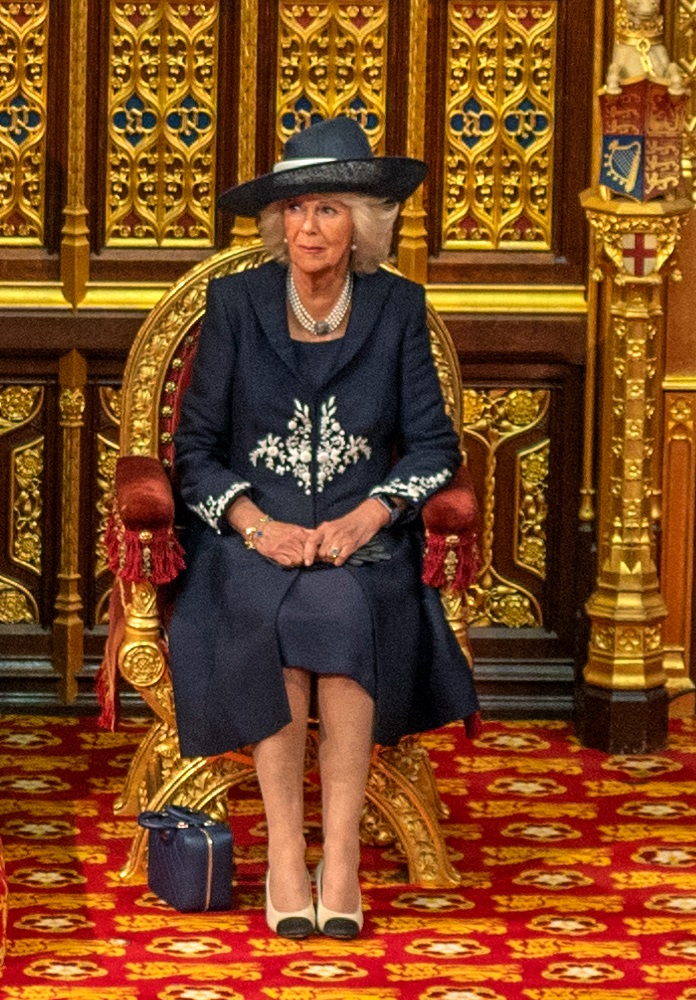
Camilla Shand, at the time of her marriage in 2005, was not popular among much of the public still grieving Diana Spencer. So as to avoid appearing to usurp her legacy, she never styled herself “Princess of Wales”, instead going by “Duchess of Cornwall”. It was also suggested back then that, upon her husband’s accession, she would be styled “Princess Consort” (presumably derived from Prince Albert) rather than Queen. How true this proved to be was always a matter of public relations rather than constitutional law. By the start of this year it was clear that her reputation had recovered sufficiently to abandon that idea, and Elizabeth II in an open letter explicitly endorsed her daughter-in-law to be called Queen Consort. Currently all major media and government sources are very insistent on styling her “The Queen Consort”, rather than simply “The Queen” as other queens consort were before her. It is not yet clear if she will be described this way for the whole of Charles’s reign or if it is simply a temporary measure so as not to confuse the public while the late queen regnant is still being mourned. Again, there is dispute over whether her article title should include “of the United Kingdom”.

The Heir Apparent

In 2011 Prince William of Wales was ennobled by his grandmother as Duke of Cambridge, Earl of Strathearn and Baron Carrickfergus in the peerage of the United Kingdom. He has not ceased to hold these titles, but they are now buried beneath several others. The dukedom of Cornwall, in the peerage of England, is governed by a 1337 Charter instructing that it belongs automatically to the eldest living legitimate son of the incumbent monarch and the heir apparent to the throne, and that if these two statuses are held by different people then the title is left vacant. This means that all dukes (save Richard of Bordeaux) are deemed to have held the original peerage, rather than it being created anew each time. The Duchy of Cornwall, a substantial land-holding corporation in the south of England, is governed by the same. The dukedom of Rothesay in the peerage of Scotland is mandated by an Act of Parliament from 1469 to follow an identical succession, as are the titles Earl of Carrick, Baron of Renfrew, Lord of the Isles, Prince of Scotland and Great Steward of Scotland. The titles of Prince of Wales and Earl of Chester, by contrast, are not automatic. They are conferred by letters patent at the discretion of the monarch. It appears from news reports that Charles III has opted to do so almost immediately after coming to the throne, though I am still waiting to see this formally confirmed in the Gazette or the Court Circular. There was a short interlude in which the royal website and Wikipedia styled him “Duke of Cornwall and Cambridge”. I argued that it was poor form to include Cambridge while leaving out Rothesay, to which an anonymous user replied:

It would, but we don’t have a basis for that usage in Wikipedia practice. The hierarchy is very much What the Papers Say > legal/heraldic/formal/official names > anything that actually makes sense. I’m guessing there will be a followup announcement about his distinct style in Scotland and indeed in Northern Ireland, and maybe they’ll end up with something more logical and less clumsy. After workshopping every other possibility.
The Others

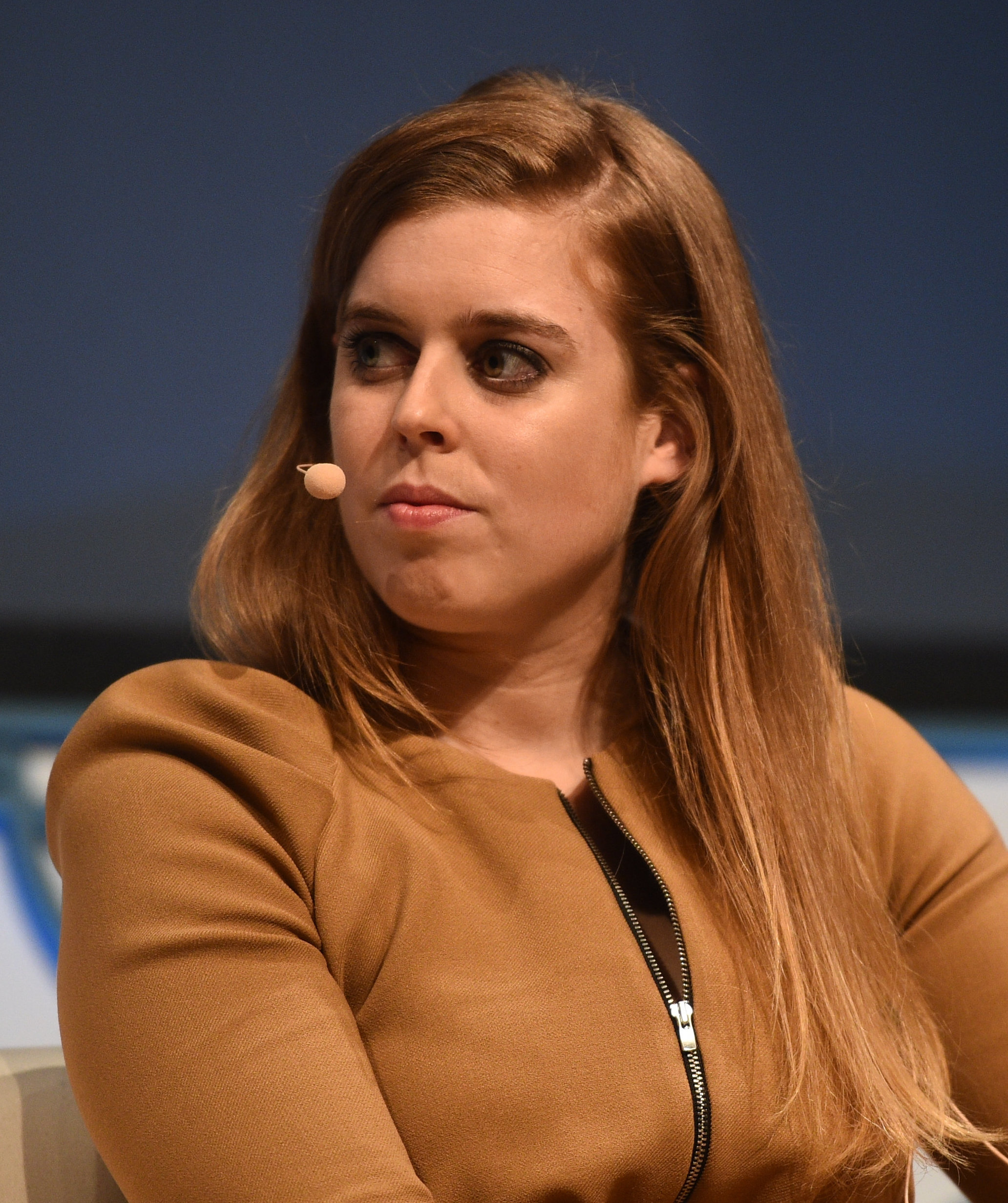
The accession of a new sovereign causes a reshuffle in the orders of precedence among the royal family. In the male order, Charles is naturally now on top. His sons William and Harry also move up, as do his grandsons George, Louis and Archie (their position before, as great-grandsons of the sovereign, was a little unclear). Andrew and Edward are demoted from sons to brothers, James and Peter from grandsons to nephews, and the Earl of Snowdon from nephew to cousin. The Dukes of Gloucester and Kent and Prince Michael are unaffected. On the female side Camilla achieves supremacy, followed by Catherine, then Meghan, then Charlotte, then Lilibet, then Sophie, Anne, Beatrice, Eugenie, Louise, Zara, Birgitte, Katharine, Marie-Christine, Sarah and Alexandra.

The styles and titles of Charles’s descendants are also upgraded (though those of his siblings and niblings are not diminished). William and Harry both gain a definitive article in their princely titles. George, Charlotte and Louis are now “of Wales” rather than “of Cambridge”. There has, of course, already been a famous Princess Charlotte of Wales, so until an alternative solution emerges their Wikipedia pages must be differentiated by the awkward use of years in brackets. Archie and Lilibet, as children of a younger son of the sovereign, now qualify as royals under the terms of the 1917 letters patent. They could now correctly be styled as “His Royal Highness Prince Archie of Sussex” and “Her Royal Highness Princess Lilibet of Sussex”, though no move has been made in that direction so far. The situation regarding the Earl of Wessex’s children remains ambiguous. Charles could, of course, amend or revoke the letters patent however he wishes, but there has not yet been any indication in that regard.

The dukedom of Edinburgh, earldom of Merioneth and barony Greenwich, which were conferred by George VI on his daughter’s fiancé Philip Mountbatten in 1947, and were then inherited by Charles in 2021, have now merged with the crown. Any of them can be bestowed anew on whomever His Majesty chooses. His brother Edward has long been presumed to receive them next, but no decision has been taken at this time.

Under the Regency Act 1937 Camilla (consort) and Beatrice (fourth adult in line) have become Counsellors of State.

The office of Lord Great Chamberlain of England (not the same as Lord Chamberlain of the Household) has automatically transferred from the 7th Marquess of Cholmondeley to the 7th Baron Carrington. The former therefore loses membership of the House of Lords under Section 2 of the 1999 Act while the latter gains it. What happens to the place he already held among the ninety elected hereditary peers is still to be determined.

The Courts

The Queen’s Bench Divisions of the High Courts of England & Wales and of Northern Ireland, as well as the Courts of Queen’s Bench for the Canadian provinces of Alberta, Manitoba, New Brunswick and Saskatchewan, have all been renamed King’s Bench. The status of Queen’s Counsel in Australia, Britain, Canada and New Zealand has likewise changed to King’s Counsel, and all who hold it have had to amend their post-nominals accordingly. Only last month I created a new template for judges of the Queen’s Bench Division and had scrupulously added the specification to each of their infoboxes. Now I have had to change all of them. Still, it helps boost my edit count I suppose.

UPDATE (March 2023)

A few months late but better than never, the Palace now confirms that Archie & Lilibet have princely titles, as well as that Edward has become a duke.

A Note on the Leadership Race

As Boris Johnson’s premiership draws to an undignified conclusion, a new leader of the Conservative & Unionist Party is to be elected for the third time in just over six years.

When last that happened, Professor Norton blogged about about four different types of Prime Ministers: Innovators who want to implement specific and ambitious goals of their own design (e.g. Thatcher), reformers who want to implement the goals of the party overall (Attlee), egoists who are in it for their own fame (Eden, Wilson, Johnson) and balancers who are concerned with keeping the peace between rival factions (Macmillan, May). He has not claimed these to be definitive or exclusive, but merely the labels he finds most useful. Recently he has revisited the idea.

In my view the roles of innovator and reformer are a little difficult to distinguish, as political ideas are often credited to the prime minister who enacted them even when their invention was owed to another (e.g. much of Thatcherite thinking was actually the product of Sir Keith Joseph). It might be better to merge them into one category of ideologue.That of balancer more obviously stands apart as someone less ambitious about specific goals and more concerned about overall stability. Egoist, of course, is something that few politicians would admit of themselves and which often comes across as a slur (not that it is untrue).

At present the nomination window has yet to formally open let alone close, so the field is still prone to change, but let us take a look at those declaring so far:

  • Kemi Badenoch (Saffron Walden), lately a junior local government minister
  • Suella Braverman (Fareham), current Attorney General
  • Jeremy Hunt (South West Surrey), current health committee chair
  • Sajid Javid (Bromsgrove), lately health secretary
  • Penny Mordaunt (Portsmouth North), a junior trade minister
  • Grant Shapps (Welwyn Hatfield), current transport secretary
  • Rishi Sunak (Richmond Yorks), lately Chancellor of the Exchequer
  • Elizabeth Truss (South West Norfolk), current foreign secretary
  • Tom Tugendhat (Tonbridge & Malling), current foreign affairs committee chair
  • Nadhim Zahawi (Stratford-on-Avon), current Chancellor of the Exchequer

At present Sunak and Truss are perceived as most likely to make the final ballot. Sunak seems to be positioning himself as a balancer. He wants to be perceived as a safe pair of hands and broadly popular among the public. Truss is going more for the ideologue side, particularly those who had favoured a harder departure from the European Union. Both are obviously egoists at heart, given that both appear to have registered their campaign websites some time before there was any hint of Johnson’s resignation. Concerns have long been raised about Truss spending government money on her own publicity, while Sunak seems to have hired a social media specialist to improve his personal brand.

Among the other candidates, Mordaunt and Tugendhat might be considered together. Their support (and that for defence secretary Ben Wallace, who was the front-runner before he ruled himself out) seems to come from the same source – a desire to clean up the party’s image and get politics back to normal. The quest for them is less about any specific policy goals and more about cleaning up the party’s image. They are seen to have demonstrated competence in their roles so far (a rare treat in modern politics) and avoided the scandals plaguing those at the top. Their military backgrounds are likely a large part of their appeal.

Javid and Hunt are somewhere in between. Hunt was the runner up in 2019 and has stayed out of Johnson’s government, so is a champion for the opposing faction (especially Remainers). Javid is more closely associated with Johnson but not seen as a lackey to the extent that Sunak or Truss are. Both are well-established within the parliamentary party so probably seek the same safe-hands image, as well as leaning on their reputations as businessmen.

Badenoch and Braverman both have fairly low national profiles which they are probably hoping to raise. They are unlikely to win but may be securing higher offers in the new cabinet or the next leadership election, whenever that may be. The former is well regarded for her chamber and studio performance, and promoted as a competent officeholder, whereas the latter seems to be favoured more as a stalking horse for an economic sect of the party.

That leaves Shapps and Zahawi, whose analysis must be very carefully phrased. Like Hunt and Javid they both have business backgrounds, but these may prove more a hindrance than a help. Shapps has several times attracted controversey over the conduct of his companies as well as denial of operating them under pseudonyms while serving in the Commons. In late 2015 he had to resign from the government due to alleged negligence in handling bullying claims within the party. He’s even been caught editing his own Wikipedia page to remove inconvenient details. Zahawi is distrusted by some in the party for having accepted a great office of state from Boris Johnson immediately before demanding he step down. There have also been numerous concerns raised about his private business interests, and flags raised by HMRC over his tax affairs.

Without commenting on the veracity of these particular claims, it raises the prospect of another category of leader – the featherer. Like egoists, no candidate would outright admit to being one, but unlike them the goal is less to acquire personal fame and more to protect one’s personal interests – or those of a different person supporting them. This would be hard to use in an academic textbook though, since such nest-feathering typically does not become known until many years after the accession has taken place.

UPDATE (12th July)

Shapps and Javid have withdrawn, Rehman Chisti dipped his toe but shortly withdrew again. Badenoch, Braverman, Hunt, Mordaunt, Sunak, Truss, Tugendhat and Zahawi have qualified for the first round.

Thanks for the Memoiries

Politician’s autobiographies are a strange beast. Everyone who’s anyone (and some who maybe aren’t) eventually publishes a weighty tome detailing their time in (or out of) power with a view to putting a favourable account of themselves in the public’s minds, as well as perhaps generating income and attention lost since holding office. A few of these, such as Alastair Campbell or Alan Clark, become famous in their own right but I suspect the majority sink into obscurity as fast as their authors do.

When I discovered it four days ago, the Wikipedia article on British political memoirs was a left much to be desired. The list was long and disorganised. After many hours of code crunching, I had rearranged it into three big tables, searchable by name and publication date. I also added details of the authors’ notability as well as the publisher. The list is, of course, incomplete, given that there are new memoirs coming out every year as well as older ones overlooked (indeed I discovered a few along the way), but with as much as is already there I can spot a few trends. Harper and Collins (together or apart) got the top picks of the right wing while Penguin and Random House (ditto) got the left’s. I don’t know if that says anything about those companies’ corporate politics or if it’s just a herd mentality among their clients. Biteback, a company dedicated to political publications, is happy to print for any party.

I am sometimes struck by how early some of these books were published: Jess Phillips, who became MP for Birmingham Yardley in 2015, released her first book Everywoman in 2017 and already seems to be on at least her third. Gerald Kaufman published How to be a Minister in 1980, when his own ministerial experience amounted to just five years as a junior minister. Maureen Colquhoun wrote A Woman In The House having been voted out of the Commons after just five years. Even those who have served a long time still stand to miss out on what happens after – Ken Clarke’s Kind of Blue, debuting in 2016, mentioned how he was glad that Kaufman cut ahead of him when taking the oath in 1970, for he had no desire to be Father of the House. I presume he didn’t expect Sir Gerald to die so soon, to say nothing of the chaos of 2019.

The titles of such books are also interesting. Both Parmjit Dhanda (Gloucester 2001-10) and Matthew Parris (West Derbyshire 1979-86) described themselves as “outsider”. Almost forty of the books listed actually had “memoir” as part of the name. Some attempted puns on their own names, such as Coming Up Trumps or Teddy Boy Blue. Of particular significance is the number of books actually named after people other than the subject: Three Conservative autobiographers defined themselves in relation to Thatcher, while only one Labour book similarly refers to Blair.

Although a large proportion of the writers end up being members of the House of Lords at some point, relatively few devote more to it than a brief note in the epilogue. Those who were MPs tend to regard their time on the green benches as their real career, with ennoblement marking its end. Often the book is already out by the time the scarlet robes are put on. Clement Attlee stands out here – he apparently wrote and released As It Happened in 1954 while he was still leading his party!

FURTHER READING

Counting Stars

Aside

After eight years as a Wikipedia editor, I have made over eighteen thousand edits, which puts me at the service rank of Veteran III, or Most Perfect Tutnum. These ranks are gained automatically by reaching the necessary tenure and edit count, with users themselves left to keep track of them. They are not any kind of deliberately-selected prize from those in charge. The Wikipedian honours system is large, varied and probably not well understood by the majority of users, including me. The one thing I had managed to comprehend was the barnstar, essentially a token of appreciation which any ordinary user can award to any other. I woke up today for some reason thinking of these, pondering why I had never gotten one. Of course, I could never draw attention to this, for nothing could be more pitiful. I thought of designing a userbox saying “This user has never received a barnstar, but he pretends not to be disappointed”. It’s the sort of ironic cloak to one’s frustrations that could well have caught on. Then, late this afternoon, I found a message on my Commons talk page from senior editor Cardofk, giving me the graphic designer’s barnstar for all the the coats of arms I’ve uploaded. So much for that plan!

State of Change

May I see the wine list?

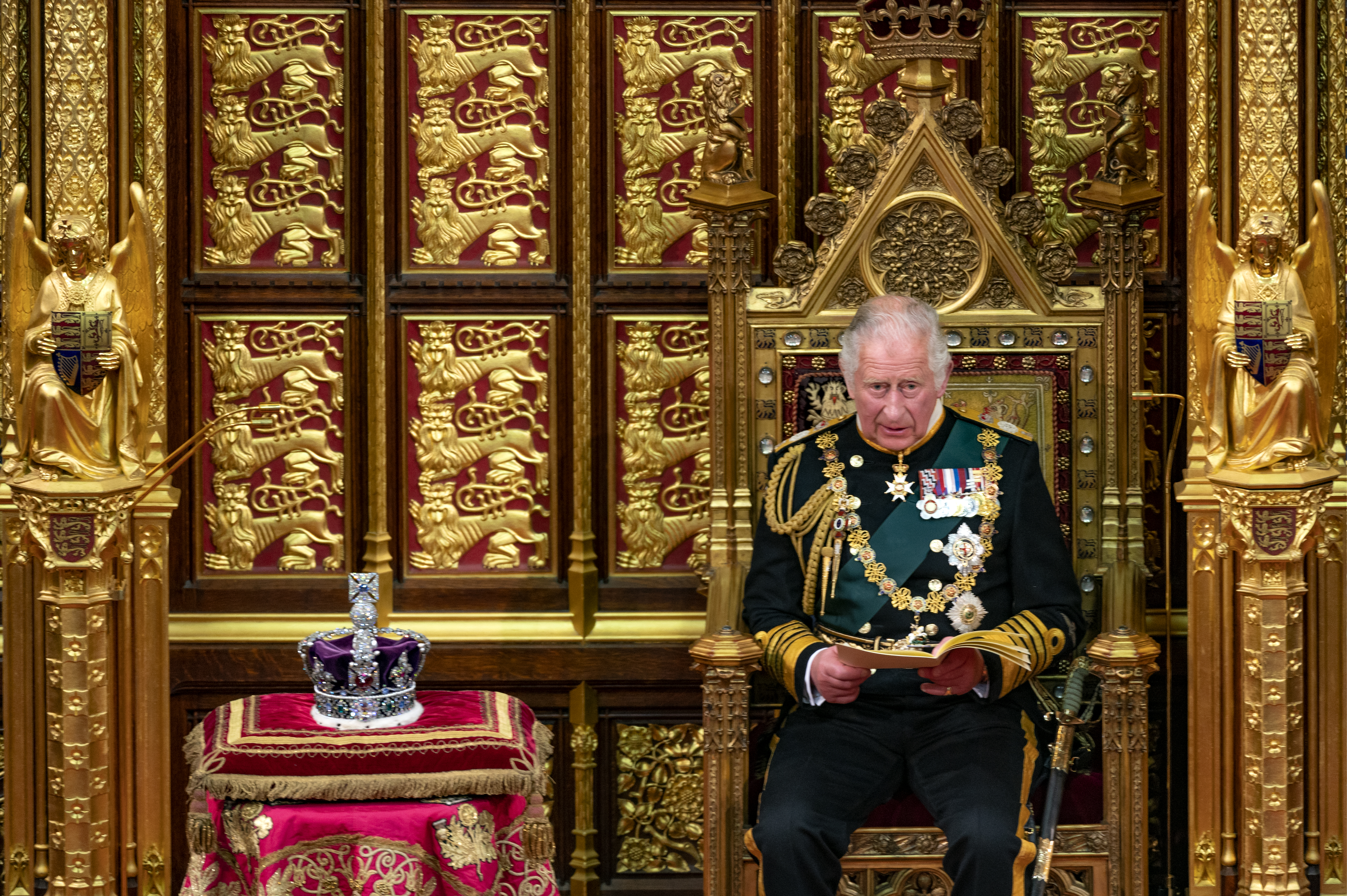
Late last night it was announced that, due to episodic mobility issues, Queen Elizabeth would not be personally present for the state opening of Parliament today. While the shortness of notice is unusual, it is far from unprecedented for a parliamentary session to begin without the monarch. The present queen missed the openings of 1959 and 1963 due to pregnancy. Victoria loathed to visit Parliament at all during her forty years of mourning. On those occasions the standard procedure was to open the session by commission, with the Lord Chancellor reading the speech. This time, perhaps in consequence of the shortness of notice, the full state ceremony went ahead but with the Prince of Wales reading the speech instead of his mother.

The last time an heir apparent opened Parliament in this way was 23rd November 1819, when the Prince Regent opened the second session of the sixth Parliament on behalf of George III, a mere nine weeks before actually ascending to the throne. Charles, of course, is not full regent, and performed today’s ceremony in his capacity as counsellor of state. Such counsellors are required to act in pairs, hence the first appearance of the Duke of Cambridge at the event.

It was reported in the BBC coverage that Charles was sitting on the consort’s throne, with the monarch’s throne being removed from the chamber completely. The Imperial State Crown was displayed on a small table to his right where the monarch’s throne would normally be, while his wife and son sat on the smaller chairs in the alcoves either side.

Convention has long been for the peer reading the speech to do so in first person, as the sovereign herself would have done, but Charles opted to switch to third person, repeatedly describing the government and its ministers as “Her Majesty’s” instead of “my”*. I do not know if he was making the substitution mentally or if the speech was actually printed again with altered wording – which would require a downgrade in materials.

Also last night it was announced that Professor Anne Curry had been appointed Arundel Herald Extraordinary. This did not make her a member of the College of Arms, but did allow her to take part in the procession with the other heralds.

This afternoon the House of Lords Flickr account published twenty photographs of the ceremony, taken by Annabel Moeller and licensed as CC BY 2.0, enabling me to quickly absorb them into Wikimedia Commons. It is unusual for us to have such number and quality of images for events like these. The trend towards releasing photographs in this way is encouraging, even if it is intermittent.

Given that this if the first time counsellors of state have been used to open a legislative session, and that the decision was not known until thirteen hours prior, one has to wonder how much improvisation was employed in today’s ceremony, for example:

  • Their Royal Highnesses travelled entirely by motorcar. Had there previously been plans to use the horse-drawn carriages?
  • The Prince of Wales was in full military uniform as for most state openings, but his wife and son were in morning suits as for the “dress down” occasions in June 2017 and December 2019. The inconsistency is inexplicable.
  • There was no mention of the Union Flag over the Victoria Tower being swapped for the royal standard. Was a banner of the heir apparent’s arms available?
  • The limousine carrying Charles had his own shield of arms mounted on the roof, but that carrying William used the generic red shield with a crown. Has a shield of William’s arms been made for this purpose?
  • The carpet on the lowest step to the throne was plain red, whereas previously the pattern of lions and roses continued all the way.
  • Sir Lindsay Hoyle is wigless for the third consecutive state opening, despite promising to wear it before his election. It can’t still be missing, can it?

When the ceremony is over, both houses debate a response to the address. Tradition dictates that the motion be introduced by a long-serving older member and seconded by a younger, recently-elected one. The role of the “old duffer” was this time fulfilled by my own MP, the “shy and retiring” Graham Stuart. He said of his constituency:

Beverley and Holderness comprises four towns—Beverley, Hornsea, Withernsea and Hedon—and many other hamlets and villages that are dotted across east Yorkshire. It is a beautiful part of the world and has history as well as charm. Beverley has contributed more than most places to the improvement of our democratic system over the years—admittedly chiefly by running elections in such a corrupt manner that the law had to be changed afterwards. After the unseating of the victorious candidate in 1727 by a petition, his agents were imprisoned and Parliament passed a whole new bribery Act. But Beverley’s notorious freemen were not to be put off so easily. Beverley continued to be a byword for electoral malpractice. The novelist Anthony Trollope stood in the Liberal interest, unsuccessfully, in 1868, and such was the level of wrongdoing that a royal commission was established especially and a new law passed disenfranchising the town and barring it from ever returning a Member of Parliament again. Obviously the law did change. Free beer and cash inducements were the electoral controversies then, rather than, say, beer and curry today. Never in the history of human conflict has so much karma come from a korma.

FURTHER READING

*The version used on the Hansard website for both the Commons and the Lords is in third person as Charles delivered it, while that on the government’s site is in first person, as well as annotated with the names of the bills being described.