Mid-Year Reading Round-up

Having already posted some months ago a long list of all the books I’ve recently acquired, I suppose at some point I should say something about the experience of actually reading them. Here, then, are some mini-reviews of the publications I’ve finished during the period of January-June 2025, in no particular order.

The First Four Georges by Sir J. H. Plumb

Already reviewed in a different post.

The Extended Phenotype by Richard Dawkins

Although he is primarily famous for The God Delusion and maybe secondarily for The Selfish Gene, the professor himself generally regards this one as his true magnum opus. I’m not sure how famous Dawkins already was back in 1982, but this book feels as if written in his capacity as a biologist rather than as a public intellectual and activist. It is a much more academic work than his more famous ones and, having not been taught biology for just over a decade, I cannot claim full comprehension of the more terminologically-dense parts, but these aren’t really necessary for understanding the main thesis. Dawkins does not present new facts so much as a new way of interpreting facts we already possess: Normally the conception of evolution and natural selection is that they take place on the level of the individual organism, the family, the society and even the entire species. Dawkins instead looks at it in terms of the alleles of genes competing indirectly against each other with the organisms serving merely as a convenient – and disposable – host. The title of the book refers to Dawkins’s other big point that alleles affect the physical and behavioural characteristics of a species, which in turn affect the environment those species inhabit, as well as the ways in which other species evolve in response, so the phenotype of an allele in one species can be regarded as including the features observed in another species. The author also brings up a great many case studies of evolutionary adaptation and competition, including counter-intuitive examples such as between males and females of the same species, or even between parent and child! Of great interest here are his analyses of why some creatures are capable of adapting to “win” an evolutionary war while others are not. A theme which runs through the book as well is the difficulty of finding the vocabulary to comprehend these complex natural phenomena without slipping into metaphor and personification, which feels in some way prescient given the author’s later writings about religion.

The Final Curtsey by Margaret Rhodes

As with Lady Boothroyd’s autobiography, the early sections of this book felt a lot like reading my own grandmother’s childhood recollections, although from the opposite end of the class spectrum. Rhodes gives her account of her aristocratic early life, her experience of living through the war and her career as a courtier to the royal family. One thing that confused me a little was her choice of names for Britain’s senior mother and daughter after 1952 – the reigning sovereign is “The Queen” whereas George VI’s widow is “Queen Elizabeth”. Often I would get a long way into a paragraph before working out which one Rhodes meant. Despite being published in 2012, just four years before she died, Rhodes mentions a distinctly old-fashioned approach to writing. To modern eyes she appears curiously unfazed by the historical weight of her experiences, taking it in her stride that she dined nightly with the heiress presumptive while the bombs were falling, got roped into organising a faraway dynastic wedding, smuggled prisoners out of a country undergoing a violent coup and even watched a man drop dead in front of her. While the overall tone may seem a little twee at times it’s definitely worth the read and packs a lot into relatively few pages. The final days of the Princess Margaret and the Queen Mother are especially important for the record.

The Gathering Storm by Sir Winston Churchill

This is a very long book, and that’s only the first in a six-volume set amounting to more than three thousand pages in total. Churchill has written a great many well-renowned history books, but here it is a history in which he was a major protagonist so it also doubles as a memoir of sorts. The length here is justified as he writes in great detail about a multiplicity of topics, taking the reader step-by-step from the conclusion of WWI to the outbreak of WWII, with the volume ending at the point when he became Prime Minister. It’s astonishing to realise that he completed this enormous tome while he was serving as Leader of the Opposition, a feat of intellectual multitasking which feels impossible today. Given that Churchill’s reputation speaks for itself it almost feels redundant to comment further except to say that I am on the lookout for Volume 2, though given the backlog of books already accumulated it could take a while to get there.

The Glamour Boys by Sir Chris Bryant

Yet another World War II history, and also written by a sitting MP. Bryant’s behind-the-scenes account of the parliamentary machinations leading up to the war is in many ways complementary to Churchill’s own. The focus here is on the alternative, underground world that the “boys” were forced to inhabit, noting the parallels between their nonconformism, adamant against the mainstream of the time, on both personal and political levels. This book presents a major setback for anyone attempting a historical rehabilitation of Neville Chamberlain – his reputation before was of optimistic (or perhaps delusional) naivety rather than malevolence, but here he comes off as cruel and wicked in his attempts to suppress his glamorous detractors with an underhanded smear campaign. The only downside to this book is its length – at 448 pages it’s a rather weighty tome and it sometimes feels as if Bryant was padding it out to look more imposing on the shelves. Some critics have said he indulges too much in the lurid descriptions of the rebels’ relationships in the early part of the book, but I think the real waffle comes nearer the end, once the war has already gotten going, when the defining goal of the story has been completed and everything thereafter feels a bit more like generic wartime biography divorced from the specialist subject matter.

The King’s Painter by Franny Moyle

Going a bit further back this time takes us to the Tudor era. This is a biography of the portrait artist Hans Holbein the Younger, best remembered for his imposing image of Henry VIII. The biography covers the full length of Holbein’s life and career, with detailed analyses of his major works and the artistic innovations they represented. Not having studied the history of art (or art itself) much before I cannot fairly judge the quality of Moyle’s commentary here, except to note that she brought up verisimilitude so often it almost felt like a tic. Aside from the art itself, a lot of the book was dedicated to the religious and political upheavals in continental Europe which alternately expanded and restricted Holbein’s professional opportunities.

The Roman War Machine by John Peddie

Returning to the war theme but backing up even further to the ancient world, this is a book on the military structure and logistics of the Roman Empire. In some ways this felt like a throwback to my GCSE Latin course, in others like a memory of and educational field trip I might have done in primary school. This book is in English, of course, save for the heavy use of Latin military jargon. Peddie writes in detail, and with diagrams, about the ranks, formations, equipment and resources sustaining Rome’s military operations. Even here we cannot avoid World War II, for Peddie makes repeated comparisons to campaigns in the twentieth century to show the historical resilience of the Roman legacy.

The Penguin Guide to the Railways of Britain by Edgar Jones

This book was published in 1981 so a lot of the guidance here is obviously out of date now. On this note I would particularly highlight some lines from pages 36-38: “The Advanced Passenger Train represents the latest development in electric rail transport.”, “It is possible that a diesel-powered version of the APT will be developed for use on non-electrified lines.” and “At this moment 60 per cent of trains are diesel-powered. With the progressive introduction of the HST – the most advanced diesel-electric in the world – it is fair to say that this form of power has reached its apogee in Britain. Since electricity holds the key to the future, when these expresses become obsolete it is probable that the diesel, like steam, will disappear.”. The first fifty pages tell the history of locomotion in Britain from the early nineteenth century to the late twentieth, including the evolution (with diagrams) of different types of rail vehicles. The next three hundred pages take the reader around the country, region by region, explaining all the routes can be taken and all the stations that can be visited. The writing, though concise and eloquent, can be a little dry and it was difficult to keep up the momentum towards the end. From the way it’s structured, it less resembles a conventional reading book than the railway version of Burke’s and Debrett’s, so perhaps one is better off treating it that way instead of trying to finish it in a linear fashion.

Classical Literary Criticism by T. S. Dorsch

It is a little strange to realise that not only has literature itself been around for thousands of years but that literary criticism has been too. Even though the source texts may be as old as the fourth century BC and the translations into English were done in 1965, a lot of the prose still feels contemporary to one familiar with book and film reviews both amateur and professional. Indeed, a lot of the talking points would not have been out of place in a modern day “reviewtainment” video essay. There are multiple chapters on individual narrative devices, as well a the structures and purposes of different types of plays and comments on stories already performed in the writers’ memories. Most impressively, there are multiple instances when one of the writers goes into detailed analyses of the subtleties of another writer’s word choices and sentence structure. All of this, of course, has to be translated from Greek and Latin into English with the nuances intact. There are even times when one of them criticises another critic’s literary criticism, such as when (p65) Aristotle notes that “Ariphades ridiculed the tragedies for using expressions that no one would use in ordinary speech… these raise the diction above the level of the commonplace, but Ariphades failed to see this”. The introductory note by the editor explains who the sources – Aristotle, Horace and Longinus – actually were. The former belonged in the fourth century BC while the latter two belonged in the first. The gap between them is greater than between Shakespeare and Wilde, yet to us know they seem interchangeable, a good reminder of how long the ancient Greek and Roman eras really were.

Shadow State by Luke Harding

The book was just over three hundred page but I devoured it very rapidly. It tells of how the Russian Federation went from the collapse of the Soviet Union under Gorbachev to the emergence of Putin’s regime in which the military, business, the mafia and the President’s personal interests are all effectively merged into one and how this level of corruption affects not just Russia itself but also the other nations with which Russia interferes. The stories told are the ones you’d expect – Hillary Clinton’s emails, the Salisbury poisoning, and Brexit. There is some poetry in the timing: The book was published in 2020 as Trump was heading to the election he would lose. I bought it from Red Cross on 28th August 2024, as he was heading to the election which would see him restored. This also of course means that Putin’s ongoing war against Ukraine cannot be included, though there is much about the events leading up to it and Zelensky (suited and beardless) makes several appearances. The hero of the tale is Eliot Higgins, a journalist who created the Bellingcat online information exchange that allowed amateurs to monitor and scrutinise world events remotely. Harding resists the temptation to grant Russia an Orwellian omniscience, noting instead that Putin’s schemes often backfired or fell flat, that he only turned to online subterfuge because he lacked the funds for traditional spycraft, that many of his apparent successes – including Trump – were coincidence or blind luck and that the quality of Russian operatives had declined since Soviet times. The story of Salisbury assassins Chepiga and Mishkin, in particular, plays out as something of a farce. Nonetheless the death and destruction they caused is very real and, at time of writing, the threat feels as pressing as ever.

The Ricardian Century by John Saunders

This may be the newest book I’ve ever picked up from a charity shop, as I found it at RSPCA in February and the copyright notice said 2025. The book was in pristine condition and I worked very hard to keep it that way, although despite my best efforts a few bits of the corner flaked off before I’d finished it. This is the official history of the Richard III Society from its foundation in 1924 (as the Fellowship of the White Boar) to its centenary celebrations in 2024. The book is the product of a print-on-demand service rather than an established publisher and at times looks, to paraphrase Mark Corrigan, like a printout rather than a book. The cover design is especially poor: On the rear is a small square photograph of Saunders, in low resolution and squinting a bit, clearly cropped from a larger group shot, while the front has an equally-fuzzy raster of a depiction of the Society’s coat of arms from which not all of the white space has been cut out of the background. Aesthetic issues aside the contents are engaging enough, giving the reader a detailed look at all the twist and turns of both Ricardianism as a movement and the Society as an organisation. What fascinates me is that by all logic the Society ought to be a dissident fringe group. Though clearly there has been a shift in public attitudes to Richard III over the centuries (and certainly in this millennium) towards acquitting him of history’s more outlandish charges, the consensus among historians is still that he was the most likely perpetrator of the regicide of his nephews. Furthermore, as Ricardianism asserts that “the wrong side won” at Bosworth in 1485, and that sad side includes the current royal family, it is tantamount to asserting (much like the Jacobites) that the entire royal line thereafter to the present day must be illegitimate. Despite this the Society has been accepted by the wider academic community as a legitimate scholarly institution (even if they still ultimately disagree with its conclusions) and has even been accepted by the royal establishment with Prince Richard, Duke of Gloucester serving as Patron for more than half of his and its lifetime and the College of Arms hosting the book’s launch. George Awdry, Wilbert’s brother, is also mentioned a few times. One thing that really stuck out at me was the revelation (p93-4) that the Society was not formally incorporated as a legal entity until 2019, which made me wonder how they’d acquired a grant of arms in 1988, among other things.

Quite the Collection

In addition to my two library cards and my many online sources I have during the past few years – commencing mainly in 2022 – accumulated a rather large collection of used books from a handful of charity shops I have frequented, mainly in Hull but also in some other East Yorkshire towns. Over the weekend I set about cataloguing the lot, though this list excludes those which I have given away as gifts to friends or family members. The small minority which I am currently reading or have already finished are shown in bold.


FICTION (arranged by author)

Dr. Gregory’s books have proven particularly easy to find at sub-£ prices.

  • Austen, Jane: The Complete Novels
  • Blyton, Enid: The Secret Seven (books 4-6)
    • Go Ahead
    • On The Trail
    • Good Work
  • Boyne, John: The Boy in Striped Pyjamas
  • Brooks, Max: World War Z
  • Chaucer, Geoffrey & Spearing, Anthony Colin: The Knight’s Tale
  • Dickens, Charles: Little Dorrit
  • Durrell, Lawrence: Sebastian
  • Gerber, Michael: Barry Trotter
    • and the Shameless Parody
    • and the Unnecessary Sequel
  • Gregory, Philippa
    • The Boleyn Inheritance
    • The Constant Princess
    • The Favoured Child
    • The Lady of the Rivers
    • The Other Boleyn Girl
    • The Other Queen
    • The Red Queen
    • The Taming of The Queen
    • The White Princess
    • The White Queen
    • Three Sisters, Three Queens
  • Keyes, Daniel: Flowers for Algernon
  • Lawrence, David Herbert
    • Lady Chatterley’s Lover
    • Women in Love
    • Sons and Lovers
  • Mallinson, Allan: A Call to Arms
  • Mantel, Dame Hilary: Bringing Up the Bodies
  • Mitchell, Margaret: Gone With The Wind
  • Naylor, Doug: Red Dwarf, Last Human
  • Orwell, George: The Complete Novels
  • Penman, Sharon: The Sunne in Splendour
  • Sachor, Louis: Holes
  • Sansom, Christopher John: Sovereign
  • Shakespeare, William: The Complete Works
  • Thackeray, William Makepeace: Vanity Fair
  • Tolkien, Christopher: The History of Middle-earth (volumes 1-7)**
    • The Book of Lost Tales, Part 1
    • The Book of Lost Tales, Part 2
    • The Lays of Beleriand
    • The Shaping of Middle-earth
    • The Lost Road and Other Writings
    • The Return of the Shadow
    • The Treason of Isengard
  • Tolkien, John Ronald Reuel: Sir Gawain & the Green Knight, Pearl and Sir Orfeo
  • Towles, Amor: A Gentleman in Moscow
  • Townsend, Sue: Adrian Mole, The Prostate Years
  • Tsiolkas, Christos: Dead Europe

NON-FICTION (arranged by topic)

ANCIENT WORLD

  • Beard, Dame Mary
    • How Do We Look? The Eye of Faith
    • Pompeii, The Life of a Roman Town
  • Graves, Robert: The Greek Myths, Vol. 1 & 2
  • Peddie, John: The Roman War Machine
  • Potter, Timothy William: Roman Italy
  • Taggart, Caroline: A Classical Education
  • Thucydides: History of the Peloponnesian War
  • Wells, Colin: The Roman Empire

ART & ARCHITECTURE

  • Cruickshank, Dan: Adventures in Architecture
  • Devonshire, Deborah, Duchess of: The House, Chatsworth
  • National Trust:
    • Beningbrough Hall*
    • Treasures of
  • Spalding, Frances: British Art Since 1900
  • Style, Colin & O-Ian: House Histories for Beginners
  • Suh, H. Anna: Leonardo’s Notebook
  • Taylor, Richard: How to Read a Church

BIOGRAPHIES AND MEMOIRS (arranged by protagonist)

  • Cameron of Chipping Norton, David, Baron: Cameron at 10 (Sir Anthony Seldon & Peter Snowdon)
  • Churchill, Sir Winston
    • The Churchills, In Love & War (Mary Sybilla Lovell)
    • Winston & Clementine, The Triumphs & Tragedies of the Churchills (Richard Hough)
  • Clark, Alan: Into Politics (himself)
  • Cook, James: Captain James Cook (Richard Hough)
  • Devonshire, Georgiana, Duchess of (Amanda Foreman)
  • Fowlds, Derek: A Part Worth Playing (himself)
  • Hodkinson, Mark: No One Round Here Reads Tolstoy (himself)
  • Holbein, Hans: The King’s Painter, The Life & Times of (Moyle, Franny)
  • Hudson, Kerry: Lowborn (himself)
  • Ishikawa, Tetsuya: How I Caused The Credit Crunch (himself)
  • Kaufman, Sir Gerald: How to be a Minister (himself)
  • Kay, Adam: Twas The Nightshift Before Christmas (himself)
  • Macron, Emmanuel: The French Exception (Alan Plowright)
  • Mitford, Nancy: The Letters of Nancy Mitford (Charlotte Mosley)
  • Mowlam, Mo: The Biography (Julia Langdon)
  • Newcastle, William, 1st Duke of: Portrait of a Cavalier (Geoffrey Trease)
  • Palin, Sir Michael: Full Circle (himself)
  • Pilkington, Karl: The World of Karl Pilkington (Ricky Gervais)
  • Riverdale, Robert “Skips”, Baron: A Life, A Sail, A Changing Sea (himself)
  • Smith, Matt: The Biography (Emily Herbert)
  • West, Timothy: Our Great Canal Journeys (himself)
  • Whitelaw, William, Viscount: The Whitelaw Memoirs (himself)

CONTEMPORARY POLITICS

  • Abell, Stig: How Britain Really Works
  • Brooks, Richard: The Great Tax Robbery
  • Cohen, Nick: Waiting for the Etonians
  • Harding, Luke: Shadow State, Murder, Mayhem & Russia’s Remaking of the West
  • Luce, Edward: In Spite of the Gods, The Strange Rise of Modern India
  • Minton, Anna: Ground Control
  • Runciman of Doxford, David, 4th Viscount: How Democracy Ends
  • Willetts, David, Baron: A University Education
  • Wilson, Andrew: The Ukraine Crisis, What It Means For The West

HISTORY (other)

  • Belchem, John: A New History of the Isle of Man, Vol. 5 The Modern Period 1830-1999
  • Briggs, Asa, Baron: A Social History of England
  • Browne, Harry: The Rule of British Trade Unions 1825-1914
  • Churchill, Sir Winston: A History of the English-Speaking Peoples, Vol. I
  • Crosby, Alan: Preston Gould, England’s Greatest Carnival
  • Thomas, Gordon: Inside British Intelligence
  • Hibbert, Christopher: A Social History of the English 1066-1945
  • Jones, Terry: Who Murdered Chaucer?
  • Laidler, Keith: The Head of God, The Lost Treasure of the Templars
  • Morfitt, Paul & Wells, Malcolm: Hull Corporation Buses*
  • Sandbrook, Dominic: Never Had It So Good
  • Stead, Neville: Kingston-upon-Hull, Images of a Rich Transport Heritage
  • Street, Sean: A Remembered Land, Recollections of Country Life 1880-1914

LINGUISTICS

  • Burrow, John Anthony: A Book of Middle English
  • Oxford
    • Dictionary of Idioms
    • Dictionary of Quotations & Proverbs Vol. I
  • Parkinson, Judy: I Before E
  • Taggart, Caroline & Wines, J. A.: My Grammar & I

LOCOMOTION

  • Allan, Ian: Railway Liveries 1923-1947
  • Atterbury, Paul: Discovering Britain’s Lost Railways
  • Morrison, G. W. & Whiteley, J. S.: Profile of the Deltics
  • Jones, Edgar: The Penguin Guide to the Railways of Britain
  • Ross, David: The Illustrated History of British Steam Railways

ROYAL FAMILY

  • Burns, Michael: The Queen’s Flight
  • Fraser, Lady Antonia: The Warrior Queens: Boadicea’s Chariot
  • Glenconner, Anne, Baroness: Lady in Waiting
  • Green, Candida Lycett & Wales, Charles, Prince of: The Garden At Highgrove
  • Junor, Penny: The Duchess, Camilla Parker Bowles
  • Kent, Princess Michael of: Crowned in a Far Country
  • Langley, Philippa & Jones, Michael: The Search for Richard III, The King’s Grave
  • Lisle, Leanda de: Tudor, The Family Story
  • Low, Valentine: Courtiers, The Hidden Power Behind the Crown
  • Mayer, Catherine: Charles, The Heart of a King
  • Phillips, Charles: Kings & Queens of Great Britain
  • Plumb, Sir John Harold: The First Four Georges
  • Rhodes, Margaret: The Final Curtsey
  • Weir, Alison: Katherine Swynford

SCIENCE, PHILOSOPHY & IDEAS

  • Attenborough, Sir David: Life on Earth
  • Darwin, Charles & Leakey, Richard: The Illustrated Origin of Species
  • Dawkins, Richard
    • The Extended Phenotype
    • The Greatest Show On Earth
  • Freeman, Betty Jo; Ornitz, Edward M. & Tanguay, Peter E.: Autism, Diagnosis, Current Research & Management
  • Garner, Alan: The Voice That Thunders
  • Harari, Yuval Noah: Homo Deus, A Brief History of Tomorrow
  • Shennan, Stephen: Genes, Memes & Human History

SECOND WORLD WAR

Churchill manages to appear on this list twice as an author and twice as a subject.

  • Beevor, Sir Anthony
    • D-Day
    • Stalingrad
  • Bryant, Sir Arthur: Triumph in the West
  • Bryant, Sir Chris: The Glamour Boys
  • Cawthorne, Nigel: Fighting Them on the Beaches
  • Churchill, Sir Winston: The Second World War, Vol. I
  • Faulks, Sebastian: The Vintage Book of War Stories
  • Felton, Mark: Zero Night
  • Gillies, Midge: The Barbed-Wire University
  • Levine, Joshua: Dunkirk, The History Behind The Major Motion Picture
  • Lomax Eric: The Railway Man
  • Roberts of Belgravia, Andrew, Baron: The Storm of War
  • Trigg, Jonathan: D-Day Through German Eyes
  • Wilson, Kevin: Men of Air, The Doomed Youth of Bomber Command

TELEVISION

  • Jay, Sir Antony & Lynn, Jonathan: The Diaries of the Right Hon. James Hacker Vol. II (Yes, Prime Minister)
  • Lloyd, John & Mitchinson, John: The Second Book of General Ignorance (QI)
  • McCann, Graham: The Story of a Television Classic (Dad’s Army)
  • Patterson, Dan: Only Book You’ll Ever Need (Mock the Week)
  • Porter, Richard: And On That Bombshell (Top Gear)

MISCELLANEOUS

  • Automobile Association:
    • 250 Tours of Britain
    • Book of British Villages
  • Lewis, Oliver: The Orwell Tour
  • Jordison, Sam & Kieran, Dan: Crap Towns Returns
  • Marshall, Enid Ann: General Principles of Scots Law
  • Which?: Book of Tax 1985/86
  • Wood, Michael: In Search of Shakespeare

*Unfortunately I left this one for some weeks in the boot of my car and upon eventually retrieving it I discovered the floor was damp. I can’t put it back on the shelf until the mold has been treated. (UPDATE 3rd February – I found another copy of Beningbrough Hall in a different charity shop for half the price at which I bought the first one.)
**These were purchased as a set for £15. Carrying them out of the shop was a bit tricky. I also acquired Volume 9, Sauron Defeated, as a gift in 2020. These may technically belong in the non-fiction section as the series constitutes more of a literary making-of documentary than a pure immersive story.

Feeling a Little Blue

For many years now I have been an infrequent reader of Murrey and Blue, a blog about medieval history written from a Ricardian perspective. Its themes and contents overlapped with my interests a fair bit, especially heraldry – the very name refers to the House of York’s livery colours. It combined a catty, snarky writing style with a great deal of detailed historical analysis and research.

The blog dates back to January 2014 and, unlike mine, has had many contributing authors over the decade. Late last month ViscountessW, one of the more prolific contributors, announced that following the death of the owner Stephen Lark and the looming, inevitable, expiration of the site’s WordPress plan, the blog has ceased operations. Happily a new incarnation of the blog is already in existence, but the fate of the eleven-year back-catalogue of old articles is not known.

I should say that while I enjoyed the content of Murrey and Blue, I’ve never been keen on it from a design perspective – the original theme used was an old one and a bit crude, but it was at least functional. At some point between March and May 2021 it was changed to something that looked a little more modern but which lacked a sense of structure and texture as well as being hard to navigate. The new website looks even worse in that regard, but I hope this is just its larval stage and a better theme will be chosen soon.

Public Domain Day 2023

Compared to previous years, the delivery of books and other media into the public domain this year – from authors who died in 1952 – is a little disappointing.

The last of the Sherlock Holmes canon entered the public domain in the United States, having already long lost its copyright in Britain, but the infamous test case Steamboat Willie is still one more year off.

The one book that stuck out to me was The Daughter of Time (1951) by Josephine Tey. It is a murder mystery novel, but instead of contemporary crimes her policeman investigates the murder of the Princes in the Tower in 1483 and comes to the conclusion that Richard III was innocent. Although a work of fiction and not a textbook, Fey’s valediction provides an insightful analysis of the interaction between fact, legend and propaganda, as well as a satire on many other types of historical literature.

All that is from the Wikipedia page, for I have not yet read the book itself. That said, I have read Philippa Langley’s The King’s Grave and attended many virtual lectures by the Richard III Society. Although the society and the wider Ricardian movement predate Fey’s book, they were of negligible size or influence by the time of its publication and many in the movement today are quite explicit about the role it played to revive academic research into the maligned monarch as well as shift public opinion.

Now that copyright has expired, I hope that LibriVox and similar organisations will not tarry in bringing out an audiobook, failing which I will search for a physical copy in my local libraries.

Power and pageantry: The coronation of King Richard III and Queen Anne

Another date with the National Archives, this time featuring Dr Sean Cunningham,the head of Medieval Records.

I was faintly amused when he brought up a still from The White Queen (2013) featuring Aneurin Barnard and Faye Marsay, if only so he could point out the inaccuracies. Then again, this coronation does not have many other televisual depictions to my knowledge.

The Good Lancastrian?

Today’s virtual lecture was by Rory MacLellan at the Society for Court Studies.

To recap for those unaware: The Lancastrian dynasty came to power in England in 1399 when Henry of Bolingbroke, Duke of Lancaster, deposed his cousin Richard II, and acceded as Henry IV. It was continued by his eldest son Henry V after 1413, and then grandson Henry VI after 1422. Richard II had no children or siblings, and Bolingbroke was his heir presumptive according to agnatic primogenture, but by the male-preference cognatic method that was the consensus then in England the throne should have passed to Edmund Mortimer, 5th Earl of March. Even if Bolingbroke’s claim had been legitimate, the overthrow (and later probable murder) of his predecessor stained him in the eyes of his people, and of God. Henry V made some efforts to atone for his father’s treason. He won the respect of the population by his glorious victory at the Battle of Agincourt in 1415, and subsequent capture of the crown of France. Henry VI was beset by mental health problems and under his weak leadership English politics fell into severe disarray, resulting in the loss of most of the French possessions he had inherited. Opposition to his government was lead by Richard, Duke of York (Edmund Mortimer’s grand-nephew and Richard II’s cognatic heir), whose own son eventually unseated Henry to become Edward IV in 1461.

MacLellan’s research concerned the manner in which the three Lancastrian monarchs were officially remembered under the Yorkist regime. They were clear that the 1399 coup was illegal and that the Lancastrian line was thus illegitimate. Each was called “King in deed but not in right”. It was easy enough to condemn Henry IV for having committed regicide, and Henry VI for losing France, but Henry V presented a challenge – all the territories his son lost were only held by England in the first place due to the supreme military, chivalric and diplomatic skill of his father, whose accomplishments are revered even to this day and which the Yorkists themselves strove to honour.

Later historians have given differing reviews of how Henry V was regarded under Edward IV’s first reign (1461-70). Jonathan Hughes found “universal respect and praise” and Russell Butcher said “one of the most successful medieval kings was difficult to criticise”, but Alison Allan said he was “usually quietly ignored” so as to maintain the Yorkist line that Lancastrian rule was a misery.

The only positive comments by Yorkists about any Lancastrian were made in the 1450s while the latter dynasty still reigned, and while Richard still insisted he only opposed Henry’s advisors instead of Henry himself. Once the White Rose had supplanted the Red the line quickly changed, with Speaker Strangeways recanting the new official version to Parliament. An act was passed to overturn the 1415 treason conviction of Richard of Conisburgh (Edward’s grandfather), saying that “a pretensed session had reached an erroneous judgement”. All other official correspondence from this time made clear that Henry had been king by usurpation. Even during Edward’s own 1467-8 bid for France, when Henry V’s legacy would have been useful, it was kept under wraps.

In Edward’s second reign (1471-83), when the House of Lancaster had been extinguished, it was politically safe for his government to recognise the personal virtues and accomplishments of Henry V though still condemning his illegitimacy. MacLellan noted that whereas Edward had been hostile to Henry VI’s establishment of Eton College and King’s at Cambridge he still patronised the religious organisations (Syon Abbey and Sheen Priory) set up by his father. Richard III also owned several books that praised Henry V, such as The Book of the Order of Chivalry (Caxton’s translation) and The Book of Noblesse (William Worcester). Perhaps Richard could be somewhat more tolerant of the Lancastrian legacy, not being the first Yorkist king.

In the Q&A the only attendees (there were but twelve of us) to ask questions were myself and Fabianpersson. He asked how Henry V was perceived by other Lancastrians, and then by the early Tudors. MacLellan said that he was revered up until the point at which his French conquests were lost, after which they simply stopped mentioning him. To lean on his glory would only have served to highlight how poorly his son was performing by comparison. Even John Fortescue’s Commendation of the Laws of England, written for Edward of Lancaster, does not mention his grandfather. Henry VII rarely brought up his namesake-but-one, except for a pamphlet around 1510 using his precedent for another campaign in France. Fabian suggested that political memory fades after 20-40 years, though MacLellan countered that the Yorkist side still brought up precedents from as early as Henry I to support their cause. Fabian also asked how Henry VI’s perception was affected by that of his father and grandfather, and how either dynasty dealt with Richard II’s own problems. MacLellan said that it was risky to criticise the foundation of the Lancastrian dynasty while it still reigned. Henry VI had the advantage that he was born into an already-established succession rather than personally being involved in its installation, and that he was well-known to be much more pious than his grandfather. The Yorkists presented Richard II as entirely blameless in his own demise. Henry V made some effort to rehabilitate him, including a reburial, but it was still to early to cede much moral ground to the former monarch without jeopardising his own crown.

I asked how the Tudor dynasty, which claimed to be the union of York and Lancaster, reconciled the competing claims of the two houses in their own official communications. MacLellan wasn’t sure about Henry IV, but said that later pamphlets were generally positive about both Edward IV and Henry V. The counterpart question to the original study- how was Edward IV was regarded during Henry’s readeption. MacLellan replied that what little had been written during Henry’s second reign was swiftly destroyed once Edward returned. He also surmised that the Lancastrians just weren’t as good at this sort of political propaganda as the Yorkists had been. I asked how long it took for historical tensions between York and Lancaster to finally subside, having heard from other historians that the controversy lingered well into Elizabeth I’s reign. He said it was slightly out of his period of study, but noted that there were still Yorkist claimants in the late fifteenth century and that it probably wasn’t until the next change of dynasty (with James VI of Scotland’s arrival) that the issue faded, though there remained a legal vaguery as to which claim was more legitimate. Finally I noted that there were many references in his own speech and in other historians’ accounts to Parliament praising whichever dynasty was then in power and condemning the one that had gone before, and asked to what extent the medieval Parliament of England simply acted to give a veneer of retroactive legitimacy to what had already happened by force. MacLellan said this was definitely the case, and that most of the parliamentary speeches that survive were written on behalf of the then-incumbent monarch so as to persuade other representatives of whatever narrative was politically convenient.

EXTERNAL LINKS

Warwick the Kingmaker by John Reid

Today I attended another virtual meeting of the Richard III Society Gloucester Branch. The presentation was by John Reid, discussing the historical reputation of Richard’s father-in-law Richard Neville, 16th Earl of Warwick, popularly nicknamed “The Kingmaker”.

Warwick has been hugely divisive to contemporaries as well as historians, Ricardians, Lancastrians and Yorkists. He was England’s greatest celebrity of the fifteenth century and his fame (or infamy) carried on into the twentieth). He even had a board game named after him.

He became the premier earl in England in 1449 due to lucky deaths. His family were great winners in the lottery of aristocratic marriages – picking up the estates of the Beauchamps and Despensers. His patchwork of armorial quartering reflects the complexity of his family connections. He had initially supported Henry VI, but changed sides in 1452 largely due to his inheritance disputes with the Duke of Somerset.
Henry VI, due in part to inherited mental health troubles, proved spectacularly incompetent, and many considered Richard, Duke of York to be king by right – though Reid showed us York’s signature on the letters patent of 1454 appointing Henry’s son Edward of Lancaster as Prince of Wales, clearly showing that even at this late stage he was not disputing the latter’s right. When eventually he rebelled against the Lancastrian crown he had Warwick’s invaluable support. York’s son Edward, Earl of March rescued Warwick from Margaret of Anjou and Warwick in turn arranged his coronation as Edward IV. For the first three years of Edward’s reign Warwick was thought “third king”, being virtual governor of the realm, acquiring even more land (after he confiscated the estates of the Percy and Clifford families, he wound up with lordships in twenty-eight English counties and a handful in Wales) and an annual income of at least £10,000 (nearly £11m in 2021 money).

Matters of matrimony spoiled his status: Warwick had spent months lobbying for a French princess to marry his king, and was humiliated by the revelation that Edward had already married – in secret – to Elizabeth Woodville, a dowager dame whose family had fought for the Lancastrian side. He described the parvenu Woodvilles as “grasping and charmless”, resenting how many titles, offices and marriages were given to them at the expense of his own dynasty, and how their influence over the crown came to displace his. Reid drew parallels with the modern-day rivalry between Carrie Symonds and Dominic Cummings.

Warwick’s first coup against Edward occurred in the summer of 1469. He launched his second in 1471, making a deal with Margaret of Anjou on 22 July and reinstating Henry VI on 3 October. He was killed at the Battle of Barnet on 14 April 1471. Reid noted that this was the only time he had fought on foot rather than horseback, leaving him with no easy way to escape when the tide turned against him and he was isolated from his allies on the field. This was very similar to the way Richard III would die fourteen years later.

The earl was adept at his own spin so contemporary sources are often too kind to him. Later writers were often too harsh. In particular Burgundian writers made him a bogeyman, believing that his policies would lead to their absorption by France. He had something of a rehabilitation under the Tudors – Henry VII wanted Henry VI to be declared a saint.

In summing up, Reid discussed Warwick’s virtues and vices. He was confident, charismatic, charming, courageous and energetic. He was treated shabbily by Edward IV after 1464. He may have been the model for Sir Lancelot as envisioned by Sir Thomas Mallory. On the other hand he can be seen as seeking power only for himself and being motivated by personal feuds rather than the national interest. His military skill is doubted, as is his necessity in the Yorkist accession. Could Edward IV have made himself king without Warwick’s help? Were the Woodvilles any worse than the Nevilles?

After the presentation itself had concluded and most attendees had logged out, there was a lengthy discussion between one attendee (Sean O’Neill) and the host (Cynthia) over the intricacies of Zoom functions – because various buttons were appearing and disappearing depending on the settings of individual hosts and updates by the company. This led to an explanation of the difficulties of an organisation managing virtual meetings, then one into internet difficulties generally as well as experiences of coronavirus. I mentioned having tested positive in November, and my experience with Hubbnet. I remarked that I would have been truly screwed had the pandemic hit in the period of 2009-13 when my house relied on plugabble WiFi dongles for very limited internet access. The two were surprised to realise that I lived near Hull, the former having once lived in North Ferriby and the latter in Hessle. They started asking me if Kingston Telecoms or Kingston Communications still existed (they do).

The Trouble with Tombs

This was a presentation by the University of Liverpool, concerning the history, primarily between the seventh and nineteenth centuries, of how England has dealt with human corpses.

The main speaker was Ruth Nugent. She wanted to examine how the dead were handled literally, emotionally, ethically, spiritually and ideologically. She found that there was rarely much commentary on the relationship between bodies and tombs, students of other subjects would focus on associated details of architecture, geneaology, heraldry and religion but the principles of burial itself were often overlooked.

Until the eleventh century burial within a church building (as opposed to the yard outside) was reserved for royals, saints and clergy. Until the thirteenth it was monasteries that were most sought after as resting places. Due to the long-term problem of overcrowding it was common for bodies to be moved after a hundred years so that the plot could be used for someone else, or because the church was undergoing renovation work. There were cases of corpses stolen by one church from another, and legal disputes between families of the deceased over where the remains could be placed. Sometimes churchmen would claim to “discover” the bodies of legendary figures such as King Arthur. Epidemics, such as the Great Plague, put increased pressure on churchyards due to sudden mass burials. In the nineteenth century secular public cemeteries were opened to give alternatives to church burials, and cremation became more accepted. Laws were passed against intramural burials and exhumation to recycle spaces.

Physical upkeep was always a problem. Tombstones would be chipped away to make ingredients for magical medicines, and sometimes families would carry out clandestine removals of their own ancestors to escape from vandalism. Elizabeth I ordered churches to restore their tombs but often the churches lacked the money to comply. The Civil War left cathedrals in particularly poor condition and soldiers often looted graves. Large numbers of graves underneath churches could cause subsidence. Antiquarians (she named John Leland, John Stow, William Camden, John Waver and William Dering) determined to make written records of tombs and their contents in the hopes that the information could survive even if the physical structures didn’t – partly through interest in history, partly to safeguard their own futures.

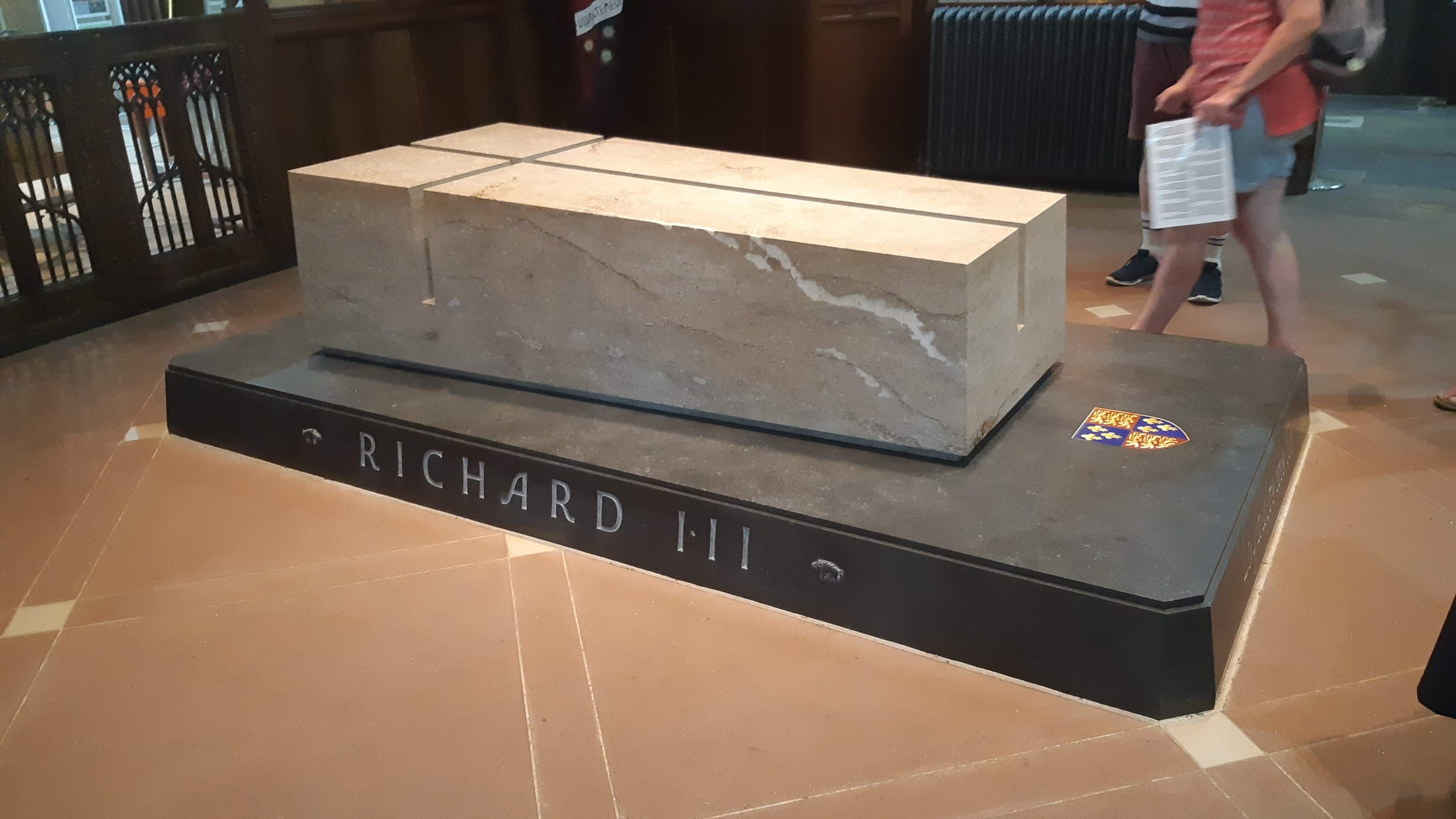
The next speaker was David Monteith, who recalled his experience with the reburial of Richard III in 2015. Public consultation revealed a very wide spectrum of preferences for the appropriate manner in which to deal with the late king – some wanting a full tomb, others a simpler box. He noted that many people’s feelings about Richard were hard to separate from his Shakespearean portrayal, and that if the rediscovery had occurred a few years later he would have needed to contend with much more polarised attitudes to memorials. He said that even in Richard’s day it was normal for the dead to be moved or their surroundings altered – Edward IV rebuilt many tombs of his relatives, as later would Elizabeth I. Burial styles changed over the centuries and so there were many valid ways of disposing of Richard. He did, though, have to discourage visitors at Leicester Cathedral from taking photographs with the casket.

Harold Mytum followed. The Church of England has policies for bodies found on consecrated land that parallel those of secular authorities. In medieval times English burials were much the same as continental ones, including frequent recycling of plots. Most above-ground interments in Europe lasted only twenty-five years before the cadaver was moved elsewhere. The Church has a duty to protect and respect human remains, but exhumation can be allowed if it serves the public interest, e.g. the advancement of science.

Andrea Bradley spoke of the challenges involved in securing land for HS2 – with its own bespoke system for the removal and reburial of human remains. They have a specific legal agreement with the Archbisop’s Council that corpses uprooted from consecrated ground must be put down in other consecrated ground.

Ian Dungavell said that burial spaces in cities are getting full again, and few now expect a large grave for themselves in perpetuity, instead accepting that after some time they will be relocated. Re-use of graves in this way has been allowed again (although only in London) since 2007 because there is no alternative possible.

Lin Foxhall, the host, took questions from the audience.

  • On the rise of digital commemoration, Nugent said to be wary of rapid-onset obsolescence. QR codes and URLs might not be functional a century from now and those without compatible technology – even today – would be locked out of interaction.
  • Asked why bodies were so obsessed over, even by cultures who insisted the soul was more important, Monteith suggested that without a standardised metaphysical understanding of death we fill the gap with fear.  He also wondered if we over-medicalise death nowadays.
  • Asked how common it was for bodies to be upgraded to higher-status graves, Mytum said that the emergence of non-religious cemeteries allowed greater commercialism in burial plans. Dungavell said that not everyone has detailed plans for their disposal, and that survivors sometimes need to “park” the body in a cheap grave for a few years while a more elaborate commemoration is organised.
  • Asked if future wills could contain clauses regulating future exhumations, Nugent said that such clauses are already in use. Foxhall said that ecological implications of burial and/or cremation are more closely observed now.
  • Asked if we should go back to communal burials, and why bones are seen as more important than ashes, Dungavell thought bones were treated brutally enough and Mytum said there are already commercial long-burrows.
  • I asked if something like the Necropolis Railway could reappear to allow urban residents to visit relatives’ graves far away. Dungavell said that the original company was unsuccessful as people wanted burials nearby. Ruth mentioned how railway companies had allowed corpses to go in sidings and embankments.
  • Asked about the changing nature of images on graves, Nugent said that some pictures could be very upsetting, especially if photographs peel off. Mytum noted that there had been changes in taste for memorials in the middle of the twentieth century, Foxhall noted very dark imagery in the eighteenth – such as cherubs becoming skeletons.
  • Asked about the need for different funeral and disposal styles for different cultures, Monteith noted he had already seen multi-faith crematoria for that purpose.

EXTERNAL LINKS

Cecily Neville by Annie Garthwaite

Host Cynthia Spencer, Chairman Keith Stenner and Writer Annie Garthwaite

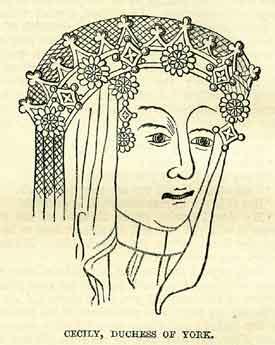
The latest installment in my EventBrite saga is today’s presentation to the Gloucester Branch of the Richard III Society by Annie Garthwaite, who has written a historical fiction piece about Cecily Neville (1415-1495), Duchess of York and mother of two kings.

The meeting properly began at 14:00 but the Zoom session was opened at 13:30. Cynthia Spencer, the host, said this was both to reduce the risk of interruption due to technical errors (or people arriving late) and to replicate in some way the socialisation between attendees that would occur at physical meetings. The first few minutes were thus filled with little more than awkward “Hello, hello?”s as early arrivals tested their sound systems. Garthwaite herself had to borrow an office with a fast broadband connection, her own being unreliable. There ensued a more general discussion as to the benefits and drawbacks of conducting all such meetings virtually. The ease of attendance from across a wider geographical area without a long commute was weighed against the subscription fee for the software. I opined that a virtual event’s main weakness was the impossibility of a buffet. Garthwaite recalled having virtual dinner parties – dinner for twelve people but only washing up for two! Inevitably there was talk about not being dressed below the waist.

After many more minutes of functional chatter, Keith Stenner (Chairman of the Gloucester Branch) announced that this was their first presentation of a fiction book. Garthwaite said that she had inherited her mother’s obsession with historical fiction and that her history teacher would pass books along to her. She was particularly enthralled by We Speak No Treason and developed an infatuation with Richard III – one obviously unrequited if for no other reason than the monarch having died five centuries prior.

Likeness by unknown artist circa 1540.

Cecily, the speaker noted, was born in the year of Agincourt and died in the reign of Henry VII. She was the only main protagonist of the Wars of the Roses to personally live through the whole of the conflict period, and spent much of that time as the most powerful woman in England save the queens themselves.

Garthwaite read out an extract from her book, set in Rouen in 1531 with Cecily observing Joan of Arc’s execution.

Returning to her background, she mentioned that she had long been familiar with other important women from the period – Margaret of Anjou, Margaret Beaufort, Elizabeth Woodville – and blamed Shakespeare for Cecily’s comparative obscurity. In his plays the duchess appears old, pious and dull, with few lines and little agency. Our guest went into an explanation of her subject’s childhood and courtship, then (with some fumbling around the screen-share function) showed us a simplified* diagram of Richard of York’s ancestry to demonstrate how he came about his multiple peerages as well as his two claims to the throne. She noted that, despite Richard clearly receiving royal favour at various points, he was always under suspicion from the Lancastrians.

Cecily’s arms – Richard Duke of York impaling Ralph Earl of Westmorland.

Garthwaite said she believed Richard & Cecily to be a marriage of equals, both being highly intelligent and ambitious – Cecily was allowed to operate autonomously in her husband’s business, household and political negotiations. It was a worryingly long time before the marriage produced any children but eventually she sired eight sons and four daughters (most of whom she outlived).

Garthwaite views Cecily’s marriage as the apprenticeship to her true flourishing as a widow, noting that when her son Edward IV acceded to the throne he immediately rushed off to the Battle of Towton, leaving the duchess in charge of the royal household “effectively as regent”, with ecclesiastical and diplomatic correspondence describing her as the true leader of England.

Describing the production process, Garthwaite said she – a novelist not a historian by training – was determined to stick as closely to known facts as possible. Medieval noblewomen did not solely concern themselves with embroidery and maternity, but would be in charge of managing large and complicated household organisations. Cecily’s family conflict was examined – her marriage into the House of York pitted her against her own Beaufort cousins.

After an anecdote about Destiny’s Stone on the Hill of Tara, another extract was read – concerning the Duke & Duchess’s last day in Ireland. This ended the formal presentation. Stenner noted that the book ended in 1461 but Cecily lived to 1495, and asked if a sequel was coming. Garthwaite confirmed that there would.

Spencer then began reading out questions that had been submitted by other attendees. One was about the allegation that Edward IV was the son of Blaybourne the archer and not Richard of York. Garthwaite laughed “I knew this would come up!” and said that the possibility of an affair was gold dust for historical novelists, but she decided that the theory was too tenuous.

Another was how a writer decides which historical events to include and which to omit, given Cecily’s very long life. Garthwaite said she learned to find the junctures which enable you to tell the overall story most clearly. She also said that “Your editor always has different opinions on it than you do.”

Spencer herself then asked about the legal status of decisions made by a woman in that era, and how her household was managed during confinement. Garthwaite replied that a lady of Cecily’s rank effectively had her own household distinct from her husband’s. After her husband’s death and her son’s accession she procured for herself very substantial tracts of land. This demonstrated, in the writer’s view, that female emancipation was not strictly linear – women of Cecily’s time wielded significantly more power than their Victorian or even later counterparts.

I asked Garthwaite what she thought of Cecily’s portrayal by Caroline Goodall in The White Queen and The White Princess** – the only instance I knew of her being played on television besides adaptations of Shakespeare plays. She replied that she had not seen either series and never passed judgement on other writers, but credited Philippa Gregory with renewing public interest in that era of history. Spencer chimed in that Cecily came across as a powerful person and that “It was a weird series but there were a few outstanding performances and I thought she was very good.”. Garthwaite said that while writing her own book she could not read anyone else’s historical fiction for fear of getting their thoughts mixed up with her own. This reminded me of Daisy Goodwin, writer of ITV’s Victoria, saying she would not watch The Crown to keep her own work independent and avoid plagiarism allegations.

The congregation then began to disperse but the session was kept open for a few more minutes so that members could scribble down contact details. I plugged my blog verbally for the first time, though I wish I had got in a moment earlier as by then there were only six out of thirty-one other people still logged in.

I have read and heard about the Richard III Society before but this was my first time directly interacting with its members. I hope there may be more.

*Inevitably, for a fully-detailed family tree for the Plantagenets, Beauforts, Nevilles and Mortimers would require multiple dimensions and still look tangled.

**Notably she was the only character not to be recast, perhaps because she was already an old woman when the first series started and so did not need to be aged up.

The Podcast in the Tower

Princes in the Tower Podcast Series

Shortly after mentioning them in a post about someone else, I came across a podcast by History Extra concerning the mystery of the “Princes in the Tower”, meaning Edward V and Richard of Shrewsbury in the Tower of London awaiting what should have been the former’s coronation. As well as the boys themselves, the podcast also investigates the historical reputation of their supposed killer Richard III, formerly Duke of Gloucester.

As the boys simply disappeared without trace in the summer of 1483, nobody can be sure exactly what happened to them. Bones were discovered in 1674 that might have been them, but there were discrepancies between historical accounts and some of the bones were not even human. Our present sovereign has not allowed DNA testing to determine their exact identity. The reason for her reticence is itself unknown, the most plausible explanation being that she fears setting a precedent for historians to tamper with her own remains in centuries to come. Perhaps “the Princess in the Tunnel” will still be an obsession for the nuttier tabloids?

Richard III himself is also hotly contested. Having been painted by the Tudors (and then Shakespeare as a deformed, leering hunchback, he has benefited from later attempts to rehabilitate his reputation, at least relative to the standards of the time. As said in the podcast, the Ricardian phenomenon is at least as intriguing as the life of Richard himself, or indeed his royal nephews.

EXTERNAL LINKS

UPDATE (February 2021)

Today I found a podcast series about Richard III by Matt Lewis.