The Queen’s Austen Faux Pas

The Queen’s Reading Room has just had its annual festival at Chatsworth House. In this video as shown on the ITN royal family YouTube channel, she makes a speech about Jane Austen (who turns 250 this year), a segment of which I will now quote:

We are provided with this magnificent backdrop that was her inspiration for Pemberley in Pride and Prejudice, and who can forget the infamous scene of Mr Darcy emerging from the lake in the BBC version?

There have been quite a few BBC adaptations, but of course she is referring to the 1995 version where Darcy is played by Colin Firth. I have not yet gotten around to reading the book or watching any of its adaptations, but immediately this line pinged something in my head. I was sure I’d read somewhere, many years ago, that this is an example of the Mandela Effect — that the infamous scene that none can forget was never actually in the episode!

Happily I didn’t need to go through the entire series on iPlayer because the Lake Scene is the subject of multiple YouTube videos, including at least two by the BBC itself.

Sure enough, we see him jumping in, then him swimming beneath the surface, then cut to Bennet in Pemberley’s garden, then to Darcy walking along the grassy hills still damp. The actual moment of his emergence from the water is not included.

Just three months ago there was a YouGov article describes this as a prime example of collective false memory: Their study showed 49% remembered the scene happening even though it didn’t. The televisual non-event is so famous that there was even a giant fibreglass statue of Firth erected in Hyde Park in 2013.

I wonder if anyone at Clarence House had to check Her Majesty’s speech in advance of the event. This is the sort of thing which should have been caught and corrected before it went public.

Trump at Windsor and Chequers

The 47th President of the United States has now completed his much-anticipated second state visit to Britain. Here are my observations on it.

Time and Place

This time the state visit was at Windsor Castle instead of Buckingham Palace. Trump himself said that this was because Windsor was better. While most (including the royals themselves) would agree that Windsor is the superior setting by most metrics, the real reason for the change of location is that Buckingham Palace is undergoing major renovations so won’t be available for these kinds of events for some time. Trump had previously visited the castle on his Official (not state) visit in 2018.

There had been some speculation about the idea of the second state visit being held in Scotland rather than England. The King’s letter to him in February even speculated he could come to Balmoral, but this did not come to pass. Trump did make a visit to Scotland this summer while the monarch was also there, but it was a private rather than a political visit and the two men did not meet.

The timing of the visit was a little tight, as it was sandwiched between the Duchess of Kent’s funeral and the Queen’s Reading Room Festival. The Duke & Duchess of Edinburgh were not present due to clashing commitments — commemorating Independence Day in Papua New Guinea, then representing Britain at a business summit in Japan.

Ceremony and Security

What made this visit a little surreal is that, due to the intense unpopularity of Donald Trump among most of the British population and the scale of protests against him, this was the paradoxical phenomenon of a state visit done almost in secret. There were no “public-facing” events, with the foreign visitor instead being flown in his own presidential helicopter directly from Stansted airport to his ambassador’s residence, then to Windsor Castle, then to Chequers, then to Stansted again, thus avoiding the public roads (although his motorcade was still driven there without him in it).

What particularly stood out here was the carriage ride: For the state visitor to be pulled by horse through the streets of Windsor (or the Mall in Westminster) is a standard part of the tradition — witness Macron two months ago, the sovereigns of Japan and Qatar last year, and even Vladimir Putin in 2003 — but the enormous additional security requirements for American leaders had previously rendered this impractical. The solution here was for the carriage ride, like everything else, to happen entirely within the castle grounds. There were still soldiers lining the route, but no cheers from adoring crowds (or, more likely, jeers from abhorring crowds instead). The emptiness of the background gave the scene a visual quality reminiscent of much of the COVID years, especially Prince Philip’s funeral.

Other Parts

The First Lady had a tour of the Windsor Castle library with Queen Camilla, followed by a Scouts Squirrels event with the Princess of Wales. Her facial expressions throughout these events are noticeably different to when she is pictured with her husband.

Attire

As the state banquet was at Windsor, naturally the royal men were wearing the Windsor uniform while everyone else wore white tie. The King & Queen wore the sash of the Order of the Garter, as did the Duke & Duchess of Gloucester, the Prince of Wales and the Princess Royal, while the Princess of Wales and Sir Tim Laurence wore that of the Royal Victorian Order. Trump’s chest was noticeable for its lack of adornment, which is a little odd as he seems exactly the sort of person who would most covet medals and sashes. There was no exchange of honours between the two heads of state, which one would normally expect to see here if it hadn’t been done already.

I also spotted that, when first meeting each other, the sovereign and the president both wore ties the same colour as the hats worn by their respective consorts, which was a nice touch.

Music

We had copious renditions of God Save The King and The Star-Spangled Banner. I was a little surprised we never heard the presidency’s own anthem Hail to the Chief. Protocol aside, it would have been more artistically-apposite to have that one paired with the royal anthem while the national anthem was paired with something like Rule, Britannia!

Progress and Politics

Having completed his Dignified stay at Windsor, the President then moved to Chequers for the Efficient part of the visit. The British and American governments produced a Memorandum of Understanding regarding cooperation on advanced information technologies and, most intriguingly, nuclear energy. That last one is something that Britain has direly needed for a while, though the other parts have yet to fully escape the realm of folly.

Photographs

One of the main perks, for me at least, of having a US Government visit to the UK is that there will be a series of official photographs released into the public domain. I was a little disappointed on this occasion to see that the White House Flickr account didn’t publish any photographs of the visit, while the State Department only published one of Marco Rubio meeting Yvette Cooper on the runway. The collection on Wikimedia Commons is mainly made up of images found on White House Twitter and Instagram feeds. The White House YouTube channel also uploaded some nice long videos of the key events (albeit with a banner over much of the screen). There is less clarity on these platforms as to the copyright status, and it may later turn out that they are commercial photographs rather than government ones, in which case they will have to be removed. The Downing Street Flickr account published three dozen photographs of the event at Chequers but the only one from Windsor was the group shot shown above. This means there are no free photographs of the state dinner itself, so these will have to be sourced from screencaps of the aforementioned videos.

The Future

Already there have been further news articles hinting that Trump intends to invite Charles & Camilla to Washington D.C. next year, on a reciprocal state visit coinciding with the 250th anniversary of the United States’ independence. That should be interesting to see!

UPDATE (22nd September)

The White House Flickr account has now released an album of the state banquet with 27 photographs at time of typing, as well as 83 of the arrival ceremony and 48 of the Chequers conference, which sure makes my life a lot easier.

The Duchess of Kent’s Funeral

The funeral took place today at Westminster Cathedral. It was not televised, but there was a press-pool camera outside which livestreamed to YouTube. Unfortunately the camera feed only covered the outside of the cathedral, and our view of the inside was limited to a handful of still images (which seem to be of guests filing in rather than the ceremony itself), and what could be seen from the outside once the doors were opened. Since it was broad daylight from the outside, it took a while for the camera’s light sensitivity to adjust so that proceedings inside were actually visible. This was briefly undone every time someone in a white cassock walked across the camera’s field of vision outside, so that the interior became a black void again. I will make here what few observations I can, mainly about flags and cars.

When viewed from the piazza, the flagpole on the left of the main door normally flies the flag of the Holy See (or Vatican City) while that on the right flies the Union Flag (or Jack). This time the Vatican flag flew full-mast throughout while the right pole flew the sovereign’s banner of arms at full-mast in his presence and the Union Flag at half-mast in his absence.

Katharine did not have the use of a banner of her own arms (the Duke of Kent impaling Sir William Worsley) so her coffin was draped in the generic royal banner with the ermine bordure. Attendees on departure could be seen clutching the printed order of service with Katharine’s royal cypher (the letter K topped by a coronet of crosses and strawberry leaves, curiously not the version shown on Wikimedia Commons). The order of service itself has not been released, but the royal family website has this article explaining events that took place. An announcement on the cathedral’s website uses Sodacan’s illustration of the late duchess’s heraldic achievement.

The doors opened as the piper was walking out, after which the national anthem was played. Two verses were sung, preceded by Gordon Jacob’s fanfare. It was played on the cathedral’s organ but I don’t think any brass players were present.

I took notes on which royals arrived in which car:

  • The Late Duchess herself was carried in the claret Jaguar hearse (no numberplate) also seen at Elizabeth II’s funeral.
  • The Duke & Duchess of Gloucester in OY20FUL (a dark red diesel Jaguar)
  • Prince & Princess Michael in a blue BMW (probably YK74MHB, electric)
  • The Duke & Duchess of York in KN74EFK (a green hybrid Range Rover)
  • Sir Tim Laurence & The Princess Anne in DK74CMV (a blue petrol Bentley Bentayga)
  • The Prince & Princess of Wales in KU25UPR (a blue hybrid Range Rover)
  • The Duke of Kent & Lady Helen Taylor in a blue Jaguar (registration not shown in footage)
  • The King and Sir Clive Alderton in the Bentley State Limousine (no numberplate needed).

The Duke of York looked a little confused on the way out, walking towards the cars, then back to the cathedral, then to the car again, as if not sure which one he was meant to be using. A short wheelbase bus was used for several other family members, including Lord & Lady Frederick Windsor.

The Duke of Kent, aged 89, understandably looked rather frail and shrivelled. His siblings Prince Michael and Princess Alexandra were both seen in wheelchairs at some points, then walking with canes at others. The Queen did not attend, having pulled out at the last minute due to a sudden bout of acute sinusitis. It is not confirmed if she will still be attending the imminent American state visit.

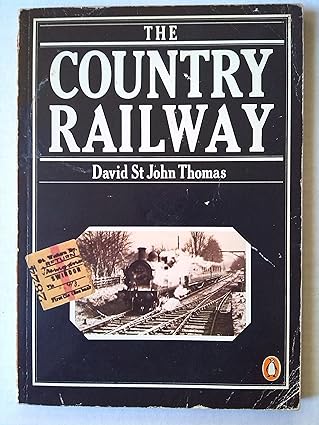
Review: The Queen and Mrs Thatcher by Dean Palmer

The Queen and Mrs ThatcherOf all the post-Churchill prime ministers who have governed the United Kingdom, there is one whose personality and policy stick out particularly strongly in the national – and indeed global – consciousness. Margaret Thatcher is the longest-serving British premier in living memory, and also the one whose tenure is often considered the most transformative. Even now, twelve years after her death, her legacy remains a potent force in determining the course of British politics both inside and outside her own party. As I mentioned in my article about memoirs, a lot of MPs define their status in relation to Thatcher in a way that doesn’t happen with Macmillan, Wilson or even Blair. Perhaps, then, it is only natural that her royal audiences, more than anyone else’s, should be a source of such fascination. Palmer isn’t the only one to single out this relationship – there’s also Moira Buffini’s comedy play Handbagged. Thatcher also marks a turning point in Elizabeth II’s reign (the halfway point of which occurred about the time of her third election victory): When the monarch came to the throne her ministers were often people nearly as old as her grandparents, by the end they were people born well within her reign and sometimes younger than her grandchildren. Thatcher was only four months older – had the Princess Elizabeth gone to school they would have been in the same academic year. On top of that, there was the obvious novelty of having the heads of state and government both be female, which still hadn’t happened again when this book came out.

The theme of the book is that despite the superficial similarity in sex and age, the two protagonists (or should that be antagonists) were fundamentally poles apart in class and philosophy – Elizabeth representing the genteel, leisurely aristocracy and Margaret the ambitious middle-class strivers. The chapters on their childhoods are where this difference is laid out most starkly (and also where Palmer’s sympathies are most obvious): Alfred & Beatrice Roberts had high aspirations for their offspring, which little Maggie displayed superhuman intelligence and stamina in pursuing, even to the extent of hiring a private tutor to teach her Latin because her grammar school didn’t offer it but Oxford required it. Palmer says that in a few months she picked up what normally takes five years. Lilibet, by contrast, barely got any formal education as her mother Elizabeth Bowes-Lyon did not value it at all. Mary of Teck intervened to rectify her granddaughters’ shortcomings but even she agreed that it would be undesirable to have them be particularly studious1. That said, it was assured that the princess took seriously her status as heiress presumptive, and that this sometimes gave her an “imperious” attitude, even to the point of criticising a priest’s sermon or a guard unit’s attire (ironically that part is like Thatcher later on). The longstanding political trope of “authenticity” comes up here: Thatcher, having worked her way from middle to upper class, had taken elocution lessons and adopted other affectations which often caused sniggering from both above and below. The Queen, having been born and raised at the top, naturally avoided this. That Thatcher did not share Her Majesty’s (or really any) sense of humour was another cause of friction. It would be wrong, however, to say that such friction is inherent due to the differences in social class, or even to political differences – among the grammar school generation of prime ministers Elizabeth II got along well with Wilson, Callaghan, Major and Brown but not so well with Heath.2

I shall attempt now to go through, in no particular order, the key reasons which Palmer identifies for the disagreement between the two leading ladies. The first is the subversion of the traditional relationship between crown and government: The British constitution employs a separation of the Dignified and Efficient parts of the state so that patriotic adulation can safely be directed at a figurehead who does not exercise real executive power, while the person who does exercise it is kept in a position of symbolic subservience. Furthermore, the Prime Minister is supposed to be first-among-equals, with all the other ministers around the cabinet table deciding on policy collectively. Thatcher’s domineering personality and immaculate sense of style often got her called “Presidential”. She would insist on immediately visiting the scene after a disaster to meet survivors (whereas the royals would wait a day or two in case their presence obstructed rescue and clean-up operations), and taking military salutes in preference to the monarch – something even Churchill couldn’t have done. It was seen that she was usurping her queen’s role as the symbolic personification of the nation. She also had a tendency to ride roughshod over her political colleagues, gradually purging all but the staunchest loyalists from the front bench, then later neglecting even these in favour of a small cabal of special advisers. This, Palmer notes, is what ultimately brought about her political downfall in 1990.

The second point of contention was Thatcher’s political philosophy: Although she was the Leader of the Conservative Party, many commentaries and histories of her tenure remark that it was really the Labour Party at this time which was “small-c conservative” in so far as it sought to maintain the prevailing status quo in Britain’s economic order. Thatcher thought that the policies of the last dozen governments had led Britain into terminal stagnation and that radical reforms were needed to find prosperity again – the welfare state, the nationalised industries and the trade unions were all dead weights which throttled growth, therefore they had to be destroyed. There was to be a ruthless drive for efficiency and productivity above all else. This did not sit well with the sedate and sentimentalist approach to life favoured by the royal household and the rest of the aristocracy. Despite the outward deference of Thatcher herself, the Firm could well have feared for their own survival against the forces she sought to unleash. The traditionalist wing of the Conservative Party, many of whose members were also from aristocratic backgrounds and who supported a paternalistic approach, likewise balked at much of this. A division erupted between One-Nation/Wet and Thatcherite/Dry parliamentarians which continues to this day.

The third division was over the pair’s approach to division itself: Thatcher realised that in order to be an effective political leader she often had to make decisions which would be unpopular even if they were necessary (and ultimately beneficial). A government can survive on the support of a surprisingly-low proportion of the population (given turnout and constituency distribution) and even that need technically only be mustered once every four or five years when a general election comes around. Party leaders need to make strategic calculations about which demographics matter and which don’t, as well as what they can accomplish in the limited time available to them. Thatcher to this day is legendarily divisive, making enemies of large swathes of the country, but not really caring as long as she beat them. The Queen, by contrast, needed to be monarch for everyone, everywhere, forever, no matter their creed or their breed. The position of the crown was more comfortable in the age of consensus than when the people were polarised. This distinction is especially stark in international affairs because Thatcher was only head of government in one country whereas Elizabeth was head of the enormous Commonwealth of Nations, many of which were demographically and economically very different to the United Kingdom. At times of crisis, such as over Rhodesia and South Africa, Thatcher often found herself at odds with the majority of her overseas counterparts, leaving Her Majesty in a difficult position scrambling to hold the organisation together. The Queen greatly valued her extended Commonwealth family, whereas Thatcher saw many of them (particularly the African countries) as ungrateful leeches. This rift also continues in the Conservative Party to this day.

Finally, many pages are devoted to Thatcher’s dealings with the news empire of Rupert Murdoch. He achieved his dominance of the British press during Thatcher’s premiership thanks in no small part to her continued and determined support. Murdoch’s many papers and other outlets would ensure the widespread distribution of the Thatcherite perspective. Murdoch shared Thatcher’s hatred of trade unions and strikers. He also had a loathing of Buckingham Palace, and his reporters would go to great lengths to dig up (or indeed create) dirt on the Windsors, intruding on their private lives where the British press theretofore had restrained themselves from treading. Thatcher may not have actively approved of such practices, but she tacitly tolerated them in exchange for Murdoch’s support to her government. To this day, many on the left and right (though mostly left) identify “The Murdoch Press” as the root of a great deal of Britain’s political and social instability – his antics in the 1980s encouraged an overall lowering of the tone which has yet to rise back up.

I picked up my copy of Palmer’s book from a throw-out sale at Hull Central Library on the 1st of this month at a price of 50p. I noticed there was a more recent edition of the same title still on the shelves for lending. In mine, I spotted an alarming number of proofreading errors, some of which I will now list for your amusement:

  • Page 43: “Alfred Roberts sought to make something of himself beyond the realm of his little business by taking an active role in both his local Methodist church and by serving on the local council.” – The word “both” should immediately follow “business”.
  • Page 61: “Mothers throughout the country were astonished that a women would take free milk from children.” – That should be “a woman” not “a women”.
  • Page 93: “Not since Elizabeth I and Mary, Queen of Scots had two “queen regnants” lived in the British Isles.” – That should be “queens regnant” not “queen regnants”.
  • Page 138: “Prurient interest in the royal family’s private lives were off-limits.” – That should be either “interests” or “was off-limits”.
  • Page 165: “Scargill was a socialist hero after helping to bring down the Tory Government in 1984.” – I would assume that meant to say 1974.
  • Page 166: “It cost £44 to mine a metric ton of British coal, while the rest of the world were selling it for £32 per ton.” – That should probably be “was selling” and metric tons are more commonly called tonnes.
  • Page 192: “At Buckingham Palace, Her Majesty waited for the third time to invited Mrs Thatcher to form her government.” – That should be “to invite” not “to invited”.
  • Page 221: “embarrassment” is used twice in the same paragraph.
  • Page 271: “King William and Queen Katherine would certainly sparkle” – That should be “Catherine” not “Katherine”.

Also, throughout the book Palmer refers to “the queen” rather than “The Queen” or “the Queen” which are more usual in most style guides.

I was intrigued too by the reference on page 153 to “the first Elizabethan period”, obviously identifying 1952-2022 as the second such era. This usage has not really caught on widely in academia or among the general public. I wonder whether “New Carolean” will do so.

On that note, the political attitudes of the then-Prince of Wales are also covered. He is described as being more “Wet” than his mother, and even as being sympathetic to the Social Democratic Party under David Owen. There is mention on page 195 of a meeting between prince and premier about increasing the former’s constitutional role. Thatcher turned down planning for any regency arrangements. She said he could open parliamentary sessions in his mother’s absence if need be, but only as a Lord Commissioner on the woolsack instead of from the throne (ironically the former was made impossible in 1999 and the latter wound up happening of Elizabeth II’s own volition in 2022). The most surprising thing mentioned was the stance of Queen Elizabeth the Queen Mother – apparently (page 207) she was an ultra-Thatcherite and fully supported the prime minister’s ideology, which is a little at odds with what was said about her attitude to raising her daughters as aforementioned or what the book also said about her dealings with Charles.

A few days ago I mentioned three new royal biographies coming out. While I have yet to read any of them in full (and may never do so) I read some of the previews on Google Books. Excepting where the later books describe events too recent for the earlier ones to cover, I expected that there would be a fair bit of overlap. Sure enough I noticed a lot of the same quotations and anecdotes appearing. This book has a very lengthy endnotes section which links back repeatedly to a large number of earlier royal and political biographies. Since most members of the family rarely (and the monarchs themselves never) give tell-all interviews (and those who do are often unreliable in what they say), nearly all of the publications on this subject will be pieced together from the same handful of sources, stories and speculations, with the original part being the author’s decision on which way to arrange them, what narrative arc to infer from them, and what commentary to add. Palmer does an adequate job of that, I suppose, but I can’t see this ever being considered one of the greats.


FOOTNOTES

1The term for this was “bluestocking”, which is also the name of Helen Lewis’s blog.

2The book came out too early to learn what she thought of May, let alone Truss.

Accession Day 2025

Today marks three years since the passing of Elizabeth II and thus the commencement of the fourth year of the New Carolean era. Here is a quick round-up of recent developments.

New Royal Biographies

The stream of these is continuous and too large to notice all of them, but three in particular have generated news coverage:

  • Entitled: The Rise and Fall of the House of York by Andrew Lownie (14th August, HarperCollins). The title alludes to the Wars of the Roses, but really it’s about the personal, professional and financial lives of the most recent Duke & Duchess. The book is overwhelmingly derogatory and might have been considered scandalous had not most of the topics therein been raised already some years ago (while the other claims are usually less-than-credible). Many reviewers and columnists have said words to the effect that it would be devastating to its targets’ reputations if only they had reputations left to devastate. The people who didn’t already believe the things Downie asserts here probably won’t read this book anyway so despite a few sensational headlines I doubt in the long run it will really change anyone’s position.
  • Power and the Palace: The Inside Story of the Monarchy and 10 Downing Street by Valentine Low (11th September, Headline). Low has already written Courtiers in 2022, which I have in my collection but have not gotten around to reading yet. I’m not sure I’ll ever read this one either since, as is often the case with this kind of book, the newspapers have already spent weeks running headlines explaining all the important bits. The book is about the relationship between senior members of the royal family and senior members of successive governments. The most outlandish part is the attempt to lift the lid on Schrödinger’s box regarding Elizabeth II’s political beliefs, long a source of speculation to all and sundry. Low, quite remarkably, claims that Her Late Majesty was much more candid than formerly thought and that everyone else around her was more studiously discreet. The most prominent assertion (in terms of news coverage) concerns her views on the 2016 EU referendum. Private Eye has this amusing summary:
GALLAGHER’S GALL
ORDERED by press watchdog Ipso to print a correction to his pre-referendum front-page headline “QUEEN BACKS BREXIT”, which was found to breach its accuracy rules since there was nothing in the story to show it was true, then-Sun editor Tony Gallagher was defiant.I don’t accept that we made an error at all,” he huffed to the BBC. “We made a judgement that the headline was right and that it was backed up by the story. We knew more than we put into the public domain. The sources were so impeccable that we had no choice but to run the story in the way that we did.”
Nine years on, Gallacher has been promoted to edit almost-as-respectable sister sheet the Times, which is serialising Power and the Palace, the new book by the paper’s retired royal-watcher Valentine Low. And what headline appeared on Saturday’s front page flagging the first revelations from the impeccably sourced tome? “The Queen was a Remainer.” (Eye 1657 page 7)
  • Charles III: New King. New Court. The Inside Story by Robert Hardman (Pan Macmillan). It actually made most of its headlines last year but apparently he has a new edition coming out soon. I’m not sure if this is the second edition or if there’s already been one in the interim that I’ve missed, as I found a version on Google Books which claims to have been published on 7th November 2024 yet includes photographs of events from 2025. It has three extra chapters compared to the one I borrowed from Hull Central Library, and these cover the two royal cancer crises as well as the D-Day Commemorations and the general election. This latest version is obviously too early to include Trump’s state visit or the Duchess of Kent’s funeral, so probably yet another version will be needed next year. Pan Macmillan ought to have a trade-in scheme so people who already bought the old edition can get discounts off the new one. In an interview with journalist Patricia Treble he said Charles is “just the King” now as opposed to “the new king” so perhaps the very name of the book is now redundant and it would be better in the long run to wait until he has enough extra material for a full-length sequel instead of endless retroactive add-ons.

The Tudor Crown

Yes, that old chestnut again. I note that HM Goverment is still not entirely consistent here: When Rushanara Ali resigned last month the Prime Minister’s typed response had the new Noad illustration on its letterhead but when Angela Rayner resigned last week Starmer’s handwritten reply was topped by the old image, as was the letter from the Standards Adviser. Recently Charles wrote a letter to King Mswati III of Eswatini (formerly Swaziland) congratulating his country on fifty-seven years of independence. That letter was Tweeted by the British High Commission in Mbabane, showing the new emblazonment. It uses the “lesser” version of the arms in blue instead of the greater version in red, so it perhaps it should be understood as an FCDO letterhead instead of a royal one.

State Visits

Britain has already received a state visit from France this year and is about to host one for America also. As far as outbound visits go, there doesn’t seem to be anything scheduled for the rest of this year. In 2026 Their Majesties are expected to travel to Canada again (for an extended royal tour), to the United States (for a British state visit) and to Antigua & Barbuda (for CHOGM). There is still no announcement as to when they will visit New Zealand, which must be frustrating to those who’ve been waiting well over a year now!

Review: Mitchell & Webb Are Not Helping

Almost ten years since the end of Peep Show and just over fifteen since the end of That Mitchell & Webb Look, the duo have returned for another series on Channel 4. A side effect of watching old material over and over again is that it can cause one’s mental cache of another person’s appearance to be skewed many years into the past, leading to surprise when a more up-to-date view is encountered. While I am familiar with David Mitchell’s recent appearance from, among other things, Ludwig (which incidentally should also be returning soon) I had not seen Robert Webb in anything new for a while and so his gaunt visage shook me a little.

It may seem glib for me to point this out, but the leads’ age is an important theme throughout a lot of the sketches: Whereas Peep Show ended with Jeremy turning forty and That Look had a sketch about how they couldn’t be cutting-edge forever, this series picks up with both men in their fifties and a lot of the jokes are about them suffering aches and pains or reminiscing about references alien to their younger co-workers. One of the few recurring sketches is even called Middle-Aged Man Island and consists of them talking about World War II, lightbulbs, Christmas decorations etc.

I’m sure that fans of Mitchell & Webb’s earlier work would have been delighted to know that a new series was happening at all, albeit cautious in their expectations of its quality. Those who were hoping for a whole-hearted revival of That Look will probably be disappointed here. The writing in this one has nowhere near the sharpness of the earlier material and often feels ill-suited to the duo’s strengths. Another of the recurring skits is Sweary Aussie Drama, about an Australian family fighting over the ownership of their enormous farm, with the big joke being that none of them can get through the simplest sentence without a shower of expletives. This could work in isolation as a decent satire, except that so much of the rest of the series’s own writing also tends that way, as well as relying on puerile blue humour in lieu of clever ideas or, indeed, good line delivery. Some of the sketches, particularly one about a workshop for dead relatives’ antiques, felt more like something from Tracey Ullman’s Show a few years back. I can’t see many scenes, or even lines or screenshots, from this production establishing lasting cultural fame the way the older ones have.

The main thing that the scripts are missing is direct interaction between the two leads: We rarely get scenes of David & Rob talking one-on-one, instead this is much more of an ensemble piece where the troupe just happens to include two members who were once in a double act. That could have been pulled off if the supporting cast from That Look or Peep Show could be carried over, but Bachman, Burdess, Evans, Fitzmourice, Hadland, Howick, Joseph, King, Neary, Suttie and Winkleman are nowhere to be seen. Olivia Colman at least manages to return, although only for one sketch and with curiously little attention drawn to her presence. In their place we have Kiell Smith-Bynoe (of Ghosts fame), Krystal Evans, Stevie Martin and Lara Ricote. I can’t criticise any of their performances individually but they don’t have the same familiar chemistry with the two leads that their predecessors would have done.

Overall I would say that Not Helping is passable but not spectacular, and I wouldn’t chose a second series of this over a Peep Show revival, or even more Back. Frankly, it’s just not Numberwang!

Review: Discovering Watermills by John Vince

At eighty pence and eighty pages, this is among the lightest book purchases I have made in the past few years. I picked it up from the Dovehouse Hospice shop in Hedon two weeks ago. An inscription on the title page indicates it was previously owned by a J. Richardson. Little explanation is required for the topic of the book. Vince recounts, in a very compact format, the emergence of the practice of grinding grains for food, from the prehistoric world to the ancient, then medieval, then modern, from hand tools to human-powered wheels to the titular watermills and the various substances — including copper, paper, snuff and lead, which were extracted or refined with their aid. There follows a similarly-compressed explanation of the materials and construction techniques — the different ways in which the pins, braces and clasps can be arranged, as well as the financial considerations involved in switching from wood to cast iron (or some hybrid arrangement) in the eighteenth century. After that came an explanation of how the mill apparatus actually works; not just the internal interaction of all the cogs and pulleys, but also the way the external landscape has to be manipulated to direct the water to the mill. The main piece of information that I picked up from here is the distinction between an undershot wheel where the water pushes along the bottom and an overshot wheel where it pushes along the top. There were also two warnings, perhaps slightly contradictory, about mills left unattended: A waterwheel left locked into a stationary state can suffer rotting in its lower half which results in the whole construction disintegrating over time, yet a wheel left unlocked is liable to spin too quickly under heavy wind or rain so that the dry components inside fly apart or even catch fire. This part of the book was accompanied by mechanical diagrams as well as a brief table of statistics about the machines’ power, speed and output.

All that I have just described was concluded on page 20. The rest of the book, apart from the index and a few pages of photographs (on glossier paper but still monochrome), was a list of “some notable watermills” (with “some” here meaning many dozens) in the United Kingdom. Each had a short paragraph about its history, construction, operation, current ownership and opening times. Since this edition was published in 1987 I don’t imagine much of what was written in that chapter is still true. I would be minded nowadays to look these places up on the internet before dialling any of the telephone numbers Vince has given. What struck me most about this section is that, among all the counties of England, Scotland, Wales and Northern Ireland (and even the Isle of Man) that were documented there was no mention of East Yorkshire, whether under that name or as “Humberside”. If there aren’t any, surely that itself is worthy of mention? I can only infer that none of our mills met Vince’s standard of notability!

The Deputy & The Duchess

The Duchess’s Heraldic Achievement

Documentaries about the stormy second premiership of Harold Wilson (1974-6) often mention his determination to take the nation by surprise after months of all his government’s secrets being leaked to a vicious press. In the end he pulled off the particularly-impressive trick of resigning on the same day that the Princess Margaret finalised her divorce from the Earl of Snowdon, and therefore knocked the latter story off the front pages. No doubt this spared the royal family a lot of grief.

Today a similar coincidence has been achieved in reverse – Angela Rayner resigned as Deputy Prime Minister, and Buckingham Palace announced the death of the Duchess of Kent. There is something a little uncanny in these events happening so close to the anniversary of Liz Truss’s accession to the premiership and Charles III’s accession to the throne. The public mourning over the deceased Queen Elizabeth obviously didn’t save the Truss government, but did at least postpone its inevitable disintegration. Neither of today’s events are quite on the scale of those but, even so, the cabinet will likely be glad of the news – and Parliament – having a different story to occupy their time.

I will deal with Rayner first. Obviously her property tax scandal is a further reputational blow for a government whose public approval ratings were already abysmal. Her departure could cause some practical issues, too. Rayner simultaneously resigned from three offices: Deputy Prime Minister of the United Kingdom, Deputy Leader of the Labour Party and Secretary of State for Housing, Communities & Local Government. The latter is the one of greatest constitutional substance, for each Secretary of State is a corporation sole defined in statute with responsibility for a government department, in this case the Ministry of Housing, Communities & Local Government. The MHCLG cannot operate effectively without its secretary of state so a successor to Rayner will need to be appointed within days and confirmed at a meeting of the Privy Council shortly afterward. The middle is of course not a government office but a party one. Deputy Leaders are elected by a postal ballot of the rank-and-file partisans in an operation that typically takes months. This will be the first time in decades that the Deputy has been replaced without the actual Leader also changing (unless Sir Keir Starmer somehow also ends up resigning imminently) and, given the unpopularity of the current government among the party’s base, it could be a major opportunity for dissident factions to attempt a strike against front bench. The internecine fighting is bound to highlight controversies and resentments on which the opposition parties can pounce. The former will be the more interesting to watch: As I have mentioned before, the Deputy Prime Minister is constitutionally little more than a courtesy title rather than a substantive office and many premiers can do without appointing one. There is no obligation for the Deputy Leader of the Labour Party to be deputy leader (whether en titre or de facto) of a Labour government – notably Harriet Harman wasn’t. Even so, the Deputy probably need to have some kind of senior government post, for as a backbencher they would be too free to criticise and challenge the incumbent. If the eventual winner of the election is not already a cabinet minister then it may necessitate another minor reshuffle. In the meantime, though the Prime Minister will need a designated survivor, he would probably be better off not appointing a new DPM, nor a First Secretary of State, as whoever landed that job would then have then have to endure the indignity of relinquishing it a few months later and, since everyone would predict this in advance, would probably struggle to accomplish much of worth during that time.

Moving on to the Duchess: Born in 1933, she was the oldest among the royal family, a status which now passes to her 89-year-old widower Edward. Her death does not create a vacancy in the Firm, as she very quietly retired from public duties a few years ago and was absent for nearly all of the big ceremonial gatherings since then.1 At the time of writing the exact date of the Duchess’s funeral has not been announced, but based on usual time lapses it should be concluded before the halfway point of this month and thus narrowly avoid clashing with either Donald Trump’s state visit to the United Kingdom or the Duke of Edinburgh’s attendance at Papua New Guinea’s semicentennial independence celebrations. Katharine was the first British royal since the Glorious Revolution to convert to Roman Catholicism, and it has been stated that her funeral will follow Catholic liturgy. That will be an innovation for the House of Windsor too, as the only thing approaching a recent precedent is the reinterment of Richard III in 2013, and even that was technically an ecumenical affair. The Duke of Kent has been steadily winding down his commitments in recent years but is still considered a senior working royal. It is yet to be seen if the death of his wife will lead to any changes in his arrangements. The Ferens Building at the University of Hull (not to be confused with Ferens Hall) has her name on its keystone and the Prime Minister’s statement this afternoon mentioned that she was “giving her time and working anonymously as a music teacher at a school in Hull”. It will be interesting to see if any of her pupils are involved in the funeral, or indeed if there will be any local ceremonies to celebrate her association.

1The latest reference I can find in the Court Circular to her attending in person, rather than being represented by someone else, is 8th June 2019. I note that the “Where is Kate?” crisis of eighteen months ago failed to notice or care that the other Katharine had been “missing” for a much longer time.

UPDATE (8pm)

In the time between drafting this article and uploading it, Sir Keir has ignored my advice and carried out a full reshuffle, appointing David Lammy as DPM and Lord Chancellor (interestingly making the same career move as Dominic Raab four years ago) and replacing Rayner at MHCLG with Steve Reed, among many other changes. No timetable or candidates have yet been confirmed for the Deputy Leadership.

Review: Captain James Cook by Richard Hough

The paperback edition of this book was first published in 1995 and sold for £6.99. I picked up my copy in 2024 for £1. It follows the conventional format for a biography, beginning with the circumstances of the subject’s birth and running all the way to the aftermath of his death. That Cook has a tragic death relatively young is probably to Hough’s advantage as it prevents the book becoming overlong.

Cook is among Britain’s most celebrated sailors and explorers. This biography covers the whole of his maritime career, particularly his three Pacific voyages. Cook makes multiple visits to New Zealand, Tahiti, Hawaii and the Society Islands. He gets close to both the North and South Poles. A lot of the book is dedicated to Cook’s interactions with the Maoris and the many Polynesian tribes. There is a recurrent schizophrenia in the stories of these encounters – one minute the islanders will be treating Cook and his crew like gods, the next they will be plundering his vessels for anything not nailed down (and often even stealing the nails themselves). This reaches its apotheosis at Kealakekua Bay in 1779: On his first visit in January Cook is hailed as Orono, God of the Season of Abundance, and is showered with lavish praise, but when he returns in February the mood is of cold hostility and it is not long before a war breaks out which leads to his own gruesome death. Cook’s own personality charts a more linear decline from a civil, optimistic attitude on his original voyage to a cruel, irrational and vindictive one by the end. Partly this is the result of the great many infuriating setbacks suffered on that trip but there is also an analysis by a twentieth-century surgeon reckoning that Cook picked up an intestinal infection which impaired his brain function.

This book highlights how much of the world prior to Cook was still uncharted: As well as looking for new navigational passages (such as around the Arctic), Cook is also sent on a mission to prove or disprove the existence of Terra Australis Incognita, a much-fabled supercontinent in the Southern hemisphere that would have linked Australia together with Antarctica. There are also references to other scientific advances at the time, such as Cook’s own dietary and sanitary innovations to combat scurvy or the excursion to Tahiti to observe the transit of Venus.

The accounts of events aboard His Majesty’s Ships Adventure, Discovery and Resolution are pieced together from those diaries and letters that survived to be archived. These include Cook’s own logs, but also those of his contemporaries Joseph Banks, William Bligh, Charles Clerke, John Gore and a host of others. As is usual with these kinds of works, we get first-hand accounts of the action and occasionally the dialogue, but the thoughts and feelings of these men can only be speculation, save the rare occasions when they speak them outright. At this period real-time communication was impossible over long distances and letters could travel no faster than the mariners themselves, so the Admiralty back in Britain would not have any meaningful understanding of what happened on these voyages until the ships completed their return journey (if they ever did at all) and gave accounts retrospectively. This also meant that sailors would be cut off from events at home for months or even years at a time. In the final chapter Hough says that James & Elizabeth Cook, having married in 1762, only spent an aggregate of four years together before his death in 1779. Most of his children rarely if ever got to see their father either. After Cook’s death, Clerke became Captain and he penned the letter back to London explaining as much. It did not arrive until 1780, by which point Clerke himself had died too and it was Gore who held command by the time the survivors got home.

I bought this book principally for my father and we read it together in short bursts over the course of a year. I would recommend it to anyone with an interest in sailing, but the story is probably easier to follow and remember when taken at a faster pace.

Everything in my Power

As we have recently celebrated the eightieth anniversary of VE and VJ Day, I have naturally been reading a lot of articles and watching a lot of documentaries about the end of World War II in both Germany and Japan. The mechanics and political technicalities of the German surrender are particularly fascinating to me, as the event represented not only the cessation of fighting but also the succession of states – with the Third Reich dissolving in favour of the Allied occupation zones. It is a reminder that, even in times of total war and with the prospect of total annihilation, there are still laws and protocols which must be followed, most notably the famous Geneva Conventions.

Key to the successful operation of these laws is the presence of at least a small number of neutral countries which maintain diplomatic relations – however strained – with both factions. This can lead to some interesting shenanigans: When my late grandmother got me A. J. P. Taylor’s1 The First World War for Christmas 2013 I was amused to read that before the United States took a side there were British and German ambassadors in Washington D.C. competing for Woodrow Wilson’s favour in loans and arms contracts. The novel Winston’s War by Michael Dobbs (which I read in the summer of 2018) has a subplot in which Churchill discovers that Britain is short of rifles and hatches a cunning plan to buy second-hand German ones instead, because the Reich had such a surplus that they were still exporting them commercially to neutral countries on the continent. Though they weren’t explicitly mentioned very often, neutral states and organisations also played an important role in The Barbed-Wire University by Midge Gillies (which I finished last April), since the parcels, letters and so forth that the Allied prisoners received from home were hardly the sort of things which their Axis captors would (or indeed could) have delivered themselves. Neutral countries are also necessary for most forms of reliable news reporting (whether or not related to the war) to get from one side to the other – though how this works in the internet age is probably worth another article.

The specific aspect of wartime diplomacy which interests me for the purposes of this article, and which I only discovered in my recent Wiki-reading, is the concept of “Protecting Powers”. Put simply, this means that when two countries have broken off diplomatic relations (and especially if they have declared war) then their ambassadors and/or other official representatives on each other’s soil will be withdrawn. A neutral third country will then be appointed to act as a go-between while the warring countries cannot communicate directly. This third country will have an “interests section” as a department of its own embassy, and will be the official channel for humanitarian aid, personnel exchanges and, eventually, peace negotiations. In some cases the PP’s embassy will take over the former embassy buildings2 of the country that it protects, and may even re-employ the same lower-level staff, so that the “interests section” is a polite fiction to allow the former embassy to continue in all but name.

There are limits to what a PP can realistically do, as both parties in the conflict must agree to their appointment – a PP which allows its interests section to push too far may see its neutrality questioned by the host country, and then its own diplomatic ties threatened. Switzerland, unsurprisingly, is a popular choice for this role, as is Sweden. The Wikipedia page on Protecting Powers has a catalogue of historic and current examples, noting that by the end of World War II Sweden held 114 mandates involving 28 countries. At the time of writing, the Swedish embassy in North Korea hosts interests sections for ten other states. There was a period in the last decade when Britain broke off relations with Iran, so the Swedish embassy in Tehran hosted a British interests section, while Oman’s in London hosted the Iranian.

Of the serious armed conflicts taking place in the world right now, the most important – at least from a European perspective – is that between Russia and Ukraine. Although relations had already become icy with Putin’s annexation of Crimea in 2014, it was his launch of a full-scale invasion in February 2022 that saw them broken off entirely. This war has now been going on for 42 months, i.e. more than half as long as Britain was fighting in World War II. Having gotten into this topic, I was naturally curious as to whom the two countries had chosen as their PPs. None of the Wikipedia articles which should have mentioned it actually did so, however, so I asked the question in various talk pages. At time of uploading, only one other contributor has managed to find any information relating to this query: Based on some articles found on a Russian news site, it looks as if there still aren’t any! In a conference in Canada in 2024 (already way too late, really) there were offers by the Vatican, South Africa, the United Arab Emirates, Lithuania and Qatar to perform the role, but nothing was agreed, though Qatar at least has been involved in some POW exchanges. Putin has said Switzerland lost its neutral status by joining in sanctions on the Russian economy, and the International Committee of the Red Cross (which can also act as PP if no sovereign state is available) has struggled to get access. I might have thought that Turkey would be a candidate, since they had hosted some (unsuccessful, of course) peace talks, but they are not mentioned at all.

This perhaps goes to show that comparisons with the 1940s may be, if anything, a bit understated: To put it bluntly, the current Russian government is at least in some respects failing to comply with protocols which even he of the small moustache managed to honour!

Article from SwissInfo: Russia rejects protecting power mandate agreed by Switzerland and Ukraine (11 August 2022)

Articles from RosBiznesConsulting:

Article from Media Center Ukraine: Bohdan Chumak: The involvement of a protecting power could become an effective tool in securing the return of prisoners of war (8 January 2025)

Article from Al Jazeera: Russia and Ukraine discuss more prisoner exchanges at Istanbul talks (23 July 2025)

1 A. J. P. Taylor is not related to me.

2 Technically the building is called the “chancery” whereas the “embassy” is the organisation hosted there.