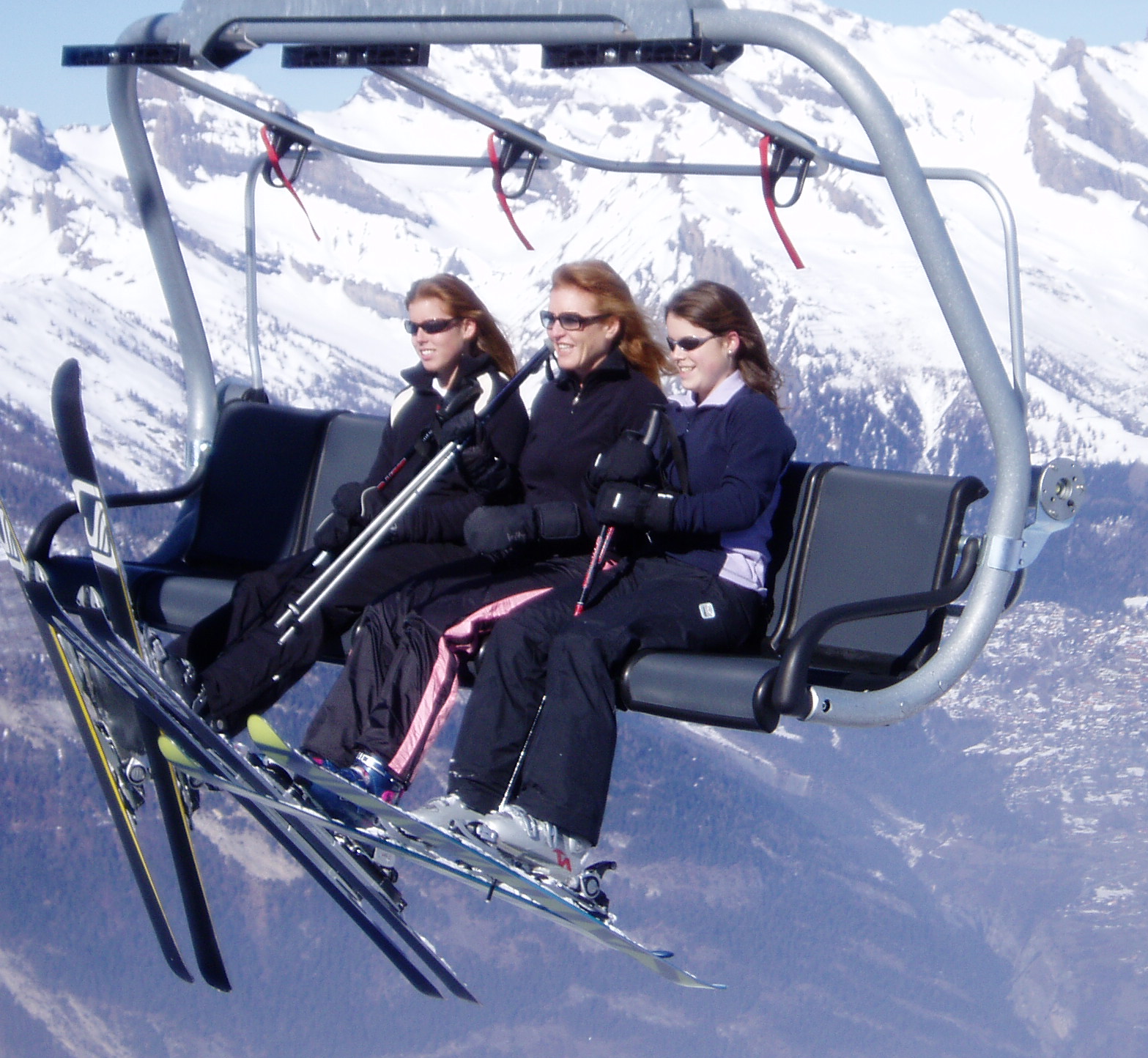
Miscellaneous Monarchical Minutiae

Alright, I couldn’t find a more recent picture.

More from Torrance

In an update to my post from two days ago, I noted that Dr David Torrance had put out a research briefing for the House of Commons Library covering much of the same substance as I had. Today, hot off his own heels, he put out an “Insight” on the concept of Royal Warrants. It examines the distinction between Royal Warrants and Letters Patent, which has long been a source of confusion to me. The Insight covers some details about process and format, though any distinction in fundamental purpose is not resolved.

What struck me in both his recent updates were his repeated links to this site: the Corpus of British Administrative Instruments. This is a website by Jason Loch of Venerable Puzzle fame. I can’t work out how recent this is as Loch doesn’t mention the site on his aforementioned blog or on his Twitter feed. The Wayback Machine shows no records at all until today.

CBAI has a lot of overlap in principle with Heraldica, which I mentioned on Sunday, although a little more modern in terms of the coding and presentation. It collates the texts of reems of patents, warrants, ministerial letters and other documents of state and royal authority. The most fascinating part is that it includes photographs of these items as well. My favourite document so far is the patent from 12th April last year appointing Mark Scott as Somerset Herald. It features a delightful illustration by Timothy Noad of Charles III at his coronation.

Following on from the main thrust of yesterday’s article, a look now at the disused duke’s wife and daughters:

The Other Yorks

None of those called “The Yorks” actually use the word York in their names anymore.

Sarah Ferguson married The Prince Andrew in 1986. Their actual marriage did not last long as they separated in 1992 and divorced in 1996. Despite being separated almost thrice as long as they were married they still live together and often behave as if still a couple. As a wife she was “Her Royal Highness The Duchess of York” and subsequently she was “Sarah, Duchess of York” — the latter following the standard formula for how divorced former peeresses are styled, and also how wives of all royal peers are styled in biographical indexes as well as the titles of their Wikipedia articles (e.g. Sophie, Duchess of Edinburgh, whose marriage is still going strong). There have been quite a few contexts, such as their daughters’ engagement announcements, in 2018 and 2019, where Palace communications have still referred to the couple together as “The Duke and Duchess of York”, probably because “His Royal Highness The Duke of York and Sarah, Duchess of York” would have looked a bit strange. Although there wasn’t a direct statement from her, news reports said that when Andrew had ceased use of the Dukedom of York Sarah had also ceased use of the courtesy title Duchess and had reverted to her maiden name. Talks are ongoing on both their Wikipedia pages as to how to present this. It would have been interesting to see what happened if a formal deprivation of the peerages had taken place, I’m not sure there is any precedent for whether the formally depriving a divorced peer of his peerage would automatically remove the courtesy title of his ex-wife as well.

Their daughters Beatrice and Eugenie also bear the title of Princess and the style of Royal Highness as children of a son of a sovereign per the 1917 letters patent. As is custom for second-generation descendants, they originally bore “of York” after their given names. We do not yet have a good custom for what to do when British princesses acquire commoner husbands: formally they are “Her Royal Highness Princess Beatrice, Mrs* Edoardo Mapelli Mozzi” and “Her Royal Highness Princess Eugenie, Mrs Jack Brooksbank”. In practice most references, and the names of their Wikipedia pages, omit anything after their first names. As with their father, this can be a little difficult for disambiguation**, as their have been other princes named Andrew (including his own paternal grandfather) and other princesses called Beatrice and Eugenie. This is also a problem for Princess Alexandra, originally “of Kent”, later “The Honourable Lady Ogilvy”. Even adding “of the United Kingdom” would not solve the problem in most of these cases, so either birth years are given in brackets or the living British one is given primacy over all others on the basis that they are overwhelmingly the most famous among current English-language sources.

Wrap-Up

In other news, His Majesty has recently appeared on another podcast. Not The King’s Music Room this time, but Unearthed with Cate Blanchett, looking at the progress of the Millennium Seed Bank. The Queen, meanwhile, has gotten herself written into the crime novel The Hawk is Dead by Peter James.

FOOTNOTES

*She might have been a Countess, but Edoardo’s comital title from the former Kingdom of Italy has no official recognition now.
**This is less of a problem for Anne, who also has the title Princess Royal.

UPDATE (31st October)

Loch has now put out a new post explaining the launch of the CBAI.

Ten Years of Blogging

It’s difficult, in retrospect, to work out precisely when this website actually started: According to some emails from WordPress I’ve recently dug up, it seems my account with them may have been created as early as July 2015, but I didn’t actually publish my first proper post until March 2016. I have settled on 5th October as the anniversary date as it is the publication date listed for the About page, as well as the earliest date for which any site views are recorded.*

This was far from my first attempt at building a website for myself: That summer I had launched Homework Direct, itself the successor to a different website started in July 2012, and I have a dim memory of working with a school friend in 2009-10 to set up an online magazine, though that never got anywhere. Thinking even further back to the mid-noughties, I have still fainter recollections of two different instances where I experimented with simple blogs, but those definitely didn’t get published either.

I can’t quite remember my original motivation for creating the blog. It may be that I had just started at Wilberforce College, leaving behind my prior social group and taking a while to establish a new one, so it wouldn’t always be possible to discuss my observations on various phenomena in person. That would have been a little redundant by March, though. More likely it was prompted by a vague sense of building one’s “brand”. I’d never fancied (and still don’t) joining Facebook or Twitter, deciding instead that having an actual website of my own would better suit my needs. The next question was which site-builder to use. I had, that summer and last, experimented with coding pages directly in HTML but it proved too much of a faff. Blogspot and Livejournal already looked a bit primitive, antiquated and amateur. Tumblr was too unstable and had too many undesirable political connotations. I couldn’t get to grips with Weebly or Squarespace no matter how much they were advertised. I didn’t learn about Medium until years later. If I was starting ten years later (and perhaps if I was ten years younger) I could well have ended up on Substack. WordPress was recommended to me by every friend and family member with webmaster experience. I suppose I could have used Wix, on which Homework Direct was already done, but it’s lucky I didn’t as I quickly came to find that service inferior. Another item to consider was the name and domain. I long had my mind set on HomeworkDirect.Com only to see it taken at the last minute by the Uncle Ben’s rice company. I ended up going for HomeworkDirect.UK instead. When it came to my personal blog I was a little annoyed to find that all the Robin Taylor domains were taken. At first I was tempted to dismiss this as the inevitable fate of all names by that point. I then tried searching for the names of my acquaintances at Wilberforce, then those I remembered from secondary and even primary school, to discover that the vast majority of them did not suffer the same problem. I had to include my middle name to find a unique domain, at the expense of the URL being a bit long. The Robin Stanley Taylor domains were all available. I settled on the one I wanted** and even designed stationery with it included, but held off actually registering it until two years later as I wanted to avoid the additional expense of a second subscription until I was sure the blog would be a long-term commitment.

Late in 2015 I became a low-level public officeholder when a senior faculty member at the college nominated me*** to be on the student council. I found myself in the position of secretary and had the role of presenting triannual reports on the reports on the council’s activities to the college corporation. That gave me some material that seemed vaguely blog-worthy. There were also visits by famous faces to the college and days out (such as university open days, or that tour of medieval Beverley) to provide extra fodder. The blog was vague enough that could write on any number of miscellaneous interests, so I discussed politics and public events a fair amount (my principal hobby at the time), such as Harold Wilson’s centenary or the recall of the National Assembly for Wales over the Tata Steel crisis. These two topic areas could overlap when Wilberforce had a political visitor, such as the Lord Norton of Louth in late 2016. At the University of Hull I became a school and then subject representative in the student union. I was a much smaller fish in this much larger pond and, although I still went to a lot of meetings, I never had anything interesting to say at them and posts about them got almost no views. More engaging were the posts I wrote about guest lecturers — such as Paul Danahar and Terence Casey. One of my most-read articles is about my time at The Lawns in Cottingham.

The COVID lockdowns put an end to campus activity anyway, so I turned almost entirely to other matters. By this point I was blogging regularly about heraldry in its various aspects, which accounts for a sizeable proportion of my posts. One upside to the lockdowns was proliferation of organisations doing free virtual conferences and lectures, often with very little scrutiny of whom they let in. I attended far more of these than I ever got around to writing up. In the years after COVID the supply of these has slowly dried up with many organisations going back to in-person events and/or restricting them to paying members. Even so, I still get to attend a handful of these each year.

As time has gone on I have drifted into standard political analyses a lot, covering both the dignified and the efficient aspect of the constitution. I got onto a particular roll with this in the closing years of the former reign and across the slow beginning of the current one. This occasionally gets recognition from high up, as when David Torrance quoted my critique of Parliamentary guidance around dissolution in 2024.

While all this is going on, I’m not really sure what to do with Homework Direct. Initially it was my main focus (which partly explains the sloth of activity on the blog) but by September 2016 I had uploaded everything I could find which fit the format and there was little more to do. There have been very few updates since then and visitor activity is low compared to the main blog. The most significant development was in August 2022 when Wix announce a hiking of the domain registration price. I was tempted to close the project completely at this point, but I ultimately decided to migrate**** it to WordPress along with everything else. A month earlier I had created a new website for Paull Holme Tower, but that is stuck in a frozen state too.

I have mentioned before the steady growth of readership on this site. From 1st January to 4th October this year I have achieved a total of 3716 views, a mean of 13.4 per day. If this trend continues for the remaining 88 days of this year I will end up just shy of 4900 views, which will exceed last year’s record but still fall a little short of my target. I don’t want to give the wrong impression here: As it says on the about page, this blog is run as a hobby not as a business, and even with an audience much larger than this it wouldn’t occur to me to put up paywalls or sell merchandise. It’s just nice to know that my contributions are appreciated.

I don’t really know what the future holds. I suppose I shall just keep on blogging about events in the news, political and royal trivia, book and television reviews, trains, buildings and virtual lectures until I physically or mentally can’t anymore, or until the hosting gets too expensive, or until WordPress shuts down or becomes unworkable, or too expensive, or until I say something controversial that gets me censured, or until the free internet is ended. Instead of planning for the future, this little exercise got me more interested in the past: There have been multiple occasions over the past ten years in which I had meant to put out an article but never got around to writing it, or wrote much of it but never got it finished, or even finished it but never published. I’m considering whether it would be worth now going back around to fill in some of the gaps, particularly for the early years where it currently looks a bit threadbare. I’m sure my student council report for the Michaelmas term in 2015 will prove super fascinating to all!

FOOTNOTES

*Most of the views are from Britain, and these are almost certainly from me checking my own site to make sure it worked, but there was also one from the United States. I wonder how they found me so soon?

**RobinStanleyTaylor.Com was also available but ‘.Net felt somehow more apposite.

***I didn’t actually meet her until some time afterwards and I never found out what was the procedure for choosing candidates.

****When I say “migrate”, I really mean a day of frantic copying and pasting.

Discovering the Small Web Movement

What happens when the mines run out?
The Captain announces a new golden age of prosperity. They just fill up again.
What, just like that?
Yeah. Well, you don’t think that’s wrong, do you?
Wrong? It’s an economic miracle. Of course it’s wrong.
Oh. Oh then, of course, the lights change.
What lights?
You know, the lights. The ones on the sky at night. Little points of light.
Do you mean the stars?

Conversation between the Doctor (Tom Baker) and Kimus (David Warwick) in The Pirate Planet (part 2) by Douglas Adams, broadcast 7th October 1978.

Anyone perusing my blog’s back-catalogue recently may recall my post about The Queen’s Reading Room, a post which I named “Reading the Room” in a very weak pun on the topic name. That post now has an update at the bottom clarifying that since I wrote it another podcast has started up which actually is called “Reading the Room”. Of course, it’s such an obvious title that, in this age of mass podcast proliferation, it was bound to be used eventually (and indeed the Substack blog carrying it needs to have “pod” at the end of its subdomain because plain “readingtheroom” was already taken), but this one seems to be rising to prominence among intellectual circles. It almost certainly gets a leg-up due to the fact that both the hosts – Felice Basbøll and Ella Dorn – are columnists for a handful of newspapers and magazines, as likely are a lot of their listeners, so its popularity is not entirely grassroots. Apart from the very broad stroke that they both talk about books, this podcast is entirely unlike the Clarence House production: There are no interviews with the authors, tours of vintage libraries or commissions of research into national literacy statistics. This podcast consists of the two hosts talking among themselves for over an hour at a time about one or more books they’ve read, their choices and the outflowing discussions focusing heavily on philosophy and contemporary socio-political matters. This is not an approach that it would be practical (or constitutionally wise) for Her Majesty to take.

Alright, that’s enough unpaid advertising. The podcast is not the real reason I’m writing this article now. In addition to their newspaper editorials, Basbøll and Dorn both also have individual Substack blogs. Most of what they write there isn’t relevant to this article either, but there was one that particularly struck me as important – Dorn’s post from 27th February this year entitled “How to Take Down Big Tech”. The main thrust was that, for the preservation of online freedom and, more broadly, of enlightened society, it would be better if we avoided large social networks as a general principle in favour of smaller forums and individual websites. She referred to this as “The Small Web Movement”. I have supported the same goals for practically the whole of my online life and have often encountered posts, articles, comments and videos from other people concurring, but only here did I discover that it was an established ideology with a tangible identity.

My history with the World Wide Web is a fought one. For most of the noughties, my family – and most households in the area – had about the connection quality you would expect from rural broadband at that time. Then again, the web itself was still quite primitive. In 2009 out ISP jacked up the price prohibitively high. For the next few years we had no home broadband at all, and internet access was only achievable through a prepaid WiFi plug-in device, which had limited utility. I think it was in 2012 that, having established HubbNet, we finally got a decent connection again. No sooner had I rejoined the online world then I became aware that it was under threat. In the good old days it appeared that, subject only to the physical limitations of their hardware, anyone could have their own website, use any number of online services and upload any number of photographs or videos. It seemed to be, quite literally, a free-for-all. The story of the past decade or so has been the realisation that this utopia was unsustainable. For a long time all of these big sites were running at a loss, heavily subsidised by very wealthy investors who supported the development of these technologies in the hope that they would somehow become massively profitable in the near future. A lot of them still haven’t. As the money dried up and investors started insisting on a tangible return, and even moreso post-pandemic as the long era of ultra-low interest rates finally ended, companies had to make drastic changes to their products to increase revenue and slash costs. Restrictions were placed on space, ads became more aggressive and harder to skip. Pages disappeared behind paywalls and old pictures/videos/files were deleted. The crusade against free riders often became in practice a war on usability. The polite term, though not the common one, for this phenomenon is “Platform Decay”. If the freedom of the web wasn’t under threat from the companies themselves, it was threatened by politicians. Leaders and legislators across many countries, parties and decades have repeatedly sought to take control of the medium that most of them don’t understand in the slightest. This is alternately done in the name of copyright, security and safety. In the New Tens we were threatened with the spectres of SOPA, PIPA, CISPA, ACTA and Article 13. thankfully the most dangerous aspects of these were killed before they could reach the statute book. In the present decade we haven’t been so lucky: I am writing this in the wake of the coming-into-force of the Online Safety Act, a multipartisan disaster passed in 2023 against the objections of everyone with half a brain. Similar laws exist in some parts of the United States and are expected to proliferate across the European Union. However virtuous may have seemed the intentions these laws claimed, they all had the potential to destroy the internet as it has been known for the past thirty years. The deliberations over these laws tend to play out as battles between sovereign states and the major tech businesses, with the common end user having plenty of reason to distrust both. With states concentrating on the most prominent large platforms, and the platform owners themselves often pre-emptively shutting messages which could offend either the government or their advertisers, the need for a decentralised network of small independent backup sites becomes pressing.

The main benefit of having an entire website of your own is that it gives you a greater degree of personal control, especially with regard to visual customisation. Twitter and similar sites give you a profile picture, a couple of sentences’ written biography and maybe a header image if you’re lucky. Long ago YouTube channels allowed you to change the button colours and set a background image, but those abilities were removed around the time they were bought out by Google. Variables, on social media profiles, tend to be restricted within a fairly narrow range. Website builders, by contrast, often allow dozens, maybe hundreds of templates, after which the client has further options for menus, logos, assorted other widgets, fonts and colour schemes. If you’re coding your own website from scratch you can have it look and work basically any way you want. For a physical analogy, imagine a street where each resident can have his own house with its own unique design and decoration, versus a barrack hall where each inmate can, at best, have a different selection of photographs on the backboard behind his pillow. The flipside of this, of course, is that increased proximity allows conversations to happen faster. Short, snappy replies can be given almost in real time, whereas with separate websites they would naturally tend to be longer and more spaced out. Most in and indeed out of the Small Web Movement would consider that a positive, perhaps even the positive, but there are others for whom this spontaneity and intimacy are extremely valuable. There are ways to approximate this, if need be – most website builders include the options for comment sections on posts and pages, as well as a “re-blog” feature. If inter-platform compatibility is an issue, you could always just include a hyperlink to the other person’s post in your own. If that’s too cumbersome… maybe email each other? In my personal experience, I’ve more often witnessed this problem occur the other way around, as Tweeters desperately crush a substantial paragraph of text into a long string of single-sentence posts, or even screenshot the block of text on another medium then upload that as an image. The latter solution has the advantage of speed but it must be monstrously inefficient in terms of accessibility, searchability and digital memory space.

The Movement’s favoured solution is the return to the dedicated online forum. Forums have been around since the earliest days of the World Wide Web, but their power and prominence has waned in latter years with the rise of the social media giants. Reddit, in particular, is designed as a sort of universal mega-forum which subsumes all the others. Forums are a halfway point between personal websites and major social networks, giving people with shared interests a common space without having to invite the whole world in, allowing customisation of design at group level but not individual. Examples of forums which still command some cultural weight are The Student Room, Digital Spy and the notorious Mumsnet. One might throw in the Army Rumour Service as well. There are also lots of smaller forums dedicated to specific hobbies, needs or franchises. Often a long-running film, book, or television series will have a quasi-official fan forum, e.g. Star Trek has Trek BBS, Doctor Who has Outpost Gallifrey and I think I’ve already mentioned Sodor Island Forums. In case I’ve not mentioned already, there are, of course, heraldry forums too.

Fairly it could be said that all of this still falls short of the intention of the Small Web Movement because they still involve using someone else’s platform. The real goal is to have each blogger hosting their own website independently. While I accept the principle of decentralisation, I think expecting everyone to keep individual servers running may be a little beyond feasibility given constraints on money, space, electricity supply and technical knowledge. Indeed, since it has been over a decade since I completed my Information Technology GCSE or had much direct involvement in HubbNet, some of the material I’ve come across from the Movement about Gopher and Gemini is stretching the limits of my own understanding a little, though I hope to get there reasonably soon. Perhaps a compromise could come about in the form of small local data centres, with hosting space rented out in a manner akin to garden allotments. More realistically, since the intention is to transition the masses away from social media accounts, builders such as this would be a relatively easy first step, from which those most determined (and whose sites are successful enough to justify it) can later move the whole way.

I remain undecided on the necessity of registering your own domain rather than using a subdomain of the website builder. I have written before about my disappointment in having to go for “HomeworkDirect.UK” because the Uncle Ben’s rice brand snapped up “HomeworkDirect.Com” just before I could claim it. I always intended this blog to be at “RobinStanleyTaylor.Net”, but did not actually get around to registering the domain until 2017, with “RobinStanleyTaylor.Wordpress.Com” sufficing for the first two years. I cannot run a proper counterfactual to see how the blog would have fared without the change, but I know I was getting at least some regular engagement on the small number of posts I’d made up until that point. I suppose the main value of a domain is on an aesthetic level – it confers an air of formality and professionalism, whereas a “.someonelse.com” looks casual and amateur. A personalised domain also tends to be shorter (what with one of the levels being removed) which makes branding easier. On a practical level, and in keeping with the general thrust of this article, having your own domain allows you to totally replace the website you use without having to give up the URL you’ve already posted everywhere. I took advantage of this in 2022 when I moved Homework Direct to WordPress because Wix put its prices up. On the other hand, renting a domain is itself an expense as well as requiring identification whereas subdomain sites can still be free and anonymous. Of the sites I frequent (on which topic more later), I notice that The Norton View is still on a WordPress subdomain after operating more than fifteen years, as did Murrey and Blue under its original ownership. Of the many Substack blogs I’ve recently encountered, the vast majority have kept it at “.substack.com”, whereas it would be difficult to imagine them all doing the same on WordPress. Perhaps one is considered more prestigious than the other in some way.

As a case study into the importance of having a website and not just a channel, I point to the example of Chuck Sonnenburg, professionally known as SF-Debris. Chuck is a film and television critic of more than seventeen years’ standing, making him one of the seniormost figures in what is now a very large “reviewtainment” industry. He got his start talking about Star Trek: Voyager, then gradually branched out to the rest of the Star Trek franchise, then to other science fiction and fantasy franchises (e.g. Doctor Who and Red Dwarf) as well as whatever miscellaneous films and series his fans suggest for him. He claims to have surpassed the ten thousand video mark some years ago. His journey has rarely been easy. His review videos take the form typical of the genre – ten to fifteen minutes of footage from the episode he’s reviewing, occasionally playing the sound but mostly as a silent montage over which he reads his commentary. Purveyors of this type of content maintain that it falls under Fair Use, but that doesn’t stop IP owners – or indeed the automated systems of the video-hosting services) from blocking videos on the grounds of copyright infringement. Chuck has been around long enough to witness several such piracy purges. For his first few years he used YouTube as his primary platform – only natural as it was and is by far the largest – with a backup channel on Blip.TV. The backup channel was mainly used for long-form videos, as YouTube back then had quite restrictive limits on running time. In 2011, having had a few too many threats from YouTube, Chuck decided to take down hundreds of his own videos before the platform inevitable purged them, then set about making Blip his main platform instead. Rather than simply reupload his old videos in their original form, Chuck decided that a lot of them needed rerecording. He did this alongside still making new reviews, so it took years before all his missing episodes were available again. Almost immediately this effort was rendered worthless because BlipTV completely shut down as a platform. Chuck therefore had to reupload everything again with yet another host. He has joked about this himself, claiming not to remember how many platforms have dropped him over the years. At the time of writing he seems to be using DailyMotion for his “full motion” videos while, ironically, going back to YouTube for lesser versions where he essentially talks over a slideshow of still images instead of moving clips. This alternative format is less engaging to watch but safer from a copyright perspective, as well as almost certainly being easier to edit. Here the point of this [my, not Dorn’s] article comes into play – originally Chuck’s videos were displayed on his YouTube channel and that was likely to be the place where people watched and commented on them. Alongside this, however, he also had a standalone website at sfdebris.com which essentially ran like a blog with each post being titled after the episode or film he was reviewing and consisting of an embed of the corresponding video followed by a short (and snarky) written description. Originally this could have struck some as pointless, but the repeated purges vindicated his approach, for links to his website remain usable long after links to his video channels are killed. When the videos are taken down, the sites pages are left with error messages or even just empty spaces where the embeds used to be, but the page titles, the descriptions and the navigation menus are intact so that the site exists as something of an empty shell. As Chuck proceeds with reuploading on a new video host, the shell is gradually filled in again with the new videos being embedded exactly where the old ones had been. When the reupload process is eventually completed, visitors will find the site looking and working much as it did before. If they notice any difference at all, it will only be that the play button on the video is a different colour – just like the citizens of Zanak noticing the new lights in the sky when the mines are refilled. Nowadays Chuck has the DailyMotion videos unlisted to they cannot be viewed from the hosting site itself, only as embedded on his blog, so that none come to think of the former as his home. Chuck also has a dedicated forum set up to take on the role normally played by the comment section. Again, this helps to maintain long-term continuity, because comments left on the videos themselves would be lost to digital history upon blocks or takedowns. It also has the advantage that the conversations themselves are easier to write and read.

If you’re as much a pessimist as I am you’ve probably already anticipated that if a critical mass of content creators adopted this strategy then the platform owners would cotton on and start forbidding embeds, or at least restricting them in some (probably financial) way to force viewers to use the host sites directly. In this scenario I would hope that creators already using said strategy would be able to vote with their feet by switching to hosts more obliging (unless of course they were to all do it at once). In the interim a simple direct link on the blog page would probably suffice for the same purpose, even if it was less elegant in looks.

Dorn’s article expressed a wish to see people exchanging URLs for websites instead of handles for profiles, so at this point I ought to share some of my own recommendations. Per her advice, I have created a link directory on this website, which can be accessed under the “About” heading in the main menu.

FURTHER READING

Checking up on the Blog (Again)

At the midpoint of the year, another review on the blog’s statistics. I will compare the view counts to the same months last year:

Month 2024 2025 Difference
Jan 293 447 +154
Feb 248 385 +137
Mar 364 461 +097
Apr 330 380 +050
May 387 382 -005
Jun 375 401 +026
Total 1997 2456 +459

This means I have already exceeded the total readership for 2023 and fairly soon will have outdone all years prior to 2024.

I have recently undertaken a substantial rewrite of the About page, as well as absorbing the Portfolio page into it, to make it better representative of the current state of the blog instead of just the period of 2015-19, as posts from that era tend to get few if any views. In particular I have dropped the “Recurring characters” who haven’t actually recurred since then and inserted instead a “Main themes” section.

Other changes may come later if I ever get around to them.

Feeling a Little Blue

For many years now I have been an infrequent reader of Murrey and Blue, a blog about medieval history written from a Ricardian perspective. Its themes and contents overlapped with my interests a fair bit, especially heraldry – the very name refers to the House of York’s livery colours. It combined a catty, snarky writing style with a great deal of detailed historical analysis and research.

The blog dates back to January 2014 and, unlike mine, has had many contributing authors over the decade. Late last month ViscountessW, one of the more prolific contributors, announced that following the death of the owner Stephen Lark and the looming, inevitable, expiration of the site’s WordPress plan, the blog has ceased operations. Happily a new incarnation of the blog is already in existence, but the fate of the eleven-year back-catalogue of old articles is not known.

I should say that while I enjoyed the content of Murrey and Blue, I’ve never been keen on it from a design perspective – the original theme used was an old one and a bit crude, but it was at least functional. At some point between March and May 2021 it was changed to something that looked a little more modern but which lacked a sense of structure and texture as well as being hard to navigate. The new website looks even worse in that regard, but I hope this is just its larval stage and a better theme will be chosen soon.

Checking up on the Blog

As this website approaches the tenth anniversary of its launch, I took the opportunity to look over the statistics which WordPress records for me. This site is not run for profit, but it is nice to feel that my publications are appreciated.

The view counts for each calendar year are as follows:

  • 2015 – 0053
  • 2016 – 0415
  • 2017 – 1289
  • 2018 – 0987
  • 2019 – 1469
  • 2020 – 2571
  • 2021 – 2800
  • 2022 – 2882
  • 2023 – 2300
  • 2024 – 4664

The first two entries don’t really count as the site didn’t exist until October and there were no meaningful posts on it until March. The third may be artificially inflated as many of the views will have been me checking posts myself to check that they’d uploaded properly. The readership exhibited steady growth from 2019 onwards, albeit with a bit of a dip (not sure why) in 2023. Last year raised the bar substantially, as the previous record was broken by the end of September.

Regular readers (if there are any) may also notice that some changes have been made to the way the blog is organised: Every now and again I go through my old posts deciding which categories and tags are needed based on regularity of use, abandoning some which are no longer needed. Today I have converted many of the most used tags into categories (with many posts inevitably being in more than one) and collapsed most of the menu options into one. I have also invented a few new tags for recurrent subtopics. I hope it makes more sense this way.

UPDATE (4th January)

Four days into the new year I’ve already reached 61 views, thus exceeding 2015’s record.

UPDATE (29th January)

Four weeks into the year I’m on 416, thus exceeding 2016.

Late-Summer Heraldic News

In the past fortnight there have been a handful of significant developments in the world of British heraldry.

Firstly, on 15th August the College of Arms published the 76th edition of its newsletter. Much of the text deals with topics already explained (such as the coronation roll and the year’s garter appointments) but there were some new details, such as the grant of arms to the University for the Creative Arts, which will be another addition to my list on Wikipedia.

Secondly, there are two long-form videos on YouTube of armorial interest: On August 20th a video by the White House Historical Association about the making of the Presidential Seal and on August 23rd by American Ancestors interviewing the York Herald Peter O’Donoghue. These videos speak for themselves so I will not elaborate them.

Thirdly, and of most interest, is a Tweet from 24th August by Alastair Bruce. It includes three photographs from inside the High Kirk of Edinburgh, showing the stallplate and banner of Queen Camilla. There is not much of surprise about the composition of the arms – they show the arms of King Charles impaling the arms of Bruce Shand – but it is reassuring to have confirmation that both shield and banner exist in formal usage, given the persistent uncertainties of Her Majesty’s status in England.

The most intriguing of the three photographs is the one which shows Camilla’s stallplate accompanied by five other royal ones: In the left column are Prince William, Earl of Strathearn (middle) and Olav V, King of Norway (bottom). In the right column are Queen Elizabeth Bowes-Lyon (top) the Prince Philip, Duke of Edinburgh (middle) and the Prince Albert, Duke of York (bottom). The fact that these six achievements are put together like this is itself a little confusing since some of those members of the order had overlapping tenures so could not have occupied the same stall. Also noteworthy is the way in which the artistic styles have changed over the years:

  • The Prince Albert, (later King George VI) was appointed to the order by his father in 1923 and presumably this is what it says on the scroll underneath (although it’s not legible in the photograph). He uses the royal arms differenced by a label of three points argent the centre bearing an anchor Azure. He has the coronet of a child of the sovereign sitting on top of a forward-facing golden helmet, and the coronet itself is topped by the lion crest, gorged at the neck by another label of three points argent – although that one doesn’t have the anchor in the middle. While that could be dismissed as an omission by the painter (perhaps too small to draw properly) it is unmissable that this stallplate clearly uses the English version of the royal arms and crest as well as referring to the prince by his England-based title (Duke of York) instead of his Scottish-based one (Earl of Inverness).
  • Queen Elizabeth was appointed by her husband in 1937. Her stallplate shows his arms impaling those of Claude Bowes-Lyon. Again the English arrangement of the royal arms is used, especially confusing as Elizabeth was herself of Scottish ancestry. The shield is topped by the royal crown. I can’t work out if it is the English or Scottish version of the crown shown, given the vagaries of the art style.
  • The Prince Philip was appointed by his wife in 1952. His stallplate shows his arms as granted in 1949. He used the same coronet as his sons and uncles-in-law, but here it is depicted beneath the helm rather than atop it as in the other examples. Philip apparently used the same arms in every heraldic jurisdiction, as well as the same title. His personal motto “God Is My Help” appears on a scroll above the crest, as is the Scottish tradition.
  • Prince William was appointed by his grandmother in 2012. Earl of Strathearn was his secondary peerage, his primary being Duke of Cambridge. His arms are in the Scottish arrangement. He uses the coronet of a son of the heir apparent on top of a front-facing grey helmet with gold bars, itself topped by the Scottish royal crest. Both crest and shield are differenced by his label of three points Argent, the centre bearing an escallop Gules. The Scottish motto “In Defens” flies over the crest. The tinctures used for this stallplate look a little off, with the Or in particular being shown as a much darker shade of yellow than that used for all the others.
  • Queen Camilla was appointed by her husband in 2023. Her shield uses the Scottish arrangement of the arms. The royal crown is drawn rather differently to that used by her grandmother-in-law, but it’s still just as unclear which one it is supposed to be.
  • Olav V, the only foreign member here, was appointed by his first cousin one removed in 1962. Crests are not a traditional feature of Norwegian heraldry, but the royal crown of Norway is placed atop a forward-facing grey helm with gold bars. The mantling is Gules doubled Or whereas the British princes here use Or doubled Ermine. Domestic depictions of the Norwegian arms tend to omit helm and mantling altogether or use a pavillion Purpure doubled ermine.

Found in the Booth

For the past few years I have kept a keen eye on the blog Heraldry Online by Stephen Plowman. Most of the heraldry community learn of grants of arms by updates on relevant authorities websites, or by the accounts given in volumes of Debrett’s. Plowman, however, posts a regular stream of photographs of the actual letters patent by which the arms were granted, spotting the historic documents as they come up for auction (typically after the actual line of armorial inheritance has gone extinct). Today he has posted one particularly important to me – the late Baroness Boothroyd.

I have written many times before about my history with her arms, but it is nice to see the definitive article at last. The text of the blazon is the same as in Debrett’s, but we now know the date of granting (8th October 1993) and the herald responsible (Conrad Swan).

Re-Directed

Bratislava New Year FireworksMy website Homework Direct slightly predates this one, having been established just over seven years ago using the development service Wix. After the first fourteen months, however, I had largely given up on it to focus my efforts here (and later on Wikipedia). There are two principal reasons for this – first that I was running out of ideas for what to include, and second that I found the Wix interface much more difficult to manage than WordPress.

Not only was updating the website a difficulty, but even monitoring activity was far more difficult than here – instead of a daily tracker I only received monthly reports by email, which frequently said there had been no views at all. In the entire seven years of operation I only recall getting one sincere communication from a client, and that was only to mention that there were spelling errors (but not specifying where!). I also occasionally got messages from a web review service saying that they had found code errors on the site which prevented it from being seen. The result is that, for most of its existence, Homework Direct has been a dead weight.

A few days ago Wix notified me that my business plan (for domain connection) was coming up for renewal and that the price, constant since 2015 was to rise 64%. WordPress, so far, has given no indication that it will do the same. This announcement was the impetus to finally make a move.

As of today, the contents of the website, as well as the domain name, have moved. I have also designed a new logo for the site (the 2015 version being little more than a placeholder), though the overall colour-scheme has been retained. This does not necessarily constitute a revival of the project, but at least what already been made is now in a more usable state (for both writer and readers) than it had been before.

EXTERNAL LINKS

A New Website

I have written a few times, though perhaps not as often as I would have liked, about my father’s attempts over the last three decades to bring Paull Holme Tower back into a liveable state.

As of today the tower has its own website. At present it is a little bare with much of the content being placeholder, but I hope that soon it will be as busy as this one. In addition to logging the videos my father has made about his work, it will be a space to write about the history of the tower and the people who lived there, as well as whatever other tangential topics may come up.

You can see it here.