Warwick the Kingmaker by John Reid

Today I attended another virtual meeting of the Richard III Society Gloucester Branch. The presentation was by John Reid, discussing the historical reputation of Richard’s father-in-law Richard Neville, 16th Earl of Warwick, popularly nicknamed “The Kingmaker”.

Warwick has been hugely divisive to contemporaries as well as historians, Ricardians, Lancastrians and Yorkists. He was England’s greatest celebrity of the fifteenth century and his fame (or infamy) carried on into the twentieth). He even had a board game named after him.

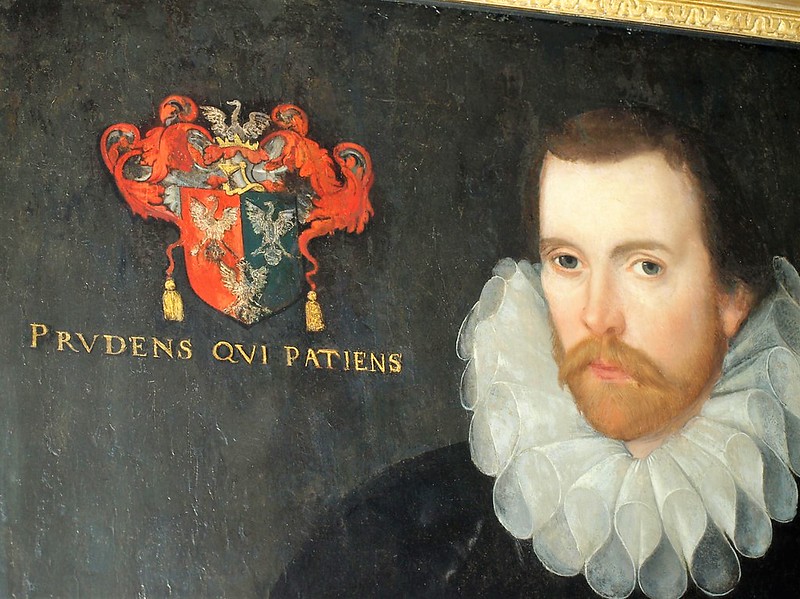
He became the premier earl in England in 1449 due to lucky deaths. His family were great winners in the lottery of aristocratic marriages – picking up the estates of the Beauchamps and Despensers. His patchwork of armorial quartering reflects the complexity of his family connections. He had initially supported Henry VI, but changed sides in 1452 largely due to his inheritance disputes with the Duke of Somerset.
Henry VI, due in part to inherited mental health troubles, proved spectacularly incompetent, and many considered Richard, Duke of York to be king by right – though Reid showed us York’s signature on the letters patent of 1454 appointing Henry’s son Edward of Lancaster as Prince of Wales, clearly showing that even at this late stage he was not disputing the latter’s right. When eventually he rebelled against the Lancastrian crown he had Warwick’s invaluable support. York’s son Edward, Earl of March rescued Warwick from Margaret of Anjou and Warwick in turn arranged his coronation as Edward IV. For the first three years of Edward’s reign Warwick was thought “third king”, being virtual governor of the realm, acquiring even more land (after he confiscated the estates of the Percy and Clifford families, he wound up with lordships in twenty-eight English counties and a handful in Wales) and an annual income of at least £10,000 (nearly £11m in 2021 money).

Matters of matrimony spoiled his status: Warwick had spent months lobbying for a French princess to marry his king, and was humiliated by the revelation that Edward had already married – in secret – to Elizabeth Woodville, a dowager dame whose family had fought for the Lancastrian side. He described the parvenu Woodvilles as “grasping and charmless”, resenting how many titles, offices and marriages were given to them at the expense of his own dynasty, and how their influence over the crown came to displace his. Reid drew parallels with the modern-day rivalry between Carrie Symonds and Dominic Cummings.

Warwick’s first coup against Edward occurred in the summer of 1469. He launched his second in 1471, making a deal with Margaret of Anjou on 22 July and reinstating Henry VI on 3 October. He was killed at the Battle of Barnet on 14 April 1471. Reid noted that this was the only time he had fought on foot rather than horseback, leaving him with no easy way to escape when the tide turned against him and he was isolated from his allies on the field. This was very similar to the way Richard III would die fourteen years later.

The earl was adept at his own spin so contemporary sources are often too kind to him. Later writers were often too harsh. In particular Burgundian writers made him a bogeyman, believing that his policies would lead to their absorption by France. He had something of a rehabilitation under the Tudors – Henry VII wanted Henry VI to be declared a saint.

In summing up, Reid discussed Warwick’s virtues and vices. He was confident, charismatic, charming, courageous and energetic. He was treated shabbily by Edward IV after 1464. He may have been the model for Sir Lancelot as envisioned by Sir Thomas Mallory. On the other hand he can be seen as seeking power only for himself and being motivated by personal feuds rather than the national interest. His military skill is doubted, as is his necessity in the Yorkist accession. Could Edward IV have made himself king without Warwick’s help? Were the Woodvilles any worse than the Nevilles?

After the presentation itself had concluded and most attendees had logged out, there was a lengthy discussion between one attendee (Sean O’Neill) and the host (Cynthia) over the intricacies of Zoom functions – because various buttons were appearing and disappearing depending on the settings of individual hosts and updates by the company. This led to an explanation of the difficulties of an organisation managing virtual meetings, then one into internet difficulties generally as well as experiences of coronavirus. I mentioned having tested positive in November, and my experience with Hubbnet. I remarked that I would have been truly screwed had the pandemic hit in the period of 2009-13 when my house relied on plugabble WiFi dongles for very limited internet access. The two were surprised to realise that I lived near Hull, the former having once lived in North Ferriby and the latter in Hessle. They started asking me if Kingston Telecoms or Kingston Communications still existed (they do).

The Trouble with Tombs

This was a presentation by the University of Liverpool, concerning the history, primarily between the seventh and nineteenth centuries, of how England has dealt with human corpses.

The main speaker was Ruth Nugent. She wanted to examine how the dead were handled literally, emotionally, ethically, spiritually and ideologically. She found that there was rarely much commentary on the relationship between bodies and tombs, students of other subjects would focus on associated details of architecture, geneaology, heraldry and religion but the principles of burial itself were often overlooked.

Until the eleventh century burial within a church building (as opposed to the yard outside) was reserved for royals, saints and clergy. Until the thirteenth it was monasteries that were most sought after as resting places. Due to the long-term problem of overcrowding it was common for bodies to be moved after a hundred years so that the plot could be used for someone else, or because the church was undergoing renovation work. There were cases of corpses stolen by one church from another, and legal disputes between families of the deceased over where the remains could be placed. Sometimes churchmen would claim to “discover” the bodies of legendary figures such as King Arthur. Epidemics, such as the Great Plague, put increased pressure on churchyards due to sudden mass burials. In the nineteenth century secular public cemeteries were opened to give alternatives to church burials, and cremation became more accepted. Laws were passed against intramural burials and exhumation to recycle spaces.

Physical upkeep was always a problem. Tombstones would be chipped away to make ingredients for magical medicines, and sometimes families would carry out clandestine removals of their own ancestors to escape from vandalism. Elizabeth I ordered churches to restore their tombs but often the churches lacked the money to comply. The Civil War left cathedrals in particularly poor condition and soldiers often looted graves. Large numbers of graves underneath churches could cause subsidence. Antiquarians (she named John Leland, John Stow, William Camden, John Waver and William Dering) determined to make written records of tombs and their contents in the hopes that the information could survive even if the physical structures didn’t – partly through interest in history, partly to safeguard their own futures.

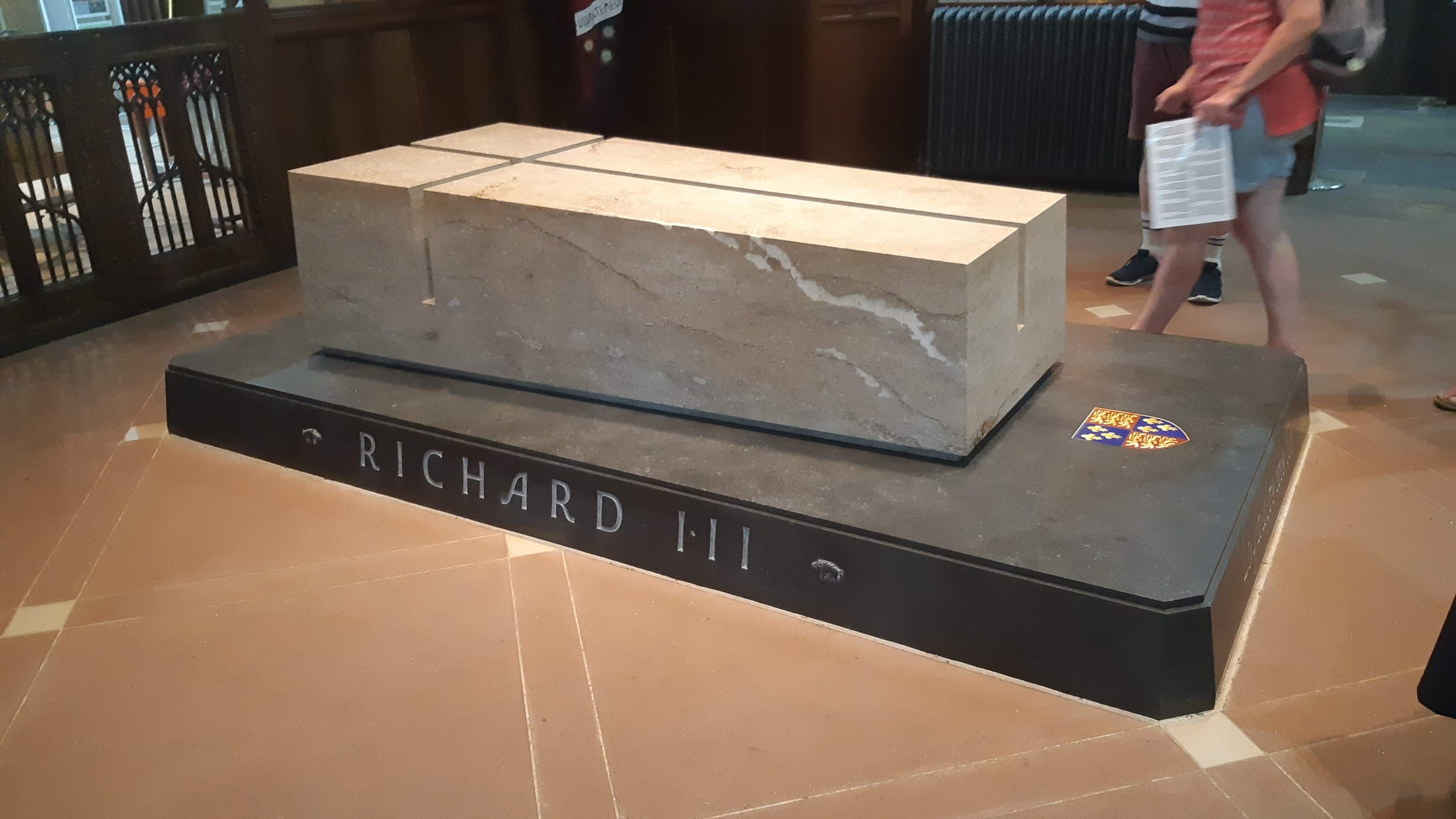
The next speaker was David Monteith, who recalled his experience with the reburial of Richard III in 2015. Public consultation revealed a very wide spectrum of preferences for the appropriate manner in which to deal with the late king – some wanting a full tomb, others a simpler box. He noted that many people’s feelings about Richard were hard to separate from his Shakespearean portrayal, and that if the rediscovery had occurred a few years later he would have needed to contend with much more polarised attitudes to memorials. He said that even in Richard’s day it was normal for the dead to be moved or their surroundings altered – Edward IV rebuilt many tombs of his relatives, as later would Elizabeth I. Burial styles changed over the centuries and so there were many valid ways of disposing of Richard. He did, though, have to discourage visitors at Leicester Cathedral from taking photographs with the casket.

Harold Mytum followed. The Church of England has policies for bodies found on consecrated land that parallel those of secular authorities. In medieval times English burials were much the same as continental ones, including frequent recycling of plots. Most above-ground interments in Europe lasted only twenty-five years before the cadaver was moved elsewhere. The Church has a duty to protect and respect human remains, but exhumation can be allowed if it serves the public interest, e.g. the advancement of science.

Andrea Bradley spoke of the challenges involved in securing land for HS2 – with its own bespoke system for the removal and reburial of human remains. They have a specific legal agreement with the Archbisop’s Council that corpses uprooted from consecrated ground must be put down in other consecrated ground.

Ian Dungavell said that burial spaces in cities are getting full again, and few now expect a large grave for themselves in perpetuity, instead accepting that after some time they will be relocated. Re-use of graves in this way has been allowed again (although only in London) since 2007 because there is no alternative possible.

Lin Foxhall, the host, took questions from the audience.

  • On the rise of digital commemoration, Nugent said to be wary of rapid-onset obsolescence. QR codes and URLs might not be functional a century from now and those without compatible technology – even today – would be locked out of interaction.
  • Asked why bodies were so obsessed over, even by cultures who insisted the soul was more important, Monteith suggested that without a standardised metaphysical understanding of death we fill the gap with fear.  He also wondered if we over-medicalise death nowadays.
  • Asked how common it was for bodies to be upgraded to higher-status graves, Mytum said that the emergence of non-religious cemeteries allowed greater commercialism in burial plans. Dungavell said that not everyone has detailed plans for their disposal, and that survivors sometimes need to “park” the body in a cheap grave for a few years while a more elaborate commemoration is organised.
  • Asked if future wills could contain clauses regulating future exhumations, Nugent said that such clauses are already in use. Foxhall said that ecological implications of burial and/or cremation are more closely observed now.
  • Asked if we should go back to communal burials, and why bones are seen as more important than ashes, Dungavell thought bones were treated brutally enough and Mytum said there are already commercial long-burrows.
  • I asked if something like the Necropolis Railway could reappear to allow urban residents to visit relatives’ graves far away. Dungavell said that the original company was unsuccessful as people wanted burials nearby. Ruth mentioned how railway companies had allowed corpses to go in sidings and embankments.
  • Asked about the changing nature of images on graves, Nugent said that some pictures could be very upsetting, especially if photographs peel off. Mytum noted that there had been changes in taste for memorials in the middle of the twentieth century, Foxhall noted very dark imagery in the eighteenth – such as cherubs becoming skeletons.
  • Asked about the need for different funeral and disposal styles for different cultures, Monteith noted he had already seen multi-faith crematoria for that purpose.

EXTERNAL LINKS

A Thistly Issue

I have written before about the intricacies of the Order of the Garter. Although it technically has only one grade (in contrast to the Bath which has three, or the British Empire which has five), there are many finely differentiated categories of membership. It is traditionally said that the order is limited to twenty-four knights companion at a time, but of course the reigning monarch himself is always the sovereign of the order (and all others), so really it was twenty-five. Then the Princes of Wales had automatic membership, so it was twenty-six. On top of that, George III in 1786 created the separate status of “royal knight”, so that his unusually large brood of sons could be installed without crowding out everybody else. In 1813 a further category of “stranger knight” was instituted so as to allow the appointment of supernumerary foreign members.

The position of female members is even more complicated. From the time of Richard II it was common to appoint ladies of the order, though even after many years I am still unsure as to their exact status and function. The last such lady appointed was Margaret Beaufort, Henry VII’s mother, in 1488. After that the installation of women to the order was discontinued completely, and for the next four hundred years the only women to wear the Garter robes were the queens regnant. After Victoria’s passing her son Edward VII, her grandson George V and her great-grandson George VI each installed their consorts as royal ladies by special statute. The Princess Elizabeth was also made a royal lady in 1947 and the stranger category came to include foreign female monarchs. From 1987 the statues were altered to allow non-royal women to be Ladies Companion of the order on the same basis as the non-royal men, the first example being the Duchess of Norfolk in 1990.

Wikipedia’s list of members for the order took pains to colour-code and differentiate between the different categories of membership. Curiously, while the modern ladies from Queen Alexandra onwards were all included, the medieval ladies were omitted. Long ago there had been a separate smaller page listing them, but it had been deleted on the recommendation to merge with the larger list. For unknown reasons that merger was never actually carried out, so that the medieval ladies were simply forgotten.

Yesterday, with the aid of one other editor, I worked to correct that problem. The sixty-four Garter ladies of the fourteenth and fifteenth centuries are now included in the table with their own colour code and numbering. For completeness, I have also added entries for those monarchs who were not already members of the order prior to accession.

Having finished that task, I then wondered if the page for the Order of the Thistle – Scotland’s Garter equivalent – would need a similar refurbishment. The list page I found was of a very different table design to that used for the Garter, or indeed the other chivalric orders, bearing sharp black borders around cells and being organised by century instead of by monarch. It took just over a day to completely convert the content to the more usual format. On the one hand, the Thistle has fewer categories than the Garter – sixteen knights brethren and supernumerary extra knights. On the other, the list did not differentiate one type of member from the other in the way that the Garter’s did, so in many cases guesswork was required and it is likely that the whole numbering system will need to be redone at some point to account for any I’ve missed.

While going through this, I received a notice that I had been granted access to the Wikipedia Library. This was intriguing, for it was an innocuous, easy-to-miss announcement of what turned out to be quite an important perk of being an editor. According to a video I found from last summer, the library has actually been around for about a decade, but until recently there was no systematic effort to advertise it, and so the vast majority of eligible members (including me) had no clue it existed. Having only discovered the resource today I cannot yet report on how useful it will be, but it looks promising so far.

It’s not all good news – for a long time I have been vexed by the positioning of “Sir” and “Dame” in the infoboxes of such subjects as are entitled to them. I prefer them to be in the name field, rather than among the honorific prefixes. Previously this appeared to be the consensus among the editors who frequented the articles of knighted politicians and civil servants, though not necessarily those of actors and musicians, with only a small number of persistent miscreants persisting otherwise. A fortnight ago this was discussed and my contribution was sought. It appeared that my stance was going to win out, but when the matter went to vote my supporters were rarely to be seen. We’re doomed to ugly box-headers for the forseable future, one supposes.

Cold Starting the Carr

Throughout the past two years I have been a regular viewer of Jimmy Carr’s YouTube channel. He has uploaded many full-length videos of his old standup specials, as well as dozens of shorter compilation videos. He even did a quiz to entertain those trapped in lockdown, although this content has subsequently faded from prominence, condensed into a few large weekly compilations.

Late last year, he announced that after getting by for so long by endlessly rehashing old material, he was finally releasing a new show, albeit not on YouTube. His Dark Material premiered on Christmas Day.

There are two segments which focus on the events of the past two years, but these are relatively brief and the majority of the material is interchangeable with what one comes to expect from all his other concerts – I even caught a few classic lines being reused.

His earlier shows primarily used a static multi-camera format, with occasional panning to keep up with him as he walks about the stage or to focus on a heckling audience member. His later output features much greater use of swooping shots from behind while he’s standing still, as well as over the audience. This can be a little surreal at times, giving the impression that one is watching a film (perhaps a biopic) rather than a live event. It also, unfortunately, highlights the increasing sagginess of Carr’s face.

A consequence of watching so many compilations of much older material is that one develops a mental cache of a celebrity’s face, hair, voice and mannerisms that averages out as being a few years into the past, which then makes it a shock to see how they’ve changed when new material finally arrives. The problem is exacerbated if the “new” material is actually delayed for a long time. I have discussed this before in relation to ‘Cats Does Countdown: Throughout 2020 and into 2021 the programming still consisted wholly of holdovers from 2019, and it was quite jarring when post-COVID footage (only four episodes so far) finally arrived showing Sean Lock‘s deathly pallor, Katherine Ryan’s increased girth and, of course, Carr’s hair transplant (which he got after the Lockdown quiz and laughs at in this special).

Later in the special Carr pondered the passing of the ages in a different way – by lecturing to the younger members of the audience about how social interaction, telephony and taxi rides used to work in the 1990s. Here I must digress into a rant about a common trend I have witnessed among comedians and other social commentators – premature declarations of obsolescence. As someone born in the cusp of generations Y and Z (sometimes called a “Zillennial”), I will say for the record that well into the noughties I was playing and recording cassettes and VHS tapes (many of which I still have). I also operated fax machines a few times and stored some school projects on diskettes. Even restricting to the past five years I have regularly sent and received paper letters (both typed and handwritten), paid for things in cash, driven a car with hand-wound rear windows and made calls on public payphones. On at least two occasions I have ridden on trains pulled by steam locomotives. The notion pushed by so many talking heads that all of these things are entirely alien to anyone born after about 1995 has never quite rung true to me.

Guts for Garters

For the last few Decembers I have eagerly awaited the release of the new year honours list. Normally they arrive a few days before the actual new year, but this time around they came with barely an hour to spare.

There were, as to be expected, a great many awards given on ministerial advice for those involved in fighting COVID, but at the very top were three new appointments made at Her Majesty’s personal discretion to the Order of the Garter: Camilla, Duchess of Cornwall, her daughter-in-law; Valerie, Baroness Amos, former Lord President of Her Privy Council; and Tony Blair, her former Prime Minister.

While sons (and in modern times also daughters) of the reigning monarch are appointed to the order routinely it is rare for royals by marriage. The only examples in the past two hundred years are of those married to the sovereigns themselves – Albert two months in advance of his wedding, Alexandra, Mary and Elizabeth shortly after their husbands’ accessions. Camilla and the late Prince Philip are the only consorts to receive the garter while their spouses were not yet on the throne. I wonder if she shall use the same stall that he did?

Amos is a former leader of the House of Lords (like Lord Salisbury, and indeed others of that title before him). She also served a brief term as High Commissioner to Australia and an even briefer one as International Development Secretary.

Tony Blair appointed Amos to most of those offices. It used to be the norm for former Prime Ministers to join the order, up to and including John Major in 2005 it became rare to see party politicians appointed. It was long assumed that Blair had declined any honours if indeed he was ever offered them, whether that was due to his personal distaste for them (he portrayed himself as a moderniser rather than a traditionalist, and was often observed to behave more like a US President than a British minister), or potential public backlash over controversies stemming from his premiership. What has persuaded him to accept the award now, fifteen years on, is not yet known.

These are the first appointments to the order since 2019. There were no Garter Day ceremonies in 2020 or 2021 due to the pandemic. This year is set to be Elizabeth II’s Platinum Jubilee, so one presumes that the Firm will be keen to make up for lost time.

Today’s news will have interesting ramifications heraldry-wise: Camilla has of course been openly armigerous since 2005, and Sodacan has already updated his graphic of her arms to include the Garter circlet. Amos has been a peeress all my life, and typically appears early on in the pages of Burke’s and Debrett’s, but has never been shown with any armorial design. She may therefore receive a brand new grant in the coming months. Blair is especially confusing, though he is joining an English order of chivalry, he may be Scottish for heraldic purposes and so it would be Lyon not Garter arranging his grant.

SEE ALSO

One Last Ride

I have mentioned before my delight at finding old documentaries uploaded for free on YouTube. One which has stuck with me for a long time is episode 10 of Monster Moves, in which a South African Class 15F tender engine is rescued from a breaker’s yard in Bloemfontein and returned to its birthplace in Glasgow.

As expected from this sort of program, every setback is milked for the drama. First, the lorry meant to move the engine to Durban turns out to be too small, so it has to be towed on rails by a diesel engine. Then the wheels all have to be re-lubricated so they don’t catch fire, then ten empty flatbeds have to be hauled behind for breaking capability, then the line is blocked by a stalled lorry, then the diesel breaks down just shy of the dock, then the ferry is diverted, then a giant floating crane is needed to lift the 100 tonnes aboard, then after arriving in Immingham another giant crane is needed to lift it off again, then the lorry trailer has to be redesigned for the narrower track gauge, then the load might be too high to get under British motorway bridges, then the long trailer struggles to navigate Glasgow’s tight corners. All of this is accompanied by a gloriously over-the-top orchestral Western song.

No. 3007 now resides at the Riverside Museum. It is a little disheartening to think that she can never actually run again – her track gauge being too narrow and her loading gauge too wide – and that the other old locomotives at the same depot probably won’t be saved. Many in the comments section also allege that South Africa’s rail infrastructure has deteriorated severely since 2006 and been hit by widespread looting during lockdown. All this makes the film’s ending a little bittersweet.

This was not the only rail-centric episode of the series – they also covered the relocation of two Gresley A4s from North America to York and the retrieval of two Stanier 8Fs from Turkey.

Hard to Track Down

Following Gordon Casely’s talk on the subject two months ago, I have pursued the topic further with the creation of another Wikipedia armorial.

As with the Middle-earth one, I notified both the relevant WikiProject groups beforehand. Nobody in the heraldry group responded, as per usual. The UK railways group took a lot more interest, though so far none have directly contributed to the article. One controversy was how to name the article – at present it is called ”Armorial of railways in Great Britain” as I have decided the island of Ireland should be a separate article to reflect its railways having always been a separate administration, though this does leave some ambiguity over how to classify the railway heraldry of the smaller islands. It may expand to ”Armorial of railways in the British Isles” at a later date.

The other controversy, of course, was over what to count as heraldry. As Casely’s lecture pointed out – and as many in the latter talk page reminded me – most railway armory in the UK is entirely bogus in terms of legal authority and trite in terms of artistic merit. This leads to some difficulties in how to cite the various insignia being catalogued, since few will appear in the works of Burke, Debrett or Fox-Davies, though the latter’s Book of Public Arms still proved very useful in blazoning the civic arms which railway emblems so frequently appropriated. Most of the illustrations are not by me, nor by other heraldic artists, but photographs of emblems as they appear on the sides of old locomotives, stock and stations or scans from very old books (William Weaver Tomlinson’s The North Eastern Railway; its rise and development being especially handy). A good handful of the company seals found are easy enough to recognise in terms of blazonry (such as the York, Berwick & Newcastle Railway, which just had the shields of those towns in a triangle formation) but others (such as Hull & Selby) have no armorial pretensions at all and look more suited to the Soviet Union.

The list is still far from complete at present, and it will be difficult by nature to judge when completeness has been achieved, but I hope this has at least got the fire started – and allowed at least one of the Sudrian shields to get a viewing.

In further heraldry news, the Lyon Court recently opened a YouTube channel, and the second uploaded video is of the installation of new heralds at the Court of Session that I covered some time ago.

The Nearest Exit

One of the most iconic components of election night in the United Kingdom is the 10pm exit poll. There will have been a heavy outpouring of regular polls, predictions and projections throughout the campaign, but the beauty of the exit poll is that instead of asking people what they intend to do it asks what they already did – all uncertainty thus being removed. The mood of political parties regarding their relative fortunes, the emotional state of all watching and the entire political narrative can be one way throughout the whole campaign and then change dramatically into something entirely different as soon as the bongs sound. The most prominent examples are 2015 – where it was widely predicted that the Conservatives would sink to around 290 seats and be level pegging with Labour, only to find that they’d actually gone up – and 2017 – where Theresa May had long expected to win by a landslide, but actually lost her majority.

Only a very small section of the people are surveyed – in the 2010 example Dimbleby said one hundred and thirty polling places, or one for every five parliamentary constituencies. The statisticians in charge of the polling companies are razor sharp in finding exactly the right places from which to check the political temperature. This makes it all the more remarkable that the polls’ predictions are so close to reality. Despite the protestations of the talking heads that “it’s too early to call” and Dimbleby’s own quip that “if it was dead accurate there’d be no need for anybody to go and vote”, generally the numbers shown are not far from the real ones.

To make the lead graphic, I skimmed through the coverage of the six UK general elections that have taken place in my lifetime, and compiled a spreadsheet of the seat totals projected for the two main parties as well as the actual numbers of seats won by those parties. The graph shows how much either party was under- or overestimated each time. The 2010 poll was nearly spot-on, with the Conservative figure exactly right and the Labour only three too low. The worst inaccuracy was the Conservative figure for 2015, and indeed this was the only occasion in this millennium where the overall result was mispredicted (it was a small Conservative majority rather than a hung parliament).

FURTHER READING

Exit polling explained – University of Warwick

State Occasions

The York Herald’s Twitter feed recently led me to discover the 1960 short documentary series Look at Life, episode 7 of which is State Occasions. It follows the then-Earl Marshal (Bernard, 16th Duke of Norfolk) around the State Opening of Parliament and the Garter Day procession, as well as giving a tour inside the college of arms.

The narrator gives a concise but comprehensive overview of the college’s work and of heraldry as an artform, with ample footage of officers and artists going about their business as well as detailed closeups of the fruits of their labour.

It’s well worth a look.